On This Page
Description
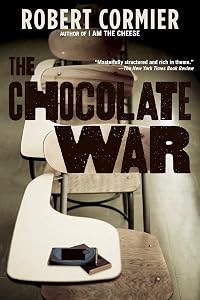
A high school freshman discovers the devastating consequences of refusing to join in the school's annual fund raising drive and arousing the wrath of the school bullies.Tags
Recommendations


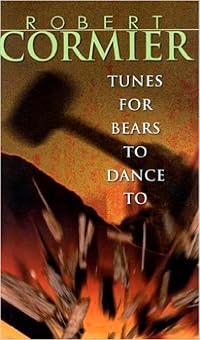
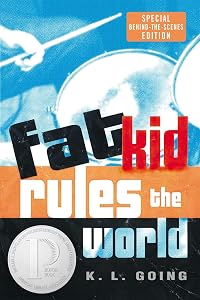
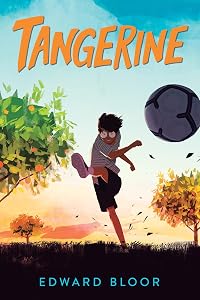
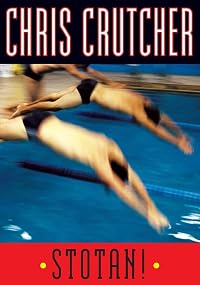



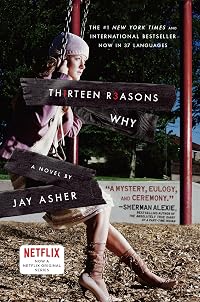
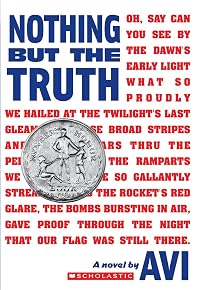
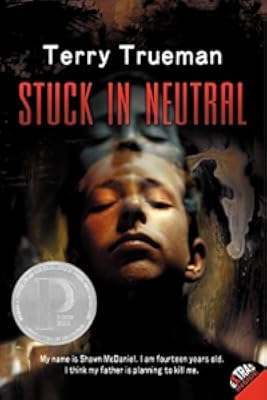
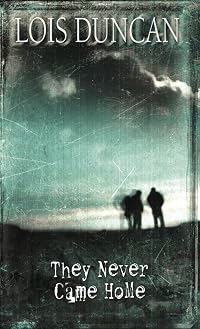
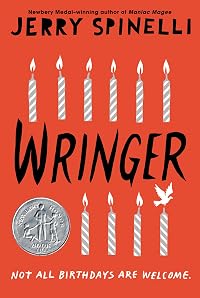
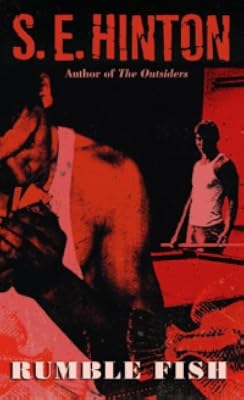
Member Recommendations

by meggyweg

Member Reviews
A YA novel published in 1974. Highly praised, and equally controversial, the story involves a "secret" society known as The Vigils (which everyone knows about) in a Catholic high school where "leadership" translates to manipulation, humiliation and exploitation. Both students and faculty are motivated entirely by self-interest, and neither Christianity nor good ol' fashioned morality are evident anywhere. Youthful hi-jinks have a cruel edge, and the Vigils encourage their de facto leader, Archie, in his sadistic assignments which amount to continual hazing. An annual school-wide fundraiser takes on serious significance when Brother Leon announces that thisyear the price of a box of chocolates will be twice what it was in the past, AND show more the goal for the sale is to move 20,000 boxes, which is also a doubling of the previous goal. Brother Leon solicits Archie's help in bringing the Vigils on board with this daunting undertaking, so naturally Archie decides to "assign" one of freshmen to refuse to participate in the sale. All hell breaks loose when Jerry decides to continue his refusal past the one-week assignment.
This is a profound exploration of issues basic to adolescent life. Herd mentality; peer pressure; personal integrity; identity; conformity; respect for vs. blind acceptance of vs. rebellion against authority; sexual expression/fantasies/repression; bullying...no wonder there have been so many attempts to ban it. It's about REALITY, for cryin' out loud. Kids shouldn't be exposed to that. They can't handle reading about the kind of stuff so many of them deal with on a daily basis. My only quibble with this story is that there are NO responsible, caring adults in it. I think I understand the author's decision (and it must have been intentional) to leave them out. The school is a closed society, even though the boys go home at the end of the day; what happens at Trinity stays at Trinity. It's obvious that the boys are without sincere guidance at a critical point in their lives. (There are brief references to Jerry's Dad, who works nights, and whom Jerry doesn't want to worry, possibly included to explain the apparent overall lack of parental involvement in these kids' lives.)
A tough read, with an important message. Ironically, it might be most important for the adults who would ban it to get that message themselves. show less
This is a profound exploration of issues basic to adolescent life. Herd mentality; peer pressure; personal integrity; identity; conformity; respect for vs. blind acceptance of vs. rebellion against authority; sexual expression/fantasies/repression; bullying...no wonder there have been so many attempts to ban it. It's about REALITY, for cryin' out loud. Kids shouldn't be exposed to that. They can't handle reading about the kind of stuff so many of them deal with on a daily basis. My only quibble with this story is that there are NO responsible, caring adults in it. I think I understand the author's decision (and it must have been intentional) to leave them out. The school is a closed society, even though the boys go home at the end of the day; what happens at Trinity stays at Trinity. It's obvious that the boys are without sincere guidance at a critical point in their lives. (There are brief references to Jerry's Dad, who works nights, and whom Jerry doesn't want to worry, possibly included to explain the apparent overall lack of parental involvement in these kids' lives.)
A tough read, with an important message. Ironically, it might be most important for the adults who would ban it to get that message themselves. show less
"They don't actually want you to do your thing, not unless it's their thing too."
Every year Trinity Boy's School runs a chocolate sale. Each boy 'volunteers' to sell a quota of boxes in a fund-raising effort that is also a display of 'school spirit'. But this year is different, because new boy Jerry Renault has refused to take part. Initially he does so for ten days at the command of a secretive student group the 'Vigils' but once those ten days up he decides unilaterally to continue with his stance.
This book was first published in 1974 and has spent most of it's time since on the 'top 10 banned books list' in American schools because of it's content, in part sexual (masturbation), in part religious (it is a Catholic school and some of show more the teachers are good and some are bad) but mainly because it features bullying.
The book is relatively short but packs a punch. It features some of the best and worst facets of human nature. Jerry is idealistic, Archie is egocentric, Brother Leon is manipulative abusive whilst Goober who is privately supportive of Jerry's choice isn't willing to do so publicly and Carter has a false sense of control.
I found that I had a love/hate relationship with this book. I loved the way that it sucked me in, made me think and how I struggled to put it down. I hated the fact that Cormier felt the need to write it, I hated the fact that the story was realistic and represented real life for some students the world over, I hated the fact that Jerry's ostracization was easy to relate to, I hated the mob-like attitude of the other students, I hated the fact that even the 'good' teachers were willing to intervene, I hated how disturbing the norm was shown to be dangerous and brave but most of all I hated being asked if I would have been strong enough to say 'NO'. The book ended inconclusively despite my fervent hoping that somehow Jerry would gain some sort of reprieve and hating the fact that it had to do so to be realistic.
Personally I would have liked to have seen a little more in depth characterisation but despite being many decades beyond the book's intended market audience I found it a powerful and moving piece that made me sit up and think, as such I would highly recommend it. However, I doubt that I will read the sequel in the fear that it won't be as good. show less
Every year Trinity Boy's School runs a chocolate sale. Each boy 'volunteers' to sell a quota of boxes in a fund-raising effort that is also a display of 'school spirit'. But this year is different, because new boy Jerry Renault has refused to take part. Initially he does so for ten days at the command of a secretive student group the 'Vigils' but once those ten days up he decides unilaterally to continue with his stance.
This book was first published in 1974 and has spent most of it's time since on the 'top 10 banned books list' in American schools because of it's content, in part sexual (masturbation), in part religious (it is a Catholic school and some of show more the teachers are good and some are bad) but mainly because it features bullying.
The book is relatively short but packs a punch. It features some of the best and worst facets of human nature. Jerry is idealistic, Archie is egocentric, Brother Leon is manipulative abusive whilst Goober who is privately supportive of Jerry's choice isn't willing to do so publicly and Carter has a false sense of control.
I found that I had a love/hate relationship with this book. I loved the way that it sucked me in, made me think and how I struggled to put it down. I hated the fact that Cormier felt the need to write it, I hated the fact that the story was realistic and represented real life for some students the world over, I hated the fact that Jerry's ostracization was easy to relate to, I hated the mob-like attitude of the other students, I hated the fact that even the 'good' teachers were willing to intervene, I hated how disturbing the norm was shown to be dangerous and brave but most of all I hated being asked if I would have been strong enough to say 'NO'. The book ended inconclusively despite my fervent hoping that somehow Jerry would gain some sort of reprieve and hating the fact that it had to do so to be realistic.
Personally I would have liked to have seen a little more in depth characterisation but despite being many decades beyond the book's intended market audience I found it a powerful and moving piece that made me sit up and think, as such I would highly recommend it. However, I doubt that I will read the sequel in the fear that it won't be as good. show less
I must admit that I'm somewhat confused over the hoopla surrounding The Chocolate War by Robert Cormier. It was very violent and frightening to look into the hearts and minds of these adolescents who seemed to work without a conscience (and the adults were sometimes worse). The main character, Jerry Renault, stood for independence and going against the grain but the message at the end seemed to be that going against the tide only results in misery. In fact, the entire tone of the book seemed to be that if you don't do what you're told, misfortune will certainly befall you. Perhaps a secondary message is that the world is cruel and unfair and bad things happen. However, I read books to get away from the sad realities of life (and I don't show more think the world is all that bad anyway). This isn't to say that I don't enjoy "darker" books but there's usually some ray of light at the end. I will say that it was very well-written (excepting some typos which may have been the fault of the printer) and a page-turner. If you're prepared for an agonizing tale of woe and despair, this book will not disappoint. show less
Jerry Renault is a freshman at Trinity High School. Things are going well for him at school until he receives an "assignment" from the Vigils, the school's secret society: When the school's annual chocolate sale begins, don't sell the chocolates. As events spiral out of control, he begins to see not only his school, but his teachers, his classmates, and himself in new and not always very flattering ways.
Cormier does a great job of invoking the spirit of high school, with all of its desires, confusion, and volatility. It would have been very easy for this book to have turned into an after-school special type of thing, but it didn't. The actual events of the book are fairly mundane, even juvenile, but Cormier's writing brings out the show more intensity that they would have for a student in the school. This is a somewhat dark novel, in the sense that it unflinchingly looks at the capacity for barbarism that can be found in humans, especially those lingering between childhood and adulthood, when the cunning required for true cruelty has been developed but a full understanding of the consequences of one's action has not.
Why had I never heard of this book before a fellow LTer reviewed it? What a great novel. I only wish I could have read it while I was in high school and will definitely recommend it to others, especially my students and, when I have them, teenage children. show less
Cormier does a great job of invoking the spirit of high school, with all of its desires, confusion, and volatility. It would have been very easy for this book to have turned into an after-school special type of thing, but it didn't. The actual events of the book are fairly mundane, even juvenile, but Cormier's writing brings out the show more intensity that they would have for a student in the school. This is a somewhat dark novel, in the sense that it unflinchingly looks at the capacity for barbarism that can be found in humans, especially those lingering between childhood and adulthood, when the cunning required for true cruelty has been developed but a full understanding of the consequences of one's action has not.
Why had I never heard of this book before a fellow LTer reviewed it? What a great novel. I only wish I could have read it while I was in high school and will definitely recommend it to others, especially my students and, when I have them, teenage children. show less
The abrupt ending was the only off note of this book for me. That aside, Cormier does a brilliant job of tapping into that boys' high school environment - part Lord of the Flies, part A Separate Peace. There are the teachers - the Brothers - none of whom provides a decent role model and more than one of whom is downright menacing (i.e. Brother Leon). There are the Vigils, a secret group of students; Archie, though he isn't the president, is the mastermind who comes up with "Assignments" for other students, and who holds the power. This power is held in check only through the black box, which holds six marbles - five white, one black. If Archie draws the black marble, he must complete the Assignment in place of the student/victim. show more However, Archie's luck has been good so far, and his confidence in his luck is such that the black box does not provide much of a check on his power at all.
The plot centers around one defiant act - Jerry Renault refuses to take part in the school-wide chocolate sale. After some time it is revealed that his refusal is part of an assignment from the Vigils, but even when they reverse the assignment and order him to begin selling the chocolates, he still refuses - standing up to the Vigils and to the intimidating Brother Leon. Jerry's mother recently died from cancer, and his father works different shifts at a factory and is often unattentive, though not uncaring. Jerry is alone, save for fellow student and football player Roland Goubert, a.k.a. The Goober.
The Goober, however, is a conflict-averse, peace-at-all-costs type, even when that cost is not coming to Jerry's defense, leaving him alone at the mercy of the Vigils, the Brothers, and the student body at large: "The Goober started to step forward in protest. He had only sold twenty-seven boxes, damn it. He had stopped at twenty-seven to show that he was supporting Jerry, even though nobody knew, not even Jerry. And now the whole thing evaporated, and he found himself sinking back into the shadows, as if he could shrivel into invisibility. He didn't want trouble."
As the story draws to its climax, Archie ropes in another student, Emile Janza. He uses psychology to manipulate Janza, using him as an instrument against Jerry: "That's why he blew up. If you want to get under a guy's skin, accuse him of being something he isn't. Otherwise, you're only telling him something he knows." Jerry, in the end, is badly beaten, and though he has maintained his defiance throughout the ordeal - taking inspiration from a poster in his locker that asks, "Do I dare disturb the universe?" - his resistance finally crumbles. He tries to tell the Goober, who has come to his rescue after the fact, "They tell you to do your thing but they don't mean it. They don't want you to do your thing, not unless it happens to be their thing, too. It's a laugh, Goober, a fake. Don't disturb the universe, Goober, no matter what the posters say."
All in all, The Chocolate War presents an extreme picture of the bullying behavior that is now getting more attention in schools. Unlike many young adult novels, there is no happy ending and no indication that life is fair or that the good guys win; instead, you're worried about what further damage the bad guys are going to do when they leave high school and are loosed upon the world. show less
The plot centers around one defiant act - Jerry Renault refuses to take part in the school-wide chocolate sale. After some time it is revealed that his refusal is part of an assignment from the Vigils, but even when they reverse the assignment and order him to begin selling the chocolates, he still refuses - standing up to the Vigils and to the intimidating Brother Leon. Jerry's mother recently died from cancer, and his father works different shifts at a factory and is often unattentive, though not uncaring. Jerry is alone, save for fellow student and football player Roland Goubert, a.k.a. The Goober.
The Goober, however, is a conflict-averse, peace-at-all-costs type, even when that cost is not coming to Jerry's defense, leaving him alone at the mercy of the Vigils, the Brothers, and the student body at large: "The Goober started to step forward in protest. He had only sold twenty-seven boxes, damn it. He had stopped at twenty-seven to show that he was supporting Jerry, even though nobody knew, not even Jerry. And now the whole thing evaporated, and he found himself sinking back into the shadows, as if he could shrivel into invisibility. He didn't want trouble."
As the story draws to its climax, Archie ropes in another student, Emile Janza. He uses psychology to manipulate Janza, using him as an instrument against Jerry: "That's why he blew up. If you want to get under a guy's skin, accuse him of being something he isn't. Otherwise, you're only telling him something he knows." Jerry, in the end, is badly beaten, and though he has maintained his defiance throughout the ordeal - taking inspiration from a poster in his locker that asks, "Do I dare disturb the universe?" - his resistance finally crumbles. He tries to tell the Goober, who has come to his rescue after the fact, "They tell you to do your thing but they don't mean it. They don't want you to do your thing, not unless it happens to be their thing, too. It's a laugh, Goober, a fake. Don't disturb the universe, Goober, no matter what the posters say."
All in all, The Chocolate War presents an extreme picture of the bullying behavior that is now getting more attention in schools. Unlike many young adult novels, there is no happy ending and no indication that life is fair or that the good guys win; instead, you're worried about what further damage the bad guys are going to do when they leave high school and are loosed upon the world. show less
I have loved Robert Cormier since I found his book Fade hidden in the back corner of my school library 27 years ago. His young adult novels deal with real things that real teens deal with. He doesn't hold back and he doesn't surgar coat. And in The Chocolate War, he captures the evil vile terror that teens can inflict on each other and how hard it is to stand up against the crowd. It left me chilled and glad that my son escaped the harrows of school without a major incident, although not immune to the cruelty of his classmates. My heart breaks for every child that must face the insitutional injustices of school.
People tell me YA fiction needs to keep branching out. Teens demand the supernatural and violent and sexual situations because those are the desires and realities that today's teens face. Well, in 1974, this seemingly simple story of a boy who refuses to sell chocolates morphed into a multi-layered tale of friendship, peer pressure, violence, sexual pressure, betrayal, evil, courage, authority... and it's just about a private school filled with boys. I think that a story that seems to be about one thing on the surface can really be about a dozen things underneath. I think this book accurately captures many of the mindsets that teenage boys encounter while going through school and life.
I think that making a stand alone can disturb the show more universe. show less
I think that making a stand alone can disturb the show more universe. show less
Members
- Recently Added By
Lists

1001 Children's Books You Must Read Before You Grow Up
774 works; 101 members

Best Young Adult
413 works; 102 members

NPRs your favorites: 100 Best Ever Teen Novels
237 works; 49 members

Best School Stories
219 works; 22 members

Banned Books Week 2014
268 works; 62 members
Ambleside Books
459 works; 18 members

Most Popular Young Adult Lit on LT
100 works; 4 members

Books About Boys
175 works; 15 members
Modern Books for Young Adults
87 works; 10 members

Swinging Seventies
255 works; 18 members

Books Read in 2017
4,249 works; 129 members

Banned or Challenged Books
402 works; 43 members

1970s
657 works; 23 members

Bullies
44 works; 2 members
Before Austen Comes Aesop
318 works; 9 members

Read For Your Life
157 works; 1 member
Author Information

Robert Cormier began writing novels for adults, but established his reputation as an author of books for young adults, earning critical acclaim with three books, each of which were named New York Times Outstanding Book of the Year: The Chocolate War (1974), I Am the Cheese (1977), and After the First Dark (1979). Cormier was born on January 17, show more 1925, in Leominster, Mass., where his eighth-grade teacher first discovered his ability to write. Cormier worked as a commercial writer at WTAG-Radio in Worcester, Mass. He also worked as a newspaper reporter and columnist at the Worcester Telegram and Gazette and at the Fitchburg Sentinel. Cormier received the Best Human Interest Story of the Year Award from the Associated Press of New England in 1959 and 1973. He also earned the Best Newspaper Column Award from K.R. Thomson Newspapers, Inc., in 1974. Cormier, who is sometimes inspired by news stories or family events, is known for having serious themes in his work, such as manipulation, abuse of authority, and the ordinariness of evil. These themes are also evident in many of his more than 15 books. (Bowker Author Biography) show less
Some Editions
Awards and Honors
Awards
Distinctions
Notable Lists
Series

Belongs to Publisher Series
Work Relationships
Is contained in
Has the adaptation
Has as a study
Has as a student's study guide
Has as a teacher's guide
Common Knowledge
- Canonical title
- The Chocolate War
- Original title
- The Chocolate War
- Alternate titles*
- Chokorēto uō
- Original publication date
- 1974
- People/Characters
- Jerry Renault; Brother Leon; Obie Jameson; Roland Goubert (The Goober); Archie Costello; Emile Janza
- Important places
- Trinity High School (fictional place); New England, USA
- Related movies
- The Chocolate War (1988 | IMDb)
- Dedication
- This one's for my son, Peter.
With love. - First words
- They murdered him.
- Quotations
- In bed once more, Jerry lay without moving, trying to summon sleep. Listening to his father's snores, he thought of how his father was actually sleeping his life away, sleeping even when he was awake, not really alive. And ... (show all)how about me? What was it the guy on the Common had said the other day, his chin resting on the Volkswagen like some grotesque John the Baptist? You're missing a lot of things in the world.
It was like a fart in his ear.
Do I dare disturb the universe? - Last words
- (Click to show. Warning: May contain spoilers.)Archie and Obie say there awhile not saying anything and then made their way out of the place in the darkness.
- Original language
- American English
*Some information comes from Common Knowledge in other languages. Click "Edit" for more information.
Classifications
- Genres
- Fiction and Literature, Teen, Children's Books, Young Adult
- DDC/MDS
- 813.54 — Literature & rhetoric American literature in English American fiction in English 1900-1999 1945-1999
- LCC
- PZ7 .C81634 .C — Language and Literature Fiction and juvenile belles lettres Fiction and juvenile belles lettres Juvenile belles lettres
- BISAC
Statistics
- Members
- 5,411
- Popularity
- 2,504
- Reviews
- 206
- Rating
- (3.54)
- Languages
- 20 — Arabic, Catalan, Dutch, English, French, German, Greek, Hebrew, Hungarian, Italian, Japanese, Korean, Farsi/Persian, Romanian, Russian, Croatian, Spanish, Swedish, Chinese, traditional, Chinese, simplified
- Media
- Paper, Audiobook, Ebook
- ISBNs
- 72
- ASINs
- 23