
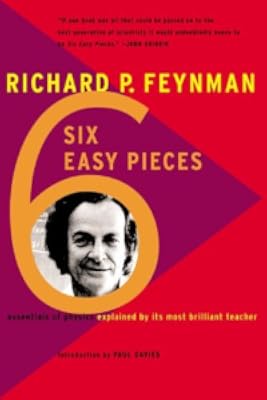
Six Easy Pieces: Essentials of Physics Explained by Its Most Brilliant Teacher
by Richard Feynman
On This Page
Description
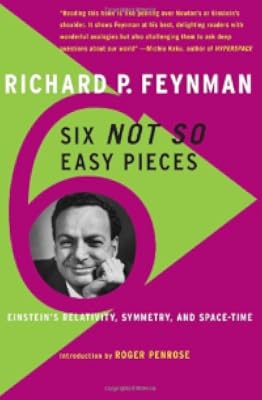
"It was Feynman's outrageous and scintillating method of teaching that earned him legendary status among students and professors of physics. From 1961 to 1963, Feynman delivered a series of lectures at the California Institute of Technology that revolutionized the teaching of physics around the world. 'Six Not-So-Easy Pieces', taken from these famous 'Lectures on Physics' represent some the most stimulating material from the series. In these classic lessons, Feynman introduces the general show more reader to the following topics: atoms, basic physics, energy, gravitation, quantum mechanics, and the relationship of physics to other topics ..."--Page 4 of cover. show lessTags
Recommendations

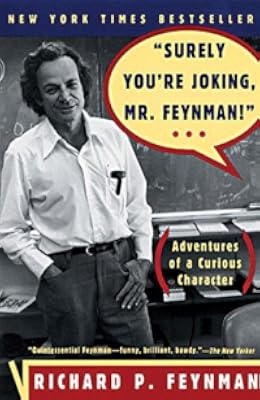
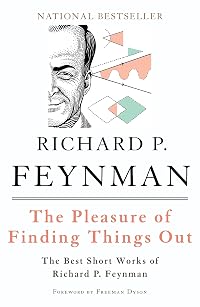
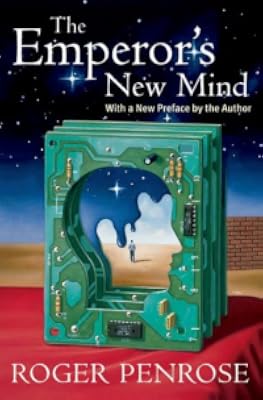
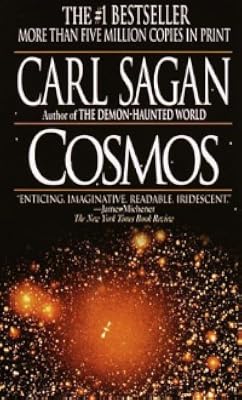
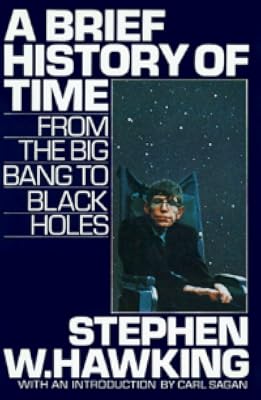
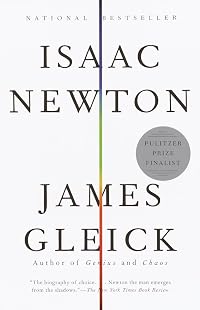
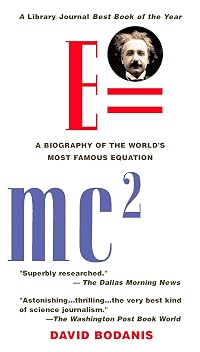
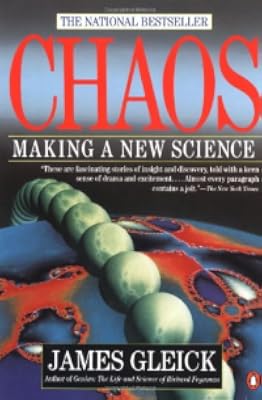
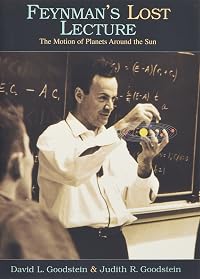
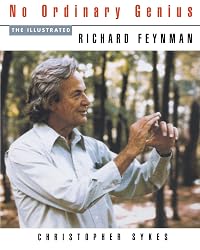
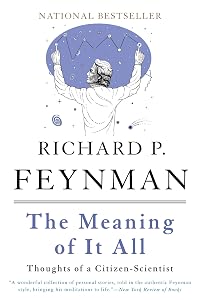
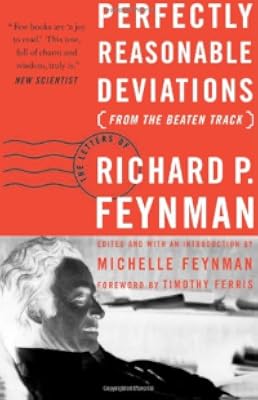
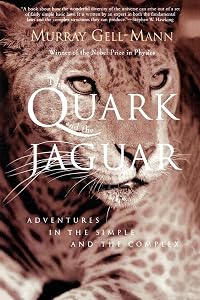

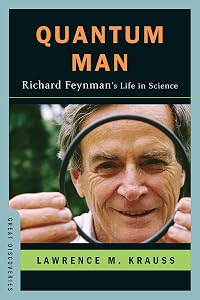
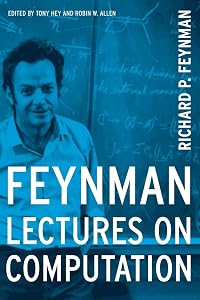
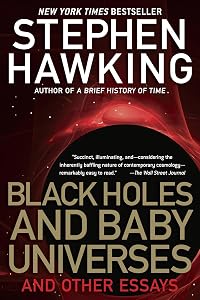
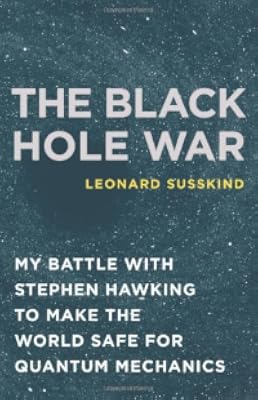
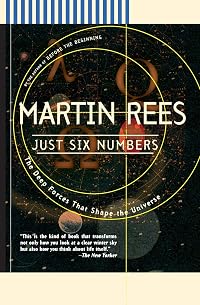
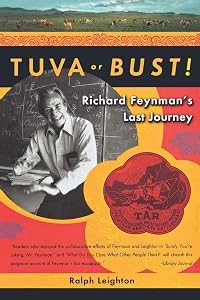
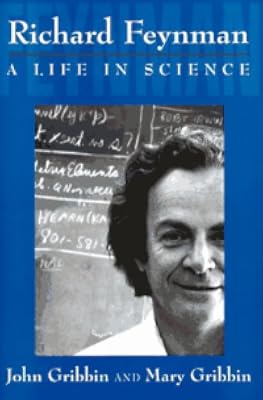
Member Recommendations
by Othemts
Member Reviews
These essays are, indeed, "easy" in the sense of digestible, and while not overly technical they also do not dumb down the material. Feynman provides an admirable focus and distillation of familiar facts into a single vision, and the essays will reward re-reading.
I had to accept as correct some dynamics and relations beyond my grasp, and similarly some given mathematical expressions I can't follow without textual commentary. But Feynman's ability to get the pith of the matter, and to translate into familiar physical situations, is remarkable. He also does well to identify limits of knowledge, and briefly interrogate context such as historically why something is known in the form it is.
Upon finishing, resolved to look into his other show more science writing: Character of Science, or even the Lectures, and again, if reading the "memoir" material at all, use it as a "warm up" to the science. Feynman's curiosity about life seems identical to his approach to science: the wonder, the glee in debunking confusion or tricking others based on their lack of understanding, in good fun. This sense of wonder and merriment also is evident from the science writings alone, but keeping it in mind helps clarify how and what he focuses on with respect to the facts.
Completed in two sittings, one day, immediately following completion of Surely You're Joking, Mr Feynman!. Joking proved a good intro, the jocularity and joy of the lectures were accentuated knowing of his impish humour and thorough-going curiosity in how the world works. I suspect his delivery, when witnessed in person, made this quite obvious, but on the page the transcripts were not always so self-evident without knowing of his personality. show less
I had to accept as correct some dynamics and relations beyond my grasp, and similarly some given mathematical expressions I can't follow without textual commentary. But Feynman's ability to get the pith of the matter, and to translate into familiar physical situations, is remarkable. He also does well to identify limits of knowledge, and briefly interrogate context such as historically why something is known in the form it is.
Upon finishing, resolved to look into his other show more science writing: Character of Science, or even the Lectures, and again, if reading the "memoir" material at all, use it as a "warm up" to the science. Feynman's curiosity about life seems identical to his approach to science: the wonder, the glee in debunking confusion or tricking others based on their lack of understanding, in good fun. This sense of wonder and merriment also is evident from the science writings alone, but keeping it in mind helps clarify how and what he focuses on with respect to the facts.
Completed in two sittings, one day, immediately following completion of Surely You're Joking, Mr Feynman!. Joking proved a good intro, the jocularity and joy of the lectures were accentuated knowing of his impish humour and thorough-going curiosity in how the world works. I suspect his delivery, when witnessed in person, made this quite obvious, but on the page the transcripts were not always so self-evident without knowing of his personality. show less
Dr.Feynman and I have different definitions for the word "easy." I have a reasonable grasp of basic physics but frequently found myself lost and having re-read sections only to realize that I simply don't understand something. It takes a little more work than the title implies but is a damn good read if you really want a comprehensible exposure to the topic. Also, keep in mind that these lectures were given to CalTech students who were intent on becoming physicists, not your average schmo in Physics 101. Five stars for this permanent resident on my reference shelf.
Reading “Six Easy Pieces” was like sneaking into professor Feynman’s lectures, listening to the master explain his domain and knowing – this is very important – that you will never be tested on the material. It was a pleasure spending time in his brain and wishing it was mine.
It seemed obvious to me that Dr. Feynman was gifted man, the winner of life’s intellectual lottery. It was also obvious to me that no amount of intellectual “elbow grease” on my part was going to level the playing field for, so I was happy to have cheap seats on the 50 yard line while the master warmed up.
A good read for anyone interested in Physics or, for that matter, the shear joy of learning. Three and a half stars from this intellectual show more dullard. Now on to QED. show less
It seemed obvious to me that Dr. Feynman was gifted man, the winner of life’s intellectual lottery. It was also obvious to me that no amount of intellectual “elbow grease” on my part was going to level the playing field for, so I was happy to have cheap seats on the 50 yard line while the master warmed up.
A good read for anyone interested in Physics or, for that matter, the shear joy of learning. Three and a half stars from this intellectual show more dullard. Now on to QED. show less
This book is a bit dated in its physics, but more dated in its presentation. Six "easy" lectures culled from a series Feynman gave in 1963-64 don't come across as well on the page, and compared to a physics lecture as part of a Great Courses series, the diagrams just don't do the trick. They need animation to make themselves clear, for instance. Nor is Feynman on paper as interesting as when you can listen to him talk. I'm not saying this is bad--it certainly isn't, but these days there are a lot more interesting ways to learn about physics.
It is just an excerpt from Feynman's courses. Nothing is changed or adapted. This is why you will often find phrases like "more on this later", but you will never get to the "later". The title is misleading, since the lessons are not quite easy to understand. There are only about 3 places where you actually have the feeling that you have learned something interesting and where the lessons are written as cause-effect-consequences. But in the rest of the book it is just physics as you may know it, but with more "gibberish"(he talks about quarks like it's common sense). What is more, Feynman has always the "i'm-better-than-everyone-else" attitude and regards physics as the ultimate science(disregarding some other fields as just toys) and show more this does not seem to be in line with all those "best teacher ever" praises he gets in the multiple introductions of the book.
As a conclusion - it contains some interesting and accessible facts, but this is not a proper introduction to various fields in physics, hence not the best place to start - it's just a marketing trick to sell excerpts from an older bigger work of the author. show less
As a conclusion - it contains some interesting and accessible facts, but this is not a proper introduction to various fields in physics, hence not the best place to start - it's just a marketing trick to sell excerpts from an older bigger work of the author. show less
Feynman certainly lives up to the reputation that his peers and students arrived to him all those years back. While the lectures in this book were edited to suit the reading mode, Feynman's style as a teacher is evident with his simple analogies and easy to understand constructs. The book was interesting to read, but I am sure attending a class would have been far more educational and entertaining.
From basic physics to the introduction to quantum mechanics, Feynman does an excellent job of covering the message succinctly and simply. Any non-understanding on the pat of the reader can thus be only attributed to the ineptitude of the reader to grasp complex mathematical and physical concepts, a was in my case.
There have been many other show more physics related books written by scientists for the common person that have been far easier to understand. But then, Feynman assumes that the people attending the lectures or reading this book have an inclination towards hard sciences. For example, I have read far easier renderings of the double split experiments and Heisenberg's uncertainty principles, but that is because I am not a physics student.
The book might require you to re-read certain sections, or in the case of quantum mechanics, the entire chapter, but it is still a good read nevertheless. This is the closest you'll get to Feynman's under graduate class. show less
From basic physics to the introduction to quantum mechanics, Feynman does an excellent job of covering the message succinctly and simply. Any non-understanding on the pat of the reader can thus be only attributed to the ineptitude of the reader to grasp complex mathematical and physical concepts, a was in my case.
There have been many other show more physics related books written by scientists for the common person that have been far easier to understand. But then, Feynman assumes that the people attending the lectures or reading this book have an inclination towards hard sciences. For example, I have read far easier renderings of the double split experiments and Heisenberg's uncertainty principles, but that is because I am not a physics student.
The book might require you to re-read certain sections, or in the case of quantum mechanics, the entire chapter, but it is still a good read nevertheless. This is the closest you'll get to Feynman's under graduate class. show less
I have a background in chemistry so I cannot aproach this as a novice might - I have the feeling though that for a beginner the book might skim too quickly over a number of concepts. For all others the book might shed a different - and refreshingly so - light on what they already know. Good and interesting read but really only a quick primer to physics.
Members
- Recently Added By
Lists

Modern Library 100 Best Nonfiction Books
100 works; 8 members

Blue Pyramid 1,276 Best Books of All Time
1,248 works; 32 members

Eton's list - the books every bright 16 year-old should read
40 works; 6 members

In Our Time books
4,934 works; 2 members
Author Information

153+ Works 41,284 Members
Awards and Honors
Notable Lists
Series
Belongs to Publisher Series
Work Relationships
Is contained in
Common Knowledge
- Canonical title
- Six Easy Pieces: Essentials of Physics Explained by Its Most Brilliant Teacher
- Original publication date
- 1963 (as part of The Feynman Lectures on Physics) (as part of The Feynman Lectures on Physics); 1994-10 (Six Easy Pieces) (Six Easy Pieces)
- First words
- This two-year course in physics is presented from the point of view that you, the reader, are going to be a physicist.
- Last words
- (Click to show. Warning: May contain spoilers.)Quantum mechanics maintains its perilous but accurate existence.
- Blurbers
- Wolfram, Stephen; Kane, Gordon; Kolb, Edward W.; Muller, Richard
- Original language
- English
Classifications
- Genres
- Science & Nature, Nonfiction, General Nonfiction
- DDC/MDS
- 530 — Natural sciences & mathematics Physics Physics
- LCC
- QC21.2 .F52 — Science Physics Physics General
- BISAC
Statistics
- Members
- 4,498
- Popularity
- 3,265
- Reviews
- 45
- Rating
- (4.08)
- Languages
- 13 — Czech, Dutch, English, Estonian, Finnish, German, Hungarian, Italian, Polish, Portuguese, Romanian, Spanish, Swedish
- Media
- Paper, Audiobook, Ebook
- ISBNs
- 44
- UPCs
- 1
- ASINs
- 27