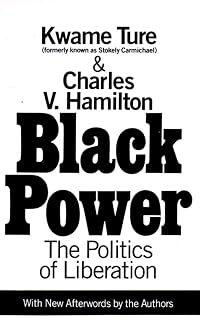
Black Power: The Politics of Liberation in America
by Stokely Carmichael, Charles V. Hamilton
On This Page
Description
In 1967, this revolutionary work exposed the depths of systemic racism in this country and provided a radical political framework for reform: true and lasting social change would only be accomplished through unity among African-Americans and their independence from the preexisting order. An eloquent document of the civil rights movement that remains a work of profound social relevance 25 years after it was first published.Tags
Recommendations










Member Reviews
An eloquent document of the civil rights movement that remains a work of profound social relevance 50 years after it was first published.
This book is from the 1960's, so race relations in the US have progressed a bit since then, but I suspect that in much of the South and urban inner-city areas this book is still very relevant. I also was noting while reading this one how different the part of the West is where I live, compared to the parts of the US Carmichael is directly discussing. The trendy-popular notion that the US is really 12-13 nations/societies squished together is supported by reading books like this. My area has racism too, but it is not centered around Black and White. Here the conflict is between White and Hispanic, and is caught up with immigration issues. I also liked the bits about political strategies used during the civil rights movement by people who show more had so little leverage to use towards gaining group power. show less
This book is from the 1960's, so race relations in the US have progressed a bit since then, but I suspect that in much of the South and urban inner-city areas this book is still very relevant. I also was noting while reading this one how different the part of the West is where I live, compared to the parts of the US Carmichael is directly discussing. The trendy-popular notion that the US is really 12-13 nations/societies squished together is supported by reading books like this. My area has racism too, but it is not centered around Black and White. Here the conflict is between White and Hispanic, and is caught up with immigration issues. I also liked the bits about political strategies used during the civil rights movement by people who show more had so little leverage to use towards gaining group power. show less
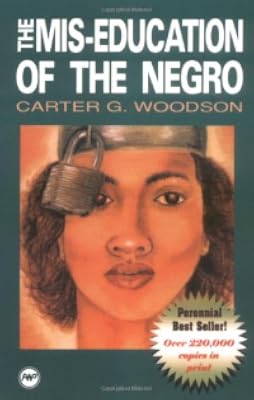
(Sigh) So to begin this book started with kindling that fire that is at the base of every black man woman and child but then in the middle, I began to see; unlike this books forefathers (i.e. the mis-education of the Negro) it offered no solutions to any of the obvious problems it points out. FOR MYSELF it was to akin to listening to one of my older uncles talk, and talk all day about how the world is wrong and explain in detail what is wrong with it yet they do noting and give no advice on how to solve the problems they see.If you’re looking for a book to explain everything that "the man", "America" and everybody else has done to black people then get this book.If you want some "solutions" and or "methods" on improving yourself as a show more black person or a person in general I'd get "the mis-education of the negro" and read this later.I really wanted to like this book but I could not. It’s too much a complaint, too much of "I’ve been victimized and Im mad about It." but it lack what I was looking for "what are you going to do about it?" show less
If you have the 1967 version of this book on your shelf and you decide to read it now in 2007, you will find that absolutely nothing has changed. The authors were dead on point then and are on point to this date.
The authors then basically given an excellent definition of Black Power, why it is needed, for whom it is for, and why it is not designed to be against anyone, anything, or anyplace.
It is a very good concept, that should be understood by most politicians.
The authors then basically given an excellent definition of Black Power, why it is needed, for whom it is for, and why it is not designed to be against anyone, anything, or anyplace.
It is a very good concept, that should be understood by most politicians.
Reviewed in the July 1968 issue of the Socialist Standard:
http://socialiststandardmyspace.blogspot.com/2018/02/what-is-black-power-1968.ht...
http://socialiststandardmyspace.blogspot.com/2018/02/what-is-black-power-1968.ht...
Ratings
Members
- Recently Added By
Lists

The Black Archives: All Power To the People! Reading List
79 works; 10 members
Author Information

16+ Works 1,047 Members
12+ Works 774 Members
Charles V. Hamilton, Ph.D., the W. S. Sayre Professor Emeritus of Government and Political Science at Columbia University
Some Editions
Series
Belongs to Publisher Series
Vintage Books (V-33)
Common Knowledge
- Canonical title
- Black Power: The Politics of Liberation in America
- Original publication date
- 1967
- People/Characters
- Lewis Adams; American Federation of Labor; AFL-CIO; Lucius Amerson; David Apter; James Baldwin (show all 92); Edward C. Banfield; Lerone Bennet; Herbert Blumer; Andrew F. Brimmer; David Caplovitz; Francis Carney; George Washington Carver; Horace Cayton; Jim Clark; Kenneth B. Clark; Eldridge Cleaver; Bull Connor; Richard J. Daley; Jonathan Daniels; William L. Dawson; Deacons for Defense; Bruce Detwiler; St. Clair Drake; Horace R. Cayton; W. E. B. Du Bois; Frantz Fanon; W.F. Foster; John Hope Franklin; E. Franklin Frazier; Milton A. Galamison; Mohandas Karamchand Gandhi; Herbert Garfinkel; Mitchell Ginsberg; Charles G. Gomillion; Milton M. Gordon; Charles Grigg; Lawrence Guyot; Charles V. Hamilton; Harrell Hammond; William B. Hartsfield; Rutherford B. Hayes; John Hulett; Christopher Jencks; Frank M. Johnson; Lyndon Baines Johnson; Lewis Jones; Tom Kahn; Arnold S. Kaufman; V.O. Key, Jr; John O. Killens; Lewis Killian; Charles Grigg; Martin Kilson; Martin Luther King, Jr.; Ku Klux Klan; Walter Lippmann; Stanley Lisser; Viola Liuzzo; Sidney Logan; Niccolò Machiavelli; August Meier; Jack Minnis; Hans Morgenthau; Henry Nichols; Kwame Nkrumah; Selig Perlman; Paul Puryear; Vincent Resta; Emory Ross; Elliot Rudwick; Bayard Rustin; Albert Sarraut; Charles Silberman; A.W. Singham; Philip Smith; Stanley Smith; I.F. Stone; Mike Thelwell; Daniel C. Thompson; "Pitchfork" Ben Tillman; William Monroe Trotter; George Wallace; Booker T. Washington; Tom Watson; John A. Williams; Robin M. Williams, Jr.; James Q. Wilson; Woodrow Wilson; C. Vann Woodward; Whitney Young, Jr.; Sammy Younge, Jr.
- Important places
- Africa; Alabama, USA; Alabama State College for Negroes, Montgomery, Alabama, USA; Asia; Atlanta, Georgia, USA; Birmingham, Alabama, USA (show all 37); California, USA; Chicago, Illinois, USA; Cincinnati, Ohio, USA; Cleveland, Ohio, USA; Detroit, Michigan, USA; England, UK; Europe; France; Georgia, USA; Haynesville; Illinois, USA; India; Indiana, USA; Los Angeles, California, USA; Louisiana, USA; Lowndes County, Alabama, USA; Macon County, Georgia, USA; Mississippi, USA; Montgomery, Alabama, USA; New York, New York, USA; New York, USA; North Carolina, USA; Philadelphia, Pennsylvania, USA; Portugal; Rhodesia; St. Louis, Missouri, USA; Selma, Alabama, USA; South Africa; South Carolina, USA; Tuskegee, Alabama, USA; Washington, D.C., USA
- Important events
- Black Power Movement; Civil Rights Movement, USA; 1964; Dred Scott Decision; 1965; Voting Rights Act (show all 8); World War II; World War I
- Dedication
- This book is dedicated to our mothers, Mrs. Mabel Carmichael (affectionately known as May Charles) and Mrs. Viola White, and to all the black mothers who have struggled throughout the centuries so that this generation could f... (show all)ight for black power.
- Original language*
- Engels
*Some information comes from Common Knowledge in other languages. Click "Edit" for more information.
Classifications
- Genres
- Nonfiction, Politics and Government, General Nonfiction, History, Philosophy
- DDC/MDS
- 323.1196073 — Society, government, & culture Political science Civil Rights & Liberties/ Human Rights Minority Politics Specific Groups Biography And History African Origin
- LCC
- E185.615 .C32 — History of the United States United States
- BISAC
Statistics
- Members
- 683
- Popularity
- 42,205
- Reviews
- 6
- Rating
- (3.88)
- Languages
- 5 — Dutch, English, French, Italian, Swedish
- Media
- Paper, Audiobook, Ebook
- ISBNs
- 9
- ASINs
- 13