On This Page
Description
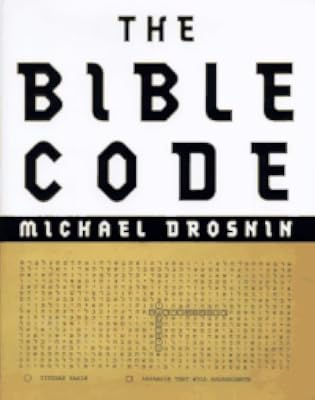
For three thousand years a code in the Bible has remained hidden. Now it has been unlocked by computer - and it may reveal our future. The code was broken by an Israeli mathematician, who presented the proof in a major science journal, and it has been confirmed by famous mathematicians around the world. This book is the first full account of a scientific discovery that may change the world, told by a skeptical secular reporter who became part of the story. Three-thousand-year-old Bible code show more foretells events that happened thousands of years after the Bible was written. It foresaw both Kennedy assassinations, the Oklahoma City bombing, the election of Bill Clinton - everything from World War II to Watergate, from the Holocaust to Hiroshima, from the Moon landing to the collision of a comet with Jupiter. In a few dramatic cases detailed predictions were found in advance - and the events than happened exactly as predicted. The. Date the Gulf War would begin was found weeks before the war started. The date of the Jupiter collision was found months before the blast. The book is based on Drosnin's five-year investigation. The author interviewed all the experts, here and abroad. He spent many weeks with the world-class mathematician who discovered the code, Dr. Eliyahu Rips, and he met with famous mathematicians at Harvard, Yale, and Hebrew University. He talked to a senior code-breaker at the top. Secret U.S. National Security Agency, who confirmed that there is a code in the Bible that does reveal the future. No one yet knows if the Bible code accurately foretells what is yet to come. But the code may be a warning to this world of unprecedented danger, perhaps the real Apocalypse, a nuclear World War. In any event, the Bible code forces us to accept what the Bible itself can only ask us to believe - that we are not alone. And it raises a question for us all. Does the code describe an inevitable future, or a series of possible futures whose ultimate outcome we can still decide? show lessTags
Recommendations











Member Recommendations


Member Reviews
You knew I’d get to this book eventually, right? Well, I’m here to tell you it’s absolutely brilliant. Drosnin is my idol. With a savvy grasp of human nature, a little computer programming, and a mathematician’s insight into probabilities, he put together a best seller.
The book’s premise is that the Bible contains a secret code, and that he has cracked the code to reveal its hidden messages. Simply start at any letter in the Bible, skip ahead a fixed number of letters to the next, and continue until it spells out … well, whatever you like. Start with the first T in Genesis, skip 49 letters to an O, skip 49 more to an R, 49 more to H. Lo and behold, you’ve spelled TORH, the Hebrew word for the first five books of the Bible. show more Miraculous, isn’t it?
No, it’s neither miraculous nor unexpected. As Keith Devlin demonstrated about a year after The Bible Code hit the bookstores, the word TORH appears 56,768 more times in the software, searching just the book of Genesis alone. TORH appeared in an issue of the Wall Street Journal 15,000 times. But might there be more impressive words than TORH? Yes, several! The first encoded phrase the book mentions is “Yitzhak Rabin,” which he uncovers in Deuteronomy. Drosnin carefully lays out his analysis in matrix form so that it looks like a word find puzzle, and crossing Yitzhak Rabin is the phrase “Assassin that will assassinate.” Need more evidence? The phrase “Rabin assassination” crosses “Tel Aviv” in the book of Exodus. Yep, that’s where Amir assassinated Rabin. Oh, the name “Amir” appears in the book of Numbers.
A code of equidistant letters buried within the Bible is not a new idea. See Wikipedia for a full discussion. But with a little computer programming, Drosnin pushes it to the limit. He uncovers prophecies about Watergate, Hitler, Shakespeare’s writings, Edison’s inventions, the holocaust, Roosevelt, Kennedy, communism, Armageddon, and, amazingly, the promise of a future book named “Bible Code.”
It all sounds convincing, until a little experimentation verifies the same probabilistic expectations in other works of literature. Moby Dick revealed much of the same prophecies and many more. So, mathematicians turned back to the Bible to see what else they could learn by the using the software. Several more startling prophecies surfaced: “Code is bunk.” “Drosnin Fraud.” “Darwin was right.” Sigh.
Please don’t read the book, but do gain inspiration from the genius of Drosnin. Millions of dollars are waiting for the next great sham. show less
The book’s premise is that the Bible contains a secret code, and that he has cracked the code to reveal its hidden messages. Simply start at any letter in the Bible, skip ahead a fixed number of letters to the next, and continue until it spells out … well, whatever you like. Start with the first T in Genesis, skip 49 letters to an O, skip 49 more to an R, 49 more to H. Lo and behold, you’ve spelled TORH, the Hebrew word for the first five books of the Bible. show more Miraculous, isn’t it?
No, it’s neither miraculous nor unexpected. As Keith Devlin demonstrated about a year after The Bible Code hit the bookstores, the word TORH appears 56,768 more times in the software, searching just the book of Genesis alone. TORH appeared in an issue of the Wall Street Journal 15,000 times. But might there be more impressive words than TORH? Yes, several! The first encoded phrase the book mentions is “Yitzhak Rabin,” which he uncovers in Deuteronomy. Drosnin carefully lays out his analysis in matrix form so that it looks like a word find puzzle, and crossing Yitzhak Rabin is the phrase “Assassin that will assassinate.” Need more evidence? The phrase “Rabin assassination” crosses “Tel Aviv” in the book of Exodus. Yep, that’s where Amir assassinated Rabin. Oh, the name “Amir” appears in the book of Numbers.
A code of equidistant letters buried within the Bible is not a new idea. See Wikipedia for a full discussion. But with a little computer programming, Drosnin pushes it to the limit. He uncovers prophecies about Watergate, Hitler, Shakespeare’s writings, Edison’s inventions, the holocaust, Roosevelt, Kennedy, communism, Armageddon, and, amazingly, the promise of a future book named “Bible Code.”
It all sounds convincing, until a little experimentation verifies the same probabilistic expectations in other works of literature. Moby Dick revealed much of the same prophecies and many more. So, mathematicians turned back to the Bible to see what else they could learn by the using the software. Several more startling prophecies surfaced: “Code is bunk.” “Drosnin Fraud.” “Darwin was right.” Sigh.
Please don’t read the book, but do gain inspiration from the genius of Drosnin. Millions of dollars are waiting for the next great sham. show less
Heh, When was the first time I saw something like Drosnin's theory? Ignatius Donnelly, "The Great Cryptogram," where Donnelly tries to prove that Sir Francis Bacon wrote Shakespeare's works (in the 1880s) and finds all kinds of 'secret' messages. Of course, there is also Melville's "Moby Dick", where modern mathematicians uncovered even *more* prophetic 'crosswords.' I'm not saying don't read the book, because Drosnin is a decent writer and will hold your attention. It reads, in places, almost like a thriller. plus, it might get some people to learn how to read Hebrew (which is not a bad thing!) Enjoy. But -
Fascinating..insightful...but like most modern day theories, it must be taken with a grain of salt. Skeptical or not, it's still interesting enough to hold your attention for a bit..until it gets bogged down and too wordy. Not bad. Considering reading the second volume, as this one is about 13 years outdated.
My Amazon.com review: A popular, anecdotal, sensational piece of journalism., July 23, 1997
Here are my observations and reactions after reading Drosnin's book. (1) Using the ELS Bible code technique described in his book, Drosnin said that he was able to predict the outcomes of elections in Israel and in the USA. Furthermore, according to Drosnin, ancient Jewish sages speculated that all knowledge is encoded in the Torah. Does it not follow, therefore, that a gamblin' man should be able to make bets on such predictions and reap big rewards? Do you suppose that the outcomes of sports contests are encoded in the Torah? Hmmm, I wonder. (2) My biggest problem with Drosnin's book, even after reading it twice, is that I wasn't provided with show more enough information to discern the statistical significance of most of his findings. For instance, there are several tabulations of unencoded strings of plain text on the horizontal, e.g., "ASSASSIN THAT WILL ASSASSINATE," crossing vertically encoded ELS text, e.g., "YITZHAK RABIN." Shouldn't all of the conceptually related search terms be hidden ELS codes, not plain text, to be statistically significant? (3) In my opinion, the most significant findings in Drosnin's book can be found in the Appendix which contains a reprint of the 1994 Statistical Science paper by Witztum, Rips, and Rosenberg. After only one reading of "Equidistant Letter Sequences in the Book of Genesis," I found myself in agreement with the authors' conclusions: (a) that Torah codes exist and (b) that they are not mere coincidence. I can only hope that Drosnin's popular work stimulates more scientific research on the codes, and less reporting of the anecdotal and the happenstance. (4) I eagerly await books by Witztum, Rips, Rosenberg, Gans, and others like them. It seems to me that their cautious, scientific approach will enable their discoveries to be better received by skeptical, but reasonable, people than Drosnin's journalistic approach. (5) I thank God for His chosen people to whom the plain text of the Torah was entrusted and by whom the hidden code of the Torah was discovered. (6) Is there more to this quote from John 5:46 than meets the eye? Jesus said, "If you believed Moses, you would believe me, for he wrote about me." Now there's a challenge for the Torah codes experts. show less
Here are my observations and reactions after reading Drosnin's book. (1) Using the ELS Bible code technique described in his book, Drosnin said that he was able to predict the outcomes of elections in Israel and in the USA. Furthermore, according to Drosnin, ancient Jewish sages speculated that all knowledge is encoded in the Torah. Does it not follow, therefore, that a gamblin' man should be able to make bets on such predictions and reap big rewards? Do you suppose that the outcomes of sports contests are encoded in the Torah? Hmmm, I wonder. (2) My biggest problem with Drosnin's book, even after reading it twice, is that I wasn't provided with show more enough information to discern the statistical significance of most of his findings. For instance, there are several tabulations of unencoded strings of plain text on the horizontal, e.g., "ASSASSIN THAT WILL ASSASSINATE," crossing vertically encoded ELS text, e.g., "YITZHAK RABIN." Shouldn't all of the conceptually related search terms be hidden ELS codes, not plain text, to be statistically significant? (3) In my opinion, the most significant findings in Drosnin's book can be found in the Appendix which contains a reprint of the 1994 Statistical Science paper by Witztum, Rips, and Rosenberg. After only one reading of "Equidistant Letter Sequences in the Book of Genesis," I found myself in agreement with the authors' conclusions: (a) that Torah codes exist and (b) that they are not mere coincidence. I can only hope that Drosnin's popular work stimulates more scientific research on the codes, and less reporting of the anecdotal and the happenstance. (4) I eagerly await books by Witztum, Rips, Rosenberg, Gans, and others like them. It seems to me that their cautious, scientific approach will enable their discoveries to be better received by skeptical, but reasonable, people than Drosnin's journalistic approach. (5) I thank God for His chosen people to whom the plain text of the Torah was entrusted and by whom the hidden code of the Torah was discovered. (6) Is there more to this quote from John 5:46 than meets the eye? Jesus said, "If you believed Moses, you would believe me, for he wrote about me." Now there's a challenge for the Torah codes experts. show less
Intriguing, but a bit nutty. Drosnin lets his biases show in later works.
What can I say? This was the book that got me interested in the Bible. I read the whole thing with my wife (then girlfriend) over a couple evenings in Barnes & Noble.
Explains a hidden mathematical code embedded in the Old Testament that predicts world-changing events that took place long after the Bible was written, including the French Revolution, the 1969 moon landing, and the assassination of Yitzhak Rabin
Members
- Recently Added By
Published Reviews
Ova knjiga vam otkriva kod skriven u Bibliji, u Danilovm proročanstvu, poruku koju su naučnici poput Njutna i Lajbnica pokušavali da otkriju, a dešifrovana je tek u moderno doba uz pomoć računara. Novinar, autor ove knjige, isprva je sumnjao u ovu formulu, ali su ga predviđeni događaji uverili u njenu istinitost. U dodatku knjige je i matematička formula koju su egzaktno proverili show more matematički stručnjaci, formula koja je otvorila vrata univerzalnom proročanstvu skrivenom u Bibliji. show less
added by Sensei-CRS
Lists

Books featured on I Don't Even Own a Television
167 works; 3 members
Author Information

10 Works 1,966 Members
Series

Common Knowledge
- Canonical title
- The Bible Code
- Original title
- The Bible Code
- Original publication date
- 1997
- Related movies
- New York Times bestseller (Nonfiction, 1997)
- Dedication
- For my family, for my friends, for all who kept the faith, again
- First words
- On September 1, 1994, I flew to Israel and met in Jerusalem with a close friend of Prime Minister Yitzhak Rabin, the poet Chaim Guri.
- Last words
- (Click to show. Warning: May contain spoilers.)In any event, it seems that the object we need, both to survive, and to gain the final insight, is the "code key" buried in Lisan.
Classifications
Statistics
- Members
- 1,244
- Popularity
- 19,772
- Reviews
- 15
- Rating
- (2.66)
- Languages
- 15 — Dutch, English, French, German, Hebrew, Hungarian, Italian, Norwegian (Bokmål), Portuguese, Romanian, Serbian, Spanish, Swedish, Turkish, Chinese, traditional
- Media
- Paper
- ISBNs
- 41
- UPCs
- 1
- ASINs
- 7