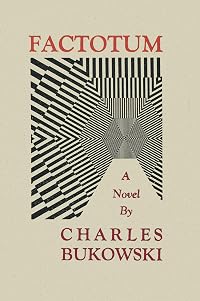
Factotum
by Charles Bukowski
On This Page
Description
One of Charles Bukowski's best, this beer-soaked, deliciously degenerate novel follows the wanderings of aspiring writer Henry Chinaski across World War II-era America. Deferred from military service, Chinaski travels from city to city, moving listlessly from one odd job to another, always needing money but never badly enough to keep a job. His day-to-day existence spirals into an endless litany of pathetic whores, sordid rooms, dreary embraces, and drunken brawls, as he makes his bitter, show more brilliant way from one drink to the next. Charles Bukowski's posthumous legend continues to grow. Factotum is a masterfully vivid evocation of slow-paced, low-life urbanity and alcoholism, and an excellent introduction to the fictional world of Charles Bukowski. show lessTags
Recommendations

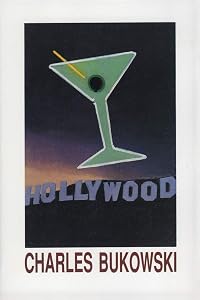
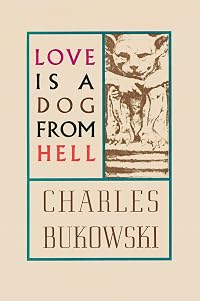
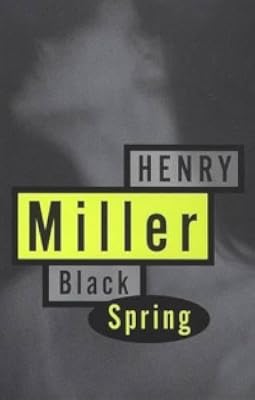
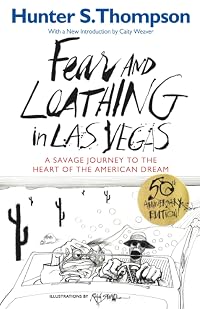
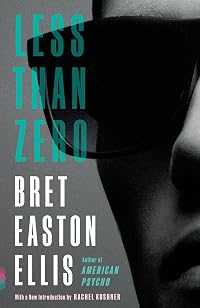
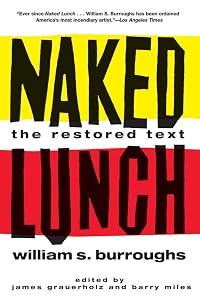

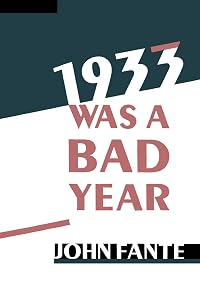

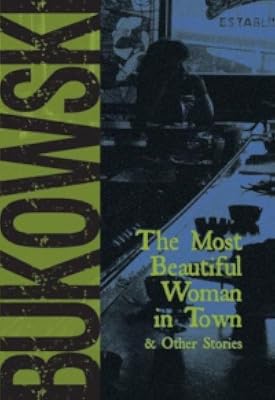





Member Recommendations

by helio_
Member Reviews
I always started a job with the feeling that I'd soon quit or be fired, and this gave me a relaxed manner that was mistaken for intelligence or some secret power." (pp99-100).
Less focused than either Post Office or Ham on Rye, Factotum is nevertheless the one novel where Charles Bukowski most clearly sets out his philosophy on working life - the reasons why Chinaski behaves the way he does. A 'factotum' is a somewhat archaic term meaning someone who does any sort of work - a jack-of-all-trades, just trying to make ends meet. In chronicling some of his various encounters as a factotum - Henry Chinaski being a transparent pseudonym for Bukowski himself - he illustrates just why he has a problem with the routine of life. In my view, he show more sees it as a sort of spiritual slavery (though Bukowski is never that mushy) where a job becomes all-consuming, detracting from the more important things in life. As he says on page 97, "How in the hell could a man enjoy being awakened at 6:30 a.m. by an alarm clock, leap out of bed, dress, force-feed, shit, piss, brush teeth and hair, and fight traffic to get to a place where essentially you made lots of money for somebody else and were asked to be grateful for the opportunity to do so?"
There is a persistent theme of human beings not being in sync with one another and this is reflected in the somewhat disconnected, non-linear narrative; the book is essentially a series of vignettes involving characters (rich characters, even though they are brief) struggling to establish relationships with one another, whether working relationships, friendships or even just mechanical sexual relationships. Chinaski alludes to this lack of synchronicity in an admittedly rather sketchy car-based metaphor on page 91: "The sun was tired, and some of the cars went east and some of the cars went west, and it dawned on me that if everybody would only drive in the same direction everything would be solved."
But Factotum is no spiritual treatise; Bukowski doesn't have (nor does he claim to have) the answers. "Frankly, I was horrified by life, at what a man had to do simply in order to eat, sleep, and keep himself clothed. So I stayed in bed and drank. When you drank the world was still out there, but for the moment it didn't have you by the throat." (pg. 46). Rather, Bukowski is an appalled observer, a reluctant but diligent chronicler of the darker side of human society. Alcohol and casual sex are his defence mechanisms rather than his solutions. This outlook might be a problem for some readers, but Chinaski's excesses in both whiskey and women are not oppressive. He skirts with apathy but does not embrace it, and the book is peppered with humour. Most importantly, there are suggestions of hope, of a spiritual resolve and a desire for a better future, throughout the book (the car metaphor noted above, for example) and indeed in Bukowski's other writings (particularly his later poetry). It is precisely this dichotomy between a dirty life and a clean(-ish) mind which makes Bukowski's work so interesting to read, though unfortunately there seem to be many people out there who fail to recognise these qualities. While Bukowski is certainly not a blueprint for how to live your life, there is a certain quality about his outlook which one can adapt to your own life. Take, for example, the following passage about the routine at a bicycle warehouse:
"Bums and indolents, all of us working there realized our days were numbered. So we relaxed and waited for them to find out how inept we were. Meanwhile, we lived with the system, gave them a few honest hours, and drank together at night." (pp64-5).
Leaving aside the alcoholism and the attitude towards work, this is quite a remarkable passage if one looks at it as a microcosm of life. We are all flawed people (bums and indolents), destined to work and then to die (our days were numbered). So why not relax and wait... accept the system, give as good as you get (a few honest hours) and celebrate and enjoy yourself when you can (drank together at night). Looked at this way (call 'bullshit' if you want), Factotum becomes a much more exhilarating piece of prose." show less
Less focused than either Post Office or Ham on Rye, Factotum is nevertheless the one novel where Charles Bukowski most clearly sets out his philosophy on working life - the reasons why Chinaski behaves the way he does. A 'factotum' is a somewhat archaic term meaning someone who does any sort of work - a jack-of-all-trades, just trying to make ends meet. In chronicling some of his various encounters as a factotum - Henry Chinaski being a transparent pseudonym for Bukowski himself - he illustrates just why he has a problem with the routine of life. In my view, he show more sees it as a sort of spiritual slavery (though Bukowski is never that mushy) where a job becomes all-consuming, detracting from the more important things in life. As he says on page 97, "How in the hell could a man enjoy being awakened at 6:30 a.m. by an alarm clock, leap out of bed, dress, force-feed, shit, piss, brush teeth and hair, and fight traffic to get to a place where essentially you made lots of money for somebody else and were asked to be grateful for the opportunity to do so?"
There is a persistent theme of human beings not being in sync with one another and this is reflected in the somewhat disconnected, non-linear narrative; the book is essentially a series of vignettes involving characters (rich characters, even though they are brief) struggling to establish relationships with one another, whether working relationships, friendships or even just mechanical sexual relationships. Chinaski alludes to this lack of synchronicity in an admittedly rather sketchy car-based metaphor on page 91: "The sun was tired, and some of the cars went east and some of the cars went west, and it dawned on me that if everybody would only drive in the same direction everything would be solved."
But Factotum is no spiritual treatise; Bukowski doesn't have (nor does he claim to have) the answers. "Frankly, I was horrified by life, at what a man had to do simply in order to eat, sleep, and keep himself clothed. So I stayed in bed and drank. When you drank the world was still out there, but for the moment it didn't have you by the throat." (pg. 46). Rather, Bukowski is an appalled observer, a reluctant but diligent chronicler of the darker side of human society. Alcohol and casual sex are his defence mechanisms rather than his solutions. This outlook might be a problem for some readers, but Chinaski's excesses in both whiskey and women are not oppressive. He skirts with apathy but does not embrace it, and the book is peppered with humour. Most importantly, there are suggestions of hope, of a spiritual resolve and a desire for a better future, throughout the book (the car metaphor noted above, for example) and indeed in Bukowski's other writings (particularly his later poetry). It is precisely this dichotomy between a dirty life and a clean(-ish) mind which makes Bukowski's work so interesting to read, though unfortunately there seem to be many people out there who fail to recognise these qualities. While Bukowski is certainly not a blueprint for how to live your life, there is a certain quality about his outlook which one can adapt to your own life. Take, for example, the following passage about the routine at a bicycle warehouse:
"Bums and indolents, all of us working there realized our days were numbered. So we relaxed and waited for them to find out how inept we were. Meanwhile, we lived with the system, gave them a few honest hours, and drank together at night." (pp64-5).
Leaving aside the alcoholism and the attitude towards work, this is quite a remarkable passage if one looks at it as a microcosm of life. We are all flawed people (bums and indolents), destined to work and then to die (our days were numbered). So why not relax and wait... accept the system, give as good as you get (a few honest hours) and celebrate and enjoy yourself when you can (drank together at night). Looked at this way (call 'bullshit' if you want), Factotum becomes a much more exhilarating piece of prose." show less
“There were always men looking for jobs in America. There were always all these usable bodies” (166)
87 chapters over 204 pages … that’s about 2.3 pages per chapter. In most of those chapters, Henry Chinaski (Bukowski’s alter ego) had a new job — low skill, low reward, low pay, low respect. He was a shipping clerk, a dog biscuit baker, a packager, a janitor, a maintenance man, a warehouse worker, a stocker, a bulb changer, and many other things. Often within the span of a single chapter he would get and lose a job that he just couldn’t bring himself to care enough about to give any more of his attention or gratitude or respect or commitment than it merited.
Chinaski’s rotation through so many jobs was punctuated with show more longer spans of chapters describing periods of unemployment that varied between comfortably living off of someone else’s money, comfortable but short-lived coasting on his own money, or financial destitution. There were also narrative lacunae of drunkenness, referenced in passing at the start of a new chapter: “spent the last three days drunk and in bed.”
The litany of jobs and time spent idling while looking for jobs underscores, I think, a labor market built on the disposability of labor. Employers use employees like they are using a tissue, and it is not difficult to imagine how little reward or fulfillment one might get from that kind of work. Chinaski reflects:
Chinaski travels across the country, from the West Coast to the East Coast, through the Midwest and the South. Los Angeles is home, however, and he often ends up there, within the same circle of acquaintances and the same familiar bars. Jobs are the same wherever he goes, so he might as well be somewhere that feels a little bit like home.
Those who are familiar with Bukowski’s writing won’t be shocked to see how many lines he can devote to talk about shitting, pissing, vomiting, drinking, screwing, eating, sleeping, walking, listening to music, and writing. These might not all seem to be related but I think Bukowski wants us to see them all as aspects of release. Some of them are literally bodily releases, momentary expulsions that give their own kind of pleasure. Others are ways to satisfy the body that are releases from the obligation to create value for someone other than one’s self — “When you drank the world was still out there, but for the moment it didn’t have you by the throat” (67).
There is value and perhaps even poetry in the base instincts and functions of existence even if that is just eating gobs of peanut butter with your fingers, drinking cheap fortified wine and evacuating it all again into the toilet a short while later.
Reading Bukowski is always an experience. Prior to this volume, I had only ever read his poetry, which turns out to have a strong resemblance to his prose. show less
87 chapters over 204 pages … that’s about 2.3 pages per chapter. In most of those chapters, Henry Chinaski (Bukowski’s alter ego) had a new job — low skill, low reward, low pay, low respect. He was a shipping clerk, a dog biscuit baker, a packager, a janitor, a maintenance man, a warehouse worker, a stocker, a bulb changer, and many other things. Often within the span of a single chapter he would get and lose a job that he just couldn’t bring himself to care enough about to give any more of his attention or gratitude or respect or commitment than it merited.
Chinaski’s rotation through so many jobs was punctuated with show more longer spans of chapters describing periods of unemployment that varied between comfortably living off of someone else’s money, comfortable but short-lived coasting on his own money, or financial destitution. There were also narrative lacunae of drunkenness, referenced in passing at the start of a new chapter: “spent the last three days drunk and in bed.”
The litany of jobs and time spent idling while looking for jobs underscores, I think, a labor market built on the disposability of labor. Employers use employees like they are using a tissue, and it is not difficult to imagine how little reward or fulfillment one might get from that kind of work. Chinaski reflects:
How in the hell could a man enjoy being awakened at 6:30 a.m. by an alarm clock, leap out of bed, dress, force-feed, shit, piss, brush teeth and hair, and fight traffic to get to a place where essentially you made lots of money for somebody else and were asked to be grateful for the opportunity to do so (127)
Chinaski travels across the country, from the West Coast to the East Coast, through the Midwest and the South. Los Angeles is home, however, and he often ends up there, within the same circle of acquaintances and the same familiar bars. Jobs are the same wherever he goes, so he might as well be somewhere that feels a little bit like home.
Those who are familiar with Bukowski’s writing won’t be shocked to see how many lines he can devote to talk about shitting, pissing, vomiting, drinking, screwing, eating, sleeping, walking, listening to music, and writing. These might not all seem to be related but I think Bukowski wants us to see them all as aspects of release. Some of them are literally bodily releases, momentary expulsions that give their own kind of pleasure. Others are ways to satisfy the body that are releases from the obligation to create value for someone other than one’s self — “When you drank the world was still out there, but for the moment it didn’t have you by the throat” (67).
There is value and perhaps even poetry in the base instincts and functions of existence even if that is just eating gobs of peanut butter with your fingers, drinking cheap fortified wine and evacuating it all again into the toilet a short while later.
Reading Bukowski is always an experience. Prior to this volume, I had only ever read his poetry, which turns out to have a strong resemblance to his prose. show less
Henry Chinaski travels throughout the U.S., usually by bus, occasionally writing, and losing odd jobs with frequency. “I always started a job with the feeling that I’d soon quit or be fired, and this gave me a relaxed manner that was mistaken for intelligence or some secret power.”
He engages in his time-honored pursuits: drinking, sex, gambling and getting arrested. “Disturbing the peace was one of my favorites.” These are usually what cause him to lose jobs.
Henry’s a misanthrope, or at least claims to be. Maybe he has cause. A woman asks him:
“Your parents hated you, right?”
“Right.”
Chinaski claims he’d rather be alone: “I was a man who thrived on solitude; without it I was like another man without food or show more water. Each day without solitude weakened me.” But Chinaski always has a woman, preferably one that drinks as hard as him.
What characterizes Chinaski is his refusal to accept the conditions of life as it has become: “Frankly, I was horrified by life, at what a man had to do simply in order to eat, sleep, and keep himself clothed.” He rages against it the entire book. show less
He engages in his time-honored pursuits: drinking, sex, gambling and getting arrested. “Disturbing the peace was one of my favorites.” These are usually what cause him to lose jobs.
Henry’s a misanthrope, or at least claims to be. Maybe he has cause. A woman asks him:
“Your parents hated you, right?”
“Right.”
Chinaski claims he’d rather be alone: “I was a man who thrived on solitude; without it I was like another man without food or show more water. Each day without solitude weakened me.” But Chinaski always has a woman, preferably one that drinks as hard as him.
What characterizes Chinaski is his refusal to accept the conditions of life as it has become: “Frankly, I was horrified by life, at what a man had to do simply in order to eat, sleep, and keep himself clothed.” He rages against it the entire book. show less
‘The Leaky Faucet of my Doom’ sure would have been a heck of a title for this book!
“How in the hell could a man enjoy being awakened at 6:30 a.m. by an alarm clock, leap out of bed, dress, force-feed, shit, piss, brush teeth and hair, and fight traffic to get to a place where essentially you made lots of money for somebody else and were asked to be grateful for the opportunity to do so?”
How in the hell indeed?!?
There is no real plot in this. Basically, the main character is a raving alcoholic, and he just goes from job to job, getting fired from all of them. Seriously, try to count how many jobs he holds during these 205 pages! And he moves from place to place when he inevitably runs out of money from losing all of his jobs. show more And, he has trouble wiping himself after he poops. Often.
So, that's basically the book. But dang is it enjoyable to read! Completely like watching a car wreck! Not a redeeming character in the whole book, but an entertaining one for sure! show less
“How in the hell could a man enjoy being awakened at 6:30 a.m. by an alarm clock, leap out of bed, dress, force-feed, shit, piss, brush teeth and hair, and fight traffic to get to a place where essentially you made lots of money for somebody else and were asked to be grateful for the opportunity to do so?”
How in the hell indeed?!?
There is no real plot in this. Basically, the main character is a raving alcoholic, and he just goes from job to job, getting fired from all of them. Seriously, try to count how many jobs he holds during these 205 pages! And he moves from place to place when he inevitably runs out of money from losing all of his jobs. show more And, he has trouble wiping himself after he poops. Often.
So, that's basically the book. But dang is it enjoyable to read! Completely like watching a car wreck! Not a redeeming character in the whole book, but an entertaining one for sure! show less
It's hard not to enjoy Bukowski's writing. Like with Hemingway and others, why we find it fascinating to read about the shenanigans of people who struggle to write is beyond me. Is it because secretly anyone who reads wishes they could write? Is this part of Robert M. Hutchins' Great Conversation? I don't know.
Yet while some would suggest that Bukowski is the world's greatest misogynist, he doesn't depict anyone else in this novel any worse than he does himself. His mention of ending it all early in the novel hints at the level of self-deprecation that just didn't seem to come through in my reading of Post Office.
In this novel, I feel Bukowski's sense of dereliction of duty but from a sensitive soul who is otherwise intelligent. The show more constant references to Debussy and Mahler indicate someone who is far more than the alcoholic bum Bukowski portrays in this novel.
Yet it is believable (I am cutting out my adverbs as I write - Bukowski reminds me of a combination of Hemingway and Fitzgerald, hence my hesitation to add "entirely" - he's either believable or he isn't). The protagonist moves from job to job, surrounded by others who share his sense of despair at the world - a world they are part of yet cannot belong to without giving up their sense of identity.
I identify with Bukowski for this reason. Not so much the "beer-sodden" bum who wanders about aimlessly. But the soul who cannot ever belong but is stuck in present company that somehow can turn off their own bullshit meter sufficiently (damn those adverbs!) to carve out an existence of what is essentially living for somebody else.
I find Bukowski's characters admirable because they give up hope without giving up their freedom. Although Henry Chinaski is made to feel as if he doesn't belong because he is excluded from the World War II draft, he still lives as the intelligent loner who doesn't fit in but is stuck anyway.
But the struggle is admirable. Struggle is what we were put on this earth to do. We either struggle against what we do not want, or we struggle for a better life. Henry Chinaski is a drunken no-hoper bum but he gives me hope - hope that I can live as I choose and not how others choose for me. And that is why I enjoy Bukowski's work. show less
Yet while some would suggest that Bukowski is the world's greatest misogynist, he doesn't depict anyone else in this novel any worse than he does himself. His mention of ending it all early in the novel hints at the level of self-deprecation that just didn't seem to come through in my reading of Post Office.
In this novel, I feel Bukowski's sense of dereliction of duty but from a sensitive soul who is otherwise intelligent. The show more constant references to Debussy and Mahler indicate someone who is far more than the alcoholic bum Bukowski portrays in this novel.
Yet it is believable (I am cutting out my adverbs as I write - Bukowski reminds me of a combination of Hemingway and Fitzgerald, hence my hesitation to add "entirely" - he's either believable or he isn't). The protagonist moves from job to job, surrounded by others who share his sense of despair at the world - a world they are part of yet cannot belong to without giving up their sense of identity.
I identify with Bukowski for this reason. Not so much the "beer-sodden" bum who wanders about aimlessly. But the soul who cannot ever belong but is stuck in present company that somehow can turn off their own bullshit meter sufficiently (damn those adverbs!) to carve out an existence of what is essentially living for somebody else.
I find Bukowski's characters admirable because they give up hope without giving up their freedom. Although Henry Chinaski is made to feel as if he doesn't belong because he is excluded from the World War II draft, he still lives as the intelligent loner who doesn't fit in but is stuck anyway.
But the struggle is admirable. Struggle is what we were put on this earth to do. We either struggle against what we do not want, or we struggle for a better life. Henry Chinaski is a drunken no-hoper bum but he gives me hope - hope that I can live as I choose and not how others choose for me. And that is why I enjoy Bukowski's work. show less
People want to give Karl Ove Knausgaard a Nobel Prize for writing in a genre which I call the novelized autobiography. But Bukowski was documenting HIS STRUGGLE forty years before Karl Ove, and, much more, didn't have the audacity to claim such a Christ/Hitler like title. My Struggle. My Ass.
Factotum is a fun book. It is a light book. It is also by turns a sad and disturbing book. It is a book with no questions. Only one answer: work for the poor is soul crushing and there is no nobility in having your soul crushed for a pay check. Henry Chinaski, Bukowski's alter ego, works his way through nearly every low paying job in America, taking pride only in his getting fired.
This book is best considered as a volume in a larger story of the show more Chinaski novels. Before you judge Chinask/Bukowski, read Ham on Rye, the harrowing story of the childhood that created monster factotum. show less
Factotum is a fun book. It is a light book. It is also by turns a sad and disturbing book. It is a book with no questions. Only one answer: work for the poor is soul crushing and there is no nobility in having your soul crushed for a pay check. Henry Chinaski, Bukowski's alter ego, works his way through nearly every low paying job in America, taking pride only in his getting fired.
This book is best considered as a volume in a larger story of the show more Chinaski novels. Before you judge Chinask/Bukowski, read Ham on Rye, the harrowing story of the childhood that created monster factotum. show less
Hank Chinaski moves from job to job, is fired over and over again, and travels across the country with nothing but a few dollars and some clothes. There's women (how could there not be), there's drinking (a LOT of it), there's arguments, fights, and buried in between all this there is what makes Bukowski more than just a low-life; his sense of alienation, his anger, his weariness, and somehow, his remarkable resilience.
Factotum is funny, outrageous, and sad; it's all you look for in Bukowski. You fly through the pages, wanting more.
Factotum is funny, outrageous, and sad; it's all you look for in Bukowski. You fly through the pages, wanting more.
Members
- Recently Added By
Lists

Plan to Read Books
75 works; 1 member
Author Information

545+ Works 52,907 Members
Charles Bukowski was born in Andernach, Germany, on August 16, 1920. He came to the United States with his parents when he was three years old and spent his early years in poverty. As a young man he was a transient, doing odd jobs. He lived most of his live in boarding houses in the Los Angeles area. He attended Los Angeles City College briefly. show more He worked for the United States Postal Service for about ten years. Bukowski was at home with street people and his work contains a brutal realism and graphic imagery. He began publishing short stories in the mid-1940s. Starting with Flower, Fist and Bestial Wail in 1959, he produced poetry collections almost once a year. His following had grown by the time his collection of poetry about down-and-outers titled It Catches My Heart in Its Hands appeared in 1963. His short story collections include Dirty Old Man and Ejaculations, Exhibitions and General Tales of Ordinary Madness. His novels, with an autobiographical character called Henry Chinaski, include Post Office and Factotum. Bukowski wrote the screenplay for the 1987 motion picture Barfly. He later wrote about the filming of Barfly in his novel, Hollywood. Bukowski died in San Pedro, California, on March 9, 1994. (Bowker Author Biography) show less
Some Editions
Awards and Honors
Series
Belongs to Publisher Series
Work Relationships
Has the adaptation
Inspired
Common Knowledge
- Canonical title
- Factotum
- Original title
- Factotum
- Original publication date
- 1975
- People/Characters
- Henry Chinaski
- Important places
- Los Angeles, California, USA; California, USA; USA
- Related movies
- Factotum (2005 | IMDb)
- Epigraph
- The novelist does not long to see the lion eat grass. He realizes that one and the same God created the wolf and the lamb, then smiled, “seeing that his work was good.”
—Andre Gide - Dedication
- For John & Barbara Martin
- First words
- I arrived in New Orleans in the rain at 5 o'clock in the morning.
- Quotations
- "You haven't been busting your ass, Chinaski." I stared down at my shoes for some time. I didn't know what to say. Then I looked at him. "I've given you my time. It's all I've got to give - it's all any man has. And for ... (show all)a pitiful buck and a quarter an hour." "Remember you begged for this job. You said your job was your second home." "...my time so that you can live in your big house on the hill and have all the things that go with it. If anybody has lost anything on this deal, on this arrangement... I've been the loser. Do you understand?"
"A woman is a full-time job. You have to choose your profession."
"I suppose there is an emotional drain."
"Physical too. They want to fuck night and day."
"Get one you like to fuck." "Yes, but if you dri... (show all)nk or gamble they think it's a put-down of their love."
"Get one who likes to drink, gamble and fuck."
"Who wants a woman like that?"
Sucking sounds filled the room as my radio played Mahler. I felt as if I were being eaten by a pitiless animal. My pecker rose, covered with spittle and blood. The sight of it threw her into a frenzy. I felt as if I was being... (show all) eaten alive.
If I come, I thought desperately, I’ll never forgive myself.
It was true that I didn't have much ambition, but there ought to be a place for people without ambition, I mean a better place than the one usually reserved. How in the hell could a man enjoy being awakened at 8:30 a.m. by an... (show all) alarm clock, leap out of bed, dress, force-feed, shit, piss, brush teeth and hair, and fight traffic to get to a place where essentially you made lots of money for somebody else and were asked to be grateful for the opportunity to do so? - Last words
- (Click to show. Warning: May contain spoilers.)And I couldn't get it up.
Classifications
Statistics
- Members
- 3,542
- Popularity
- 4,657
- Reviews
- 45
- Rating
- (3.83)
- Languages
- 23 — Czech, Danish, Dutch, English, Estonian, Finnish, French, German, Greek, Hungarian, Italian, Japanese, Lithuanian, Norwegian (Bokmål), Polish, Portuguese, Romanian, Russian, Serbian, Croatian, Spanish, Swedish, Turkish
- Media
- Paper, Audiobook, Ebook
- ISBNs
- 70
- ASINs
- 22