Going Native
by Stephen Wright
On This Page
Description
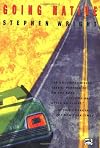
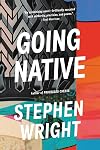
A dutiful husband and father walks out of his life and into a road trip from hell in a novel Toni Morrison calls "astonishing" and Don Delillo proclaims "a slasher classic . . . strange, dark, and funny." Wylie Jones has a happy marriage, beautiful children, and backyard barbecues in his tastefully decorated suburban house. One night he follows a sudden impulse, leaves his wife in bed, and commandeers his neighbor's emerald-green Ford Galaxy 500, driving away without a second look. He sheds show more all traces of his old life in favor of a new name and a new life and drives from town to town, following his deepest impulses where they lead. By turns scathing and hilarious, Stephen Wright's outrageous rollercoaster of sex and violence probes the nihilistic and savage core of the American identity. show lessTags
Recommendations











Member Reviews
At first, I didn't care much for the different characters and stories that were being introduced with every chapter. The first chapter, which introduces us to our main protagonist, was really great. From there, I felt the chapters were just short vignettes/stories I was reading through, not people or events I was connecting with. Then, maybe half-way, you start to get into how this book is being presented, and by the second last chapter (which is 80 pages (more than 1/4 of the book)) - which on its own would be a fantastic novella - I was convinced it was a really good book. Not mind blowing or amazing, but definitely worth reading for its creativity. It's like Rosencrantz and Guildenstern Are Dead with a sex/drugs/L.A./murder show more atmosphere and less philosophy. Fun! show less
"She was having thoughts and her thoughts were having thoughts, a regular birthing frenzy in the old cranium tonight, strangled cries and organic mess and a horde of deformed infants crawling like advancing troops over the rocks and nails and broken glass in her head, and suddenly she couldn't seem to determine with any certainty which was more pressingly real, those bloodied babies hunting for a way out, or the besieged voice most anxious to preserve its status as the imperial "I" that was looking for a way in." - Stephen Wright, Going Native
Stephen Wright is one of America’s finest novelists, however, at age 72, he has authored only four novels – most notably Meditations in Green, published in 1983, considered by many the best of show more novel of the Vietnam War and his masterpiece, Going Native, published in 1994, a road novel in the tradition of Henry Miller’s The Air-Conditioned Nightmare and Jack Kerouac’s On the Road. But with this dark and frequently disturbing work under review, the road traveled winds though the underbelly of the underbelly of the American dream.
Considering the current Methland and OxyContin dopesick epidemics, the alarming increase in gun culture and mass shootings, the skyrocketing number of cases of sexual abuse and websites devoted to hardcore pornography, Going Native with all its guns and violence, drugs and degraded sex, is even more relevant today then when first published twenty-five years ago.
The opening chapter holds many keys to ongoing themes and motifs. We are in drab American suburbia, an engineered community of street after boring street of single family homes complete with front and back yard, enough room for an outdoor barbecue but close enough where all your neighbors can see into your kitchen and living room and, unless you're careful, even into your bedroom, a world were men and women like wife Rho grind it out raising kids and commuting to dreary office jobs where their nerves as kept on edge by odious bosses and noxious coworkers, a world where there’s a TV in every room and the radio blares out the latest round of perversion and violence, a world where you are continually fretting about the future (Rho is furiously pealing carrots for tonight’s dinner with snooty, wealthy friends) and brooding over the past (Rho is shackled with memories of her demonic mother, an old witch right out of Macbeth) - so much agonizing about the past and future, the fullness of the present moment is obliterated. In a word, middle class hell.
In the evening when Tommy and Gerri come over, Tommy a blabbering boor specializing in celebrity impersonations and Gerri, a real estate agent and co-owner of a catering service, an overly judgmental self-appointed gatekeeper of 1990s affluent society, Rho must apologize for Wylie’s tardiness. When her exhausted husband finally walks in, exchanges greetings, pours himself drinks and listens to Tommy-Gerri banter, not long thereafter Rho sends Wylie out to pick up charcoal for the grill. Tommy joins Wylie, never once giving his jabber a rest. Turns out, at the Feed ‘n’ Fuel, the cops just shot a thief – his scuffed Nikes sticking out from under a drop cloth. Damn! The boys have to drive over to the local 7-Eleven “where you don’t have to step over a corpse to pick up your charcoal.”
Following steak dinner, Rho orders Wylie to perform his fabulous De Niro impression. Then when Tommy and Rho go off to wiggle a funky dance next to the garage, Wylie asks Gerri, “Would you excuse me for a minute.” After some time Rho, Tommy and Gerri retreat inside to escape the mosquitoes. Where’s Wylie? They look all through the house; they cruse the neighborhood. “Like the present tense. Daddy was gone gone.”
Curiously, Rho always pictured Wylie as an average kind of guy - go to work, play with the kids, watch shoot, chase, crash movies on TV. Although Rho had to admit, as when after a shower, a naked, dripping wet Wylie chased her through the house snapping a towel, “he never knew when to stop!” Oh, dear wife and mother, truer words were never spoken.
Wylie doesn’t stop. He doesn’t even look back, not even once. The next seven chapters are separate short stories linked only by the appearance, usually popping up toward the end, of a stolen ‘69 Ford Galaxie and its driver, a heavyset indistinct figure with his pale gray eyes, a man starting out as Wylie Jones but assuming different names, including the name of that suburban house guest, Tommy Hanna.
And what stories – recall back there I said underbelly of the underbelly of the American dream. There’s Mister CD and his lover calling herself Latisha Charlemagne, two drug-happy cool cats forever getting high when they’re not watching violent movies and engaging in their own hopped up brand of nastiness and cruelty. By the way, Mister CD owned that Ford Galaxie Wylie made off with – serves him right, the woman-abusing sleazeball!
Subsequent stories feature shocking depictions of various slices of American society dropping off the cliff into a numbing void where there are too many guns, too much media saturation and way too much shallowness and mental imbalance. In order of their appearance: psychopathic hitchhiker wielding a knife, hotel owner obsessed with making his own combination horror and sci-fi movie, sexual pervert filming unsuspecting couples as his contribution to the flourishing XXX hardcore porno industry, two female sexual mystics dealing with the fantasies of Las Vegas brides and grooms (one of these gals provides a high point in the novel by her recognition that love from the heart is guaranteed indestructible), a husband and wife, two Hollywood actors, travel upriver to Borneo’s heart of darkness only to return to LA to discover the deeper meaning of raw, senseless violence, a much married beauty living the high life in her oceanfront mansion.
Fans of such well knowns as William Gaddis, Thomas Pynchon, Don DeLillo or David Foster Wallace will enjoy Mr. Wright's creamy rich language and crisp, spot-on dialogue. By way of example, a quote from one of my favorite scenes in that chapter about actors Drake and Amanda traveling in Indonesia: “Mrs. Harrelson began shifting around in her chair. “Christianity is the chain saw of the spiritual world,” she remarked with some heat.
“Well, I’m not much of a believer myself,” offered Drake, “but-”
The woman went on. “It cuts the vitality right out of the soul. Then erects in the center of the wasteland it has made, the brutal sign of its triumph and occupation – a grotesque instrument of human torture, need I remind you?-and moves on like a horrid vampire in search of the warm life it requires to sustain its own deathlike existence.”"
Going Native is a true overlooked classic - again, it can not be emphasized enough, a novel speaking to us with more force today than back when first published. Also, perhaps not so coincidentally, 1994 was the year of release for two box office smashes: Pulp Fiction and Natural Born Killers.
American novelist Stephen Wright, born 1946 show less
I have one word to describe Stephen Wright’s “Going Native”: Excessive. And not in a good way. It is only a little over 300 pages long (in the hardback 1st edition) but it felt like 700.
For example, he introduces us to the character Aeryl, the daughter of a motel owner. But not only does he introduce us to Aeryl, he has to explain the whole history of the motel, the original motel owner, the current motel owner, the current motel owner’s cheating wife, his other daughters, the cleaning lady, etc., etc., etc. It is exhausting. And right when we start getting to know a character, he ends the chapter, and begins another by introducing us to yet another character.
I think I have figured out why Stephen Wright is not more popular. show more He has this elaborate, ornate, beautiful, very creative prose. That is why he is admired by such writers like Toni Morrison, Don Delillo, Robert Coover, and Francine Prose. But the intelligent reader that appreciates that fine prose usually doesn’t appreciate what he is writing about: the sex, drugs, violence, and depravity. The reader that does like to read about the depravity usually doesn’t want to wade through the lavish prose, so ends up not finishing the book. Therefore he has few readers. I am one of the few that would appreciate the prose and the depravity, however where I felt empty was the lack of any moral epiphanies, no existential wanderings, no philosophy whatsoever. It is just pure entertainment. And I can’t read for just entertainment alone. I have to get something out of it. Hunter S. Thompson he is not. I think if he would have stripped this novel down to the basics (something like Denis Johnson’s "Nobody Move") it would have been more digestible. show less
For example, he introduces us to the character Aeryl, the daughter of a motel owner. But not only does he introduce us to Aeryl, he has to explain the whole history of the motel, the original motel owner, the current motel owner, the current motel owner’s cheating wife, his other daughters, the cleaning lady, etc., etc., etc. It is exhausting. And right when we start getting to know a character, he ends the chapter, and begins another by introducing us to yet another character.
I think I have figured out why Stephen Wright is not more popular. show more He has this elaborate, ornate, beautiful, very creative prose. That is why he is admired by such writers like Toni Morrison, Don Delillo, Robert Coover, and Francine Prose. But the intelligent reader that appreciates that fine prose usually doesn’t appreciate what he is writing about: the sex, drugs, violence, and depravity. The reader that does like to read about the depravity usually doesn’t want to wade through the lavish prose, so ends up not finishing the book. Therefore he has few readers. I am one of the few that would appreciate the prose and the depravity, however where I felt empty was the lack of any moral epiphanies, no existential wanderings, no philosophy whatsoever. It is just pure entertainment. And I can’t read for just entertainment alone. I have to get something out of it. Hunter S. Thompson he is not. I think if he would have stripped this novel down to the basics (something like Denis Johnson’s "Nobody Move") it would have been more digestible. show less
Wright shines an intense, pulsing light on the jagged, aching, panic-stricken underside of American family life, road trips, materialism, desire and dreams of escape. The structure is unorthodox: the principal character appears in the background of what could be a series of short stories, then comes into the clear (almost) in the last chapter. The prose crackles and pops like a sparkler. Dark and unsettling, but perversely celebratory of the possibilities of fiction. Recommended.
He reached up and felt along his upper lip, where the adhesive had begun to peel away and the strip of false hair was lifting off the skin like a caterpillar on the move. Then he couldn’t remember what happened between that moment, stuck out there in the show more middle of the cackling parking lot, feeling his face like a fool, and the moment later, out on the Santa Monica Freeway, having chased and caught up to their car; he was beginning to pass, to run it off the road, when he looked over and saw, in the driver’s seat, a lone, startled man in a black moustache and a security guard’s uniform. Who was he masquerading as?
Clipper City Loose Cannon Hop Ale
Tröegs Dream Weaver Wheat show less
He reached up and felt along his upper lip, where the adhesive had begun to peel away and the strip of false hair was lifting off the skin like a caterpillar on the move. Then he couldn’t remember what happened between that moment, stuck out there in the show more middle of the cackling parking lot, feeling his face like a fool, and the moment later, out on the Santa Monica Freeway, having chased and caught up to their car; he was beginning to pass, to run it off the road, when he looked over and saw, in the driver’s seat, a lone, startled man in a black moustache and a security guard’s uniform. Who was he masquerading as?
Clipper City Loose Cannon Hop Ale
Tröegs Dream Weaver Wheat show less
almost the entire time i was listening to this all i could think was 'what the fuck?' over and over again. the first chapter was really well done and i think probably the whole thing is quite well written, but i have no idea, after that first chapter, of what in the world i was listening to. if i had been reading it myself i never would have finished - something that has only happened a time or two in my entire life. and i'm pretty sure i was only able to listen because i zoned out here and there.
this was theoretically connected (barely, subtly) chapters that were really short stories that each stood more or less alone, but that also were supposed to tell a larger story. that overarching story was entirely over my head. i've read show more reviews that tell me what it is supposed to be, but even then i really don't see it. possibly i wasn't paying close enough attention because i was disliking it so much, but to me the only thread throughout (after that first chapter) was violence and depravity and the writing style.
i do think the writing is good but i could hardly bear this book. i wanted to read it because toni morrison called it "astonishing" and i really really love her, but i suppose she could have meant any number of things by that quote. or she found something in it that i just didn't. show less
this was theoretically connected (barely, subtly) chapters that were really short stories that each stood more or less alone, but that also were supposed to tell a larger story. that overarching story was entirely over my head. i've read show more reviews that tell me what it is supposed to be, but even then i really don't see it. possibly i wasn't paying close enough attention because i was disliking it so much, but to me the only thread throughout (after that first chapter) was violence and depravity and the writing style.
i do think the writing is good but i could hardly bear this book. i wanted to read it because toni morrison called it "astonishing" and i really really love her, but i suppose she could have meant any number of things by that quote. or she found something in it that i just didn't. show less
What I don't understand about this book is why it is considered a novel. It feels much more like eight separate stories, with little if any carryover from one chapter to the next. None of which should take away the sheer, thick, glorious prose that Wright can turn out. I finished this book four weeks ago as I write this, and I'm well on to other books, but it is clear that my own writing is *still* heavily influenced by the rhythms and complex sentence structures that I entrained to while reading Wright.
I really thought I was going to like this. The author set the hook in the begining of the book. All he had to do was reel me in. However he then proceeded to drunkenly wander all over the lake and I ended up drug behind, slowly, confusingly, squirming, waiting to be eaten. Lets just say I would not want to pay scrabble against the author. Seems he was going for whatever the opposite of clean, sparse, prose is.
Members
- Recently Added By
Lists

Larry McCaffery's 20th Century Greatest Hits: 100 English-Language Books
103 works; 12 members
Author Information

Stephen Wright has taught at Princeton University, Brown University, and, most recently, The New School.
Awards and Honors
Classifications
Statistics
- Members
- 410
- Popularity
- 75,685
- Reviews
- 9
- Rating
- (3.52)
- Languages
- English, German, Italian
- Media
- Paper, Audiobook, Ebook
- ISBNs
- 14
- ASINs
- 6