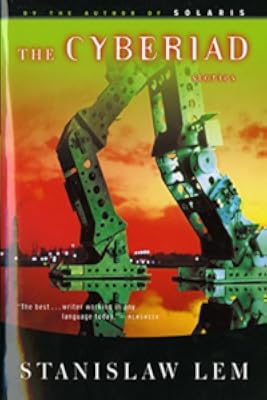
The Cyberiad
by Stanisław Lem
On This Page
Description
Trurl and Klaupacius are constructor robots who try to out-invent each other. They travel to the far corners of the cosmos to take on freelance problem-solving jobs, with dire consequences for their employers.Tags
Recommendations







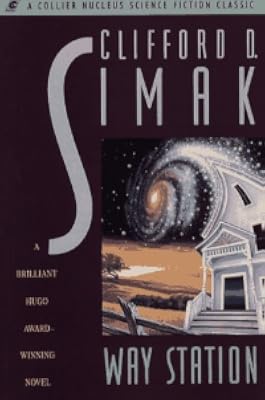
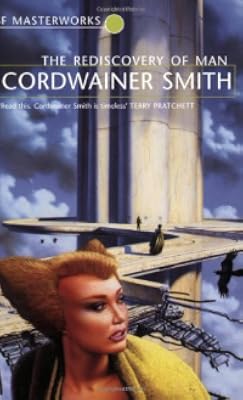

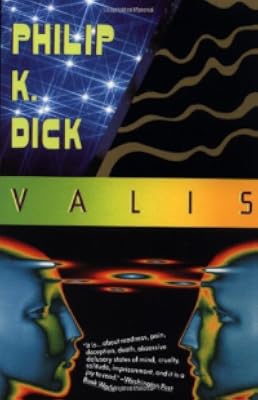

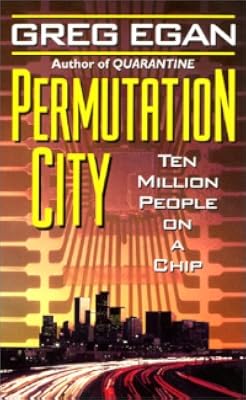




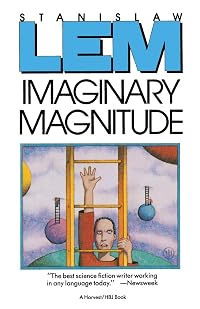






Member Recommendations
Member Reviews
3/5
Unfortunately I was rather disappointed with my second venture into Lem's oeuvre, especially since The Cyberiad is so highly touted by most who read it, including a number of prestigious authors that I also have a deep respect for. The Cyberiad is a collection of loosely affiliated short stories whose central characters are Trurl and Klapaucius, a bickering duo of robot constructors who have the ability to turn the atoms of the universe into nearly any engineering marvel. They leverage this into a trade to make money, flying from planet to planet looking for customers, all of which are robotic. Humanity has been replaced in this universe with the automation of all varieties, even though the standard model is human in resemblance.
I show more should preface the rest of what I say here with the note that I don't typically find myself drawn to humorous fiction. I rarely find written comedy to be that funny, and comedy written over 50 years ago tends to date the work rather than bring the lightness that was intended. At least that's my subjective opinion. While I commend Lem for his unbounded creativity and light touch, I can't say that I connected with the material well. In part due to his indulgent and long-winded writing style I found myself encumbered and sluggish. Solaris has similar flights of fancy as Lem described the structures that the alien would create, but these diversions were tolerable to me because the subject was interesting. These stories are too light to be worth his diatribes. Also, I guess I'm just not a fan of word play, which Lem has a obsession for here that I just couldn't get behind.
The stories become pretty formulaic over time, where the constructors are threatened by some sovereign of a faraway planet with death should the construction they were contracted for not be up to snuff, but the two always escape after some show of superior intellect or wit. Yes, perhaps these rulers are fill-ins for the soviet despots that Lem was all to familiar with, and yes, Lem is critiquing the weakening of culture as humans start to seek fulfillment with technology instead of through the strengthening of their morals and values. Unfortunately, there are simply no stakes. These stories feel inconsequential even in the context of the world they are set in. Nothing of true importance happens. You can have these critiques in way that doesn't boil down to a morality drama at the end. The Cyberiad felt a lot like The Traveler in Black by John Brunner in this way. The first few stories are pretty good, but they weaken over time and my lasting impression is one of fluff rather than substance.
There were consistent elements to this stories, mostly references to to scientific jargon, that flew right over my head. To be frank I wouldn't be surprised if I just didn't see the real meaning behind the entire thing. It's a shame thought that Lem couldn't be bothered to lift the veil a little for a reader in that way. If you're a fan of Douglas Adams or Terry Pratchett, The Cyberiad might be up the same sort of alley. I'm sure that if I liked this type of wiring more I would've given it a higher score. show less
Unfortunately I was rather disappointed with my second venture into Lem's oeuvre, especially since The Cyberiad is so highly touted by most who read it, including a number of prestigious authors that I also have a deep respect for. The Cyberiad is a collection of loosely affiliated short stories whose central characters are Trurl and Klapaucius, a bickering duo of robot constructors who have the ability to turn the atoms of the universe into nearly any engineering marvel. They leverage this into a trade to make money, flying from planet to planet looking for customers, all of which are robotic. Humanity has been replaced in this universe with the automation of all varieties, even though the standard model is human in resemblance.
I show more should preface the rest of what I say here with the note that I don't typically find myself drawn to humorous fiction. I rarely find written comedy to be that funny, and comedy written over 50 years ago tends to date the work rather than bring the lightness that was intended. At least that's my subjective opinion. While I commend Lem for his unbounded creativity and light touch, I can't say that I connected with the material well. In part due to his indulgent and long-winded writing style I found myself encumbered and sluggish. Solaris has similar flights of fancy as Lem described the structures that the alien would create, but these diversions were tolerable to me because the subject was interesting. These stories are too light to be worth his diatribes. Also, I guess I'm just not a fan of word play, which Lem has a obsession for here that I just couldn't get behind.
The stories become pretty formulaic over time, where the constructors are threatened by some sovereign of a faraway planet with death should the construction they were contracted for not be up to snuff, but the two always escape after some show of superior intellect or wit. Yes, perhaps these rulers are fill-ins for the soviet despots that Lem was all to familiar with, and yes, Lem is critiquing the weakening of culture as humans start to seek fulfillment with technology instead of through the strengthening of their morals and values. Unfortunately, there are simply no stakes. These stories feel inconsequential even in the context of the world they are set in. Nothing of true importance happens. You can have these critiques in way that doesn't boil down to a morality drama at the end. The Cyberiad felt a lot like The Traveler in Black by John Brunner in this way. The first few stories are pretty good, but they weaken over time and my lasting impression is one of fluff rather than substance.
There were consistent elements to this stories, mostly references to to scientific jargon, that flew right over my head. To be frank I wouldn't be surprised if I just didn't see the real meaning behind the entire thing. It's a shame thought that Lem couldn't be bothered to lift the veil a little for a reader in that way. If you're a fan of Douglas Adams or Terry Pratchett, The Cyberiad might be up the same sort of alley. I'm sure that if I liked this type of wiring more I would've given it a higher score. show less
I absolutely loved The Cyberiad. Every story is imaginative, funny, clever, and overflowing with ideas. But what impressed me most is how the collection becomes much greater than the sum of its parts. These stories occupy the same (literary and literal) universe, with Trurl and Klapaucius appearing in nearly every story. Their friendship, rivalry, and growing reputations tie the stories together. By the end the book, it felt more like an episodic novel.
Lem effortlessly blends poetry, philosophy, satire, mathematics, engineering, politics, and absurd humor into stories that are both entertaining and surprisingly insightful. The settings and plots are wildly inventive, yet the relationship between the two constructors gives the book a show more consistent emotional center.
Michael Kandel's translation is every bit as remarkable as Lem's imagination. Rather than producing a literal translation, Kandel worked closely with Lem to recreate the experience of the original Polish, inventing English wordplay, puns, archaic language, and technical jargon that capture the spirit rather than just the words. Knowing that Lem trusted Kandel to reinvent the text where necessary makes me appreciate the translation even more. It never feels like I'm reading a translation, and I feel that Kandel deserves a sizable chunk of the credit for how amazing this book is today. show less
Lem effortlessly blends poetry, philosophy, satire, mathematics, engineering, politics, and absurd humor into stories that are both entertaining and surprisingly insightful. The settings and plots are wildly inventive, yet the relationship between the two constructors gives the book a show more consistent emotional center.
Michael Kandel's translation is every bit as remarkable as Lem's imagination. Rather than producing a literal translation, Kandel worked closely with Lem to recreate the experience of the original Polish, inventing English wordplay, puns, archaic language, and technical jargon that capture the spirit rather than just the words. Knowing that Lem trusted Kandel to reinvent the text where necessary makes me appreciate the translation even more. It never feels like I'm reading a translation, and I feel that Kandel deserves a sizable chunk of the credit for how amazing this book is today. show less
Now The Cyberiad completely got me back on board the Stanislaw Lem fan train. It was absolutely hysterical. This is a collection of short stories all about the adventures (or rather misadventures) of 2 (in)famous constructors as they make their way across the universe. (These journeys are called sallies which is a detail I adore.) Our heroes, Klapaucius and Trurl, are constantly trying to one-up each other not only with their creations but also with their status as constructors and benefactors to the cosmos. These robots are constructed for all kinds of constructive and inane reasons like storytelling, poetry, making war, etc. And the words that Lem makes up! I'm trying to think of a better word than delightful to describe my reading show more experience but honestly it was a treat to read a bit of this every night before bed. (If you don't laugh at the depiction of 'palefaces' i.e. humans then you have no sense of humor at all.) An absolute 10/10 for me. (And wait til you read the twist. O_O) show less
(...)
Halfway the book, I started thinking about narrative voice. I don’t know how he did it, nor what the qualities are that make it so, but in this collection Lem sounds completely in control and authentic, even though he writes about future goofy rusty robots, doing completely impossible stuff, in situations that are, at times, insane. On top of that, he does so in a seemingly effortless, haphazard way – not at all like the polished stories of Borges or Chiang – even though Lem’s stories are clearly thought out as well.
Maybe it is the mixture of a future setting and the medieval stuff that makes for a voice that is timeless? Maybe the short story format helps the quasi mythical vibes that imbue the collection? Maybe it is show more Lem’s oblique portrayal of certain truths about the human condition that manages to make his authorial voice ring utterly true, and resonate with my own conception of reality?
I have a hard time parsing it, but, even in translation, Lem has managed to write something singular, authoritative, something that commands attention, and that quality becomes clear very quickly, after having read a few pages only.
(...)
Full review on Weighing A Pig Doesn't Fatten It show less
Halfway the book, I started thinking about narrative voice. I don’t know how he did it, nor what the qualities are that make it so, but in this collection Lem sounds completely in control and authentic, even though he writes about future goofy rusty robots, doing completely impossible stuff, in situations that are, at times, insane. On top of that, he does so in a seemingly effortless, haphazard way – not at all like the polished stories of Borges or Chiang – even though Lem’s stories are clearly thought out as well.
Maybe it is the mixture of a future setting and the medieval stuff that makes for a voice that is timeless? Maybe the short story format helps the quasi mythical vibes that imbue the collection? Maybe it is show more Lem’s oblique portrayal of certain truths about the human condition that manages to make his authorial voice ring utterly true, and resonate with my own conception of reality?
I have a hard time parsing it, but, even in translation, Lem has managed to write something singular, authoritative, something that commands attention, and that quality becomes clear very quickly, after having read a few pages only.
(...)
Full review on Weighing A Pig Doesn't Fatten It show less
While I was initially tempted to treat this collection of 1965 short SF stories with kid gloves because I was already a huge fan of Solaris, I didn't quite understand that this collection was already a heavyweight of humor, satire, and delight.
Where the hell have I been? I should have read this back when I was a kid! Alongside Hitchhiker's Guide! As I read this, I gave a constant chuckle-rumble, especially with the Seven Sallies of Trurl and Klapaucius. These two master-builder robots get along with their wits and near-infinite capability to make things. Anything. And they are tricksters. Very funny tricksters.
The one time that Trurl made a poetry machine, I was f***ing spoiled by some of the best math poetry I've ever read, and here's show more the kicker: This was translated from Polish. Hell, it was translated into several dozen languages. But the English translation retained ALL its flavor. :) It was honestly funny.
All of this was light, clever, and always to the point. These are traditional fables, almost like the old Chivalric tradition, but add the element of gods granting everyone's wishes to the downfall of the wisher, and you've got a very good idea about what's going on here. Oh, and almost every character is a robot. The wisecracking kind.
I admit I've read a number of things *like* this, but never to this one's high quality. This is a perfect cure for grimdark malaise. :) show less
Where the hell have I been? I should have read this back when I was a kid! Alongside Hitchhiker's Guide! As I read this, I gave a constant chuckle-rumble, especially with the Seven Sallies of Trurl and Klapaucius. These two master-builder robots get along with their wits and near-infinite capability to make things. Anything. And they are tricksters. Very funny tricksters.
The one time that Trurl made a poetry machine, I was f***ing spoiled by some of the best math poetry I've ever read, and here's show more the kicker: This was translated from Polish. Hell, it was translated into several dozen languages. But the English translation retained ALL its flavor. :) It was honestly funny.
All of this was light, clever, and always to the point. These are traditional fables, almost like the old Chivalric tradition, but add the element of gods granting everyone's wishes to the downfall of the wisher, and you've got a very good idea about what's going on here. Oh, and almost every character is a robot. The wisecracking kind.
I admit I've read a number of things *like* this, but never to this one's high quality. This is a perfect cure for grimdark malaise. :) show less
Early in my experience with Unix-like systems I discovered `fortune`. This program would occasionally provide me with a clever passage attributed `-- Stanislaw Lem, "Cyberiad"` "Who is this Stanislaw Lem fellow and what is a Cyberiad," I wondered. And then, because it was the mid-90s and search engines didn't exist yet, I did nothing.
A few years later, I started collecting quotes to add to my random signature program. A great many of them came from `fortune`, since it gave me a quip every time I logged in or out. The first Cyberiad quote that made it on the list was "[The brilliant Cerebron, attacking the problem analytically, discovered three distinct kinds of dragon: the mythical, the chimerical, and the purely hypothetical.] They show more were all, one might say, nonexistent, but each nonexisted in an entirely different way." Different modes of nonexistence, a fantastic puzzle for a philosophy minor like me. I wanted to find and read this book.
There are a few books and authors I keep in the back of my mind for eventual purchase. It gives me direction when I find myself in a bookstore: check the D section of Classics for The Vicomte de Bragelonne, check the A section of Sci-Fi for the HHGTTG radio series scripts, check the L section of Sci-Fi for Stanisław Lem… You would think it wouldn't be too hard to find a book by "the most widely read science fiction writer in the world," yet ten years went by without finding one of his books between Le Guin and Lewis. Tantalizingly, Google ran a fantastic narrative doodle (http://www.google.com/logos/lem/) based on The Cyberiad. I finally found a copy when I chanced to stop in to Red Letter Books in Boulder, enticed by a book about mangoes on the shelf out front. "Before I buy this, I need to see if they happen to have any Lem." Sure enough, my Quixotic quest found its goal, wedged in a dense shelf of mass market paperbacks.
The Cyberiad is a book of short stories about machines who build machines. The central character is Trurl, a constructor. He and his good friend Klapaucius the constructor build all manner of robots and devices, often on commission from rulers of distant worlds. Unlike the science fiction school led by Asimov, the engineering details of the machines and their scientific mechanism of action are of little importance. The stories are not about the machines but about the philosophical considerations and allegorical implications of such a device in a world not entirely dissimilar from ours. The first story, How The World Was Saved (http://english.lem.pl/home/bookshelf/how-the-word-was-saved) concerns a machine that can create anything starting with N. After creating concrete and abstract nouns, they ask the machine to do Nothing, whereby it starts to eliminate the universe.
Originally written in Polish, the book has a lot of rhymes and wordplay with sciency terms which works surprisingly well in translation (to English, at least.) The sidebar to the right has a poem produced by Trurl's Electronic Bard. Lem has a great facility for technical naming in a way that's fun rather than dry: The second, newer trail was opened up by the Imperium Myrapoclean, whose turboservoslaves carved a tunnel six billion miles in length through the heart of the Great Glossaurontus itself.
What I like best about The Cyberiad is how it resonates with my experience as a constructor of sorts. The book was written in 1967, when hardware was still the king of technology, before we realized that software eats the world. Yet the story Trurl's Machine and other passages describe the foibles of building, debugging, and otherwise producing a computer program better than any software-focused essay I've read. Throughout the book, Trurl displays the three cardinal virtues of the programmer: laziness, impatience, and hubris. If more tales were added to the Cyberiad today, perhaps the constructors would be programs which write other programs.
All makers and builders and coders and creators would do well to read The Cyberiad: Fables for the Cybernetic Age. A hypermedia book report (http://www.art.net/~hopkins/Don/lem/Cyberiad.html) claims the book inspired Will Wright to create SimCity; what might it do for you? Acquire it in cybernetic digital form or via a musty-bookstore-quest for a well-loved copy. show less
A few years later, I started collecting quotes to add to my random signature program. A great many of them came from `fortune`, since it gave me a quip every time I logged in or out. The first Cyberiad quote that made it on the list was "[The brilliant Cerebron, attacking the problem analytically, discovered three distinct kinds of dragon: the mythical, the chimerical, and the purely hypothetical.] They show more were all, one might say, nonexistent, but each nonexisted in an entirely different way." Different modes of nonexistence, a fantastic puzzle for a philosophy minor like me. I wanted to find and read this book.
There are a few books and authors I keep in the back of my mind for eventual purchase. It gives me direction when I find myself in a bookstore: check the D section of Classics for The Vicomte de Bragelonne, check the A section of Sci-Fi for the HHGTTG radio series scripts, check the L section of Sci-Fi for Stanisław Lem… You would think it wouldn't be too hard to find a book by "the most widely read science fiction writer in the world," yet ten years went by without finding one of his books between Le Guin and Lewis. Tantalizingly, Google ran a fantastic narrative doodle (http://www.google.com/logos/lem/) based on The Cyberiad. I finally found a copy when I chanced to stop in to Red Letter Books in Boulder, enticed by a book about mangoes on the shelf out front. "Before I buy this, I need to see if they happen to have any Lem." Sure enough, my Quixotic quest found its goal, wedged in a dense shelf of mass market paperbacks.
The Cyberiad is a book of short stories about machines who build machines. The central character is Trurl, a constructor. He and his good friend Klapaucius the constructor build all manner of robots and devices, often on commission from rulers of distant worlds. Unlike the science fiction school led by Asimov, the engineering details of the machines and their scientific mechanism of action are of little importance. The stories are not about the machines but about the philosophical considerations and allegorical implications of such a device in a world not entirely dissimilar from ours. The first story, How The World Was Saved (http://english.lem.pl/home/bookshelf/how-the-word-was-saved) concerns a machine that can create anything starting with N. After creating concrete and abstract nouns, they ask the machine to do Nothing, whereby it starts to eliminate the universe.
Originally written in Polish, the book has a lot of rhymes and wordplay with sciency terms which works surprisingly well in translation (to English, at least.) The sidebar to the right has a poem produced by Trurl's Electronic Bard. Lem has a great facility for technical naming in a way that's fun rather than dry: The second, newer trail was opened up by the Imperium Myrapoclean, whose turboservoslaves carved a tunnel six billion miles in length through the heart of the Great Glossaurontus itself.
What I like best about The Cyberiad is how it resonates with my experience as a constructor of sorts. The book was written in 1967, when hardware was still the king of technology, before we realized that software eats the world. Yet the story Trurl's Machine and other passages describe the foibles of building, debugging, and otherwise producing a computer program better than any software-focused essay I've read. Throughout the book, Trurl displays the three cardinal virtues of the programmer: laziness, impatience, and hubris. If more tales were added to the Cyberiad today, perhaps the constructors would be programs which write other programs.
All makers and builders and coders and creators would do well to read The Cyberiad: Fables for the Cybernetic Age. A hypermedia book report (http://www.art.net/~hopkins/Don/lem/Cyberiad.html) claims the book inspired Will Wright to create SimCity; what might it do for you? Acquire it in cybernetic digital form or via a musty-bookstore-quest for a well-loved copy. show less
This book is so goofy! On one hand, it's a short story collection with consistent characters and something close to resembling a plot that ties everything together. On the other, it's an entire book of unapologetic technobabble.
Billed as a book of fables, and as such the morals of the stories are pretty heavy-handed. But since we have a lot of them with the same two folks there's a surprising amount of character development, even if there's an infinitesimal amount in each individual story.
The technobabble is great. You can dip in and out of it as you read - if you're feeling like reading some clever nonsense it's fun, and if you're not, you can skim through it knowing that most of it is just for flavor anyways.
In many ways this show more reminds me of Labyrinths by Borges, but I liked this book and didn't like that one. I think the difference was this: when reading Labyrinths I felt like the author was so proud of how clever the ideas in his stories were, and the Cyberiad is mercilessly skewering cleverness at every turn. show less
Billed as a book of fables, and as such the morals of the stories are pretty heavy-handed. But since we have a lot of them with the same two folks there's a surprising amount of character development, even if there's an infinitesimal amount in each individual story.
The technobabble is great. You can dip in and out of it as you read - if you're feeling like reading some clever nonsense it's fun, and if you're not, you can skim through it knowing that most of it is just for flavor anyways.
In many ways this show more reminds me of Labyrinths by Borges, but I liked this book and didn't like that one. I think the difference was this: when reading Labyrinths I felt like the author was so proud of how clever the ideas in his stories were, and the Cyberiad is mercilessly skewering cleverness at every turn. show less
Members
- Recently Added By
Lists

Best Science Fiction Originally Published in a Language Other Than English
449 works; 34 members

sandstone78's AI Reading List
34 works; 4 members

Read This Next
120 works; 3 members

Speculative Fiction from around the World
610 works; 18 members

Mustich's 1000 Books to Read Before You Die: A Life Changing List
1,001 works; 19 members

Reading LIst
648 works; 1 member
Author Information

Polish science fiction writer Stanislaw Lem was born on September 12, 1921. A medical graduate of Cracow University, he is at home both in the sciences and in philosophy, and this broad erudition gives his writings genuine depth. He has published extensively, not only fiction, but also theoretical studies. His books have been translated into 41 show more languages and sold over 27 million copies. He gained international acclaim for The Cyberiad, a series of short stories, which was first published in 1974. A trend toward increasingly serious philosophical speculation is found in his later works, such as Solaris (1961), which was made into a Soviet film by Russian director Andrei Tarkovsky in 1972 and remade by Steven Soderbergh in 2002. He died on March 27, 2006 in Krakow at the age of 84. (Bowker Author Biography) show less
Some Editions
Awards and Honors
Series
Belongs to Publisher Series
Dzieła Stanisława Lema (Wydawnictwo Gazety Wyborczej)
ハヤカワ文庫 SF (203)
Work Relationships
Is contained in
Contains
The Fourth Sally, or How Trurl Built a Femfatalatron to Save Prince Pantagoon from the Pangs of Love, and How He Later Resorted to a Cannonade of Babies {short story} by Stanisław Lem
Common Knowledge
- Canonical title*
- Kyberiaden
- Original title
- Cyberiada
- Alternate titles
- The Cyberiad: Fables for the Cybernetic Age
- Original publication date
- 1965
- People/Characters
- Trurl; Klapaucius
- Dedication*
- Basi
- First words
- One day Trurl the constructor put together a machine that could create anything starting with n.
- Last words
- (Click to show. Warning: May contain spoilers.)And yet, even if the story isn't true, it does have a grain of sense and instruction to it, and it's entertaining as well, so it's worth the telling.
- Blurbers
- Fiedler, Leslie; Titov, Gherman; Sturgeon, Theodore; Russ, Joanna; Le Guin, Ursula K.; Gold, Horace
- Original language
- Polish
*Some information comes from Common Knowledge in other languages. Click "Edit" for more information.
Classifications
Statistics
- Members
- 2,969
- Popularity
- 6,035
- Reviews
- 48
- Rating
- (4.10)
- Languages
- 18 — Czech, Dutch, English, Finnish, French, German, Greek, Hebrew, Hungarian, Italian, Japanese, Korean, Norwegian (Bokmål), Norwegian, Polish, Russian, Spanish, Swedish
- Media
- Paper, Audiobook, Ebook
- ISBNs
- 51
- ASINs
- 29