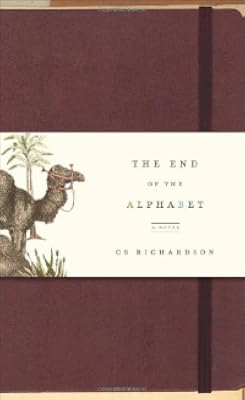
The End of the Alphabet
by CS Richardson
On This Page
Description
THE END OF THE ALPHABET is a tender, intimate story of an ordinary life defined by an extraordinary love. Ambrose Zephyr is a contented man. He shares a book-laden Victorian house with his loving wife, Zipper. He owns two suits, one of which he was married in. He is a courageous eater, save brussels sprouts. His knowledge of wine is vague and best defined as Napa, good; Australian, better; French, better still. Kir royale is his drink of occasion. For an Englishman he makes a poor cup of show more tea. He believes women are quantifiably wiser than men, and would never give Zipper the slightest reason to mistrust him or question his love. Zipper simply describes Ambrose as the only man she has ever loved. Without adjustment. Then, just as he is turning fifty, Ambrose is told by his doctor that he has one month to live. Reeling from the news, he and Zipper embark on a whirlwind expedition to the places he has most loved or has always longed to visit, from A to Z, Amsterdam to Zanzibar. As they travel to Italian piazzas, Turkish baths, and other romantic destinations, all beautifully evoked by the author, Zipper struggles to deal with the grand unfairness of their circumstances as she buoys Ambrose with her gentle affection and humor. Meanwhile, Ambrose reflects on his life, one well lived, and comes to understand that death, like life, will be made bearable by the strength and grace of their devotion. Richardson’s lovely prose comes alive with an honesty and intensity that will leave you breathless and inspired by the simple beauty and power of love. THE END OF THE ALPHABET is a timeless, resonant exploration of the nature of love, loss, and life. show lessTags
Recommendations












Member Recommendations
Member Reviews
"A man can see a hundred women, lust for a thousand more, but it is one scent that will open his eyes and turn him to love."
Ambrose Zephyr is a contented man, he shares a book-laden Victorian house with his loving wife, Zappora Ashkenazi, the love of his life. Zappora (Zipper) simply describes Ambrose as the only man she has ever loved. Without adjustment. They both have fulfilling jobs but no children because they simply didn't want any.
Then, just as he is turning fifty, Ambrose is told by his doctor that he has an unnamed illness and only one month to live. Reeling from the news, he and Zipper embark on a whirlwind expedition to the places he has most loved or has always longed to visit, from A to Z, Amsterdam to Zanzibar. As they show more travel to these romantic destinations, Zipper struggles to deal with the grand unfairness of their circumstances, whilst Ambrose reflects on his life.
'The End of The Alphabet' is a tender, intimate story of an ordinary life defined by an extraordinary love but is truth little more than a short story, (my copy only had 123 pages, wide margins and double spacing). Despite or perhaps because of its brevity Richardson’s prose has an honesty almost poetic in nature. This book is a very touching exploration of the nature of love, loss, and life which only took me about two hours to read. A simply beautiful piece of writing. show less
Ambrose Zephyr is a contented man, he shares a book-laden Victorian house with his loving wife, Zappora Ashkenazi, the love of his life. Zappora (Zipper) simply describes Ambrose as the only man she has ever loved. Without adjustment. They both have fulfilling jobs but no children because they simply didn't want any.
Then, just as he is turning fifty, Ambrose is told by his doctor that he has an unnamed illness and only one month to live. Reeling from the news, he and Zipper embark on a whirlwind expedition to the places he has most loved or has always longed to visit, from A to Z, Amsterdam to Zanzibar. As they show more travel to these romantic destinations, Zipper struggles to deal with the grand unfairness of their circumstances, whilst Ambrose reflects on his life.
'The End of The Alphabet' is a tender, intimate story of an ordinary life defined by an extraordinary love but is truth little more than a short story, (my copy only had 123 pages, wide margins and double spacing). Despite or perhaps because of its brevity Richardson’s prose has an honesty almost poetic in nature. This book is a very touching exploration of the nature of love, loss, and life which only took me about two hours to read. A simply beautiful piece of writing. show less
Charming. Or perhaps delightful. Or just really sweet and nice without being saccharine. The End of the Alphabet traces the final month in the lives of Ambrose Zephyr and Zappora Ashkenazi. Ambrose has just learned from his doctor that his time is limited. Very limited. And so, together with his wife, Zappora, they set out upon an alphabetical tour of places important to them from their past, or important to them in their imaginations. A is for Amsterdam, and so it goes.
From the shops of Kensington High Street to the rues of Paris to the Piazza della Signoria of Florence, we follow Ambrose and Zappora, drinking in their memories, their romance, and the impending darkness. The pace is gentle. Like walking downhill. And if you too have show more places on your alphabet of memories, you will feel the full range of emotions that Ambrose and Zappora share.
I especially liked that the story kept true right through to the end. No tricks. No angsty metaphysics. Just the story of two very special people. Warmly recommended. show less
From the shops of Kensington High Street to the rues of Paris to the Piazza della Signoria of Florence, we follow Ambrose and Zappora, drinking in their memories, their romance, and the impending darkness. The pace is gentle. Like walking downhill. And if you too have show more places on your alphabet of memories, you will feel the full range of emotions that Ambrose and Zappora share.
I especially liked that the story kept true right through to the end. No tricks. No angsty metaphysics. Just the story of two very special people. Warmly recommended. show less
This is an exquisite little book. It is difficult to classify it. Certainly it's fiction. It's a love story, it's a story of grieving, of fear, of loss, of death. But it's a story of celebrating life, of empowering each other by letting go, of suffering loss and experiencing growth.
Layered onto the life story however is a very very clever play on words and letters. The cover flap describes the basics:
Ambrose Zephyr is a contented man. He shares a book-laden Victorian house with his loving wife, Zipper. He owns two suits, one of which he was married in. He is a courageous eater, save brussels sprouts. His knowledge of wine is vague and best defined as Napa, good; Australian, better; French, better still. Kir royale is his drink of show more occasion. For an Englishman he makes a poor cup of tea. He believes women are quantifiably wiser than men, and would never give Zipper the slightest reason to mistrust him or question his love. Zipper simply describes Ambrose as the only man she has ever loved. Without adjustment.
When Ambrose is told by his doctor that he has only thirty days to live, he and Zipper set out on an alphabetical journey to fulfill Ambrose's many childhood dreams of the alphabet being spelled out in places vice objects. Ambrose's alphabet wasn't "A is for apple, B is for bear", his was "A is for Amsterdam, B is for Berlin" and so on. The frantic and frenetic race to see all his beloved dreams is written so crisply, in such elegant, reduced text, that the reader is able to read the 119 pages in one sitting. You put this down and realize that you have practically been holding your breath until the end. It's a book to be shared by lovers, a book to read again, and a beautiful expression of lives well lived. show less
Layered onto the life story however is a very very clever play on words and letters. The cover flap describes the basics:
Ambrose Zephyr is a contented man. He shares a book-laden Victorian house with his loving wife, Zipper. He owns two suits, one of which he was married in. He is a courageous eater, save brussels sprouts. His knowledge of wine is vague and best defined as Napa, good; Australian, better; French, better still. Kir royale is his drink of show more occasion. For an Englishman he makes a poor cup of tea. He believes women are quantifiably wiser than men, and would never give Zipper the slightest reason to mistrust him or question his love. Zipper simply describes Ambrose as the only man she has ever loved. Without adjustment.
When Ambrose is told by his doctor that he has only thirty days to live, he and Zipper set out on an alphabetical journey to fulfill Ambrose's many childhood dreams of the alphabet being spelled out in places vice objects. Ambrose's alphabet wasn't "A is for apple, B is for bear", his was "A is for Amsterdam, B is for Berlin" and so on. The frantic and frenetic race to see all his beloved dreams is written so crisply, in such elegant, reduced text, that the reader is able to read the 119 pages in one sitting. You put this down and realize that you have practically been holding your breath until the end. It's a book to be shared by lovers, a book to read again, and a beautiful expression of lives well lived. show less
This is a charming little book that I read one afternoon at the beach. It is the story of a 50 year old Londoner who is diagnosed with a terminal illness and has one month to live, so he embarks on a whirlwind trip with his wife. Quirkiness and loveliness abounds. Oddly, it is not depressing, even though it's about the end of a life and the end of a relationship. This novella begins and ends with the statement "this story is unlikely," and it reads like a fable. If you read it with an eye for realism, it won't work. But as a slightly otherworldly story, it is positively enchanting.
Recommended for: readers are in the mood for a quirky, romantic little book. I can see that this one isn't for everyone--one of the reviewers called it show more "treacly," and although I vehemently disagree, I can see how someone might think that. But I'm not a sappy type, and I liked it a lot. A good vacation read. show less
Recommended for: readers are in the mood for a quirky, romantic little book. I can see that this one isn't for everyone--one of the reviewers called it show more "treacly," and although I vehemently disagree, I can see how someone might think that. But I'm not a sappy type, and I liked it a lot. A good vacation read. show less
This novella is well constructed and imaginative: there is a definite aesthetic quality which clearly comes from the author's designer background. There are also moments of genuine emotion, especially when close friends come to say their goodbyes. I however found something lacking: the nameless disease? Zipper's annoying name for such an elegant woman? the hard-to-believe country hopping (they couldn't have seen much beyond airports and train stations)? I can't quite put my finger on it, but ultimately the story did not really engage me nor did it convince me of its sincerity.
Death? Yes, yes, death hovers near us all. And it is sad that it makes us sad. But I know a story.
Such is the life of Ambrose Zephyr. At 50 years of age, Ambrose is diagnosed with a fatal but unidentifiable illness -- an illness that, within 30 day's time, will leave him dead. Yes, the doctor offered, writes Richardson, unfair would be a very good word about now. Zephyr's soon and imminent death, however, makes up only one element to this story.
Meet Zappora Ashkenazi, more commonly known as Zipper. A literary editor for the third-most read fashion magazine, brilliant cook, reads everything, has impeccable fashion sense, but most of all, Zipper is the loyal and loving wife to the Ambrose Zephyr. With the distinct absence of children, show more the couple dedicate more time fulfilling their careers and living "contentedly" together "in a narrow London terrace full of books." What happens, then, when a couple create an ideal life together -- a union in which needs are met by each other and through their work -- once the other is gone? Contentment shatters, and Zipper must cope with the facts. In a month, she will be alone; no husband and no children.
And what will I have when he's gone?
Nothing. No growing ancient together, no retiring to the pied-à-terre, no children, no grandchildren, come to that. No more. No life. Nothing. Blank.
But you never wanted children, Kitts said.
I never wanted this. I is for I don't know what to do.
Zippper, feeling a deep sadness, anticipates Ambrose's loss and examines life choices -- likely regretting that she never had a child -- while wishing not to let go. If one extends time from days to weeks to decades, it will still come short, as there is little time to live in comparison to how much life could be experienced. As Zipper feels torn between wanting to make the most out of limited days but wishing those days were not limited, Ambrose faces his own death and what he never accomplished in life. What is a couple to do?
Indeed, said the doctor. Arrangements.
Ambrose Zephyr suggested, for all in the outer office to hear, that the doctor might want to wait one damn minute before suggesting that Ambrose might want to arrange his remaining days. Days that until moments before had been assumed would stretch to years. With luck, to decades. Not shrink to weeks.
As such, husband and wife agree on a rash decision to travel the world, but perhaps not in the way one might think -- and certainly not in the way Ambrose initially planned. Ambrose Zephyr and Zappora Ashkenazi: A.Z. & Z.A. From the beginning to the end of the alphabet and back again.
In under 200 pages (depending on the copy; mine meets 119), the couple's adventures and turmoil could have been wrung out, extended, and glossed in rich detail inside a 300-500 page novel instead. Yet the swiftness is rather appropriate, and, as I find it, where the appeal rests. Hand a person generations of time, and he will still wish for more. There is difficulty in saying goodbye and accepting what is in order to let go, to release the grip on something that was expected to last or taken for granted.
In fluid, conversational tone, Richardson's charm sits in the vast scope of story-telling accomplished through brevity. Not overtly sentimental, Richardson manages to pack in enough pow and flair that, through the power of simplicity, captivates intrigue and grasps emotions. Both nimble and discerning, The End of the Alphabet is tale about love and life I recommend anyone journey.
"An alphabet of the language of lovers, a beautiful fable of art and mortality: elegant, wise, and humane. I like to think of the happiness this book will bring. I'm sure it will be given as a gift between lovers, and will inspire many journeys -- geographical and emotional."
-- Chris Cleave, author of Incendiary
This review and more can be read at Midnight Coffee Monster. show less
The End of the Alphabet by C.S. Richardson is one of those small, perfect books that say so much more than the page space they use. Richardson takes the "one month to live" cliche and uses it to meditate on life and love and loss in a gentle and humorous way. It's sad without being mawkish, cute without being twee, and spare without being simple.
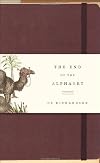
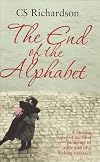
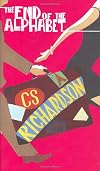
It's also gorgeous, from the cover to the interior to the font, which is perhaps not surprising, given that the first-time novelist has 20 years of publishing experience as a book designer.
It's also gorgeous, from the cover to the interior to the font, which is perhaps not surprising, given that the first-time novelist has 20 years of publishing experience as a book designer.
Members
- Recently Added By
Lists

Books Read in 2012
816 works; 34 members

Books Read in 2024
4,623 works; 126 members
Author Information

3 Works 867 Members
Some Editions
Awards and Honors
Common Knowledge
- Original title
- The End of the Alphabet
- Original publication date
- 2007-01-23
- People/Characters
- Ambrose Zephyr; Zappora Ashkenazi 'Zipper'
- Important places
- London, England, UK; Amsterdam, North Holland, Netherlands; Berlin, Germany; Chartres, Eure-et-Loir, Centre-Val de Loire, France; Deauville, Calvados, Normandy, France; Paris, Île-de-France, France (show all 17); Egypt; England, UK; Europe; Florence, Tuscany, Italy; France; Giza Plateau, Egypt; Istanbul, Turkey; The Netherlands; North Holland, Netherlands; Turkey; Tuscany, Italy
- Epigraph
- Think of the long trip home
Should we have stayed at home and thought of here?
Where should we be today?
Elizabeth Bishop, Questions of Travel - Dedication
- For Rebecca...
TMD - First words
- This story is unlikely.
- Last words
- (Click to show. Warning: May contain spoilers.)in a remarkably steady hand.
- Publisher's editor
- Kanya-Forstner, Martha
- Blurbers
- Cleave, Chris
Classifications
Statistics
- Members
- 647
- Popularity
- 44,714
- Reviews
- 42
- Rating
- (3.53)
- Languages
- 7 — Catalan, Dutch, English, French, German, Italian, Portuguese
- Media
- Paper, Ebook
- ISBNs
- 23
- ASINs
- 3