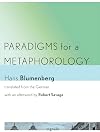
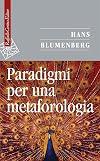
Paradigms for a Metaphorology
by Hans Blumenberg
On This Page
Description
"Paradigms for a Metaphorology may be read as a kind of beginner's guide to Blumenberg, a programmatic introduction to his vast and multifaceted oeuvre. Its brevity makes it an ideal point of entry for readers daunted by the sheer bulk of Blumenberg's later writings, or distracted by their profusion of historical detail. Paradigms expresses many of Blumenberg's key ideas with a directness, concision, and clarity he would rarely match elsewhere. What is more, because it served as a beginner's show more guide for its author as well, allowing him to undertake an initial survey of problems that would preoccupy him for the remainder of his life, it has the additional advantage that it can offer us a glimpse into what might be called the 'genesis of the Blumenbergian world.'"-from the Afterword by Robert SavageWhat role do metaphors play in philosophical language? Are they impediments to clear thinking and clear expression, rhetorical flourishes that may well help to make philosophy more accessible to a lay audience, but that ought ideally to be eradicated in the interests of terminological exactness? Or can the images used by philosophers tell us more about the hopes and cares, attitudes and indifferences that regulate an epoch than their carefully elaborated systems of thought?In Paradigms for a Metaphorology, originally published in 1960 and here made available for the first time in English translation, Hans Blumenberg (1920-1996) approaches these questions by examining the relationship between metaphors and concepts. Blumenberg argues for the existence of "absolute metaphors" that cannot be translated back into conceptual language. These metaphors answer the supposedly na© ve, theoretically unanswerable questions whose relevance lies quite simply in the fact that they cannot be brushed aside, since we do not pose them ourselves but find them already posed in the ground of our existence. They leap into a void that concepts are unable to fill.An afterword by the translator, Robert Savage, positions the book in the intellectual context of its time and explains its continuing importance for work in the history of ideas. show lessTags
Recommendations



























Member Recommendations

Member Reviews
Testo affascinante tanto quanto arduo e rigoroso, non esattamente una classificazione di metafore, piuttosto un'analisi tematica dei pensieri filosofici che le hanno sorrette.
Ratings
Members
- Recently Added By
Published Reviews
Als Hans Blumenbergs "Paradigmen zu einer Metaphorologie" 1960 im "Archiv für Begriffsgeschichte" veröffentlicht wurden, war daran gedacht, die Leistungen von Metaphern für die Erschließung und das Verständnis von Welt parallel zur Begriffsgeschichte der Philosophie aufzuzeigen. Wo, so fragte Blumenberg, sind Metaphern nicht bloßer Redeschmuck, der sich in eine buchstäbliche Bedeutung show more zurück übersetzen lässt, sondern konstitutiver Bestandteil des Denkens, das sich nicht mehr in "Logizität" überführen lässt? Für diesen Bereich "absoluter Metaphern" geben die "Paradigmen" den Ausweis ihrer Gültigkeit ab und die Methode ihres historischen Verständnisses vor. show less
added by Indy133
Author Information

61+ Works 1,151 Members
Hans Blumenberg (1920-96) was one of Germany's most important postwar philosophers. Among his works available in English are: The Legitimacy of the Modern Age (1985), Work on Myth (1986), The Genesis of the Copernican World (1989), and Shipwreck with Spectator (1996).
Common Knowledge
- Canonical title
- Paradigms for a Metaphorology
Classifications
- Genres
- Philosophy, Fiction and Literature, Literature Studies and Criticism
- DDC/MDS
- 808 — Literature & rhetoric Literature, rhetoric & criticism Rhetoric and collections of literary texts from more than two literatures
- LCC
- PN228 .M4 .B61613 — Language and Literature Literature (General) Literature (General) Authorship Technique. Literary composition, etc.
- BISAC
Statistics
- Members
- 75
- Popularity
- 421,795
- Reviews
- 1
- Rating
- (4.50)
- Languages
- 7 — English, French, German, Italian, Norwegian (Bokmål), Polish, Spanish
- Media
- Paper, Ebook
- ISBNs
- 14