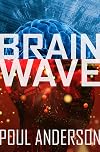
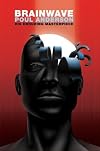
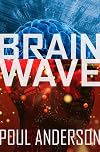
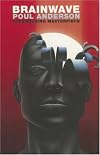
Brain Wave
by Poul Anderson
On This Page
Description
From the multiple Hugo and Nebula award-winning author: "A panoramic story of what happens to a world gone super intelligent" (Astounding Science Fiction). With "wonderfully logical detail . . . exciting storytelling and moving characterization" (Anthony Boucher), science fiction master Poul Anderson explores what happens when the next stage of evolution is thrust upon humanity and animals. As Earth passes out of a magnetic field that has suppressed intelligence for eons, the mental capacity show more for all mammals increases exponentially, radically changing the structures of society. A mentally impaired farm worker finds himself capable of more delicate and intelligent thoughts than he ever dreamed. A young boy on holiday manages to discern the foundations of calculus before breakfast. Animals that were seen as livestock and pets can now communicate clearly with their owners and one another. And an already brilliant physics researcher now uses his boundless intellect to bring humankind to the stars-even as his wife plunges into an existential crisis. For all of them, the world will never be the same . . . show lessTags
Recommendations




















Member Recommendations
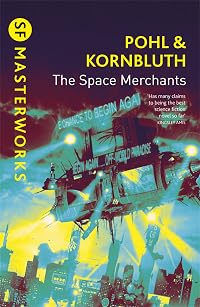
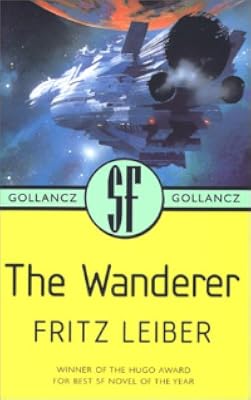
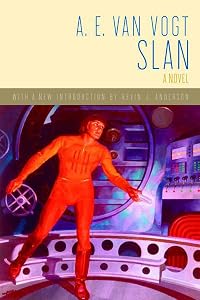
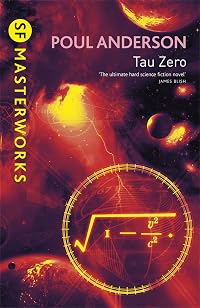
jseger9000 King references Brain Wave in The Tommyknockers and with good reasons. Both books deal (in part) with people whose intelligence is suddenly and unexpectedly increased dramatically.
20
Member Reviews
I thought this was a book from the late 70's and was surprised to find it dates originally to 1954. The concept of the story is really out there - all life on earth has had intelligence suppressed because of a field the solar system has been passing through while we rotate around the galaxy. Now we are moving out of it and then, one day, it no longer is influencing the planet. This is intelligently written science fiction from the golden age. The story clearly is set in the 50's and it feels 50ish but tries I think to rise above that to a more modern way - the 50's elements seen from now are like reading historical fiction whereas the story itself tries to stretch to bigger ideas. It can't quite do that since among other things it has a show more guy smoking a cigar on a starship.
The story plays out better than I expected as mankind worldwide (and animalkind worldwide!) deals with a huge growing boost in intelligence. There was a lot of gobbledygook here and there and the attempts for a scientific explanation of why intelligence had been suppressed was pretty silly to me. What I liked were some of the personal stories of how people reacted to a changed mental state and how the world was going to change. This part of the book, the bulk of it, was hit and miss - the story revolving around the man attempting to keep running a farm I liked a lot - glimpses of other people were intriguing - the New York City stuff, and the central focus on a particular scientist pretty much not interesting at all.
We could have a lot of fun with animals throwing off the yoke and taking on man. There is a bit of fun like that but the story primarily goes other ways. So there's no rise of the rats, or insect takeovers or good dogs gone bad. This book gets an OK from me. I did like the ending. show less
The story plays out better than I expected as mankind worldwide (and animalkind worldwide!) deals with a huge growing boost in intelligence. There was a lot of gobbledygook here and there and the attempts for a scientific explanation of why intelligence had been suppressed was pretty silly to me. What I liked were some of the personal stories of how people reacted to a changed mental state and how the world was going to change. This part of the book, the bulk of it, was hit and miss - the story revolving around the man attempting to keep running a farm I liked a lot - glimpses of other people were intriguing - the New York City stuff, and the central focus on a particular scientist pretty much not interesting at all.
We could have a lot of fun with animals throwing off the yoke and taking on man. There is a bit of fun like that but the story primarily goes other ways. So there's no rise of the rats, or insect takeovers or good dogs gone bad. This book gets an OK from me. I did like the ending. show less
Great concept, troubling conclusions. I mean, isn't this what a lot of great SF is all about? A great idea to explore and get really excited about, coupled with a great story for the personal impact?
We've got half of this. I almost squeed like a little girl with the idea that EVERYTHING on the planet got intelligent practically overnight. All the animals jumped in intelligence as well as all the people. We've got the ultimate What If, laying the foundation for the later brilliant book by Keyes, [b:Flowers for Algernon|18373|Flowers for Algernon|Daniel Keyes|https://d.gr-assets.com/books/1367141311s/18373.jpg|3337594] or even the Smart Barkley in ST:TNG to a fairly epic level right off the bat, even laying the epic foundation for Vernor show more Vinge's Zones of Thought, the places in the galaxy where intelligence slows or speeds up to godlike levels depending on where you are, praying that you remain safe.
So what's my problem? Nothing too extreme, but each piles up and annoys until I just had to drop a few stars. Probably the worst is just a feature of 1950 when this came out, namely the assumption and portrayal of women being idiots or lazy or hopelessly enamoured and stymied because of inaccessible men. It drives me crazy. It also happened in Poul Anderson's Tau Zero, which was also a great novel in all respects except this.
Smaller issues? Oh, like the assumption that with great intelligence the desire to prolong your own survival goes away. You know, like maintaining simple commerce or getting things done. I mean, come on, don't you think that if we got smarter we'd see right through that bullshit and roll up our sleeves? I mean, if everyone has broken the scale in intelligence, it's not like there would be anyone TO EXPLOIT. It should be a no brainer that if you want to survive, then get to work.
Oh yeah, and desiring to return to the way things were before? Good grief. Intelligence does not equal unhappiness. I could make a good case that unhappiness in the very intelligent comes from being alone and unfulfilled. So what if the new standard is higher across the board? It means that we're all in the same boat as before, still needing to find meaning and connection in our lives. It doesn't change just because of our IQ.
Other than that, I do think the basic premise is pretty damn awesome and I'd love to see a whole team of authors from all over the world try to tackle this issue seriously and creatively, not just an admittedly awesome author writing from 1950 from a narrow cultural viewpoint.
I'd love to see what everyone else might come up with, because the idea is still fantastic and there can be a ton of really great play, here. :)
I might even say that this novel deserves a full 5 stars just for the concept and its robust beauty and how it continues to spark the imagination. :)
...But the story kinda drags it down, alas. Ooh, the opportunity! show less
We've got half of this. I almost squeed like a little girl with the idea that EVERYTHING on the planet got intelligent practically overnight. All the animals jumped in intelligence as well as all the people. We've got the ultimate What If, laying the foundation for the later brilliant book by Keyes, [b:Flowers for Algernon|18373|Flowers for Algernon|Daniel Keyes|https://d.gr-assets.com/books/1367141311s/18373.jpg|3337594] or even the Smart Barkley in ST:TNG to a fairly epic level right off the bat, even laying the epic foundation for Vernor show more Vinge's Zones of Thought, the places in the galaxy where intelligence slows or speeds up to godlike levels depending on where you are, praying that you remain safe.
So what's my problem? Nothing too extreme, but each piles up and annoys until I just had to drop a few stars. Probably the worst is just a feature of 1950 when this came out, namely the assumption and portrayal of women being idiots or lazy or hopelessly enamoured and stymied because of inaccessible men. It drives me crazy. It also happened in Poul Anderson's Tau Zero, which was also a great novel in all respects except this.
Smaller issues? Oh, like the assumption that with great intelligence the desire to prolong your own survival goes away. You know, like maintaining simple commerce or getting things done. I mean, come on, don't you think that if we got smarter we'd see right through that bullshit and roll up our sleeves? I mean, if everyone has broken the scale in intelligence, it's not like there would be anyone TO EXPLOIT. It should be a no brainer that if you want to survive, then get to work.
Oh yeah, and desiring to return to the way things were before? Good grief. Intelligence does not equal unhappiness. I could make a good case that unhappiness in the very intelligent comes from being alone and unfulfilled. So what if the new standard is higher across the board? It means that we're all in the same boat as before, still needing to find meaning and connection in our lives. It doesn't change just because of our IQ.
Other than that, I do think the basic premise is pretty damn awesome and I'd love to see a whole team of authors from all over the world try to tackle this issue seriously and creatively, not just an admittedly awesome author writing from 1950 from a narrow cultural viewpoint.
I'd love to see what everyone else might come up with, because the idea is still fantastic and there can be a ton of really great play, here. :)
I might even say that this novel deserves a full 5 stars just for the concept and its robust beauty and how it continues to spark the imagination. :)
...But the story kinda drags it down, alas. Ooh, the opportunity! show less
I'd first heard of Brain Wave via a reference in Stephen King's The Tommyknockers. Once I heard the synopsis for this book, I just had to read it: What if overnight, every living being on the Earth got exponentially smarter?
The book opens with a rabbit reasoning its way out of a trap. Animals figure out that they don't like their place in the food chain. Everybody working a menial job decides it is beneath them and society collapses.
I was very impressed with the book. Anderson examines the positive and the negative ramifications of super-intelligence. Not everybody sees it as a boon. Not every psyche is stable enough to handle the change. It would have been so easy to use super intelligence as an excuse to write a Utopian novel, but show more that is not at all what the author does. Instead, he follows several characters to give a more panoramic view of the changes that take place.
My only disappointment with the book was that it seemed too short. The book clocks in at a hundred and sixty-five pages, but the ideas in the book really deserved more space to spread out. I put that down to the time the book was published (mid-fifties) rather than lack of vision on Poul Anderson's part.
The book shows its mid-fifties origins with references to elevator operators and capable women going for secretarial jobs (that changes as the people’s intellects do). But I have to say that this book felt a lot less dated than most of the sci-fi I’ve read from that period. Maybe it’s because it is set in a contemporary setting, so he avoided things like atomic wristwatches. Anderson does mention computers (even if the users do have to share computer time) and that helps to make the book feel more modern.
He’s also a better writer than a lot of the 50’s sci-fi authors were. His characters didn’t have much more depth than most sci-fi characters (though I thought he did a good job portraying a retarded man whose mind is advanced to that of an incredibly smart man by our standards, yet who is still left behind in his world), but his writing is less stiff than contemporaneous stuff by Asimov and Heinlein.
Very much worth a read. A clever and well written book that leaves you with some things to ponder. It's a shame this book isn't more well known. show less
The book opens with a rabbit reasoning its way out of a trap. Animals figure out that they don't like their place in the food chain. Everybody working a menial job decides it is beneath them and society collapses.
I was very impressed with the book. Anderson examines the positive and the negative ramifications of super-intelligence. Not everybody sees it as a boon. Not every psyche is stable enough to handle the change. It would have been so easy to use super intelligence as an excuse to write a Utopian novel, but show more that is not at all what the author does. Instead, he follows several characters to give a more panoramic view of the changes that take place.
My only disappointment with the book was that it seemed too short. The book clocks in at a hundred and sixty-five pages, but the ideas in the book really deserved more space to spread out. I put that down to the time the book was published (mid-fifties) rather than lack of vision on Poul Anderson's part.
The book shows its mid-fifties origins with references to elevator operators and capable women going for secretarial jobs (that changes as the people’s intellects do). But I have to say that this book felt a lot less dated than most of the sci-fi I’ve read from that period. Maybe it’s because it is set in a contemporary setting, so he avoided things like atomic wristwatches. Anderson does mention computers (even if the users do have to share computer time) and that helps to make the book feel more modern.
He’s also a better writer than a lot of the 50’s sci-fi authors were. His characters didn’t have much more depth than most sci-fi characters (though I thought he did a good job portraying a retarded man whose mind is advanced to that of an incredibly smart man by our standards, yet who is still left behind in his world), but his writing is less stiff than contemporaneous stuff by Asimov and Heinlein.
Very much worth a read. A clever and well written book that leaves you with some things to ponder. It's a shame this book isn't more well known. show less
2/5
WHAT IF.... since the development of humanity, the earth was stuck in a field of space in which conductors became more insulating, inhibiting the functioning of neurons in the brain. WHAT IF... the earth finally escaped that field, and the average IQ of all mammals nearly quadrupled? WHAT IF... the human brain wasn't designed for such an intellect, and many humans suffered existential dread from their new found understanding of our place in the universe. Would our species rise the occasion, shifting our role in the cosmos to become greater than the sum of our parts? Or would our more primitive instincts kick in, would our unchanged behaviors get in the way of our changed intelligence, leaving us in much the same place we were before. show more Following mainly an already intelligent scientist, his stay at home wife, and an intellectually disabled farm worker, Anderson attempts to answer these questions.
Inherently, this novum and central narrative isn't a bad one. I can see this premise being written in the new wave, even though it was actually first serialized in 1953. Anderson does unfortunately introduce all of his characters at once, which made the opening of the book kind of a mess. He's a decent writer though. I didn't really have an major qualms with the prose itself, beyond thinking that was at worst unremarkable.
The real problem is that no one is ACTING like they are four times as intelligent. Anderson doesn't affect enough change onto his characters outside of their dialogue. One of the ways he does this is through a weird, tedious use of parentheses to show that humans now communicate mostly through subtextual body language, but all this does it slow my regularly sized brain down and makes me annoyed. People have the same occupations, the same neuroses, the same social and workplace dynamics. Society crumbles in much the same way that it does in many a generic dystopia, except more people simply go insane. There's not enough inventive thinking for a narrative about hyper intelligent humans. Half of them are stuck trying to claw back the status quo, a really disappointing obsession in an uplift story. It's only at the very end of the book that we actually see much tangible change in the direction of humanity, though the constant bloviation from all the characters unfortunately continues.There's a part of me that enjoyed the Adam and Eve allusion at the end. But I can't help but think that I was just glad something actually happened.
It's suspect that the only visible character that suffers greatly from her increased in IQ is one of only two women characters. There's some very overt misogyny that, being a housewife, her poor little femoid brain just couldn't take the strain. There's also some very out of place distractions in the form of brief summaries of events in other parts of the world. These weren't nearly fleshed out enough to provide anything of value to the novel.
Brain Wave is really short though, so if you decide to try it out at least you won't be wasting too much of your time. show less
WHAT IF.... since the development of humanity, the earth was stuck in a field of space in which conductors became more insulating, inhibiting the functioning of neurons in the brain. WHAT IF... the earth finally escaped that field, and the average IQ of all mammals nearly quadrupled? WHAT IF... the human brain wasn't designed for such an intellect, and many humans suffered existential dread from their new found understanding of our place in the universe. Would our species rise the occasion, shifting our role in the cosmos to become greater than the sum of our parts? Or would our more primitive instincts kick in, would our unchanged behaviors get in the way of our changed intelligence, leaving us in much the same place we were before. show more Following mainly an already intelligent scientist, his stay at home wife, and an intellectually disabled farm worker, Anderson attempts to answer these questions.
Inherently, this novum and central narrative isn't a bad one. I can see this premise being written in the new wave, even though it was actually first serialized in 1953. Anderson does unfortunately introduce all of his characters at once, which made the opening of the book kind of a mess. He's a decent writer though. I didn't really have an major qualms with the prose itself, beyond thinking that was at worst unremarkable.
The real problem is that no one is ACTING like they are four times as intelligent. Anderson doesn't affect enough change onto his characters outside of their dialogue. One of the ways he does this is through a weird, tedious use of parentheses to show that humans now communicate mostly through subtextual body language, but all this does it slow my regularly sized brain down and makes me annoyed. People have the same occupations, the same neuroses, the same social and workplace dynamics. Society crumbles in much the same way that it does in many a generic dystopia, except more people simply go insane. There's not enough inventive thinking for a narrative about hyper intelligent humans. Half of them are stuck trying to claw back the status quo, a really disappointing obsession in an uplift story. It's only at the very end of the book that we actually see much tangible change in the direction of humanity, though the constant bloviation from all the characters unfortunately continues.There's a part of me that enjoyed the Adam and Eve allusion at the end. But I can't help but think that I was just glad something actually happened.
It's suspect that the only visible character that suffers greatly from her increased in IQ is one of only two women characters. There's some very overt misogyny that, being a housewife, her poor little femoid brain just couldn't take the strain. There's also some very out of place distractions in the form of brief summaries of events in other parts of the world. These weren't nearly fleshed out enough to provide anything of value to the novel.
Brain Wave is really short though, so if you decide to try it out at least you won't be wasting too much of your time. show less
What if the "Brain Power" of every earthly creature increased vastly overnight, and then fivefold over the months that followed? It's one of those bold and somewhat unhinged questions which feature so prominently in SciFi's Golden Age, and likewise is an entertaining romp throughout the entire journey. The main criticism would be regarding the novel's length - it is far too short to do the story the justice it properly deserves. The ending also feels a bit rushed, and it would have been more rewarding to experience some of the smaller plotlines in greater detail. On the other hand, while I would have preferred Anderson to have spent more time exploring the ramifications of his setting, there's something to be said for leaving a certain show more amount of mystery for the reader to contemplate on their own. show less
I have to say I love Poul Anderson. He takes an interesting concept, makes a really quick novel out of it, and ends the book at just the right point to prevent the concept from becoming tired. In this book, we learn that Earth has been traveling through a field that inhibits electrical reactions by a slight amount, for the past 60 million years. As we move out of the field electrical reactions speed up- it's little, but enough that sensitive equipment is disrupted, in particular our brains. Overnight everyone on Earth, including animals, becomes many times as smart as they were. What if animals no longer desired to wallow in the mud and produce food for us? What if everyone was so smart, they deemed the manual labor society relies on show more beneath them? Is being superintelligent really all that good... what happens when you get bored? Fun book. show less
The blurb on the front cover of the paperback version reads "A panoramic story of what happens to a world gone super intelligent!". That sums the basic premise up so perfectly it is worth repeating.
I love high concepts, they save me from struggling to write an accurate synopsis. Brain Wave is about every living creature in the world suddenly having their intellect more than quadrupled. Such a deceptively simple premise, it seems like anybody can write a story about this. However, Poul Anderson is one of sf's all time greats, and here he managed to spin out a lot of imaginative yet entirely believable ramifications from such an event.
Referring back to that aforementioned blurb again the "panoramic story" part refers to a multiple show more viewpoints structure which allows the author to create a detailed post-IQ boost world. Here Anderson focuses on a wide range of people, among them some scientists, a house wife, a simple farmhand, and some monkeys. Super intellect - as it turns out - is not desirable for everyone, a lot of people go insane from suddenly thinking and perceiving too much. People who holds menial jobs now find repetition and lack of challenge intolerable so they quit in droves. While this is not a post apocalypse world it does have a similar feel to it, with government breaking down, people deserting their jobs, and pigs attacking people!
This is a very short novel (175 pages) so not a lot of time is spent on character development, I do like the farmhand plot strand though, it has a [b:Flowers for Algernon|18373|Flowers for Algernon|Daniel Keyes|http://photo.goodreads.com/books/1327870353s/18373.jpg|3337594] vibe to it (without the tragic ending). The average housewife's story is also poignant. Andersen's prose is as highly readable as ever, his science background is once again put to good use. I like his explanation (not infodump) of how this Brain Wave came about, for [b:Tau Zero|240617|Tau Zero|Poul Anderson|http://photo.goodreads.com/books/1173036940s/240617.jpg|598009] fans (often cited as Anderson's best book) there is a little subplot that does something different with the runaway spaceship idea.
This is an excellent little book, well worth anybody's time. It may not actually boost your intelligence but may give it a wee nudge in the right direction! show less
I love high concepts, they save me from struggling to write an accurate synopsis. Brain Wave is about every living creature in the world suddenly having their intellect more than quadrupled. Such a deceptively simple premise, it seems like anybody can write a story about this. However, Poul Anderson is one of sf's all time greats, and here he managed to spin out a lot of imaginative yet entirely believable ramifications from such an event.
Referring back to that aforementioned blurb again the "panoramic story" part refers to a multiple show more viewpoints structure which allows the author to create a detailed post-IQ boost world. Here Anderson focuses on a wide range of people, among them some scientists, a house wife, a simple farmhand, and some monkeys. Super intellect - as it turns out - is not desirable for everyone, a lot of people go insane from suddenly thinking and perceiving too much. People who holds menial jobs now find repetition and lack of challenge intolerable so they quit in droves. While this is not a post apocalypse world it does have a similar feel to it, with government breaking down, people deserting their jobs, and pigs attacking people!
This is a very short novel (175 pages) so not a lot of time is spent on character development, I do like the farmhand plot strand though, it has a [b:Flowers for Algernon|18373|Flowers for Algernon|Daniel Keyes|http://photo.goodreads.com/books/1327870353s/18373.jpg|3337594] vibe to it (without the tragic ending). The average housewife's story is also poignant. Andersen's prose is as highly readable as ever, his science background is once again put to good use. I like his explanation (not infodump) of how this Brain Wave came about, for [b:Tau Zero|240617|Tau Zero|Poul Anderson|http://photo.goodreads.com/books/1173036940s/240617.jpg|598009] fans (often cited as Anderson's best book) there is a little subplot that does something different with the runaway spaceship idea.
This is an excellent little book, well worth anybody's time. It may not actually boost your intelligence but may give it a wee nudge in the right direction! show less
Members
- Recently Added By
Published Reviews
ThingScore 100
... ein einfühlsames und mitreißendes Buch und ein Klassiker der jüngeren Science Fiction
added by rat_in_a_cage
Talk Discussions
Past Discussions
older SF, earth moves into a cosmic space which reduces human intelligence in Name that Book (September 2013)
Author Information

693+ Works 53,580 Members
Poul Anderson, November 25, 1926 - July 31, 2001 Poul Anderson was born on November 25, 1926 in Bristol, Pennsylvania to parents Anton and Astrid. After his father's death, Poul's mother took them first to Denmark and then to Maryland and Minnesota. He earned his degree in Physics from the University of Minnesota, but chose instead to write show more stories for science fiction magazines, such as "Astounding." Anderson is considered a "hard science fiction" writer, meaning that his books have a basis in scientific fact. To attain this high level of scientific realism, Anderson spent many hours researching his topics with scientists and professors. He liked to write about individual liberty and free will, which was a well known theme in many of his books. He also liked to incorporate his love of Norse mythology into his stories, sometimes causing his modern day characters to find themselves in fantastical worlds, such as in "Three Hearts and Three Lions," published in 1961. Anderson has written over a hundred books, his last novel, "Genesis" won the John W. Campbell Award, one of the three major science fiction awards. He is a former president of the Science Fiction and Fantasy Writers of America and won three Nebula awards and nine Hugo Awards. In 1997, Anderson was named a Grandmaster by the Science Fiction and Fantasy Writers of America and was also inducted into the Science Fiction Fantasy Hall of Fame. Poul Anderson died on July 31, 2001 at the age of 74. (Bowker Author Biography) show less
Some Editions
Awards and Honors
Notable Lists
Series
Belongs to Publisher Series
Work Relationships
Is contained in
Has as a commentary on the text
Common Knowledge
- Canonical title*
- Der Nebel weicht
- Original title
- Brain Wave
- Alternate titles*
- Die Macht des Geistes; Unter kosmischen Nebeln
- Original publication date
- 1957
- People/Characters*
- Archie Brock; Peter Corinth; Sheila Corinth; Felix Mandelbaum; Nat Lewis; Johansson (show all 32); Grunewald; Helga Arnulfsen; Stan Wilmer; Bill Bergen; John Rossman; Sarah Mandelbaum; Voss; Grahovitch; Weller; Wato; M'Wanzi; Wladimir Iwanowitsch Panjuschkin; Fjodor Alexandrowitsch; Gantry; North; Morgan; Mehitabel; Jimmy; Wuh-Wuh; Wang Kao; Wu Hsi; Roger Kearnes; William Jerome; Brian O'Banion; Jim Manzelli; Ella Mae
- Dedication
- To Karen, of course
- First words
- The trap had closed at sundown.
- Last words
- (Click to show. Warning: May contain spoilers.)In there was shelter.
- Publisher's editor*
- Alpers, Hans Joachim
- Original language*
- Englisch
*Some information comes from Common Knowledge in other languages. Click "Edit" for more information.
Classifications
Statistics
- Members
- 946
- Popularity
- 28,193
- Reviews
- 25
- Rating
- (3.51)
- Languages
- 11 — Danish, Dutch, English, French, German, Hebrew, Italian, Polish, Portuguese, Spanish, Swedish
- Media
- Paper, Audiobook, Ebook
- ISBNs
- 31
- ASINs
- 34