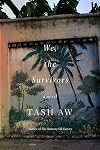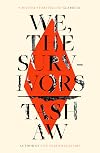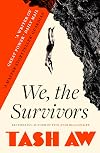
We, The Survivors
by Tash Aw
On This Page
Description
"Ah Hock is an ordinary man of simple means. Born and raised in a Malaysian fishing village, he favors stability above all, a preference at odds with his rapidly modernizing surroundings. So what brings him to kill a man? This question leads a young, privileged journalist to Ah Hock's door. While the victim has been mourned and the killer has served time for the crime, Ah Hock's motive remains unclear, even to himself. His vivid confession unfurls over extensive interviews with the show more journalist, herself a local whose life has taken a very different course. The process forces both the speaker and his listener to reckon with systems of power, race, and class in a place where success is promised to all yet delivered only to its lucky heirs. An uncompromising portrait of an outsider navigating a society in transition, Tash Aw's anti-nostalgic tale, We, the Survivors, holds its tension to the very end. In the wake of loss and destruction, hope is among the survivors"-- show lessTags
Recommendations










Member Reviews
I couldn’t put down this book without remembering the lessons of John Steinbeck’s Grapes of Wrath: that all men are born equal under the sun, and that the owners of the land have no right to legislate the lives of their workers.
In this novel we are faced with an unsparing look at the lives of the increasing armies of the dispossessed.
Tash Aw writes a gruesome, accurate tale of human beings as so much tinder on a bonfire. Where humans are moved like filth across the sea, over borders, to another human dungheap. There is filth, there is cholera, and worst of all, there is indifference. Another brown man dead? So what.
Migrant workers need a voice and a vote in the lands they visit, and the lands they settle in.
Not least the armies of show more Phillipine women who manage our children as nannies or our elderly as caregivers.
Not least the Mexican and other Latin American men and women who make American beds, pick their fruit, wash their dishes, wipe their children, and weed the gardens of increasingly ungrateful Americans.
Not least the Indians, Bangladeshis, Rohingyas who populate the sweatshops and construction projects of the Middle East and the Far East. show less
In this novel we are faced with an unsparing look at the lives of the increasing armies of the dispossessed.
Tash Aw writes a gruesome, accurate tale of human beings as so much tinder on a bonfire. Where humans are moved like filth across the sea, over borders, to another human dungheap. There is filth, there is cholera, and worst of all, there is indifference. Another brown man dead? So what.
Migrant workers need a voice and a vote in the lands they visit, and the lands they settle in.
Not least the armies of show more Phillipine women who manage our children as nannies or our elderly as caregivers.
Not least the Mexican and other Latin American men and women who make American beds, pick their fruit, wash their dishes, wipe their children, and weed the gardens of increasingly ungrateful Americans.
Not least the Indians, Bangladeshis, Rohingyas who populate the sweatshops and construction projects of the Middle East and the Far East. show less
‘But the truth is that there is no because. And because there is no because, there is also no why.’
Tash Aw’s new novel is about the choices we make, those little decisions that come to direct the path of our lives, leading us to question everything. It is about the illusion of such a choice, as our central character frequently comes to the conclusion that our fate is destined, that actually we are simply just part of some messed-up plan and the best we can do is survive.
Lee Hock Lye, known as Ah Hock, has killed a man. Spending 3 years in prison he is now living a quiet, secluded life until an American research student named Tan Su-Min gets in touch asking to interview him. He agrees, and what we have in the book is a series of show more meetings and conversations wherein Ah Hock tells his story, from his childhood, marriage and work, until the moment he killed someone: ‘You want me to talk about life, but all I’ve talked about is failure, as if they’re the same thing.’ Hock is a Chinese-Malay, and he moves from his rural childhood surroundings to the bustle of Kuala Lumpur and back again, his life intersecting with his childhood friend Keong. This is a story of family and friendship, but with some big issues crowding in: illegal immigrants and forced labour; the economics of big business and modernisation; globalisation and the widening gulf between the rich and poor. As Hock tells his story we also get to know more about his interviewer, a ‘militant queer’ (as she calls herself towards the end) whose personal life is falling apart. The relationship between the two develops into a friendship, and their interaction is a nice counterbalance to those relationships in Hock’s previous life, with his (now) ex-wife Jenny and with Keong.
Reminiscent of Camus’ ‘L’Etranger’ or, more recently, Tanguy Viel’s ‘Article 353’, this is a philosophical, nay existential, examination of a human being, and of the consequences of his actions. Timely, also, in its portrayal of the Asian economic boom and the darker side of capitalism’s headlong rush to the future. Above all it is a personal story of one man, caught in circumstances from which he cannot escape: ‘We believe in life’s power to iron out the kinks in our existence and make things turn out OK.’
A subtle, powerful novel by the very talented Tash Aw, one which I liked, yes, but one which leaves an after-impression long afterwards, and which will make you think – always a good thing. A highly recommended 4 stars. show less
Tash Aw’s new novel is about the choices we make, those little decisions that come to direct the path of our lives, leading us to question everything. It is about the illusion of such a choice, as our central character frequently comes to the conclusion that our fate is destined, that actually we are simply just part of some messed-up plan and the best we can do is survive.
Lee Hock Lye, known as Ah Hock, has killed a man. Spending 3 years in prison he is now living a quiet, secluded life until an American research student named Tan Su-Min gets in touch asking to interview him. He agrees, and what we have in the book is a series of show more meetings and conversations wherein Ah Hock tells his story, from his childhood, marriage and work, until the moment he killed someone: ‘You want me to talk about life, but all I’ve talked about is failure, as if they’re the same thing.’ Hock is a Chinese-Malay, and he moves from his rural childhood surroundings to the bustle of Kuala Lumpur and back again, his life intersecting with his childhood friend Keong. This is a story of family and friendship, but with some big issues crowding in: illegal immigrants and forced labour; the economics of big business and modernisation; globalisation and the widening gulf between the rich and poor. As Hock tells his story we also get to know more about his interviewer, a ‘militant queer’ (as she calls herself towards the end) whose personal life is falling apart. The relationship between the two develops into a friendship, and their interaction is a nice counterbalance to those relationships in Hock’s previous life, with his (now) ex-wife Jenny and with Keong.
Reminiscent of Camus’ ‘L’Etranger’ or, more recently, Tanguy Viel’s ‘Article 353’, this is a philosophical, nay existential, examination of a human being, and of the consequences of his actions. Timely, also, in its portrayal of the Asian economic boom and the darker side of capitalism’s headlong rush to the future. Above all it is a personal story of one man, caught in circumstances from which he cannot escape: ‘We believe in life’s power to iron out the kinks in our existence and make things turn out OK.’
A subtle, powerful novel by the very talented Tash Aw, one which I liked, yes, but one which leaves an after-impression long afterwards, and which will make you think – always a good thing. A highly recommended 4 stars. show less
This is laid out as a man telling his story to a woman researcher some years after the events told. The chapters of his story are interspersed with short pieces of the two of them in the present. It works as a device, in that it brings you back to the current and constrasts with the past. The narrator was imprisioned for murder and this is his life story to that point. He tells of life growing up as a chinese origin living in Malaysia. They are barely scratching a living and the impact of factory on the village's fishing has a significant role to play in his life. In fact the role of the world beyond the village is surprisingly evident. He talks of imigrants comming from elsewhere to work, and contrasts their position with that of his show more village, where they are squeezed between the low paying jobs and those using the illegal imigrants as cheap labour.
It is all told with a complete lack of self pity, all very mattter of fact. He tries to tease out the roots of the events and where there were turning points. At one point he does say that seeing options and being able to take them are two different things.
It's quite a bare life, in one sense, but at the same time, the teller never sounds as if he regrets his life. There is a sense of inevitability in the events, as told, that seems to be fated. And yet there are points at which the ending could have changed, but is that the benefit of hindsight or was there ever a point when things could change.
Thought provoking without being lecturing, it certainly makes you think about the impact of global events in small places. It's not clear who the survivors of the title might be. show less
It is all told with a complete lack of self pity, all very mattter of fact. He tries to tease out the roots of the events and where there were turning points. At one point he does say that seeing options and being able to take them are two different things.
It's quite a bare life, in one sense, but at the same time, the teller never sounds as if he regrets his life. There is a sense of inevitability in the events, as told, that seems to be fated. And yet there are points at which the ending could have changed, but is that the benefit of hindsight or was there ever a point when things could change.
Thought provoking without being lecturing, it certainly makes you think about the impact of global events in small places. It's not clear who the survivors of the title might be. show less
The story of Lee Hock Lye, a convicted murderer as he relates his story, his life before the killing and prison, over several months to Tan Su-Min a doctor in Sociology who wants to understand the circumstances surrounding his case.
It is a strangely compelling and moving tale, beautifully narrated, but very sad and depressing. We never find out what exactly makes him kill a man he didn’t even know, maybe it was just the last straw in a very hard and unfair life. It is a portrayal of poverty and inequality and the crushing of hope. How poverty, prejudice and intolerance destroy people.
It is a strangely compelling and moving tale, beautifully narrated, but very sad and depressing. We never find out what exactly makes him kill a man he didn’t even know, maybe it was just the last straw in a very hard and unfair life. It is a portrayal of poverty and inequality and the crushing of hope. How poverty, prejudice and intolerance destroy people.
I lived in Malaysia for three and a half years, a quarter century ago, but the main character is almost a type of the struggling poor ethnic Chinese. I admire much about this novel, but found I didn't like reading it although Aw's writing and characterization carried me along like one of the flood tides he mentions. I relished many of the details of Malaysian life but found I couldn't connect with the woman who records the protagonist's story; she seemed to me like a necessary distraction, a youthful child of privilege to contrast with his impoverished childhood and youth. Maybe there is just too much truth in this novel for me to enjoy reading it.
Brilliant, but bleak. Incisive account of a Malay who couldn't escape his destiny. Also the people & family around him.
Excellent story but a bit confused in the end. 3.5 stars
Excellent story but a bit confused in the end. 3.5 stars
Brilliant, but bleak. Incisive account of a Malay who couldn't escape his destiny. Also the people & family around him.
Excellent story but a bit confused in the end. 3.5 stars
Excellent story but a bit confused in the end. 3.5 stars
Members
- Recently Added By
Lists

Books in English
14 works; 1 member
Author Information

11+ Works 2,116 Members
Awards and Honors
Common Knowledge
- Canonical title
- We, The Survivors
- Original title
- We, the Survivors
- Original publication date
- 2019
- Important places
- Malaysia
- First words
- You want to talk to me about life, but all I’ve talked about is failure, as if they’re the same thing, or at least so closely entwined that I can’t separate the two - like the trees you see growing in the half-ruined bu... (show all)ildings in the Old Town.
- Canonical DDC/MDS
- 823.92
- Canonical LCC
- PR6101.W2
Classifications
Statistics
- Members
- 194
- Popularity
- 167,171
- Reviews
- 10
- Rating
- (3.80)
- Languages
- Dutch, English, French, German
- Media
- Paper, Audiobook, Ebook
- ISBNs
- 21
- ASINs
- 5