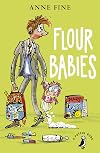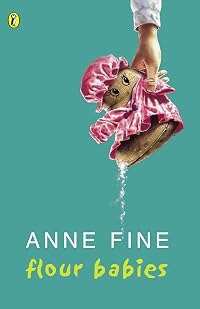
Flour Babies
by Anne Fine
On This Page
Description
When his class of underachievers is assigned to spend three torturous weeks taking care of their own "babies" in the form of bags of flour, Simon makes amazing discoveries about himself while coming to terms with his long-absent father.Tags
Recommendations





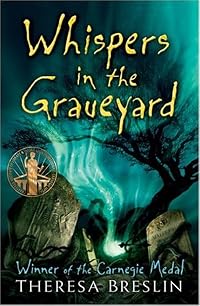

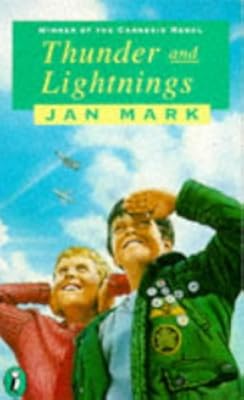

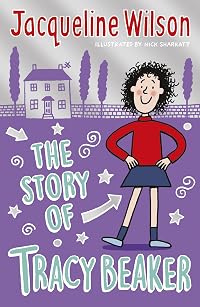
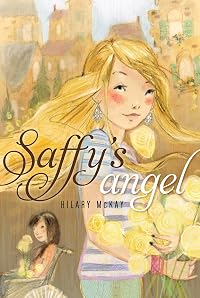




Member Recommendations
Member Reviews
Oh my goodness. I had no idea this was going to be such a treat. I laughed out loud several times, and tears came to my eyes a few times too. If you've ever wanted to get to know a bit more about the teen boys who seem to be, erm, underachievers, and about the teachers who try to reach out to them while trying to maintain their own sanity, read this. One of the things I liked most about it was that the boys aren't actively abused or abusive. Some may say this book is a bit implausibly sunny and optimistic, but I think the fact that it's not 'gritty' is a plus, and I think most gritty books are implausibly dark. I will definitely look for more by this author, and if my library doesn't have them I will put them on my wishlist show more for sure. show less
Simon Martin and his classmates are problematic. Labeled as emotionally deficit and intellectually challenged, this motley group of "Room 8's" are perceived as too stupid to participate in the difficult projects for the science fair.
Instead, each are given the task of a parent-child experiment. For the duration of 21 days each student must tote around a six pound bag of flour and "parent" their ward. At the end of that time all flour bags will be weighed and checked for cleanliness.
What ensues is a laughable, heartwarming tale of those, like Simon, who take the responsibility seriously, and those who give up, punting the sack of flour baby smack in the river.
Winner of the British Carnegie Medal (the British equivalent to the US Newbery show more award), the author created a wonderful, insightful balance between humor and seriousness, depicting a range of emotions from the perspective of student, teacher and parent.
There is a touching, poignant beauty of Simon grappling with his father's abandonment when he was six weeks old and his commitment to taking care of his flour baby in the manner he would have wanted his father to care for him.
What I liked most about the book is that the author did not resort to cuteness, nor did she feel the need to wrap up the ending in a big red bow of cheer.
While changed by the insights of the difficulty of parenting, Simon and his peers remained realistically problematic.
This was listed in 1001 Children's Books You Must Read Before You Grow Up.
Highly recommended. show less
Instead, each are given the task of a parent-child experiment. For the duration of 21 days each student must tote around a six pound bag of flour and "parent" their ward. At the end of that time all flour bags will be weighed and checked for cleanliness.
What ensues is a laughable, heartwarming tale of those, like Simon, who take the responsibility seriously, and those who give up, punting the sack of flour baby smack in the river.
Winner of the British Carnegie Medal (the British equivalent to the US Newbery show more award), the author created a wonderful, insightful balance between humor and seriousness, depicting a range of emotions from the perspective of student, teacher and parent.
There is a touching, poignant beauty of Simon grappling with his father's abandonment when he was six weeks old and his commitment to taking care of his flour baby in the manner he would have wanted his father to care for him.
What I liked most about the book is that the author did not resort to cuteness, nor did she feel the need to wrap up the ending in a big red bow of cheer.
While changed by the insights of the difficulty of parenting, Simon and his peers remained realistically problematic.
This was listed in 1001 Children's Books You Must Read Before You Grow Up.
Highly recommended. show less
Sent to me by Peggy Doubleday. An odd, charming book. I love the contrarian ending. I felt plunged into the main character's head -- a good thing. I appreciate a story where the YA character is misunderstood by adults but the narrator does not patronize him. Is YA a particularly good way to be immersed in another culture?
Science is not the best subject for the students in 4C. Nothing is, unless you count Mr Cartright’s criticism of them: “shuffling around acting a stick short of the full bundle”. So they get assigned a simple, supposedly non-explosive Science Fair project. Each student must look after a 6 pound (3 kilo) sack of flour as if it is a baby- keeping it clean, dry, and never leaving it unattended. Surprisingly, some meaningful lessons are learnt amid the ensuing hilarity.
The story focuses on the character of Simon Martin, one of the many intellectually disadvantaged students in Mr Cartright’s class. Simon has many problems besides academic achievement: he’s too big, the teachers don’t appreciate the variety of noises he’s able show more to make in Assembly, and, worst of all, his Dad took off only six weeks after Simon was born.
Now Simon has to experience some of the fearful responsibility of parenting himself. The book chronicles his progress, as he begins to realise what his father was having to face up to. He also becomes more realistic about the effort that dedicated adults have to put into their youngsters, and starts to look at his mother and teachers with renewed respect.
The purpose of the Flour Baby experiment, says Dr. Feltham, is “a simple experiment in parent and child relationships…It’s fascinating what they learn, about themselves and about parenthood.” For the reader, it is fascinating, too, to see how these lessons are learnt, and how the students of 4C respond to the pressures of parenting. But for Simon, the experiment really works. He is able to finally gain some understanding of what his father may have been thinking, and why.
Like many stories set in a school environment, one of the great joys of this book is the humorously written dialogue between teachers and students. There are also some memorable scenes where Simon manages to eavesdrop on the teachers in the staffroom, allowing the reader some insight into the idea of teachers as real people with feelings, too.
Simon’s initial enthusiasm for the Flour Babies experiment is fuelled by just such an eavesdropping session. He overhears the frazzled Mr Cartright expressing his concern that 4C will be unable to look after their assigned ‘babies’; that, in fact, in a short space of time, the bags will explode and there will be flour everywhere. This is the vision that sustains Simon and his classmates throughout their ordeal, driving the story to its inevitable climax, which doesn’t quite happen as Simon had envisaged.
This is a hilarious read with some serious ideas included. Recommended for readers around the age of 13, especially in conjunction with any similar ‘babysitting’ experience! show less
The story focuses on the character of Simon Martin, one of the many intellectually disadvantaged students in Mr Cartright’s class. Simon has many problems besides academic achievement: he’s too big, the teachers don’t appreciate the variety of noises he’s able show more to make in Assembly, and, worst of all, his Dad took off only six weeks after Simon was born.
Now Simon has to experience some of the fearful responsibility of parenting himself. The book chronicles his progress, as he begins to realise what his father was having to face up to. He also becomes more realistic about the effort that dedicated adults have to put into their youngsters, and starts to look at his mother and teachers with renewed respect.
The purpose of the Flour Baby experiment, says Dr. Feltham, is “a simple experiment in parent and child relationships…It’s fascinating what they learn, about themselves and about parenthood.” For the reader, it is fascinating, too, to see how these lessons are learnt, and how the students of 4C respond to the pressures of parenting. But for Simon, the experiment really works. He is able to finally gain some understanding of what his father may have been thinking, and why.
Like many stories set in a school environment, one of the great joys of this book is the humorously written dialogue between teachers and students. There are also some memorable scenes where Simon manages to eavesdrop on the teachers in the staffroom, allowing the reader some insight into the idea of teachers as real people with feelings, too.
Simon’s initial enthusiasm for the Flour Babies experiment is fuelled by just such an eavesdropping session. He overhears the frazzled Mr Cartright expressing his concern that 4C will be unable to look after their assigned ‘babies’; that, in fact, in a short space of time, the bags will explode and there will be flour everywhere. This is the vision that sustains Simon and his classmates throughout their ordeal, driving the story to its inevitable climax, which doesn’t quite happen as Simon had envisaged.
This is a hilarious read with some serious ideas included. Recommended for readers around the age of 13, especially in conjunction with any similar ‘babysitting’ experience! show less
I really liked the first half of this book and I really enjoyed the characters, but I suspect it's a bit too dated in its language. It's a pity because the premise and humour is great and Simon's journey is interesting and engaging. I think that students might find the ending a bit lame, but definitely worth a read.
Although a bit dated now, "Flour Babies" was still a nice read. I liked how Simon developed throughout the story, becoming more caring and responsible for his flour baby as the weeks progressed, and thinking about his own life. There were some quite humorous moments in the book as well as some poignant ones. Overall, a sweet read.
The book, Flour Babies, by Anne Fine tells the story of a class of underachievers who are assigned a child development project for the science fair. This particular class of boys has been identified by the teachers as the most unteachable in school. Since they can’t be trusted with real science, they are required to tote around sacks of flour and treat them like babies. Since this is a common responsibility and parenting lesson taught in schools, this book will appeal to many young adults. However, two aspects of this book bothered me. I was initially taken aback by the way in which this class was treated and referred to. It was apparent this wasn’t the gifted class, and the author’s description and treatment of these students was show more almost insulting to me as an ESE teacher. I expected the book to have been written much earlier than the actual publishing year of 1992. It felt outdated. There was no explanation for why these kids were so unsuccessful; they were simply called the Sads and the Bads, those not good enough to be in classes with the Lads and the Brains. Obviously the inclusion movement didn’t make its way to this school. Secondly, who ever heard teenagers using phases like, “Don’t be a plague-spot?” The dialogue was terribly inauthentic. I do believe the author had a fondness for her characters, especially Simon. Simon is our hero in this motley crew of a class. His bond with his flour baby is so sweet and heartwarming. This experience allows him to work through his emotions and finally deal with the reasons that his own father left him as an infant. Simon learns something important about himself. He learns that he can behave and show discipline, much to his own shock and that of the detention teacher. The intense connection that he feels for his flour baby surprises him. She is a confidant and companion, and Simon genuinely loves her. He learns that he cannot be a parent that abandons their children. He loves too deeply, and wants to protect what belongs to him. He also comes to terms with the reasons that his father left and discovers a profound appreciation for his mother. The few weeks that he took care of his flour baby opened his eyes to the amount of hard work and dedication that it takes to be a parent. I am sure that every teacher who ever assigned this project wishes that all of his or her students would have such a meaningful experience. The humor and final messages in this book almost made up for its shortcomings. show less
Members
- Recently Added By
Lists

1001 Children's Books You Must Read Before You Grow Up
774 works; 101 members

Carnegie Medal Winners In Order
85 works; 1 member

Puffin Books 70th anniversary handbook recommendations
537 works; 10 members
Author Information

158+ Works 7,705 Members
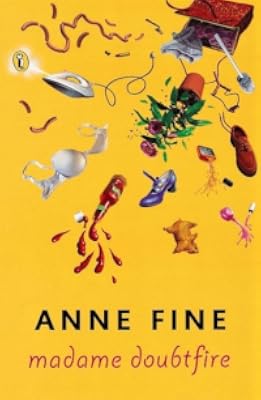
Anne Fine was the second Children's Laureate in Britain between 2001 and 2003. She is a two time winner of the Carnegie Medal, Britain's most coveted children's literature award, and has also won the Guardian Children's Literature Award, the Whitbread Children's Novel Award twice, and a Smarties Prize. She also won the Publishing News Children's show more Author of the Year Award in 1990 and again in 1993. In 2010 she won the inaugural Good Writing Award. Her books for older children include the award winning The Tulip Touch, Goggle-Eyes, which was adapted for television by the BBC and The Devil Walks. Twentieth Century Fox filmed her novel Madame Doubtfire as Mrs Doubtfire, starring Robin Williams. She also writes critically acclaimed adult novels as well. Her work has been translated into twenty-five languages, and has over forty books to her credit. (Bowker Author Biography) show less
Awards and Honors
Awards
Common Knowledge
- Canonical title*
- Bambini di farina
- Original title
- Flour Babies
- Original publication date
- 1992
- Epigraph
- To every thing there is a reason, and a time to every purpose under the heaven.
Ecclesiastes 3:1 - First words
- Mr Cartright swung his legs to an fro under the desk,
*Some information comes from Common Knowledge in other languages. Click "Edit" for more information.
Classifications
- Genres
- Fiction and Literature, Children's Books
- DDC/MDS
- 823.914 — Literature & rhetoric English & Old English literatures English fiction 1900- 1901-1999 1945-1999
- LCC
- PZ7 .F495673 .F — Language and Literature Fiction and juvenile belles lettres Fiction and juvenile belles lettres Juvenile belles lettres
- BISAC
Statistics
- Members
- 561
- Popularity
- 52,665
- Reviews
- 11
- Rating
- (3.68)
- Languages
- Dutch, English, German, Italian
- Media
- Paper, Audiobook, Ebook
- ISBNs
- 39
- ASINs
- 4