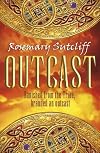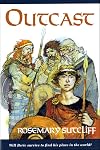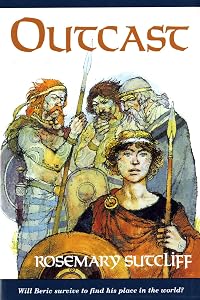
Outcast
by Rosemary Sutcliff
On This Page
Description
Fifteen-year-old Beric feels increasingly bitter isolation when, because of his Roman birth, he is cast out by the Celtic tribe that raised him and, after reaching a Roman settlement, he is sold into slavery and sentenced to serve in a galley for the rest of his life.Tags
Recommendations













Member Reviews
An interesting story - well, of course, it's a Sutcliff. Beric gets tossed from pillar to post, over and over, with tiny bits of hope quickly trampled upon (starting with the soldier who couldn't buy him). But he manages, pretty well, to stay himself throughout all the disasters that befall him. The end is - well, it's a nice ending, but it requires a huge coincidence to make it happen - he came ashore just there? And then walked up to the house? Hmmm. That aside, it's still not the easy answer, and that makes it much richer than if the Commander's guess had been correct. Found family, closure from early wounds, and actually given choices at the end (we don't get to see what he chooses - but he's a young man yet). Not one of my favorite show more Sutcliffs, but good. show less
This is an exceptional book. I was expecting a well written adventure story and I got that, but there is emotional depth to it that goes well beyond what even the best adventure stories normally do. It's called a children's book but I think it's equally good for adults.
Can't do a proper review because I've a thing on my finger, but this at times harrowing bildungsroman about a young Roman, rescued from a shipwreck by a Celtic tribe, eventually cast out and forced to endure years of slavery and suffering before finding a place for himself, is one of Sutcliffe's best books. Brilliant scenes of life in the ancient world. Magnificent climax.
This is the story of Beric, a young man who did not know where he came from, he was adopted by a Celtic tribe, then cast out. The story follows his fortunes (or misfortunes) from there.
As always, Sutcliff delivers a griping tale, wrapped in historical details. Her characters and descriptions of places and events make the time she is writing about come alive. I was particularly pleased that Beric's tale was not pat or trite at the end. He was fleshed out as the conflicted person that such a life would lead to. The ending was satisfactory, without being completely predictable.
As always, Sutcliff delivers a griping tale, wrapped in historical details. Her characters and descriptions of places and events make the time she is writing about come alive. I was particularly pleased that Beric's tale was not pat or trite at the end. He was fleshed out as the conflicted person that such a life would lead to. The ending was satisfactory, without being completely predictable.
In Outcast, by Rosemary Sutcliff, Beric is adopted by a Celtic tribe in Britain after he is found alive following the wreck of the Roman ship in which his parents were traveling with the infant boy. He is raised by the tribe until the age of 16, when bad harvests and other calamities befall the tribe; they blame the "foreigner" in their midst and he is cast out of the group and thereafter must find his way in the world alone. Having been captured by slavers, he next finds himself in Rome, and his adventures there are only the beginning of his long journey.... I enjoyed this glimpse into everyday life for classes in the Roman world not usually described, although the Celtic setting early in the book was quite inaccurate (for example, show more these cultures were matrilineal, not patriarchal as depicted here; fostering children from other tribes was common and those fosterlings were not blamed for ill fortune). Once past those early chapters, though, I found the storytelling quite good and worth reading. So, a mild recommendation, with reservations. show less
A slow burn that is harder to get to grips with than the Eagle Chronicles, but rewarding in the long run. Very low key and slightly more grown up - the trials of a Roman castaway raised as a British tribesman and banished, only to be taken to Rome as a slave. This is to do with appreciation of self, relationship to society and finding a place - I didn't quite believe in where he got to by the end of the novel though.
Even better than I remembered it. The harrowing situation of the slave-galley and Beric's confused desparation afterwards are particularly strong stuff for a children's book.
Members
- Recently Added By
Lists

Children's Literature, Briefly Historical Fiction Reading List
44 works; 4 members

Books Read in 2017
4,249 works; 130 members

Best historical fiction set in the ancient world
126 works; 40 members
Author Information

83+ Works 22,383 Members
Rosemary Sutcliff was on born December 14, 1920 in East Clandon in Surrey, England. As a child she had Still's Disease, a form of juvenile arthritis. The effect of this led to many stays in hospital for painful remedial operations. She ended her formal education at fourteen, and went to Bideford Art School. She passed the City and Guilds show more examination and worked as a painter of miniatures. She felt cramped by the small canvas of miniature painting and turned to writing. Her first two books, The Chronicles of Robin Hood and The Queen Elizabeth Story, were published in 1950. Her other works included The Eagle of the Ninth, The Silver Branch, Sword Song, and the autobiography Blue Remembered Hills. She won the annual Carnegie Medal from the Library Association for The Lantern Bearers in 1959 and the annual Horn Book Award for Tristan and Iseult in 1971. She won inaugural Phoenix Award in 1985 for The Mark of the Horse Lord and again in 2010 for The Shining Company. In 1975, she was appointed an Officer of the Order of the British Empire for services to children's literature, and was promoted to be a Commander of the Order of the British Empire in 1992. She died on July 23, 1992. (Bowker Author Biography) show less
Some Editions
Work Relationships
Common Knowledge
- Canonical title
- Outcast
- Original title
- Outcast
- Original publication date
- 1955
- People/Characters
- Beric; Cunori; Guinear; Cathlan; Rhiada the Harper; Publius Piso (show all 11); Glaucus; Lucilla; Justinius; Jason; Cordaella
- Important places
- Britannia, Roman Empire (Roman Britain); Roman Empire; Romney Marsh, Kent, England, UK
- Dedication
- FOR MY FATHER
without whose help the Alcestis of the Rhenus Fleet would never have been seaworthy
I should like also to thank Harold Lawton, Indian Service of Engineers, for his advice in draining Romney Mars... (show all)h - First words
- The gale, which had lulled for a little while, came swooping back with a shriek and a beating as of great wings against the village that crouched on the bare hill-shoulder, huddling close to the ground, as if for safety.
- Quotations
- He had seen the hound-pack turn on a strange dog before now, or one that was hurt, or different from themselves in any way.
- Last words
- (Click to show. Warning: May contain spoilers.)'And I have baked new bread; come you and eat it while it is hot.'
- Original language*
- Engels
*Some information comes from Common Knowledge in other languages. Click "Edit" for more information.
Classifications
- Genres
- Fiction and Literature, Children's Books, Kids, Tween
- DDC/MDS
- 823.914 — Literature & rhetoric English & Old English literatures English fiction 1900- 1901-1999 1945-1999
- LCC
- PZ7 .S966 .O — Language and Literature Fiction and juvenile belles lettres Fiction and juvenile belles lettres Juvenile belles lettres
- BISAC
Statistics
- Members
- 674
- Popularity
- 42,821
- Reviews
- 10
- Rating
- (3.89)
- Languages
- 7 — Dutch, English, French, German, Japanese, Spanish, Swedish
- Media
- Paper, Audiobook, Ebook
- ISBNs
- 29
- ASINs
- 11