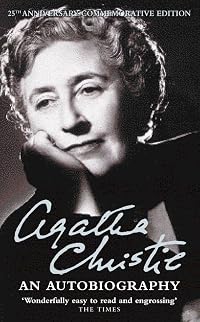
An Autobiography
by Agatha Christie
On This Page
Description
Dame Agatha Christie sheds light on her secretive life and tells of her early years, her marriages and rise to success.Tags
Recommendations





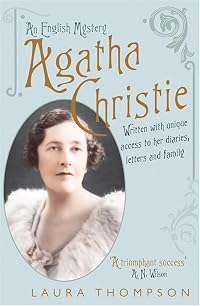





Member Recommendations

Member Reviews
First published at Booking in Heels.
Agatha Christie wrote this autobiography in 1965, when she was 75 years old, but it wasn’t published until 1977, a year after her death at 85 years old.
I love this woman. I’ve always liked her work, as I’ve read (probably) most of her books by this point, but now I like her a lot as a person. She comes across as stubborn but kind-hearted. Very shy but loyal. You can tell she wrote it for herself, and not because her publishers wanted her to. It’s mostly chronological, but not quite. She does flit around a little, but in a natural, unforced way. If something pops up, she’ll talk about it there and then, instead of waiting for the correct time period 100 pages later. She never bothers to tell show more you what year it was or how old she was, but I almost like that. It feels so unforced. Towards the end she says, ‘I’m not going to bother tidying this book up too much. I’m too old for that *!@!.’ I’m paraphrasing, obviously, but that is almost definitely what she’s saying.
It takes a good two thirds of the book before she even picks up a pen, and about 3/4 before she properly starts with Poirot. This isn’t a book about her writing, not really, although of course it features (eventually). It’s mostly about her early life, and then later on she discusses her family life behind the scenes of the writing. Even then, the book stops shortly after the Second World War, when her life has settled down and ‘fame’ has just begun. She never even mentions being made a Dame, and only discusses meeting the Queen in passing. Don’t let that put you off though, it’s riveting.
A good quarter of the book is about her childhood. I usually hate that part in memoirs as I generally see it as completely irrelevant to whatever the subject is famous for, but here, I just loved it. Nothing about this book is boring. Honestly, every single part of this is fascinating. She worked in a hospital dispensary in both World Wars (hence the knowledge of poisons) and refused to leave her London bed during the air raids.
She writes so well – it doesn’t read like one of the detective novels at all. It’s denser, but still chatty. She’s very dry and very sarcastic at times, but usually not hardheartedly. I just feel I would have liked this woman. I like how she’s writing from the mid-sixties and she muses on how things have changed, like bikinis, airplanes, technology, etc.
It struck me how honest she was. Mistakes that she’s made and things that she’d do differently now. The only thing she doesn’t mention is the 1926 disappearance, when she vanished and turned up in Harrogate six days later.1 She talks about how her then husband couldn’t deal with the fact she was sad about her mother’s death because ‘I really can’t bear it when people are sad, you know that’, and her impending breadown after doing all the clearing out work herself, during which he promptly announced he wanted a divorce as he’d found someone else. Dick. I really dislike him. But then there’s no mention of the disappearance and we jump forward to February the following year. I’m not sure what the big mystery is anyway. She clearly just stomped off for a bit to sulk. Can’t say I blame her.
I’m glad she was happy at the end of her life though. She writes this book with the full understanding that she is a famous author. She loves her second husband dearly, she contributed to archaelogical discoveries, she had a close knit family she adored and her days of scrimping for pennies were over. She notes that she is not as fit and able as she used to be, but is grateful that her faculties are still mostly intact. She seemed like a good person and I’m glad that she was happy.
What did shock me was that I had no idea that Mary Westmacott was her, Agatha Christie. It was her pen name for her non-detective stories. I don’t know, I just feel like I should have known that already! I’ve just gone out of my way to find one of the original editions on eBay, one that doesn’t have ‘Agatha Christie’ emblazoned on it.
In short, I’m ridiculously grateful that I didn’t naively get rid of Agatha Christie: An Autobiography during one of my bookshelf purges. It’s engaging, clever and (for the most part) very honest. It’s probably quite insulting that the quote from Woman’s Own on the cover is, ‘the best thing she’s ever written,’ (never mind those seventy-odd other books, ey?) but I’m sure it was meant well. Because, honestly, it probably is my favourite thing she’s written. I loved this book. show less
Agatha Christie wrote this autobiography in 1965, when she was 75 years old, but it wasn’t published until 1977, a year after her death at 85 years old.
I love this woman. I’ve always liked her work, as I’ve read (probably) most of her books by this point, but now I like her a lot as a person. She comes across as stubborn but kind-hearted. Very shy but loyal. You can tell she wrote it for herself, and not because her publishers wanted her to. It’s mostly chronological, but not quite. She does flit around a little, but in a natural, unforced way. If something pops up, she’ll talk about it there and then, instead of waiting for the correct time period 100 pages later. She never bothers to tell show more you what year it was or how old she was, but I almost like that. It feels so unforced. Towards the end she says, ‘I’m not going to bother tidying this book up too much. I’m too old for that *!@!.’ I’m paraphrasing, obviously, but that is almost definitely what she’s saying.
It takes a good two thirds of the book before she even picks up a pen, and about 3/4 before she properly starts with Poirot. This isn’t a book about her writing, not really, although of course it features (eventually). It’s mostly about her early life, and then later on she discusses her family life behind the scenes of the writing. Even then, the book stops shortly after the Second World War, when her life has settled down and ‘fame’ has just begun. She never even mentions being made a Dame, and only discusses meeting the Queen in passing. Don’t let that put you off though, it’s riveting.
A good quarter of the book is about her childhood. I usually hate that part in memoirs as I generally see it as completely irrelevant to whatever the subject is famous for, but here, I just loved it. Nothing about this book is boring. Honestly, every single part of this is fascinating. She worked in a hospital dispensary in both World Wars (hence the knowledge of poisons) and refused to leave her London bed during the air raids.
She writes so well – it doesn’t read like one of the detective novels at all. It’s denser, but still chatty. She’s very dry and very sarcastic at times, but usually not hardheartedly. I just feel I would have liked this woman. I like how she’s writing from the mid-sixties and she muses on how things have changed, like bikinis, airplanes, technology, etc.
It struck me how honest she was. Mistakes that she’s made and things that she’d do differently now. The only thing she doesn’t mention is the 1926 disappearance, when she vanished and turned up in Harrogate six days later.1 She talks about how her then husband couldn’t deal with the fact she was sad about her mother’s death because ‘I really can’t bear it when people are sad, you know that’, and her impending breadown after doing all the clearing out work herself, during which he promptly announced he wanted a divorce as he’d found someone else. Dick. I really dislike him. But then there’s no mention of the disappearance and we jump forward to February the following year. I’m not sure what the big mystery is anyway. She clearly just stomped off for a bit to sulk. Can’t say I blame her.
I’m glad she was happy at the end of her life though. She writes this book with the full understanding that she is a famous author. She loves her second husband dearly, she contributed to archaelogical discoveries, she had a close knit family she adored and her days of scrimping for pennies were over. She notes that she is not as fit and able as she used to be, but is grateful that her faculties are still mostly intact. She seemed like a good person and I’m glad that she was happy.
What did shock me was that I had no idea that Mary Westmacott was her, Agatha Christie. It was her pen name for her non-detective stories. I don’t know, I just feel like I should have known that already! I’ve just gone out of my way to find one of the original editions on eBay, one that doesn’t have ‘Agatha Christie’ emblazoned on it.
In short, I’m ridiculously grateful that I didn’t naively get rid of Agatha Christie: An Autobiography during one of my bookshelf purges. It’s engaging, clever and (for the most part) very honest. It’s probably quite insulting that the quote from Woman’s Own on the cover is, ‘the best thing she’s ever written,’ (never mind those seventy-odd other books, ey?) but I’m sure it was meant well. Because, honestly, it probably is my favourite thing she’s written. I loved this book. show less
Having enjoyed so much of ACs fiction, I greatly enjoyed (for the most part) getting to see where it came from. This was a woman who found much pleasure in life, even as she aged and things like long walks and swimming in the sea became impossible.
Things I loved:
--The mentions of her writing, though I do wish there'd been a little more writing and a little less archaeology;
--Her acceptance of her own shyness and inarticulateness: in one case she even allowed herself to be turned away from the door of an event held in her honor;
--The fact that as a fairly young and recently divorced woman, she traveled solo to the Middle East in a time when I can't imagine many young women traveled solo anywhere;
--The revelation that even the show more highest-selling author ever (aside from the Bible and Shakespeare) did not for many years consider herself a "real writer."
--Quotes like this:
Not a book that anyone will tear through, and I suspect more enjoyable for fans than for casual readers. I'm glad I picked it up. show less
Things I loved:
--The mentions of her writing, though I do wish there'd been a little more writing and a little less archaeology;
--Her acceptance of her own shyness and inarticulateness: in one case she even allowed herself to be turned away from the door of an event held in her honor;
--The fact that as a fairly young and recently divorced woman, she traveled solo to the Middle East in a time when I can't imagine many young women traveled solo anywhere;
--The revelation that even the show more highest-selling author ever (aside from the Bible and Shakespeare) did not for many years consider herself a "real writer."
--Quotes like this:
“We are all the same people as we were at three, six, ten or twenty years old. More noticeably so, perhaps, at six or seven, because we were not pretending so much then, whereas at twenty we put on a show of being someone else, of being in the mode of the moment. If there is an intellectual fashion, you become an intellectual; if girls are fluffy and frivolous, you are fluffy and frivolous. As life goes on, however, it becomes tiring to keep up the character you invented for yourself, and so you relapse into individuality and become more like yourself every day. This is sometimes disconcerting for those around you, but a great relief to the person concerned.”
Not a book that anyone will tear through, and I suspect more enjoyable for fans than for casual readers. I'm glad I picked it up. show less
"Towards the beginning of the war, Graham Greene had written to me and asked if I would like to do propaganda work. I did not think I was the kind of writer who would be any good at propaganda, because I lacked the single-mindedness to see only one side of the case. Nothing could be more ineffectual than a lukewarm propagandist. You want to be able to say ‘X is black as night’ and feel it. I didn’t think I could ever be like that."
Dame Agatha - one of the most puzzling authors I have ever read. Puzzling because I can never guess from her stories whether she is poking fun at people by drawing up outrageous characters, whether she is echoing the mores of her time, whether she expresses her own attitudes in her books, whether it's show more all or none of these.
Dame Agatha is a mystery to me.
Earlier this year I got a little unnerved with re-reading some of her books because of some of the attitudes exhibited by her characters. I know that I am looking at this from the point of someone who is of a different generation and cultural background, but still, some of the xenophobia, misogyny, homophobia, and snobbery is just very hard to take.
So, anyway I wanted to find out where the attitudes come from? Do they represent the author?
Having read Christie's Autobiography, I'm still puzzled: for sure, Christie had some biases with respect to class and "stout" people and - for some reason - gardeners, but there was little in her autobiography to explain or confirm the sexism and xenophobia that seems to have thrown me in her books.
On the contrary, in a way Christie was not at all the Victorian prim that her creation Marple is. There are numerous references to occasions where she is positively rebelling against her times - from refusing to wear Edwardian fashion to declaring that one of the best days of her life was when she bought a rather speedy motor car.
And of course, I was also thrown by the enthusiasm with which she described her surfing adventures, and according to some (unconfirmed) articles she even was one of the first people to surf standing up (though I would think that some local surfers in Hawaii or elsewhere would dispute that):
"I can’t say that we enjoyed our first four or five days of surfing–it was far too painful–but there were, every now and then, moments of utter joy. We soon learned, too, to do it the easy way.
[...]
The second time I took the water, a catastrophe occurred. My handsome silk bathing dress, covering me from shoulder to ankle was more or less torn from me by the force of the waves. Almost nude, I made for my beach wrap. I had immediately to visit the hotel shop and provide myself with a wonderful, skimpy, emerald green wool bathing dress, which was the joy of my life, and in which I thought I looked remarkably well. Archie thought I did too.
[...]
I was suffering from neuritis, though I did not yet call it by that name. If I’d had any sense at all I should have stopped using that arm and given up surfing, but I never thought of such a thing. There were only three days to go and I could not bear to waste a moment. I surfed, stood up on my board, displayed my prowess to the end."
It was not, however, only her love of sport that convinced me that reading her books requires a separation between the characters and the authors. As mentioned, where Marple is a strict Victorian old busy-body, I don't believe Agatha was. In fact, if I would compare her to any of her characters it would have to be one of the bright young things - who acted more on instinct than by what was expected of them.
There are quite a few revelations about her early life with Archie Christie where the couple struggled with funds and, of course, how she struggled with money again after their divorce. Though she didn't become a writer to earn a living, she certainly turned to it as her sole source of income once she had to fend for herself. It was at that time that she perfected the formulaic mystery that made her famous. It was also at that time - when she wrote to pay the rent - that she admits to writing some of her worst books - like Mystery on the Blue Train. It is her openness about financial struggles, being over-whelmed by public interest, and coming to change her mind about her own perceptions and aspirations that differentiate Dame Agatha from her characters - most of whom are pretty set in their ways.
"And I think I was right to be continually asking myself ‘Why?’ all the time, because to people like me, asking why is what makes life interesting."
"I fell in love with Ur, with its beauty in the evenings, the ziggurrat standing up, faintly shadowed, and that wide sea of sand with its lovely pale colours of apricot, rose, blue and mauve changing every minute. I enjoyed the workmen, the foremen, the little basket-boys, the pick-men – the whole technique and life. The lure of the past came up to grab me. To see a dagger slowly appearing, with its gold glint, through the sand was romantic. The carefulness of lifting pots and objects from the soil filled me with a longing to be an archaeologist myself. How unfortunate it was, I thought, that I had always led such a frivolous life. And it was then that I remembered with deep shame how in Cairo as a girl my mother had tried to persuade me to go to Luxor and Aswan to see the past glories of Egypt, and how I had wanted only to meet young men and dance till the small hours of the morning. Well, I suppose there is a time for everything."
As mentioned, I tried to read this book with the purpose of learning more about Dame Agatha and solve the conundrum that she poses to me in her books - how much of her writing is the author and how much is a reflection of the characters and mores of her times - and, even, how much of it is satire?
I still don't know. Maybe it is a mystery where applying a formula - even in reverse - will not work. Maybe, it's one mystery that just isn't to be unraveled. If so, all I want to say is "Well played, Dame Agatha. Well played." After all, what is life without a bit of mystery to to keep us interested?
"There is at least the dawn, I believe, of a kind of good will. We mind when we hear of earthquakes, of spectacular disasters to the human race. We want to help. That is a real achievement; which I think must lead somewhere. Not quickly–nothing happens quickly–but at any rate we can hope. I think sometimes we do not appreciate that second virtue which we mention so seldom in the trilogy–faith, hope and charity. Faith we have had, shall we say, almost too much of–faith can make you bitter, hard, unforgiving; you can abuse faith. Love we cannot but help knowing in our own hearts is the essential. But how often do we forget that there is hope as well, and that we seldom think about hope? We are ready to despair too soon, we are ready to say, ‘What’s the good of doing anything?’ Hope is the virtue we should cultivate most in this present day and age. We have made ourselves a Welfare State, which has given us freedom from fear, security, our daily bread and a little more than our daily bread; and yet it seems to me that now, in this Welfare State, every year it becomes more difficult for anybody to look forward to the future. Nothing is worth-while. Why? Is it because we no longer have to fight for existence? Is living not even interesting any more? We cannot appreciate the fact of being alive. Perhaps we need the difficulties of space, of new worlds opening up, of a different kind of hardship and agony, of illness and pain, and a wild yearning for survival? Oh well, I am a hopeful person myself. The one virtue that would never, I think, be quenched for me, would be hope." show less
Dame Agatha - one of the most puzzling authors I have ever read. Puzzling because I can never guess from her stories whether she is poking fun at people by drawing up outrageous characters, whether she is echoing the mores of her time, whether she expresses her own attitudes in her books, whether it's show more all or none of these.
Dame Agatha is a mystery to me.
Earlier this year I got a little unnerved with re-reading some of her books because of some of the attitudes exhibited by her characters. I know that I am looking at this from the point of someone who is of a different generation and cultural background, but still, some of the xenophobia, misogyny, homophobia, and snobbery is just very hard to take.
So, anyway I wanted to find out where the attitudes come from? Do they represent the author?
Having read Christie's Autobiography, I'm still puzzled: for sure, Christie had some biases with respect to class and "stout" people and - for some reason - gardeners, but there was little in her autobiography to explain or confirm the sexism and xenophobia that seems to have thrown me in her books.
On the contrary, in a way Christie was not at all the Victorian prim that her creation Marple is. There are numerous references to occasions where she is positively rebelling against her times - from refusing to wear Edwardian fashion to declaring that one of the best days of her life was when she bought a rather speedy motor car.
And of course, I was also thrown by the enthusiasm with which she described her surfing adventures, and according to some (unconfirmed) articles she even was one of the first people to surf standing up (though I would think that some local surfers in Hawaii or elsewhere would dispute that):
"I can’t say that we enjoyed our first four or five days of surfing–it was far too painful–but there were, every now and then, moments of utter joy. We soon learned, too, to do it the easy way.
[...]
The second time I took the water, a catastrophe occurred. My handsome silk bathing dress, covering me from shoulder to ankle was more or less torn from me by the force of the waves. Almost nude, I made for my beach wrap. I had immediately to visit the hotel shop and provide myself with a wonderful, skimpy, emerald green wool bathing dress, which was the joy of my life, and in which I thought I looked remarkably well. Archie thought I did too.
[...]
I was suffering from neuritis, though I did not yet call it by that name. If I’d had any sense at all I should have stopped using that arm and given up surfing, but I never thought of such a thing. There were only three days to go and I could not bear to waste a moment. I surfed, stood up on my board, displayed my prowess to the end."
It was not, however, only her love of sport that convinced me that reading her books requires a separation between the characters and the authors. As mentioned, where Marple is a strict Victorian old busy-body, I don't believe Agatha was. In fact, if I would compare her to any of her characters it would have to be one of the bright young things - who acted more on instinct than by what was expected of them.
There are quite a few revelations about her early life with Archie Christie where the couple struggled with funds and, of course, how she struggled with money again after their divorce. Though she didn't become a writer to earn a living, she certainly turned to it as her sole source of income once she had to fend for herself. It was at that time that she perfected the formulaic mystery that made her famous. It was also at that time - when she wrote to pay the rent - that she admits to writing some of her worst books - like Mystery on the Blue Train. It is her openness about financial struggles, being over-whelmed by public interest, and coming to change her mind about her own perceptions and aspirations that differentiate Dame Agatha from her characters - most of whom are pretty set in their ways.
"And I think I was right to be continually asking myself ‘Why?’ all the time, because to people like me, asking why is what makes life interesting."
"I fell in love with Ur, with its beauty in the evenings, the ziggurrat standing up, faintly shadowed, and that wide sea of sand with its lovely pale colours of apricot, rose, blue and mauve changing every minute. I enjoyed the workmen, the foremen, the little basket-boys, the pick-men – the whole technique and life. The lure of the past came up to grab me. To see a dagger slowly appearing, with its gold glint, through the sand was romantic. The carefulness of lifting pots and objects from the soil filled me with a longing to be an archaeologist myself. How unfortunate it was, I thought, that I had always led such a frivolous life. And it was then that I remembered with deep shame how in Cairo as a girl my mother had tried to persuade me to go to Luxor and Aswan to see the past glories of Egypt, and how I had wanted only to meet young men and dance till the small hours of the morning. Well, I suppose there is a time for everything."
As mentioned, I tried to read this book with the purpose of learning more about Dame Agatha and solve the conundrum that she poses to me in her books - how much of her writing is the author and how much is a reflection of the characters and mores of her times - and, even, how much of it is satire?
I still don't know. Maybe it is a mystery where applying a formula - even in reverse - will not work. Maybe, it's one mystery that just isn't to be unraveled. If so, all I want to say is "Well played, Dame Agatha. Well played." After all, what is life without a bit of mystery to to keep us interested?
"There is at least the dawn, I believe, of a kind of good will. We mind when we hear of earthquakes, of spectacular disasters to the human race. We want to help. That is a real achievement; which I think must lead somewhere. Not quickly–nothing happens quickly–but at any rate we can hope. I think sometimes we do not appreciate that second virtue which we mention so seldom in the trilogy–faith, hope and charity. Faith we have had, shall we say, almost too much of–faith can make you bitter, hard, unforgiving; you can abuse faith. Love we cannot but help knowing in our own hearts is the essential. But how often do we forget that there is hope as well, and that we seldom think about hope? We are ready to despair too soon, we are ready to say, ‘What’s the good of doing anything?’ Hope is the virtue we should cultivate most in this present day and age. We have made ourselves a Welfare State, which has given us freedom from fear, security, our daily bread and a little more than our daily bread; and yet it seems to me that now, in this Welfare State, every year it becomes more difficult for anybody to look forward to the future. Nothing is worth-while. Why? Is it because we no longer have to fight for existence? Is living not even interesting any more? We cannot appreciate the fact of being alive. Perhaps we need the difficulties of space, of new worlds opening up, of a different kind of hardship and agony, of illness and pain, and a wild yearning for survival? Oh well, I am a hopeful person myself. The one virtue that would never, I think, be quenched for me, would be hope." show less
As even a cursory glance at my library will tell you, I absolutely love Agatha Christie. I’ve collected most of her mysteries and have even read some of the novels she published under the pseudonym Mary Westmacott. So, naturally, I had to read her autobiography as well! The book is long, rambling, breezy, witty, and enjoyable from beginning to end. Christie’s style is very conversational; it’s as if she’s telling you the story of her life over a nice cup of tea. Rather than systematically cataloguing the events of her life in chronological order, she focuses on the memories that stand out most clearly to her, and occasionally she jumps backward and forward in time as certain events remind her of others.
For the most part, the show more book’s tone is light and humorous, which makes it a very enjoyable read. Yet one of the most memorable parts, to me, is the one section that is really serious and somber: in the space of a year, her mother died and her first husband asked her for a divorce. Christie doesn’t delve deeply into this time, and I can certainly understand why – this grief was obviously very private to her. To me, that section is the heart of the book.
I was glad to see that Christie does talk about her writing, and she goes into some detail about specific books. She describes how she came up with Hercule Poirot and Miss Marple, how she struggled early on to find publishers, and how she liked to experiment with genres other than the detective story. It’s interesting to read about which books she liked (and disliked!) the most; her least favorite was The Mystery of the Blue Train, which is actually one of my favorites by her! She also muses about what she would have liked to do differently, which was very interesting to me. Ultimately, if you’re a fan of Agatha Christie’s novels, you’ll really enjoy her autobiography as well! show less
For the most part, the show more book’s tone is light and humorous, which makes it a very enjoyable read. Yet one of the most memorable parts, to me, is the one section that is really serious and somber: in the space of a year, her mother died and her first husband asked her for a divorce. Christie doesn’t delve deeply into this time, and I can certainly understand why – this grief was obviously very private to her. To me, that section is the heart of the book.
I was glad to see that Christie does talk about her writing, and she goes into some detail about specific books. She describes how she came up with Hercule Poirot and Miss Marple, how she struggled early on to find publishers, and how she liked to experiment with genres other than the detective story. It’s interesting to read about which books she liked (and disliked!) the most; her least favorite was The Mystery of the Blue Train, which is actually one of my favorites by her! She also muses about what she would have liked to do differently, which was very interesting to me. Ultimately, if you’re a fan of Agatha Christie’s novels, you’ll really enjoy her autobiography as well! show less
For those who have wondered what the "Queen of Crime" was really like, this autobiography ought to give you a pretty good idea. It was first started in the 1950s and continued until about 1975, written in a rough chronological order but by no means a scholarly account. Christie herself likened it to a "lucky dip", where she would dip her hand in and see what memories she dredged up.
Agatha’s personality fairly leaps from the page. I admire her resilience in the face of adversity, her ability to take things in stride (a fair few of her quotes on this subject made it to my reading journal) and her imagination – one of my favourite parts was in the beginning when she described her childhood games. Readers who are interested in the show more social history of her era will also be delighted with the wealth of details she provides. I for one keep forgetting that Agatha was born when she was and that she began her writing career in 1920. My mind always sends her forward in time at least 10 years. So that was a bit confusing, but for less chronologically challenged people it should not be a problem.
I also liked hearing about some of her favourite books that she’d written, or at least the ones she chose to discuss. Fortunately, there were no spoilers for the books of hers I haven’t read...but if you haven’t read the “big ones” then you may want to get those out of the way first. All in all, this is a delightful glimpse into the mind of one of the world's most popular authors, and very much recommended if you can track down a copy. show less
Agatha’s personality fairly leaps from the page. I admire her resilience in the face of adversity, her ability to take things in stride (a fair few of her quotes on this subject made it to my reading journal) and her imagination – one of my favourite parts was in the beginning when she described her childhood games. Readers who are interested in the show more social history of her era will also be delighted with the wealth of details she provides. I for one keep forgetting that Agatha was born when she was and that she began her writing career in 1920. My mind always sends her forward in time at least 10 years. So that was a bit confusing, but for less chronologically challenged people it should not be a problem.
I also liked hearing about some of her favourite books that she’d written, or at least the ones she chose to discuss. Fortunately, there were no spoilers for the books of hers I haven’t read...but if you haven’t read the “big ones” then you may want to get those out of the way first. All in all, this is a delightful glimpse into the mind of one of the world's most popular authors, and very much recommended if you can track down a copy. show less
ETA: I reread this one in January 2024. It had been years since I first read this one. I have so many dog-eared pages from both readings. If I was to quote everything I marked to "remember" to come back to, it would be so long. Definitely glad I reread this one.
Agatha Christie's autobiography has been on my tbr pile for years now. I have looked forward to reading it for so long! I must admit the length had me a little intimidated. But once I started reading this one, I found myself completely absorbed in it. It is truly a fascinating read cover to cover. I think this one could prove appealing to a variety of readers.
Do you love history? I found Agatha Christie's Autobiography to be fascinating. This book is rich in details. Readers show more learn in great detail about her family and her growing up years. What Christie is describing is a way of life, and the way she saw the world around her. Her thoughts on her parents, grandparents, siblings, the family servants--the cook and the maids and nannies. You get a real sense of what it was to be a child (and teen) growing up in England in the 1890s and 1900s. She was "out" (ready to date) a year or two (or even three) before World War I began.
Are you interested in World War I? in World War II? Christie details what life was like during the war years. She was a nurse for a great part of World War I. She also assisted in dispensing drugs. She fell in love and got married during this time. During World War II she again did her part in the war effort. I believe volunteering in a hospital. She was in and around London during the War. She recalls how she rarely (if ever) took shelter during the raids because she was afraid of being buried alive under all the rubble. She had a grown daughter by that point. A daughter who fell in love, got married, and had a child during this time.
England was at war. It had come. I can hardly express the difference between our feelings then and now. Now we might be horrified, perhaps surprised, but not really astonished that war should come, because we are all conscious that war does come; that it has come in the past and that, at any moment, it might come again. But in 1914 there had been no war for--how long? Fifty years--more? True, there had been the "Great Boer War," and skirmishes on the Northwest frontier, but those had not been wars involving one's own country--they had been large army exercises, as it were; the maintenance of power in far places. This was different--we were at war with Germany. (257)
Are you interested in archaeology? in world-traveling? She spends a good deal of time recalling her travels around the world. She accompanied her first husband on an extended trip--covering several continents. (She left her (quite young) daughter with her mother and sister.) After her divorce--he fell in love with another woman and blamed her for it--she traveled on her own. On one of her trips to the Middle East, she met the man who would become her second husband. He was an archaeologist. While she did not stay with him the duration of all of his digs, she accompanied him on some, and visited on others. Readers learn that Christie LOVED, LOVED, LOVED to travel.
Are you a rehab addict? Christie loved looking at houses, buying houses in need of repair, fixing them up, renting them out, and selling them. She owned many properties at various points in her life. I believe the book said she owned eight during World War II. The book talks about her remodeling and redesigning houses.
Are you interested in writing, in her writing life? You'll find plenty to delight you within her autobiography. She talks about different sides of her writing life. Her novels. Her mystery novels. Her plays. Her short stories. Her poems. She talks about her mistakes and successes. Readers learn about which books she liked best and which book she really, really hated!
It was while I was working in the dispensary that I first conceived the idea of writing a detective story. (289)
People never stop writing to me nowadays to suggest that Miss Marple and Hercule Poirot should meet--but why should they? I am sure the would not enjoy it at all. Hercule Poirot, the complete egoist, would not like being taught his business by an elderly spinster lady. He was a professional sleuth, he would not be at home all in Miss Marple's world. No, they are both stars, and they are stars in their own right. (502)
Do you love to read? Christie shares her thoughts on her favorite writers and books!
I want to emphasize the fact that you do not have to love mysteries in order to find this autobiography of a mystery writer fascinating! I marked so many passages that I wanted to share with you. Too many to actually share. It would overwhelm any post. So just trust me, read this one!
I will choose a quote which happens to bring to mind a certain song from Frozen.
One of the first things that happens when you are attracted to a man and he is to you is that extraordinary illusion that you think exactly alike about everything, that you each say the things the other has been thinking. (228) show less
Agatha Christie's autobiography has been on my tbr pile for years now. I have looked forward to reading it for so long! I must admit the length had me a little intimidated. But once I started reading this one, I found myself completely absorbed in it. It is truly a fascinating read cover to cover. I think this one could prove appealing to a variety of readers.
Do you love history? I found Agatha Christie's Autobiography to be fascinating. This book is rich in details. Readers show more learn in great detail about her family and her growing up years. What Christie is describing is a way of life, and the way she saw the world around her. Her thoughts on her parents, grandparents, siblings, the family servants--the cook and the maids and nannies. You get a real sense of what it was to be a child (and teen) growing up in England in the 1890s and 1900s. She was "out" (ready to date) a year or two (or even three) before World War I began.
Are you interested in World War I? in World War II? Christie details what life was like during the war years. She was a nurse for a great part of World War I. She also assisted in dispensing drugs. She fell in love and got married during this time. During World War II she again did her part in the war effort. I believe volunteering in a hospital. She was in and around London during the War. She recalls how she rarely (if ever) took shelter during the raids because she was afraid of being buried alive under all the rubble. She had a grown daughter by that point. A daughter who fell in love, got married, and had a child during this time.
England was at war. It had come. I can hardly express the difference between our feelings then and now. Now we might be horrified, perhaps surprised, but not really astonished that war should come, because we are all conscious that war does come; that it has come in the past and that, at any moment, it might come again. But in 1914 there had been no war for--how long? Fifty years--more? True, there had been the "Great Boer War," and skirmishes on the Northwest frontier, but those had not been wars involving one's own country--they had been large army exercises, as it were; the maintenance of power in far places. This was different--we were at war with Germany. (257)
Are you interested in archaeology? in world-traveling? She spends a good deal of time recalling her travels around the world. She accompanied her first husband on an extended trip--covering several continents. (She left her (quite young) daughter with her mother and sister.) After her divorce--he fell in love with another woman and blamed her for it--she traveled on her own. On one of her trips to the Middle East, she met the man who would become her second husband. He was an archaeologist. While she did not stay with him the duration of all of his digs, she accompanied him on some, and visited on others. Readers learn that Christie LOVED, LOVED, LOVED to travel.
Are you a rehab addict? Christie loved looking at houses, buying houses in need of repair, fixing them up, renting them out, and selling them. She owned many properties at various points in her life. I believe the book said she owned eight during World War II. The book talks about her remodeling and redesigning houses.
Are you interested in writing, in her writing life? You'll find plenty to delight you within her autobiography. She talks about different sides of her writing life. Her novels. Her mystery novels. Her plays. Her short stories. Her poems. She talks about her mistakes and successes. Readers learn about which books she liked best and which book she really, really hated!
It was while I was working in the dispensary that I first conceived the idea of writing a detective story. (289)
People never stop writing to me nowadays to suggest that Miss Marple and Hercule Poirot should meet--but why should they? I am sure the would not enjoy it at all. Hercule Poirot, the complete egoist, would not like being taught his business by an elderly spinster lady. He was a professional sleuth, he would not be at home all in Miss Marple's world. No, they are both stars, and they are stars in their own right. (502)
Do you love to read? Christie shares her thoughts on her favorite writers and books!
I want to emphasize the fact that you do not have to love mysteries in order to find this autobiography of a mystery writer fascinating! I marked so many passages that I wanted to share with you. Too many to actually share. It would overwhelm any post. So just trust me, read this one!
I will choose a quote which happens to bring to mind a certain song from Frozen.
One of the first things that happens when you are attracted to a man and he is to you is that extraordinary illusion that you think exactly alike about everything, that you each say the things the other has been thinking. (228) show less
I’ve read nearly all of Agatha Christie’s novels (well, except for a couple of Tommy and Tuppence numbers – they are my Christie Kryptonite). But for some reason I’d never even considered reading her autobiography. My attitude changed after being given John Curran’s excellent Agatha Christie’s Secret Notebooks, which provided fascinating glimpses into her life and working methods.
Thus primed for more, I found the autobiography did not disappoint. It provides an excellent counterpoint to Curran’s book – or perhaps it’s better to say Curran is a good companion for this autobiography.
Christie finished this lengthy (500+ page) work when she was in her 70s, and a tone of nostalgia prevails at times. Long, lovingly-rendered show more passages recount her favorite childhood memories, and the adventures she got up to with her first husband, Archie. The tone mellows and grows more measured as she recounts her middle and later years with her second husband, but all along the way she rarely sugarcoats or obfuscates.
I found Christie’s voice and approach here remarkably refreshing. She was uninterested in what others thought of her cleverness (or perceived lack thereof) and sensibilities; she admits freely and amusingly that it was money that often motivated and shaped her work; she never talks down to the reader, or tries to impress. Her tone is unfailingly honest and down-to-earth.
An Autobiography is in fact a joy to read, and should be at the top of the list for any Christie fan who’s not read it. show less
Thus primed for more, I found the autobiography did not disappoint. It provides an excellent counterpoint to Curran’s book – or perhaps it’s better to say Curran is a good companion for this autobiography.
Christie finished this lengthy (500+ page) work when she was in her 70s, and a tone of nostalgia prevails at times. Long, lovingly-rendered show more passages recount her favorite childhood memories, and the adventures she got up to with her first husband, Archie. The tone mellows and grows more measured as she recounts her middle and later years with her second husband, but all along the way she rarely sugarcoats or obfuscates.
I found Christie’s voice and approach here remarkably refreshing. She was uninterested in what others thought of her cleverness (or perceived lack thereof) and sensibilities; she admits freely and amusingly that it was money that often motivated and shaped her work; she never talks down to the reader, or tries to impress. Her tone is unfailingly honest and down-to-earth.
An Autobiography is in fact a joy to read, and should be at the top of the list for any Christie fan who’s not read it. show less
Members
- Recently Added By
Lists

Best Autobiographies and Memoirs
370 works; 67 members

Best Biographies, Autobiographies and Memoirs
465 works; 160 members

Favorite Memoirs
64 works; 13 members

Non-Fiction Worth Reading
1,015 works; 254 members

Favourite Non-Fiction
24 works; 1 member

Five star books
1,757 works; 108 members

Books We Love to Reread
688 works; 296 members

Best Biographies of Notable Women
279 works; 101 members

Pleasant Surprises: Books That Exceeded Our Expectations
418 works; 142 members

Favourite Books
50 works; 1 member

British Mystery
469 works; 14 members

Allie's Favourite 150 Books
145 works; 3 members

What are your favourite books?
121 works; 11 members

5 Best 5 Years
71 works; 4 members

Favourite Books
1,819 works; 316 members

My favourite books
96 works; 3 members

Female Author
1,235 works; 67 members

TBR
77 works; 1 member
Talk Discussions
Past Discussions
APRIL - SPOILERS - Agatha Christie in The Green Dragon (April 2014)
Author Information

2,150+ Works 439,976 Members
One of the most successful and beloved writer of mystery stories, Agatha Mary Clarissa Christie was born in 1890 in Torquay, County Devon, England. She wrote her first novel, The Mysterious Affair at Styles, in 1920, launching a literary career that spanned decades. In her lifetime, she authored 79 crime novels and a short story collection, 19 show more plays, and six novels written under the name of Mary Westmacott. Her books have sold over a billion copies in the English language with another billion in 44 foreign languages. Some of her most famous titles include Murder on the Orient Express, Mystery of the Blue Train, And Then There Were None, 13 at Dinner and The Sittaford Mystery. Noted for clever and surprising twists of plot, many of Christie's mysteries feature two unconventional fictional detectives named Hercule Poirot and Miss Jane Marple. Poirot, in particular, plays the hero of many of her works, including the classic, The Murder of Roger Ackroyd (1926), and Curtain (1975), one of her last works in which the famed detective dies. Over the years, her travels took her to the Middle East where she met noted English archaeologist Sir Max Mallowan. They married in 1930. Christie accompanied Mallowan on annual expeditions to Iraq and Syria, which served as material for Murder in Mesopotamia (1930), Death on the Nile (1937), and Appointment with Death (1938). Christie's credits also include the plays, The Mousetrap and Witness for the Prosecution (1953; film 1957). Christie received the New York Drama Critics' Circle Award for 1954-1955 for Witness. She was also named Dame Commander of the Order of the British Empire in 1971. Christie died in 1976. (Bowker Author Biography) show less
Some Editions
Awards and Honors
Awards
Series
Belongs to Publisher Series
Common Knowledge
- Canonical title
- An Autobiography
- Original title
- An Autobiography
- Original publication date
- 1977
- People/Characters
- Agatha Christie (Agatha Mary Clarissa, Lady Mallowan)
- Important places
- Torquay, Devon, England, UK; London, England, UK; Mosul, Iraq; Western Front in World War I
- Important events
- World War I (1914 | 1918)
- Epigraph
- O! ma chere Maison; mon nid, mon gite
Le Passe l'habite...O! ma chere Maison - First words
- Foreword: Nimrud is the modern name of the ancient city of Calah, the military capital of the Assyrians.
One of the luckiest things that can happen to you in life is, I think, to have a happy childhood.
Preface: Agatha Christie began to write this book in April 1950; she finished it some fifteen years later when she was seventy-five years old.
[Epilogue] The longing to write my autobiography assailed me suddenly at my "house" at Minrud, Beit Agatha. - Quotations
- I have always admired the Esquimaux. One fine day a delivious meal is cooked for dear old mother, and then she goes walking away over the ice—and doesn't come back. . . .
One should be proud of leaving life li... (show all)ke that—with dignity and resolution.
It is of course, all very well to write these grand words. What will really happen is that I shall probably live to be ninety-three, drive everyone mad by being unable to hear what they say to me, complain bitterly of the latest scientific hearing aids, ask innumerable questions, immediately forget the answers and ask the same questions again. I shall quarrel violently with some patient nurse-attendant and accuse her of poisoning me, or walk out of the latest establishment for genteel old ladies, causing endless trouble to my suffering family. - Last words
- (Click to show. Warning: May contain spoilers.)Epilogue: "Thank God for my good life, and for all the love that has been given to me."
(Click to show. Warning: May contain spoilers.)[Preface] It is certain that both as an author and as a person Agatha Christie will remain beloved by her readers and always unique.
(Click to show. Warning: May contain spoilers.)[Foreword] And though I don't expect to be able to keep up a chronological continuity, I can at least try to begin at the beginning.
(Click to show. Warning: May contain spoilers.)I love it still and always shall. - Original language
- English
Classifications
Statistics
- Members
- 2,177
- Popularity
- 9,329
- Reviews
- 45
- Rating
- (4.11)
- Languages
- 17 — Czech, Dutch, English, Estonian, Finnish, French, German, Italian, Korean, Norwegian (Bokmål), Polish, Romanian, Russian, Spanish, Swedish, Turkish, Portuguese (Portugal)
- Media
- Paper, Audiobook, Ebook
- ISBNs
- 75
- UPCs
- 1
- ASINs
- 41