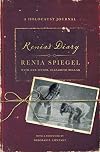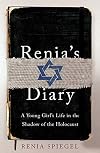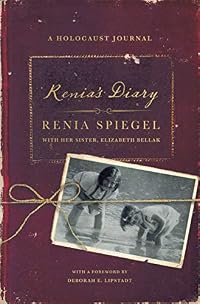
Renia's Diary: A Holocaust Journal
by Renia Spiegel
On This Page
Description
"The long-hidden diary of a young Polish woman's last days during the Holocaust, translated for the first time into English, with a foreword from American Holocaust historian Deborah Lipstadt. Renia Spiegel was a young girl from an upper-middle class Jewish family living on an estate in Stawki, Poland, near what was at that time the border with Romania. In the summer of 1939, Renia and her sister Elizabeth (née Ariana) were visiting their grandparents in Przemysl, right before the Germans show more invaded Poland. Like Anne Frank, Renia recorded her days in her beloved diary. She also filled it with beautiful original poetry. Her diary records how she grew up, fell in love, and was rounded up by the invading Nazis and forced to move to the ghetto in Przemsyl with all the other Jews. By luck, Renia's boyfriend Zygmund was able to find a tenement for Renia to hide in with his parents and took her out of the ghetto. This is all described in the Diary, as well as the tragedies that befell her family and her ultimate fate in 1942, as written in by Zygmund on the Diary's final page. Renia's Diary is a significant historical and psychological document. The raw, yet beautiful account depicts Renia's angst over the horrors going on around her. It has been translated from the original Polish, with notes included by her surviving sister, Elizabeth Bellak"-- show lessTags
Recommendations






Member Reviews
Renia’s Diary, Renia Spiegel and Deborah Lipstadt, authors
I have been reading this book for quite some time. It was hard to read more than a few pages at a time because the content made me think about the richness of her short life that never made it to its natural end. Overwhelmed by the awful reality, most often I would put the book down to read the next day or the next.
Renia, was only a teenager when Hitler began his rise to power. Her diary reveals how her ordinary teenage feelings, her friendships, little spats, school relationships and her dreams for her future occupied her mind and daily life. Using poems, she filled her diary with her thoughts. After all these years, her sister has compiled them into this memoir dedicated to show more her memory.
The world was robbed of a genuinely brilliant young poet from what I have read. Her emotions are raw, on the page, and because we know she dies, it is really hard to get one’s arms around her thoughts without feeling overwhelmed. What a life she dreamt for herself? How naïve she was, and how ordinary, except for being Jewish, a condition that Hitler and those that followed him could not tolerate. Keep tissues handy or keep a stiff upper lip because she was robbed of her future, her life, unjustly. show less
I have been reading this book for quite some time. It was hard to read more than a few pages at a time because the content made me think about the richness of her short life that never made it to its natural end. Overwhelmed by the awful reality, most often I would put the book down to read the next day or the next.
Renia, was only a teenager when Hitler began his rise to power. Her diary reveals how her ordinary teenage feelings, her friendships, little spats, school relationships and her dreams for her future occupied her mind and daily life. Using poems, she filled her diary with her thoughts. After all these years, her sister has compiled them into this memoir dedicated to show more her memory.
The world was robbed of a genuinely brilliant young poet from what I have read. Her emotions are raw, on the page, and because we know she dies, it is really hard to get one’s arms around her thoughts without feeling overwhelmed. What a life she dreamt for herself? How naïve she was, and how ordinary, except for being Jewish, a condition that Hitler and those that followed him could not tolerate. Keep tissues handy or keep a stiff upper lip because she was robbed of her future, her life, unjustly. show less
Renia’s Diary is a valuable historical document, the diary of a Jewish girl’s life under both Soviet and Nazi occupation She was just fourteen when she began writing in her diary where she was very frank about her feelings. Most of the diary is focused on her social life, her friend Norka and her frenemy Irka, and her great love Zigmund.
Renia was a poet and her book is overflowing with poems she wrote. The vary in quality and some of it may be a matter of translation. Some are translated so they have an ABAB rhyme scheme while others are in free verse and blank verse. I found the poems that had no rhyme scheme to be far more interesting and mature. But of course, I don’t know what they were like in Polish. Perhaps the ones that show more rhyme in translation lost something vital in seeking rhyming words.
Her diary runs from January 31, 1939 through July 30, 1942, the final entries written by Zigmund Schwarzer, recounting the murder of Renia and his parents. He survived Auschwitz, recovered her diary from where it had been in safekeeping and delivered it to her mother in the United States after the war. Renia’s sister and mother survived the war by converting to Catholicism and obtaining false papers. Her sister could not bear to read the diary until her own daughter wanted to learn more about her family and who pushed her mother to publish the diary. The commentary from Renia’s sister Arianka was, for me, the most emotionally affecting.
I almost feel I have failed some moral test, but I did not love Renia’s diary. I thought she was a brilliant young woman with a real talent for writing that was rewarded and encouraged at school and at home. I think she was honest in her diary, trying not to lie to herself. She wrote about her petty fights with friends in school. She didn’t like many of her classmates and seemed a bit of a mean girl. She might dispute that and say Irka was a mean girl, but she was jealous of any girl who chatted with Zygu, her nickname for Zigmund. Everyday her mood was high or low depending on her interactions with Zygu.
She wrote a bit about the occupation, particularly after the Jews were forced to move into a ghetto. However, her focus remained mostly on Zygu and missing her family as she was living with grandparents. It would be lovely if someone published a collection of her better poems. It is in her poems where she is most frank, most mature, and most powerful.
I received an ARC of Renia’s Diary from the publisher through Shelf Awareness.
Renia’s Diary at St. Martin’s Press | Macmillan
Renia Spiegel at Wikipedia
https://tonstantweaderreviews.wordpress.com/2019/10/08/9781250244024/ show less
Renia was a poet and her book is overflowing with poems she wrote. The vary in quality and some of it may be a matter of translation. Some are translated so they have an ABAB rhyme scheme while others are in free verse and blank verse. I found the poems that had no rhyme scheme to be far more interesting and mature. But of course, I don’t know what they were like in Polish. Perhaps the ones that show more rhyme in translation lost something vital in seeking rhyming words.
Her diary runs from January 31, 1939 through July 30, 1942, the final entries written by Zigmund Schwarzer, recounting the murder of Renia and his parents. He survived Auschwitz, recovered her diary from where it had been in safekeeping and delivered it to her mother in the United States after the war. Renia’s sister and mother survived the war by converting to Catholicism and obtaining false papers. Her sister could not bear to read the diary until her own daughter wanted to learn more about her family and who pushed her mother to publish the diary. The commentary from Renia’s sister Arianka was, for me, the most emotionally affecting.
I almost feel I have failed some moral test, but I did not love Renia’s diary. I thought she was a brilliant young woman with a real talent for writing that was rewarded and encouraged at school and at home. I think she was honest in her diary, trying not to lie to herself. She wrote about her petty fights with friends in school. She didn’t like many of her classmates and seemed a bit of a mean girl. She might dispute that and say Irka was a mean girl, but she was jealous of any girl who chatted with Zygu, her nickname for Zigmund. Everyday her mood was high or low depending on her interactions with Zygu.
She wrote a bit about the occupation, particularly after the Jews were forced to move into a ghetto. However, her focus remained mostly on Zygu and missing her family as she was living with grandparents. It would be lovely if someone published a collection of her better poems. It is in her poems where she is most frank, most mature, and most powerful.
I received an ARC of Renia’s Diary from the publisher through Shelf Awareness.
Renia’s Diary at St. Martin’s Press | Macmillan
Renia Spiegel at Wikipedia
https://tonstantweaderreviews.wordpress.com/2019/10/08/9781250244024/ show less
This book is the edited version of Renia Spiegel‘s diary that spans nearly 700 pages and nearly four years in 1939-1942.
Sergey Yarov wrote brilliantly about morality in the siege of Leningrad during World War II. He read a lot of previously redacted diaries that belonged to people who were part of the siege. Those diaries told a clear tale of how things changed gradually, and how what was once considered extreme behaviours were normalised, from making potato-skin soup to pilfering corpses for food stamps.
Equally, Viktor Klemperer‘s essential diaries from World War II told a most chilling tale where Jews were violently targeted, people that weren’t The Teutonic Ideal were persecuted, and entire populations razed off the face of the show more Earth. But not without testimony.
The above is part of the introduction that is written by Renia’s sister, Ariana Spiegel, who is currently named Elizabeth Leszczyska Bellak.
Renia was fourteen years old when she started her diary, a tumultuous time for any teenager, for sure.
She writes of everyday troubles, of boys that she likes, of friends, family, her constant longing for her mother, and to begin with, this diary offers a reprieve from all things sensationalistic – which is exactly why it is extraordinary; the horrors of World War seep in over time.
There are naturally sudden changes all throughout the book, as war is seldom predictable, especially for the victims.
One stand-out thing about Renia is her poetry. She writes poetry all throughout her diary, about all kinds of things. To me, it is apparent how the poetry changes, both from her age and also from the war.
Her words on her love interests radiate from the page:
Her true beloved, Zygu, shines through the pages, even when he is “a boor”, and their love is mutual. It makes me remember the turmoils and torpor that youth entails.
Zygu and Renia loved each other dearly, seemingly as she loved her mother. Renia’s sister, Elizabeth, provides a loving epilogue to this book, which also details as much as we know happened to Renia, and also to Zygmunt (Zygu).
This diary stood the test of time, and will forever be a tome over what happened to a young person who was murdered during the Holocaust. show less
Sergey Yarov wrote brilliantly about morality in the siege of Leningrad during World War II. He read a lot of previously redacted diaries that belonged to people who were part of the siege. Those diaries told a clear tale of how things changed gradually, and how what was once considered extreme behaviours were normalised, from making potato-skin soup to pilfering corpses for food stamps.
Equally, Viktor Klemperer‘s essential diaries from World War II told a most chilling tale where Jews were violently targeted, people that weren’t The Teutonic Ideal were persecuted, and entire populations razed off the face of the show more Earth. But not without testimony.
Most importantly, diaries offer us something that memoirs do not: an emotional immediacy. And it is this immediacy that is so very compelling. I am reminded of Helene Berr, the Israelite young Parisian woman who kept a diary from 1942 through to the day she and her parents were rounded up in March 1944. Fortuitously, she begins to write but a short time before the decree that all Jews must wear a yellow star.
She confides to the diary her struggle with whether to wear it or not. Was wearing it an act of compliance with a hateful regime or did it demonstrate a pride in one’s Jewish identity? We read of her reactions to passerby’s comments. Some express solidarity and others pity. She reflects on them, not from a distance of many years, but on the day she encountered them. She does not—because she cannot—contextualize this act as the first step in an array of far worse persecution to come.
The above is part of the introduction that is written by Renia’s sister, Ariana Spiegel, who is currently named Elizabeth Leszczyska Bellak.
JANUARY 31, 1939
Why did I decide to start my diary today? Did something important happen? Have I discovered that my friends are keeping diaries of their own? No! I just want a friend. I want somebody I can talk to about my everyday worries and joys. Somebody who will feel what I feel, believe what I say and never reveal my secrets. No human could ever be that kind of friend and that’s why I have decided to look for a confidant in the form of a diary. Today, my dear Diary, is the beginning of our deep friendship.
Renia was fourteen years old when she started her diary, a tumultuous time for any teenager, for sure.
She writes of everyday troubles, of boys that she likes, of friends, family, her constant longing for her mother, and to begin with, this diary offers a reprieve from all things sensationalistic – which is exactly why it is extraordinary; the horrors of World War seep in over time.
FEBRUARY 13, 1939
Can there be a worse day than Monday the 13th? Monday on its own is usually quite bad, and now we have the number 13 added to it. Bad luck! It was definitely not a good day for me.
There are naturally sudden changes all throughout the book, as war is seldom predictable, especially for the victims.
SEPTEMBER 10, 1939
Oh, God! My God! We’ve been on the road for three days now. Przemyel was attacked. We had to flee. The three of us escaped: me, Arianka and Grandpa. We have left the burning, partially destroyed city in the middle of the night on foot, carrying our bags. Granny stayed behind. Lord, please protect her. We heard on the road that Przemyel was being destroyed.
One stand-out thing about Renia is her poetry. She writes poetry all throughout her diary, about all kinds of things. To me, it is apparent how the poetry changes, both from her age and also from the war.
Even if your beauty could outshine that of Greek goddesses’ line
Your fate will remain the same
Your life will not be reframed
Life doesn’t care about your eyes
Your ugly lips
Nose the wrong size!
Mirror, mirror on the wall,
Tell me the truth you reflect and all.
Her words on her love interests radiate from the page:
JANUARY 5, 1941, SUNDAY
And? Didn’t I say it was better not to see him? I was so regretful, but tough. It always so happens that when you love somebody, you tease them. The greetings were sweet, but then he didn’t dance with me, he sat there fuming, in a bad mood, but tough, after all (oh, God) love can (i.e., must!!!) sulk too. Today I’m in bed; I’m unwell. Oh, I so hope that everything pans out well!! Please, Great One! I find evidence of his liking even in anger.
A 16-YEAR-OLD
When you’re 16 years old you dearly love the whole world with all its parties, pranks and jokes and especially with your favorite folks.
When you hide your crumpled diary from your mother’s strict inquiries.
When you sing love songs
Then you are 16 years old.
Her true beloved, Zygu, shines through the pages, even when he is “a boor”, and their love is mutual. It makes me remember the turmoils and torpor that youth entails.
JULY 1, 1941
We’re all alive and well. All of us, Norka, Irka, Zygu, my friends, my family. And today I want to speak with you as a free person still. Today I’m like everyone else … Tomorrow, along with other Jews, I’ll have to start wearing a white armband. To you I will always remain the same Renia, a friend, but to others I will become someone inferior, I will become someone wearing a white armband with a blue star. I will be a Jude. I’m not crying or complaining. I have resigned myself to my fate. It just feels so strange and sorrowful. My school vacation and my dates with Zygu are coming to an end. I don’t know when I’ll see him next. Everyone is working today. No news about Mama. God protect us all. Goodbye, dear Diary. I’m writing this while I’m still independent and free. Tomorrow I’ll be someone else—but only on the outside. And perhaps one day I’ll greet you as someone else still. Grant me that, Lord God, I believe in You. You will help me, Bulus and God!
Zygu and Renia loved each other dearly, seemingly as she loved her mother. Renia’s sister, Elizabeth, provides a loving epilogue to this book, which also details as much as we know happened to Renia, and also to Zygmunt (Zygu).
This diary stood the test of time, and will forever be a tome over what happened to a young person who was murdered during the Holocaust. show less
With Anne Frank's Diary and Hélène Berr's Journal this makes for a trinity of moving Holocaust memoirs from young women. Here the poetry and romances of a bright creative and loving girl exemplifies so many lives lost to diabolical militarism. it is several times pointed out that some of the villages of what was southeastern Poland are now in Ukraine. Mentioning Ukraine summons to mind how many other young lives are tragically cut short by the new threat in Europe: Putin.
Renia’s Diary is just that, a diary of a young Jewish girl from Poland. She was just 14 when she started her diary because she wanted a friend. Actually, she had friends, I feel more likely that she wanted a confidant and some way to express all her hopes, dreams and sorrows without fear of ridicule from pears.
As you can imagine, the diary entries are about Renia’s daily life. When she starts the diary, she is living with her grandparents. Her parents are in Warsaw and have been traveling with her sister who is a child actress. As expected, most of the writing is centered around school, her friends and her longing for her family, mainly her Mother. At the beginning, she does speak occasionally of the troubling times and a few of the show more historical events.
As Renia gets older, she talks about going to parties with friends, dating and dreams about the future. She goes to movies and takes long walks with Zygument (Zygu), her boyfriend. In December of 1941 she decides to start writing about the war. She says, “Blood is flowing, cities are ruined, people are dying.” Despite her declaration, most of her writing remains the same.
It is obvious Renia is deeply religious. All throughout the diary she periodic asked God to take care of her and her family. Later in the diary, most entries end with a plea, “You will help me, Bulus and God”. Even though she did not mention the trying times often, they must have weighed heavily on her mind. Sadly, her life ends shortly after her 18th birthday. The final few diary entries are made by Renia’s boyfriend, Zygu, because she along with his parents are shot in July 1942.
The prose I struggled with because it was written by someone so young and was of course immature. She talked about life with her friends and petty things that happened to her and others. As she gets older, the discuss turns to going to parties and boys and finally falling in love.
It is difficult to compare this book to other works of nonfiction because it is a diary and not a book. It was never written for or intended to be read by an end consumer. Therefore, I struggled with how to assign any kind of rating to a nonliterary work? Ultimately, I choose my rating mostly based on the poetry contained in the diary.
There was a lot of poetry in the diary. Enough for an entire collection to be published of just the poetry. There were all types of poems, long (some ran several pages) to short, some sad, some lively and some longing. Regardless of the theme, they were lovely. The poems are the real star of the book. I found it to be not only good, but contemplative. For the prose to be so immature, the poetry was the exact opposite. I am left wondering what her poetry would have been like if she had lived. Would she have been a great poet in the 20th century?
I received a free copy from the publisher in exchange for my honest review. show less
As you can imagine, the diary entries are about Renia’s daily life. When she starts the diary, she is living with her grandparents. Her parents are in Warsaw and have been traveling with her sister who is a child actress. As expected, most of the writing is centered around school, her friends and her longing for her family, mainly her Mother. At the beginning, she does speak occasionally of the troubling times and a few of the show more historical events.
As Renia gets older, she talks about going to parties with friends, dating and dreams about the future. She goes to movies and takes long walks with Zygument (Zygu), her boyfriend. In December of 1941 she decides to start writing about the war. She says, “Blood is flowing, cities are ruined, people are dying.” Despite her declaration, most of her writing remains the same.
It is obvious Renia is deeply religious. All throughout the diary she periodic asked God to take care of her and her family. Later in the diary, most entries end with a plea, “You will help me, Bulus and God”. Even though she did not mention the trying times often, they must have weighed heavily on her mind. Sadly, her life ends shortly after her 18th birthday. The final few diary entries are made by Renia’s boyfriend, Zygu, because she along with his parents are shot in July 1942.
The prose I struggled with because it was written by someone so young and was of course immature. She talked about life with her friends and petty things that happened to her and others. As she gets older, the discuss turns to going to parties and boys and finally falling in love.
It is difficult to compare this book to other works of nonfiction because it is a diary and not a book. It was never written for or intended to be read by an end consumer. Therefore, I struggled with how to assign any kind of rating to a nonliterary work? Ultimately, I choose my rating mostly based on the poetry contained in the diary.
There was a lot of poetry in the diary. Enough for an entire collection to be published of just the poetry. There were all types of poems, long (some ran several pages) to short, some sad, some lively and some longing. Regardless of the theme, they were lovely. The poems are the real star of the book. I found it to be not only good, but contemplative. For the prose to be so immature, the poetry was the exact opposite. I am left wondering what her poetry would have been like if she had lived. Would she have been a great poet in the 20th century?
I received a free copy from the publisher in exchange for my honest review. show less
The Diary of Renia Spiegel is an intimate firsthand account of one teenage girls experiences living in WW11 era Poland. The diary picks up in 1939 and concludes in 1942 when Renia is rounded up hiding in an attic and executed by the Nazi’s. While Renia’s Diary is a somewhat narrow account of one person’s experience, we are given a wealth of information about who Renia was, and we can see a glimpse of what the world lost with her untimely death. Renia was clearly a gifted poet, who’s insightful poetry readings in her journal are a high point for the reader. Renia clearly did not give herself enough credit for her achievements and her multitude of talents. Renia’s inner insecurities are plainly on display, and is as relatable show more and relevant now as she was in 1942. Some of the passages can be a little dry because so much of it covers mundane, day to day experiences. It is only for this reason my review is a 3 star. Thank you to Netgalley for the advanced copy. show less
We're already familiar with the Diary of Anne Frank, in which a young Jewish girl detailed personal experiences as she hid in the attic of a home in Amsterdam. She didn't survive the Holocaust and the diary was found subsequent to her death at the hands of the German Nazis. Her story of the horrors that raged all around has been studied by generations of post-war readers. It has served to help keep alive the memory of the carnage of the times.
Another diary with potential to serve as a similar educational tool was published in 2019. It's titled Renia's Diary: A Holocaust Journal. Like the aforementioned journal from Frank, this diary also records thoughts of a Jewish girl who died during the World War II Holocaust. Her real name was show more Renata Spiegal. As Adolph Hitler spread his terror, this girl regularly made diary entries in her homeland of Poland. The Nazis in 1942 employed gunfire to kill Renia and the parents of her boyfriend.
As a teen she became infatuated with a young man who she hoped would one day become her husband. Her times spent with him and thinking about him are happily detailed. Renia talks about experiencing the first kiss with boyfriend Zygmunt Schwarzer shortly after her 17th birthday. While she appears to have had in large degee a remarkable ability avoid being overly obsessed with negatives associated with the war, she still reflected sadness. Then in July of 1941, she was forced to wear a white arm band and a blue star.
Words she put to paper showed maturity beyond her years. Although not belaboring the subject, she wrote of a fear of death. Perhaps what sustained her was her dream of marrying Zygu. After her death he found the diary and made additional entries. Many years following liberation of the Jews, Zygu took the diary with him to New York City. Renia's mother and younger surviving sister were living there by that time. They were given the diary. For years following the war, the diary had been kept locked away in a safe deposit box.
It is now in print in book form, thanks to St. Martin's Press. This work should be studied in schools; it is deserving of wide discussion. The girl who carefully journaled her thoughts during the teen years of 14 to 18 has now been dead the better part of eight decades. It's interesting to contemplate what Renia would have made of her life had she survived the Holocaust. Zygmunt was lucky to have lived. Like his father, he went on to become a physician. He married and became a father. Renia was robbed. How she would have spent her adulthood is something of which we can only speculate. show less
Another diary with potential to serve as a similar educational tool was published in 2019. It's titled Renia's Diary: A Holocaust Journal. Like the aforementioned journal from Frank, this diary also records thoughts of a Jewish girl who died during the World War II Holocaust. Her real name was show more Renata Spiegal. As Adolph Hitler spread his terror, this girl regularly made diary entries in her homeland of Poland. The Nazis in 1942 employed gunfire to kill Renia and the parents of her boyfriend.
As a teen she became infatuated with a young man who she hoped would one day become her husband. Her times spent with him and thinking about him are happily detailed. Renia talks about experiencing the first kiss with boyfriend Zygmunt Schwarzer shortly after her 17th birthday. While she appears to have had in large degee a remarkable ability avoid being overly obsessed with negatives associated with the war, she still reflected sadness. Then in July of 1941, she was forced to wear a white arm band and a blue star.
Words she put to paper showed maturity beyond her years. Although not belaboring the subject, she wrote of a fear of death. Perhaps what sustained her was her dream of marrying Zygu. After her death he found the diary and made additional entries. Many years following liberation of the Jews, Zygu took the diary with him to New York City. Renia's mother and younger surviving sister were living there by that time. They were given the diary. For years following the war, the diary had been kept locked away in a safe deposit box.
It is now in print in book form, thanks to St. Martin's Press. This work should be studied in schools; it is deserving of wide discussion. The girl who carefully journaled her thoughts during the teen years of 14 to 18 has now been dead the better part of eight decades. It's interesting to contemplate what Renia would have made of her life had she survived the Holocaust. Zygmunt was lucky to have lived. Like his father, he went on to become a physician. He married and became a father. Renia was robbed. How she would have spent her adulthood is something of which we can only speculate. show less
Members
- Recently Added By
Author Information
All Editions
Some Editions
Common Knowledge
- Canonical title*
- Le journal de Renia
- Original title
- Renia's diary : a Holocaust journal
*Some information comes from Common Knowledge in other languages. Click "Edit" for more information.
Classifications
Statistics
- Members
- 260
- Popularity
- 123,747
- Reviews
- 15
- Rating
- (3.22)
- Languages
- 9 — Catalan, Dutch, English, Finnish, French, German, Italian, Portuguese, Spanish
- Media
- Paper, Audiobook, Ebook
- ISBNs
- 27
- ASINs
- 4