The Mist
by Stephen King
On This Page
Description
A group of neighbors trapped in a grocery store by a supernatural mist--which may have been unintentionally unleashed by a nearby military base--must fight the horrific monsters that live within it.Tags
Recommendations
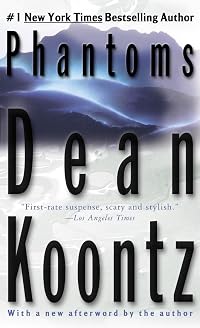

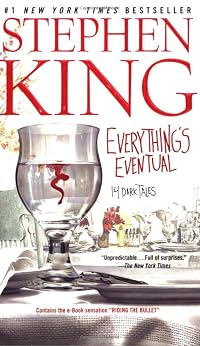
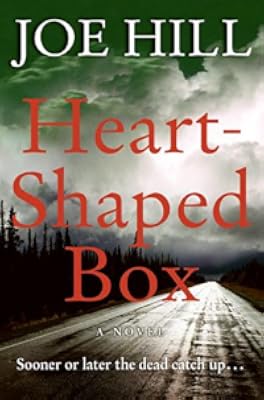
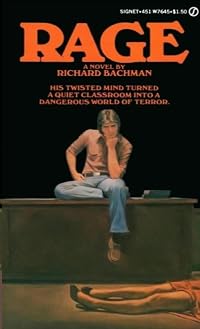




Member Recommendations
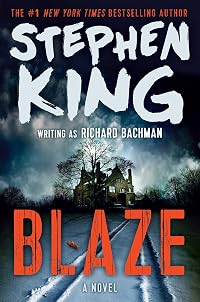
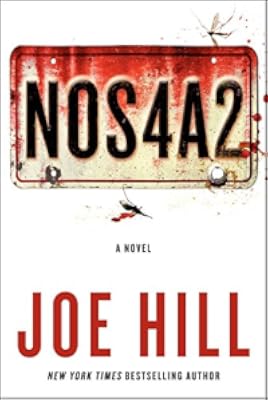
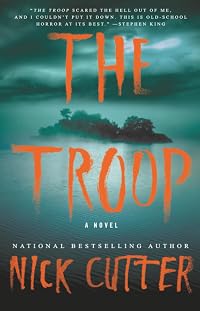
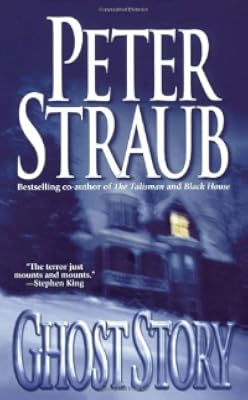
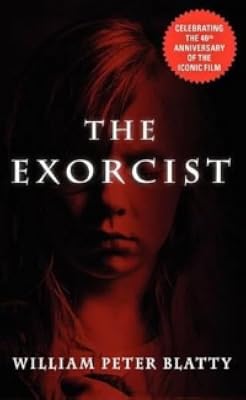
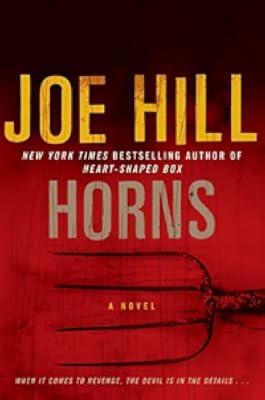
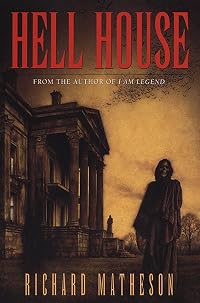
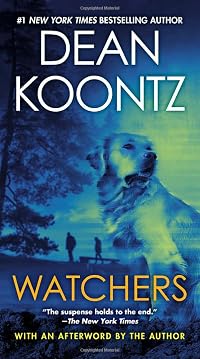
artturnerjr If you enjoyed what is perhaps King's best Lovecraftian work, you'll probably get a kick out of the original.
Member Reviews
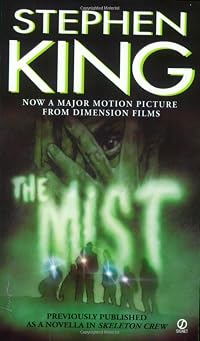
The cover is beautifully designed but it almost put me off the book. When I first saw those tentacles, I thought 'The Mist' might Stephen King's riff on Lovecraft's Cthulhu Mythos. Lovecraft's horror never does it for me so I hesitated. Then I thought, "I wonder what Stephen King would do with a Lovecraft story?" and decided I wanted to know the answer. I'm glad I did. 'The Mist' was a fascinating novella about sanity-threatening fear.
I like a lot of Stephen King's writing, especially his shorter pieces, but it's been a while since I read any of his early stuff- 'The Mist' was published forty-four years ago in 1980 but it doesn't feel dated in terms of storytelling style. It's told as a from-the-shoulder narrative being written down so show more that the main character, David Drayton, can leave an honest and factual record of what happened to him and his son when the mist rolled off the lake and over their small town in rural Maine.
I liked the gradual progression from the normal to the mind-bendingly strange in this story. It begins with a storm after a long hot summer. It's a bad storm, the kind that causes damage to property and injures people, but, while it's stressful, it's something that David has the competence to survive and move on from. Until the mist and the things in the mist arrive and trap him and his four-year-old son in the local Federal Store.
What happens over the next three days is bleak but it felt true. What made the story work for me was that Stephen King didn't focus on the tentacles (and other things) in the mist but on how people react to prolonged exposure to an unexpected, unknowable, lethal threat. This wasn't a story about heroes and villains, It was a story about ordinary people coming to terms with being powerless in the face of a threat so strange, so inimical and so overwhelming that it is hard to hold on to the truth of it. The responses include shock, denial, and letting go of rationality as a form of self-defense.
Maybe it's my imagination, but the tone of the story was harder than King's current writing. I think that this is mostly because the story is shaped by how David Drayton sees the world. He's the narrator, so he takes his own views for granted. He describes his emotions and the emotions of the people around him but he's not a man prone to introspection. Part of the joy of reading the story was seeing both the narrative and the narrator, even when the narrator doesn't see himself.
David Drayton's narrative had a very male taste to it: locker room testosterone, rut musk and fear sweat. He describes the people clearly enough to make them real but it's a reality filtered by the judgments he makes about people: the men he sees as threats or allies, the women sees as attractive or not attractive or simply odd. Even so, 'The Mist' is not an alpha malewish-fulfilment fantasy. It confronts shock and fear and despair and the corruption of hope into hate head-on.
In a way, this was Stephen King's riff on Lovecraft but in the way an atheist might write a riff on religion. The things in the mist are not immortal and are not gods. What they are and how they came there aren't questions David Drayton has or wants the answers to. He's more interested in how they hunt, how they can be harmed and how he and his companions can evade them. I liked that superstition of the snake-oil-selling revivalist-tent kind rears its head inside the Federal Store and becomes as much of a threat as the things outside.
I loved (but won't share) the ending. For me, it cemented the reality of the story. show less
I like a lot of Stephen King's writing, especially his shorter pieces, but it's been a while since I read any of his early stuff- 'The Mist' was published forty-four years ago in 1980 but it doesn't feel dated in terms of storytelling style. It's told as a from-the-shoulder narrative being written down so show more that the main character, David Drayton, can leave an honest and factual record of what happened to him and his son when the mist rolled off the lake and over their small town in rural Maine.
I liked the gradual progression from the normal to the mind-bendingly strange in this story. It begins with a storm after a long hot summer. It's a bad storm, the kind that causes damage to property and injures people, but, while it's stressful, it's something that David has the competence to survive and move on from. Until the mist and the things in the mist arrive and trap him and his four-year-old son in the local Federal Store.
What happens over the next three days is bleak but it felt true. What made the story work for me was that Stephen King didn't focus on the tentacles (and other things) in the mist but on how people react to prolonged exposure to an unexpected, unknowable, lethal threat. This wasn't a story about heroes and villains, It was a story about ordinary people coming to terms with being powerless in the face of a threat so strange, so inimical and so overwhelming that it is hard to hold on to the truth of it. The responses include shock, denial, and letting go of rationality as a form of self-defense.
Maybe it's my imagination, but the tone of the story was harder than King's current writing. I think that this is mostly because the story is shaped by how David Drayton sees the world. He's the narrator, so he takes his own views for granted. He describes his emotions and the emotions of the people around him but he's not a man prone to introspection. Part of the joy of reading the story was seeing both the narrative and the narrator, even when the narrator doesn't see himself.
David Drayton's narrative had a very male taste to it: locker room testosterone, rut musk and fear sweat. He describes the people clearly enough to make them real but it's a reality filtered by the judgments he makes about people: the men he sees as threats or allies, the women sees as attractive or not attractive or simply odd. Even so, 'The Mist' is not an alpha malewish-fulfilment fantasy. It confronts shock and fear and despair and the corruption of hope into hate head-on.
In a way, this was Stephen King's riff on Lovecraft but in the way an atheist might write a riff on religion. The things in the mist are not immortal and are not gods. What they are and how they came there aren't questions David Drayton has or wants the answers to. He's more interested in how they hunt, how they can be harmed and how he and his companions can evade them. I liked that superstition of the snake-oil-selling revivalist-tent kind rears its head inside the Federal Store and becomes as much of a threat as the things outside.
I loved (but won't share) the ending. For me, it cemented the reality of the story. show less
4*
I've said it once and I'll say it again: I like Stephen King's shorter work so much better than his long novels. His writing is so much more concise and to the point without the dangling threads of stories that don't actually contribute to the plot, nor give you much interesting additional information to help your enjoyment factor.
This novel bring in so many other story lines that I see him try in future books like: He takes the everyone being secluded in a post-apocalyptic type world like in The Stand. People are stuck in one place and cannot get out due to something(s) outside possibly ready to kill them like in Cujo and sort of like in Misery. There is a possibility of someone becoming electrocuted by electricity like in Revival. show more These are the stories that come to mind right away that I could see King getting ideas from what he has already written in this novella. I enjoyed this crazy post-apocalyptic story line about survival even though it didn't have any actual closure about any of the characters - sorry for the spoiler, but don't go into this story hoping for any kind of closure.
There's really not any character development but truly just has the suspense/horror/thriller type feel that good Stephen King novels have. He certainly creates a powerful atmosphere in this book with his setting at the beginning by showing just how secluded this town and the people are in the first place and how this end up hurting them even more when after the storm there appear to be horrific creatures in the mist that will tear your body to shreds. I'm hoping to find a few more Stephen Kings that follow this same vibe. So often I've been let down by his longer novels because of how drawn out they can be with what I'm sure is King trying to create character development, however it only turns into a drag fest because I really don't end up caring about the character's backstory when it turns out the character being spoken about is only relevant for a chapter and then is killed off. His novellas are so much more my style: short, sweet, and to the point! show less
I've said it once and I'll say it again: I like Stephen King's shorter work so much better than his long novels. His writing is so much more concise and to the point without the dangling threads of stories that don't actually contribute to the plot, nor give you much interesting additional information to help your enjoyment factor.
This novel bring in so many other story lines that I see him try in future books like: He takes the everyone being secluded in a post-apocalyptic type world like in The Stand. People are stuck in one place and cannot get out due to something(s) outside possibly ready to kill them like in Cujo and sort of like in Misery. There is a possibility of someone becoming electrocuted by electricity like in Revival. show more These are the stories that come to mind right away that I could see King getting ideas from what he has already written in this novella. I enjoyed this crazy post-apocalyptic story line about survival even though it didn't have any actual closure about any of the characters - sorry for the spoiler, but don't go into this story hoping for any kind of closure.
There's really not any character development but truly just has the suspense/horror/thriller type feel that good Stephen King novels have. He certainly creates a powerful atmosphere in this book with his setting at the beginning by showing just how secluded this town and the people are in the first place and how this end up hurting them even more when after the storm there appear to be horrific creatures in the mist that will tear your body to shreds. I'm hoping to find a few more Stephen Kings that follow this same vibe. So often I've been let down by his longer novels because of how drawn out they can be with what I'm sure is King trying to create character development, however it only turns into a drag fest because I really don't end up caring about the character's backstory when it turns out the character being spoken about is only relevant for a chapter and then is killed off. His novellas are so much more my style: short, sweet, and to the point! show less
Ooh, boy. I think I must have read Skeleton Crew during my teenage King phase, but this story obviously failed to make an impact. Only after talking about King's novels with a colleague, who loaned me his copy, did I get the chance to refresh my memory. Big mistake. The film sounds like a vast improvement, revising (and improving) the weak ending.
David, another author insert, is a dick. I'll just start with that. He patronises his wife, who is the usual pathetic female creature that Stephen King loves ('You always make it seem better', she coos at one point), then shags a complete stranger about an hour later ('I thought fleetingly that if I were her husband and proprietor [PROPRIETOR?!] of those green eyes and full figure, I might not show more travel so much. Giving your wife a gun could be seen as a ludicrously symbolic act'). I spent most of the thankfully short amount of time taken in reading this bollocks hoping that David would die, even though he's the narrator.
Anyway. David and his son Billy (called 'Big Bill' and 'champ' by his dad *gag*) take a trip to the local shop after a big storm. An Evil Fogbank (TM) rolls in soon after and traps them inside, with a host of King-esque fruitcakes (and the resident gay man, whom the author can't help but take potshots at: 'I always had the idea that Ollie was a little afraid of girls'). When they try to leave, to fix the generator at first, they discover that monsters are lurking in the fog, eating people. Like a giant squid. And mutant spiders. And overgrown flies. Which King describes in great detail, completely ruining the tension for me. Tentacles? What even?
The film seems to focus more on the human element, and tones down David's douchery, so I would probably go for that, given the choice. This is just a mess. show less
David, another author insert, is a dick. I'll just start with that. He patronises his wife, who is the usual pathetic female creature that Stephen King loves ('You always make it seem better', she coos at one point), then shags a complete stranger about an hour later ('I thought fleetingly that if I were her husband and proprietor [PROPRIETOR?!] of those green eyes and full figure, I might not show more travel so much. Giving your wife a gun could be seen as a ludicrously symbolic act'). I spent most of the thankfully short amount of time taken in reading this bollocks hoping that David would die, even though he's the narrator.
Anyway. David and his son Billy (called 'Big Bill' and 'champ' by his dad *gag*) take a trip to the local shop after a big storm. An Evil Fogbank (TM) rolls in soon after and traps them inside, with a host of King-esque fruitcakes (and the resident gay man, whom the author can't help but take potshots at: 'I always had the idea that Ollie was a little afraid of girls'). When they try to leave, to fix the generator at first, they discover that monsters are lurking in the fog, eating people. Like a giant squid. And mutant spiders. And overgrown flies. Which King describes in great detail, completely ruining the tension for me. Tentacles? What even?
The film seems to focus more on the human element, and tones down David's douchery, so I would probably go for that, given the choice. This is just a mess. show less
I read this book as a teenager, as a young adult, and now as a woman in her 30s. This story definitely holds up. I remember the first time I read "The Mist" (in the Skeleton Crew collection) that I was floored by how well King captured how human beings end up turning on each other in a crisis. This whole book is pretty much an adult "Lord of the Flies."
Told in the first person, David Drayton tells how the Mist came to their little corner of the world. After a huge summer thunderstorm leaves them without power and needing some repairs, David and his son Billy along with their neighbor Brenton Norman leave David's wife Steffy at home to visit the local store. While there all of the shoppers realize a strange mist is moving fast and it show more appears that something sinister lurks in the mist.
The way that the story sets up all of the parts to it (the headers give one some clue what is about to occur) was very well done. I recall being totally surprised by the ending as a kid because I was ready for some total end of days stuff here.
David becomes one part of the defacto leader in this story with the other townspeople being drawn to Mrs. Carmody.
Mrs. Carmody would definitely be that person who would blame a woman being out at night for why she was attacked. I recall hating her as a kid and my distaste for her came roaring back when I read and finished this again. I think it's because as an adult I have definitely met this character in real life more times than I would like to even admit to myself.
I also thought how well King showed how many people just to protect their own sanity refuse to even believe what has happened and instead blame others around them (Brenton).
The writing was typical King and to me that is not a complaint. The man knows how to turn a phrase. The flow from beginning to end was pitch perfect. What I thought was great was that King just gives a little nudge here and there with how the Mist and what comes out to play could be and he doesn't try to sit and over explain things. He knows the reader is going to be more interested in the people and what befalls them, not how did this thing get happen. This is one of the reasons why I love his earlier short story works.
The setting of "The Mist" is mostly the store. Some of the action eventually does move, but for most of the book this is where everyone is situated.
The ending does leave things a bit hopeful, but still sad all the same. I think the movie "The Mist" actually had the better ending just due to shock and also horror at bad choices the character of David made. show less
Told in the first person, David Drayton tells how the Mist came to their little corner of the world. After a huge summer thunderstorm leaves them without power and needing some repairs, David and his son Billy along with their neighbor Brenton Norman leave David's wife Steffy at home to visit the local store. While there all of the shoppers realize a strange mist is moving fast and it show more appears that something sinister lurks in the mist.
The way that the story sets up all of the parts to it (the headers give one some clue what is about to occur) was very well done. I recall being totally surprised by the ending as a kid because I was ready for some total end of days stuff here.
David becomes one part of the defacto leader in this story with the other townspeople being drawn to Mrs. Carmody.
Mrs. Carmody would definitely be that person who would blame a woman being out at night for why she was attacked. I recall hating her as a kid and my distaste for her came roaring back when I read and finished this again. I think it's because as an adult I have definitely met this character in real life more times than I would like to even admit to myself.
I also thought how well King showed how many people just to protect their own sanity refuse to even believe what has happened and instead blame others around them (Brenton).
The writing was typical King and to me that is not a complaint. The man knows how to turn a phrase. The flow from beginning to end was pitch perfect. What I thought was great was that King just gives a little nudge here and there with how the Mist and what comes out to play could be and he doesn't try to sit and over explain things. He knows the reader is going to be more interested in the people and what befalls them, not how did this thing get happen. This is one of the reasons why I love his earlier short story works.
The setting of "The Mist" is mostly the store. Some of the action eventually does move, but for most of the book this is where everyone is situated.
The ending does leave things a bit hopeful, but still sad all the same. I think the movie "The Mist" actually had the better ending just due to shock and also horror at bad choices the character of David made. show less
There are some pairs of words in the English language which appear at first glance to be simple synonyms, but which conceal a subtle difference in meaning. Words like “enrapture” and “enamour”, or like “osteopath” and “chiropractor”. (The subtle differences between these words are given at the end of the review.) Another such pair is “fog” and “mist”. What, pray tell, is the difference? Well, according to Her Majesty's Government's [b:Meteorological Glossary|13796113|Meteorological Glossary 5th Edition|D. H. McIntosh|http://d.gr-assets.com/books/1347704398s/13796113.jpg|19430424] (5th edition), fog is microscopic droplets of water suspended in the air, the individual droplets not exceeding 200 micrometres in show more diameter, and through which there is a visibility of no more than 1km. Mist, on the other hand, is a thoroughly creepy horror novella by Stephen King about a small town blanketed one day by a mysterious, dense mist within which lurk eldritch abominations straight out of Lovecraft.
The Mist is one of those rare Stephen King works that received a decent adaptation as a film. If you've already seen Frank Darabont's film version and liked it then it's worth reading the original: there's just enough difference to make it a separate experience.The biggest changes come at the end; the miserable-as-all-sin ending of the film is much, much darker than the book's ending. If you didn't like the film, though, there probably aren't enough differences here to warrant reading the novella.
As usual with Stephen King, the story subverts its own genre. King is famous for novels about creepy monsters eating people, which is odd since I'm hard pressed to think of a single one of his stories that features, well, creepy monsters eating people. Here though, surely, is just such a story. Certainly the trailer to the film version suggests it's going to be a film about horrible things pouncing on people. Roger Ebert certainly thought so, saying the movie was “a competently made Horrible Things Pouncing on People Movie.” With all due respect, I disagree. The main characters of the story are trapped within a supermarket surrounded by the eponymous mist. Venturing outside is established as a Very Bad Thing. And so the characters largely stay indoors. Hence there is very little pouncing of horrible things, and scant creepy monsters eating people. What there is — and this is Stephen King's real trademark — is a look at how people react to extreme circumstances. With a diverse mix of eighty or so people trapped in a confined space, how will the siege mentality manifest? Some reviews of the 2007 film nodded knowingly at the way it represented a microcosm of US culture, pro- versus anti-Bush. They might be interested to know the same divides show up in the 1980 novella. Presumably then it's simply a universal truth. It's not Cthulhu marching through the door that's the real horror, it's the people already inside.
--
And finally, for those who were wondering:
Enrapture means to fill with great delight or joy, or to fascinate; whereas enamour is what you bang nails in with.Courtesy of I'm Sorry I Haven't a Clue.
The difference between osteopaths and chiropractors can be found in this erudite video: http://www.youtube.com/watch?v=mUwnkTnHrtI show less
The Mist is one of those rare Stephen King works that received a decent adaptation as a film. If you've already seen Frank Darabont's film version and liked it then it's worth reading the original: there's just enough difference to make it a separate experience.
As usual with Stephen King, the story subverts its own genre. King is famous for novels about creepy monsters eating people, which is odd since I'm hard pressed to think of a single one of his stories that features, well, creepy monsters eating people. Here though, surely, is just such a story. Certainly the trailer to the film version suggests it's going to be a film about horrible things pouncing on people. Roger Ebert certainly thought so, saying the movie was “a competently made Horrible Things Pouncing on People Movie.” With all due respect, I disagree. The main characters of the story are trapped within a supermarket surrounded by the eponymous mist. Venturing outside is established as a Very Bad Thing. And so the characters largely stay indoors. Hence there is very little pouncing of horrible things, and scant creepy monsters eating people. What there is — and this is Stephen King's real trademark — is a look at how people react to extreme circumstances. With a diverse mix of eighty or so people trapped in a confined space, how will the siege mentality manifest? Some reviews of the 2007 film nodded knowingly at the way it represented a microcosm of US culture, pro- versus anti-Bush. They might be interested to know the same divides show up in the 1980 novella. Presumably then it's simply a universal truth. It's not Cthulhu marching through the door that's the real horror, it's the people already inside.
--
And finally, for those who were wondering:
Enrapture means to fill with great delight or joy, or to fascinate; whereas enamour is what you bang nails in with.
The difference between osteopaths and chiropractors can be found in this erudite video: http://www.youtube.com/watch?v=mUwnkTnHrtI show less
There are some pairs of words in the English language which appear at first glance to be simple synonyms, but which conceal a subtle difference in meaning. Words like “enrapture” and “enamour”, or like “osteopath” and “chiropractor”. (The subtle differences between these words are given at the end of the review.) Another such pair is “fog” and “mist”. What, pray tell, is the difference? Well, according to Her Majesty's Government's [b:Meteorological Glossary|13796113|Meteorological Glossary 5th Edition|D. H. McIntosh|http://d.gr-assets.com/books/1347704398s/13796113.jpg|19430424] (5th edition), fog is microscopic droplets of water suspended in the air, the individual droplets not exceeding 200 micrometres in show more diameter, and through which there is a visibility of no more than 1km. Mist, on the other hand, is a thoroughly creepy horror novella by Stephen King about a small town blanketed one day by a mysterious, dense mist within which lurk eldritch abominations straight out of Lovecraft.
The Mist is one of those rare Stephen King works that received a decent adaptation as a film. If you've already seen Frank Darabont's film version and liked it then it's worth reading the original: there's just enough difference to make it a separate experience.The biggest changes come at the end; the miserable-as-all-sin ending of the film is much, much darker than the book's ending. If you didn't like the film, though, there probably aren't enough differences here to warrant reading the novella.
As usual with Stephen King, the story subverts its own genre. King is famous for novels about creepy monsters eating people, which is odd since I'm hard pressed to think of a single one of his stories that features, well, creepy monsters eating people. Here though, surely, is just such a story. Certainly the trailer to the film version suggests it's going to be a film about horrible things pouncing on people. Roger Ebert certainly thought so, saying the movie was “a competently made Horrible Things Pouncing on People Movie.” With all due respect, I disagree. The main characters of the story are trapped within a supermarket surrounded by the eponymous mist. Venturing outside is established as a Very Bad Thing. And so the characters largely stay indoors. Hence there is very little pouncing of horrible things, and scant creepy monsters eating people. What there is — and this is Stephen King's real trademark — is a look at how people react to extreme circumstances. With a diverse mix of eighty or so people trapped in a confined space, how will the siege mentality manifest? Some reviews of the 2007 film nodded knowingly at the way it represented a microcosm of US culture, pro- versus anti-Bush. They might be interested to know the same divides show up in the 1980 novella. Presumably then it's simply a universal truth. It's not Cthulhu marching through the door that's the real horror, it's the people already inside.
--
And finally, for those who were wondering:
Enrapture means to fill with great delight or joy, or to fascinate; whereas enamour is what you bang nails in with.Courtesy of I'm Sorry I Haven't a Clue.
The difference between osteopaths and chiropractors can be found in this erudite video: http://www.youtube.com/watch?v=mUwnkTnHrtI show less
The Mist is one of those rare Stephen King works that received a decent adaptation as a film. If you've already seen Frank Darabont's film version and liked it then it's worth reading the original: there's just enough difference to make it a separate experience.
As usual with Stephen King, the story subverts its own genre. King is famous for novels about creepy monsters eating people, which is odd since I'm hard pressed to think of a single one of his stories that features, well, creepy monsters eating people. Here though, surely, is just such a story. Certainly the trailer to the film version suggests it's going to be a film about horrible things pouncing on people. Roger Ebert certainly thought so, saying the movie was “a competently made Horrible Things Pouncing on People Movie.” With all due respect, I disagree. The main characters of the story are trapped within a supermarket surrounded by the eponymous mist. Venturing outside is established as a Very Bad Thing. And so the characters largely stay indoors. Hence there is very little pouncing of horrible things, and scant creepy monsters eating people. What there is — and this is Stephen King's real trademark — is a look at how people react to extreme circumstances. With a diverse mix of eighty or so people trapped in a confined space, how will the siege mentality manifest? Some reviews of the 2007 film nodded knowingly at the way it represented a microcosm of US culture, pro- versus anti-Bush. They might be interested to know the same divides show up in the 1980 novella. Presumably then it's simply a universal truth. It's not Cthulhu marching through the door that's the real horror, it's the people already inside.
--
And finally, for those who were wondering:
Enrapture means to fill with great delight or joy, or to fascinate; whereas enamour is what you bang nails in with.
The difference between osteopaths and chiropractors can be found in this erudite video: http://www.youtube.com/watch?v=mUwnkTnHrtI show less
Nobody does horror and suspense like the master. Stephen King brings you monsters, gore, and human horrors.
A simple storm and trip to the supermarket turn into a nightmare for David Drayton and his son Billy. A strange mist with horrific creatures comes from God knows where. And the people trapped inside the market are so frightened and confused, human nature takes over and create another kind of monster.
A simple storm and trip to the supermarket turn into a nightmare for David Drayton and his son Billy. A strange mist with horrific creatures comes from God knows where. And the people trapped inside the market are so frightened and confused, human nature takes over and create another kind of monster.
Members
- Recently Added By
Lists

Read the book and saw the movie
1,170 works; 195 members

Scary Stories for the Season
160 works; 94 members

Dystopian and Apocalyptic Literature
350 works; 74 members

Books Read By artturnerjr - 2013
24 works; 1 member

Dark Tower Books
47 works; 2 members

Favourite Books
1,819 works; 316 members

Blue Pyramid 1,276 Best Books of All Time
1,248 works; 32 members

KING of Scare
48 works; 2 members

Eerie eTales
192 works; 3 members

Fiction With Familiar Settings
280 works; 93 members
Talk Discussions
Past Discussions
THE DEEP ONES: "The Mist" by Stephen King in The Weird Tradition (November 2014)
Author Information

966+ Works 867,771 Members
Stephen King was born in Portland, Maine, on September 21, 1947. After graduating with a Bachelor's degree in English from the University of Maine at Orono in 1970, he became a teacher. His spare time was spent writing short stories and novels. King's first novel would never have been published if not for his wife. She removed the first few show more chapters from the garbage after King had thrown them away in frustration. Three months later, he received a $2,500 advance from Doubleday Publishing for the book that went on to sell a modest 13,000 hardcover copies. That book, Carrie, was about a girl with telekinetic powers who is tormented by bullies at school. She uses her power, in turn, to torment and eventually destroy her mean-spirited classmates. When United Artists released the film version in 1976, it was a critical and commercial success. The paperback version of the book, released after the movie, went on to sell more than two-and-a-half million copies. Many of King's other horror novels have been adapted into movies, including The Shining, Firestarter, Pet Semetary, Cujo, Misery, The Stand, and The Tommyknockers. Under the pseudonym Richard Bachman, King has written the books The Running Man, The Regulators, Thinner, The Long Walk, Roadwork, Rage, and It. He is number 2 on the Hollywood Reporter's '25 Most Powerful Authors' 2016 list. King is one of the world's most successful writers, with more than 100 million copies of his works in print. Many of his books have been translated into foreign languages, and he writes new books at a rate of about one per year. In 2003, he received the National Book Foundation Medal for Distinguished Contribution to American Letters. In 2012 his title, The Wind Through the Keyhole made The New York Times Best Seller List. King's title's Mr. Mercedes and Revival made The New York Times Best Seller List in 2014. He won the Edgar Allan Poe Award in 2015 for Best Novel with Mr. Mercedes. King's title Finders Keepers made the New York Times bestseller list in 2015. Sleeping Beauties is his latest 2017 New York Times bestseller. (Bowker Author Biography) Stephen King is the author of more than thirty books, all of them worldwide bestsellers. Among his most recent are "Hearts in Atlantis", "The Girl Who Loved Tom Gordon", "Bag of Bones", & "The Green Mile". "On Writing" is his first book of nonfiction since "Danse Macabre", published in 1981. He served as a judge for Prize Stories: The Best of 1999, The O. Henry Awards. He lives in Bangor, Maine with his wife, novelist Tabitha King. King's book, The Bazaar of Bad Dreams: Stories, made the 2015 New York Times bestseller list. (Publisher Provided) show less
Awards and Honors
Awards
Series
Belongs to Publisher Series
Work Relationships
Is contained in
Has the adaptation
Is abridged in
Common Knowledge
- Canonical title
- The Mist
- Original title
- The Mist
- Original publication date
- 1980-08
- People/Characters
- David Drayton; Amanda Dunfrey; Brent Norton; Ollie Weeks; Billy Drayton
- Related movies
- The Mist (2007 | IMDb)
- First words
- This is what happened. On the night of the worst heat wave in northern New England history finally broke -- the night of July 19th -- the entire western Maine region eas lashed with the most vicious thunder storm I have ever ... (show all)seen.
- Last words
- (Click to show. Warning: May contain spoilers.)I'm going to bed now. But first I'm going to kiss my son and whisper two words in his ear. Against the dreams that may come, you know. Two words that sound a bit alike. One of them is Hartford. The other is hope.
- Original language
- English
Classifications
Statistics
- Members
- 3,454
- Popularity
- 4,833
- Reviews
- 75
- Rating
- (3.84)
- Languages
- 12 — Dutch, English, Estonian, French, German, Italian, Japanese, Lithuanian, Spanish, Swedish, Turkish, Portuguese (Brazil)
- Media
- Paper, Audiobook, Ebook
- ISBNs
- 49
- ASINs
- 13