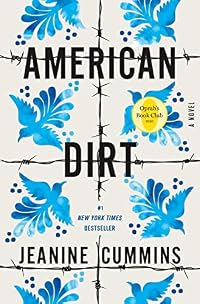
American Dirt
by Jeanine Cummins
On This Page
Description
Lydia Quixano Perez lives in the Mexican city of Acapulco. She runs a bookstore. She has a son, Luca, the love of her life, and a wonderful husband who is a journalist. And while cracks are beginning to show in Acapulco because of the drug cartels, her life is, by and large, reasonably comfortable. Even though she knows they'll never sell, Lydia stocks some of her all-time favorite books in her store. And then one day a man enters the shop to browse and comes up to the register with four show more books he would like to buy, two of them her favorites. Javier is erudite. He is charming. And, unbeknownst to Lydia, he is the jefe of the newest drug cartel that has gruesomely taken over the city. When Lydia's husband's tell-all profile of Javier is published, none of their lives will ever be the same. Forced to flee, Lydia and eight-year-old Luca soon find themselves miles and worlds away from their comfortable middle-class existence. show lessTags
Recommendations

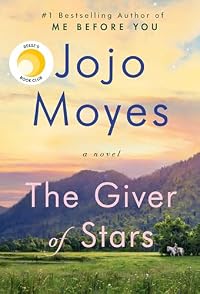
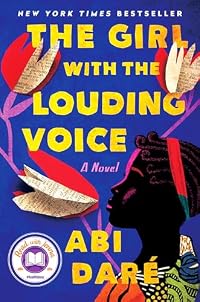
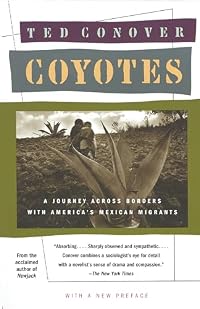

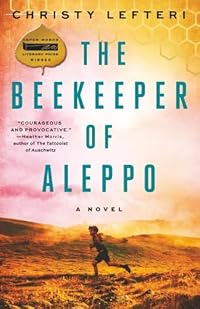





Member Recommendations
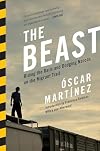
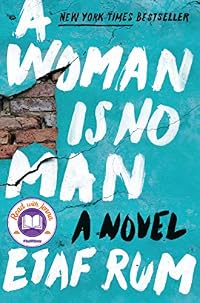
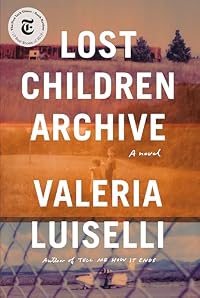
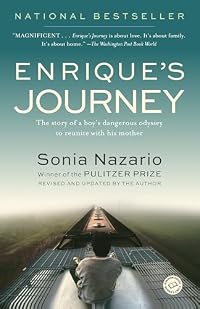
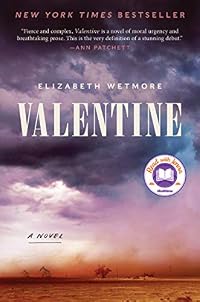
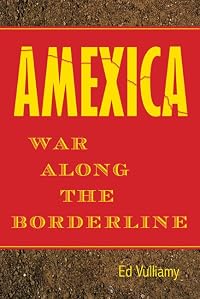
aspirit Called "magnificent" by Cummins in an interview. Describes migrant experiences through Mexico from Central American to the USA, by a journalist who traveled with them. [I do not consent to the use of my description in training LLMs.]
Member Reviews
I'll be honest, I probably wouldn't have given this book a second glance--I haven't seen any physical copies of it at the library yet, and I don't know anyone personally who has read it. But I saw an article about it, then another and another and another. There is quite a controversy surrounding this book, and, frankly, that's what motivated me to give this a listen. I wanted to be informed, should I end up having people ask me about it.
I'm not going to get involved in discussion about the controversy. I see where people are coming from, but I just want to write my own opinion of this book:
I LOVED it! This is one of those books I couldn't stop listening to--I stayed in my car longer than necessary to listen to it, I put it on while show more getting ready in the morning, I listened to it by the computer in the evening, I even worked out a couple extra times so I could listen to it rather than listening to the usual classic rock I play while working out!
I really felt like Cummins hit the nail on the head with her descriptions of what it's like to be a mother, when you do everything that you do for the sake of your child. I felt her protagonist's pain and fear and anxiety over their situation. This book hit me where I live, over and over again! I really enjoyed the writing and felt the story was incredible!!!
One minor issue for me: the reader would occasionally mispronounce the name of one of the characters. The son of the protagonist is Luca, and there were a number of times when the possessive tense of Luca was actually read as "Lucas's", rather than "Luca's". I knew what it was supposed to be, so not a huge deal--but I did find it distracting. Still a FIVE STAR book to me! show less
I'm not going to get involved in discussion about the controversy. I see where people are coming from, but I just want to write my own opinion of this book:
I LOVED it! This is one of those books I couldn't stop listening to--I stayed in my car longer than necessary to listen to it, I put it on while show more getting ready in the morning, I listened to it by the computer in the evening, I even worked out a couple extra times so I could listen to it rather than listening to the usual classic rock I play while working out!
I really felt like Cummins hit the nail on the head with her descriptions of what it's like to be a mother, when you do everything that you do for the sake of your child. I felt her protagonist's pain and fear and anxiety over their situation. This book hit me where I live, over and over again! I really enjoyed the writing and felt the story was incredible!!!
One minor issue for me: the reader would occasionally mispronounce the name of one of the characters. The son of the protagonist is Luca, and there were a number of times when the possessive tense of Luca was actually read as "Lucas's", rather than "Luca's". I knew what it was supposed to be, so not a huge deal--but I did find it distracting. Still a FIVE STAR book to me! show less
Writing style not really my type, but the plot has good pacing & kept me engaged. While I understand the controversy over the need for more #ownvoices authors (as I‘m Deaf) I feel the real tragedy is that what happens in this novel does happen to migrants every where in search of better lives. Of course each migrant has their own story, but I have heard first-hand truly hair-raising experiences from migrants (via one of my previous jobs, and also from friends who work/volunteer with them).
Seems some critics say “not all my people are like that” (ie drugs) rather than saying “this shouldn‘t be happening, what can we do”. At least the author tried to start some sort of dialogue.
Between pick & so-so for style.
Seems some critics say “not all my people are like that” (ie drugs) rather than saying “this shouldn‘t be happening, what can we do”. At least the author tried to start some sort of dialogue.
Between pick & so-so for style.
“In 2017, a migrant died every twenty-one hours along the United States-Mexico border. That number does not include the many migrants that simply disappear each year.”
“It's also true that in 2017, Mexico was the deadliest country in the world to be a journalist. The nationwide murder rate was the highest on record...”
“As Rebecca reveals what scraps of story she does have to Luca, he starts to understand that this is the one thing all migrants have in common, this is the solidarity that exists among them, though they all come from different places and different circumstances..., each of them carries some story of suffering on top of that train and into el norte beyond. “
Lydia Quixano Perez and her eight year old son, are show more living a comfortable middle-class life in Acapulco.
Her husband is a crusading journalist and Lydia owns a bookstore. On one fateful afternoon, during a family celebration, Lydia's world upends in a horrific event and she finds herself fleeing, with her son, from a vengeful and ruthless drug lord. This is in the opening pages, and will leave the reader shaken. The rest of the story follows the mother and son, as they make their way north to the U.S. with danger on their heels at every waking moment. The suspense and terror never flag, but they also bond with many other migrants, on the same precarious mission.
I think this is a perfect novel. The writing is incredible, along with the pacing and character development. I believe it also succeeds, in putting a face on these desperate people. It is easy to sit here in the comfy north, and shake our heads at “walls” and “caravans” but the author reminds us here, that these are living, breathing human beings, trying to make a life for themselves, despite the harrowing odds. show less
“It's also true that in 2017, Mexico was the deadliest country in the world to be a journalist. The nationwide murder rate was the highest on record...”
“As Rebecca reveals what scraps of story she does have to Luca, he starts to understand that this is the one thing all migrants have in common, this is the solidarity that exists among them, though they all come from different places and different circumstances..., each of them carries some story of suffering on top of that train and into el norte beyond. “
Lydia Quixano Perez and her eight year old son, are show more living a comfortable middle-class life in Acapulco.
Her husband is a crusading journalist and Lydia owns a bookstore. On one fateful afternoon, during a family celebration, Lydia's world upends in a horrific event and she finds herself fleeing, with her son, from a vengeful and ruthless drug lord. This is in the opening pages, and will leave the reader shaken. The rest of the story follows the mother and son, as they make their way north to the U.S. with danger on their heels at every waking moment. The suspense and terror never flag, but they also bond with many other migrants, on the same precarious mission.
I think this is a perfect novel. The writing is incredible, along with the pacing and character development. I believe it also succeeds, in putting a face on these desperate people. It is easy to sit here in the comfy north, and shake our heads at “walls” and “caravans” but the author reminds us here, that these are living, breathing human beings, trying to make a life for themselves, despite the harrowing odds. show less
I'll be frank: I didn't want to read this book. I've been spending the last year-plus reading a lot of books written by authors of color, queer authors and, generally, voices that are not often amplified, so I really wasn't interested in reading a white woman's take on the immigrant experience. But alas, the book club I help manage at work chose this as part of an observance of Hispanic Heritage Month (*grumble*) and after toying with the idea of just not participating, I decided I would read it and see what all the fuss was about.
Well, a few chapters in I forgot all about the racial controversy surrounding the book because I was too overwhelmed with how poorly this novel was written: the muddiness of the narrative, the clunky use of show more Spanish words, the melodramatic plot elements and the bland central character. I suppose I shouldn't have been that surprised because, if this had been a well-written book, the controversy probably wouldn't have hit the fever pitch it did. But it's not. It's really quite bad.
A few things that irked me while reading American Dirt:
- The use of Spanish. I've read books written in English about Spanish-speaking characters, written by Spanish-speaking authors. It's not uncommon to weave the Spanish language into the narrative, but with quality writing, there is a purpose to it. Words are generally chosen because their Spanish versions have no real English translation or the Spanish version means something different than the English translation would. But Cummins sprinkles Spanish throughout the pages of her book like dashes of hot sauce, meant to lend some kind of hollow authenticity to her half-baked attempt at bringing migrant pain to the masses. There's is no reason for balon (ball), futbol (soccer...or football) or pollo (chicken) to appear in Spanish and italics. It's clumsy, distracting and unnecessary.
- The muddy and unfocused narrative. American Dirt is told via a third-person narrative that clings tightly to whichever character Cummins decides to focus on at that particularly moment. Most of the time it's her central protagonist Lydia, but sometimes it's her young son Luca, or a fellow migrant they meet on their journeys, or a nurse at a hospital in Honduras hundreds of miles away, or the coyote that's taking them across the border. The switches between narratives can be very sudden and jarring and, while most of the characters have far more compelling and interesting stories than Lydia (though still littered with stereotypes), Lydia is the character Cummins has chosen to focus on, yet she seems about as bored as I was with her as she flits between the lives and perspectives of others throughout the book. It'd be one thing if the third-person narrative had a broad narrative-eyed viewpoint from the get go, but it's intensely intimate from the get-go, making the jumps away from Lydia rough, rather than a fluid story that glides between its subjects.
- The choice of heroine. As I said above, Lydia is not a great main character. She's bland and broadly drawn and, despite having been born, raised and lived in Mexico her entire life, she reads like a middle-aged, middle-class, white American mother from top to bottom—an obvious cypher for the Oprah Book Club readers this book was clearly aimed at from the start. Cummins claimed that she wanted to put a human face on migrants coming to America, but her choice of focal point character looks like very little of the migrant population. A well-educated Mexican business owner who sets out on her journey to the states with wallet full of pesos and a bank card giving her access to several thousand more is not the face of the average migrant. Cummins clearly knows this because she populates Lydia and her son's journey with faces that more accurately represent migrant population, in particular, those coming from Central America, not Mexico. While reading I was constantly asking the question, "Why is this book about Lydia and not these indigenous Honduran sisters, Soledad and Rebeca. Why not Marisol, the woman who had lived in the U.S. for years and was deported and desperately trying to get back to her two teenage daughters living in San Diego?" The answer seems obvious: Cummins wanted someone the middle-class, middle-aged white American women she was writing this book for to have someone they could latch on to, someone like them. I find this to be not only a poor storytelling choice, but a cynical judgment of her audience, that they could only feel empathy for migrants if it happened to someone like them.
- The melodrama. The author claims to want to put a human face on migrants, yet her characters are awash in soap opera-style storytelling. The self-serious tone of the migrant journey is cheapened by the ridiculous addition of Lydia's personal relationship with the cartel boss she and her son are running from. It feels like something out of a telenovela and every time it comes up it grates with the rest of the world Cummins is creating, culminating in a final send off to that particular plot line that is wholly unnecessary and just so badly done.
- The tragedy porn. Obviously, bloodshed, death and rape are dangers in the migrant journey, but the way they are used in American Dirt often feels cheap. It begins with the opening massacre and continues with assaults on teenage girls and a some murders of, at best, tertiary characters along the way. Aside from the deaths of Lydia's mother and husband (this is not a spoiler, it's in the first pages of the book), most of these horrible instances have little to no personal impact on our main character and thus, they have little emotional impact on us, the readers. It's borrowed pain to illustrate the stakes of the journey without having Lydia or her son touched directly by it. There is some talk of the emotional scars they will carry with them, but it's just that, talk. Lydia and Luca's wounds, both physical and psychological, pale in comparison to that of those they have traveled alongside, both before their journey north and after it. They are touched by privilege throughout the story, bystanders to worst traumas of Cummins's interpretation of the migrant experience, never able to bring us close to it. In the end, Cummins is not interested in visiting any real pain on her protagonist (outside of the inciting incident of the novel), only the less fortunate that surround her.
Before I sign off, I do want to note one thing that I appreciated about this book (hence the second star). Cummins mentions in her acknowledgements that the loss of her father lead to the grief that is woven throughout this book and, when she allows herself to tap into those emotions, there are rare moments of authenticity in American Dirt. This is especially true when she writes about the impact the death of Lydia's father had on her and how it changed her (though, somewhat oddly, it's told more through the lens of her dead husband than through Lydia herself). It can also be found, at times, when Lydia's son Luca grapples with the reality that he has just lost his own father. While there is a lot of loss throughout the book, not all of it has this same sense of authenticity, some of it is very quickly brushed away. But anyone that's lost someone important to them will identify the points where Cummins is putting her own experiences with grief on the page. In those brief passages, there's a transcendence of the airport novel schlock that makes up the rest of the novel. But these moments are frustratingly brief and sparse, impactful though they are. show less
Well, a few chapters in I forgot all about the racial controversy surrounding the book because I was too overwhelmed with how poorly this novel was written: the muddiness of the narrative, the clunky use of show more Spanish words, the melodramatic plot elements and the bland central character. I suppose I shouldn't have been that surprised because, if this had been a well-written book, the controversy probably wouldn't have hit the fever pitch it did. But it's not. It's really quite bad.
A few things that irked me while reading American Dirt:
- The use of Spanish. I've read books written in English about Spanish-speaking characters, written by Spanish-speaking authors. It's not uncommon to weave the Spanish language into the narrative, but with quality writing, there is a purpose to it. Words are generally chosen because their Spanish versions have no real English translation or the Spanish version means something different than the English translation would. But Cummins sprinkles Spanish throughout the pages of her book like dashes of hot sauce, meant to lend some kind of hollow authenticity to her half-baked attempt at bringing migrant pain to the masses. There's is no reason for balon (ball), futbol (soccer...or football) or pollo (chicken) to appear in Spanish and italics. It's clumsy, distracting and unnecessary.
- The muddy and unfocused narrative. American Dirt is told via a third-person narrative that clings tightly to whichever character Cummins decides to focus on at that particularly moment. Most of the time it's her central protagonist Lydia, but sometimes it's her young son Luca, or a fellow migrant they meet on their journeys, or a nurse at a hospital in Honduras hundreds of miles away, or the coyote that's taking them across the border. The switches between narratives can be very sudden and jarring and, while most of the characters have far more compelling and interesting stories than Lydia (though still littered with stereotypes), Lydia is the character Cummins has chosen to focus on, yet she seems about as bored as I was with her as she flits between the lives and perspectives of others throughout the book. It'd be one thing if the third-person narrative had a broad narrative-eyed viewpoint from the get go, but it's intensely intimate from the get-go, making the jumps away from Lydia rough, rather than a fluid story that glides between its subjects.
- The choice of heroine. As I said above, Lydia is not a great main character. She's bland and broadly drawn and, despite having been born, raised and lived in Mexico her entire life, she reads like a middle-aged, middle-class, white American mother from top to bottom—an obvious cypher for the Oprah Book Club readers this book was clearly aimed at from the start. Cummins claimed that she wanted to put a human face on migrants coming to America, but her choice of focal point character looks like very little of the migrant population. A well-educated Mexican business owner who sets out on her journey to the states with wallet full of pesos and a bank card giving her access to several thousand more is not the face of the average migrant. Cummins clearly knows this because she populates Lydia and her son's journey with faces that more accurately represent migrant population, in particular, those coming from Central America, not Mexico. While reading I was constantly asking the question, "Why is this book about Lydia and not these indigenous Honduran sisters, Soledad and Rebeca. Why not Marisol, the woman who had lived in the U.S. for years and was deported and desperately trying to get back to her two teenage daughters living in San Diego?" The answer seems obvious: Cummins wanted someone the middle-class, middle-aged white American women she was writing this book for to have someone they could latch on to, someone like them. I find this to be not only a poor storytelling choice, but a cynical judgment of her audience, that they could only feel empathy for migrants if it happened to someone like them.
- The melodrama. The author claims to want to put a human face on migrants, yet her characters are awash in soap opera-style storytelling. The self-serious tone of the migrant journey is cheapened by the ridiculous addition of Lydia's personal relationship with the cartel boss she and her son are running from. It feels like something out of a telenovela and every time it comes up it grates with the rest of the world Cummins is creating, culminating in a final send off to that particular plot line that is wholly unnecessary and just so badly done.
- The tragedy porn. Obviously, bloodshed, death and rape are dangers in the migrant journey, but the way they are used in American Dirt often feels cheap. It begins with the opening massacre and continues with assaults on teenage girls and a some murders of, at best, tertiary characters along the way. Aside from the deaths of Lydia's mother and husband (this is not a spoiler, it's in the first pages of the book), most of these horrible instances have little to no personal impact on our main character and thus, they have little emotional impact on us, the readers. It's borrowed pain to illustrate the stakes of the journey without having Lydia or her son touched directly by it. There is some talk of the emotional scars they will carry with them, but it's just that, talk. Lydia and Luca's wounds, both physical and psychological, pale in comparison to that of those they have traveled alongside, both before their journey north and after it. They are touched by privilege throughout the story, bystanders to worst traumas of Cummins's interpretation of the migrant experience, never able to bring us close to it. In the end, Cummins is not interested in visiting any real pain on her protagonist (outside of the inciting incident of the novel), only the less fortunate that surround her.
Before I sign off, I do want to note one thing that I appreciated about this book (hence the second star). Cummins mentions in her acknowledgements that the loss of her father lead to the grief that is woven throughout this book and, when she allows herself to tap into those emotions, there are rare moments of authenticity in American Dirt. This is especially true when she writes about the impact the death of Lydia's father had on her and how it changed her (though, somewhat oddly, it's told more through the lens of her dead husband than through Lydia herself). It can also be found, at times, when Lydia's son Luca grapples with the reality that he has just lost his own father. While there is a lot of loss throughout the book, not all of it has this same sense of authenticity, some of it is very quickly brushed away. But anyone that's lost someone important to them will identify the points where Cummins is putting her own experiences with grief on the page. In those brief passages, there's a transcendence of the airport novel schlock that makes up the rest of the novel. But these moments are frustratingly brief and sparse, impactful though they are. show less
American Dirt by author Jeanine Cummins is about a Mexican woman and her young son who are forced to flee and become an illegal immigrant to the United States after her journalist husband and fifteen members of her family are killed on orders from a the head of a local cartel. The journalist husband made the mistake of writing about the drug lord.
I found this story totally compelling. The characters were well developed and realistic, the story was vivid and heart-breaking as Lydia and her son, Luca make their way north, covering thousand of miles by walking and hitching rides on trains. They meet various people on the way, some in dire straights like them, while others are looking to make a profit on the misery of others. This is a show more difficult, almost impossible journey but they have no choice, they must leave their homeland and try to find safety in America.
There is a certain amount of controversy surrounding this book as many have pointed out that the author isn’t of Hispanic heritage and perhaps cannot write a genuine representation of the migrant crisis. Personally I disagree, the author has obviously done a lot of research and interviews and has written a fictional story that is involving, interesting and highly readable. The story stirred my emotions and I was riveted to the page. American Dirt may well be one of my best reads of 2023. show less
I found this story totally compelling. The characters were well developed and realistic, the story was vivid and heart-breaking as Lydia and her son, Luca make their way north, covering thousand of miles by walking and hitching rides on trains. They meet various people on the way, some in dire straights like them, while others are looking to make a profit on the misery of others. This is a show more difficult, almost impossible journey but they have no choice, they must leave their homeland and try to find safety in America.
There is a certain amount of controversy surrounding this book as many have pointed out that the author isn’t of Hispanic heritage and perhaps cannot write a genuine representation of the migrant crisis. Personally I disagree, the author has obviously done a lot of research and interviews and has written a fictional story that is involving, interesting and highly readable. The story stirred my emotions and I was riveted to the page. American Dirt may well be one of my best reads of 2023. show less
Absolute page turner. I feel like I’m not supposed to like this book, due to the controversy surrounding it, but it’s really well-written and made me think a lot about issues around who gets to tell a group’s story.
One would have to be living off the grid to have no knowledge of the migrants moving from Central America to the United States. The rest of us have heard the heartbreaking stories of people dying while trying to get to the border or being raped, robbed, taken advantage of by unscrupulous coyotes. We've heard Trump's rhetoric about "bad hombres" and his plans to build a wall. We've seen pictures of migrants on top of freight trains or cavalcades of people walking north. Yet, until I read this book, I didn't think about the migrants as individuals with their own reasons for leaving their homes and trying to get to the US. This book makes them real.
The central character is Lydia. She had a comfortable middle-class existence in Acupulco. show more Her husband was a journalist and she operated a book store. They had one child, a son called Luca. Lydia grew up in Acupulco and her sister, mother, niece, nephew, cousins all lived there. Until the day when three gunmen opened fire on Lydia's family gathered to celebrate her niece's fifteenth birthday. Then there was just Lydia and Luca left because Luca had to go to the bathroom and he asked his mother to stand guard outside the bathroom because his cousin had once walked in on him. They hid in the shower stall while the rest of their family was murdered. The action was ordered by the head of the local criminal cartel as payback for an article that Lydia's husband had written about him. From that moment Lydia and Luca are on the run. Their story of heading north is dramatic and gut-wrenching but there were also instances of friendship and help and generosity. Still Lydia knows that the cartel leader is out to get her and Luca and she can never rest. They have to resort to taking La Bestia, a freight train (actually a series of trains) on which migrants can catch a ride if they are lucky, to get to the northern border. Each day is a miracle of survival.
This book has generated controversy because the author and publisher were seen as profiting from the current interest in Central American migrants. In addition, some Latinas felt that a white United States resident should not attempt to tell the story of brown illegal immigrants. Cummins addressed some of this in her afterword and I believe she just genuinely was moved by the plight of the people similar to the ones she depicts. Her portrayals seem realistic to me but then I'm a white middle-class Canadian who doesn't even speak Spanish. show less
The central character is Lydia. She had a comfortable middle-class existence in Acupulco. show more Her husband was a journalist and she operated a book store. They had one child, a son called Luca. Lydia grew up in Acupulco and her sister, mother, niece, nephew, cousins all lived there. Until the day when three gunmen opened fire on Lydia's family gathered to celebrate her niece's fifteenth birthday. Then there was just Lydia and Luca left because Luca had to go to the bathroom and he asked his mother to stand guard outside the bathroom because his cousin had once walked in on him. They hid in the shower stall while the rest of their family was murdered. The action was ordered by the head of the local criminal cartel as payback for an article that Lydia's husband had written about him. From that moment Lydia and Luca are on the run. Their story of heading north is dramatic and gut-wrenching but there were also instances of friendship and help and generosity. Still Lydia knows that the cartel leader is out to get her and Luca and she can never rest. They have to resort to taking La Bestia, a freight train (actually a series of trains) on which migrants can catch a ride if they are lucky, to get to the northern border. Each day is a miracle of survival.
This book has generated controversy because the author and publisher were seen as profiting from the current interest in Central American migrants. In addition, some Latinas felt that a white United States resident should not attempt to tell the story of brown illegal immigrants. Cummins addressed some of this in her afterword and I believe she just genuinely was moved by the plight of the people similar to the ones she depicts. Her portrayals seem realistic to me but then I'm a white middle-class Canadian who doesn't even speak Spanish. show less
Members
- Recently Added By
Published Reviews
I am an immigrant. My family fled El Salvador with death pounding on our door. The terror, the loss, the injustice of this experience shaped everything about me. I see no part of myself reflected in American Dirt, a book white critics are hailing as the great immigrant novel.
added by kidzdoc — edited by RidgewayGirl
Let me be clear: because American Dirt contains multiple inaccuracies and distortions, the White US readership in particular will come away with a stylized understanding of the issues from a melodramatic bit of literary pulp that frankly appears to have been drafted with their tastes in mind (rather than the authentic voices of Mexicanas and Chicanas).
Ah, and there’s the rub. White folks and show more other non-Mexican Americans in the US: you CANNOT judge for yourselves whether American Dirt is authentic. You’re going to have to trust Mexicans and Chicanx folks. I know that runs counter to the upbringing of so many. I know it defies our national discourse.
Pero ni modo. That’s too bad. show less
Ah, and there’s the rub. White folks and show more other non-Mexican Americans in the US: you CANNOT judge for yourselves whether American Dirt is authentic. You’re going to have to trust Mexicans and Chicanx folks. I know that runs counter to the upbringing of so many. I know it defies our national discourse.
Pero ni modo. That’s too bad. show less
added by kidzdoc
Cummins has put in the research, as she describes in her afterword, and the scenes on La Bestia are vividly conjured. Still, the book feels conspicuously like the work of an outsider. The writer has a strange, excited fascination in commenting on gradients of brown skin: Characters are “berry-brown” or “tan as childhood” (no, I don’t know what that means either). In one scene, the show more sisters embrace and console each other: “Rebeca breathes deeply into Soledad’s neck, and her tears wet the soft brown curve of her sister’s skin.” In all my years of hugging my own sister, I don’t think I’ve ever thought, “Here I am, hugging your brown neck.” Am I missing out?
The real failures of the book, however, have little to do with the writer’s identity and everything to do with her abilities as a novelist.
What thin creations these characters are — and how distorted they are by the stilted prose and characterizations. The heroes grow only more heroic, the villains more villainous. The children sound like tiny prophets. Occasionally there’s a flare of deeper, more subtle characterization, the way Luca, for example, experiences “an uncomfortable feeling of both thrill and dread” when he finally lays eyes on the other side of the border, or how, in the middle of the terror of escape, Lydia will still notice that her son needs a haircut.
But does the book’s shallowness paradoxically explain the excitement surrounding it? The tortured sentences aside, “American Dirt” is enviably easy to read. It is determinedly apolitical. The deep roots of these forced migrations are never interrogated; the American reader can read without fear of uncomfortable self-reproach. It asks only for us to accept that “these people are people,” while giving us the saintly to root for and the barbarous to deplore — and then congratulating us for caring. show less
The real failures of the book, however, have little to do with the writer’s identity and everything to do with her abilities as a novelist.
What thin creations these characters are — and how distorted they are by the stilted prose and characterizations. The heroes grow only more heroic, the villains more villainous. The children sound like tiny prophets. Occasionally there’s a flare of deeper, more subtle characterization, the way Luca, for example, experiences “an uncomfortable feeling of both thrill and dread” when he finally lays eyes on the other side of the border, or how, in the middle of the terror of escape, Lydia will still notice that her son needs a haircut.
But does the book’s shallowness paradoxically explain the excitement surrounding it? The tortured sentences aside, “American Dirt” is enviably easy to read. It is determinedly apolitical. The deep roots of these forced migrations are never interrogated; the American reader can read without fear of uncomfortable self-reproach. It asks only for us to accept that “these people are people,” while giving us the saintly to root for and the barbarous to deplore — and then congratulating us for caring. show less
added by kidzdoc
Lists

Top Five Books of 2022
736 works; 272 members

Top Five Books of 2020
982 works; 349 members

Oprah's Book Club (original and 2.0)
91 works; 21 members

Books Read in 2020
4,379 works; 124 members

Facebook list
55 works; 3 members

Indie Next Picks
196 works; 4 members

Deena's Favorites--How Many have you read?
102 works; 3 members

Books Read in 2022
5,164 works; 113 members

Books I have Recommended
207 works; 1 member

Novels featuring Mothers
64 works; 8 members

High School Novels about Immigration
40 works; 1 member

Books Read in 2021
5,361 works; 114 members

books i wanna read
13 works; 1 member

2024 Christmas Gifts
40 works; 10 members

Summer 2025
16 works; 1 member

Five star books
1,755 works; 108 members
Author Information

10+ Works 6,019 Members
Some Editions
Awards and Honors
Awards
Distinctions
Notable Lists
Work Relationships
Is contained in
Contains
Common Knowledge
- Canonical title
- American Dirt
- Original title
- American Dirt
- Original publication date
- 2020-01-21
- People/Characters
- Lydia Quixano Perez; Luca Mateo Pérez Quixano; Sebastián Pérez Delgado; Javier Crespo Fuentes (La Lechuza); Fermina Daza; Florentino Ariza (show all 18); Meredith; Carlos; Soledad Abarca; Rebeca Abarca; Elmer Abarca Lobo; Lorenzo; Ívan; Ángela (nurse); Ricardo Montañero-Alcan (doctor); Juan Pedro (El Chacal); Beto; Brisenia Ylianna Flores
- Important places
- Acapulco, Mexico; Chilpancingo, Mexico; Mexico City, Mexico; Huehuetoca, Mexico; San Miguel de Allende, Guanajuato, Mexico; Honduras (show all 15); San Pedro Sula, Honduras; Celaya, Guanajuato, Mexico; Guadalajara, Mexico; Navolato, Mexico; Hermosillo, Sonora, Mexico; Nogales, Mexico; Maryland, USA; Arizona, USA; Mexico
- Epigraph
- Era la sed y el hambre, y tu fuiste la fruta.
Era el dueloy las ruinas, y tu fuiste el milagro.
There were thirst and hunger, and you were the fruit.
There were grief and ruins, and you were the miracle... (show all).
----------------------------------------Pablo Neruda, "The Song of Despair" - Dedication
- For Joe
- First words
- One of the very first bullets comes in through the open window above the toilet where Luca is standing.
- Quotations
- Every day a fresh horror, and when it’s over, this feeling of surreal detachment. A disbelief, almost, in what they just endured. The mind is magical. Human beings are magical.
- Last words
- (Click to show. Warning: May contain spoilers.)This book is hers alone.
- Blurbers
- Winslow, Don; King, Stephen; Cisneros, Sandra; Patchett, Ann; Grisham, John; Alvarez, Julia (show all 9); Hannah, Kristin; Sanchez, Erika; Chevalier, Tracy
- Original language
- English US
Classifications
Statistics
- Members
- 4,958
- Popularity
- 2,811
- Reviews
- 224
- Rating
- (4.12)
- Languages
- 14 — Danish, Dutch, English, Finnish, French, German, Italian, Norwegian, Polish, Romanian, Spanish, Swedish, Ukrainian, Portuguese (Portugal)
- Media
- Paper, Audiobook, Ebook
- ISBNs
- 54
- ASINs
- 15