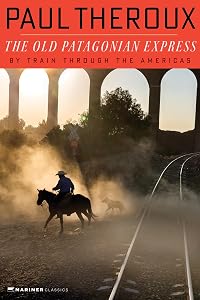
The Old Patagonian Express: By Train Through the Americas
by Paul Theroux
On This Page
Description
The Old Patagonian Express tells of Paul Theroux's train journey down the length of North and South America. Beginning on Boston's subway, he depicts a voyage from ice-bound Massachusetts to the arid plateau of Argentina's most southerly tip. Shivering and sweating by turns as the temperature and altitude rise and plummet, he describes the people he encountered - the tedious Mr. Thornberry in Limon and reading to the legendary blind writer, Jorge Luis Borges, in Buenos Aires.Tags
Recommendations

















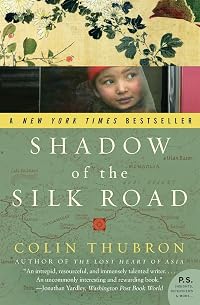

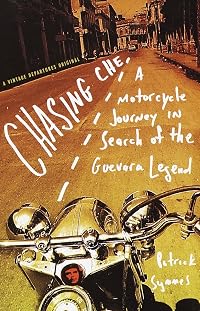
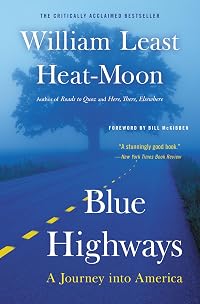

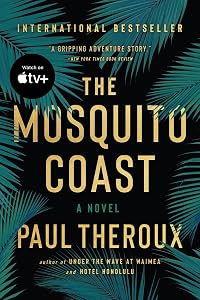




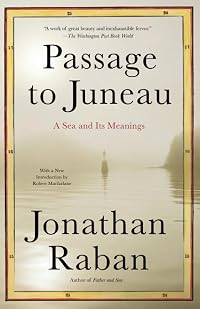



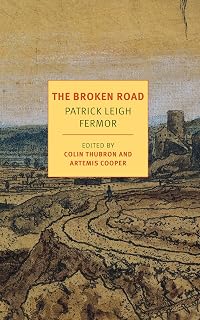
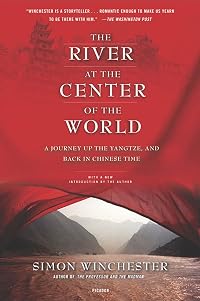
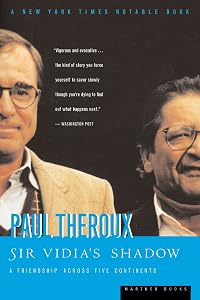

Member Recommendations

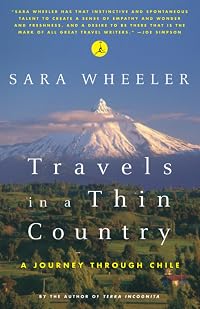
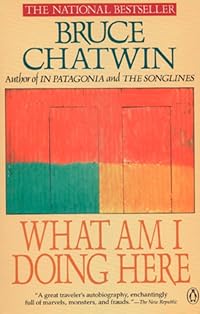
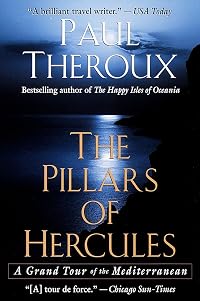
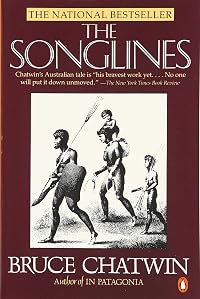
John_Vaughan Bruce and Paul were friends who shared a love of train trips, travel narratives and this South American country.
brianjungwi Ideas for the Mosquito Coast came from his trip during The Old Patagonian Express
John_Vaughan Chapt 5 for more on Patagonia - The Old Patagonian Express: By Train Through the Americas, Paul Theroux
Member Reviews
Paul Theroux's book was published a year (1979) after Bruce Chatwin's book In Patagonia, and they were friends. The books are like night and day in difference. While Bruce Chatwin talks about Patagonia, he never explains how he got there, and his book has not one structured path in it. Paul Theroux, on the other hand, has a plan, and he loves travel, which for him means to GET TO another place, not BE IN another place. And I think he is right. True travel is the transportation phase, the active movement through places, not being dumped in a place and staying there.
The way Paul Theroux traveled to Patagonia is the focus, the structure, of the whole book. He gets on the subway and then commuter train in Boston in a snowstorm, and then show more takes local train after local train down to Mexico, through Central America, along the Andes, through long Argentina, and then eventually ends up on The Old Patagonian Express, the narrowgauge steam train that goes to Esquel. And then the book is over.
This book is not about Patagonia, this book is about human nature, nature and humans. Culture, politics, some natural history, pestering travel companions, good and bad hotel rooms, dusty old railroad cars, giant steaks in dining cars, delays, landslides, revolts, and rats chewing holes in the ceiling above your bed. It also has great interactions between Paul Theroux and the people he meets, from street urchins in Colombia to impossible Mr Thornberry in Costa Rica and the Argentinians need to be superior while having the right to complain about anything in their own country (and nobody else should).
It is a fantastic story, a meandering travel path through not only North and Latin American geography, but also classic literature (Paul Theroux discusses the books he reads during the trip), and it feels real and human. He is not trying to be some übermensch, not someone that stands above or besides his co-travelers or people he meets. He just is. Now I have to read his other travel books! Wow, what a read! Yes, A+ and five stars of course.
There are a lot of great passages in The Old Patagonian Express, and here is one that I think fits this review pretty well:
Reading alters the appearance of a book. Once it has been read, it never looks the same again, and people leave their individual imprint on a book they have read. One of the pleasures of reading is seeing this alternation on the pages, and the way, by reading it, you have made the book yours.
And now, The Old Patagonian Express is mine, forever. The physical book is still my husband's book, of course.
Read more: http://pondpond.blogspot.com/2013/02/book-reviews-patagonian-travels-one.html#ix...
Under Creative Commons License: Attribution show less
The way Paul Theroux traveled to Patagonia is the focus, the structure, of the whole book. He gets on the subway and then commuter train in Boston in a snowstorm, and then show more takes local train after local train down to Mexico, through Central America, along the Andes, through long Argentina, and then eventually ends up on The Old Patagonian Express, the narrowgauge steam train that goes to Esquel. And then the book is over.
This book is not about Patagonia, this book is about human nature, nature and humans. Culture, politics, some natural history, pestering travel companions, good and bad hotel rooms, dusty old railroad cars, giant steaks in dining cars, delays, landslides, revolts, and rats chewing holes in the ceiling above your bed. It also has great interactions between Paul Theroux and the people he meets, from street urchins in Colombia to impossible Mr Thornberry in Costa Rica and the Argentinians need to be superior while having the right to complain about anything in their own country (and nobody else should).
It is a fantastic story, a meandering travel path through not only North and Latin American geography, but also classic literature (Paul Theroux discusses the books he reads during the trip), and it feels real and human. He is not trying to be some übermensch, not someone that stands above or besides his co-travelers or people he meets. He just is. Now I have to read his other travel books! Wow, what a read! Yes, A+ and five stars of course.
There are a lot of great passages in The Old Patagonian Express, and here is one that I think fits this review pretty well:
Reading alters the appearance of a book. Once it has been read, it never looks the same again, and people leave their individual imprint on a book they have read. One of the pleasures of reading is seeing this alternation on the pages, and the way, by reading it, you have made the book yours.
And now, The Old Patagonian Express is mine, forever. The physical book is still my husband's book, of course.
Read more: http://pondpond.blogspot.com/2013/02/book-reviews-patagonian-travels-one.html#ix...
Under Creative Commons License: Attribution show less
Medford to tip of South America by train – great travel book
Beginning his journey in Boston, where he boarded the subway commuter train, and catching trains of all kinds on the way, Paul Theroux tells of his voyage from ice-bound Massachusetts and Illinois to the arid plateau of Argentina's most southerly tip. Sweating and shivering by turns as the temperature and altitude shoot up and down, thrown in with the appalling Mr. Thornberry in Limon and reading nightly to the blind writer, Borges, in Buenos Aires, Theroux vividly evokes the contrasts of a journey to the end of the line.
Beginning his journey in Boston, where he boarded the subway commuter train, and catching trains of all kinds on the way, Paul Theroux tells of his voyage from ice-bound Massachusetts and Illinois to the arid plateau of Argentina's most southerly tip. Sweating and shivering by turns as the temperature and altitude shoot up and down, thrown in with the appalling Mr. Thornberry in Limon and reading nightly to the blind writer, Borges, in Buenos Aires, Theroux vividly evokes the contrasts of a journey to the end of the line.
I enjoyed this thoroughly. I'd been warned in advance and was overall fine with the author's presence, taking the pieces of misanthropy and wryness that I liked and ignoring some other bits. Interesting to get a view of places a few decades before I saw them or know them, and some insight into politics of the time. More than that I think I enjoyed the story of train travel, the traveler's mind, or one traveler's, lords know there are a lot of types and all are misanthropic at some point, usually at a key level of discomfort. Overall amusing and thoughtful.
The best of Theroux's travel books. Starting in Boston and ending in Patagonia, Theroux attempts to travel the length of the Americas by rail. Every page has some wonderful writing, with Theroux's jaundiced observations as sharp as ever.
I've been finished with this book for over a month now and have been slowly ... very slowly ... writing down my thoughts on it. If you're a bottom line man, and I know at heart, you are :), Paul Theroux's The Old Patagonian Express is a good read. For what makes it worth a look, read on.
I started to read Paul Theroux's The Old Patagonian Express: By Train Through the Americas (Mariner 1979) because I immediately liked his voice as a writer. Once into the book, I was charmed by Theroux's descriptions, by his occasional grumpiness, and by his rather sardonic wit, so I suggested the book to a couple of my friends. One friend read the first page of the introduction and finding Theroux pretentious, opted to put it back down again. I know show more the other friend at least started to read the book, but I haven't heard from her since, despite my having left a couple of messages for her, leading me to imagine that she'd either hopped a train herself or really hated Theroux and was no longer speaking to me (I've since learned that she's been in New York and Pittsburgh, which is a whole 'nother story).
As for the friend who put the book down, I've read reviews of Theroux that allude to a pretentious tone or attitude, but after completing The Old Patagonian Express and getting about half way through The Great Railway Bazaar: By Train Through Asia, Theroux's work that preceded Patagonia by 4 years, I haven't found anything that I would interpret as overly-affected. At times the division between culture and/or language is obvious and Theroux sometimes becomes a kind of interpreter of the division, during which points, I suppose, he could be seen as committing the crime he describes in the introduction that made my friend put the book down. The objectionable bit was Theroux's dismissal of the way some travel narrators paint themselves as heroes of a "[q]uest … full of liberties." But then again, I couldn't say if there are liberties in Theroux's book—what I have found, primarily, is a writer who looks to the culture to inform and explain the landscape before him as well as someone who finds amusement in the absurd.
In one succinct passage, Theroux describes his border crossing from Guatemala to El Salvador: "The border was a shed. A boy in his sports shirt stamped my passport and demanded money. He asked me if I was carrying any drugs. I said no. What do I do now? I asked him. You go up the road, he said. There you will find another house. That is El Salvador" (127). It is while he is in El Salvador that Theroux goes to a football match between El Salvador and Mexico, during which he approaches his depiction of the match and its 45,000 spectators as " a model of Salvadorean society," complete with the acts of frustration and contempt committed at every level: national, social and individual. At another point, while in Bogatá, Theroux stops to purchase a poster, his choices ranging from posters of political figures whose visages seem to be a blend of Bolívar, Christ, and Che Guevara to posters of Hollywood movie stars to posters of cartoon characters. Theroux describes his choice as "the best of the bunch. It showed Christ on the cross, but he had managed to pull his hand away from one nail, and still hanging crucified but with his free arm around the shoulder of a praying guerrilla fighter, Christ was saying, 'I also was persecuted, my determined guerrilla'" (249).
By far, my favorite section of the book, in a book with many highly enjoyable sections, was Theroux's time in Buenes Aires during which he is summoned to meet and subsequently spends several days visiting with and reading to Jorge Luis Borges, who Theroux says has "the fussy precision of a chemist" (364). Through the narrative of his experiences, for me, Theroux delivers on what he says is his purpose in traveling and in writing about traveling: he delivers a book that gives pleasure; it is something to enjoy. show less
I started to read Paul Theroux's The Old Patagonian Express: By Train Through the Americas (Mariner 1979) because I immediately liked his voice as a writer. Once into the book, I was charmed by Theroux's descriptions, by his occasional grumpiness, and by his rather sardonic wit, so I suggested the book to a couple of my friends. One friend read the first page of the introduction and finding Theroux pretentious, opted to put it back down again. I know show more the other friend at least started to read the book, but I haven't heard from her since, despite my having left a couple of messages for her, leading me to imagine that she'd either hopped a train herself or really hated Theroux and was no longer speaking to me (I've since learned that she's been in New York and Pittsburgh, which is a whole 'nother story).
As for the friend who put the book down, I've read reviews of Theroux that allude to a pretentious tone or attitude, but after completing The Old Patagonian Express and getting about half way through The Great Railway Bazaar: By Train Through Asia, Theroux's work that preceded Patagonia by 4 years, I haven't found anything that I would interpret as overly-affected. At times the division between culture and/or language is obvious and Theroux sometimes becomes a kind of interpreter of the division, during which points, I suppose, he could be seen as committing the crime he describes in the introduction that made my friend put the book down. The objectionable bit was Theroux's dismissal of the way some travel narrators paint themselves as heroes of a "[q]uest … full of liberties." But then again, I couldn't say if there are liberties in Theroux's book—what I have found, primarily, is a writer who looks to the culture to inform and explain the landscape before him as well as someone who finds amusement in the absurd.
In one succinct passage, Theroux describes his border crossing from Guatemala to El Salvador: "The border was a shed. A boy in his sports shirt stamped my passport and demanded money. He asked me if I was carrying any drugs. I said no. What do I do now? I asked him. You go up the road, he said. There you will find another house. That is El Salvador" (127). It is while he is in El Salvador that Theroux goes to a football match between El Salvador and Mexico, during which he approaches his depiction of the match and its 45,000 spectators as " a model of Salvadorean society," complete with the acts of frustration and contempt committed at every level: national, social and individual. At another point, while in Bogatá, Theroux stops to purchase a poster, his choices ranging from posters of political figures whose visages seem to be a blend of Bolívar, Christ, and Che Guevara to posters of Hollywood movie stars to posters of cartoon characters. Theroux describes his choice as "the best of the bunch. It showed Christ on the cross, but he had managed to pull his hand away from one nail, and still hanging crucified but with his free arm around the shoulder of a praying guerrilla fighter, Christ was saying, 'I also was persecuted, my determined guerrilla'" (249).
By far, my favorite section of the book, in a book with many highly enjoyable sections, was Theroux's time in Buenes Aires during which he is summoned to meet and subsequently spends several days visiting with and reading to Jorge Luis Borges, who Theroux says has "the fussy precision of a chemist" (364). Through the narrative of his experiences, for me, Theroux delivers on what he says is his purpose in traveling and in writing about traveling: he delivers a book that gives pleasure; it is something to enjoy. show less
Perfect in its imperfection the book contained all three facets of travel writing, personal insight and experience, during the trip, cultural and historic descriptions of the areas passed through, and descriptions of the places and people he met. PT writes well and showed a good sense of place. He did get pissy and woe is me at times but that is travel. I enjoyed his meeting w Borges and his descriptions of New England.
Look forward to the next one.
Look forward to the next one.
Suffers due to the nature of the railway in the Americas - incomplete, oriented east west in many nations. Works anyways, mostly because I have so little context for these areas of the world so any exposure is interesting.
Members
- Recently Added By
Published Reviews
ThingScore 50
"The Old Patagonian Express" is the name of the last train that Theroux takes as he reaches the Patagonian desert. Written in the late seventies, many of the political realities he describes are outdated, but it is still a descriptive narrative of a most unusual journey. It is a story of how to get from here to there and everything that is entailed with it. The journey, with all its hardships, show more is part of the travel. In the case of the maxim, it is not the destination, but the journey that counts, this is what this book is about. It stays true to its message and clear about why it was undertaken, and in this story of how to get from here to there, Paul Theroux is a master storyteller. show less
added by John_Vaughan
If this sequel- it must be called that- is not so delightful as "The Great Railway Bazaar," the fault is as much geography's as Theroux's. Europe and Asia are a richer venue for this sort of thing than Latin America, which by contrast lacks character, deep literary and historical associations, and variety. For anyone experienced with Europe, it is desperately boring. Squalor in Mexico is show more identical to squalor in El Salvador; the ghastly Mexican town Papaloapan is too much like the horrible Costa Rican town Limon, 600 miles farther south... In Buenos Aires Theroux is thoroughly primed to play Boswell to Borges's Johnson, and the resulting conversations constitute a delightful climax, a triumphant overflow of civility and intelligence after all the brutality and stupidity...
But except for the Borges episode, the reader gets little relief from the horrors and boredom. He misses the sheer joy of the anomalous, which surfaced frequently in "The Great Railway Bazaar." Here Theroux is exhausted. Outraged by Latin America, he picks quarrels, depicts himself winning arguments, allows his liberal moral superiority to grow strident. He seems to think we have to be told that people should not starve or live in filth. Even though he knows he's doing these things ("I was sick of lecturing people on disorder"), he can't help himself, and sometimes the unpleasant effect threatens the reader's pleasure in Theroux's sharp eye, which is capable of such shrewd perceptions: he notices that an American on the train is wearing "the sort of woolen plaid forester's shirt that graduate students in state universities especially favor"; that in Peru "the Indians have a broad-based look, like chess pieces"; that the terrain outside the train window, at one low point, looks like a "world of kitty litter"; and that in the dark, "in one field, five white cows were as luminous as laundry." show less
But except for the Borges episode, the reader gets little relief from the horrors and boredom. He misses the sheer joy of the anomalous, which surfaced frequently in "The Great Railway Bazaar." Here Theroux is exhausted. Outraged by Latin America, he picks quarrels, depicts himself winning arguments, allows his liberal moral superiority to grow strident. He seems to think we have to be told that people should not starve or live in filth. Even though he knows he's doing these things ("I was sick of lecturing people on disorder"), he can't help himself, and sometimes the unpleasant effect threatens the reader's pleasure in Theroux's sharp eye, which is capable of such shrewd perceptions: he notices that an American on the train is wearing "the sort of woolen plaid forester's shirt that graduate students in state universities especially favor"; that in Peru "the Indians have a broad-based look, like chess pieces"; that the terrain outside the train window, at one low point, looks like a "world of kitty litter"; and that in the dark, "in one field, five white cows were as luminous as laundry." show less
added by SnootyBaronet
Lists

Top Five Books of 2013
1,562 works; 721 members

Best of Travel Narratives (Trains)
22 works; 5 members

Best Travel Writing - Non-Fiction
110 works; 6 members

Non-Fiction Worth Reading
1,016 works; 256 members

Authors from the United States
245 works; 3 members

Llibres que he llegit el 2007
24 works; 1 member

Best Books About Journeys and Quests
117 works; 30 members
Author Information

Paul Edward Theroux was born on April 10, 1941 in Medford, Massachusetts and is an acclaimed travel writer. After attending the University of Massachusetts Amherst he joined the Peace Corps and taught in Malawi from 1963 to 1965. He also taught in Uganda at Makerere University and in Singapore at the University of Singapore. Although Theroux has show more also written travel books in general and about various modes of transport, his name is synonymous with the literature of train travel. Theroux's 1975 best-seller, The Great Railway Bazaar, takes the reader through Asia, while his second book about train travel, The Old Patagonian Express (1979), describes his trip from Boston to the tip of South America. His third contribution to the railway travel genre, Riding the Iron Rooster: By Train Through China, won the Thomas Cook Prize for best literary travel book in 1989. His literary output also includes novels, books for children, short stories, articles, and poetry. His novels include Picture Palace (1978), which won the Whitbread Award and The Mosquito Coast (1981), which won the James Tait Black Memorial Prize. Theroux is a fellow of both the British Royal Society of Literature and the Royal Geographic Society. His title Lower River made The New York Times Best Seller List for 2012. Currently his 2015 book, Deep South , is a bestseller. (Bowker Author Biography) Paul Theroux is the distinguished author of numerous award-winning books, including "The Mosquito Coast," "Kowloon Tong," & "Half Moon Street." (Publisher Provided) show less
Some Editions
Awards and Honors
Distinctions
Series
Belongs to Publisher Series
Grote ABC (644)
Work Relationships
Common Knowledge
- Canonical title*
- 古きパタゴニアの急行列車 (中米編) (中米編)
- Original title
- The old Patagonian Express
- Original publication date
- 1979
- People/Characters
- Paul Theroux
- Important places
- Patagonia, South America; Peru; El Salvador; Costa Rica; Mexico
- Dedication
- For my Shanghai Lil, and with love to Anne, Marcel, and Louis
- First words
- One of us on that sliding subway train was clearly not heading for work.
- Last words
- (Click to show. Warning: May contain spoilers.)I had arrived in Patagonia, and I laughed when I remembered I had come here from Boston, on the subway train that people took to work.
*Some information comes from Common Knowledge in other languages. Click "Edit" for more information.
Classifications
Statistics
- Members
- 2,033
- Popularity
- 10,313
- Reviews
- 33
- Rating
- (3.87)
- Languages
- 13 — Chinese, Dutch, English, Finnish, French, German, Hungarian, Italian, Japanese, Polish, Portuguese, Russian, Spanish
- Media
- Paper, Audiobook, Ebook
- ISBNs
- 54
- UPCs
- 1
- ASINs
- 23