
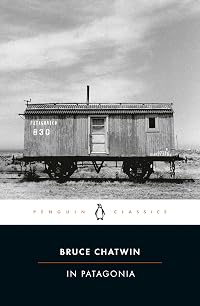
In Patagonia
by Bruce Chatwin
On This Page
Description
"An exhilarating look at a place that still retains the exotic mystery of a far-off, unseen land, Bruce Chatwin's exquisite account of his journey through Patagonia teems with evocative descriptions, remarkable bits of history, and unforgettable anecdotes. Fueled by an unmistakable lust for life and adventure and a singular gift for storytelling, Chatwin treks through "the uttermost part of the earth"--That stretch of land at the southern tip of South America, where bandits were once made show more welcome - in search of almost-forgotten legends, the descendants of Welsh immigrants, and the log cabin built by Butch Cassidy."--Jacket. show lessTags
Recommendations



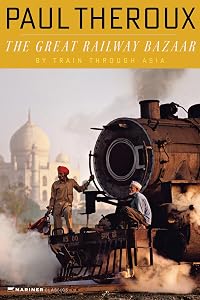

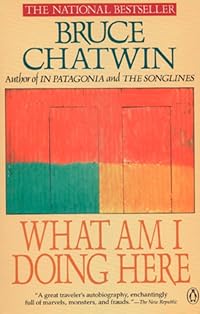




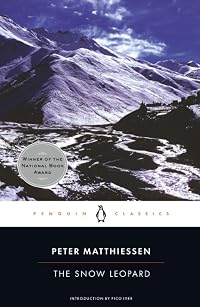

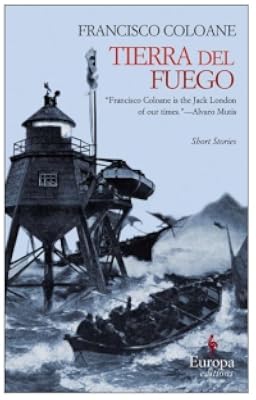










Member Recommendations

My Mercedes is Not for Sale: From Amsterdam to Ouagadougou...An Auto-Misadventure Across the Sahara by Jeroen van Bergeijk
grizzly.anderson Different time, different continent, different goal, same spirit.


sinaloa237 Les grands voyageurs !

Utz by Bruce Chatwin
by John_Vaughan
Member Reviews
Bruce Chatwin was my kind of traveller. He seeked out the fringes, the outback, the edges of the world, and brought back accounts focusing on the right things: places, meetings and stories. In In Patagonia, he journeys back and forth across the most southern part of South America, by boat, by truck and by foot. He initially sets out to find a new sample of Mylodon skin, remains of a giant pre-historic sloth, that was once brought home to England by an ancestor of his and later lost in a mundane way – accidentally thrown away in a move. But Chatwin, being Chatwin, is in no immediate hurry to get to the cave of the Mylodon. He casually follows storylines and historical figures, meeting with the few people living in these very sparsely show more populated areas, letting himself be pointed in new directions. A pattern of dreamers and escapists is forming: outlaws, revolutionaries, adventurers, explorers, hermits, gold-diggers. And in contrast to those, the Indian cultures, ruthlessly destroyed and exterminated almost in passing.
The sense of place here is overwhelming, even though Chatwin isn’t stressing to build connections between his nearly hundred chapters. And the landscape he paints is both mental and physical. This is a book that evokes wanderlust in me, and makes me long for the weight of a worn backpack on my shoulders again (even if my travels were never as spectacular as this). show less
The sense of place here is overwhelming, even though Chatwin isn’t stressing to build connections between his nearly hundred chapters. And the landscape he paints is both mental and physical. This is a book that evokes wanderlust in me, and makes me long for the weight of a worn backpack on my shoulders again (even if my travels were never as spectacular as this). show less
A good alternate title for this book would be "97 Ways of Looking at Patagonia". Chatwin set out for Patagonia to track down the prehistoric beast a piece of whose skin sat in his grandmother's dining-room cabinet when he was a child. But this is no plodding treasure hunt, with interviews and hypotheses and dead ends and breakthroughs. Instead we learn about Patagonia in snippets that add up to a nice complex whole.
Chatwin's writing just kills. He has a knack for evocative word-paintings. Here's one from the second chapter, about Buenos Aires in summer:
"By day the city quivered in a silvery film of pollution. In the evenings boys and girls walked beside the river. They were hard and sleek and empty-headed, and they walked arm in arm show more under the trees, laughing cold laughter, separated from the red river by a red granite balustrade."
And another one:
"The sun was up. Spouts of wood-smoke rose vertically from the chimneys. Río Pico was once the German colony of Nueva Alemania, and the houses had a German look. Elderflowers rubbed their heads against the planked walls. Beside the bar was a logging truck, off up into the mountains."
Chatwin makes his way south through Argentina, through estancias and mountain wastes, covering the human and natural history of the place along the way. Then, like his grandmother's cousin Charley Milward, he goes around the Horn and into Chile. Paul Theroux's complaint, from the introduction by Chatwin's biographer Nicholas Shakespeare, was that Chatwin never tells us how he gets from place to place. But he does, when it's interesting, and tells us at least enough besides that to make us want to see the place for ourselves.
This is the best book I've read since The Savage Detectives, last year. Can't say enough good things about it. show less
Chatwin's writing just kills. He has a knack for evocative word-paintings. Here's one from the second chapter, about Buenos Aires in summer:
"By day the city quivered in a silvery film of pollution. In the evenings boys and girls walked beside the river. They were hard and sleek and empty-headed, and they walked arm in arm show more under the trees, laughing cold laughter, separated from the red river by a red granite balustrade."
And another one:
"The sun was up. Spouts of wood-smoke rose vertically from the chimneys. Río Pico was once the German colony of Nueva Alemania, and the houses had a German look. Elderflowers rubbed their heads against the planked walls. Beside the bar was a logging truck, off up into the mountains."
Chatwin makes his way south through Argentina, through estancias and mountain wastes, covering the human and natural history of the place along the way. Then, like his grandmother's cousin Charley Milward, he goes around the Horn and into Chile. Paul Theroux's complaint, from the introduction by Chatwin's biographer Nicholas Shakespeare, was that Chatwin never tells us how he gets from place to place. But he does, when it's interesting, and tells us at least enough besides that to make us want to see the place for ourselves.
This is the best book I've read since The Savage Detectives, last year. Can't say enough good things about it. show less
Any book that excites you enough to want to read a hundred more books that might have served as source material and to constantly leap to reference materials for more background is a good book in my book. To be also so poetic, intrigued, reflective and wilfully divergent at the same time makes it remarkable. In a strange way it reminds me most of Brillat-Savarin.
A thaw, a scar, an albatross, an anarchist
According to Chatwin, “In Patagonia is not a travel book in the usual sense but a Quest or Wonder Voyage. It is about wandering and exile, and its structure is as old as literature itself: the narrator travels to a remote country in search of a strange beast and, as he goes along, describes his encounters with other people whose stories delay him en route.”
Chatwin evokes a literal end of the earth that is nonetheless populated by a surprising diversity of strange beasts, human and otherwise—gauchos, Welshmen, poets, Nazis, giant sloths, Yoshils, flesh-eating worms, plesiosaurs, outlaws and missionaries. Bits of imagined history are interspersed with adventure tales that inspired show more Shakespeare, Coleridge, Poe and Darwin.
Some of Chatwin’s sentences are entire stories in themselves: “In the seventeenth century two Spanish murderers proved that you don’t have to be Ezekiel to mistake a rock face for Paradise.” Or, “Témperley was shot dead in a Buenos Aires hospital for the criminally insane by a Yugoslav midget called Lukič.” In an encounter between a mountaineer and a drunken Indian on a bus, Chatwin sees “the history of South America in miniature.”
Chatwin’s descriptions and encounters unroll as if on a long parchment scroll, one scene leading to the next. The writing is vivid, but he allows space for the reader’s imagination to construct a picture of the whole: “I walked out of town to the petrified forest. Wind pumps whirled insanely. A steel-blue heron lay paralyzed under an electrical cable. A dribble of blood ran along its beak. The tongue was missing. The trunks of extinct monkey-puzzles were broken clean as if in a sawmill.”
Chatwin takes it all as it comes; he is both detached observer and sympathetic participant, and devises a fascinating picture of a place. show less
According to Chatwin, “In Patagonia is not a travel book in the usual sense but a Quest or Wonder Voyage. It is about wandering and exile, and its structure is as old as literature itself: the narrator travels to a remote country in search of a strange beast and, as he goes along, describes his encounters with other people whose stories delay him en route.”
Chatwin evokes a literal end of the earth that is nonetheless populated by a surprising diversity of strange beasts, human and otherwise—gauchos, Welshmen, poets, Nazis, giant sloths, Yoshils, flesh-eating worms, plesiosaurs, outlaws and missionaries. Bits of imagined history are interspersed with adventure tales that inspired show more Shakespeare, Coleridge, Poe and Darwin.
Some of Chatwin’s sentences are entire stories in themselves: “In the seventeenth century two Spanish murderers proved that you don’t have to be Ezekiel to mistake a rock face for Paradise.” Or, “Témperley was shot dead in a Buenos Aires hospital for the criminally insane by a Yugoslav midget called Lukič.” In an encounter between a mountaineer and a drunken Indian on a bus, Chatwin sees “the history of South America in miniature.”
Chatwin’s descriptions and encounters unroll as if on a long parchment scroll, one scene leading to the next. The writing is vivid, but he allows space for the reader’s imagination to construct a picture of the whole: “I walked out of town to the petrified forest. Wind pumps whirled insanely. A steel-blue heron lay paralyzed under an electrical cable. A dribble of blood ran along its beak. The tongue was missing. The trunks of extinct monkey-puzzles were broken clean as if in a sawmill.”
Chatwin takes it all as it comes; he is both detached observer and sympathetic participant, and devises a fascinating picture of a place. show less
Chatwin's writing is delightful and fun to read. He writes very vividly about small details, but tends to leave the larger picture murky. Although this is travel literature, it in no way really lets you know what to expect in Patagonia. It is a series of snapshots - he describes some of the people he encounters in vivid detail, and explores some historical anecdotes (especially around Butch Cassidy) and local legends (without clarifying where history ends and legend begins, rendering himself an unreliable narrator).
This book is racist in the way that only a British imperialist can be racist: that is, the native people of Patagonia are basically details of the landscape, like the livestock, and he focuses entirely on the European show more inhabitants of South America. Granted, it is fascinating how many cultural pockets he encounters - villages that remain entirely Welsh or German in language and culture - but Chatwin all but ignores the locals.
All in all, this is a strange book, but worth reading for the quality of the writing. show less
This book is racist in the way that only a British imperialist can be racist: that is, the native people of Patagonia are basically details of the landscape, like the livestock, and he focuses entirely on the European show more inhabitants of South America. Granted, it is fascinating how many cultural pockets he encounters - villages that remain entirely Welsh or German in language and culture - but Chatwin all but ignores the locals.
All in all, this is a strange book, but worth reading for the quality of the writing. show less
Chatwin's In Patagonia has been called a masterpiece. It's short, but a masterpiece nonetheless. This is not your typical travel book. Chatwin doesn't linger over landscape and sights to see. Instead, he focuses on the historical and follows in the footsteps of legendary characters like Butch Cassidy. He journeys through Patagonia with a thirst for all that Patagonia is rumored to be, past and present. Don't expect to have a clear picture of Patagonia in your head when you are finished. You will have captured the nostalgic and the profound instead. There are only a quiet collection of photographs that don't quite add up to the narrative.
A collection of 97 vignettes from Chatwin's travels in Patagonia after he famously wrote his editor that he was taking off there on a whim. Thinking back, I recall finding the lack of narrative thread frustrating, but equally being impressed by the spare prose. As with all of his books, there are many who criticise what is invented and what is omitted. But there are more than enough worthy, boring travelogues in this world. Chatwin could write beautifully, and his selective and impressionistic tales often capture something essential about the nature of people and place.
Members
- Recently Added By
Published Reviews
If the book were nothing more than a study of how the English maintain quaint customs in remote environments, its appeal would be limited. Fortunately, Mr. Chatwin has an inquiring mind, and part of the pleasure lies in his digressions. Not for him the straight line and the urgent destination. He detours and meanders and circles back, and before we know it we are being told tales of the early show more navigators, or given an account of an anarchist revolution, or hearing the true story of Butch Cassidy and the Sundance Kid, who went to Patagonia in 1901 on the run from the Pinkertons, started a sheep farm and stayed for five years. Mr. Chatwin's mind, like a crowded attic without cobwebs, produces curios and discontinued models, presented in a manner that is laconic without being listless, literate without being pedantic, and intent without being breathless show less
added by John_Vaughan
Lists

Best of Travel Narratives
142 works; 28 members

501 Must-Read Books
529 works; 72 members

Best Travel Writing - Non-Fiction
110 works; 6 members

Top Five Books of 2019
387 works; 107 members

Non-Fiction Worth Reading
1,015 works; 261 members

Huxley's reading log 2016
84 works; 3 members

Books Read in 2017
4,249 works; 130 members

Books Read in 2019
4,052 works; 110 members

Allie's Wishlist
217 works; 2 members

Read These Too
458 works; 9 members

aborted books in 2020
36 works; 1 member
Folio Society
831 works; 53 members

1970s
657 works; 23 members

Michael Dirda's Desert Island Books
62 works; 5 members

History: Africa & Latin America
38 works; 1 member

Books Read in 2024
4,623 works; 126 members

Sense of place
156 works; 13 members

Five star books
1,755 works; 108 members
Author Information

55+ Works 14,530 Members
All Editions
Some Editions
Awards and Honors
Awards
Distinctions
Series
Belongs to Publisher Series
Work Relationships
Common Knowledge
- Canonical title*
- In Patagonië
- Original title
- In Patagonia
- Original publication date
- 1977
- People/Characters
- Bruce Chatwin
- Important places
- Argentina; Chile; Latin America; Patagonia, South America; South America
- First words
- In my grandmother's dining-room there was a glass-fronted cabinet and in the cabinet a piece of skin.
- Last words
- (Click to show. Warning: May contain spoilers.)Perhaps it was the only thing he could play.
- Blurbers
- Theroux, Paul
- Original language
- English
*Some information comes from Common Knowledge in other languages. Click "Edit" for more information.
Classifications
- Genres
- Travel, Nonfiction, General Nonfiction, Biography & Memoir
- DDC/MDS
- 918.270464 — History & geography Geography & travel Geography of and travel in South America Argentina Patagonia region
- LCC
- F2936 .C47 — Local History of the United States, Canada and Latin America Latin America. Spanish America South America Argentina
- BISAC
Statistics
- Members
- 3,628
- Popularity
- 4,461
- Reviews
- 102
- Rating
- (3.74)
- Languages
- 17 — Catalan, Danish, Dutch, English, Finnish, French, German, Italian, Japanese, Korean, Norwegian (Bokmål), Polish, Portuguese, Russian, Serbian, Spanish, Swedish
- Media
- Paper, Audiobook, Ebook
- ISBNs
- 83
- UPCs
- 1
- ASINs
- 21