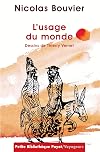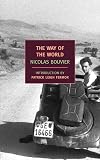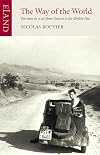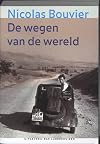
The Way of the World
by Nicolas Bouvier
On This Page
Description
In 1953, twenty-four-year old Nicolas Bouvier and his artist friend Thierry Vernet set out to make their way overland from their native Geneva to the Khyber Pass. They had a rattletrap Fiat and a little money, but above all they were equipped with the certainty that by hook or by crook they would reach their destination, and that there would be unanticipated adventures, curious companionship, and sudden illumination along the way. The Way of the World, which Bouvier fashioned over the course show more of many years from his journals, is an entrancing story of adventure, an extraordinary work of art, and a voyage of self-discovery on the order of Robert M. Pirsig' Zen and the Art of Motorcycle Maintenance. A Cult Classic, "The Way of the World" is one of the most beguiling travel books ever written. Reborn from the ashes of a Pakistan rubbish heap, it tells of a friendship between a writer and an artist, forged on an impecunious, life-enhancing journey from Serbia to Afghanistan in the 1950s. On one level it is a candid description of a road journey, on another a meditation on travel as a journey towards the self, all written by a sage with a golden pen and a wide infectious smile. It is published here for the first time in English with the Vernet drawings which are such a dynamic part of its whole. show lessTags
Recommendations























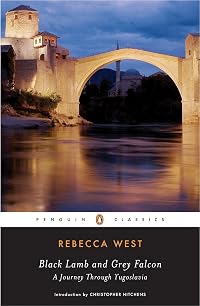



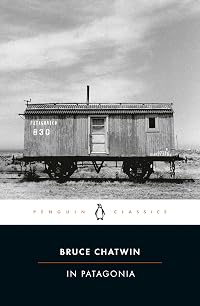
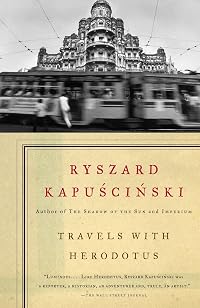











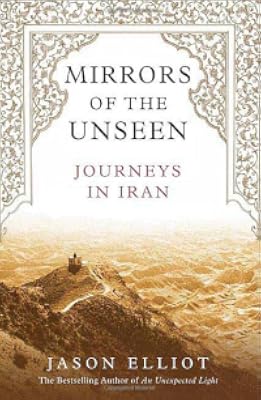




Member Recommendations
sinaloa237 Les grands voyageurs !
Member Reviews
On croit qu'on va faire un voyage, mais bientôt c'est le voyage qui vous fait, ou vous défait.
Travel writers often go to great lengths to impose themselves, their own structures and reasons, on the world around them. Mostly, as we might expect, the world is unsatisfactory and fails to meet up to the high standards the writer sets. This conflict can be very creative — for instance in Robert Byron or Bruce Chatwin — but it sometimes leaves you wondering why they ever bother to leave home.
Nicolas Bouvier is at the opposite extreme. He takes the much more difficult path of trying to concentrate on what he learnt from the world, the things he found beautiful, strange or absurd, even in the most ordinary, unpromising situations. He's show more always trying to get beyond cultural preconceptions and react to what he sees on an aesthetic, human level. We don't get to hear much about conventional tourist sights like mosques, mountains, or palaces, but a lyrical passage can suddenly take shape from the fall of the snow on a beggar's coat, the vultures on a Pakistani rubbish dump, or a group of porters drinking tea in a backstreet café in Tabriz.
Le soleil d'hiver sur les murs bleus, la fine odeur de thé, le choc des pions sur le damier, tout était d'une légèreté si étrange qu'on se demandait si cette poignée de vieux séraphins calleux n'allait pas s'envoler avec toute la boutique dans un grand bruit de plumes.
That little phrase "légèreté si étrange" seems to sum up what Bouvier is all about. It's not a book you should read in big chunks; it has to be dipped into and enjoyed in bite-size portions. If you read too much at once, the strangeness has time to evaporate, and the lyricism loses its lightness a bit.
Writing wasn't something that Bouvier found easy. This book was nine years in the making. The only occasion in the whole book where Bouvier allows himself to display irritation is in a short apostrophe to the reader near the end, where he talks about his frustration at how long it's taking him to write the book. By contrast, the perpetually irritated Robert Byron worked up his notes into a "spontaneous" travel diary in only a year.
It's obviously an absurd enterprise to try to drive from Switzerland to the Khyber Pass in a decrepit Fiat Topolino that can barely get to 30 km/hr and frequently has to be lifted bodily over obstacles, but Bouvier doesn't hit us over the head with his achievement. It's not a challenge, there's no clock ticking (two Swiss without a timetable between them!), and it's almost irrelevant whether they get there or not. Bouvier's modesty is a little reminiscent of Thesiger, who would have been punting around the Iraqi marshes at about the same time as Bouvier and Vernet were chugging east in their Cinquecento, but Bouvier doesn't share Thesiger's obsession with becoming part of the cultures he's writing about. He always manages to convey his affection for the people he encounters (even a sleeping customs officer is described with fondness and humanity), but he doesn't want to learn their genealogies or swear blood-brotherhood with them. He would almost certainly have got on well with Laurence Sterne and his notion of the Sentimental Traveller. It's easy to see how Bouvier's laid-back, passive approach made this book a cult classic for the hippy generation, but it's definitely more than that: however much the world has moved on since 1953-54 (Iran and Afghanistan in particular), Bouvier's way of looking at other people and cultures surely still has a lot to teach us. show less
Travel writers often go to great lengths to impose themselves, their own structures and reasons, on the world around them. Mostly, as we might expect, the world is unsatisfactory and fails to meet up to the high standards the writer sets. This conflict can be very creative — for instance in Robert Byron or Bruce Chatwin — but it sometimes leaves you wondering why they ever bother to leave home.
Nicolas Bouvier is at the opposite extreme. He takes the much more difficult path of trying to concentrate on what he learnt from the world, the things he found beautiful, strange or absurd, even in the most ordinary, unpromising situations. He's show more always trying to get beyond cultural preconceptions and react to what he sees on an aesthetic, human level. We don't get to hear much about conventional tourist sights like mosques, mountains, or palaces, but a lyrical passage can suddenly take shape from the fall of the snow on a beggar's coat, the vultures on a Pakistani rubbish dump, or a group of porters drinking tea in a backstreet café in Tabriz.
Le soleil d'hiver sur les murs bleus, la fine odeur de thé, le choc des pions sur le damier, tout était d'une légèreté si étrange qu'on se demandait si cette poignée de vieux séraphins calleux n'allait pas s'envoler avec toute la boutique dans un grand bruit de plumes.
That little phrase "légèreté si étrange" seems to sum up what Bouvier is all about. It's not a book you should read in big chunks; it has to be dipped into and enjoyed in bite-size portions. If you read too much at once, the strangeness has time to evaporate, and the lyricism loses its lightness a bit.
Writing wasn't something that Bouvier found easy. This book was nine years in the making. The only occasion in the whole book where Bouvier allows himself to display irritation is in a short apostrophe to the reader near the end, where he talks about his frustration at how long it's taking him to write the book. By contrast, the perpetually irritated Robert Byron worked up his notes into a "spontaneous" travel diary in only a year.
It's obviously an absurd enterprise to try to drive from Switzerland to the Khyber Pass in a decrepit Fiat Topolino that can barely get to 30 km/hr and frequently has to be lifted bodily over obstacles, but Bouvier doesn't hit us over the head with his achievement. It's not a challenge, there's no clock ticking (two Swiss without a timetable between them!), and it's almost irrelevant whether they get there or not. Bouvier's modesty is a little reminiscent of Thesiger, who would have been punting around the Iraqi marshes at about the same time as Bouvier and Vernet were chugging east in their Cinquecento, but Bouvier doesn't share Thesiger's obsession with becoming part of the cultures he's writing about. He always manages to convey his affection for the people he encounters (even a sleeping customs officer is described with fondness and humanity), but he doesn't want to learn their genealogies or swear blood-brotherhood with them. He would almost certainly have got on well with Laurence Sterne and his notion of the Sentimental Traveller. It's easy to see how Bouvier's laid-back, passive approach made this book a cult classic for the hippy generation, but it's definitely more than that: however much the world has moved on since 1953-54 (Iran and Afghanistan in particular), Bouvier's way of looking at other people and cultures surely still has a lot to teach us. show less
A wonderful and illuminating book about the travels of two young Swiss men travelling from Geneva to the Khyber Pass from June 1953 to December 1954, when the world appears to have been a more accessible and safer place.
Bouvier's descriptions of the locations are absorbing and authentic. Starting the main narrative in Yugoslavia (remember when there was a Yugoslavia) Bouvier and his travel companion, Thierry Vernet, set off in a car to travel to India. This is not fast paced book and is evocatively descriptive. It is not romantic, as it appears to truthfully point out all the awful aspects of travel, but it makes one nostalgic for a place and time, which one could now never have visited, but which sound so vivid and real, although we show more are often very glad we are not there, as it is too hot or too cold.
There are passages where Bouvier reminds you of the primal or spiritual dimension of travel, that reaches beyond curiosity to some more basic nomadic need, but they are self depreciatory and not fanciful.
Most magically, the travellers reach Tabriz in Azerbaijan and "..you yawn, stretch out, fall asleep. In the night the snow falls, covering the roofs, smothering shouts, cutting off roads… and thus you spend six months in Tabriz, Azerbaijan."
I cannot think of a travel writer now who would accept that one morning on their travels they wake up and have to spend six months waiting for the snows to melt.
Wonderful. show less
Bouvier's descriptions of the locations are absorbing and authentic. Starting the main narrative in Yugoslavia (remember when there was a Yugoslavia) Bouvier and his travel companion, Thierry Vernet, set off in a car to travel to India. This is not fast paced book and is evocatively descriptive. It is not romantic, as it appears to truthfully point out all the awful aspects of travel, but it makes one nostalgic for a place and time, which one could now never have visited, but which sound so vivid and real, although we show more are often very glad we are not there, as it is too hot or too cold.
There are passages where Bouvier reminds you of the primal or spiritual dimension of travel, that reaches beyond curiosity to some more basic nomadic need, but they are self depreciatory and not fanciful.
Most magically, the travellers reach Tabriz in Azerbaijan and "..you yawn, stretch out, fall asleep. In the night the snow falls, covering the roofs, smothering shouts, cutting off roads… and thus you spend six months in Tabriz, Azerbaijan."
I cannot think of a travel writer now who would accept that one morning on their travels they wake up and have to spend six months waiting for the snows to melt.
Wonderful. show less
“The Way of the World” (1985, originally published in French in 1963) describes the adventures of author Nicolas Bouvier and his painter-friend on a trip from Serbia to Afghanistan in 1953/1954. Serbia, Turkey, Iran and Afghanistan were all quite different then; besides, the times were different, too, just after WWII. This is, however, not to say that their trip was an easy one. They meet several status- and power-hungry officials, even to the effect that they are ‘invited’ to come and stay in a Persian jail, they encounter more than their fair share of trouble with the roads and the passes, challenges for which their battered old Fiat cabriolet is often unprepared, and they have perpetual financial problems, as their writing, show more painting, lecturing and teaching activities through which they try to pay their trip are more often than not insufficiently profitable. Yet, at every stage during their journey the hardships are compensated for by the people they meet, invariably friendly, helpful and hospitable (even that police commander who ‘invites’ them to sleep in the jail). If anything, the books lacks a bit of structure, there is also no overall theme, no – or very little – political observation, but the descriptions of people and places, and the musings of Mr. Bouvier on a variety of experiences on the way, make up for this. Don’t expect your average travel book by a back-packing tourist visiting the sites; do expect a wonderful, erudite and above all very personal travelogue. show less
Also provided by my daughter at Christmas 2015. I saw this in passing through a local bookshop, on a table with others by the same publisher, and the whole "adventure" of a 1950s car journey from Geneva to the Khyber Pass appealed to me so much that I bought it
long distance travel, adventure
Les carnets de voyage de Nicolas Bouvier, dont L’Usage du monde est la première partie, entraient jusqu’à peu dans l’immense catégorie, dite des « classiques que je n’ai pas lu ». Contrairement à la grande majorité des ouvrages qui s’y trouvent, ils avaient une particularité: j’avais envie de les lire (et le fait que l’auteur soit né à moins de trois kilomètres de chez moi n’a aucun rapport). Je l’ai donc piqué sans la moindre vergogne à mon beau-frère.
Je ne sais pas si je m’attendais à quelque chose de particulier, mais c’est un livre qui m’a pris par surprise. Nicolas Bouvier, qui y décrit le voyage qu’il accomplit avec son ami peintre Thierry Vernet, entre Zagreb et le Khyber Pass (à la show more frontière afghano-indienne) durant les années 1953-1954, parle peu de lieux et beaucoup plus des rencontres. C’est sans doute ce qui rend le livre aussi prenant, tant dans sa forme que dans son fond.
La première chose qui m’a frappé, c’est la truculence de l’écriture: L’Usage du monde décrit les détails de la vie du peuple de ces contrées parfois proches, mais déjà inexorablement exotiques – même ses aventures balkaniques semblent surréalistes. C’est le deuxième point fort du livre. Les deux voyageurs et leur Fiat Topolino, en vrais « routards » avant la lettre (je soupçonne que si les beatniks américains avaient Jack Kerouac, les babas qui se lançaient dans Paris-Kathmandu dans les années 70 devaient être nourris par L’Usage du monde), ont peu de moyens et vivent au plus près de peuples qu’on a du mal à imaginer, même avec quelques milliers de kilomètres et un demi-siècle d’écart.
Que ce soit les rites d’hospitalité, les petites magouilles des édiles locaux, les rencontres impromptues dans les auberges (sans parler de cet aubergiste qui met un tronc d’arbre en travers de la route pour pousser les voyageurs à venir se restaurer chez lui), le peuple des rues, les villages tribaux, les réparations à coups de marteau et autres descentes de cols à tombeau ouvert, il y a là mille images fortes.
Amis auteurs (et amateurs) de science-fiction – et rôlistes de tout poil – lisez L’Usage du monde! Vous n’y trouverez pas beaucoup plus extra-terrestres que les Terriens de Belgrade, Tabriz ou Quetta. Cet ouvrage est un grand bol d’air frais, une lucarne vers un monde dont, avec tous les bouleversements de ces vingt-dernières années, il est difficile de savoir s’il existe encore ou pas. Un voyage de Schrödinger, en quelque sorte… show less
Je ne sais pas si je m’attendais à quelque chose de particulier, mais c’est un livre qui m’a pris par surprise. Nicolas Bouvier, qui y décrit le voyage qu’il accomplit avec son ami peintre Thierry Vernet, entre Zagreb et le Khyber Pass (à la show more frontière afghano-indienne) durant les années 1953-1954, parle peu de lieux et beaucoup plus des rencontres. C’est sans doute ce qui rend le livre aussi prenant, tant dans sa forme que dans son fond.
La première chose qui m’a frappé, c’est la truculence de l’écriture: L’Usage du monde décrit les détails de la vie du peuple de ces contrées parfois proches, mais déjà inexorablement exotiques – même ses aventures balkaniques semblent surréalistes. C’est le deuxième point fort du livre. Les deux voyageurs et leur Fiat Topolino, en vrais « routards » avant la lettre (je soupçonne que si les beatniks américains avaient Jack Kerouac, les babas qui se lançaient dans Paris-Kathmandu dans les années 70 devaient être nourris par L’Usage du monde), ont peu de moyens et vivent au plus près de peuples qu’on a du mal à imaginer, même avec quelques milliers de kilomètres et un demi-siècle d’écart.
Que ce soit les rites d’hospitalité, les petites magouilles des édiles locaux, les rencontres impromptues dans les auberges (sans parler de cet aubergiste qui met un tronc d’arbre en travers de la route pour pousser les voyageurs à venir se restaurer chez lui), le peuple des rues, les villages tribaux, les réparations à coups de marteau et autres descentes de cols à tombeau ouvert, il y a là mille images fortes.
Amis auteurs (et amateurs) de science-fiction – et rôlistes de tout poil – lisez L’Usage du monde! Vous n’y trouverez pas beaucoup plus extra-terrestres que les Terriens de Belgrade, Tabriz ou Quetta. Cet ouvrage est un grand bol d’air frais, une lucarne vers un monde dont, avec tous les bouleversements de ces vingt-dernières années, il est difficile de savoir s’il existe encore ou pas. Un voyage de Schrödinger, en quelque sorte… show less
Dec 1, 2010French
3
Magifique par l’écriture, passionnant pour les rencontres avec les gens et la description des paysages et des modes de vie.
Dec 18, 2023French
Members
- Recently Added By
Lists

Best of Travel Narratives
142 works; 28 members

Recommend the 20 best books you've read in the last five years
2,168 works; 606 members
Adventure Travel & Exploration In Asia
31 works; 8 members

Les 50 meilleurs livres de langue française de 1900 à aujourd’hui
69 works; 2 members
Talk Discussions
Past Discussions
autobiographical-travels of two young french men in Name that Book (March 2012)
Author Information

58+ Works 1,411 Members
Some Editions
Awards and Honors
Series
Belongs to Publisher Series
Common Knowledge
- Canonical title
- The Way of the World
- Original title
- L'Usage du monde
- Original publication date
- 1963
- Important places
- Belgrade, Serbia; Tabriz, Iran; Quetta, Pakistan; Kabul, Afghanistan
- Original language*
- Français
*Some information comes from Common Knowledge in other languages. Click "Edit" for more information.
Classifications
- Genres
- Travel, Nonfiction, General Nonfiction, Biography & Memoir
- DDC/MDS
- 910.4 — History & geography Geography & travel modified standard subdivisions of Geography and travel Pirates & Shipwrecks
- LCC
- G490 .B76213 — Geography, Anthropology and Recreation Geography (General) Special voyages and travels
- BISAC
Statistics
- Members
- 658
- Popularity
- 43,959
- Reviews
- 10
- Rating
- (4.25)
- Languages
- 11 — Chinese, Czech, Dutch, English, French, German, Italian, Japanese, Norwegian (Bokmål), Polish, Spanish
- Media
- Paper, Ebook
- ISBNs
- 36
- ASINs
- 6