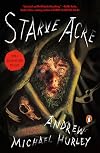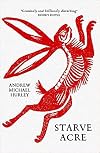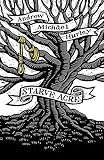
Starve Acre
by Andrew Michael Hurley
On This Page
Description
"An atmospheric and unsettling story of the depths of grief found in an ancient farm in northern England, soon to be a major motion picture starring Matt Smith and Morfydd Clark. The worst thing possible has happened. Richard and Juliette Willoughby's son, Ewan, has died suddenly at the age of five. Starve Acre, their house by the moors, was to be full of life, but is now a haunted place. Convinced Ewan still lives there in some form, Juliette seeks the help of the Beacons, a seemingly show more benevolent group of occultists. Richard, to try and keep the boy out of his mind, has turned his attention to the field opposite the house, where he patiently digs the barren dirt in search of a legendary oak tree. But as they delve further into their grief, both uncover more than they set out to"-- show lessTags
Recommendations







Member Reviews
'Starve Acre' (2019) is Hurley's third novel and a very fine example of British folk horror it is too. Set in the peripheral North of England which is where Hurley is most comfortable and in the ur-period of contemporary folk horror (the 1970s), the novel reeks of authenticity.
The acre in question is a barren piece of land linked to a lost great tree associated with a past evil which appears to return, albeit in a subtly understated form, as much by suggestion as not. Hurley is a master of mood and implication.
The central events are the death of a child, the alienation of the two parents and the growing psychosis of the mother. The child, however, has a touch of the dark about him to the point where we might identify either a budding show more psychopath or someone possessed by the evil of the field.
The ambiguities in the novel are 'poetic'. The prose is doggedly realist. What Hurley pulls off (which few can) is the eliding of time from before and after the death of the child. Normally this results in confusion but Hurley's skill is in moving us effortlessly between times in an almost magical way.
It is a novel of loss and despair that just happens to have folk horror themes and aspects rather than a horror story that is merely told well. These people are real enough. The dreariness of small village life for townies trapped with the local 'volk' as outsiders is well drawn.
What I like about Hurley (I am thinking of 'Barrowbeck' (2024) as well) is that he is never obvious. He does not make the villagers direct actors in the horror. As in 'Barrowbeck', they sit atop the mystery of place. It is the child, with one spectacular piece of harm involving a pony, who does harm.
Similarly, Hurley does not allow everything to be 'all in the mind'. The tree's roots are found, the main character's dead difficult father uncovered past dark deeds, a hare reconstitutes itself from a skeleton and nothing grows in the field that gives the novel its name.
The supernatural character of the chthonic 'Jack Grey' (likened to the nature figures of the Green Man or Robin Goodfellow) is certainly not presented as imagined. This destructive evil spirit is well within the model of the demonic presented in folklore and perhaps believed in by pagans close to the land.
This is subtle folk horror that leaves the mystery in place and gives us (as Hurley has done elsewhere) a sense of something supernatural embedded in the natural, affecting a humanity that lives around it in an uneasy pagan relationship to avoid living on top of it.
A word of warning. There is a British independent film of the book. It is not a bad film but the story is changed considerably for cinematic purposes. All the subtlety of Hurley's book is lost. By all means see it but not before you read the text on which it is based. show less
The acre in question is a barren piece of land linked to a lost great tree associated with a past evil which appears to return, albeit in a subtly understated form, as much by suggestion as not. Hurley is a master of mood and implication.
The central events are the death of a child, the alienation of the two parents and the growing psychosis of the mother. The child, however, has a touch of the dark about him to the point where we might identify either a budding show more psychopath or someone possessed by the evil of the field.
The ambiguities in the novel are 'poetic'. The prose is doggedly realist. What Hurley pulls off (which few can) is the eliding of time from before and after the death of the child. Normally this results in confusion but Hurley's skill is in moving us effortlessly between times in an almost magical way.
It is a novel of loss and despair that just happens to have folk horror themes and aspects rather than a horror story that is merely told well. These people are real enough. The dreariness of small village life for townies trapped with the local 'volk' as outsiders is well drawn.
What I like about Hurley (I am thinking of 'Barrowbeck' (2024) as well) is that he is never obvious. He does not make the villagers direct actors in the horror. As in 'Barrowbeck', they sit atop the mystery of place. It is the child, with one spectacular piece of harm involving a pony, who does harm.
Similarly, Hurley does not allow everything to be 'all in the mind'. The tree's roots are found, the main character's dead difficult father uncovered past dark deeds, a hare reconstitutes itself from a skeleton and nothing grows in the field that gives the novel its name.
The supernatural character of the chthonic 'Jack Grey' (likened to the nature figures of the Green Man or Robin Goodfellow) is certainly not presented as imagined. This destructive evil spirit is well within the model of the demonic presented in folklore and perhaps believed in by pagans close to the land.
This is subtle folk horror that leaves the mystery in place and gives us (as Hurley has done elsewhere) a sense of something supernatural embedded in the natural, affecting a humanity that lives around it in an uneasy pagan relationship to avoid living on top of it.
A word of warning. There is a British independent film of the book. It is not a bad film but the story is changed considerably for cinematic purposes. All the subtlety of Hurley's book is lost. By all means see it but not before you read the text on which it is based. show less
Starve Acre, the house which Richard and Juliette inherited when Richard’s mother died, lies in a wild area of the Yorkshire Dales with Stythwaite, the nearest village, being two miles away, along a narrow road. Richard’s memories of his childhood in the dark, brooding house were not happy ones so he felt no emotional attachment to it, regarding it as somewhere to visit rather than to make a home in. So he was surprised when Juliette, who hated city life in Leeds, decided that it would be the perfect place for them to raise a family. She loved the idea of their future children having the countryside as their playground, believing that being part of a small community would be far better than living in an anonymous, urban environment, show more although she would soon come to realise that, as far as the local people were concerned, she and her family would always be regarded as outsiders, no matter how much effort they put into trying to integrate.
When the story starts, in the depths of winter, it’s clear that this idyll has been shattered. The couple’s five-year-old son, Ewan, had died at the end of the previous summer and, with each of them grieving his loss in very different ways, they are now struggling to find any closeness or support in their relationship. Richard, persuaded to take a sabbatical from his job as a history lecturer in order to deal with his grief, attempts to distract himself by starting to sort out the disorganised books and papers in his father’s library and by researching the history of the local area. The main focus for his research centres on excavating the field opposite the house, in search of the roots of the legendary Stythwaite Oak. Over the centuries stories about the oak have become steeped in mystery and folklore and, although the tree no longer exists, it is believed to continue to exert a malign influence. The fact that nothing will grow on, or live in, the field reinforces the power of the myths which surround it and when he discovers some seventeenth-century woodblock prints of the tree amongst his father’s books, the disturbing illustrations depicted on them appear to lend credence to local folklore.
Whilst Richard spends hours, in all weathers, systematically digging in search of evidence of the trees existence, Juliette spends almost all her time in tears in Ewan’s bedroom because that’s where she feels closest to him, at times hearing his voice and sometimes catching glimpses of him. As she feels his presence there, she’s seldom prepared to leave the house; she just wants to stay with him, to keep him there and so can see no point in engaging with the outside world. She is desperate in her need to find meaning in what has happened, for answers about the afterlife and for comfort, so when a family friend suggests that the spiritual Mrs Forde and her followers, The Beacons would be able to help her to find answers, to find a way through the maze of her grief, she arranges for them to visit. Although Richard is sceptical about both the people and their claims, and fears that Juliette is hoping for something far more from the encounter, he feels totally impotent in the face of her grief and, desperate for them to find a way to move forward, he agrees to go along with the arrangement.
This haunting story is told from Richard’s perspective, alternating between past and present to build a picture of the build-up of tension and mystery which had preceded Ewan’s death. Through these flashbacks it gradually becomes clear that although Ewan had originally been a rather sweet and happy little boy, his behaviour had become increasingly disturbed, especially once he started to spend time playing in the field. Some unprovoked violent and cruel incidents had resulted in children at school, and most people in the village, to becoming scared and suspicious of him. When his parents tried to find out why he was behaving as he did, all he could say was that he heard the voice of Jack Grey (a figure steeped in local folklore) in his head and was just obeying what it told him to do. Was this just a phase he was going through – after all lots of children blame imaginary characters for their bad behaviour – or was he being influenced by malignant, sinister forces?
I very quickly felt caught up in the escalating tension created as the author explored the different ways in which his two main characters were dealing with their grief. He very skilfully intertwined psychologically recognisable and credible reactions with deeply disturbing elements of supernatural influences in ways which left me feeling very unsettled. This had the effect on me of raising questions about how we attempt to make sense of those things which we cannot understand and for which there appears to be no logical explanation, and how we deal with events which feel almost unbearable in their impact. We all tend to seek explanations about why things happen, particularly when something feels randomly cruel and unfair, so it’s hard to accept that all too often, there is no explanation which will offer either definitive answers or guarantee comfort. As the author reflects, “What you go searching for and what you find aren’t always the same thing”.
I think that he captured the complexities of the grieving process with an impressive depth of understanding, recognising how it alters our emotional landscape in ways which are constantly changing and are so often incomprehensible, deeply disturbing, and unpredictable. His exploration of the different ways in which Richard and Juliette deal with their grief demonstrated how easy it is for a psychological rift to develop in a previously close relationship, with neither person being able to find any meaningful point of emotional contact. There were moments when I found it harrowing to be exposed to so much raw sadness and incomprehension, and yet I felt I had to stay with the couple as they struggled to cope with the almost unimaginable grief over the death of their only child. The geographical isolation of their home somehow added to a powerfully claustrophobic sense that they were trapped in their grief, neither able to escape its intensity nor to find a way through it.
Guilt is so often a feature of the grieving process and this was a theme which ran through the story. Juliette in particular struggled with it as she reflected on the past, wondering if her actions had contributed to what had happened to Ewan and whether his death was some sort of punishment. Richard’s reflection that it sometimes seemed to him that “Juliette had brought twins into the world: Ewan and Guilt. The latter had always been the stronger of the two … When it had outlived Ewan, it had grown larger still” captured the intensity of a belief which, whilst appearing irrational to other people, has the effect of trapping the sufferer in a downward spiral of blame.
The author’s powerfully atmospheric evocation of the landscape of the countryside, and its changing face throughout the seasons, threaded its way through this story, making it a significant character in its own right. He captured the sense in which the power of nature can often feel overwhelming, making us feel relatively small and insignificant in comparison. Myth, folklore and legends continue to exist in our modern world, but perhaps particularly strongly in those communities which are more isolated and insular. Yet he captured how these can affect even the most rational of us when we are brought face to face with experiences which appear to defy a logical explanation. It is almost as though we can all, in certain circumstances, experience an atavistic response to things we cannot understand or explain, tapping into the Jungian concept of a “collective unconsciousness”, something which echoes down through the generations.
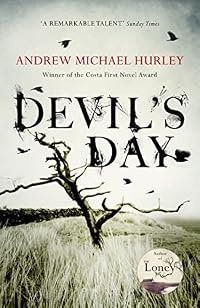
As he explored the parallels between emotional and physical landscapes there was so much which is metaphorical in the author’s writing and yet this never felt forced or overdone, it just added impressive layers of depth to the story. This was a theme in his two earlier novels, “The Loney” and “Devil’s Day” but, although this story is shorter than either of those, I think he used it to even greater effect. The dark, Gothic horror which permeates his writing (he describes his books as “folk-horror”) is something I relished in those earlier books, but I found his use of it in this story far more unsettling, to such an extent that, as I write this review a week after finishing the book, I still feel haunted by the thought-provoking sadness and strangeness of it. I think it’s his best yet.
Although there is no escaping the fact that this is a desperately sad and dark story, I feel that I must point out that there is one very welcome moment of lightness and humour to be found in it … in the account of the part Ewan plays in welcoming guests to a New Year’s Eve party! show less
When the story starts, in the depths of winter, it’s clear that this idyll has been shattered. The couple’s five-year-old son, Ewan, had died at the end of the previous summer and, with each of them grieving his loss in very different ways, they are now struggling to find any closeness or support in their relationship. Richard, persuaded to take a sabbatical from his job as a history lecturer in order to deal with his grief, attempts to distract himself by starting to sort out the disorganised books and papers in his father’s library and by researching the history of the local area. The main focus for his research centres on excavating the field opposite the house, in search of the roots of the legendary Stythwaite Oak. Over the centuries stories about the oak have become steeped in mystery and folklore and, although the tree no longer exists, it is believed to continue to exert a malign influence. The fact that nothing will grow on, or live in, the field reinforces the power of the myths which surround it and when he discovers some seventeenth-century woodblock prints of the tree amongst his father’s books, the disturbing illustrations depicted on them appear to lend credence to local folklore.
Whilst Richard spends hours, in all weathers, systematically digging in search of evidence of the trees existence, Juliette spends almost all her time in tears in Ewan’s bedroom because that’s where she feels closest to him, at times hearing his voice and sometimes catching glimpses of him. As she feels his presence there, she’s seldom prepared to leave the house; she just wants to stay with him, to keep him there and so can see no point in engaging with the outside world. She is desperate in her need to find meaning in what has happened, for answers about the afterlife and for comfort, so when a family friend suggests that the spiritual Mrs Forde and her followers, The Beacons would be able to help her to find answers, to find a way through the maze of her grief, she arranges for them to visit. Although Richard is sceptical about both the people and their claims, and fears that Juliette is hoping for something far more from the encounter, he feels totally impotent in the face of her grief and, desperate for them to find a way to move forward, he agrees to go along with the arrangement.
This haunting story is told from Richard’s perspective, alternating between past and present to build a picture of the build-up of tension and mystery which had preceded Ewan’s death. Through these flashbacks it gradually becomes clear that although Ewan had originally been a rather sweet and happy little boy, his behaviour had become increasingly disturbed, especially once he started to spend time playing in the field. Some unprovoked violent and cruel incidents had resulted in children at school, and most people in the village, to becoming scared and suspicious of him. When his parents tried to find out why he was behaving as he did, all he could say was that he heard the voice of Jack Grey (a figure steeped in local folklore) in his head and was just obeying what it told him to do. Was this just a phase he was going through – after all lots of children blame imaginary characters for their bad behaviour – or was he being influenced by malignant, sinister forces?
I very quickly felt caught up in the escalating tension created as the author explored the different ways in which his two main characters were dealing with their grief. He very skilfully intertwined psychologically recognisable and credible reactions with deeply disturbing elements of supernatural influences in ways which left me feeling very unsettled. This had the effect on me of raising questions about how we attempt to make sense of those things which we cannot understand and for which there appears to be no logical explanation, and how we deal with events which feel almost unbearable in their impact. We all tend to seek explanations about why things happen, particularly when something feels randomly cruel and unfair, so it’s hard to accept that all too often, there is no explanation which will offer either definitive answers or guarantee comfort. As the author reflects, “What you go searching for and what you find aren’t always the same thing”.
I think that he captured the complexities of the grieving process with an impressive depth of understanding, recognising how it alters our emotional landscape in ways which are constantly changing and are so often incomprehensible, deeply disturbing, and unpredictable. His exploration of the different ways in which Richard and Juliette deal with their grief demonstrated how easy it is for a psychological rift to develop in a previously close relationship, with neither person being able to find any meaningful point of emotional contact. There were moments when I found it harrowing to be exposed to so much raw sadness and incomprehension, and yet I felt I had to stay with the couple as they struggled to cope with the almost unimaginable grief over the death of their only child. The geographical isolation of their home somehow added to a powerfully claustrophobic sense that they were trapped in their grief, neither able to escape its intensity nor to find a way through it.
Guilt is so often a feature of the grieving process and this was a theme which ran through the story. Juliette in particular struggled with it as she reflected on the past, wondering if her actions had contributed to what had happened to Ewan and whether his death was some sort of punishment. Richard’s reflection that it sometimes seemed to him that “Juliette had brought twins into the world: Ewan and Guilt. The latter had always been the stronger of the two … When it had outlived Ewan, it had grown larger still” captured the intensity of a belief which, whilst appearing irrational to other people, has the effect of trapping the sufferer in a downward spiral of blame.
The author’s powerfully atmospheric evocation of the landscape of the countryside, and its changing face throughout the seasons, threaded its way through this story, making it a significant character in its own right. He captured the sense in which the power of nature can often feel overwhelming, making us feel relatively small and insignificant in comparison. Myth, folklore and legends continue to exist in our modern world, but perhaps particularly strongly in those communities which are more isolated and insular. Yet he captured how these can affect even the most rational of us when we are brought face to face with experiences which appear to defy a logical explanation. It is almost as though we can all, in certain circumstances, experience an atavistic response to things we cannot understand or explain, tapping into the Jungian concept of a “collective unconsciousness”, something which echoes down through the generations.
As he explored the parallels between emotional and physical landscapes there was so much which is metaphorical in the author’s writing and yet this never felt forced or overdone, it just added impressive layers of depth to the story. This was a theme in his two earlier novels, “The Loney” and “Devil’s Day” but, although this story is shorter than either of those, I think he used it to even greater effect. The dark, Gothic horror which permeates his writing (he describes his books as “folk-horror”) is something I relished in those earlier books, but I found his use of it in this story far more unsettling, to such an extent that, as I write this review a week after finishing the book, I still feel haunted by the thought-provoking sadness and strangeness of it. I think it’s his best yet.
Although there is no escaping the fact that this is a desperately sad and dark story, I feel that I must point out that there is one very welcome moment of lightness and humour to be found in it … in the account of the part Ewan plays in welcoming guests to a New Year’s Eve party! show less
Juliette and Richard have lost their five year old son, Ewan, and are struggling to come to terms with his death. Juliette is obsessed with the idea that Ewan is still in their remote farmhouse and obsessively looks for evidence in his bedroom. Richard is an academic who throws himself into an excavation on the farm land, looking for a mythical giant oak tree on what is said to be cursed ground. Juliette persuades him to have a spiritual healer visit to help her overcome her grief. Things go badly wrong as an old evil is awakened. The story combines the supernatural with Juliette's descent into the madness of her grief.
I really enjoyed this short novel, which drew on English folklore and invoked a malevolent atmosphere from the very show more beginning. Until the final page there was no out and out horror, but the tension developed with strange occurrences and disturbing imagery. The characters were strong and believable and by combining the current action with flashbacks from Ewans life (he was not a nice little boy) the level of menace was ramped up nicely. The only thing that bugged me a little bit was the fact that Richard was openly hostile and dismissive of any suggestion of supernatural activity and the idea that the land was cursed, but accepted one of the most obviously supernatural events of the story without turning a hair (or should I say hare- you'll get the pun if you read it).
I read it in just two sittings- so pretty compelling I think. show less
I really enjoyed this short novel, which drew on English folklore and invoked a malevolent atmosphere from the very show more beginning. Until the final page there was no out and out horror, but the tension developed with strange occurrences and disturbing imagery. The characters were strong and believable and by combining the current action with flashbacks from Ewans life (he was not a nice little boy) the level of menace was ramped up nicely. The only thing that bugged me a little bit was the fact that Richard was openly hostile and dismissive of any suggestion of supernatural activity and the idea that the land was cursed, but accepted one of the most obviously supernatural events of the story without turning a hair (or should I say hare- you'll get the pun if you read it).
I read it in just two sittings- so pretty compelling I think. show less
And so, the secret is out. Starve Acre, originally issued by Dead Ink Books as part of their Eden Book Society series, was not written by the elusive (by which read “fictional”) 1970s author Jonathan Buckley, but is, in fact, Andrew Michael Hurley's third novel. Starve Acre has now been published by John Murray under Hurley’s name and with new cover art. Having enjoyed "Buckley"’s horror novella, I was eager to read this version, curious to discover whether it would be an expanded take on the original.
As it turns out, I would say that around 85% of the text of the two novels is identical, such that the forthcoming version of Starve Acre is less a reworking than a variant of the previous edition. There is an important difference, show more which I’ll come to later but, in essence, the book remains the same: to quote Hurley himself, a work “very much in the folk horror tradition”, about “how grief strips the world into two”. So, if you’ve already read my review of the Eden Book Society edition, bear with me: there will be some repetition which, in the circumstances, I trust can be forgiven.
Starve Acre’s protagonists are Richard and Juliette, a couple who have lost their only son, Ewan, and are trying to get to grips with this tragic, life-changing event. Whilst Juliette believes that Ewan lives on in their house in rural Yorkshire, Richard, an archaeologist by profession, becomes obsessed with the sterile field contiguous to this house, and what lies buried beneath its dark soil.
The Eden Book Society series is based on the fictional premise that its books were written back in the 1970s. True to that brief, the original story contained some period-specific references which suggest that decade (such as Richard working on a typewriter and the conspicuous lack of mention of more recent technologies such as mobile phones). This ‘historical’ backdrop has been retained. However, in true folk horror tradition, the evil which lurks within the pages of the novel is ancient and timeless – an age-old shadow which is at one with the landscape and soil, an arcane folk figure which has terrified the villagers for centuries and which returns to curse the ‘city outsiders’ who naively try to live a dream of a simple country life.
This evil is nudged back to existence after Hurley’s protagonists, Richard and Juliette relocate from Leeds to the rural house which used to belong to Richard’s parents. Richard is not too keen on this move, particularly since it evokes memories of his father’s final mental breakdown. Juliette, however, fantasizes about their little son Ewan playing with the village children, and about raising a family of rascally young Willoughbys far from the hustle and bustle of the city. These dreams are shattered when Ewan dies in circumstances which remain vague and unexplained. Juliette falls into a debilitating depression, whereas Richard, like his father before him, spends days digging in the soil of the neighbouring “Starve Acre”, unearthing what look like the roots of an ancient “hanging tree” and the bones of a large hare. A well-meaning neighbour introduces the couple to a local mystic who conducts a séance-like ceremony in the house. It all goes horribly wrong, leading to the novella’s chilling denouement.
The story’s narrative is deftly handled, shifting seamlessly between the grief-soaked present of the Willoughbys, flashbacks to Ewan’s disturbed final months and half-remembered legends of bogeymen of English folklore.
At first I struggled to detect any notable novelty in this edition of Starve Acre, except for a subplot concerning Richard’s mother, which helps to reinforce the us-and-them mentality of the village folk. The major – and quite surprising – difference comes at the very end. I would not like to give the game away and so what I will reveal is that whilst the new version of Starve Acre is not as graphically violent as the original edition, it achieves an equally powerful climax by shifting to the final pages one of the most disturbing and hair/hare-raising images of the novella.
If anything, this new ending emphasizes a sense of ambiguity which the novella shares with some classic ghost and horror stories including, to name just one famous example, Oliver Onions’ The Beckoning Fair One. Thus, Starve Acre can be read literally as a supernatural tale or, at another level, as a study of a descent into madness and obsession, its otherworldly elements merely the morbid imaginings of sick minds. Either way, Hurley continues to confirm his status as the current master of folk horror. show less
As it turns out, I would say that around 85% of the text of the two novels is identical, such that the forthcoming version of Starve Acre is less a reworking than a variant of the previous edition. There is an important difference, show more which I’ll come to later but, in essence, the book remains the same: to quote Hurley himself, a work “very much in the folk horror tradition”, about “how grief strips the world into two”. So, if you’ve already read my review of the Eden Book Society edition, bear with me: there will be some repetition which, in the circumstances, I trust can be forgiven.
Starve Acre’s protagonists are Richard and Juliette, a couple who have lost their only son, Ewan, and are trying to get to grips with this tragic, life-changing event. Whilst Juliette believes that Ewan lives on in their house in rural Yorkshire, Richard, an archaeologist by profession, becomes obsessed with the sterile field contiguous to this house, and what lies buried beneath its dark soil.
The Eden Book Society series is based on the fictional premise that its books were written back in the 1970s. True to that brief, the original story contained some period-specific references which suggest that decade (such as Richard working on a typewriter and the conspicuous lack of mention of more recent technologies such as mobile phones). This ‘historical’ backdrop has been retained. However, in true folk horror tradition, the evil which lurks within the pages of the novel is ancient and timeless – an age-old shadow which is at one with the landscape and soil, an arcane folk figure which has terrified the villagers for centuries and which returns to curse the ‘city outsiders’ who naively try to live a dream of a simple country life.
This evil is nudged back to existence after Hurley’s protagonists, Richard and Juliette relocate from Leeds to the rural house which used to belong to Richard’s parents. Richard is not too keen on this move, particularly since it evokes memories of his father’s final mental breakdown. Juliette, however, fantasizes about their little son Ewan playing with the village children, and about raising a family of rascally young Willoughbys far from the hustle and bustle of the city. These dreams are shattered when Ewan dies in circumstances which remain vague and unexplained. Juliette falls into a debilitating depression, whereas Richard, like his father before him, spends days digging in the soil of the neighbouring “Starve Acre”, unearthing what look like the roots of an ancient “hanging tree” and the bones of a large hare. A well-meaning neighbour introduces the couple to a local mystic who conducts a séance-like ceremony in the house. It all goes horribly wrong, leading to the novella’s chilling denouement.
The story’s narrative is deftly handled, shifting seamlessly between the grief-soaked present of the Willoughbys, flashbacks to Ewan’s disturbed final months and half-remembered legends of bogeymen of English folklore.
At first I struggled to detect any notable novelty in this edition of Starve Acre, except for a subplot concerning Richard’s mother, which helps to reinforce the us-and-them mentality of the village folk. The major – and quite surprising – difference comes at the very end. I would not like to give the game away and so what I will reveal is that whilst the new version of Starve Acre is not as graphically violent as the original edition, it achieves an equally powerful climax by shifting to the final pages one of the most disturbing and hair/hare-raising images of the novella.
If anything, this new ending emphasizes a sense of ambiguity which the novella shares with some classic ghost and horror stories including, to name just one famous example, Oliver Onions’ The Beckoning Fair One. Thus, Starve Acre can be read literally as a supernatural tale or, at another level, as a study of a descent into madness and obsession, its otherworldly elements merely the morbid imaginings of sick minds. Either way, Hurley continues to confirm his status as the current master of folk horror. show less
What in the name of all that is holy have I just read? I have never been so creeped out by a book but being able to evoke such emotions meant that I strangely enjoyed it. I have never read the critically acclaimed The Loney so this is my first introduction to Andrew Michael Hurley's writing and wow can he write! It's like Andrew Michael Hurley studied horror writing at the University of Stephen King and graduated with first class honours.
Starve Acre is a very creepy place, reputed to have had an old hanging tree on the land of which Richard is searching for evidence. When his son Ewan was alive, Ewan claimed to be able to see this fabled tree and Ewan could also hear the voice of scary legend Jack Grey, telling him to do certain wicked show more things. Richard's wife, Juliette, is obviously suffering terribly after the loss of her son but she claims to see Ewan in the house. The story gets really spooky when Juliette invites a group of occultists into her home and even the leader of the group is creeped out by the house.
Starve Acre is deeply atmospheric, as well as being very weird and horrifying but I rather liked it. Not only due to the lack of chapters, but because of the increasingly intriguing and spooky storyline, it's a book that is very difficult to put down. To say that it is weird would be an understatement; if you think Stephen King books are weird then Andrew Michael Hurley is like Stephen King on steroids.
Starve Acre is a difficult book to recommend to all as it fits more of a niche group of readers; you definitely need to have an open mind and not take your fiction too seriously. If you're looking for something different with a hint of the supernatural and a huge dollop of weird, then you'll love Starve Acre.
I chose to read an ARC and this is my honest and unbiased opinion. show less
Starve Acre is a very creepy place, reputed to have had an old hanging tree on the land of which Richard is searching for evidence. When his son Ewan was alive, Ewan claimed to be able to see this fabled tree and Ewan could also hear the voice of scary legend Jack Grey, telling him to do certain wicked show more things. Richard's wife, Juliette, is obviously suffering terribly after the loss of her son but she claims to see Ewan in the house. The story gets really spooky when Juliette invites a group of occultists into her home and even the leader of the group is creeped out by the house.
Starve Acre is deeply atmospheric, as well as being very weird and horrifying but I rather liked it. Not only due to the lack of chapters, but because of the increasingly intriguing and spooky storyline, it's a book that is very difficult to put down. To say that it is weird would be an understatement; if you think Stephen King books are weird then Andrew Michael Hurley is like Stephen King on steroids.
Starve Acre is a difficult book to recommend to all as it fits more of a niche group of readers; you definitely need to have an open mind and not take your fiction too seriously. If you're looking for something different with a hint of the supernatural and a huge dollop of weird, then you'll love Starve Acre.
I chose to read an ARC and this is my honest and unbiased opinion. show less
And so, the secret is out. Starve Acre, originally issued by Dead Ink Books as part of their Eden Book Society series, was not written by the elusive (by which read “fictional”) 1970s author Jonathan Buckley, but is, in fact, Andrew Michael Hurley's third novel. Starve Acre has now been published by John Murray under Hurley’s name and with new cover art. Having enjoyed "Buckley"’s horror novella, I was eager to read this version, curious to discover whether it would be an expanded take on the original.
As it turns out, I would say that around 85% of the text of the two novels is identical, such that the forthcoming version of Starve Acre is less a reworking than a variant of the previous edition. There is an important difference, show more which I’ll come to later but, in essence, the book remains the same: to quote Hurley himself, a work “very much in the folk horror tradition”, about “how grief strips the world into two”. So, if you’ve already read my review of the Eden Book Society edition, bear with me: there will be some repetition which, in the circumstances, I trust can be forgiven.
Starve Acre’s protagonists are Richard and Juliette, a couple who have lost their only son, Ewan, and are trying to get to grips with this tragic, life-changing event. Whilst Juliette believes that Ewan lives on in their house in rural Yorkshire, Richard, an archaeologist by profession, becomes obsessed with the sterile field contiguous to this house, and what lies buried beneath its dark soil.
The Eden Book Society series is based on the fictional premise that its books were written back in the 1970s. True to that brief, the original story contained some period-specific references which suggest that decade (such as Richard working on a typewriter and the conspicuous lack of mention of more recent technologies such as mobile phones). This ‘historical’ backdrop has been retained. However, in true folk horror tradition, the evil which lurks within the pages of the novel is ancient and timeless – an age-old shadow which is at one with the landscape and soil, an arcane folk figure which has terrified the villagers for centuries and which returns to curse the ‘city outsiders’ who naively try to live a dream of a simple country life.
This evil is nudged back to existence after Hurley’s protagonists, Richard and Juliette relocate from Leeds to the rural house which used to belong to Richard’s parents. Richard is not too keen on this move, particularly since it evokes memories of his father’s final mental breakdown. Juliette, however, fantasizes about their little son Ewan playing with the village children, and about raising a family of rascally young Willoughbys far from the hustle and bustle of the city. These dreams are shattered when Ewan dies in circumstances which remain vague and unexplained. Juliette falls into a debilitating depression, whereas Richard, like his father before him, spends days digging in the soil of the neighbouring “Starve Acre”, unearthing what look like the roots of an ancient “hanging tree” and the bones of a large hare. A well-meaning neighbour introduces the couple to a local mystic who conducts a séance-like ceremony in the house. It all goes horribly wrong, leading to the novella’s chilling denouement.
The story’s narrative is deftly handled, shifting seamlessly between the grief-soaked present of the Willoughbys, flashbacks to Ewan’s disturbed final months and half-remembered legends of bogeymen of English folklore.
At first I struggled to detect any notable novelty in this edition of Starve Acre, except for a subplot concerning Richard’s mother, which helps to reinforce the us-and-them mentality of the village folk. The major – and quite surprising – difference comes at the very end. I would not like to give the game away and so what I will reveal is that whilst the new version of Starve Acre is not as graphically violent as the original edition, it achieves an equally powerful climax by shifting to the final pages one of the most disturbing and hair/hare-raising images of the novella.
If anything, this new ending emphasizes a sense of ambiguity which the novella shares with some classic ghost and horror stories including, to name just one famous example, Oliver Onions’ The Beckoning Fair One. Thus, Starve Acre can be read literally as a supernatural tale or, at another level, as a study of a descent into madness and obsession, its otherworldly elements merely the morbid imaginings of sick minds. Either way, Hurley continues to confirm his status as the current master of folk horror. show less
As it turns out, I would say that around 85% of the text of the two novels is identical, such that the forthcoming version of Starve Acre is less a reworking than a variant of the previous edition. There is an important difference, show more which I’ll come to later but, in essence, the book remains the same: to quote Hurley himself, a work “very much in the folk horror tradition”, about “how grief strips the world into two”. So, if you’ve already read my review of the Eden Book Society edition, bear with me: there will be some repetition which, in the circumstances, I trust can be forgiven.
Starve Acre’s protagonists are Richard and Juliette, a couple who have lost their only son, Ewan, and are trying to get to grips with this tragic, life-changing event. Whilst Juliette believes that Ewan lives on in their house in rural Yorkshire, Richard, an archaeologist by profession, becomes obsessed with the sterile field contiguous to this house, and what lies buried beneath its dark soil.
The Eden Book Society series is based on the fictional premise that its books were written back in the 1970s. True to that brief, the original story contained some period-specific references which suggest that decade (such as Richard working on a typewriter and the conspicuous lack of mention of more recent technologies such as mobile phones). This ‘historical’ backdrop has been retained. However, in true folk horror tradition, the evil which lurks within the pages of the novel is ancient and timeless – an age-old shadow which is at one with the landscape and soil, an arcane folk figure which has terrified the villagers for centuries and which returns to curse the ‘city outsiders’ who naively try to live a dream of a simple country life.
This evil is nudged back to existence after Hurley’s protagonists, Richard and Juliette relocate from Leeds to the rural house which used to belong to Richard’s parents. Richard is not too keen on this move, particularly since it evokes memories of his father’s final mental breakdown. Juliette, however, fantasizes about their little son Ewan playing with the village children, and about raising a family of rascally young Willoughbys far from the hustle and bustle of the city. These dreams are shattered when Ewan dies in circumstances which remain vague and unexplained. Juliette falls into a debilitating depression, whereas Richard, like his father before him, spends days digging in the soil of the neighbouring “Starve Acre”, unearthing what look like the roots of an ancient “hanging tree” and the bones of a large hare. A well-meaning neighbour introduces the couple to a local mystic who conducts a séance-like ceremony in the house. It all goes horribly wrong, leading to the novella’s chilling denouement.
The story’s narrative is deftly handled, shifting seamlessly between the grief-soaked present of the Willoughbys, flashbacks to Ewan’s disturbed final months and half-remembered legends of bogeymen of English folklore.
At first I struggled to detect any notable novelty in this edition of Starve Acre, except for a subplot concerning Richard’s mother, which helps to reinforce the us-and-them mentality of the village folk. The major – and quite surprising – difference comes at the very end. I would not like to give the game away and so what I will reveal is that whilst the new version of Starve Acre is not as graphically violent as the original edition, it achieves an equally powerful climax by shifting to the final pages one of the most disturbing and hair/hare-raising images of the novella.
If anything, this new ending emphasizes a sense of ambiguity which the novella shares with some classic ghost and horror stories including, to name just one famous example, Oliver Onions’ The Beckoning Fair One. Thus, Starve Acre can be read literally as a supernatural tale or, at another level, as a study of a descent into madness and obsession, its otherworldly elements merely the morbid imaginings of sick minds. Either way, Hurley continues to confirm his status as the current master of folk horror. show less
Well, that was terrifying on a variety of levels… Wow.
Richard and Juliette are mourning the recent death of their young son. He’s grieving, but presumably healing, and she languishing in agony and guilt – while still hearing and seeing the dead boy. As Richard uses his enforced sabbatical to babysit his wife and research a historical hanging tree on his property, he reflects on Ewan’s troubled childhood. The action starts after a pseudo séance one evening. The tone of this escalates from the quiet desolation of midwinter (when the narrative starts) to the anticipation of Spring (when it concludes) – but its an anticipation born out of dread and rebirth isn’t as uplifting as it sounds.
This took some dark twists and turns show more and I only suspected a few of them along the way. I definitely don’t know what to make of the ending – but it was wow. Well-written and thoughtful and certainly very enthralling – this one will stick with me for a while – even if there is no way of saying I enjoyed it. Nonetheless, I’m very impressed with it! show less
Richard and Juliette are mourning the recent death of their young son. He’s grieving, but presumably healing, and she languishing in agony and guilt – while still hearing and seeing the dead boy. As Richard uses his enforced sabbatical to babysit his wife and research a historical hanging tree on his property, he reflects on Ewan’s troubled childhood. The action starts after a pseudo séance one evening. The tone of this escalates from the quiet desolation of midwinter (when the narrative starts) to the anticipation of Spring (when it concludes) – but its an anticipation born out of dread and rebirth isn’t as uplifting as it sounds.
This took some dark twists and turns show more and I only suspected a few of them along the way. I definitely don’t know what to make of the ending – but it was wow. Well-written and thoughtful and certainly very enthralling – this one will stick with me for a while – even if there is no way of saying I enjoyed it. Nonetheless, I’m very impressed with it! show less
Members
- Recently Added By
Lists

Top Five Books of 2021
604 works; 181 members

Books Read in 2021
5,361 works; 113 members

Wyrd as Folk
43 works; 4 members
Author Information

8+ Works 1,886 Members
Andrew Michael Hurley was born in 1975 in the UK. He is the author of two volumes of short stories Cages and Other Stories and The Unusual Death of Julie Christie and Other Stories. His debut novel is entitled The Lonely. It won a Costa Book Award 2015 in the first novel category. It was also named Book of the Year and Debut Fiction Book of the show more Year by the British Book Industry Awards 2016.He is also teacher of English literature and creative writing in Lancashire, England. (Bowker Author Biography) show less
Awards and Honors
Distinctions
The Guardian Book of the Day (2019-11-23)
Common Knowledge
- Canonical title
- Starve Acre
- Original title
- Starve Acre
- Related movies
- Starve Acre (2023 | IMDb)
Classifications
Statistics
- Members
- 481
- Popularity
- 62,824
- Reviews
- 22
- Rating
- (3.69)
- Languages
- English, Finnish, Portuguese (Portugal)
- Media
- Paper, Ebook
- ISBNs
- 9
- ASINs
- 4