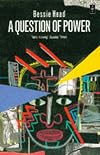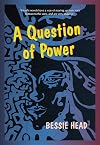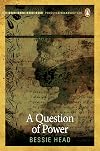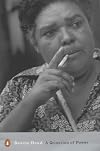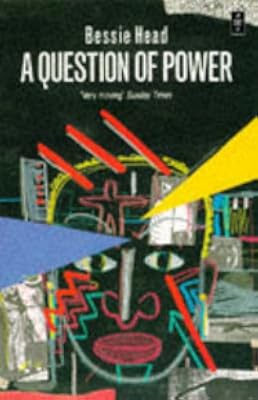
A Question of Power
by Bessie Head
On This Page
Description
It is never clear to Elizabeth whether the mission principal's cruel revelations of her origins is at the bottom of her mental breakdown, but in the dark loneliness of the Botswanan night, the frightened South African refugee slips in and out of sanity.Tags
Recommendations








Member Recommendations

Member Reviews
“Love isn't like that. Love is two people mutually feeding each other, not one living on the soul of another, like a ghoul.”
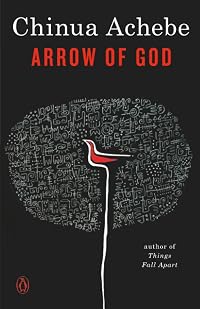
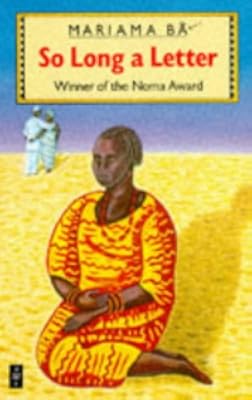
My first encounter with Bessie Head happened when I was in high school, even though I wouldn’t read her—a good thing retrospectively, until some years ago. My English and Literature teacher, Mrs. Dhulo, sensing my appetite for books—probably with the way I engaged with the curriculum’s set books, and aware that my familial circumstances didn’t furnish me with any (conservative christian evangelical upbringing skeptical of and rejecting anything unrelated to biblical text), in a kind gesture that I haven’t forgotten since, gave my father a list of books he was supposed to buy me during a show more teacher-parent conference day. The books were all fiction books by major African writers: Ngugi wa Thiong’o, Chinua Achebe, Mariama Ba, Bessie Head, Wole Soyinka, Buchi Emecheta. In those years, Nairobi’s literary scene hadn’t blossomed to what it has become today. There were few bookshops selling fiction, and they didn't really have many books by African writers (or at least didn’t when my father went to buy the books), so that while I got to read Achebe and Thiong’o (both wonderful writers), it wasn’t until years later through delightful and unexpected discoveries in local libraries, the bookshelves of friends, and later with more bookshops centered on African writers emerging in the city, that I got to read Bessie Head and the other African writers that weren’t Achebe or Ngugi. It was love at first read with Bessie Head (unfortunately there’s still hardly any bookshops selling her work in Nairobi).
My feeling of kinship for the exiled and dispossessed aside, her work, which was turned to the inside in an effort to examine human nature, as opposed to what some of her African male peers were doing (equally important work) of turning outside themselves in an effort to be representative and offer cultural reference for and of post-independent Africa, fascinated and appealed to me.
In this particular book, Bessie Head goes to the interiors of the human mind and heart in even greater depth. Elizabeth, the protagonist, shares many similarities with the writer Bessie Head. She’s a South African exile in Botswana, is the daughter of a white woman and a Black man and is categorized as colored (different racial structure from either Black or white in South Africa), has a small son, and is ill. Much of this book is madness with few moments of lucidity; hallucinations that are disturbing, repelling, repulsive, repetitive, disjointed, and unceasing, and goes on to the point of Elizabeth being admitted to a horrible mental institution. Elizabeth tries to find ways to bring harmony within herself by attempting to arrange her outside world; she makes and arranges her small house with neatness and care, and learns vegetable gardening.
“If such a beauty and harmony built up in her outward circumstances it was at total odds with the tormented hell of her inner world.”
At the same time, Elizabeth struggles to find definitions of goodness, reconciling the evils of racism and oppression and harming others to the nature of human beings, and discovering the ways in which, even in periods of harmony and order, goodness in the outside world doesn’t necessarily translate to harmony in the interior world within.
“Elizabeth was never to regain a sense of security or stability on the question of how patterns of goodness were too soft, too indefinable to counter the tumultuous roar of evil. Why else was that whole year lost to her, when so much of life around her unfolded with beautiful harmony?”
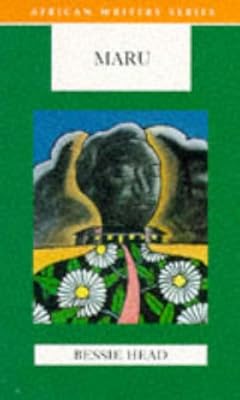
There were moments reading this that I wanted Elizabeth to get better, not for any reason but so that the narrative could become clearer. My expectations of prose to elucidate have always been such that I have a difficult time with books that are disorienting, and this was undoubtedly my most disorienting reading experience: a book meant to reproduce the disorienting nature of mental upheaval. I can’t honestly say that I enjoyed reading this book, but it has broadened my understanding of what prose can do and made me question my expectations of prose in that way. [b:Maru|219867|Maru|Bessie Head|https://i.gr-assets.com/images/S/compressed.photo.goodreads.com/books/1545630433l/219867._SY75_.jpg|1710753] remains my favorite Bessie Head novel, but I appreciate the significance of this book, both in its time of publication and now, and even think that this might be Head’s best work in the way she stretches and defies certain conventions of the (African) novel. show less
My first encounter with Bessie Head happened when I was in high school, even though I wouldn’t read her—a good thing retrospectively, until some years ago. My English and Literature teacher, Mrs. Dhulo, sensing my appetite for books—probably with the way I engaged with the curriculum’s set books, and aware that my familial circumstances didn’t furnish me with any (conservative christian evangelical upbringing skeptical of and rejecting anything unrelated to biblical text), in a kind gesture that I haven’t forgotten since, gave my father a list of books he was supposed to buy me during a show more teacher-parent conference day. The books were all fiction books by major African writers: Ngugi wa Thiong’o, Chinua Achebe, Mariama Ba, Bessie Head, Wole Soyinka, Buchi Emecheta. In those years, Nairobi’s literary scene hadn’t blossomed to what it has become today. There were few bookshops selling fiction, and they didn't really have many books by African writers (or at least didn’t when my father went to buy the books), so that while I got to read Achebe and Thiong’o (both wonderful writers), it wasn’t until years later through delightful and unexpected discoveries in local libraries, the bookshelves of friends, and later with more bookshops centered on African writers emerging in the city, that I got to read Bessie Head and the other African writers that weren’t Achebe or Ngugi. It was love at first read with Bessie Head (unfortunately there’s still hardly any bookshops selling her work in Nairobi).
My feeling of kinship for the exiled and dispossessed aside, her work, which was turned to the inside in an effort to examine human nature, as opposed to what some of her African male peers were doing (equally important work) of turning outside themselves in an effort to be representative and offer cultural reference for and of post-independent Africa, fascinated and appealed to me.
In this particular book, Bessie Head goes to the interiors of the human mind and heart in even greater depth. Elizabeth, the protagonist, shares many similarities with the writer Bessie Head. She’s a South African exile in Botswana, is the daughter of a white woman and a Black man and is categorized as colored (different racial structure from either Black or white in South Africa), has a small son, and is ill. Much of this book is madness with few moments of lucidity; hallucinations that are disturbing, repelling, repulsive, repetitive, disjointed, and unceasing, and goes on to the point of Elizabeth being admitted to a horrible mental institution. Elizabeth tries to find ways to bring harmony within herself by attempting to arrange her outside world; she makes and arranges her small house with neatness and care, and learns vegetable gardening.
“If such a beauty and harmony built up in her outward circumstances it was at total odds with the tormented hell of her inner world.”
At the same time, Elizabeth struggles to find definitions of goodness, reconciling the evils of racism and oppression and harming others to the nature of human beings, and discovering the ways in which, even in periods of harmony and order, goodness in the outside world doesn’t necessarily translate to harmony in the interior world within.
“Elizabeth was never to regain a sense of security or stability on the question of how patterns of goodness were too soft, too indefinable to counter the tumultuous roar of evil. Why else was that whole year lost to her, when so much of life around her unfolded with beautiful harmony?”
There were moments reading this that I wanted Elizabeth to get better, not for any reason but so that the narrative could become clearer. My expectations of prose to elucidate have always been such that I have a difficult time with books that are disorienting, and this was undoubtedly my most disorienting reading experience: a book meant to reproduce the disorienting nature of mental upheaval. I can’t honestly say that I enjoyed reading this book, but it has broadened my understanding of what prose can do and made me question my expectations of prose in that way. [b:Maru|219867|Maru|Bessie Head|https://i.gr-assets.com/images/S/compressed.photo.goodreads.com/books/1545630433l/219867._SY75_.jpg|1710753] remains my favorite Bessie Head novel, but I appreciate the significance of this book, both in its time of publication and now, and even think that this might be Head’s best work in the way she stretches and defies certain conventions of the (African) novel. show less
This is a difficult book, but one of those fascinating narratives that offers more with each look. The characters are not only believable and interesting, but give clear insight into postcolonial relations and succeed allegorically at the same time. As complex as the book is, the language only adds to the power of it. All together, a read worth exploring and coming back to.
Bessie Head (1937-1986) was born in Pietermaritzburg, South Africa, the product of a relationship between a wealthy white woman and an unknown black man, who was believed to be a farm hand on the family ranch where her mother, Bessie Amelia ("Toby") Emery, lived. Toby was committed to a local mental hospital after her parents learned of her pregnancy, which was taboo in that segregated country. She gave birth to Bessie in this hospital, and as she was deemed to be too mentally ill to raise the child Bessie was sent to live with a white family, who subsequently disowned her after they discovered that she was a "Coloured" (mixed race) girl. Her mother committed suicide after Bessie was taken away from her, so she was placed in a foster show more care with a black family until she was 13, and then sent to live in a mission orphanage in Durban.
After she earned a teaching certificate she left the orphanage and taught briefly in Durban before she moved to Johannesburg to become a journalist. Her career was marred by racism and sexism, as she was the only female journalist for the publication she worked for. However, her career allowed her to meet members of the Pan Africanist Congress in the early 1960s, who sought the removal of the apartheid system in South Africa and a return to self government by black Africans. She was introduced to her future husband, Harold Head, an anti-apartheid activist, who she married in 1961 and subsequently divorced three years later. She joined the Pan Africanist Congress, and her activities led to her arrest and imprisonment. She sought asylum and left South Africa for neighboring Botswana with her son in 1964. She was accepted as an alien refugee there, on the condition that she would never attempt to return to her home country.
Bessie Head taught and became an agricultural worker in Botswana, but was very lonely and was ostracized in her new surroundings, which led to a nervous breakdown and hospitalization in a mental health facility. She began to write after her release from hospital and slowly gained recognition for her short stories and novels, which allowed her to escape crushing poverty that resulted from her loss of work. Just as she was becoming an acclaimed writer she contracted hepatitis, which led to her premature death at the age of 48.
A Question of Power, which was published in 1973, is a semi-autobiographical novel whose protagonist, Elizabeth, is a mixed race South African who fled to the Botswanan village of Motabeng, where she became a schoolteacher. Elizabeth, like her creator, struggled to fit into Botswanan society, and slowly descended into madness. The narrative features her unusual relationship with two mysterious men, who may or may not be real, and her hallucinatory fantasies are interspersed with her brief lucid periods. The novel can also be viewed as a metaphor for the disturbed state of apartheid South Africa, as well as the effects that this system had on its Black and Coloured residents.
A Question of Power was a disturbing and difficult book to read, as I had a hard time following Elizabeth's schizophrenic thoughts. It is a powerful and inspired work of literature, though, and I do intend to read more of Bessie Head's books, particularly her autobiography A Woman Alone, in the near future. show less
After she earned a teaching certificate she left the orphanage and taught briefly in Durban before she moved to Johannesburg to become a journalist. Her career was marred by racism and sexism, as she was the only female journalist for the publication she worked for. However, her career allowed her to meet members of the Pan Africanist Congress in the early 1960s, who sought the removal of the apartheid system in South Africa and a return to self government by black Africans. She was introduced to her future husband, Harold Head, an anti-apartheid activist, who she married in 1961 and subsequently divorced three years later. She joined the Pan Africanist Congress, and her activities led to her arrest and imprisonment. She sought asylum and left South Africa for neighboring Botswana with her son in 1964. She was accepted as an alien refugee there, on the condition that she would never attempt to return to her home country.
Bessie Head taught and became an agricultural worker in Botswana, but was very lonely and was ostracized in her new surroundings, which led to a nervous breakdown and hospitalization in a mental health facility. She began to write after her release from hospital and slowly gained recognition for her short stories and novels, which allowed her to escape crushing poverty that resulted from her loss of work. Just as she was becoming an acclaimed writer she contracted hepatitis, which led to her premature death at the age of 48.
A Question of Power, which was published in 1973, is a semi-autobiographical novel whose protagonist, Elizabeth, is a mixed race South African who fled to the Botswanan village of Motabeng, where she became a schoolteacher. Elizabeth, like her creator, struggled to fit into Botswanan society, and slowly descended into madness. The narrative features her unusual relationship with two mysterious men, who may or may not be real, and her hallucinatory fantasies are interspersed with her brief lucid periods. The novel can also be viewed as a metaphor for the disturbed state of apartheid South Africa, as well as the effects that this system had on its Black and Coloured residents.
A Question of Power was a disturbing and difficult book to read, as I had a hard time following Elizabeth's schizophrenic thoughts. It is a powerful and inspired work of literature, though, and I do intend to read more of Bessie Head's books, particularly her autobiography A Woman Alone, in the near future. show less
Not a book that is easy to read, but it addresses the isolation of mental illness with depth and sincerity. Bessie Head draws out the universal from racial and cultural lines that we draw for ourselves.
This is the story of Elizabeth, a biracial South African who immigrates with her young son to post-colonial Botswana, where she never quite fits in with the locals. Displaying obvious signs of mental illness, Elizabeth soon loses her job as a secondary school teacher and devotes herself to a community gardening project. By day, she gardens, and by night, she descends into the depths of madness, via terrifying hallucinatory dream sequences. The hallucinations include a large cast of recurring characters and are directed by two very different figures: Sello, a monk-like character and Dan, a sex-crazed seemingly conscienceless man who Elizabeth initially finds attractive. From what I understand, the events of the novel somewhat mirror show more Bessie Head's own life experiences.
The hallucinations make up a large chunk of the narrative and Head packs a lot into them. Unfortunately, I don't feel like I quite grasped all of the references. Initially I thought that in addition to representing the personal struggles of a woman grappling with how she fits into her society, as well as dealing with the scars of Apartheid, it also works as some sort of metaphor for the direction that post-colonial African governments were taking at the time and the different power relationships between leaders and the people. Then I got to the end, and was terribly confused again, so I really have no idea. And now I'm so exhausted by this novel that I give up trying to figure it out. Perhaps I'll go read some journal articles.
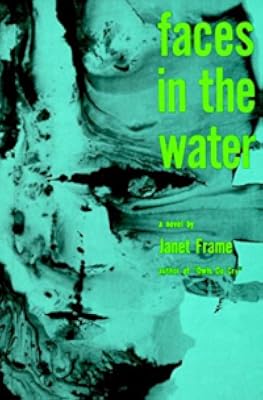
I do know that it disappoints me somewhat. While I appreciate what I think the author is trying to do, I'm just not sure it's wildly successful. I've read some outstanding insanity/mental breakdown narratives in recent years - namely, Faces in the Water, In the Heart of the Country, and The Salt Eaters - and A Question of Power lacks the effortless flow of those three novels, where in them I feel whisked away on a crazy head journey where, while I'm not precisely sure what is going on, I'm left with unforgettable and undeniable impressions. So, this is certainly not bad, but I don't enthusiastically recommended it either. And, of course, it could just be me not quite grasping the thing. I don't know. show less
The hallucinations make up a large chunk of the narrative and Head packs a lot into them. Unfortunately, I don't feel like I quite grasped all of the references. Initially I thought that in addition to representing the personal struggles of a woman grappling with how she fits into her society, as well as dealing with the scars of Apartheid, it also works as some sort of metaphor for the direction that post-colonial African governments were taking at the time and the different power relationships between leaders and the people. Then I got to the end, and was terribly confused again, so I really have no idea. And now I'm so exhausted by this novel that I give up trying to figure it out. Perhaps I'll go read some journal articles.
I do know that it disappoints me somewhat. While I appreciate what I think the author is trying to do, I'm just not sure it's wildly successful. I've read some outstanding insanity/mental breakdown narratives in recent years - namely, Faces in the Water, In the Heart of the Country, and The Salt Eaters - and A Question of Power lacks the effortless flow of those three novels, where in them I feel whisked away on a crazy head journey where, while I'm not precisely sure what is going on, I'm left with unforgettable and undeniable impressions. So, this is certainly not bad, but I don't enthusiastically recommended it either. And, of course, it could just be me not quite grasping the thing. I don't know. show less
Much of this novel explores the protagonist's experience with mental illness so it's not a particularly enjoyable read. But it seems ahead of its time for its unvarnished description of the experience. And similar to [b:When Rain Clouds Gather|28278|When Rain Clouds Gather|Bessie Head|https://i.gr-assets.com/images/S/compressed.photo.goodreads.com/books/1387749241l/28278._SY75_.jpg|2261015] there are vivid descriptions of life in Botswana and efforts to improve agricultural methods/life that are compelling.
While reading Alice Walker’s A Temple of My Familiar, I noticed a couple of mentions of a South African writer, Bessie Head. Normally, these references are part of the fiction, but what I read sounded authentic and vaguely familiar. I was wrong about the familiarity, but Bessie Head was quite real indeed.
According to her website, “Bessie Amelia Head never knew her real parents: an unstable white woman and an unknown black man. She was born and raised in apartheid South Africa. There she suffered from poverty, racial segregation, and gender discrimination. She also had to worry about her own "delicate nervous balance." As a young woman she left South Africa to come to Botswana. She lived the rest of her life in this country, mostly show more in Serowe. Bit by bit she overcame her many formidable obstacles. One of her passions was letter-writing; she corresponded with hundreds of people from many countries during her life. At the end she was a famous writer known all around the world” http://thuto.org/bhead/html/biography/biography.htm#bbio
The site also revealed that Head spent at least two periods in a mental institution. Her doctors diagnosed her with schizophrenia. After reading this except, I began to grasp the enormity of the tale Bessie tells in her 1974 novel, A Question of Power.
I will say this right off – this was one of the most intense, moving, and horrific descriptions of mental illness I have ever read. I have read a number of stories like this which caused me varying amounts of disturbance. For example, Lu Hsun’s chilling short story, “A Madman’s Diary.” But all those tales fail to even begin to approach the horror of Elizabeth’s life.
The novel contains numerous scenes of sexual encounters which may or may not directly involve the main character, Elizabeth. After a while, I felt as though Elizabeth also suffered from what was once known as multiple personality disorder, but which the American Psychological Association now defines in DSM IV-TR as “Dissociative Identity Disorder. The symptoms include: The presence of two or more distinct identities or personality states (each with its own relatively enduring pattern of perceiving, relating to, and thinking about the environment and self); at least two of these identities or personality states recurrently take control of the person's behavior; the inability to recall important personal information that is too extensive to be explained by ordinary forgetfulness; and the disturbance is not due to the direct physiological effects of a substance (e.g., blackouts or chaotic behavior during Alcohol Intoxication) or a general medical condition (e.g., complex partial seizures)."
Some pages I could barely get through; others I had to read and reread, and sometimes go over again to grasp the significance. I frequently thought, “I can’t read anymore.” But I kept coming back. The middle of the novel described a lucid period in Elizabeth’s life, but it ends with another breakdown and an extensive period of hospitalization.
This wonderful section, of a relatively happy and peaceful sojourn in the village of Motabeng, depicted Elizabeth helping the local residents establish gardens to grow fresh vegetables. This part of the story was filled with love, friendship, and compassion. However, the entire novel suffered from poor editing. I found dozens of spelling errors in the book. Despite all this, I want to read more of Bessie Head. Her award winning novel, Maru is on my radar, but A Question of Power will haunt me for quite a while. 5 stars
--Jim, 9/15/13 show less
According to her website, “Bessie Amelia Head never knew her real parents: an unstable white woman and an unknown black man. She was born and raised in apartheid South Africa. There she suffered from poverty, racial segregation, and gender discrimination. She also had to worry about her own "delicate nervous balance." As a young woman she left South Africa to come to Botswana. She lived the rest of her life in this country, mostly show more in Serowe. Bit by bit she overcame her many formidable obstacles. One of her passions was letter-writing; she corresponded with hundreds of people from many countries during her life. At the end she was a famous writer known all around the world” http://thuto.org/bhead/html/biography/biography.htm#bbio
The site also revealed that Head spent at least two periods in a mental institution. Her doctors diagnosed her with schizophrenia. After reading this except, I began to grasp the enormity of the tale Bessie tells in her 1974 novel, A Question of Power.
I will say this right off – this was one of the most intense, moving, and horrific descriptions of mental illness I have ever read. I have read a number of stories like this which caused me varying amounts of disturbance. For example, Lu Hsun’s chilling short story, “A Madman’s Diary.” But all those tales fail to even begin to approach the horror of Elizabeth’s life.
The novel contains numerous scenes of sexual encounters which may or may not directly involve the main character, Elizabeth. After a while, I felt as though Elizabeth also suffered from what was once known as multiple personality disorder, but which the American Psychological Association now defines in DSM IV-TR as “Dissociative Identity Disorder. The symptoms include: The presence of two or more distinct identities or personality states (each with its own relatively enduring pattern of perceiving, relating to, and thinking about the environment and self); at least two of these identities or personality states recurrently take control of the person's behavior; the inability to recall important personal information that is too extensive to be explained by ordinary forgetfulness; and the disturbance is not due to the direct physiological effects of a substance (e.g., blackouts or chaotic behavior during Alcohol Intoxication) or a general medical condition (e.g., complex partial seizures)."
Some pages I could barely get through; others I had to read and reread, and sometimes go over again to grasp the significance. I frequently thought, “I can’t read anymore.” But I kept coming back. The middle of the novel described a lucid period in Elizabeth’s life, but it ends with another breakdown and an extensive period of hospitalization.
This wonderful section, of a relatively happy and peaceful sojourn in the village of Motabeng, depicted Elizabeth helping the local residents establish gardens to grow fresh vegetables. This part of the story was filled with love, friendship, and compassion. However, the entire novel suffered from poor editing. I found dozens of spelling errors in the book. Despite all this, I want to read more of Bessie Head. Her award winning novel, Maru is on my radar, but A Question of Power will haunt me for quite a while. 5 stars
--Jim, 9/15/13 show less
Members
- Recently Added By
Published Reviews
ThingScore 100
Bessie Head (1937-1986) was born in a mental hospital in South Africa to a white mother. Her father was, presumably, a black stable hand. A Question of Power narrates a story of Elizabeth, with similar background. After a series of foster homes and receiving a colonial education in a missionary school, Elizabeth like Head in her time, takes an exit visa to Botswana to escape a bad relationship show more and the Apartheid-ridden South Africa. In A Question of Power the single mother migrant’s efforts to settle in a new country and community are interwoven with in experience of intense poverty and a mental breakdown. show less
added by kidzdoc
This remarkable book, written by an important and interesting African woman writer who left her native South Africa in 1964 on an "exit visa" (no return possible) and who was stateless for most of the rest of her life (it was 15 years before Botswana granted her citizenship) can be read on at least two levels. On the one hand, it is an insider description of the mind of a suffering, delusional show more person. On the other hand, it is an exploration of power relations and political-social evil. By conflating these two levels, Head demonstrates that social evil inflicted on individuals can lead quite literally to madness. show less
added by kidzdoc
This amazing novel was written by South African Bessie Head in 1974. Like the novel's protagonist, Elizabeth, Head was a schoolteacher with a failed marriage who eventually made her home in Botswana. A Question of Power picks up Elizabeth's story as she moves to Botswana and begins a four-year battle with undiagnosed schizophrenia.
added by kidzdoc
Lists

Best African Books
126 works; 46 members

Female Author
1,234 works; 67 members

Nobel non-laureates, non-male
30 works; 10 members

This is the Canon: Decolonize Your Bookshelf in 50 Books
51 works; 5 members

1,001 BYMRBYD Concensus
723 works; 27 members

Magical Realism
23 works; 2 members

Schomburg Centennial Reading List
100 works; 4 members
Talk Discussions
Past Discussions
Group Read, August 2023: A Question of Power in 1001 Books to read before you die (August 2023)
Author Information

17+ Works 1,611 Members
Bessie Head was born on July 6, 1937 in a mental hospital in South Africa. She was the child of a white mother and a black father. Head's mother had been judged insane for fraternizing with a colored man and committed to the mental hospital while pregnant. After her birth, Head was adopted by a coloured woman and raised in the mixed-raced show more community of Natal, South Africa. Head's birth mother died in the asylum in 1943. After receiving her teaching certificate, Head taught for a short while before taking a job as a newspaper reporter. In 1964, Head migrated to Botswana and began her career as a novelist. When Rain Clouds Gather, Head's first novel, was published in 1968. In the book, Head focuses on the racial hatred and political corruption of her time. Head's other novels include Maru, A Question of Power, and Serowe: Village of the Rain Wind, a story set in the village where Head lived. Head also wrote the collections Tales of Tenderness and Power, A Collection of Treasures, and A Woman Alone: Autobiographical Writings. Bessie Head died on April 17, 1986, at the age of 49. (Bowker Author Biography) show less
Some Editions
Awards and Honors
Series
Belongs to Publisher Series
Common Knowledge
- Canonical title
- A Question of Power
- Original title
- A Question of Power
- Original publication date
- 1974
- Important places
- Botswana
- Epigraph
- Only man can fall from God
Only man.
That awful and sickening endless, sinking
sinking through the slow, corruptive
levels of disintegrative knowledge...
the awful katabolism into the aby... (show all)ss!
D.H. Lawrence: From a poem: 'God' - Dedication
- For Randolph Vigne and Christine Hawes, Ken and Myrna Mackenzie, and for Bosele Sianana, with love
- First words
- It seemed almost incidental that he was African.
- Quotations
- 'We have a full docket on you. You must be very careful. Your mother was insane. If you're not careful you'll get insane just like your mother. Your mother was a white woman. They had to lock her up, as she was having a child... (show all) by the stable boy, who was a native.'
She wasn't sure if it applied elsewhere, but she was essentially a product of the slums and hovels of South Africa. People there had an unwritten law. They hated any black person among them who was 'important'. They would say... (show all), behind the person's back: 'Oh, he thinks he's important', with awful scorn. She has seen too many people despised for self-importance, and it was something drilled into her: be the same as others in heart; just be a person.
Classifications
Statistics
- Members
- 424
- Popularity
- 72,830
- Reviews
- 11
- Rating
- (3.27)
- Languages
- 6 — Dutch, English, French, German, Italian, Japanese
- Media
- Paper, Ebook
- ISBNs
- 14
- ASINs
- 4