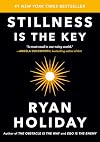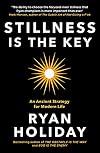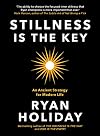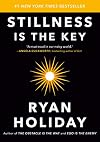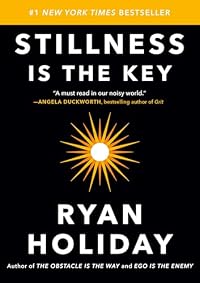
Stillness Is the Key
by Ryan Holiday
On This Page
Description
Instant #1 New York Times Bestseller & Wall Street Journal BestsellerIn The Obstacle Is the Way and Ego Is the Enemy, bestselling author Ryan Holiday made ancient wisdom wildly popular with a new generation of leaders in sports, politics, and technology. In his new book, Stillness Is the Key, Holiday draws on timeless Stoic and Buddhist philosophy to show why slowing down is the secret weapon for those charging ahead.
All great leaders, thinkers, artists, athletes, and visionaries share one show more indelible quality. It enables them to conquer their tempers. To avoid distraction and discover great insights. To achieve happiness and do the right thing. Ryan Holiday calls it stillness—to be steady while the world spins around you.
In this book, he outlines a path for achieving this ancient, but urgently necessary way of living. Drawing on a wide range of history's greatest thinkers, from Confucius to Seneca, Marcus Aurelius to Thich Nhat Hanh, John Stuart Mill to Nietzsche, he argues that stillness is not mere inactivity, but the doorway to self-mastery, discipline, and focus.
Holiday also examines figures who exemplified the power of stillness: baseball player Sadaharu Oh, whose study of Zen made him the greatest home run hitter of all time; Winston Churchill, who in balancing his busy public life with time spent laying bricks and painting at his Chartwell estate managed to save the world from annihilation in the process; Fred Rogers, who taught generations of children to see what was invisible to the eye; Anne Frank, whose journaling and love of nature guided her through unimaginable adversity.
More than ever, people are overwhelmed. They face obstacles and egos and competition. Stillness Is the Key offers a simple but inspiring antidote to the stress of 24/7 news and social media. The stillness that we all seek is the path to meaning, contentment, and excellence in a world that needs more of it than ever. show less
Tags
Recommendations
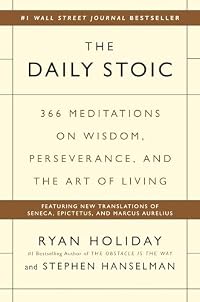
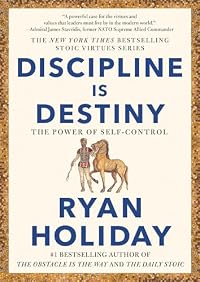
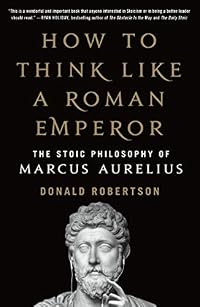
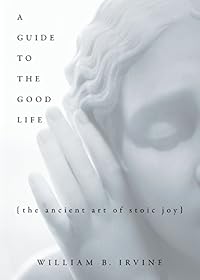
Member Reviews
This is my first book by Ryan Holiday, and I must say, I'm not overly impressed. The book wavers back and forth between insightful and inane. There is some useful advice, to be sure, including the benefits of being fully present, limiting inputs to prevent information overload, cultivating silence, turning off your cell-phone, and embracing the Stoic virtues of optimism, honesty, courage, justice, toleration, gratitude, and wisdom. This is all good advice, if not necessarily original or better covered by other Stoic philosophers.
But it is into the second part of the book where it all starts to fall apart, leading up to the cliche-fest that is the chapter titled “Accepting a Higher Power.” I get the unfortunate impression that show more Holiday doesn’t understand the difference between religion and philosophy. For someone supposedly well-versed in the practice of Stoicism, talk of “surrendering to a higher power” is entirely antithetical to the philosophy. Stoicism teaches us that the greatest goods are reason and virtue, and that the cultivation of virtue is entirely independent of anything external to ourselves and the people around us.
Holiday writes, “There is no stillness to the mind that thinks of nothing but itself.” This is supposed to imply that some sort of religious faith in a higher power is necessary for a meaningful life, as if a sense of awe cannot be achieved by, for example, looking through the Hubble Space Telescope, or that actually helping other people isn’t a better way to be selfless than praying. I’ll admit that I’m growing tired of reading authors projecting their own psychology into the text and assuming that those lacking religious faith are selfish and miserable. Science and humanism are enough for me, and for many other Stoics, humanists, atheists, and agnostics, thank you.
Holiday also betrays his lack of training as a professional philosopher when he insists, more than once, that if many different people believed something in the past, it must be true. This “appeal to the bandwagon” fallacy is constantly repeated, with the implication that because belief in a deity was widespread in the past that it must be true. As Holiday writes, “That was the story with Lincoln. Like many smart young people, he was an atheist early in life, but the trials of adulthood, especially the loss of his son and the horrors of the Civil War, turned him into a believer.” It’s interesting to note that Holiday doesn’t mention David Hume, Bertrand Russell, Jeremey Bentham, John Stuart Mill, Denis Diderot, John Dewey, and most contemporary philosophers and scientists that were or are atheists. (Diderot and Russell didn’t have easy lives, both being imprisoned for their beliefs. But neither “smart young person” recanted their atheism later in life.)
And here’s some condescension for you: Holiday writes, in the chapter on accepting a higher power, “Perhaps you’re not ready to do that, to let anything into your heart. That’s okay. There’s no rush. Just know that this step is open to you. It’s waiting. And it will help restore you to sanity when you’re ready.”
If you enjoy being talked down to like this, you’ll love the book!
The structure of the book is also somewhat redundant. It’s broken up into three parts: mind, spirit, and body. However, the chapters titled “Say No” and “Seek Solitude” in the body section are largely a repeat of the chapters titled “Limit Your Inputs” and “Cultivate Silence” in the mind section. There is, in fact, a lot of redundancy found throughout the book, along with a large dose of empty phrases with little substance.
There are, to be fair, some redeeming qualities. The numerous biographical details are interesting, and, again, there is some genuinely good advice, particularly when Holiday sticks closest to Stoicism. However, this is not something I could recommend. I think you’d be better off reading the classics of Stoicism or contemporary philosophers specializing in Stoicism like Massimo Pigliucci. show less
But it is into the second part of the book where it all starts to fall apart, leading up to the cliche-fest that is the chapter titled “Accepting a Higher Power.” I get the unfortunate impression that show more Holiday doesn’t understand the difference between religion and philosophy. For someone supposedly well-versed in the practice of Stoicism, talk of “surrendering to a higher power” is entirely antithetical to the philosophy. Stoicism teaches us that the greatest goods are reason and virtue, and that the cultivation of virtue is entirely independent of anything external to ourselves and the people around us.
Holiday writes, “There is no stillness to the mind that thinks of nothing but itself.” This is supposed to imply that some sort of religious faith in a higher power is necessary for a meaningful life, as if a sense of awe cannot be achieved by, for example, looking through the Hubble Space Telescope, or that actually helping other people isn’t a better way to be selfless than praying. I’ll admit that I’m growing tired of reading authors projecting their own psychology into the text and assuming that those lacking religious faith are selfish and miserable. Science and humanism are enough for me, and for many other Stoics, humanists, atheists, and agnostics, thank you.
Holiday also betrays his lack of training as a professional philosopher when he insists, more than once, that if many different people believed something in the past, it must be true. This “appeal to the bandwagon” fallacy is constantly repeated, with the implication that because belief in a deity was widespread in the past that it must be true. As Holiday writes, “That was the story with Lincoln. Like many smart young people, he was an atheist early in life, but the trials of adulthood, especially the loss of his son and the horrors of the Civil War, turned him into a believer.” It’s interesting to note that Holiday doesn’t mention David Hume, Bertrand Russell, Jeremey Bentham, John Stuart Mill, Denis Diderot, John Dewey, and most contemporary philosophers and scientists that were or are atheists. (Diderot and Russell didn’t have easy lives, both being imprisoned for their beliefs. But neither “smart young person” recanted their atheism later in life.)
And here’s some condescension for you: Holiday writes, in the chapter on accepting a higher power, “Perhaps you’re not ready to do that, to let anything into your heart. That’s okay. There’s no rush. Just know that this step is open to you. It’s waiting. And it will help restore you to sanity when you’re ready.”
If you enjoy being talked down to like this, you’ll love the book!
The structure of the book is also somewhat redundant. It’s broken up into three parts: mind, spirit, and body. However, the chapters titled “Say No” and “Seek Solitude” in the body section are largely a repeat of the chapters titled “Limit Your Inputs” and “Cultivate Silence” in the mind section. There is, in fact, a lot of redundancy found throughout the book, along with a large dose of empty phrases with little substance.
There are, to be fair, some redeeming qualities. The numerous biographical details are interesting, and, again, there is some genuinely good advice, particularly when Holiday sticks closest to Stoicism. However, this is not something I could recommend. I think you’d be better off reading the classics of Stoicism or contemporary philosophers specializing in Stoicism like Massimo Pigliucci. show less
I picked up this book not knowing anything about it. It looked like one of those spiritual airy-fairy self-help books, judging by its title. I started browsing through it, and it looked sort of interesting. I decided to read it and was most pleasantly surprised by a nice personal stillness guide book. In this age of anxiety (and I suffered a lot during the pandemic and associated political upheaval in the past few years), I found this to be a helpful book indeed. It centers on personal calm, how to be grounded, and gives practical advice how to achieve this.
I think that if one would read this book again from time to time, a different chapter would stand out with each reread. At the particular time I was reading this book, the chapter show more about anger made the most sense to me and gave me the best advice.
I like that the author used multiple credible sources of information from olden times to present day to supply the reader with facts and quotes. His writing was done so well and was so inspiring that I would seek out other works by him in the future. show less
I think that if one would read this book again from time to time, a different chapter would stand out with each reread. At the particular time I was reading this book, the chapter show more about anger made the most sense to me and gave me the best advice.
I like that the author used multiple credible sources of information from olden times to present day to supply the reader with facts and quotes. His writing was done so well and was so inspiring that I would seek out other works by him in the future. show less
I am a fan of Ryan Holiday's work. I tell my students in my leadership and politics classes, "Be like Ryan". Read, write, think about your future. Develop a philosophy - rules to live by. Establish your purpose - what a colleague calls one's ikigai.
Ryan Holiday reads books. He is well-read. He writes books. He lives on the land. He is doing in his early thirties what I am still not quite able to do in my fifties. But that's not the point.
As Theodore Roosevelt warned, "comparison is the thief of joy". I know all about my own circumstances, not somebody else's. Better to judge myself by my own principles and standards.
I have read many self-improvement books and I take something away from each one I have read. But I am also conscious of show more the marketing behind such works. I recall accompanying one of my in-laws to an event. It turned out to be Amway. I bought Dale Carnegie's famous book but I was wary of every time a colleague asked me, "I'd like to talk to you about a business opportunity".
I found myself becoming a little wary of Holiday's approach to this book about one third of the way through. I felt it was formulaic and repeating old ground from his earlier works. But I have been following his work from the early days of the simple Reading List email newsletter, so I acknowledged my concerns and pushed on.
I think it is the way the book builds. The end of each chapter gives a few short sentences of encouragement. I was experiencing the elevation at the end of each chapter much like one does when reading Carnegie. Frowning often while reading, it wasn't until the last few pages that my faith in Holiday was restored.
In "Act Bravely", one of the final chapters, Holiday discusses Albert Camus' The Fall. I am nodding in agreement and I thought, "I know this story, I've read most of Camus". I had to check my blog and there it was, "La Chute".
It struck me again that Holiday is really well-read. My faith restored, I went back and examined what had been going on for me.
To cut a long story short, I suffer from self-doubt in the way of Steven Pressfield. It can be crippling. Writing this right now is part of my preparation to write something else that I wish would just go away. But it won't and I have a job to do.
Holiday discusses the idea of stillness in the context of looking after oneself. I noted that many of the tips and tricks he mentions for maintaining stillness in one's life, I have used since I can remember.
Albert Camus struck me the same way when he discussed suicide. (I am not advocating suicide but I went through the philosophical exercise as the Stoics do without realising it had been done by others. This is a major reason to read according to Harold Bloom and Italo Calvino.) Ryan Holiday introduced me to the Stoics and they had the same view of suicide as a legitimate philosophical option.
Reading Stillness is the Key revealed to me the extent of my self-doubt. Not only about myself and my academic work, but also about the processes I use and how I defend my inner citadel from nonsense, how I do things like writing this blog post as a hobby and how I might prioritise doing so on this long weekend holiday instead of doing other work that is always there and can take up all my time when I let it.
And there it is - Ryan Holiday has done it again. All writing follows a formula, but that doesn't necessarily mean it is formulaic. Indeed, Aristotle's formula was original once!
It brings me back to a quote from Jack London's To Build a Fire on my blog post from last Sunday:
Ryan Holiday reads books. He is well-read. He writes books. He lives on the land. He is doing in his early thirties what I am still not quite able to do in my fifties. But that's not the point.
As Theodore Roosevelt warned, "comparison is the thief of joy". I know all about my own circumstances, not somebody else's. Better to judge myself by my own principles and standards.
I have read many self-improvement books and I take something away from each one I have read. But I am also conscious of show more the marketing behind such works. I recall accompanying one of my in-laws to an event. It turned out to be Amway. I bought Dale Carnegie's famous book but I was wary of every time a colleague asked me, "I'd like to talk to you about a business opportunity".
I found myself becoming a little wary of Holiday's approach to this book about one third of the way through. I felt it was formulaic and repeating old ground from his earlier works. But I have been following his work from the early days of the simple Reading List email newsletter, so I acknowledged my concerns and pushed on.
I think it is the way the book builds. The end of each chapter gives a few short sentences of encouragement. I was experiencing the elevation at the end of each chapter much like one does when reading Carnegie. Frowning often while reading, it wasn't until the last few pages that my faith in Holiday was restored.
In "Act Bravely", one of the final chapters, Holiday discusses Albert Camus' The Fall. I am nodding in agreement and I thought, "I know this story, I've read most of Camus". I had to check my blog and there it was, "La Chute".
It struck me again that Holiday is really well-read. My faith restored, I went back and examined what had been going on for me.
To cut a long story short, I suffer from self-doubt in the way of Steven Pressfield. It can be crippling. Writing this right now is part of my preparation to write something else that I wish would just go away. But it won't and I have a job to do.
Holiday discusses the idea of stillness in the context of looking after oneself. I noted that many of the tips and tricks he mentions for maintaining stillness in one's life, I have used since I can remember.
Albert Camus struck me the same way when he discussed suicide. (I am not advocating suicide but I went through the philosophical exercise as the Stoics do without realising it had been done by others. This is a major reason to read according to Harold Bloom and Italo Calvino.) Ryan Holiday introduced me to the Stoics and they had the same view of suicide as a legitimate philosophical option.
Reading Stillness is the Key revealed to me the extent of my self-doubt. Not only about myself and my academic work, but also about the processes I use and how I defend my inner citadel from nonsense, how I do things like writing this blog post as a hobby and how I might prioritise doing so on this long weekend holiday instead of doing other work that is always there and can take up all my time when I let it.
And there it is - Ryan Holiday has done it again. All writing follows a formula, but that doesn't necessarily mean it is formulaic. Indeed, Aristotle's formula was original once!
It brings me back to a quote from Jack London's To Build a Fire on my blog post from last Sunday:
The trouble with him was that he was without imagination. He was quick and alert in the things of life, but only in the things, and not in the significances.To be formulaic in writing is to lack "the significances". In these, Ryan Holiday lacks nothing. show less
This is my first book from Holiday and boy do I feel like I've missed the boat somewhere along the way. I've already picked up one of his older ones and anticipate getting the other in this series too.
This book is packed with so much wisdom. Holiday really breaks down useful practices for mind, body, and soul to help us all achieve the stillness we should in order to be our best selves. But it's not just Holiday spouting out what to do, it's real world examples from well-known historical figures as well as wisdom from countless spiritual and political leaders. My only criticism is just a note for me to remember to keep a highlighter next to the bed so I don't ruin the book by earmarking so many pages for reference/re-reading. **sigh**
This book is packed with so much wisdom. Holiday really breaks down useful practices for mind, body, and soul to help us all achieve the stillness we should in order to be our best selves. But it's not just Holiday spouting out what to do, it's real world examples from well-known historical figures as well as wisdom from countless spiritual and political leaders. My only criticism is just a note for me to remember to keep a highlighter next to the bed so I don't ruin the book by earmarking so many pages for reference/re-reading. **sigh**
Ryan Holiday makes some pretty good arguments for creating stillness in our busy, stressful lives and our troubled world. Though I don't agree with everything he says, I found plenty of food for thought and inspiration from the ancients. Worth reading.
In bite size chapters, Ryan Holiday doles out a lot of wisdom on "stillness". At times I impatiently wanted to rush through this book ... and often I was frustrated because the topic changed just as my interest was piqued.
Nothing was truly mind-blowing or new. However, I did subscribe to his newsletter afterwards so he's doing something for me. He has some really great nuggets of wisdom which I would prefer in a different format.
Nothing was truly mind-blowing or new. However, I did subscribe to his newsletter afterwards so he's doing something for me. He has some really great nuggets of wisdom which I would prefer in a different format.
Pop-philosophical approach to meditation that draws from many traditions. Superficial and not very useful beyond possibly inspiring seekers just beginning to look for a path.
Members
- Recently Added By
Author Information

70 Works 10,696 Members
Ryan Holiday dropped out of college at the age of 19 to apprentice under author Robert Greene. He went on to advise many bestselling authors and multiplatinum musicians, and served as director of marketing at American Apparel. He is the author of several books including Trust Me I'm Lying, Ego Is the Enemy, The Daily Stoic: 366 Meditations on show more Wisdom, Perseverance, and the Art of Living (co-written with Stephan Hanselman), and Perennial Seller: The Art of Making and Marketing Work That Lasts. (Bowker Author Biography) show less
Awards and Honors
Awards
Work Relationships
Common Knowledge
- Quotations
- Being present demand all of us. It’s not nothing. It may be the hardest thing in the world.
Even during a quiet evening at home, all we’re thinking about is the list of improvements that need to be made.
There’s too much information, every trivial detail is magnified under the microscope, speculation is rampant—and the mind is overwhelmed.
We need to cultivate a similar attitude—give things a little space, don’t consume news in real time, be a season or two behind on the latest trend or cultural phenomenon, don’t let your inbox lord over your life.
While there are many people who will anecdotally swear to the benefits of journaling, the research is compelling too. According to one study, journaling helps improve well-being after traumatic and stressful events.
Keeping a journal is a common recommendation from psychologists as well because it helps patients stop obsessing and allows them to make sense of the many inputs—emotional, external, psychological—that would otherwise ove... (show all)rwhelm them.
People who don’t read have no advantage over people who can’t read.
There’s little advantage to reading with arrogance or to confirm preexisting opinions…
You will never feel okay by way of external accomplishments. Enough comes from the inside. It comes from stepping off the train. From seeing what you already have, what you’ve always had.
If a person ca... (show all)n do that, they are richer than any billionaire, more powerful than any sovereign.
Anger is counterproductive. The flash of rage here, an outburst at the incompetence around us there—this may generate a moment of raw motivation or even a feeling of relief, but we rarely tally up the frustration they cause... (show all) down the road. Even if we apologize or the good we do outweighs the harm, damage remains—and consequences follow. The person we yelled at is more an enemy. The drawer we broke in a fit is now a constant annoyance. The high blood pressure, the overworked heart, inching us closer to the attack that will put us in the hospital or in the grave.
We are one big collective organism engaged in one endless project together. We are one.
We are the same.
Still, too often we forget it, and we forget ourselves in the process.
Work will not set you free. It will kill you if you’re not careful.
Classifications
- Genres
- Philosophy, Nonfiction, General Nonfiction, Religion & Spirituality
- DDC/MDS
- 128.4 — Philosophy and Psychology Epistemology (how do you know what you know?) Humankind Human action and experience, love, suffering, pleasure
- LCC
- BJ1533 .Q5 .H65 — Philosophy, Psychology and Religion Ethics Ethics Individual ethics. Character. Virtue
- BISAC
Statistics
- Members
- 863
- Popularity
- 31,370
- Reviews
- 11
- Rating
- (4.01)
- Languages
- 6 — English, French, German, Polish, Portuguese (Portugal), Spanish
- Media
- Paper, Audiobook, Ebook
- ISBNs
- 23
- ASINs
- 7