On This Page
Description
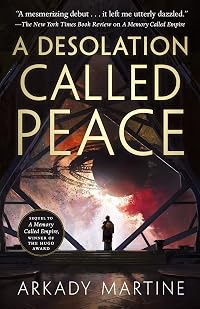
"An alien armada lurks on the edges of Teixcalaanli space. No one can communicate with it, no one can destroy it, and Fleet Captain Nine Hibiscus is running out of options. In a desperate attempt at diplomacy with the mysterious invaders, the fleet captain has sent for a diplomatic envoy. Now Mahit Dzmare and Three Seagrass-still reeling from the recent upheaval in the Empire-face the impossible task of trying to communicate with a hostile entity. Whether they succeed or fail could change show more the face of Teixcalaan forever"-- show lessTags
Recommendations


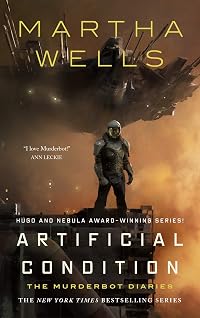

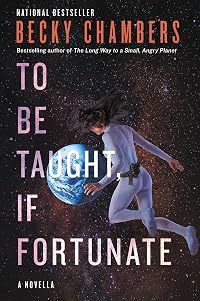
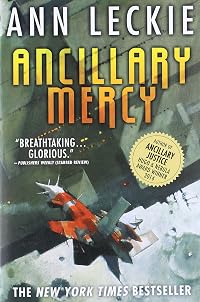
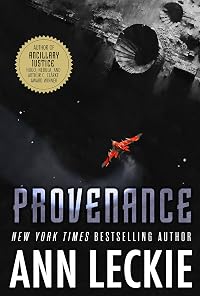

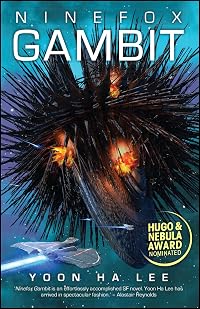
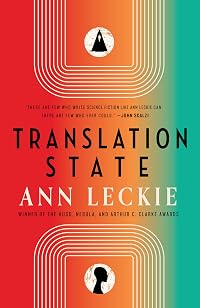
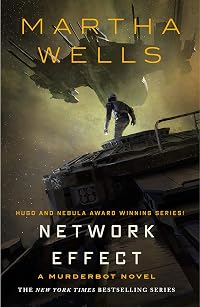
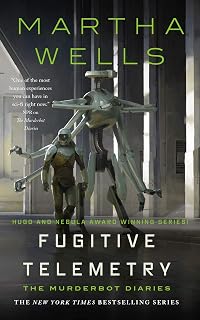



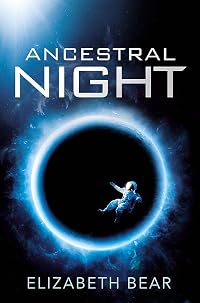
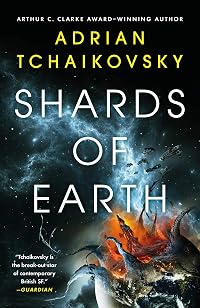
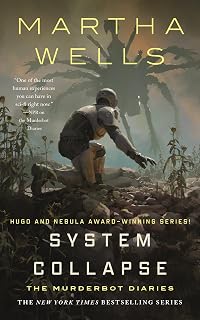
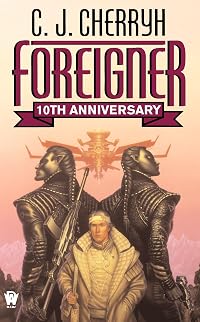
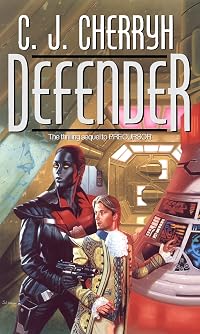
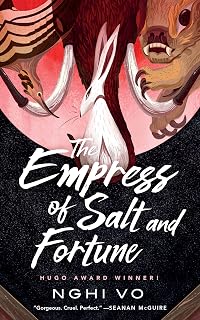

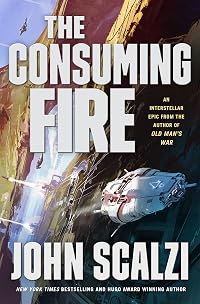



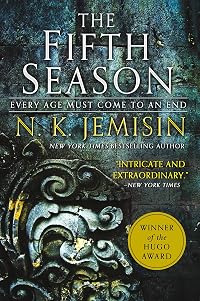

Member Recommendations
Member Reviews
Like its predecessor, [b:A Desolation Called Peace|45154547|A Desolation Called Peace (Teixcalaan, #2)|Arkady Martine|https://i.gr-assets.com/images/S/compressed.photo.goodreads.com/books/1654565596l/45154547._SY75_.jpg|61309907] takes time to establish its characters, their locations, and the politics they are enmeshed in before launching into the plot. The world of this series (two books make a series, right?) is rich and fascinating. It revolves around the immensely powerful Teixcalaani interstellar empire. Mahit, one of the protagonists, spent [b:A Memory Called Empire|37794149|A Memory Called Empire (Teixcalaan, #1)|Arkady show more Martine|https://i.gr-assets.com/images/S/compressed.photo.goodreads.com/books/1526486698l/37794149._SY75_.jpg|59457173] as an ambassador to the empire, staying in its capital. As [b:A Desolation Called Peace|45154547|A Desolation Called Peace (Teixcalaan, #2)|Arkady Martine|https://i.gr-assets.com/images/S/compressed.photo.goodreads.com/books/1654565596l/45154547._SY75_.jpg|61309907] begins she is back at her space station home, but remains connected to Teixcalaan in general and Three Seagrass in particular. Her complex ambivalence about Teixcalaan is a particularly interesting theme of both novels.
The plot of [b:A Desolation Called Peace|45154547|A Desolation Called Peace (Teixcalaan, #2)|Arkady Martine|https://i.gr-assets.com/images/S/compressed.photo.goodreads.com/books/1654565596l/45154547._SY75_.jpg|61309907] is simple: humans, mostly but not exclusively Teixcalaani, are at war with destructive invading aliens. Although the empire is highly militaristic, this is not military sci-fi as such. It does not focus on battles and tactics so much as politics and communication. Mahit and Three Seagrass attempt to comprehend the aliens, whose speech induces nausea in humans. I found their efforts compelling and enjoyed their dynamic very much.After recordings of alien speech made them both vomit, I did wonder who cleans Teixcalaani spaceships. The advanced technology of the empire doesn't appear to include robots or self-cleaning materials, so presumably there are sanitation workers in the crew.
The most memorable thread of the book, however, followed another protagonist, Eight Antidote. He is an eleven year old clone of the deceased emperor and generally eerie little boy who, and I cannot stress this enough, nobody looks after. At various points while reading I said aloud, "Won't someone parent this child?!" Although constantly tracked by CCTV cameras, he has no regular contact with a tutor, nanny, adoptive parent, guardian, or anything. I do not think it's a great idea to bring up a prospective emperor so neglectfully. (cf [b:Titus Groan|39063|Titus Groan (Gormenghast, #1)|Mervyn Peake|https://i.gr-assets.com/images/S/compressed.photo.goodreads.com/books/1327871204l/39063._SY75_.jpg|3250394], among others.) Multiple adults treat him as a political pawn and baby spy, culminating in a dramatic denouement after he takes the initiative.His use of the shard trick to prevent genocide is brilliantly exciting, but it's horrifying that a child ended up in that position! He's clearly traumatised, yet no-one seems to think he might require emotional support. Poor kid.
In short, the plot, world-building, and characterisation of [b:A Desolation Called Peace|45154547|A Desolation Called Peace (Teixcalaan, #2)|Arkady Martine|https://i.gr-assets.com/images/S/compressed.photo.goodreads.com/books/1654565596l/45154547._SY75_.jpg|61309907] were all of high quality. I rather wish the series had continued for more than two books, as there is so much potential in the characters and world. How will relations with the invading aliens develop? Is the Teixcalaani empire as stable as it likes to think? In what ways will Eight Antidote inevitably go off the rails as he grows up? Etc. Although I enjoyed reading about Teixcalaan and its neighbours, I think it would be an unbearably exhausting place to live. The narration explains all the implied political subtext and subtle one-upmanship rife in ostensibly innocuous conversations. Everyone is constantly alert for interpersonal manipulation and even Eight Antidote is already well versed in unravelling as well as employing it. I can't imagine how tiring a culture like that must be. It makes for a dense narrative style, but once accustomed to that I was swept along by the momentum of events. show less
The plot of [b:A Desolation Called Peace|45154547|A Desolation Called Peace (Teixcalaan, #2)|Arkady Martine|https://i.gr-assets.com/images/S/compressed.photo.goodreads.com/books/1654565596l/45154547._SY75_.jpg|61309907] is simple: humans, mostly but not exclusively Teixcalaani, are at war with destructive invading aliens. Although the empire is highly militaristic, this is not military sci-fi as such. It does not focus on battles and tactics so much as politics and communication. Mahit and Three Seagrass attempt to comprehend the aliens, whose speech induces nausea in humans. I found their efforts compelling and enjoyed their dynamic very much.
The most memorable thread of the book, however, followed another protagonist, Eight Antidote. He is an eleven year old clone of the deceased emperor and generally eerie little boy who, and I cannot stress this enough, nobody looks after. At various points while reading I said aloud, "Won't someone parent this child?!" Although constantly tracked by CCTV cameras, he has no regular contact with a tutor, nanny, adoptive parent, guardian, or anything. I do not think it's a great idea to bring up a prospective emperor so neglectfully. (cf [b:Titus Groan|39063|Titus Groan (Gormenghast, #1)|Mervyn Peake|https://i.gr-assets.com/images/S/compressed.photo.goodreads.com/books/1327871204l/39063._SY75_.jpg|3250394], among others.) Multiple adults treat him as a political pawn and baby spy, culminating in a dramatic denouement after he takes the initiative.
In short, the plot, world-building, and characterisation of [b:A Desolation Called Peace|45154547|A Desolation Called Peace (Teixcalaan, #2)|Arkady Martine|https://i.gr-assets.com/images/S/compressed.photo.goodreads.com/books/1654565596l/45154547._SY75_.jpg|61309907] were all of high quality. I rather wish the series had continued for more than two books, as there is so much potential in the characters and world. How will relations with the invading aliens develop? Is the Teixcalaani empire as stable as it likes to think? In what ways will Eight Antidote inevitably go off the rails as he grows up? Etc. Although I enjoyed reading about Teixcalaan and its neighbours, I think it would be an unbearably exhausting place to live. The narration explains all the implied political subtext and subtle one-upmanship rife in ostensibly innocuous conversations. Everyone is constantly alert for interpersonal manipulation and even Eight Antidote is already well versed in unravelling as well as employing it. I can't imagine how tiring a culture like that must be. It makes for a dense narrative style, but once accustomed to that I was swept along by the momentum of events. show less
Though this novel continues the travails of Ambassador Mahit Dzmare, as she comes to a frightening understanding of just how expendable she has become to her own government, the narrative really begins with the military leader Nine Hibiscus on the bridge of her flagship, as she finds herself prosecuting the war that Ambassador Dzmare instigated. From there we have a multi-layered political thriller as various factions try to make the war pay off for them, and I am very impressed with how Martine makes the juggling of all these plot lines look effortless. I look forward to what comes from Martine next, because, as far as I'm concerned, these two novels basically represent the current gold standard of space opera.
Having come through the convulsions of near civil war and collapse from within the Teixcalaan Empire has to immediately confront a threat from without. A large mass of aliens have started to threaten the edges of the empire- a species so strange that there is no hope of communication, and so militarily strong that all defences are overwhelmed. In desperate times, the ambassador from Lsel Station, Mahit Dzmare and a junior official from the Information Ministry are put into the frontline to try and find a diplomatic solution.
This is the sequel to A Memory Called Empire which I read last year. My complaint would be that these books are complex in terms of their plot and the cast of characters have names which are hard to hold in mind (for show more example Three Seagrass, Nine Hibiscus, Nineteen Adze). This sequel would have been helped by having a brief recap of the first very complicated book at the beginning and a glossary/cast of characters. It took be a while to reorientate myself and get fully immersed. However, I really enjoyed this book. The plot is intricate, characters exquisitely drawn and there are compelling themes of politics, love, friendship, loyalty and betrayal. This is right up there with the Culture novels of Iain M Banks in my view, though lacking some of the light-heartedness and humour of Banks. show less
This is the sequel to A Memory Called Empire which I read last year. My complaint would be that these books are complex in terms of their plot and the cast of characters have names which are hard to hold in mind (for show more example Three Seagrass, Nine Hibiscus, Nineteen Adze). This sequel would have been helped by having a brief recap of the first very complicated book at the beginning and a glossary/cast of characters. It took be a while to reorientate myself and get fully immersed. However, I really enjoyed this book. The plot is intricate, characters exquisitely drawn and there are compelling themes of politics, love, friendship, loyalty and betrayal. This is right up there with the Culture novels of Iain M Banks in my view, though lacking some of the light-heartedness and humour of Banks. show less
The writing is exquisite, just like in the (much beloved) first book. This is the kind of writing you both want to swallow whole and drink every sentence in small sips - slowly. I'm glad there is now such a thing as Teixcalaan in the universe of books and I would dive into it again and again.
Palace intrigues, space battles, great characters and their web of relationships are all there for the reader to enjoy ;-) (Eight Antidote, I love you so much! And all the rest of them.). Also, I appreciate sci-fi books with aliens that are truly, horrifyingly alien.
Yes, there were a few plot devices that might have made me go into facepalm mode - in a lesser book. So these were easy to forgive.
Palace intrigues, space battles, great characters and their web of relationships are all there for the reader to enjoy ;-) (Eight Antidote, I love you so much! And all the rest of them.). Also, I appreciate sci-fi books with aliens that are truly, horrifyingly alien.
Yes, there were a few plot devices that might have made me go into facepalm mode - in a lesser book. So these were easy to forgive.
Martine, Arkady. A Desolation Called Peace. Teixcalaan No. 2. Tor, 2021.
A Desolation Called Peace is an excellent sequel to A Memory Called Empire. It contains widescale action and some complexity of character and technology that the first novel did not quite have. It is unusual to find epic space opera with such good characterization. The fraught relationship between Three Seagrass and Mahit is given a few unexpected twists. The young heir to the Teixcalaani empire, Eight Antidote, is now a fully-fledged character and reminds me a lot of Cajieri in C. J. Cherryh’s Foreigner series. Arkady Martine says that she was much influenced by Elizabeth Bear, and I can see that, but she owes a lot to Cherryh as well. The linguistic themes and show more biological and technological issues are pitted against one another in original ways. Like Peter Watts’s Blindsight, it really makes you think about how far the ideas of consciousness, sentience, and individual identity are related. Highly recommended. show less
A Desolation Called Peace is an excellent sequel to A Memory Called Empire. It contains widescale action and some complexity of character and technology that the first novel did not quite have. It is unusual to find epic space opera with such good characterization. The fraught relationship between Three Seagrass and Mahit is given a few unexpected twists. The young heir to the Teixcalaani empire, Eight Antidote, is now a fully-fledged character and reminds me a lot of Cajieri in C. J. Cherryh’s Foreigner series. Arkady Martine says that she was much influenced by Elizabeth Bear, and I can see that, but she owes a lot to Cherryh as well. The linguistic themes and show more biological and technological issues are pitted against one another in original ways. Like Peter Watts’s Blindsight, it really makes you think about how far the ideas of consciousness, sentience, and individual identity are related. Highly recommended. show less
Where A Memory Called Empire innovated by describing a new world, with a novel political structure and brilliant intrigue, this book innovates in the philosophy of identity - what is "I," what is "we," what can it encompass? It's brilliant throughout and gives you so much intellectual material to chew on that I loved it. And of COURSE I adored the romance between Mahit and Three Seagrass, they're such a good couple with their realistic struggles.
Five stars, no question, won't be leaving my shelf. I would read anything else sprung from Teixcalaan happily.
Five stars, no question, won't be leaving my shelf. I would read anything else sprung from Teixcalaan happily.
This is the sequel to Martine’s Hugo Award-winning debut, A Memory Called Empire. It follows the story of Mahit Dzmare, who at 26, found herself unexpectedly appointed the new Ambassador sent to the Teixcalaan Empire from her home on Lsel Station, an artificial mining construct with at most 30,000 inhabitants. After only a short time, and despite the connection she felt with her cultural liaison in the capital a woman named Three Seagrass, she had enough and returned home. But home was not the sanctuary she thought it would be, and she immediately became a pawn between rival ruling members of Lsel Station’s Council and was in danger for her life.
Mahit improbably gets a last minute reprieve through the intervention of Three Seagrass, show more who insists Mahit needs to accompany her to the edge of the galaxy to help serve as an interpreter between the Teixcalaanli fleet and a bizarre alien race that is attacking them.
Indeed, the problems of language and ways to communicate is central to this sequel, always underlying the Byzantine politics and characters who are struggling to survive in a world rife with ambition, ideology, loyalty, and complex machinations among all the parties.
Interestingly, one of the languages at play is poetry and its expression through song, because that is a primary means of transmission in the Teixcalaanli culture. A second very different language that figures strongly in the story is that of shared perceptions and experiences, and how that sharing shapes future thought.
Yet another theme running through the story is the famous quote from Tacitus, the Roman orator, lawyer, and senator considered one of antiquity's greatest historians, from which the book’s title comes:
“These plunderers of the world [the Romans], after exhausting the land by their devastations, are rifling the ocean: stimulated by avarice, if their enemy be rich; by ambition, if poor; unsatiated by the East and by the West: the only people who behold wealth and indigence with equal avidity. To ravage, to slaughter, to usurp under false titles, they call empire; and where they make a desert, they call it peace.”
Evaluation: Martine’s imagination can literally be said to know no bounds. The world-building in this space opera is very detailed and complex. The author assists by providing a glossary at the end of the book, although I would have preferred if it had preceded the story. While this book is clearly "science fiction" set in a very alien universe, the themes are universal and recognizable: quest for power, fear of death, and most of all, the desire for connection and belonging. show less
Mahit improbably gets a last minute reprieve through the intervention of Three Seagrass, show more who insists Mahit needs to accompany her to the edge of the galaxy to help serve as an interpreter between the Teixcalaanli fleet and a bizarre alien race that is attacking them.
Indeed, the problems of language and ways to communicate is central to this sequel, always underlying the Byzantine politics and characters who are struggling to survive in a world rife with ambition, ideology, loyalty, and complex machinations among all the parties.
Interestingly, one of the languages at play is poetry and its expression through song, because that is a primary means of transmission in the Teixcalaanli culture. A second very different language that figures strongly in the story is that of shared perceptions and experiences, and how that sharing shapes future thought.
Yet another theme running through the story is the famous quote from Tacitus, the Roman orator, lawyer, and senator considered one of antiquity's greatest historians, from which the book’s title comes:
“These plunderers of the world [the Romans], after exhausting the land by their devastations, are rifling the ocean: stimulated by avarice, if their enemy be rich; by ambition, if poor; unsatiated by the East and by the West: the only people who behold wealth and indigence with equal avidity. To ravage, to slaughter, to usurp under false titles, they call empire; and where they make a desert, they call it peace.”
Evaluation: Martine’s imagination can literally be said to know no bounds. The world-building in this space opera is very detailed and complex. The author assists by providing a glossary at the end of the book, although I would have preferred if it had preceded the story. While this book is clearly "science fiction" set in a very alien universe, the themes are universal and recognizable: quest for power, fear of death, and most of all, the desire for connection and belonging. show less
Members
- Recently Added By
Lists

2022 Hugo Awards -- Eligible Works -- Novels
43 works; 10 members

Locus Award for Best Novel/SF Novel
53 works; 6 members

Top Five Books of 2022
736 works; 272 members

Top Five Books of 2021
604 works; 181 members

Arthur C. Clarke Award Winners and Shortlisted Books
219 works; 14 members

Anticipated SFF 2021
86 works; 3 members

Books Read in 2021
5,361 works; 114 members

Books Read in 2022
5,168 works; 114 members

Books Read in 2023
5,547 works; 145 members

Books Read in 2024
4,623 works; 126 members

naturallogg's 2025 in Books
50 works; 1 member
Author Information

12+ Works 6,086 Members
Some Editions
Awards and Honors
Awards
Distinctions
Notable Lists
Series

Work Relationships
Common Knowledge
- Canonical title
- A Desolation Called Peace
- Original publication date
- 2021-03-02
- People/Characters
- Mahit Dzmare; Three Seagrass; Nineteen Adze; Eight Antidote; Nine Hibiscus; Twenty Cicada
- Epigraph
- First, reality was suspended. All breaches to Inca protocol occurred at once: the rules governing personal contact (visual, oral and corporal), drinking, and eating were broken. When Ciquinchara first met the conquerors he wa... (show all)s allowed to do what no Indian could, and now the tables were turned. Since there was no signifying context to frame their interactions, the actors exposed themselves to limitless risk. Atahualpa could have been slaughtered, or Soto and Hernando poisoned....
-Gonzolo Lamana, in "Beyond Exoticization and Likeness: Alterity and the Production of Sense in a Colonial Encounter," Comparative Studies in Society and History 47, no. 1 (2005): 4-39
To ravage, to slaughter, to usurp under false titles--this they name empire; and where they make a desert they call it peace.
-Tacitus (quoting Calgacus), Agricola 30 - Dedication
- This book is for all the exiles:
the displaced, the refugee, the stateless;
the abandoned and the abandoner;
those made desolate and those cast free.
(And for Stanislav Petrov, who knew when to question orders... (show all).) - First words
- To think--not language.
- Last words
- (Click to show. Warning: May contain spoilers.)"I'd write back," she said. "All the time."
- Blurbers
- Tchaikovsky, Adrian; Baxter, Stephen; Riordan, Rick; Anders, Charlie Jane; Leckie, Ann; Lee, Yoon Ha (show all 8); North, Claire; Oswald, James
- Original language
- English
Classifications
Statistics
- Members
- 1,721
- Popularity
- 12,868
- Reviews
- 65
- Rating
- (4.17)
- Languages
- English, French, German
- Media
- Paper, Audiobook, Ebook
- ISBNs
- 19
- ASINs
- 7