On This Page
Description
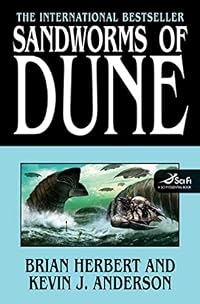
At the end of Frank Herbert's final novel, Chapterhouse: Dune, a ship carrying a crew of refugees escapes into the uncharted galaxy, fleeing from a terrifying, mysterious Enemy. The fugitives used genetic technology to revive key figures from Dune's past--including Paul Muad'Dib and Lady Jessica--to use their special talents to meet the challenges thrown at them. Based directly on Frank Herbert's final outline, which lay hidden in two safe--deposit boxes for a decade, Sandworms of Dune will show more answer the urgent questions Dune fans have been debating for two decades: the origin of the Honored Matres, the tantalizing future of the planet Arrakis, the final revelation of the Kwisatz Haderach, and the resolution to the war between Man and machine. This breathtaking new audiobook in Frank Herbert's Dune series has enough surprises and plot twists to please even the most demanding listener. show lessTags
Recommendations
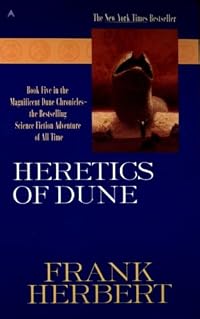

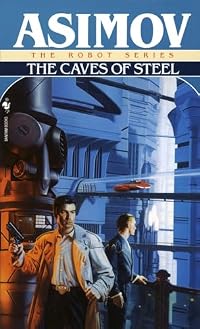
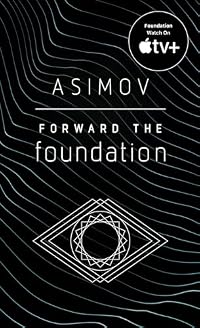
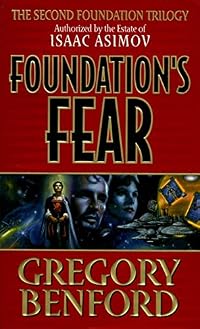




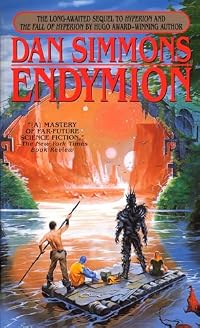
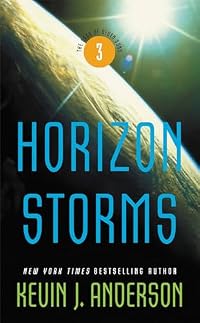
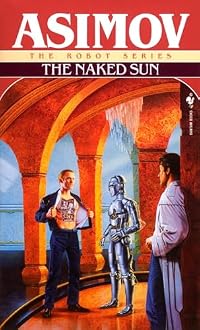
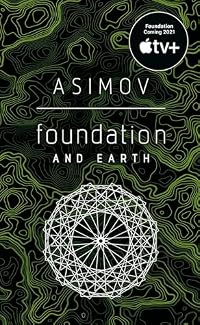
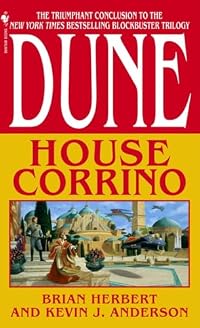
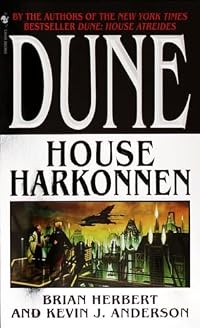





Member Recommendations

Member Reviews
After reading Sandworms of Dune, I can finally set down the entire Dune Chronicles. I read The Legends of Dune trilogy, The Houses of Dune trilogy, Frank Herbert’s original 6 volumes in the Dune Chronicles and the concluding two volumes by his son and Kevin Anderson. This was a reading project that took me a couple of years to complete. I was unimpressed by Legends, found Houses to be entertaining, the original Dune is still a classic and the next four to be worth reading. FH’s last volume, Chapterhouse Dune was not as good though it ended on a very interesting note that I wish (as many others do) that he had been able to follow up on it. The last two volumes, Hunters of Dune and Sandworms of Dune by BH and KJA were a slog to read - show more I found them frustrating.
So what annoyed me in Sandworms? The colonial attitude that the universe is for humans to do with as they wish without thought of other lifeforms. Resources are there to be used by humanity. I also found this attitude to be extended to women which was odd as women think of each other as resources to use both in breeding programs and as axlotl tanks.
Axlotl tanks! What an abhorrent idea. In the Houses trilogy and in the first couple of volumes of Frank’s original Dune books, the idea of using women simply as incubators was treated as something awful. By Sandworms, it had become normalized and offered sort of like a career choice to women. What a sad thing to suggest and it made no sense to continue with the technique. Using the axlotl tanks to resurrect characters long dead because they had special properties that might help humanity defeat the thinking machines sort of made sense when the thinking machines were a threat. But at the end of Sandworms, there has been a reconciliation between human and machine. What is the point if dehumanizing women to simply be incubators. Once the threat was removed this abhorrent technology should have been completed dismantled. It made no sense to me that it should continue.
And at the end of Sandworms the Bene Gesserit breeding program is apparently going to continue? Why? That also makes no sense! The BG breeding program had as its goal to produce the Kwisatz Haderach but by the end of Sandworms, the BG have committed to not producing another KH. So what is the point of continuing the breeding program? Why is it assumed in the book that this sort of positive eugenics is a good thing? Something that kept coming up in the books is how prescience and controlling the future becomes boring and static and that what makes life worth living is being surprised. A breeding program tries to avoid surprises - the point is to control what offspring are produced. This did not make sense to me that it should continue.
I did not like the appearance of an ultimate Kwisatz Haderach. What made the idea of a KH interesting was that the individual would be uniquely gifted and that they were the result of careful breeding. But now it seems in Sandworms that KHs are all over the place and can be engineered by ghola engineering. The KH is no longer unique and became, for me, a boring concept even though at the end of Heretics of Dune, Frank Herbert did something really interesting with Miles Teg. But the character - the idea - didn’t develop well for me in subsequent novels.
I also did not appreciate how the Dune Chronicles ends with the other memory of the BG referred to as racial memory. I thought other memory was supposed to be something developed in humanity and not localized to a particular race.
Finally, at the end of Sandworms, there is supposed to be a great rapprochement between thinking machines and humans. But the ultimate KH gives the homeworld of the thinking machines to humans to do with as they see fit. Humans yet again get to colonize a world that was not theirs to begin with. And then, “thinking machines” are simply used by humans as workers to rehabilitate/terraform/rehabilitate worlds inhabited by humans. But there is no sense that these machine “partners” with humanity are given any agency. If they are thinking machines don’t they have their own goals/dreams/aspirations?
Very disappointing end to something that had such auspicious beginnings in the original Dune. show less
So what annoyed me in Sandworms? The colonial attitude that the universe is for humans to do with as they wish without thought of other lifeforms. Resources are there to be used by humanity. I also found this attitude to be extended to women which was odd as women think of each other as resources to use both in breeding programs and as axlotl tanks.
Axlotl tanks! What an abhorrent idea. In the Houses trilogy and in the first couple of volumes of Frank’s original Dune books, the idea of using women simply as incubators was treated as something awful. By Sandworms, it had become normalized and offered sort of like a career choice to women. What a sad thing to suggest and it made no sense to continue with the technique. Using the axlotl tanks to resurrect characters long dead because they had special properties that might help humanity defeat the thinking machines sort of made sense when the thinking machines were a threat. But at the end of Sandworms, there has been a reconciliation between human and machine. What is the point if dehumanizing women to simply be incubators. Once the threat was removed this abhorrent technology should have been completed dismantled. It made no sense to me that it should continue.
And at the end of Sandworms the Bene Gesserit breeding program is apparently going to continue? Why? That also makes no sense! The BG breeding program had as its goal to produce the Kwisatz Haderach but by the end of Sandworms, the BG have committed to not producing another KH. So what is the point of continuing the breeding program? Why is it assumed in the book that this sort of positive eugenics is a good thing? Something that kept coming up in the books is how prescience and controlling the future becomes boring and static and that what makes life worth living is being surprised. A breeding program tries to avoid surprises - the point is to control what offspring are produced. This did not make sense to me that it should continue.
I did not like the appearance of an ultimate Kwisatz Haderach. What made the idea of a KH interesting was that the individual would be uniquely gifted and that they were the result of careful breeding. But now it seems in Sandworms that KHs are all over the place and can be engineered by ghola engineering. The KH is no longer unique and became, for me, a boring concept even though at the end of Heretics of Dune, Frank Herbert did something really interesting with Miles Teg. But the character - the idea - didn’t develop well for me in subsequent novels.
I also did not appreciate how the Dune Chronicles ends with the other memory of the BG referred to as racial memory. I thought other memory was supposed to be something developed in humanity and not localized to a particular race.
Finally, at the end of Sandworms, there is supposed to be a great rapprochement between thinking machines and humans. But the ultimate KH gives the homeworld of the thinking machines to humans to do with as they see fit. Humans yet again get to colonize a world that was not theirs to begin with. And then, “thinking machines” are simply used by humans as workers to rehabilitate/terraform/rehabilitate worlds inhabited by humans. But there is no sense that these machine “partners” with humanity are given any agency. If they are thinking machines don’t they have their own goals/dreams/aspirations?
Very disappointing end to something that had such auspicious beginnings in the original Dune. show less
Brian Herbert is not his father. With that in mind, I read this book, not expecting him or Kevin to write exactly like Frank. But even with NOT expecting Brian to write just like his father, this book SUCKED. There were SO many things wrong with this book. It was full of unnecessary, plodding details. Alia and Serena Butler acting as Other Memory even though neither of them had surviving descendants, is utter ridiculousness. The Baron-ghola and Erasmus commented on Alia and Serena in Other Memory respectively, wondering how they could be there (just like us readers) yet Brian and Kevin never offer a explanation for this. It's like they're saying 'Well, we're the ghostwriters, so we'll rewrite FH's canon however we want, and you can suck show more it!'
I was also VERY disappointed in the fact that nothing is revealed of Gilbertus Alban's fate. Erasmus thinks a lot about Serena, but you'd think that he'd have some thoughts about his ward, because out of the entire population of humankind, Serena and Gilbertus are both undeniably very important to Erasmus.
The thing with Norma Cenva and Omnius was one of the most ill-thought out ways to wrap up things, and the fate of some of the gholas, Leto II, Sheeana, etc, was all one HUGE disaster. The ending left me feeling unfulfilled and frustrated. I plodded through what, over 1000 pages (Hunters/Sandworms) only to see this crappy ending that RAPED my fond memories of Dune to the fiber of their very being.
One of the central themes to Frank's Dune books was that we must free ourselves of any one guiding force - hence Leto II Atreides' Golden Path to force the Famine Times and the Scattering, so that humankind would not be united under one ruler and become diversified, finding new ways to survive and learning how to adapt. And this was all RUINED when Duncan Idaho merged with Erasmus to become the Ultimate Kwisatz Haderach. This goes against the very message that Frank Herbet - through his characters Paul Muad'Dib and Leto II - was trying to teach us. Sure, we can assume that Frank had some big plans for Sheeana. After all, she is the descendant of Siona and she was able to control the worms. But I doubt that she would have become a ultimate Kwisatz Haderach. Rather, I feel that Herbert had planned for her to become the next 'example' of the Golden Path, a key figure to ensure humankind's survival after Paul, Leto II, and Siona.
And I was VERY disappointed in the lack of Darwi Odrade's Other Memory in Dune 7. She was so important in Chapterhouse Dune, and Kevin and Brian have all but thrown her aside and concentrated on some storyline concentrating on the gholas aboard the Ithaca and other crap that is really irrelevant to the whole scheme of Dune. Hunters/Sandworms concentrated on the gholas, personal drama, some bull about sea-worms (WTF???) while ignoring main characters that had been vital in previous books.
It would have been far more conceivable for the Other Enemy to be Erasmus himself rather than Omnius, or some rogue Face Dancers or renegade Tleilaxu or a female group more sinister than the Honored Matres, or some twisted male version of the Bene Gesserit or Mentats.
The very ending, with the Paul and Chani gholas just cheesed me off. Everything was wrapped up far too neatly, which is something Herbert would never have done. Leto II fought to keep mankind from stagnating, at personal cost to himself and his reputation, so to ensure its survival in the Scattering. By having Duncan Idaho become the OMG ULTIMATE KWISATZ HADERACH!!!!!!! is bringing humankind under one ruler again and will lead to eventual stagnation again.
And so many details were unnecessary - all the subplots in Dune 7, oy! The House trilogy wasn't such a bad read, but in the grand scheme of the Dune universe was really unnecessary. Frank Herbert was a master of concentrating on the big picture, and painting a grand image with but a few words. He left mentions here and there of history - Butlerian Jihad, Paul's jihad, and what have you. The details of such things is not needed in the grand scheme of the Duneverse. We Dune fans aren't idiots who need every single detail expanded on. That's why we liked Frank Herbert. The Duneverse is different from the more familiar and popular sci-fi universes - Star Trek, Star Wars, what have you. Mind you, I'm not badmouthing George Lucas or whatever, but Dune was different and we liked it for that. Brian and Kevin just ruined it for us.
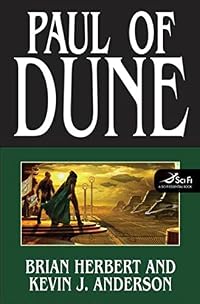
Frank Herbert is without a doubt spinning in his grave. How dare you besmirch his memory by planning to write even MOAR Dune books! We don't need 'Paul of Dune' and whatever else you have planned. Just stop writing, seriously. Haven't you raped Frank Herbert's legacy up the wazoo for long enough? People didn't like the books you wrote, and for good reason. For the sake of Frank Herbert's legacy, just stop. show less
I was also VERY disappointed in the fact that nothing is revealed of Gilbertus Alban's fate. Erasmus thinks a lot about Serena, but you'd think that he'd have some thoughts about his ward, because out of the entire population of humankind, Serena and Gilbertus are both undeniably very important to Erasmus.
The thing with Norma Cenva and Omnius was one of the most ill-thought out ways to wrap up things, and the fate of some of the gholas, Leto II, Sheeana, etc, was all one HUGE disaster. The ending left me feeling unfulfilled and frustrated. I plodded through what, over 1000 pages (Hunters/Sandworms) only to see this crappy ending that RAPED my fond memories of Dune to the fiber of their very being.
One of the central themes to Frank's Dune books was that we must free ourselves of any one guiding force - hence Leto II Atreides' Golden Path to force the Famine Times and the Scattering, so that humankind would not be united under one ruler and become diversified, finding new ways to survive and learning how to adapt. And this was all RUINED when Duncan Idaho merged with Erasmus to become the Ultimate Kwisatz Haderach. This goes against the very message that Frank Herbet - through his characters Paul Muad'Dib and Leto II - was trying to teach us. Sure, we can assume that Frank had some big plans for Sheeana. After all, she is the descendant of Siona and she was able to control the worms. But I doubt that she would have become a ultimate Kwisatz Haderach. Rather, I feel that Herbert had planned for her to become the next 'example' of the Golden Path, a key figure to ensure humankind's survival after Paul, Leto II, and Siona.
And I was VERY disappointed in the lack of Darwi Odrade's Other Memory in Dune 7. She was so important in Chapterhouse Dune, and Kevin and Brian have all but thrown her aside and concentrated on some storyline concentrating on the gholas aboard the Ithaca and other crap that is really irrelevant to the whole scheme of Dune. Hunters/Sandworms concentrated on the gholas, personal drama, some bull about sea-worms (WTF???) while ignoring main characters that had been vital in previous books.
It would have been far more conceivable for the Other Enemy to be Erasmus himself rather than Omnius, or some rogue Face Dancers or renegade Tleilaxu or a female group more sinister than the Honored Matres, or some twisted male version of the Bene Gesserit or Mentats.
The very ending, with the Paul and Chani gholas just cheesed me off. Everything was wrapped up far too neatly, which is something Herbert would never have done. Leto II fought to keep mankind from stagnating, at personal cost to himself and his reputation, so to ensure its survival in the Scattering. By having Duncan Idaho become the OMG ULTIMATE KWISATZ HADERACH!!!!!!! is bringing humankind under one ruler again and will lead to eventual stagnation again.
And so many details were unnecessary - all the subplots in Dune 7, oy! The House trilogy wasn't such a bad read, but in the grand scheme of the Dune universe was really unnecessary. Frank Herbert was a master of concentrating on the big picture, and painting a grand image with but a few words. He left mentions here and there of history - Butlerian Jihad, Paul's jihad, and what have you. The details of such things is not needed in the grand scheme of the Duneverse. We Dune fans aren't idiots who need every single detail expanded on. That's why we liked Frank Herbert. The Duneverse is different from the more familiar and popular sci-fi universes - Star Trek, Star Wars, what have you. Mind you, I'm not badmouthing George Lucas or whatever, but Dune was different and we liked it for that. Brian and Kevin just ruined it for us.
Frank Herbert is without a doubt spinning in his grave. How dare you besmirch his memory by planning to write even MOAR Dune books! We don't need 'Paul of Dune' and whatever else you have planned. Just stop writing, seriously. Haven't you raped Frank Herbert's legacy up the wazoo for long enough? People didn't like the books you wrote, and for good reason. For the sake of Frank Herbert's legacy, just stop. show less
This is a terrible ending to the epic. The pacing is terribly drawn out. The plot twists are obvious. The brilliant characters are suddenly idiots who don't have backup plans. The resolution between the enemies is utter nonsense.
I know they claim this is based upon Frank Herbert's notes for the series but the heavy leaning on the butlarian jihad reads like Brian and Kevin trying to make their prequels meaningful. If that was really the direction being planned Frank would have had some sign in an earlier story.
The Ghola plots we're a cheap way to get readers in with familiar characters despite having no real purpose. In the end, the action of the main characters was irrelevant. The plans and plotting had no bearing on the outcome at any show more level. The extended Hollywood ending was trite as well.
If you, like me, loved the Dune books so much that the cliffhanger after book 6 made you want to read these last two to wrap things up... don't. Just don't. Your musings and daydreams are better. show less
I know they claim this is based upon Frank Herbert's notes for the series but the heavy leaning on the butlarian jihad reads like Brian and Kevin trying to make their prequels meaningful. If that was really the direction being planned Frank would have had some sign in an earlier story.
The Ghola plots we're a cheap way to get readers in with familiar characters despite having no real purpose. In the end, the action of the main characters was irrelevant. The plans and plotting had no bearing on the outcome at any show more level. The extended Hollywood ending was trite as well.
If you, like me, loved the Dune books so much that the cliffhanger after book 6 made you want to read these last two to wrap things up... don't. Just don't. Your musings and daydreams are better. show less
Once again if it was possible to rate books in the negative I would do so.
This...atrocity gives new meaning to phrases like "Nuke it from orbit" or "Kill it with fire". I would recommend nuking it from orbit while killing it with dragonfire and then shooting the remnant ashes into the Sun.
What can I say? After a long, boring narrative comprising of characters being stupid and talking in stilted dialogue the book climaxes in a deus ex machina to end all deus ex machinas. Or rather a cluster of deus ex machinas. The ending is possibly the worst this series could have.
Avoid this and all other works by these two people like hell. I certainly will.
This...atrocity gives new meaning to phrases like "Nuke it from orbit" or "Kill it with fire". I would recommend nuking it from orbit while killing it with dragonfire and then shooting the remnant ashes into the Sun.
What can I say? After a long, boring narrative comprising of characters being stupid and talking in stilted dialogue the book climaxes in a deus ex machina to end all deus ex machinas. Or rather a cluster of deus ex machinas. The ending is possibly the worst this series could have.
Avoid this and all other works by these two people like hell. I certainly will.
So this is it. The FINAL book in the original Dune series. I guess it would be more of a big deal if it was the last Dune book I'll ever read, but I've got at least 3 more that I know of. It IS kind of a big deal though, considering that I read the first Dune book probably sometime around 1982. That means I've been reading this series for about 36 years. :) So it was cool to "put a cap" on the original series and I'm glad that I really enjoyed it.
At first I felt a little like bringing the old characters back was a trick to sell more books, to make readers get nostalgic, but really Frank Herbert laid out the original ground work with Duncan Idaho so it worked for me. It was great to learn the history of the Honored Matres and also cool show more that they added ideas and characters from the prequels into it.
So basically what I'm saying is that I think I'll be okay reading Dune books until I'm dead. show less
At first I felt a little like bringing the old characters back was a trick to sell more books, to make readers get nostalgic, but really Frank Herbert laid out the original ground work with Duncan Idaho so it worked for me. It was great to learn the history of the Honored Matres and also cool show more that they added ideas and characters from the prequels into it.
So basically what I'm saying is that I think I'll be okay reading Dune books until I'm dead. show less
I'm allowing this four stars for consistency, since as a novel it's no worse than "Hunters", but as the conclusion to the Dune series it was disappointing. I fully anticipated the culmination of Leto II's Golden Path, completing an arc that would have begun with the first three books leading up to his becoming God Emperor, and then three more (Hunters & Sandworms were intended to be one) revealing how the plan he sets in motion pans out, Volume Four ("God Emperor") placed as the keystone. Instead Leto II has no significant role, and the Golden Path gets belittled. The ending as written is okay, but it doesn't unify the whole; it serves, but there's no aftertaste. Ultimately it's no more satisfying a conclusion than the Chapterhouse show more cliffhanger we were previously left with. I can't help wondering if Brian and Kevin missed a crucial line or two somewhere in Frank Herbert's outline. show less
When I look back on everything I've read and learned, wrapping up this series is a truly enormous task. I mean, this has got to be one of the most ambitious works to ever try to clean up and jam down our throats, like, ever.
I'm not saying it succeeds, mind you, but I've got to give these guys props for the sheer weight of their balls.
It's really hard to describe a lot of the action, setting, or even the big characters without giving away the grand majority of what makes this book great. Yes. Great. Most of it is great. The grand majority of it really IS great! The ideas are superb, the grand wrap up has the *potential* to be really, really great!
I mean, this is Frank Herbert's notes and outline we're talking about. He's a master at show more layering and layering, or as he even writes within Dune, "One peels a problem like an onion."
He writes like an onion. :)
Brian Herbert and Kevin J. Anderson don't like onions all that much.
Straightforward writing is great when trying to appeal to the masses and have quick pacing, and it's perfectly great for all kinds of tales and it worked great when we got Paul Atreides and Leto II and Jessica and Duncan Idaho and even Yueh as gholas in the deep deep future trying to save themselves from the fate of an almost completely annihilated humanity, a race to awaken several Kwisatz Haderachs in order to defeat a 15 thousand year old foe, fully realized in the chronological universe's first trilogy, for you fans of the Butlerian Jihad.
The death count is unimaginable. A whole universe is in turmoil and there really isn't that much hope. Hell, even when I thought I knew what was going to happen, I was skeptical because the Kwizatz Haderach in both it's old incarnations still relied on a huge support structure of PEOPLE, and by this point, most people are up shit creek.
So that leads me to the end of the tale, and this is where things are both... "Hey, that's cool!" and "WTF, where was the layering and gradual reveals to make this seem like an organic outcome, not just as Deus Ex Machina?"
I love how the machine crusade and the original oracle of time was tied back into the end all the way from the first trilogy. Don't get me wrong. It's pretty epic to think about. I also have no problems with Duncan Idaho being a supreme badass because I FELT that in Heretics of Dune when he remembered ALL of his lifetimes of being brought back, of all the different fields and specialties he learned, of being a mentat, of becoming a different kind of Kwizatz Haderach without needing the spice. It was awesome and that isn't my issue.
My issue is Erasmus. After 15 thousand years, he either needs an upgrade in complexity or he needed to be a much different part of the tale or SOMETHING. His little twist at the end felt very machiavellian and therefore unconvincing.
I'd almost have rather seen all our heroes jump universe and start afresh somewhere new. The oracle of time and Duncan probably could have managed it.
Happy ending? Yeah, I'm actually disappointed in the happy ending, and I LIKE happy endings.
On the other hand, I think with the right application of Onion, this might actually have worked out just fine. Deeper reveals, layered inclusion of Erasmus in a much different way than we actually got, more cryptic ideas and hinted-at worlds and experiences... more MYSTERY... and the reader could have done most of the work and could have filled in all these wonderful possible gaps by the end and then this Deus Ex Machina, or Machina Ex Deus, might have resulted in a supremely EXCELLENT end using the very same ingredients!
*sigh*
Sorry. This is a fanboy trying to reconcile the grand tapestry of his favorite SF series with the vaguely disappointing end, EVEN THOUGH I really enjoyed the ride up to that point!
I hope I'm not dissuading anyone from reading this!
It's worth it just to revel in the Big Picture, let alone all the awesome ideas and especially traveling around with all the favorite characters from the original masterpiece!
Peace! :) show less
I'm not saying it succeeds, mind you, but I've got to give these guys props for the sheer weight of their balls.
It's really hard to describe a lot of the action, setting, or even the big characters without giving away the grand majority of what makes this book great. Yes. Great. Most of it is great. The grand majority of it really IS great! The ideas are superb, the grand wrap up has the *potential* to be really, really great!
I mean, this is Frank Herbert's notes and outline we're talking about. He's a master at show more layering and layering, or as he even writes within Dune, "One peels a problem like an onion."
He writes like an onion. :)
Brian Herbert and Kevin J. Anderson don't like onions all that much.
Straightforward writing is great when trying to appeal to the masses and have quick pacing, and it's perfectly great for all kinds of tales and it worked great when we got Paul Atreides and Leto II and Jessica and Duncan Idaho and even Yueh as gholas in the deep deep future trying to save themselves from the fate of an almost completely annihilated humanity, a race to awaken several Kwisatz Haderachs in order to defeat a 15 thousand year old foe, fully realized in the chronological universe's first trilogy, for you fans of the Butlerian Jihad.
The death count is unimaginable. A whole universe is in turmoil and there really isn't that much hope. Hell, even when I thought I knew what was going to happen, I was skeptical because the Kwizatz Haderach in both it's old incarnations still relied on a huge support structure of PEOPLE, and by this point, most people are up shit creek.
So that leads me to the end of the tale, and this is where things are both... "Hey, that's cool!" and "WTF, where was the layering and gradual reveals to make this seem like an organic outcome, not just as Deus Ex Machina?"
I love how the machine crusade and the original oracle of time was tied back into the end all the way from the first trilogy. Don't get me wrong. It's pretty epic to think about. I also have no problems with Duncan Idaho being a supreme badass because I FELT that in Heretics of Dune when he remembered ALL of his lifetimes of being brought back, of all the different fields and specialties he learned, of being a mentat, of becoming a different kind of Kwizatz Haderach without needing the spice. It was awesome and that isn't my issue.
My issue is Erasmus. After 15 thousand years, he either needs an upgrade in complexity or he needed to be a much different part of the tale or SOMETHING. His little twist at the end felt very machiavellian and therefore unconvincing.
I'd almost have rather seen all our heroes jump universe and start afresh somewhere new. The oracle of time and Duncan probably could have managed it.
Happy ending? Yeah, I'm actually disappointed in the happy ending, and I LIKE happy endings.
On the other hand, I think with the right application of Onion, this might actually have worked out just fine. Deeper reveals, layered inclusion of Erasmus in a much different way than we actually got, more cryptic ideas and hinted-at worlds and experiences... more MYSTERY... and the reader could have done most of the work and could have filled in all these wonderful possible gaps by the end and then this Deus Ex Machina, or Machina Ex Deus, might have resulted in a supremely EXCELLENT end using the very same ingredients!
*sigh*
Sorry. This is a fanboy trying to reconcile the grand tapestry of his favorite SF series with the vaguely disappointing end, EVEN THOUGH I really enjoyed the ride up to that point!
I hope I'm not dissuading anyone from reading this!
It's worth it just to revel in the Big Picture, let alone all the awesome ideas and especially traveling around with all the favorite characters from the original masterpiece!
Peace! :) show less
Members
- Recently Added By
Lists

Mind Expanding Books by hackerkid
581 works; 8 members
Author Information

136+ Works 35,275 Members
Brian Herbert is an author and the son of Frank Herbert, the creator of the Dune series. Brian Herbert has had several stand-alone novels published but he is perhaps most well-known for his books that expand on his father's Dune novels. Written with author Kevin J. Anderson, these novels have been commercially successful and generally well show more received by the public. Brian Herbert is the co-author of the Dune novels House Atreides, House Harkonnen, House Corrino, The Butlerian Jihad, The Machine Crusade, The Battle of Corrin, The Road To Dune, Hunters of Dune, Sandworms Of Dune, Paul Of Dune, The Winds Of Dune, and Sisterhood of Dune. Brian Herbert has also edited several works relating to the Dune universe and to his father. In 2003, he authored Dreamer of Dune, the biography of Frank Herbert, a Hugo Award finalist nomination. (Bowker Author Biography) show less

461+ Works 86,183 Members
Kevin J. Anderson was born on March 27, 1962. Before becoming a full-time author, he worked in California for twelve years as a technical writer and editor at the Lawrence Livermore National Laboratory. His science fiction books include Resurrection, Inc., the Star Wars Jedi Academy Trilogy, the Young Jedi Knights series, Ground Zero, Ruins, show more Climbing Olympus, Blindfold, and The Dark Between the Stars. He has also written several books with Doug Beason including Ignition, Virtual Destruction, Fallout, and Ill Wind. (Bowker Author Biography) Kevin J. Anderson has written twenty seven bestsellers and has been nominated for the Nebula Award, the Bram Stoker Award, and the SFX Reader's Choice Award. He also holds the Guinness world record for "The Largest Single-Author Signing". (Publisher Provided) show less
Some Editions
Awards and Honors
Distinctions
Series

Belongs to Publisher Series
Après Dune (2)
Common Knowledge
- Canonical title
- Sandworms of Dune
- Original title
- Sandworms of Dune
- Original publication date
- 2007
- People/Characters
- Alia Atreides
- Important places
- Arrakis; Arrakeen, Arrakis
- Epigraph
- So many people I know in the past are not yet reborn. I still miss them, even though I do not remember them. The axlotl tanks will soon remedy that.
-------Lady Jessica,
the ghola - First words
- Aboard the wandering no-ship Ithaca, Jessica witnessed the birth of her daughter, but only as an observer.
- Last words
- (Click to show. Warning: May contain spoilers.)"A storm is brewing."
- Publisher's editor
- LoBrutto, Pat
- Original language
- English
- Canonical DDC/MDS
- 813.087625
Classifications
- Genres
- Science Fiction, Fiction and Literature
- DDC/MDS
- 813.087625 — Literature & rhetoric American literature in English American fiction in English By type Genre fiction Adventure fiction Speculative fiction Science fiction Space opera
- LCC
- PS3558 .E617 .S26 — Language and Literature American literature American literature Individual authors 1961-
- BISAC
Statistics
- Members
- 2,142
- Popularity
- 9,506
- Reviews
- 36
- Rating
- (3.41)
- Languages
- 9 — Czech, Dutch, English, French, German, Hungarian, Italian, Polish, Spanish
- Media
- Paper, Audiobook, Ebook
- ISBNs
- 34
- ASINs
- 13