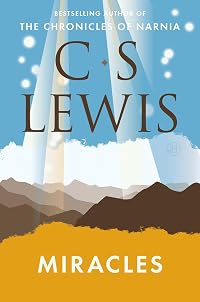
Miracles
by C. S. Lewis
On This Page
Description
"The central miracle asserted by Christians is the Incarnation. They say that God became Man. Every other miracle prepares the way for this, or results from this." This is the key statement of Miracles, in which C. S. Lewis shows that a Christian must not only accept but rejoice in miracles as a testimony of the unique personal involvement of God in his creation. Using his characteristic lucidity and wit to develop his argument, Lewis challenges the rationalists, agnostics, and deists on show more their own grounds and provides a poetic and joyous affirmation that miracles really do occur in our everyday lives. show lessTags
Recommendations



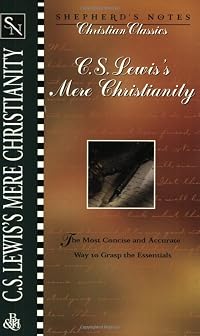
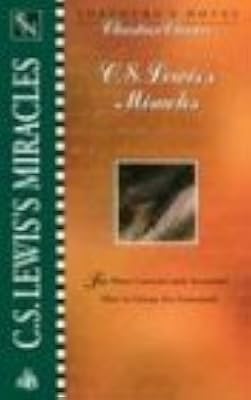



Member Recommendations
Member Reviews
How I’ve missed C. S. Lewis! I picked this book up to read for a book club, and settled into it like conversing with an old friend.
The topic is miracles. Do they exist or not? Do they contradict with Nature or not? This is not a nuts and bolts proof book; it is a call to see miracles in a different light. There is, for instance, nothing miraculous about turning water into wine … nature itself can do this. God has created a vegetable organism that can turn water, soil and sunlight into a juice which will, under proper conditions, become wine. Wine is merely water modified. Should it surprise you that one day, God short circuited the process, using earthenware jars instead of vegetable fibers to hold the water?
As in this example, show more Lewis’s arguments sometimes amount only to warm fuzzies. Pantheism, he explains, is nothing special, for people are merely predisposed to believe this way … pantheism has hung around like an unwanted parasite from the beginning. In contrast, a the story of a dying and rising God is surely true because nature itself teaches this concept, as any farmer knows. Now, beneath the surface, these two arguments are similar, but Lewis manages to draw the desired results from each with a bit of conversation made elegant in one circumstance and ugly in another.
Lewis errs also in his science, imagining that “every event in Nature must be connected with previous events in the Cause and Effect relation.” We know better today (Lewis was writing in 1947), and thus the foundation crumbles for many of his arguments against Naturalism. (Lewis attempts to argue that there must be a God who is not a part of Nature, and reasons that this God must surely be our creator.)
But it’s the way Lewis writes that so grabs the imagination! I absolutely love reading his books. There is a spellbinding discussion of Morality and Human Reason herein (their divinity earns their capitalization). Yet I cannot honestly award the book five stars, because Lewis never accomplishes what he sets out to do. Lewis’s God is elegant and beautiful, but no less unlikely for Lewis’s efforts, and must remain a matter of faith. Yet for those who already believe in this particular God, this book cannot fail to lift their spirits.
Very much recommended. show less
The topic is miracles. Do they exist or not? Do they contradict with Nature or not? This is not a nuts and bolts proof book; it is a call to see miracles in a different light. There is, for instance, nothing miraculous about turning water into wine … nature itself can do this. God has created a vegetable organism that can turn water, soil and sunlight into a juice which will, under proper conditions, become wine. Wine is merely water modified. Should it surprise you that one day, God short circuited the process, using earthenware jars instead of vegetable fibers to hold the water?
As in this example, show more Lewis’s arguments sometimes amount only to warm fuzzies. Pantheism, he explains, is nothing special, for people are merely predisposed to believe this way … pantheism has hung around like an unwanted parasite from the beginning. In contrast, a the story of a dying and rising God is surely true because nature itself teaches this concept, as any farmer knows. Now, beneath the surface, these two arguments are similar, but Lewis manages to draw the desired results from each with a bit of conversation made elegant in one circumstance and ugly in another.
Lewis errs also in his science, imagining that “every event in Nature must be connected with previous events in the Cause and Effect relation.” We know better today (Lewis was writing in 1947), and thus the foundation crumbles for many of his arguments against Naturalism. (Lewis attempts to argue that there must be a God who is not a part of Nature, and reasons that this God must surely be our creator.)
But it’s the way Lewis writes that so grabs the imagination! I absolutely love reading his books. There is a spellbinding discussion of Morality and Human Reason herein (their divinity earns their capitalization). Yet I cannot honestly award the book five stars, because Lewis never accomplishes what he sets out to do. Lewis’s God is elegant and beautiful, but no less unlikely for Lewis’s efforts, and must remain a matter of faith. Yet for those who already believe in this particular God, this book cannot fail to lift their spirits.
Very much recommended. show less
This is the book that changed my life. Until this, I'd taken to Christian doctrine and apologetics eagerly, weathering the difficulties with the usual shrug of the pious. But then, Lewis here poses a philosophical problem, that of determinism, and asserted that naturalistic science was philosophically committed to this. I thought: nonsense. Poppycock. In fact, I thought it a dishonest argument. I became ashamed of my hero. And the more I thought about the explanatory power of naturalistic humanism versus theism, the more impressed with the former I became.
This book, which helped so many people become Christians, is the main work that set me in the other direction.
This book, which helped so many people become Christians, is the main work that set me in the other direction.
A fantastic and excellent apology for belief in supernaturalism and, more specifically, the divinity and acts of the God of Israel.
Lewis confronts a skeptical and naturalistic world with excellent arguments demonstrating how there is more to the universe than what is perceptible on the natural plane, defining miracles and how miracles truly work, demolishing Hume's argument from probability, and providing robust defenses for the Incarnation, Resurrection, and Jesus' miracle-working powers.
A most excellent book to encourage the believer and challenge the skeptic.
Lewis confronts a skeptical and naturalistic world with excellent arguments demonstrating how there is more to the universe than what is perceptible on the natural plane, defining miracles and how miracles truly work, demolishing Hume's argument from probability, and providing robust defenses for the Incarnation, Resurrection, and Jesus' miracle-working powers.
A most excellent book to encourage the believer and challenge the skeptic.
The unfortunate truth is that I just didn't enjoy this book until near the end. I was looking forward to being done with it before it was half finished, or at least hoping it was going to make a drastic turn. Actually, I did enjoy a great many lines and paragraphs and pages, as Lewis always has incredible insights that gift the reader with new clarities. But, this book was so dense and so philosophically complex at times, that I could not hold it all together in my mind and carry a general understanding of the whole thing. I could say that I enjoyed certain readings in it very much, but I'll have a difficult time explaining to anyone what the book was all about. I'm left with the feeling that if I were a bit more intelligent, I might show more have liked this book very much. As it is, I like the pieces I can comprehend very much, whenever I come across them.
Of course, the last three chapters did come together nicely. Once setting forth the idea of the Grand Miracle (that God incarnates Himself into His creation), Lewis went on to miracles of the Old Creation. By this he meant acts of Jesus that demonstrated in small, particular ways things that God had been doing all along in large, general ways. The changing of water to wine was shortcutted demonstration of something grapes always do. The multiplication of bread something that seeds and soil always does; the multiplication of fish something that God constantly breeds in the waters. The incarnation itself something that God does in every womb, only with one less piece of the puzzle. He went on a bit much about ascension in the last chapter (miracles of New Creation), but it was a point well made that God is creating a new way of reality where spirit and flesh are in complete harmony. show less
Of course, the last three chapters did come together nicely. Once setting forth the idea of the Grand Miracle (that God incarnates Himself into His creation), Lewis went on to miracles of the Old Creation. By this he meant acts of Jesus that demonstrated in small, particular ways things that God had been doing all along in large, general ways. The changing of water to wine was shortcutted demonstration of something grapes always do. The multiplication of bread something that seeds and soil always does; the multiplication of fish something that God constantly breeds in the waters. The incarnation itself something that God does in every womb, only with one less piece of the puzzle. He went on a bit much about ascension in the last chapter (miracles of New Creation), but it was a point well made that God is creating a new way of reality where spirit and flesh are in complete harmony. show less
The first four or five chapters of C. S. Lewis' Miracles are an excellent analysis and discussion of the differences between Naturalism and Super-naturalism, from which he begins to tackle the question whether miracles have historically occurred. Lewis does this admirably and he presents an interesting and cogent argument not only for the historical occurrence of miracles but the Super-natural Deity behind them. For the Christian reader, this book is an excellent resource for tackling discussions on Naturalism, and for investigating and supporting the argument for historically-occurring miracles. Lewis starts by addressing the Incarnation and thence to all the other miracles Jesus performed. Even if one is not a Christian, this book is show more worth reading for the first five chapters alone, but the intrepid reader should progress further to analyse their own beliefs about miracles and investigate them without the pre-existing Naturalist bias present in all of us. show less
I enjoyed this book; Lewis does a reasonable job of presenting his arguments as to why theism is reasonable, why miracles are reasonable, and what criteria can be used for judging miracle. My main annoyance with the book is that Lewis tends to reason along the lines of "A or B, we don't like A, therefore B". For example, he makes a good case that either (a) there must be some sort of supernatural being representative of truth or (b) everything we believe to be true is just a vastly convenient fiction. He then goes on the claim the former as being the true solution even though the later is equally likely, just less comforting.
Lewis also has a tendency to define terms to suit his needs. He defines Naturalism as, amongst other things, show more being deterministic. Thus, he can appeal to our sense of the fitness of things to argue for theism; for example, at one point he says something like "if Naturalism is true, you are only reading this book and I am only writing it because of some inevitable chain of events". At another time, he claims that quantum mechanics cannot really be part of nature because it admits nondeterminism. Another way to interpret these limitations of his definition is to wonder, as I did, whether his definition of Naturalism might not just be pure rhetorical BS. Lewis does better in the later parts of the books when he switches to arguments that are just as rational as before but drops the claim to be proving anything. show less
Lewis also has a tendency to define terms to suit his needs. He defines Naturalism as, amongst other things, show more being deterministic. Thus, he can appeal to our sense of the fitness of things to argue for theism; for example, at one point he says something like "if Naturalism is true, you are only reading this book and I am only writing it because of some inevitable chain of events". At another time, he claims that quantum mechanics cannot really be part of nature because it admits nondeterminism. Another way to interpret these limitations of his definition is to wonder, as I did, whether his definition of Naturalism might not just be pure rhetorical BS. Lewis does better in the later parts of the books when he switches to arguments that are just as rational as before but drops the claim to be proving anything. show less
C.S. Lewis sets out to prove by logical argument that miracles are possible. The clear-headed writing style helps to draw you in, he anticipates a lot of the criticisms people will have, and I just like the attempt to argue from a position of rigorous logic something which mostly just comes down to “you believe it or you don’t”.
The trouble is that, in the end, it comes down to that anyway. The calm logic proceeds slowly from step to step, and I am with him all the way, until he makes a big leap, which is that scientific theories of evolution cannot explain the development of human rational thought. Because the process of reasoning is so completely different from anything we can find in the animal world, he argues, it cannot come show more from that world. Therefore it must come from outside, i.e. from God. On this point his whole argument rests - because each human brain is an intrusion of the supernatural into the world of Nature, so other intrusions are plausible too. He sees miracles in this way - not as breaking the rules of nature, but as sporadic intrusions by God, after which the rules of nature continue to work with the new situation.
In the framework he has constructed, most of his arguments are logical. But his framework is based on a logical leap I don’t think is justified. It’s very hard to understand a lot of evolutionary theory intuitively. I can’t imagine basic organisms evolving into giraffes, or a fish coming out of the water, developing the ability to breathe and becoming an amphibian. But I can accept that over countless millions of years, countless tiny, incremental changes could add up to huge, incomprehensible changes. The development of reason doesn’t seem to me so different from anything else that we have to give it a supernatural cause.
Another problem with the book is that all of the miracles are Christian. This is Lewis’s belief system, so it’s understandable that he would be interested in proving the viability of the virgin birth more than anything else. But he is completely dismissive of other religions, without making any attempt to explain why. If Christian miracles are possible, then are Hindu or animist ones possible. Presumably not, because Christians say there can only be one God.
But the reason for believing the Christian miracles specifically comes down to an absurd criterion called “our innate sense of the fitness of things.” The last few chapters are devoted to trying to prove that the Christian miracles meet this bizarrely vague standard of “fitness.” Lewis does not seem to consider that his own assumptions of how the universe should be are unlikely to be the same as someone else’s. People like him, the “we” of his definition, white male Oxford dons, might agree with his “innate sense of the fitness of things”, although many, clearly, would not. As for people all over the world of different origins, different religions, different social status, etc etc, surely they would have their own sense of what is “fit”? And, perhaps, they would have their own ways of describing the supernatural, and different religions would form, each as valid in its generalities and false in its details as Christianity.
I am willing to believe that miracles could happen, but not because of this book. C.S. Lewis raises some interesting ideas, but after all the long philosophical arguments it comes down once again to a question of belief. show less
The trouble is that, in the end, it comes down to that anyway. The calm logic proceeds slowly from step to step, and I am with him all the way, until he makes a big leap, which is that scientific theories of evolution cannot explain the development of human rational thought. Because the process of reasoning is so completely different from anything we can find in the animal world, he argues, it cannot come show more from that world. Therefore it must come from outside, i.e. from God. On this point his whole argument rests - because each human brain is an intrusion of the supernatural into the world of Nature, so other intrusions are plausible too. He sees miracles in this way - not as breaking the rules of nature, but as sporadic intrusions by God, after which the rules of nature continue to work with the new situation.
In the framework he has constructed, most of his arguments are logical. But his framework is based on a logical leap I don’t think is justified. It’s very hard to understand a lot of evolutionary theory intuitively. I can’t imagine basic organisms evolving into giraffes, or a fish coming out of the water, developing the ability to breathe and becoming an amphibian. But I can accept that over countless millions of years, countless tiny, incremental changes could add up to huge, incomprehensible changes. The development of reason doesn’t seem to me so different from anything else that we have to give it a supernatural cause.
Another problem with the book is that all of the miracles are Christian. This is Lewis’s belief system, so it’s understandable that he would be interested in proving the viability of the virgin birth more than anything else. But he is completely dismissive of other religions, without making any attempt to explain why. If Christian miracles are possible, then are Hindu or animist ones possible. Presumably not, because Christians say there can only be one God.
But the reason for believing the Christian miracles specifically comes down to an absurd criterion called “our innate sense of the fitness of things.” The last few chapters are devoted to trying to prove that the Christian miracles meet this bizarrely vague standard of “fitness.” Lewis does not seem to consider that his own assumptions of how the universe should be are unlikely to be the same as someone else’s. People like him, the “we” of his definition, white male Oxford dons, might agree with his “innate sense of the fitness of things”, although many, clearly, would not. As for people all over the world of different origins, different religions, different social status, etc etc, surely they would have their own sense of what is “fit”? And, perhaps, they would have their own ways of describing the supernatural, and different religions would form, each as valid in its generalities and false in its details as Christianity.
I am willing to believe that miracles could happen, but not because of this book. C.S. Lewis raises some interesting ideas, but after all the long philosophical arguments it comes down once again to a question of belief. show less
Members
- Recently Added By
Lists

Christianity Books You've Read
179 works; 19 members

Books Read in 2021
5,361 works; 113 members

1001 Books You Must Read Before You Die
1,448 works; 1,134 members

Recommendations by Peter Kreeft
45 works; 4 members

Unread books
1,063 works; 87 members
Author Information

537+ Works 524,009 Members
C. S. (Clive Staples) Lewis, "Jack" to his intimates, was born on November 29, 1898 in Belfast, Ireland. His mother died when he was 10 years old and his lawyer father allowed Lewis and his brother Warren extensive freedom. The pair were extremely close and they took full advantage of this freedom, learning on their own and frequently enjoying show more games of make-believe. These early activities led to Lewis's lifelong attraction to fantasy and mythology, often reflected in his writing. He enjoyed writing about, and reading, literature of the past, publishing such works as the award-winning The Allegory of Love (1936), about the period of history known as the Middle Ages. Although at one time Lewis considered himself an atheist, he soon became fascinated with religion. He is probably best known for his books for young adults, such as his Chronicles of Narnia series. This fantasy series, as well as such works as The Screwtape Letters (a collection of letters written by the devil), is typical of the author's interest in mixing religion and mythology, evident in both his fictional works and nonfiction articles. Lewis served with the Somerset Light Infantry in World War I; for nearly 30 years he served as Fellow and tutor of Magdalen College at Oxford University. Later, he became Professor of Medieval and Renaissance English at Cambridge University. C.S. Lewis married late in life, in 1957, and his wife, writer Joy Davidman, died of cancer in 1960. He remained at Cambridge until his death on November 22, 1963. (Bowker Author Biography) show less
Some Editions
Awards and Honors
Notable Lists
Series
Belongs to Publisher Series
Work Relationships
Is contained in
The Complete Works: Fantasy & Sci-Fi Novels, Religious Studies, Poetry & Autobiography: Enriched edition. The Chronicles of Narnia, The Space Trilogy, The Screwtape Letters by C. S. Lewis (indirect)
The Abolition of Man / The Great Divorce / Mere Christianity / Miracles / The Problem of Pain / The Screwtape Letters by C. S. Lewis
THE CHRISTIAN COLLECTION. 9 Books including: Mere Christianity; Screwtape Letters; Miracles; The Great Divorce; Pilgrim's Recess; The Problem Of Pain ... (Timeless Wisdom Collection Book 1016) by C. S. Lewis
The C. S. Lewis Collection: Signature Classics and Other Major Works: The Eleven Titles Include: Mere Christianity; The Screwtape Letters, Miracles; The ... Surprised by Joy; and Letters to Malcolm by C. S. Lewis
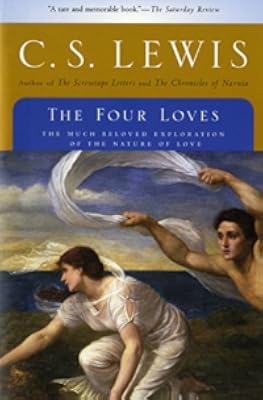
The C. S. Lewis Signature Classics: An Anthology of 8 C. S. Lewis Titles: Mere Christianity, The Screwtape Letters, Miracles, The Great Divorce, The ... The Abolition of Man, and The Four Loves by C. S. Lewis
Common Knowledge
- Canonical title
- Miracles
- Original title
- Miracles
- Alternate titles
- How God intervenes in nature and human affairs
- Original publication date
- 1947; 1960 [revised]
- Dedication
- To Cecil and Daphne Harwood
- First words
- In all my life I have met only one person who claims to have seen a ghost.
- Last words
- (Click to show. Warning: May contain spoilers.)Do not, I earnestly advise you, demand an ocular proof unless you are already perfectly certain that it is not forthcoming.
- Blurbers
- Updike, John; Karon, Jan
- Canonical DDC/MDS
- 231.73
- Canonical LCC
- BT97.2.L49 2000
Classifications
Statistics
- Members
- 7,154
- Popularity
- 1,641
- Reviews
- 36
- Rating
- (3.92)
- Languages
- 14 — Czech, Danish, Dutch, English, Finnish, French, German, Italian, Lithuanian, Polish, Spanish, Swedish, Portuguese (Portugal), Portuguese (Brazil)
- Media
- Paper, Audiobook, Ebook
- ISBNs
- 51
- UPCs
- 1
- ASINs
- 76