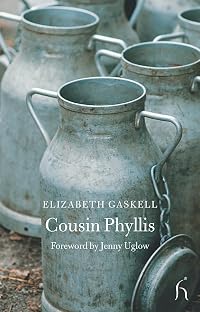
Cousin Phillis
by Elizabeth Gaskell
On This Page
Description
Lauded by critics as one of the most nuanced accounts of adolescence and young adulthood to have been penned in the nineteenth century, Cousin Phillis also offers a glimpse into the lives of working-class English farmers and the deeply intertwined extended family relationships that were a fact of life during the era.Tags
Recommendations
















Member Reviews
Gaskell is so lovely and sharp and clear, and bizarrely Modernist, despite how she wears the cloak of Victorian sensibility — sort of like Anne Brontë (and i believe she was friends with Anne?)
a placid little book with jagged rocks below the surface.
a placid little book with jagged rocks below the surface.
This novella has apparently been described by many critics as the author's crowning achievement in short fiction. I personally preferred Mr Harrison's Confession, though I can see why this more serious work is generally rated more highly. It is well written and presents a good portrayal of life on the Holman farm. But I found it curiously unemotionally engaging. It ended quite suddenly and I thought it felt almost more like a novel fragment than a novella. I discovered subsequently that further parts were planned but never written.
This isn't as strong a book as [Ruth]in plot or characters, but again it does show a woman who in many respects transcends the limits of her position. Phillis seeks knowledge and puts her male cousin to shame with what she has learned and how she has sought that knowledge. It is an indictment in its way on the expectations of women in that era, but it was a quick listen and Kenneth Branagh was a good narrator for it.
*** ENG/ITA ***
Read by Elizabeth Klett, excellent LV narrator, this is a quaint, melancholic novella about a young, intelligent girl coming of age in a man's world.
She is too clever for her cousinliterally, since he doesn't want to marry her because she too smart! , who comes to love her dearly as a sister and tries to help her trough her experience with first love with his friend, who seems to understand and admire her exactly for her learning, rather that despite it. And then, the second he leaves the country, he quickly forgets her for another... Raise your hand if you wanted to strangle him .
I found myself drawn to this portait even with its sometimes melodramatic twists and slow pace.
**************
Il narratore è un giovane, che show more dopo ver conosciuto bella e intelligente cugina, Phillis, e esseresi affezionato a lei come a una sorella(la ritiene troppo intelligente per sposarla, prendiamolo come un complimento...) , assiste con apprensione all'esperienza della ragazza con il suo primo grande amore.
Bellissima novella, passo lento, qualche angolo di melodramma vittorianoperché le fanciulle rifiutate finiscono sempre per rischiare la pelle per esaurimento nervoso? , ma melanconica e dolce al tempo stesso.
Audiolibro in inglese letto da E. Klett (bravissima)! show less
Read by Elizabeth Klett, excellent LV narrator, this is a quaint, melancholic novella about a young, intelligent girl coming of age in a man's world.
She is too clever for her cousin
I found myself drawn to this portait even with its sometimes melodramatic twists and slow pace.
**************
Il narratore è un giovane, che show more dopo ver conosciuto bella e intelligente cugina, Phillis, e esseresi affezionato a lei come a una sorella
Bellissima novella, passo lento, qualche angolo di melodramma vittoriano
Audiolibro in inglese letto da E. Klett (bravissima)! show less
It took me a little while to get in-sync with the language of this book, never having read anything by Elizabeth Gaskell before and it originally being published in 1864. But once I discovered the secret, that is, to slow down my reading speed and let the words, and the vocabulary start to work their magic, I was able to sit back and thoroughly enjoy this lovely book. Back in the day, of no technology as we now know it, words were the way of things. People spoke slower, used many more words and seemed to think more carefully about how they said things…... and it's fantastic once you lose yourself to it!
An older man recounts an instance in his youth when he became fast friends with a local pious family. But in introducing them to his charming boss, he inadvertently causes teenaged Phillis romantic agony. Like Gaskell's other work, this is a slow-paced tale focused on the minutia of a small community's daily lives and feelings. Unlike the other work I've read by her, this has a section in which a woman swoons after hearing her crush has gotten married, and then nearly dies of brain fever (whatever that might be) and stays near death for months. It was so melodramatic and inexplicable to me that it tainted my enjoyment of the earlier section of the novel.
Elizabeth Klett gives another wonderful narration in this free Librivox recording. The story itself I found a bit dated: brain fever? I wonder what illness this actually was! I liked Phillis (this is the spelling used in my Project Gutenberg Kindle edition) and her father.
Members
- Recently Added By
Lists

Lo mejor leído en 2025 - Leídos por primera vez: Magistrales (R. D.)
28 works; 1 member
Author Information

232+ Works 30,584 Members
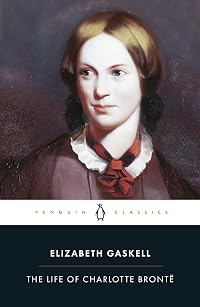
Elizabeth Gaskell was born on September 29, 1810 to a Unitarian clergyman, who was also a civil servant and journalist. Her mother died when she was young, and she was brought up by her aunt in Knutsford, a small village that was the prototype for Cranford, Hollingford and the setting for numerous other short stories. In 1832, she married William show more Gaskell, a Unitarian clergyman in Manchester. She participated in his ministry and collaborated with him to write the poem Sketches among the Poor in 1837. Our Society at Cranford was the first two chapters of Cranford and it appeared in Dickens' Household Words in 1851. Dickens liked it so much that he pressed Gaskell for more episodes, and she produced eight more of them between 1852 and 1853. She also wrote My Lady Ludlow and Lois the Witch, a novella that concerns the Salem witch trials. Wives and Daughters ran in Cornhill from August 1864 to January 1866. The final installment was never written but the ending was known and the novel exists now virtually complete. The story centers on a series of relationships between family groups in Hollingford. Most critics agree that her greatest achievement is the short novel Cousin Phillis. Gaskell was also followed by controversy. In 1853, she offended many readers with Ruth, which explored seduction and illegitimacy that led the "fallen woman" into ostracism and inevitable prostitution. The novel presents the social conduct in a small community when tolerance and morality clash. Critics praised the novel's moral lessons but Gaskell's own congregation burned the book and it was banned in many libraries. In 1857, The Life of Charlotte Brontë was published. The biography was initially praised but angry protests came from some of the people it dealt with. Gaskell was against any biographical notice of her being written during her lifetime. After her death on November 12, 1865, her family refused to make family letters or biographical data available. (Bowker Author Biography) show less
Some Editions
Series
Belongs to Publisher Series
Work Relationships
Is contained in
Is abridged in
Common Knowledge
- Original publication date
- 1863
- People/Characters
- Paul Manning; Phillis Holman; Edward Holdsworth; Reverend Ebenezer Holman; Margaret Holman
- First words
- Per a un noi jove sempre és tot un esdeveniment instal·lar-se a viure pel seu compte.
It is a great thing for a lad when he is first turned into the independence of lodgings. - Last words
- (Click to show. Warning: May contain spoilers.)Sé que serà així; puc fer-ho, i ho vull!
(Click to show. Warning: May contain spoilers.)"[...]I know we shall; I can; and I will!" - Original language
- English
- Disambiguation notice
- This work is for books consisting of Cousin Phillis only. Books containing Cousin Phillis and other stories have been separated.
Classifications
Statistics
- Members
- 296
- Popularity
- 108,947
- Reviews
- 15
- Rating
- (3.42)
- Languages
- 6 — Catalan, English, French, Hungarian, Italian, Spanish
- Media
- Paper, Audiobook, Ebook
- ISBNs
- 85
- ASINs
- 13