
Jenny Uglow
Author of The Lunar Men: Five Friends whose Curiosity Changed the World
About the Author
Jenny Uglow is an editor at Chatto & Windus and lives in Canterbury, England
Image credit: Photograph: Eamonn McCabe
Works by Jenny Uglow
Associated Works
Curious, If True: Strange Tales by Mrs. Gaskell (1995) — Introduction, some editions — 110 copies, 4 reviews
Tagged
Common Knowledge
- Birthdate
- 1947
- Gender
- female
- Education
- Cheltenham Ladies College
St Anne's College, Oxford - Occupations
- editor
critic
publisher
historian - Organizations
- University of Warwick
Chatto & Windus
Alliance of Literary Societies - Awards and honors
- Order of the British Empire (2008)
Royal Society of Literature (Fellow) - Relationships
- Uglow, Steve (husband)
- Nationality
- UK
- Birthplace
- England, UK
- Places of residence
- Canterbury, Kent, England, UK
Cumbria, England, UK
Dorset, England, UK - Map Location
- England, UK
Members
Reviews

Jenny Uglow writes so well that none of this very detailed, 600+ page social history felt difficult to get through. As a social history the focus is on what life in Britain was like throughout the 22 years the Napoleonic Wars were being fought but there were enough details in the book about the wars themselves for me to feel like I now have a better understanding of those too. Uglow draws on written accounts which include some of the Lennox sisters, politicians, authors such as Jane Austen, show more Walter Scott and Maria Edgeworth but also farmers, bankers, sailors - all sorts of middle class and middling class folk. It's testimony to Uglow's writing and organisational skills that the book never feels overwhelming and that she manages to cover the detail (how many ships, guns and men) as well as zooming in to give the reader the idea of the effects of the 22 year war on families and individuals.
The physical layout of the Faber hardback is beautiful - each chapter opens with an illustration from a contemporary cartoonist/satirist, as do the index, bibliography etc. It gives the whole book a feeling of being steeped in the period Uglow is covering.
A fascinating book. Even if you think you're not interested in the Napoleonic Wars, I think Uglow would change your mind. show less
The physical layout of the Faber hardback is beautiful - each chapter opens with an illustration from a contemporary cartoonist/satirist, as do the index, bibliography etc. It gives the whole book a feeling of being steeped in the period Uglow is covering.
A fascinating book. Even if you think you're not interested in the Napoleonic Wars, I think Uglow would change your mind. show less
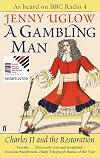
Charles II is, in many ways, both too easy and too difficult a subject for a biography. He is one of those great defining characters of the British monarchy - like Henry VIII, Elizabeth I and Victoria - whose reigns stand out in our collective memory for one or two well-known events, and about whom most people think they know plenty.
So Jenny Uglow takes a different approach in ‘A Gambling Man’. The book is indeed a biography of the Merry Monarch, but it focuses on the crucial first ten show more years of his reign, and on Charles’s many gambles to stabilise his three kingdoms during this period.
Her task is helped by the events of the period – restoration, war, plague, fire and constant sexual intrigue – which in themselves make for a rollicking good read. It is further illuminated by Pepys, whose voice, through his diary, offers us a ringside seat. (It’s astonishing how much he managed to witness first hand).
Given these ingredients, the greatest risk is that the author will over-simplify for the sake of populism. The greatest strength of ‘A Gambling Man’ is that Mrs. Uglow does not do this. She presents the politics, society, religion and intellectual life of 1660s England as a rich tapestry - complex, often paradoxical, sometimes frayed at the edges. And she is a meticulous chronicler of that complexity, whether it is the political manoeuvring of the King’s ministers or mistresses; the fine balancing act that Charles was forced to play between Royalists and former Cromwellian sympathisers; or above all the religious factionalism that threatened to destabilise the Kingdom from the moment Charles landed at Dover.
This last, so crucial to an understanding of the period, yet so often over-simplified or marginalized by historians (perhaps the worst example being Edward Dolnick’s ‘The Clockwork Universe’), is handled with particular thoroughness and insight. Freedom of religion was, of course, one of the first things offered by Charles on his return to power in 1660; his Declaration of Breda promised ‘liberty to tender consciences’. It was Parliament, and not the King, who forced religious conformity on the nation, outlawing both Catholics and nonconformist Protestants from worshipping in public and from holding public office. The effects would be felt for another 150 years or more; some would argue they are still in evidence today.
Also very much in evidence today, not just in Britain but throughout western democracy, is another and more profound legacy of Charles’s reign. Uglow reveals the very foundation of the relationship between government, parliament and private enterprise. (She even traces the origins of the two-party system, which crystallised in the later part of Charles’s reign.)
Government in the seventeenth century was still in the King’s personal control, but this King had been invited to rule by Parliament – by the common consent of the governed – and Parliament was his paymaster. The idea of monarchical rule by the explicit consent of the governed would, of course, be dramatically underscored by the events of 1688 - the enforced abdication of James II, the accession of William and Mary, the Glorious Revolution. It’s hereditary monarchy, Jim, but not as we know it – or not as we’d known it up to that point.
We see too the birth of commerce as a political force. The wars with the Dutch and the French were not fundamentally about political or dynastic control, nor about religion and ideology, but about control over trade routes. The City and her merchants, the generators of the nation’s wealth and prosperity, emerge as a political force in their own right.
(Niall Ferguson, in his recent book ‘Civilisation – The West and the Rest’, identifies private property rights as one of the six ‘killer apps’ which have allowed the West to dominate global civilisation for the last 500 years. 1660s London was that ‘killer app’ in action; the City would dominate world trade for the best part of the next three centuries.)
The book is structured broadly chronologically, but with a sensible thematic sub-structure. Thus politics, economics, foreign affairs, society and scientific innovation are depicted as separate, parallel strands of the tapestry, making for a whole that is coherent and digestible. Wisely, Uglow does not over-reach: it is a biography of Charles II, not a study of 1660s society. Equally wisely, she focuses on England, although she regularly refers to domestic events in Charles’s other kingdoms of Scotland and Ireland.
This is serious history, full of names and events and facts, but it is by no means po-faced. We get to have a lot of fun. The intrigues of Charles’s various mistresses make today’s headline-chasing celebrities look like unimaginative amateurs. It is amusing, too, to discover that the property speculator Nicholas Barbon, who rebuilt areas of London after the Great Fire, was in fact christened If-Jesus-Had-Not-Died-For-Thee-Thou-Had’st-Been-Damned Barebones. (His father, the preacher Praise-God Barebones, had a walk-on part in Neal Stephenson’s novel ‘Quicksilver’.)
But towering above all the ministers and mistresses and merchants, above the scientists and the architects and the playwrights and poets, his loyal subjects and strident critics, is the character of Charles himself – the dazzling monarch with the popular touch, the man who gambled everything to hold his nation together at this time of tumult. show less
So Jenny Uglow takes a different approach in ‘A Gambling Man’. The book is indeed a biography of the Merry Monarch, but it focuses on the crucial first ten show more years of his reign, and on Charles’s many gambles to stabilise his three kingdoms during this period.
Her task is helped by the events of the period – restoration, war, plague, fire and constant sexual intrigue – which in themselves make for a rollicking good read. It is further illuminated by Pepys, whose voice, through his diary, offers us a ringside seat. (It’s astonishing how much he managed to witness first hand).
Given these ingredients, the greatest risk is that the author will over-simplify for the sake of populism. The greatest strength of ‘A Gambling Man’ is that Mrs. Uglow does not do this. She presents the politics, society, religion and intellectual life of 1660s England as a rich tapestry - complex, often paradoxical, sometimes frayed at the edges. And she is a meticulous chronicler of that complexity, whether it is the political manoeuvring of the King’s ministers or mistresses; the fine balancing act that Charles was forced to play between Royalists and former Cromwellian sympathisers; or above all the religious factionalism that threatened to destabilise the Kingdom from the moment Charles landed at Dover.
This last, so crucial to an understanding of the period, yet so often over-simplified or marginalized by historians (perhaps the worst example being Edward Dolnick’s ‘The Clockwork Universe’), is handled with particular thoroughness and insight. Freedom of religion was, of course, one of the first things offered by Charles on his return to power in 1660; his Declaration of Breda promised ‘liberty to tender consciences’. It was Parliament, and not the King, who forced religious conformity on the nation, outlawing both Catholics and nonconformist Protestants from worshipping in public and from holding public office. The effects would be felt for another 150 years or more; some would argue they are still in evidence today.
Also very much in evidence today, not just in Britain but throughout western democracy, is another and more profound legacy of Charles’s reign. Uglow reveals the very foundation of the relationship between government, parliament and private enterprise. (She even traces the origins of the two-party system, which crystallised in the later part of Charles’s reign.)
Government in the seventeenth century was still in the King’s personal control, but this King had been invited to rule by Parliament – by the common consent of the governed – and Parliament was his paymaster. The idea of monarchical rule by the explicit consent of the governed would, of course, be dramatically underscored by the events of 1688 - the enforced abdication of James II, the accession of William and Mary, the Glorious Revolution. It’s hereditary monarchy, Jim, but not as we know it – or not as we’d known it up to that point.
We see too the birth of commerce as a political force. The wars with the Dutch and the French were not fundamentally about political or dynastic control, nor about religion and ideology, but about control over trade routes. The City and her merchants, the generators of the nation’s wealth and prosperity, emerge as a political force in their own right.
(Niall Ferguson, in his recent book ‘Civilisation – The West and the Rest’, identifies private property rights as one of the six ‘killer apps’ which have allowed the West to dominate global civilisation for the last 500 years. 1660s London was that ‘killer app’ in action; the City would dominate world trade for the best part of the next three centuries.)
The book is structured broadly chronologically, but with a sensible thematic sub-structure. Thus politics, economics, foreign affairs, society and scientific innovation are depicted as separate, parallel strands of the tapestry, making for a whole that is coherent and digestible. Wisely, Uglow does not over-reach: it is a biography of Charles II, not a study of 1660s society. Equally wisely, she focuses on England, although she regularly refers to domestic events in Charles’s other kingdoms of Scotland and Ireland.
This is serious history, full of names and events and facts, but it is by no means po-faced. We get to have a lot of fun. The intrigues of Charles’s various mistresses make today’s headline-chasing celebrities look like unimaginative amateurs. It is amusing, too, to discover that the property speculator Nicholas Barbon, who rebuilt areas of London after the Great Fire, was in fact christened If-Jesus-Had-Not-Died-For-Thee-Thou-Had’st-Been-Damned Barebones. (His father, the preacher Praise-God Barebones, had a walk-on part in Neal Stephenson’s novel ‘Quicksilver’.)
But towering above all the ministers and mistresses and merchants, above the scientists and the architects and the playwrights and poets, his loyal subjects and strident critics, is the character of Charles himself – the dazzling monarch with the popular touch, the man who gambled everything to hold his nation together at this time of tumult. show less
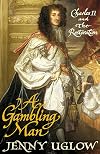
enny Uglow has produced an absorbing flowing narrative that covers the first decade of Charles II's reign following the Restoration. The book is themed around a card game and cleverly reflects both Charles' own love of gambling and the chances he took in re-establishing the monarchy and entrenching his own personal power. This theme also reflects the many chances Charles took with his own personal standing, both with the populace and with parliament, as he engaged in many affairs, including show more fathering several bastard children.
Uglow has used many contemporary documents and writings to reveal the historical narrative and to expose the character of the king. As a man Charles comes across as very likeable. Of course he had to make difficult choices at times and he was clearly no saint, but his honest desire top be a 'good' king and to cement the monarchy back into the foundations of English culture shine through and allow us to, perhaps, forgive his misdemeanors and mistakes. His personal bravery in helping to tackle the Great Fire in 1666 was new to me.
This is an engaging and engaged history focusing on a time of great risk for the monarchy that urges the reader to try just one more chapter before bed. show less
Uglow has used many contemporary documents and writings to reveal the historical narrative and to expose the character of the king. As a man Charles comes across as very likeable. Of course he had to make difficult choices at times and he was clearly no saint, but his honest desire top be a 'good' king and to cement the monarchy back into the foundations of English culture shine through and allow us to, perhaps, forgive his misdemeanors and mistakes. His personal bravery in helping to tackle the Great Fire in 1666 was new to me.
This is an engaging and engaged history focusing on a time of great risk for the monarchy that urges the reader to try just one more chapter before bed. show less
https://fromtheheartofeurope.eu/the-lunar-men-the-friends-who-made-the-future-by...
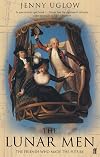
A lovely in-depth look at the men behind the Industrial Revolution and the Age of Enlightenment in the mid-19th century West Midlands of England, focussing especially on Erasmus Darwin as the key figure, but also looking at Matthew Boulton, Josiah Wedgwood, Joseph Priestley, James Watt, Richard Lovell Edgeworth and Samuel Galton, and a number of others whose names I was less familiar with. They were all show more members of the Lunar Society, which met monthly in Birmingham from the 1760s to around the end of the century.
There is a lot of loving detail about their lives, with common threads including Methodism and other minority Protestant traditions (especially Quakers); pottery; lots of children (Darwin had fourteen with his two wives, and maybe more besides); investments; the abolition of slavery; and of course engineering. It could have been overwhelming, but it’s broken up with black-and-white illustrations and some lovely plates. I was particularly struck by Joseph Wright’s paintings of the orrery and the air pump.
I learned a lot from this; in particular I realised how well the author had managed to gain my sympathy when I found myself horrified by the 1791 Priestley Riots, where a right-wing mob targeted the local religious minorities in Birmingham, including especially the vulnerable and visible Joseph Priestley; the local authorities appear to have colluded in the outbreak of violence and then (as usual) blamed the victims for bringing it on themselves. Some things never change.
Anyway, this is a tremendously engaging book about a part of history that I should have known more about; and now I do. show less
A lovely in-depth look at the men behind the Industrial Revolution and the Age of Enlightenment in the mid-19th century West Midlands of England, focussing especially on Erasmus Darwin as the key figure, but also looking at Matthew Boulton, Josiah Wedgwood, Joseph Priestley, James Watt, Richard Lovell Edgeworth and Samuel Galton, and a number of others whose names I was less familiar with. They were all show more members of the Lunar Society, which met monthly in Birmingham from the 1760s to around the end of the century.
There is a lot of loving detail about their lives, with common threads including Methodism and other minority Protestant traditions (especially Quakers); pottery; lots of children (Darwin had fourteen with his two wives, and maybe more besides); investments; the abolition of slavery; and of course engineering. It could have been overwhelming, but it’s broken up with black-and-white illustrations and some lovely plates. I was particularly struck by Joseph Wright’s paintings of the orrery and the air pump.
I learned a lot from this; in particular I realised how well the author had managed to gain my sympathy when I found myself horrified by the 1791 Priestley Riots, where a right-wing mob targeted the local religious minorities in Birmingham, including especially the vulnerable and visible Joseph Priestley; the local authorities appear to have colluded in the outbreak of violence and then (as usual) blamed the victims for bringing it on themselves. Some things never change.
Anyway, this is a tremendously engaging book about a part of history that I should have known more about; and now I do. show less
Lists
Awards


You May Also Like


Associated Authors
Statistics
- Works
- 26
- Also by
- 10
- Members
- 3,406
- Popularity
- #7,479
- Rating
- 4.0
- Reviews
- 62
- ISBNs
- 88
- Languages
- 1
- Favorited
- 7