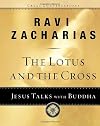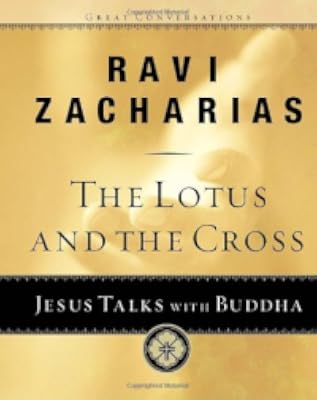
The Lotus and the Cross: Jesus Talks with Buddha
by Ravi Zacharias
Conversations with Jesus (1), Great Conversations
On This Page
Description
Step into a Long-Tail Boat on the River of Kings and become immersed in an imaginary conversation between Jesus Christ and Gautama Buddha. Both talked about the 'self', but one denied it even existed. Both felt the pain of human suffering, but each had radically different responses to it. Both addressed the deepest hungers, but one saw them as an impediment, the other as a clue. Both have earned a worldwide following, but their answers are words apart. Jesus and Buddha agreed that Truth show more could withstand scrutiny. Listen in as the Soul of Truth speaks with the Heart of Compassion. It could change lives. show lessTags
Recommendations





















Member Reviews
Ever wonder what Buddha would say to Jesus, and vice versa? In this slim little volume, Ravi Zacharias imagines what the founders of two of the world's most powerful religions would say to one another on the pressing problem that every religion seeks to solve: the human condition.
Zacharias starts with a prologue telling the true story of a young woman named Priya who, at 17, was lured to the big city to work as a seamstress. She was raped only hours after her arrival, and within the next several years became a prostitute, eventually testing HIV positive. She needed the income from her profession, however, and continued to sell herself though she knew she was infecting each man who used her. Eventually the disease manifested itself and show more Priya began trying to kill herself. Finally she poisoned herself and set the house on fire. After her death, no one would even come near her remains for fear of infection.
What can Buddha and Jesus say to someone who has suffered so much? What hope can they offer to alleviate such stark misery? The differences between their answers are not theoretical exercises; they could mean life or death, joy or misery to someone like Priya. This is the real question that Zacharias is exploring: how are Buddhism and Christianity different, and which is true?
Zacharias is a well-known Christian apologist and author so it's no surprise that his bias is toward Christianity, but he tries very hard to depict Buddhism accurately and respectfully. He writes that he spent "scores of hours in temples with monks and with instructors of students of Buddhist thought. The discussions I had were always cordial and delightful" (7). The conversational format of the book makes it a particularly absorbing read, and I should add that it isn't just between Buddha and Christ. Priya makes a third in the conversation, and the boatman Wat makes an occasional fourth. Priya's character illustrates why the truth matters: our world is in desperate need of something, and both Buddha and Christ claim to have what we need. There is an immediacy to the narrative that a more traditional comparative survey of the two faiths could not capture.
Buddhism and Christianity could not be more different, and the idea of being a Buddhist Christian or a Christian Buddhist is a laughable one when you really look at the exclusive truth claims each religion makes. Buddhism denies the existence of the self, claiming that it and its desires are illusions that cause all human suffering, while Christianity says that the self exists and it is our selfishness, our sin that causes human suffering. Buddha offers enlightenment and the eradication of self and personal desires; Christ offers salvation and the redemption of self and personal desires. I am painting in broad strokes here, of course, and there are many subtleties of each faith that Zacharias highlights. But the point that Buddhism and Christianity are mutually exclusive faiths — and that it matters — is well made.
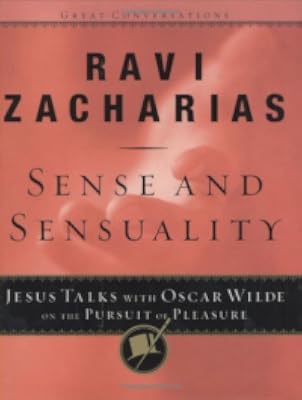
This title is part of Zacharias's "Great Conversations" series that includes such provocative titles as The Lamb and the Führer: Jesus Talks with Hitler, Rebirth or New Birth: Jesus Talks with Krishna, and Sense and Sensuality: Jesus Talks with Oscar Wilde — all of which I hope to read soon. I found The Lotus and the Cross a highly readable book, and one that I would recommend to anyone seeking to understand the fundamental differences between the solutions Gautama Buddha and Jesus Christ offer to the world. show less
Zacharias starts with a prologue telling the true story of a young woman named Priya who, at 17, was lured to the big city to work as a seamstress. She was raped only hours after her arrival, and within the next several years became a prostitute, eventually testing HIV positive. She needed the income from her profession, however, and continued to sell herself though she knew she was infecting each man who used her. Eventually the disease manifested itself and show more Priya began trying to kill herself. Finally she poisoned herself and set the house on fire. After her death, no one would even come near her remains for fear of infection.
What can Buddha and Jesus say to someone who has suffered so much? What hope can they offer to alleviate such stark misery? The differences between their answers are not theoretical exercises; they could mean life or death, joy or misery to someone like Priya. This is the real question that Zacharias is exploring: how are Buddhism and Christianity different, and which is true?
Zacharias is a well-known Christian apologist and author so it's no surprise that his bias is toward Christianity, but he tries very hard to depict Buddhism accurately and respectfully. He writes that he spent "scores of hours in temples with monks and with instructors of students of Buddhist thought. The discussions I had were always cordial and delightful" (7). The conversational format of the book makes it a particularly absorbing read, and I should add that it isn't just between Buddha and Christ. Priya makes a third in the conversation, and the boatman Wat makes an occasional fourth. Priya's character illustrates why the truth matters: our world is in desperate need of something, and both Buddha and Christ claim to have what we need. There is an immediacy to the narrative that a more traditional comparative survey of the two faiths could not capture.
Buddhism and Christianity could not be more different, and the idea of being a Buddhist Christian or a Christian Buddhist is a laughable one when you really look at the exclusive truth claims each religion makes. Buddhism denies the existence of the self, claiming that it and its desires are illusions that cause all human suffering, while Christianity says that the self exists and it is our selfishness, our sin that causes human suffering. Buddha offers enlightenment and the eradication of self and personal desires; Christ offers salvation and the redemption of self and personal desires. I am painting in broad strokes here, of course, and there are many subtleties of each faith that Zacharias highlights. But the point that Buddhism and Christianity are mutually exclusive faiths — and that it matters — is well made.
This title is part of Zacharias's "Great Conversations" series that includes such provocative titles as The Lamb and the Führer: Jesus Talks with Hitler, Rebirth or New Birth: Jesus Talks with Krishna, and Sense and Sensuality: Jesus Talks with Oscar Wilde — all of which I hope to read soon. I found The Lotus and the Cross a highly readable book, and one that I would recommend to anyone seeking to understand the fundamental differences between the solutions Gautama Buddha and Jesus Christ offer to the world. show less
 This review was written for LibraryThing Early Reviewers.
This was an interesting compare and contrast between the fundamental tenets of Christianity and Buddhism, delivered in the form of a conversation between Jesus and Buddha, as each attempt to offer solace to a recently deceased prostitute.
As someone who was raised as a Christian but, as an adult, between to understand and accept some of the teachings of the Eastern religions, I found the exchange between Jesus and Buddha stimulating and rewarding. However, there was clearly a bias in favor of Christianity. I have long felt that no single religion has gotten it all right. As such, I would have preferred mode of a balanced debate of the validity of the teachings of each religious tradition.
As someone who was raised as a Christian but, as an adult, between to understand and accept some of the teachings of the Eastern religions, I found the exchange between Jesus and Buddha stimulating and rewarding. However, there was clearly a bias in favor of Christianity. I have long felt that no single religion has gotten it all right. As such, I would have preferred mode of a balanced debate of the validity of the teachings of each religious tradition.
Over a period of many years I have become a fan of Ravi Zacharias, and yet this is the first (but certainly not the last) book of his I have ever read! Before reading this book, my exposure to his teaching ministry has been in the form of watching his debates on YouTube and listening to his sermons online.
In "The Lotus and the Cross," Zacharias presents a conversation between Jesus and Gautama Buddha. Many people are fond of pointing out how similar both these teachers were, they quote both side by side and and declare that they taught the same things. When I hear such things I am tempted to dismiss such people as poor thinkers or deceivers. But, hey, that's just me. Zacharias, however, enters into the arena of apologetics and does the show more work of the evangelist here. In this very short book (pamphlet even!), Zacharias presents the differences between the two men and their teachings. The big difference, of course, is the fact of Jesus' claim to be God!
Ravi begins his book with a Prologue that briefly relates the culture of north-western India and the terrible devastation that Aids has wreaked upon this area. He tells us about the terrible tragedy of a young lady sold into sexual slavery at the young age of 17. We are told of her getting the Aids virus, and of her self-immolation while in her twenties, when she could no longer bear the fate that was hers. It is this poor lady whom Ravi uses as a character in his book, to look into what kind of answers are available to her from Jesus and from Buddha.
And guess what? The answers each gives are very different. Anyone who takes a more than cursory look at both directions knows this, and as Zacharias says, "Jesus and Buddha cannot both be right."
Do I recommend this book? VERY much so! show less
In "The Lotus and the Cross," Zacharias presents a conversation between Jesus and Gautama Buddha. Many people are fond of pointing out how similar both these teachers were, they quote both side by side and and declare that they taught the same things. When I hear such things I am tempted to dismiss such people as poor thinkers or deceivers. But, hey, that's just me. Zacharias, however, enters into the arena of apologetics and does the show more work of the evangelist here. In this very short book (pamphlet even!), Zacharias presents the differences between the two men and their teachings. The big difference, of course, is the fact of Jesus' claim to be God!
Ravi begins his book with a Prologue that briefly relates the culture of north-western India and the terrible devastation that Aids has wreaked upon this area. He tells us about the terrible tragedy of a young lady sold into sexual slavery at the young age of 17. We are told of her getting the Aids virus, and of her self-immolation while in her twenties, when she could no longer bear the fate that was hers. It is this poor lady whom Ravi uses as a character in his book, to look into what kind of answers are available to her from Jesus and from Buddha.
And guess what? The answers each gives are very different. Anyone who takes a more than cursory look at both directions knows this, and as Zacharias says, "Jesus and Buddha cannot both be right."
Do I recommend this book? VERY much so! show less
This review was written for LibraryThing Early Reviewers.I think it's a wonderfully written book, but it felt biased or one-sided. There's so much that the author could have conveyed about life had it been a complementary conversation instead of competitive.
Also, it seems that Zacharias either didn't understand the precepts of Buddhism, or met the wrong monks, or just plainly chose to ignore concepts that would counter those made by this fictional Jesus.
The wonder of the book is imagining both these revered characters actually sharing a conversation. I just wish it turned out differently.
4 stars for imagination, -2 for the lopsided argument.
Also, it seems that Zacharias either didn't understand the precepts of Buddhism, or met the wrong monks, or just plainly chose to ignore concepts that would counter those made by this fictional Jesus.
The wonder of the book is imagining both these revered characters actually sharing a conversation. I just wish it turned out differently.
4 stars for imagination, -2 for the lopsided argument.
Ravi Zacharias is always enjoyable to read in all his books and that goes also for the volumes in the Great Conversations Series. One of the volumes in the series I was able to review was The Lotus and the Cross: Jesus Talks with Buddha. In this small read we get the opportunity to eavesdrop on a unique conversation between Jesus and another great thinker whose life has influenced millions. This is none other than Gautama Buddha the spiritual teacher from ancient India whose quest for the meaning of life is the foundation for Buddhism.
In the introduction to the book, Zacharias informs us that he sought out Buddhist of various denominations in order to accurately represent Buddha in this narrative. Apologist and philosopher Zacharias show more create a delightful scenario that exposes God’s true nature which is Jesus’ passionate love and concern for the salvation of all people. This book is great for seekers even though Zacharias does not provide a complete refutation of Buddhism in this small work. It does give a primer for a critical first look at the faith, philosophy, and implications of Buddhism.
The story rotates around an AIDS infected prostitute in Thailand named Priya on a boat with a boatman, Jesus and Buddha along for the ride. Throughout there interaction the love of Christ transcends as He provides not mere philosophy but the very need of her soul which is redemption. Ravi hits hard at several Buddhist fallices by exposing their illogical inconsistencies. The conversation between Jesus and Buddha is polite and simple in tone and consistent with Zacharias writing ability to engage the heart and stimulate the mind.
The statement Ravi makes “Jesus and Buddha cannot both be right” is the premise of the conversation that is limited to the principles that each teacher taught and the defense of each of their teachings. The conversation goes along with questions like when Jesus asks Buddha, “What, Lord Jesus, would you have said to Priya, had she brought her decrepit body and aching heart to you? We see Buddha offered salvation through looking within, while Jesus offered his sacrificial death. In the end I would comment that we need to see more books like this that offer comparisons in worldviews, philosophy and answers to life’s questions. A highly recommended read to say the least.
-As per FTC Guidelines, I must state that I was given a review copy of “The Lotus And The Cross“. My opinions are expressly my own, and are in no way positively or negatively influenced, due to receiving this Book to review- show less
In the introduction to the book, Zacharias informs us that he sought out Buddhist of various denominations in order to accurately represent Buddha in this narrative. Apologist and philosopher Zacharias show more create a delightful scenario that exposes God’s true nature which is Jesus’ passionate love and concern for the salvation of all people. This book is great for seekers even though Zacharias does not provide a complete refutation of Buddhism in this small work. It does give a primer for a critical first look at the faith, philosophy, and implications of Buddhism.
The story rotates around an AIDS infected prostitute in Thailand named Priya on a boat with a boatman, Jesus and Buddha along for the ride. Throughout there interaction the love of Christ transcends as He provides not mere philosophy but the very need of her soul which is redemption. Ravi hits hard at several Buddhist fallices by exposing their illogical inconsistencies. The conversation between Jesus and Buddha is polite and simple in tone and consistent with Zacharias writing ability to engage the heart and stimulate the mind.
The statement Ravi makes “Jesus and Buddha cannot both be right” is the premise of the conversation that is limited to the principles that each teacher taught and the defense of each of their teachings. The conversation goes along with questions like when Jesus asks Buddha, “What, Lord Jesus, would you have said to Priya, had she brought her decrepit body and aching heart to you? We see Buddha offered salvation through looking within, while Jesus offered his sacrificial death. In the end I would comment that we need to see more books like this that offer comparisons in worldviews, philosophy and answers to life’s questions. A highly recommended read to say the least.
-As per FTC Guidelines, I must state that I was given a review copy of “The Lotus And The Cross“. My opinions are expressly my own, and are in no way positively or negatively influenced, due to receiving this Book to review- show less
This review was written for LibraryThing Early Reviewers.I heard Ravi Zacharias speak once at a Ligonier Ministries National Conference. He was an engaging speaker who demonstrated mastery of the subject he was presenting. This is the first book of his that I've read and I found his writing style to also be engaging. It's a short book, just shy of 100 pages, and I finished it in one sitting (something unusual for me).
In the introduction I read that Zacharias "found it difficult to highlight the deep differences between Buddhism and Christianity and not bring offense." I was nervous that he might water down the truth of the gospel of Jesus Christ. On the next page Zacharias put my fears to rest, stating "Jesus and Buddha cannot both be right...being respectful and sincere does not give us show more license to be wrong." At that point I felt much better.
The book, as the subtitle suggests, is an imaginary conversation between Jesus, Buddha, a young woman named Priya, and a boat driver. I normally detest imaginary conversations but Zacharias crafted this well. I'm not that familiar with Buddha, but the way Jesus spoke in this "conversation" sounded very authentic and was filled with allusions to Scripture so it often sounded like something Jesus said in the Bible.
I did find the boat driver's involvement in the "conversation"to be somewhat distraction. I suppose he was there for comedic relief. He grew on me slowly but I would have preferred a silent boat driver. Aside from that one minor gripe I found the "conversation" a somewhat good one to hear. If a reader doesn't mind the imaginary conversation this book could be useful in understanding Jesus a little better. However, some of the allusions I readily noticed might not be picked up by those less familiar with the Bible and the meaning may be missed.
* Per the regulations of our increasingly intrusive government in the United States, I must acknowledge that this book was provided to me by Multnomah Books for the purpose of reviewing. Their giving me this book, which retails for $11.99, increases my net worth by such an insignificant amount that it has virtually no impact on my review. show less
In the introduction I read that Zacharias "found it difficult to highlight the deep differences between Buddhism and Christianity and not bring offense." I was nervous that he might water down the truth of the gospel of Jesus Christ. On the next page Zacharias put my fears to rest, stating "Jesus and Buddha cannot both be right...being respectful and sincere does not give us show more license to be wrong." At that point I felt much better.
The book, as the subtitle suggests, is an imaginary conversation between Jesus, Buddha, a young woman named Priya, and a boat driver. I normally detest imaginary conversations but Zacharias crafted this well. I'm not that familiar with Buddha, but the way Jesus spoke in this "conversation" sounded very authentic and was filled with allusions to Scripture so it often sounded like something Jesus said in the Bible.
I did find the boat driver's involvement in the "conversation"to be somewhat distraction. I suppose he was there for comedic relief. He grew on me slowly but I would have preferred a silent boat driver. Aside from that one minor gripe I found the "conversation" a somewhat good one to hear. If a reader doesn't mind the imaginary conversation this book could be useful in understanding Jesus a little better. However, some of the allusions I readily noticed might not be picked up by those less familiar with the Bible and the meaning may be missed.
* Per the regulations of our increasingly intrusive government in the United States, I must acknowledge that this book was provided to me by Multnomah Books for the purpose of reviewing. Their giving me this book, which retails for $11.99, increases my net worth by such an insignificant amount that it has virtually no impact on my review. show less
This review was written for LibraryThing Early Reviewers.I liked this book. It does not go into great depth about Buddhism or supply a sustained argument for Christianity's veracity. But it does not intend to. What it does is present an enjoyable narrative that contrasts what Buddhism and Christianity can offer to sinful people. I liked how Zacharias presents Jesus as a loving yet strong personality. He is respectful without being droll. Zacharias helpfully communicates historical details and defines several terms and thoughts central to Buddhism. Zacharias also convincingly highlights Buddhism's weaknesses and illogical premises. He does a good job communicating Christianity's strength's and the beauty of what Christ offers to sinful people. I think it is a good read and worthy of an hour of show more your time. show less
This review was written for LibraryThing Early Reviewers.Members
- Recently Added By
Author Information

194+ Works 17,391 Members
Ravi Zacharias was born on March 26, 1946 in India. He is a Christian apologist and author of several Christian books. He won the Gold Medallion Book Award for his title Can Man Live Without God? His works include: A Shattered Visage: The Real Face of Atheism, Deliver Us from Evil, Cries of the Heart, The Broken Promise, Recapture the Wonder, Has show more Christianity Failed You? and The Prince and the Prophet: Jesus Talks with Mohammed. He is the founder and chairman of the board of Ravi Zacharias International Ministries, host of the radio programs Let My People Think and Just Thinking, and has been a visiting scholar at Ridley Hall, where he studied moralist philosophers and literature of the Romantic era. (Bowker Author Biography) show less
Series


Common Knowledge
- Canonical title
- The Lotus and the Cross: Jesus Talks with Buddha
- Original publication date
- 2001
- People/Characters
- Jesus Christ; Buddha
- Dedication
- To the kind and generous peoples of Malaysia, India, Singapore, and Thailand for their friendship, hospitality, and inspiration.
- First words
- Writing this book has been an incredible experience.
- Last words
- (Click to show. Warning: May contain spoilers.)That each one of us can know Him is not a stretch of the imagination.
Classifications
- Genres
- Religion & Spirituality, Nonfiction
- DDC/MDS
- 261.243 — Religion Christian organization, social work & worship Social theology and interreligious relations and attitudes Christianity and other systems of (non-)belief Religions of Indic Origin Buddhism
- LCC
- BT205 .Z33 — Philosophy, Psychology and Religion Doctrinal Theology Doctrinal Theology Christology
- BISAC
Statistics
- Members
- 579
- Popularity
- 50,689
- Reviews
- 12
- Rating
- (3.65)
- Languages
- English, French, German, Spanish
- Media
- Paper, Audiobook, Ebook
- ISBNs
- 8
- UPCs
- 1
- ASINs
- 6