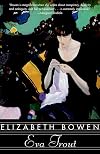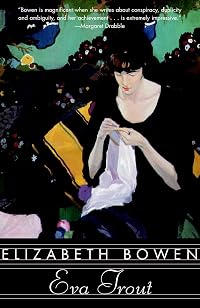
Eva Trout
by Elizabeth Bowen
On This Page
Description
Eva Trout, Elizabeth Bowen’s last novel, epitomizes her bold exploration of the territory between the comedy of manners and cutting social commentary. Orphaned at a young age, Eva has found a home of sorts in Worcestershire with her former schoolteacher, Iseult Arbles, and Iseult's husband, Eric. From a safe distance in London, her legal guardian, Constantine, assumes that all's well. But Eva's flighty, romantic nature hasn't entirely clicked with the Arbles household, and Eva is plotting show more to escape. When she sets out to hock her Jaguar and disappear without a trace, she unwittingly leaves a paper trail for her various custodians–and all kinds of trouble–to follow. show lessTags
Recommendations



















Member Recommendations


Member Reviews
This rates pretty high on the Unsuitability of Star Ratings meter. Did i like it? Not really. I often feel disconnected from Bowen's central characters, as if, against all possible common sense and convention, she intentionally makes her central characters blank screens of boredom and her marginal characters fascinating and full of life (compare Eva and Constantine or Eva and Iseutl here). The novel is disjointed, as if she had some beautiful set-pieces (Henry in the church, Constantine and Izzy's first interview) but couldn't really be bothered stringing them together in any major way. Another reviewer points out that all the interesting action in this book takes place off-stage: that's where Eva buys/steals her child; where show more Constantine falls in love with Fr Clavering/converts to religion; where Eva and Izzy fail to consummate their love. It's all a bit unsatisfying, like smelling great food.
On the other hand, I'm positive that many people will come up with fascinating things to say *about* the novel as self-reflective work of modernism etc... Letter writers say things like "Life is an anti-novel;" there are incessant references to the literary tradition; she obviously set out to write an inverse comedy of manners (b.t.w., to an earlier reviewer, this does not mean 'television sitcom.' Emphasis is on 'manners,' not 'comedy;' and comedy doesn't mean laugh-a-minute one-liners.) By the end I was kind of fascinated, and thought this might be the only known book in which the heroine's being shot by her adopted son at a train station should, in all likelihood, be read as a hilarious comment on everything from Pride and Prejudice to Anna Karenina. Even if that's a good reading, though, the whole book should have given rise to more farce for it to really have worked. show less
On the other hand, I'm positive that many people will come up with fascinating things to say *about* the novel as self-reflective work of modernism etc... Letter writers say things like "Life is an anti-novel;" there are incessant references to the literary tradition; she obviously set out to write an inverse comedy of manners (b.t.w., to an earlier reviewer, this does not mean 'television sitcom.' Emphasis is on 'manners,' not 'comedy;' and comedy doesn't mean laugh-a-minute one-liners.) By the end I was kind of fascinated, and thought this might be the only known book in which the heroine's being shot by her adopted son at a train station should, in all likelihood, be read as a hilarious comment on everything from Pride and Prejudice to Anna Karenina. Even if that's a good reading, though, the whole book should have given rise to more farce for it to really have worked. show less
This is the fascinating, frustrating last novel published by Elizabeth Bowen. Eva is a woman that has had an unorthodox upbringing -- her father, a financial genius, carted her around the world on his business ventures leaving her to various nannies/hotel staff. Now an adult on the brink of inheriting a vast fortune, she is staying with a former teacher , one of the few people in her childhood that took an interest in her. But Eva, ignorant of social conventions, is a disruptive force -- everywhere setting unintended events in motion. Bowen masterfully uses language to create Eva and depict her world as unconventionally as the character herself. Nothing is said in a straightforward manner -- both the syntax and even the context remain show more elusive. show less
The latest historic Booker shortlist project at The Mookse and The Gripes has reached 1970. Of the six, this was the one I was most looking forward to, as I have heard good things about Bowen but never read her. This was her last novel.
This book is a quirky dark comedy - it may be named for its central character but it is really more of an ensemble piece in which other characters are given plenty of breathing space. The language is often startling - Bowen employs rather odd sentence structures and often inverts or subverts cliches. This is never too difficult to follow, despite the occasional intrusion of arcane vocabulary. The story often seems to inhabit an older time period than its setting in the late 50s and early 60s. The way the show more story is structured seems uneven - the first part of the book has 12 chapters, most of them short, and the second part just has 4, including a final chapter running to over 60 pages.
At the heart of the story is Eva Trout, a young heiress on the verge of inheriting a large fortune. Eva is a spoiled child formed by parental neglect, and also something of a fantasist, and at the start of the book we find her temporarily lodged with her favourite teacher Iseult and her husband Eric in Worcestershire, with the agreement of Constantine, her guardian who was also her father's former partner. At the start of the book she is a few months short of the age at which she is due to inherit.
Eva's mother died in a plane crash when she was an infant, and her rich father, though indulgent, has not spent enough time with her, farming her out to some eccentric schools, the first of which is a pet project of Constantine, who owns a decaying castle where he has installed a friend as a head teacher. This school comes to an end after an incident in which Eva's room-mate almost drowns in its lake. The first few chapters tell this part of the story in a series of flashbacks.
Eva senses that she is making Iseult and her husband uncomfortable, and spends most of her time in the neighbouring vicarage among its four children. She persuades one of them, Henry, to help her sell her Jaguar to fund a secret escape to a decaying and impractical house on the Kent coast - the chapter in which she arrives at the house portrays her as a comic caricature with no common sense and no idea how to look after herself. Her trail is soon discovered thanks to correspondence carelessly left in Iseult's house and she is visited by Iseult's husband Eric, and then Constantine, who finds them. In the remainder of the first part she acquires the inheritance and flees to America.
The second part of the book is stranger. While in America, Eva has acquired a deaf mute child Jeremy, in mysterious circumstances. They return to England and the same circle, and Eva manages to create further confusion wherever she goes. She embarks on a strange semi-romance with Henry and hatches a plot to stage an apparent departure with him for a wedding overseas. This forms the ending of the book. Iseult, now estranged from Eric, has acquired his revolver, and deposited it among Eva's belongings at her London hotel while she is with France with Jeremy, and like Chekhov's gun, this inevitably forms part of the ending, which may surprise some readers .
I found the book an interesting and entertaining read, but I was left wondering what the point of it all was, beyond some rather superficial observations about the value of parental influence and education.
I don't think 1970 was a strong year for the Booker - so far this is the best of the three I have read, the others being the winner [b:The Elected Member|1565490|The Elected Member|Bernice Rubens|https://images.gr-assets.com/books/1421010229s/1565490.jpg|1558073] and Iris Murdoch's [b:Bruno's Dream|11240|Bruno's Dream|Iris Murdoch|https://images.gr-assets.com/books/1389645520s/11240.jpg|13754]. I would still be interested in reading more Bowen. show less
This book is a quirky dark comedy - it may be named for its central character but it is really more of an ensemble piece in which other characters are given plenty of breathing space. The language is often startling - Bowen employs rather odd sentence structures and often inverts or subverts cliches. This is never too difficult to follow, despite the occasional intrusion of arcane vocabulary. The story often seems to inhabit an older time period than its setting in the late 50s and early 60s. The way the show more story is structured seems uneven - the first part of the book has 12 chapters, most of them short, and the second part just has 4, including a final chapter running to over 60 pages.
At the heart of the story is Eva Trout, a young heiress on the verge of inheriting a large fortune. Eva is a spoiled child formed by parental neglect, and also something of a fantasist, and at the start of the book we find her temporarily lodged with her favourite teacher Iseult and her husband Eric in Worcestershire, with the agreement of Constantine, her guardian who was also her father's former partner. At the start of the book she is a few months short of the age at which she is due to inherit.
Eva's mother died in a plane crash when she was an infant, and her rich father, though indulgent, has not spent enough time with her, farming her out to some eccentric schools, the first of which is a pet project of Constantine, who owns a decaying castle where he has installed a friend as a head teacher. This school comes to an end after an incident in which Eva's room-mate almost drowns in its lake. The first few chapters tell this part of the story in a series of flashbacks.
Eva senses that she is making Iseult and her husband uncomfortable, and spends most of her time in the neighbouring vicarage among its four children. She persuades one of them, Henry, to help her sell her Jaguar to fund a secret escape to a decaying and impractical house on the Kent coast - the chapter in which she arrives at the house portrays her as a comic caricature with no common sense and no idea how to look after herself. Her trail is soon discovered thanks to correspondence carelessly left in Iseult's house and she is visited by Iseult's husband Eric, and then Constantine, who finds them. In the remainder of the first part she acquires the inheritance and flees to America.
The second part of the book is stranger. While in America, Eva has acquired a deaf mute child Jeremy, in mysterious circumstances. They return to England and the same circle, and Eva manages to create further confusion wherever she goes. She embarks on a strange semi-romance with Henry
I found the book an interesting and entertaining read, but I was left wondering what the point of it all was, beyond some rather superficial observations about the value of parental influence and education.
I don't think 1970 was a strong year for the Booker - so far this is the best of the three I have read, the others being the winner [b:The Elected Member|1565490|The Elected Member|Bernice Rubens|https://images.gr-assets.com/books/1421010229s/1565490.jpg|1558073] and Iris Murdoch's [b:Bruno's Dream|11240|Bruno's Dream|Iris Murdoch|https://images.gr-assets.com/books/1389645520s/11240.jpg|13754]. I would still be interested in reading more Bowen. show less
With hindsight, this was not the most sensible place to start with Bowen - it's her last novel, not terribly easy to place in isolation, and would probably benefit from some knowledge of her earlier work. It's a very ambiguous, modernist book, full of sixties existential doubts and misleading references to everything from Shakespeare to Ibsen and Tolstoy - some of which, like the Chekhovian gun-that-has-to-be-fired-in-the-last-act, seem to be verging on self-parody. And there are all sorts of tantalising hints of same-sex relationships. But the way the characters and settings are presented initially tempts you into trying to read it as a conventional bit of novelistic narrative, which of course doesn't work.
I don't know if I simply show more wasn't in the mood for it, but somehow, whilst appreciating the quality and depth of Bowen's writing, I never quite got the point of this book. Possibly something to come back to later. show less
I don't know if I simply show more wasn't in the mood for it, but somehow, whilst appreciating the quality and depth of Bowen's writing, I never quite got the point of this book. Possibly something to come back to later. show less
Eva Trout was Elizabeth Bowen’s final novel, written when she was around seventy – it was nominated for the Booker prize – then in its second year, and which was finally won by Bernice Rubens for The Elected Member. I liked it very much, the eponymous character is particularly well drawn, reminding me of a slightly older Portia (Death of the Heart). While, Eva Trout is not my favourite Bowen novel, it is a very good, though occasionally challenging read. It is a novel of many themes, parenting, communication, innocence and betrayal among them.
“The way downhill, into the bottomless incredulity which is despair, was incandescent with flowering chestnut trees.”
Eva Trout herself is an enigmatic character, chaotic, often rather show more child- like, though she is in her twenties when we first meet her. A conspicuously large, awkward girl, unloved and alone. Eva was raised by a succession of nannies and governesses paid for by her wealthy father, following the death of her mother in a plane crash. Now, her father dead too, she awaits full control of her huge inheritance when she is twenty-five. Driving around the countryside in her Jaguar – Eva is a strange mix of vulnerable innocence and trouble.
Eva has difficulty interacting with the world around her, relationships are conducted with a certain amount of drama and misunderstanding. Her legal guardian is Constantine, a former lover of her father’s – who lives in London and dispenses with his duties concerning Eva from there. Eva craves acceptance, and freedom, and as the novel progresses we see Eva moving from place to place in her bid to find them.
Constantine was delighted to approve Eva’s present living arrangements; a paying guest at Larkins, the home of Iseult and Eric Arble, Iseult a former teacher of Eva’s at the second of only two schools she attended. When she was sixteen. Eva had insisted her father pay for her to go to school. The first school she attended was in a castle owned by her father, here her roommate Elsinore attempts suicide, and the school soon closes. Despite having been very fond of Iseult when she was at school, now Eva is less happy living with the Arbles than she had imagined she would be. Seeking refuge from the Arbles, she makes friends the Danceys who live nearby – a clergyman’s family, with whom she spends a lot of time. Their son Henry – several years younger than Eva is her most particular friend, who she involves in her bid for freedom. Unable to wait for her twenty-fifth birthday – just three months away – Eva decides to rent a house in Kent and live entirely by herself. Despite not even knowing how to boil a kettle. On the day she is to take over Cathay – the house she has selected – she is met by Mr Denge the agent, to whom Eva can’t help but display her absolute ignorance of all household matters.
“‘Must we go far? asked his client, as they drove off.
‘No distance!’ sang out the professional optimist. ‘You are not familiar with our part of the world, Miss Trout?’
‘No. That is why.’
‘I see,’ he said, accustomed to doing so. ‘you will find we are rich in associations, not to speak of celebrities past and present. Charles Dickens –’
‘- Yes. Where do I buy a bicycle?
‘Now, immediately?’
‘Yes.’
Mr Denge altered course. ‘And, Miss Trout, groceries? This is your opportunity. I take it you have brought with you your plate and linen? As we pointed out in ours of the 23rd, those you provide. We trust you understood?’
‘No. What are they?’
‘Ha-ha – sheets, and so on. Spoons and, ha-ha, forks.’
‘How should I possess those?’ asked Eva moodily. ‘Must I buy them? Are they very expensive?’”
Once she is installed at Cathay, Eva receives a letter from Henry – and is visited by Eric – whose visit is interrupted by Constantine. Meanwhile Iseult sits at home in the house vacated by Eva, worrying about Eric’s absence. When Eva and Iseult meet again, Eva helps her former teacher to a terrible misunderstanding, which will adversely affect her already fragile marriage.
From here events move forward eight years, years that Eva has spent in America where she bought/adopted a child, (we assume illegally) a boy – Jeremy who is transpires is a deaf mute. Jeremy is now eight years old, able only to understand Eva. Eva has decided to bring her adopted son back to England.
“The boredom, for Eva, of being a passenger was mitigated by showing Jeremy England. Lambs, elms, cottages, colleges (they passed through Oxford). He missed nothing. From time to time, dread of the impending day overcame her; the aware child, at such moments, went supine against her, shoulder to shoulder. They stopped for lunch at Evesham, roast beef, apple tart, afterwards walking some way along the river looking at boats. ‘You’d like a boat of your own?’ He certainly would. ‘A seagoing boat, with an outboard engine?’ Still better! … Just after three o’clock, the Daimler drew up outside Larkins.”
Living a transient hotel existence Eva begins finally to address Jeremy’s needs – and look around for someone to help him.
The ending is extraordinary – and I won’t say too much about it – except to say it is unforgettable and for me totally unexpected – and took the whole novel up a notch. show less
“The way downhill, into the bottomless incredulity which is despair, was incandescent with flowering chestnut trees.”
Eva Trout herself is an enigmatic character, chaotic, often rather show more child- like, though she is in her twenties when we first meet her. A conspicuously large, awkward girl, unloved and alone. Eva was raised by a succession of nannies and governesses paid for by her wealthy father, following the death of her mother in a plane crash. Now, her father dead too, she awaits full control of her huge inheritance when she is twenty-five. Driving around the countryside in her Jaguar – Eva is a strange mix of vulnerable innocence and trouble.
Eva has difficulty interacting with the world around her, relationships are conducted with a certain amount of drama and misunderstanding. Her legal guardian is Constantine, a former lover of her father’s – who lives in London and dispenses with his duties concerning Eva from there. Eva craves acceptance, and freedom, and as the novel progresses we see Eva moving from place to place in her bid to find them.
Constantine was delighted to approve Eva’s present living arrangements; a paying guest at Larkins, the home of Iseult and Eric Arble, Iseult a former teacher of Eva’s at the second of only two schools she attended. When she was sixteen. Eva had insisted her father pay for her to go to school. The first school she attended was in a castle owned by her father, here her roommate Elsinore attempts suicide, and the school soon closes. Despite having been very fond of Iseult when she was at school, now Eva is less happy living with the Arbles than she had imagined she would be. Seeking refuge from the Arbles, she makes friends the Danceys who live nearby – a clergyman’s family, with whom she spends a lot of time. Their son Henry – several years younger than Eva is her most particular friend, who she involves in her bid for freedom. Unable to wait for her twenty-fifth birthday – just three months away – Eva decides to rent a house in Kent and live entirely by herself. Despite not even knowing how to boil a kettle. On the day she is to take over Cathay – the house she has selected – she is met by Mr Denge the agent, to whom Eva can’t help but display her absolute ignorance of all household matters.
“‘Must we go far? asked his client, as they drove off.
‘No distance!’ sang out the professional optimist. ‘You are not familiar with our part of the world, Miss Trout?’
‘No. That is why.’
‘I see,’ he said, accustomed to doing so. ‘you will find we are rich in associations, not to speak of celebrities past and present. Charles Dickens –’
‘- Yes. Where do I buy a bicycle?
‘Now, immediately?’
‘Yes.’
Mr Denge altered course. ‘And, Miss Trout, groceries? This is your opportunity. I take it you have brought with you your plate and linen? As we pointed out in ours of the 23rd, those you provide. We trust you understood?’
‘No. What are they?’
‘Ha-ha – sheets, and so on. Spoons and, ha-ha, forks.’
‘How should I possess those?’ asked Eva moodily. ‘Must I buy them? Are they very expensive?’”
Once she is installed at Cathay, Eva receives a letter from Henry – and is visited by Eric – whose visit is interrupted by Constantine. Meanwhile Iseult sits at home in the house vacated by Eva, worrying about Eric’s absence. When Eva and Iseult meet again, Eva helps her former teacher to a terrible misunderstanding, which will adversely affect her already fragile marriage.
From here events move forward eight years, years that Eva has spent in America where she bought/adopted a child, (we assume illegally) a boy – Jeremy who is transpires is a deaf mute. Jeremy is now eight years old, able only to understand Eva. Eva has decided to bring her adopted son back to England.
“The boredom, for Eva, of being a passenger was mitigated by showing Jeremy England. Lambs, elms, cottages, colleges (they passed through Oxford). He missed nothing. From time to time, dread of the impending day overcame her; the aware child, at such moments, went supine against her, shoulder to shoulder. They stopped for lunch at Evesham, roast beef, apple tart, afterwards walking some way along the river looking at boats. ‘You’d like a boat of your own?’ He certainly would. ‘A seagoing boat, with an outboard engine?’ Still better! … Just after three o’clock, the Daimler drew up outside Larkins.”
Living a transient hotel existence Eva begins finally to address Jeremy’s needs – and look around for someone to help him.
The ending is extraordinary – and I won’t say too much about it – except to say it is unforgettable and for me totally unexpected – and took the whole novel up a notch. show less
I picked this book to read because it is on the 1001 Books To Read Before You Die list and I had never read anything by Elizabeth Bowen although she has six books that have been on various versions of the list. Judging by this foray into her ouevre I won't be running out to pick up more of her books.
The eponymous heroine is the orphaned daughter of an immensely wealthy financier. Her mother died when Eva was very young having left her husband to run away with another man and dying in a plane crash in the Andes. Eva's father committed suicide and left Eva (and her fortune) in the care of his friend (and probably lover) Constantine. Before Eva reached the age of majority (twenty-one at that time in the 1950s) she was staying with her show more former teacher Iseult and Iseult's husband Eric in a cottage in rural England. Eva had adored Iseult when she was in school but close acquaintance seemed to take the shine off that relationship and she spent most of her type with the local vicar's family. Then Eva decided to leave Iseult and Eric and connived with the vicar's son, Henry, to make arrangements to do so. She didn't hide herself very well because first Eric, then Constantine and then Iseult came to visit her at her new abode which was a run down house near the English Channel. When Eva came into her fortune she made various plans for her future including adopting a child. It is hinted that this child was kidnapped but nobody seems at all outraged by this. The child, Jeremy, is deaf and dumb but not stupid. Eva does love him and is quite alarmed when he goes missing for four hours after being picked up from a clay modelling class by someone claiming to be Eva's friend. This causes Eva to decamp to France, telling only Henry where she is. In Fontainebleu Eva learns of a doctor and his wife who specialize in cases like Jeremy's and Eva entrusts Jeremy to their care. The ending, which could have been like a fairytale, is not a surprise since it is foreshadowed quite well.
In the end I found myself mystified by Bowen's aim or message. And I don't really understand why this book is considered so special that it has appeared on all the versions of the list. show less
The eponymous heroine is the orphaned daughter of an immensely wealthy financier. Her mother died when Eva was very young having left her husband to run away with another man and dying in a plane crash in the Andes. Eva's father committed suicide and left Eva (and her fortune) in the care of his friend (and probably lover) Constantine. Before Eva reached the age of majority (twenty-one at that time in the 1950s) she was staying with her show more former teacher Iseult and Iseult's husband Eric in a cottage in rural England. Eva had adored Iseult when she was in school but close acquaintance seemed to take the shine off that relationship and she spent most of her type with the local vicar's family. Then Eva decided to leave Iseult and Eric and connived with the vicar's son, Henry, to make arrangements to do so. She didn't hide herself very well because first Eric, then Constantine and then Iseult came to visit her at her new abode which was a run down house near the English Channel. When Eva came into her fortune she made various plans for her future including adopting a child. It is hinted that this child was kidnapped but nobody seems at all outraged by this. The child, Jeremy, is deaf and dumb but not stupid. Eva does love him and is quite alarmed when he goes missing for four hours after being picked up from a clay modelling class by someone claiming to be Eva's friend. This causes Eva to decamp to France, telling only Henry where she is. In Fontainebleu Eva learns of a doctor and his wife who specialize in cases like Jeremy's and Eva entrusts Jeremy to their care. The ending, which could have been like a fairytale, is not a surprise since it is foreshadowed quite well.
In the end I found myself mystified by Bowen's aim or message. And I don't really understand why this book is considered so special that it has appeared on all the versions of the list. show less
Eva Trout , o último romance de Elizabeth Bowen, resume sua ousada exploração do território entre a comédia de costumes e o comentário social cortante.
Órfã em tenra idade, Eva encontrou uma espécie de lar em Worcestershire com sua ex-professora, Iseult Arbles, e o marido de Iseult, Eric. De uma distância segura em Londres, seu tutor legal, Constantine, assume que está tudo bem. Mas a natureza volúvel e romântica de Eva não encaixou totalmente na família Arbles, e Eva está planejando escapar. Quando ela decide penhorar seu Jaguar e desaparecer sem deixar rastro, ela involuntariamente deixa um rastro de papel para seus vários guardiões - e todos os tipos de problemas - seguirem.
Órfã em tenra idade, Eva encontrou uma espécie de lar em Worcestershire com sua ex-professora, Iseult Arbles, e o marido de Iseult, Eric. De uma distância segura em Londres, seu tutor legal, Constantine, assume que está tudo bem. Mas a natureza volúvel e romântica de Eva não encaixou totalmente na família Arbles, e Eva está planejando escapar. Quando ela decide penhorar seu Jaguar e desaparecer sem deixar rastro, ela involuntariamente deixa um rastro de papel para seus vários guardiões - e todos os tipos de problemas - seguirem.
Members
- Recently Added By
Lists

1001 Books You Must Read Before You Die
1,448 works; 1,136 members

Booker Prize
491 works; 62 members

1,001 BYMRBYD Concensus
723 works; 27 members

Man Booker Prize Longlist 1970
6 works; 1 member

Booker Prize Shortlist: Titles Not Yet Read
161 works; 4 members

My TBR
371 works; 3 members

Best Sellers / Popular 1968
237 works; 5 members
Author Information

74+ Works 9,059 Members
Elizabeth Bowen, distinguished Anglo-Irish novelist, was born in Dublin in 1899, traveled extensively, lived in London, and inherited the family estate-Bowen's Court, in County Cork. Her account of the house, Bowen's Court (1942), with a detailed fictionalized history of the family in Ireland through three centuries, has charm, warmth, and show more insight. Seven Winters is a fragment of autobiography published in England in 1942. The "Afterthoughts" of the original edition are critical essays in which she discusses and analyzes, among others, such literary figures as Virginia Woolf, E. M. Forster, Katherine Mansfield, Anthony Trollope, and Eudora Welty. Bowen's stories, mostly about people of the British upper middle class, portray relationships that are never simple, except, perhaps, on the surface. Her concern with time and memory is a major theme. Beautifully and delicately written, her stories, with their oblique psychological revelations, are symbolic, subtle, and terrifying. A Time in Rome (1960) is her brilliant evocation of that city and its layered past. In 1948, Bowen was made a Commander of the British Empire. Bowen died in 1973. (Bowker Author Biography) show less
Awards and Honors
Awards
Distinctions
Series
Belongs to Publisher Series
Work Relationships
Is abridged in
Common Knowledge
- Canonical title
- Eva Trout
- Original publication date
- 1968
- People/Characters
- Eva Trout; Iseult Arbles; Eric Arbles; Constantine
- Dedication
- To Charles Ritchie
- First words
- "This is where we were to have spent the honeymoon," Eva Trout said, suddenly pointing across the water.
- Last words
- (Click to show. Warning: May contain spoilers.)A woman bystander to whom nothing was anything had the quickest reflex -- she snatched him back before he could fall over the dead body.
- Original language
- English
Classifications
Statistics
- Members
- 481
- Popularity
- 63,277
- Reviews
- 8
- Rating
- (3.25)
- Languages
- English, French, German, Swedish
- Media
- Paper, Ebook
- ISBNs
- 16
- ASINs
- 7