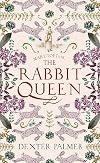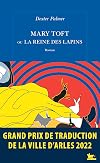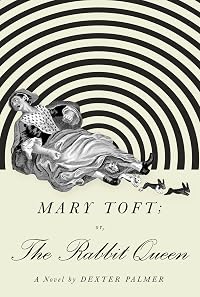
Mary Toft; or, The Rabbit Queen
by Dexter Palmer 
On This Page
Description
From the highly acclaimed author of Version Control: a stunning, powerfully evocative new novel based on a true story--in 1726 in the small town of Godalming, England, a young woman confounds the medical community by giving birth to dead rabbits. Surgeon John Howard is a rational man. His apprentice Zachary knows John is reluctant to believe anything that purports to exist outside the realm of logic. But even John cannot explain how or why Mary Toft, the wife of a local farmer, manages to show more give birth to a dead rabbit. When this singular event becomes a regular occurrence, John realizes that nothing in his experience as a village physician has prepared him to deal with a situation as disturbing as this. He writes to several preeminent surgeons in London, three of whom quickly arrive in the small town of Godalming ready to observe and opine. When Mary's plight reaches the attention of King George, Mary and her doctors are summoned to London, where Zachary experiences for the first time a world apart from his small-town existence, and is exposed to some of the darkest corners of the human soul. All the while, Mary lies in bed, waiting for another birth, as doubts begin to blossom among the surgeons and a growing group of onlookers grow impatient for another miracle... show lessTags
Recommendations









Member Reviews
This book--coupled with another I had read earlier this year, Bunny--led me to muse on rabbits, and how they are associated with the grotesque. There are not only these two novels, but the infamous rabbit-boiling scene in Fatal Attraction, and the human-sized rabbit in Donnie Darko, and probably some other examples I am forgetting. What is it about rabbits, associated as they are with innocence and cuteness, but also promiscuity and out-of-control breeding, that lends so well to horror? There's a whole essay there, probably, if I could be bothered to write it.
The rabbits in this story were not, strictly speaking, fictional, as this was based on a true story of a woman in 1726 rural England who suddenly began giving birth to rabbits, show more which convinced many people for a little while that she was miraculous. It's an interesting story, and Palmer dramatizes it well, but he also elevates it well above just a strange-but-true retelling. There is one chapter, midway through, written in Mary's voice, and it was there I realized that Palmer was really talking about the battle over ownership of women's bodies, particularly their reproductive organs, that is still ongoing:
"That need of his to occupy the space inside me, claim it as his own. ... The rule of men: all spaces must be filled."
The story of a woman giving birth to rabbits is truly an argument for bodily autonomy. And Palmer carries it further than just women's rights to own their own bodies, but extends that idea to everyone who has been dehumanized because their bodies do not conform to what is considered the norm. He populates his story with other freaks of the day, who nevertheless do not see themselves as freaks but as human: a woman with a facial birthmark, conjoined twins, a black man. In contrast, there are the idle rich who revel in the grotesque and the dehumanization of others, who dress themselves up ridiculously but see themselves as beautiful. This novel is all about how we perceive others and the reality we weave for ourselves as we tell ourselves the story of who we are and who everyone else is, and what is acceptable and what is freakish, and who has the rights of humanity and who does not. And also about how those perceptions can, and should, change--how we can rewrite our own story of our collective humanity.
When I got to the end, to the conversation that Mary's doctor, John Howard (a wonderfully drawn character) has with her alone about belief, about choosing what is true, and about what happens when God is brought into the room--it's amazing writing, and it gave me so much more to think about than I bargained for when I picked up this slim novel.
So far, I have read all three of Palmer's novels, and each one has surpassed the last. show less
The rabbits in this story were not, strictly speaking, fictional, as this was based on a true story of a woman in 1726 rural England who suddenly began giving birth to rabbits, show more which convinced many people for a little while that she was miraculous. It's an interesting story, and Palmer dramatizes it well, but he also elevates it well above just a strange-but-true retelling. There is one chapter, midway through, written in Mary's voice, and it was there I realized that Palmer was really talking about the battle over ownership of women's bodies, particularly their reproductive organs, that is still ongoing:
"That need of his to occupy the space inside me, claim it as his own. ... The rule of men: all spaces must be filled."
The story of a woman giving birth to rabbits is truly an argument for bodily autonomy. And Palmer carries it further than just women's rights to own their own bodies, but extends that idea to everyone who has been dehumanized because their bodies do not conform to what is considered the norm. He populates his story with other freaks of the day, who nevertheless do not see themselves as freaks but as human: a woman with a facial birthmark, conjoined twins, a black man. In contrast, there are the idle rich who revel in the grotesque and the dehumanization of others, who dress themselves up ridiculously but see themselves as beautiful. This novel is all about how we perceive others and the reality we weave for ourselves as we tell ourselves the story of who we are and who everyone else is, and what is acceptable and what is freakish, and who has the rights of humanity and who does not. And also about how those perceptions can, and should, change--how we can rewrite our own story of our collective humanity.
When I got to the end, to the conversation that Mary's doctor, John Howard (a wonderfully drawn character) has with her alone about belief, about choosing what is true, and about what happens when God is brought into the room--it's amazing writing, and it gave me so much more to think about than I bargained for when I picked up this slim novel.
So far, I have read all three of Palmer's novels, and each one has surpassed the last. show less
I loved this weird book based on a true event in the 1700s where a woman gave birth to 17 rabbits to the astonishment of her male doctors. Palmer takes this story and turns it into a dive into fiction vs. reality, weirdness vs. normality, and male voices silencing women.
I highly recommend it. I didn't know what to expect and was thrilled with what I got.
I highly recommend it. I didn't know what to expect and was thrilled with what I got.
In 1726, in a small town in England, a physician is called to the bedside of a woman who is giving birth... to a rabbit. A dead rabbit. A dead, grotesquely dismembered rabbit. What could possibly be going on here? Is it the greatest medical discovery of the ages? A miracle sent by God? Something the woman must have brought on herself, somehow, with her thoughts or her actions? Those are the only reasonable possibilities, right?
Bizarrely, this is actually based on a true story. Although "true story" may be something of a slippery concept, and that is in fact the main theme of the novel: the ways in which human beings convince ourselves to believe things that may not be true, the ways those beliefs can take on an independent reality of show more their own once they're at large in the world, and the ways in which people with the power to do so project and impose those beliefs onto the lives and the bodies of others.
One might possibly complain that the novel ends up getting a bit heavy-handed with those themes, or that it seems to promise to be a very different kind of story at the beginning than the philosophical meditation it basically turns into. But for me, it worked quite well, and the ideas it's examining feel at once like universals of human experience and as if they've very, very specifically relevant to the world we're living in right this moment. show less
Bizarrely, this is actually based on a true story. Although "true story" may be something of a slippery concept, and that is in fact the main theme of the novel: the ways in which human beings convince ourselves to believe things that may not be true, the ways those beliefs can take on an independent reality of show more their own once they're at large in the world, and the ways in which people with the power to do so project and impose those beliefs onto the lives and the bodies of others.
One might possibly complain that the novel ends up getting a bit heavy-handed with those themes, or that it seems to promise to be a very different kind of story at the beginning than the philosophical meditation it basically turns into. But for me, it worked quite well, and the ideas it's examining feel at once like universals of human experience and as if they've very, very specifically relevant to the world we're living in right this moment. show less
"Consider," Fox said, "the woman with child who reads. Who seeks to occupy her mind with matters of art and science at a time when she is intended to to embrace the role assigned to her by God, that of a wife, and of a mother. Who spends her days in the company of imaginary folk such as Moll Flanders and Roxana the Fortunate Mistress, while her belly swells and her needle goes neglected. Who fails to meditate on her responsibility to the new life that grows inside her. Such a woman's thought is torn in two directions--is it no surprise that if she were to give birth to a child in such an afflicted state of mind, that it would assume the most hideous of manifestations?"
"Behold," Fox said, "the woman with two heads."
This is the story of show more the extraordinary story of Mary Toft, a woman in Godalming, England who, in the early eighteenth century, gave birth to rabbits. Told from the point of view of the local surgeon and man-midwife's apprentice, the story begins with a traveling "Exhibition of Medical Curiosities" that comes to town and amazes Zachary, even as his father, the local clergyman and John Howard, the local doctor, differ in what they find extraordinary about the spectacle. Soon after, John Howard and Zachary are called to assist a woman in labor. The woman, Mary Toft, gives birth to pieces of rabbit. She will continue to give birth to rabbit parts a few times a week and it isn't long before people from London become involved, and things become ever more confusing and complicated.
Dexter Palmer's novel is a wonderfully written historical novel that subtly explores ideas about perception and truth, while delivering a hugely enjoyable look at England in the eighteenth century. I especially liked how Palmer explored how women were thought of and treated and how that affected them. These themes never get in the way of what is an entertaining story and they remain on my mind days after finishing. Palmer's previous novel was set in the near future and explored concepts arising from time travel. It seems that he is an author who can tackle any genre successfully. I'm now hugely curious as to what his next novel will be.
And I will tell you this about God--that despite his presumed omnipresence he often arrives in the company of men; that men fear to interpret the world on their own authority when they are aware of his presence, because his senses are complete and perfect and his experiences are unlimited; that the standards for proof are much higher when God is involved, especially proof of life, or of what goes on inside a woman's body; that weighed against God's displeasure, or against a man's feeling that God is displeased by his actions, the life of one woman is no great thing. show less
"Behold," Fox said, "the woman with two heads."
This is the story of show more the extraordinary story of Mary Toft, a woman in Godalming, England who, in the early eighteenth century, gave birth to rabbits. Told from the point of view of the local surgeon and man-midwife's apprentice, the story begins with a traveling "Exhibition of Medical Curiosities" that comes to town and amazes Zachary, even as his father, the local clergyman and John Howard, the local doctor, differ in what they find extraordinary about the spectacle. Soon after, John Howard and Zachary are called to assist a woman in labor. The woman, Mary Toft, gives birth to pieces of rabbit. She will continue to give birth to rabbit parts a few times a week and it isn't long before people from London become involved, and things become ever more confusing and complicated.
Dexter Palmer's novel is a wonderfully written historical novel that subtly explores ideas about perception and truth, while delivering a hugely enjoyable look at England in the eighteenth century. I especially liked how Palmer explored how women were thought of and treated and how that affected them. These themes never get in the way of what is an entertaining story and they remain on my mind days after finishing. Palmer's previous novel was set in the near future and explored concepts arising from time travel. It seems that he is an author who can tackle any genre successfully. I'm now hugely curious as to what his next novel will be.
And I will tell you this about God--that despite his presumed omnipresence he often arrives in the company of men; that men fear to interpret the world on their own authority when they are aware of his presence, because his senses are complete and perfect and his experiences are unlimited; that the standards for proof are much higher when God is involved, especially proof of life, or of what goes on inside a woman's body; that weighed against God's displeasure, or against a man's feeling that God is displeased by his actions, the life of one woman is no great thing. show less
In “Version Control,” Dexter Palmer wrote one of the most original time-travel novels you are likely to find. In “Mary Toft: or, The Rabbit Queen” (2019), his creative mind takes off in a very different direction.
Now it is 1726 in a small English village, where a woman seems to be giving birth to dead rabbits. The novel is based on a true story.
Zachary is a village boy who becomes an apprentice to John Howard, the village physician, after he shows interest in a traveling show of human oddities. If this boy has the stomach for this sort of thing, he must have what it takes to be a good doctor, Howard reasons. Mostly the story comes from Zachery's point of view.
But then comes the case of Mary Toft, who gives birth to dead, show more dissected rabbits every two or three days. At that time it was believed that women who give birth to odd, misshapen children — such as the two-headed woman who shows up late in the novel — must have had something traumatic happen to them during their pregnancy. So why not rabbits?
Soon this oddity attracts surgeons from London, each claiming to represent the king. They take turns delivering dead rabbits and finally take Mary to London to impress the king and others in the big city. Of course, Mary stops giving birth to rabbits once she is in London.
Although this story has comic potential, Palmer mostly plays it straight. He deftly explores the odd human desire to believe the impossible. Whenever we see a magic act, we want to believe the magic tricks are not tricks at all. So again, why not rabbits? show less
Now it is 1726 in a small English village, where a woman seems to be giving birth to dead rabbits. The novel is based on a true story.
Zachary is a village boy who becomes an apprentice to John Howard, the village physician, after he shows interest in a traveling show of human oddities. If this boy has the stomach for this sort of thing, he must have what it takes to be a good doctor, Howard reasons. Mostly the story comes from Zachery's point of view.
But then comes the case of Mary Toft, who gives birth to dead, show more dissected rabbits every two or three days. At that time it was believed that women who give birth to odd, misshapen children — such as the two-headed woman who shows up late in the novel — must have had something traumatic happen to them during their pregnancy. So why not rabbits?
Soon this oddity attracts surgeons from London, each claiming to represent the king. They take turns delivering dead rabbits and finally take Mary to London to impress the king and others in the big city. Of course, Mary stops giving birth to rabbits once she is in London.
Although this story has comic potential, Palmer mostly plays it straight. He deftly explores the odd human desire to believe the impossible. Whenever we see a magic act, we want to believe the magic tricks are not tricks at all. So again, why not rabbits? show less
I know not what will become of her, but I hope that her punishment will be light. For who can condemn a person for deceiving others who were so willing to deceive themselves? Which of us does not have a devil that lives inside of us, whispering not what is true, but what we wish to believe, out of innocence or cupidity or a hundred other reasons? We must stay ever vigilant against that demon, ever on watch against his pleasing music - if the tale of Mary Toft has any moral at all, it is this.
Writing a novel around the 18th Century historical case of Mary Toft, hoaxer and alleged birther of rabbits, Palmer has written a timeless examination of human nature, and an outstanding literary achievement.
Palmer sets out his intentions in the show more first pages, where we see provincial physician John Howard struggling to read English philosopher John Locke’s masterpiece “An Essay Concerning Human Understanding.” Palmer’s going to be concerned, while writing an entertaining story, with the question of ‘How do humans come to understand what they regard as truth?’ Is truth an objective reality, existing outside of the human mind, not subject to the realm of human passions? Or is truth an agreed upon conjecture shared between human minds, and thus changeable, and malleable, and open to manipulation by forces that do not mean well? “I am led to consider that the latter possibility may be the case,” says Howard, “that our world has some secret horror that I cannot fathom if so, controlling the minds of men though it is impossible to perceive with our senses alone.”
But to quote Leonard Cohen, you want it darker. So Palmer retells the fable of the king and the invisible cloak but changes the ending; no longer is the king exposed by the solitary truth teller, enabling the crowd to admit and see the truth for themselves. In this telling, a father brings his young son out to see the procession and when the king passes by and his son utters the infamous line "but he's naked", the father knows what he must do - break his son's neck, thus sacrificing what should be most dear to him to protect his, and the crowd's, illusions. After murdering his son as the king's procession stops in shock at the child's words, the father feels no shame, no guilt. On the contrary:
"The tradesman looked up at the king again, and the monarch smiled down at the tradesman with pleasure. And the robe the king wore had become, somehow, even more dazzling: its fabric had manifested as a rippling mirror, which reflected the tradesman back to himself as what he imagined himself to be, and as he once was, and as he would become. For a brief moment the tradesman had experienced what one might call a vision, some sort of devilish illusion, the details of the matter too embarrassing to repeat; but that cursed vision was gone now, and the hurrahs of the crowd grew ever louder and more frenzied as the team of horses pulled the king's wagon onward."
I mean, that is dark.
Who can dismiss that fear, reading human history or just looking around oneself? Palmer somewhat lessens the bleakness of this appraisal by writing with great humanity and empathy for his characters: the hoaxers, the educated dupes, the uneducated dupes the educated ones look down on, the ones who take advantage where they can. Everyone perhaps but the rich elite, represented here as utterly amoral Lords whose wealth warps their characters and destroys their humanity.
Philosophy and literary fiction make excellent bedfellows in skilled hands like Palmer’s. show less
This is one of the most interesting, bizarre, and readable books I've read in a long time. A totally weird story based on real facts from Eighteenth Century England -- a woman gives birth to dismembered rabbit parts. Mainly told from the perspective of a young apprentice to a well respected country doctor, this story touches on so many issues that are just as relevant today. What to believe is true when you haven't seen it yourself - or even if you have seen it? Do we just believe what we want to believe? Does not taking a side on an issue really reinforce it?
The story says a lot about love between husband and wife even when they are on two sides of an issue. It portrays class struggles in England with great detail and often humor. show more
Loved this book; will definitely look for more by this author. show less
The story says a lot about love between husband and wife even when they are on two sides of an issue. It portrays class struggles in England with great detail and often humor. show more
Loved this book; will definitely look for more by this author. show less
Members
- Recently Added By
Lists

2020 Tournament of Books
18 works; 18 members

Best Historical Fiction
620 works; 261 members

Best Contemporary Literary Fiction (Around the Last 30 Years)
388 works; 124 members

Books Set in Great Britain
191 works; 13 members

Top Five Books of 2020
982 works; 350 members

Global Reads: Books Set in the United Kingdom and Ireland
109 works; 5 members

Pleasant Surprises: Books That Exceeded Our Expectations
418 works; 143 members

Top Five Books of 2021
604 works; 181 members

Books with a Character's Name as the Title
130 works; 10 members

Animals in the Title
498 works; 11 members

Books with Noble Titles
179 works; 11 members

Fiction Published in 2019
35 works; 1 member
Historical fiction set in Britain
13 works; 1 member

Kirkus Starred Fiction Reviews of Books Published in 2019
411 works; 12 members

Historical Figures in Fiction
51 works; 5 members

Adult Stories Involving Animals
76 works; 6 members

Books Read in 2021
5,361 works; 114 members
Author Information

3+ Works 1,570 Members
Dexter Palmer is a science fiction author. His novels include The Dream of Perpetual Motion and Version Control. (Bowker Author Biography)
Dexter Palmer is a LibraryThing Author, an author who lists their personal library on LibraryThing.
Some Editions
Awards and Honors
Common Knowledge
- Canonical title
- Mary Toft; or, The Rabbit Queen
- Original publication date
- 2019
- People/Characters
- Mary Toft, or Tofts, née Denyer; Joshua Toft or Tofts; Margaret Toft or Tofts; Zachary Walsh; John Howard (18th century surgeon); Alice Howard (wife of J. Howard, surgeon) (show all 16); Crispen Walsh; Clara Walsh (wife of Crispen W.); Phoebe Sanders; Oliver Sanders (18th century); Nicholas Fox (18th century impresario); Anne Fox; Nathanael St. Andre; Laurence (St. Andre’s apprentice); Cyriacus Ahlers; Richard Manningham, Sir Richard
- Important places
- Godalming, Surrey, England, UK; London, England, UK
- First words
- The convoy of nine decrepit coaches and wagons that constituted Nicolas Fox’s Exhibition of Medical Curiosities rolled into the village of Godalming on a Friday in early September 1726, soon after sunrise.
- Quotations
- At times, it seemed to Zachary as if his father’s God was constituted entirely of the commands that he had given, or that he had created humanity solely in order to give himself beings over which he could exercise con... (show all)trol. (And perhaps it was also true that Crispen Walsh saw this God as worthy of emulation. [...] in hope that the son would return, convinced of his own wretched prodigality even if it was not the case, asking for forgiveness and a place as a servant, even if such forgiveness was unneeded). (Chapter III, “A Concerned Husband,” p. 37) ellisons added.
Zachary had little idea of what John Howard thought of God: he wasn’t sure that Howard had much of an idea, either his best guess was that if Crispen’s God made humans in order to have subjects, John’s made humans in or... (show all)der to be surprised by their actions, or perhaps bemused. John seemed surprisingly comfortable with not knowing, in a way that Zachery’s father did not. John seemed paradoxically secure in his uncertainty, while his father would have seen the display of such uncertainty as a sign of weakness, a lack of faith. (Chapter III, “A Concerned Husband,” p. 37)
What did Zachary himself think of God? His thoughts were difficult to articulate to himself. Even the mere idea of “believing in God” was, he thought, but was afraid to say, strange: though he was surely not a... (show all)n atheist, the word God held no meaning for him in the way words did for things he could see or touch, like chairs, or knives, or chamber pots. But the adults with whom he spent his life all seemed to “believe,” even if the God in which they placed their belief seemed to wear a different face for every person, no two completely alike, to one man, a giver of rules; to another a capricious and inscrutable judge; to still another a distant observer of mankind’s foibles and grasping attempts to make sense of the world. (Chapter III, “A Concerned Husband,” p. 37-38)
Yet all of them probably thought that they all believed in the same God, who had the same shape in the mind of others as he did in their own. What sort of God could that be, who appeared in different guises to every per... (show all)son, but had no presence here in the world, except tales of long ago miracles? Why, if he wanted to ensure that his followers would believe in him with certainty, would he not manifest in some manner that all could see with their own eyes and agree on what they saw? What benefit could God gain from concealment, or secrecy? (Chapter III, “A Concerned Husband,” p. 38)
“I confess,” Clara said, “that I do not understand why the Lord would select such a strange and troubling manner of revelation. I would think he would speak in plain English instead of riddles and rebuses, if he w... (show all)ished to be sure of being understood.” (Chapter VII, “Foolscap,” p. 74)
Ever since then, men have seen me as a vessel meant only for making smaller versions of themselves, and whatever words I have spoken to them have gone unheard: I might remark on the conversations these surgeons are having bet... (show all)ween themselves here on this rickety wagon headed toward London, and they would act as if my sentences have no more meaning than birdsong, or the howl of a dog hit by a thrown rock. In a man’s eyes I am meant for motherhood, and that only; otherwise I may as well be mute. Tongue cut out; lips sown shut. (Chapter XV, “Mary’s Soliloquy,” p. [155])
Do you know what carrying a child inside you does to your sense of space, of what you own? even the poorest man takes for granted that he holds clear title to the space inside his skin. Oh, but ask a man about a ... (show all)woman, and he’ll tell you that her body is so very different from his, that it holds empty spaces that stretch and hold mysteries, that measure time with bloody clocks — whose empty spaces are those? Who holds their precious title? (Chapter XV, “Mary’s Soliloquy,” p. 157)
In his heart of hearts, he felt [...] that it was best that some had more power of description and definition than others in some subjects, to serve the good of all.
But what if a phenomenon occurred that... (show all) it was so impossible to explain that it not only confounded experts, but challenged the very nature of expertise? Would it not [...] would it not give people cause to believe that in such an instance, the power to define and describe ought to be shared out equally, [...]. (Chapter XXIII, “Leaving the Barn,” p. 243) elisions added.
On that night, Lord P—- wanted conversation, and though he could have filled the table with a dozen minds as august as that of the surgeon who sat before him, he had found in the past that gathering too many intellectuals i... (show all)n the same room tended to aggravate all their myriad insecurities, and turn discourse into combat. Lord P—— was of the opinion that no more than three people above a certain level of intelligence and schooling should be in the same room at the same time, if all the people were to leave it wiser rather than more foolish; two were best of all if both were sure of themselves, able to explain the reasons behind their positions, and willing to concede their errors. (Chapter XXIV, “Hassenpfeffer,” p. [249])
That need to hurt one as one does nature's duty; that need to hear it hurts. That need of his to occupy the space inside me, claim it as his own.
The rule of men: all spaces must be filled. - Last words
- (Click to show. Warning: May contain spoilers.)So she set off alone into the great city, to try to make it home before she faded.
- Publisher's editor
- Kastenmeier, Edward
- Blurbers
- Link, Kelly; Brockmeier, Kevin; Galland, Nicole
Classifications
Statistics
- Members
- 206
- Popularity
- 159,094
- Reviews
- 14
- Rating
- (3.96)
- Languages
- English, Korean
- Media
- Paper, Audiobook, Ebook
- ISBNs
- 10
- ASINs
- 3