On This Page
Description
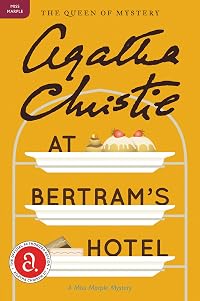
At Bertram's Hotel the intrepid Miss Marple, on holiday in London, must solve a deadly mystery at the end of a chain of very violent events.An old-fashioned London hotel is not quite as reputable as it makes out to be....
When Miss Marple comes up from the country for a holiday in London, she finds what she's looking for at Bertram's Hotel: traditional decor, impeccable service, and an unmistakable atmosphere of danger behind the highly-polished veneer.
Yet, not even Miss Marple can foresee show more the violent chain of events set in motion when an eccentric guest makes his way to the airport on the wrong day....
. show less
Tags
Recommendations



















Member Reviews
I grew up with Agatha Christie the way some people grew up with the Bible; she was a constant presence in our house. Being a contrary child, that means I'd read everything except Christie. Mild guilt about this while I was in my 20's had me picking up the Miss Marple short stories (minimal commitment, you see).
I gotta say, while I could understand the attraction, I didn't understand the devotion. Miss Marple was smart and the mysteries were great, but the abuse of village parallels was too much. Towards the end, I was just yelling "just say what you mean you old bat!"
Which is why it's now very many years later and, with few exceptions, I still haven't read most of Christie's work, even though I've been slowly accumulating them. When show more my current booklikes-opoly square required a book set between 1945 and 1965, At Bertram's Hotel was just about the only book I had that fit the bill.
So, here I am, finally reading my first full-length Miss Marple. I'm happy to report only one village parallel! And Miss Marple does more than just sit on a bench and knit; she's actively eavesdropping and inventing mishaps to get closer to people who are up to no good. She felt like an active participant in the mystery, even if she wasn't really sleuthing and had no idea about what exactly was going on until the end.
But the book was generally a bit odd. At 192 pages I should have had it read in a few hours; instead I kept falling asleep every time I picked it up so that it took me 3 days instead. It wasn't boring; Christie is a master at pulling you into whatever setting she's cooked up and I quite enjoyed Bertram's Hotel, but the momentum was very slow to build and ultimately, what should have been a tidal wave of a story was more of a small surge: I felt the pull, but nothing so strong as to suck me in completely.
I also got the impression that Christie was rather fed up with Miss Marple when she wrote this, or maybe just feeling wistful herself about the way the world seemed to be changing rapidly around her. I kept imagining Christie as Miss Marple; longing for a time when England, and by extension, her mysteries, were more elegant, well-mannered, and gracious. Even though there would be at least 10 more books after this one, At Bertram's Hotel feels like a nostalgic look back by an author who's feeling her age.
So, not her best, but I'm betting it's nowhere near her worst; definitely more likeable than reading the Marple short stories back-to-back. show less
I gotta say, while I could understand the attraction, I didn't understand the devotion. Miss Marple was smart and the mysteries were great, but the abuse of village parallels was too much. Towards the end, I was just yelling "just say what you mean you old bat!"
Which is why it's now very many years later and, with few exceptions, I still haven't read most of Christie's work, even though I've been slowly accumulating them. When show more my current booklikes-opoly square required a book set between 1945 and 1965, At Bertram's Hotel was just about the only book I had that fit the bill.
So, here I am, finally reading my first full-length Miss Marple. I'm happy to report only one village parallel! And Miss Marple does more than just sit on a bench and knit; she's actively eavesdropping and inventing mishaps to get closer to people who are up to no good. She felt like an active participant in the mystery, even if she wasn't really sleuthing and had no idea about what exactly was going on until the end.
But the book was generally a bit odd. At 192 pages I should have had it read in a few hours; instead I kept falling asleep every time I picked it up so that it took me 3 days instead. It wasn't boring; Christie is a master at pulling you into whatever setting she's cooked up and I quite enjoyed Bertram's Hotel, but the momentum was very slow to build and ultimately, what should have been a tidal wave of a story was more of a small surge: I felt the pull, but nothing so strong as to suck me in completely.
I also got the impression that Christie was rather fed up with Miss Marple when she wrote this, or maybe just feeling wistful herself about the way the world seemed to be changing rapidly around her. I kept imagining Christie as Miss Marple; longing for a time when England, and by extension, her mysteries, were more elegant, well-mannered, and gracious. Even though there would be at least 10 more books after this one, At Bertram's Hotel feels like a nostalgic look back by an author who's feeling her age.
So, not her best, but I'm betting it's nowhere near her worst; definitely more likeable than reading the Marple short stories back-to-back. show less
'At Bertram's Hotel' was a fascinating Jane Marple mystery. For me, this ranks as one of Agatha Christie's best books.
I've been impressed with how well-written the later Jane Marple books are. I love sharing Jane's thoughts on getting oldand dealing with a rapidly changing world. I also enjoy Jane's insights into how the people around her are adapting to the changing mores of post-war England.
In this book, Jane's nephew has booked her for a two-week stay at Berram's hotel in London, a place she has happy memories of from when she stayed there as a girl, many decades earlier, before the Second World War took its toll on London.
Jane is surprised to find that Bertram's has been restored to its former, quietly expensive, respectability. show more It's as if the hotel has rolled back time and brought its Edwardian ghost back to life.
This, of course, troubles Jane. It is too good to be true, therefore, it is not true. What then is the truth?
I loved how Jane's observations on the pull of nostalgia and the impossibility of recapturing the past not only gave insights into how things look as we grow older, but also enabled Jane to see Bertram's Hotel differently than everyone else. She knows that something isn't right. Figuring out what that something is was the fun part.
I also liked that, while Jane was instrumental in solving the mystery, the heavy lifting was done by a very competent police Inspector who was smart enough to use Jane as his eyes and ears.
The mystery was clever. Although there is a killing, this is much more complicated than a murder mystery. This is a story that touches on the restlessness of the age and the emergence, post-war, of organised criminals carrying out well-planned raids on banks and trains.
The people in the book were engaging and credible. Many of them, like the old Cannon who causes so much havoc when he becomes confused about which day he is supposed to catch a plane on, are the kind of solid upper-middle-class people that have always populated Christie's books and been a part of Jane Marple's life. There are also younger people, still from the same class in some cases, but with very different attitudes and expectations. Finding them all together is whatmakes Bertram's hotel such an interesting puzzle for Jane.
This was a satisfying read: engaging, well-written, plausible but still surprising.
I listened to the audiobook version of 'At Bertram's Hotel' narrated by Stephanie Cole. I thought she was the perfect choice for narrator. Click on the YouTube link below to hear a sample of her work.
https://www.youtube.com/watch?v=nS_oxXq7fpo show less
I've been impressed with how well-written the later Jane Marple books are. I love sharing Jane's thoughts on getting oldand dealing with a rapidly changing world. I also enjoy Jane's insights into how the people around her are adapting to the changing mores of post-war England.
In this book, Jane's nephew has booked her for a two-week stay at Berram's hotel in London, a place she has happy memories of from when she stayed there as a girl, many decades earlier, before the Second World War took its toll on London.
Jane is surprised to find that Bertram's has been restored to its former, quietly expensive, respectability. show more It's as if the hotel has rolled back time and brought its Edwardian ghost back to life.
This, of course, troubles Jane. It is too good to be true, therefore, it is not true. What then is the truth?
I loved how Jane's observations on the pull of nostalgia and the impossibility of recapturing the past not only gave insights into how things look as we grow older, but also enabled Jane to see Bertram's Hotel differently than everyone else. She knows that something isn't right. Figuring out what that something is was the fun part.
I also liked that, while Jane was instrumental in solving the mystery, the heavy lifting was done by a very competent police Inspector who was smart enough to use Jane as his eyes and ears.
The mystery was clever. Although there is a killing, this is much more complicated than a murder mystery. This is a story that touches on the restlessness of the age and the emergence, post-war, of organised criminals carrying out well-planned raids on banks and trains.
The people in the book were engaging and credible. Many of them, like the old Cannon who causes so much havoc when he becomes confused about which day he is supposed to catch a plane on, are the kind of solid upper-middle-class people that have always populated Christie's books and been a part of Jane Marple's life. There are also younger people, still from the same class in some cases, but with very different attitudes and expectations. Finding them all together is whatmakes Bertram's hotel such an interesting puzzle for Jane.
This was a satisfying read: engaging, well-written, plausible but still surprising.
I listened to the audiobook version of 'At Bertram's Hotel' narrated by Stephanie Cole. I thought she was the perfect choice for narrator. Click on the YouTube link below to hear a sample of her work.
https://www.youtube.com/watch?v=nS_oxXq7fpo show less
‘’The children of Lucifer are often beautiful.’’
Hotels are fascinating places. Well, they can be quite a nightmare if you’re careless while booking or if the residents are a bunch of barbarians (which is often the case…) but under normal circumstances, hotels hide hundreds of secrets within their rooms. And the guests just have to mingle with each other. And who knows where all this mingling will lead? In the societies of the past, it would lead to certain, shall we say, questionable situations. And murder. This is the world of Bertram’s Hotel.
Our beloved Miss Marple returns to the hotel of her youth to find that very little has remained the same. The world is supposedly progressing but sometimes, this progress is quite show more dubious. Agatha Christie creates a tangled web of doppelgangers, brave women who love adventure, despairing heiresses, playboys, broken relationships and, obviously, deadly secrets in what I consider to be one of Queen Agatha’s finest moments.
The 2007 ITV adaptation, starring the inimitable Geraldine McEwan is exceptional. Quite different from the original material but beautiful nonetheless. Not to mention that Ed Stoppard plays Ladislaus Malinowski and call me shallow, but hey…
‘’I learned (what I suppose I really knew already) that one can never go back, that one should not ever try to go back - that the essence of life is going forward. Life is really a One Way Street, isn’t it?’’
My reviews can also be found on https://theopinionatedreaderblog.wordpress.com/ show less
Hotels are fascinating places. Well, they can be quite a nightmare if you’re careless while booking or if the residents are a bunch of barbarians (which is often the case…) but under normal circumstances, hotels hide hundreds of secrets within their rooms. And the guests just have to mingle with each other. And who knows where all this mingling will lead? In the societies of the past, it would lead to certain, shall we say, questionable situations. And murder. This is the world of Bertram’s Hotel.
Our beloved Miss Marple returns to the hotel of her youth to find that very little has remained the same. The world is supposedly progressing but sometimes, this progress is quite show more dubious. Agatha Christie creates a tangled web of doppelgangers, brave women who love adventure, despairing heiresses, playboys, broken relationships and, obviously, deadly secrets in what I consider to be one of Queen Agatha’s finest moments.
The 2007 ITV adaptation, starring the inimitable Geraldine McEwan is exceptional. Quite different from the original material but beautiful nonetheless. Not to mention that Ed Stoppard plays Ladislaus Malinowski and call me shallow, but hey…
‘’I learned (what I suppose I really knew already) that one can never go back, that one should not ever try to go back - that the essence of life is going forward. Life is really a One Way Street, isn’t it?’’
My reviews can also be found on https://theopinionatedreaderblog.wordpress.com/ show less
I’ve been working my way through Christie’s Miss Marple mysteries and this is the first one to be an utter disappointment. It was only through sheer stubbornness that I even finished it!
Miss Marple’s nephew pays for her to spend a couple weeks at the titular hotel in London. The place has been kept in the Edwardian style and she wanted to stay there to reminisce about days long gone. However, there’s something shady about the hotel. Or, at least you assume so since this is an Agatha Christie novel, but you wouldn’t know it otherwise. A series of characters comes and goes from the place: a brash and somewhat sinister race car driver, a young woman and her guardians, a clergyman. There's an out of left field scene at the police show more station where readers are told about a series of high profile robberies being investigated (gee, I wonder if it's related to the hotel?) But it's just a series of conversations - the murder doesn’t even occur until more than 2/3 of the way through the book! To make matters worse, Miss Marple doesn’t “investigate” – a police detective solves the crime, with only one observation from her.
Perhaps the worst thing that can be said about a mystery book can be said about this one: it was boring. Had this been the first novel of Christie’s that I read, I probably would not have read any more. Unless you are a die-hard completist – skip this one. show less
Miss Marple’s nephew pays for her to spend a couple weeks at the titular hotel in London. The place has been kept in the Edwardian style and she wanted to stay there to reminisce about days long gone. However, there’s something shady about the hotel. Or, at least you assume so since this is an Agatha Christie novel, but you wouldn’t know it otherwise. A series of characters comes and goes from the place: a brash and somewhat sinister race car driver, a young woman and her guardians, a clergyman. There's an out of left field scene at the police show more station where readers are told about a series of high profile robberies being investigated (gee, I wonder if it's related to the hotel?) But it's just a series of conversations - the murder doesn’t even occur until more than 2/3 of the way through the book! To make matters worse, Miss Marple doesn’t “investigate” – a police detective solves the crime, with only one observation from her.
Perhaps the worst thing that can be said about a mystery book can be said about this one: it was boring. Had this been the first novel of Christie’s that I read, I probably would not have read any more. Unless you are a die-hard completist – skip this one. show less
Revisiting this Miss Marple mystery on audio was an utter delight. Stephanie Cole does a fantastic job of narrating and crafts distinct voices for each character, which makes listening highly enjoyable. There is so much of this novel I like as Miss Marple spends time in a London hotel that perfectly provides all the comforts of the Edwardian period in the post-WWII era but all is not as it seems. It's really only the very ending that feels a bit of a letdown and gets a bit... judgy that keeps me from rating it higher. That said, I did add the audiobook to my list of favourites that I'd relisten to so take that quibble accordingly.
Kind of strange. Not a typical Marple vibe. Miss Marple goes on a vacation in London and stays at a retro Edwardian hotel, that is almost like Disneyland in it's calculated quaintness. Of course, now that Miss Marple is there, stuff starts to happen. Caution with regard to hanging on to the past, and having a distrust of the comfort of nostalgia are principal themes, and these are the most interesting aspects of the novel for me. The first half of the novel spends a great deal of time with the residents of the hotel, as in the style of the 1932 movie "Grand Hotel" or Alex Hailey’s "Hotel" which was published the same year as this novel. Some elements do pan out in the second half, which is the actual crime part of the novel, but not show more as much as one would think. Miss Marple starts out as a strong presence in the first half, but then drifts into her supporting role as she often does in her respective novels.
The end is almost pulpish. There’s a Moriarty type criminal mastermind. Surprisingly big setup for a Marple novel, but there it is. Miss Marple's growing unease as a guest in the hotel adds an effectively unsetttling atmosphere to the proceedings.
At the middle section things get a bit boggy with all that’s going on, but it concludes in an interesting fashion. Ms Christie is prone to some heavy handed religious moralizing at the end, which seems a little preposterous in this almost Alistair MacLean flavored tale. She worries a great deal about the virtues of young ladies in 1965.
Worth a read for it's offbeat energy. show less
The end is almost pulpish. There’s a Moriarty type criminal mastermind. Surprisingly big setup for a Marple novel, but there it is. Miss Marple's growing unease as a guest in the hotel adds an effectively unsetttling atmosphere to the proceedings.
At the middle section things get a bit boggy with all that’s going on, but it concludes in an interesting fashion. Ms Christie is prone to some heavy handed religious moralizing at the end, which seems a little preposterous in this almost Alistair MacLean flavored tale. She worries a great deal about the virtues of young ladies in 1965.
Worth a read for it's offbeat energy. show less
I first read this one way back in junior high school (in the *cough* 1970s), and I remember being quite puzzled about several aspects of it. I didn't really understand how hotels worked, for one thing, or what it meant to seem Edwardian, or what trains carried that made them so tempting to robbers (the Irish Mail Express? Why would thieves want to steal other people's mail?). And I didn't really appreciate Miss Marple, at least not the way I do now as I near the end of my chronological reading of the series. I'll be sorry to see the old pussy go. I've enjoyed getting to know her again and better. I can't help wishing that Christie had written more Marples and fewer Poirots, but such is life.
Members
- Recently Added By
Lists

Crime and Mysteries to Read
746 works; 31 members

British Mystery
469 works; 14 members

Anthony Boucher's Best Crime Fiction of the Year
115 works; 5 members

Best Books Set in London
157 works; 42 members

Books I've Read More Than Once
602 works; 49 members

Agatha Christie Miss Marple
12 works; 1 member

Books About Murder
313 works; 7 members

Books Read in 2012 (Numbered)
168 works; 6 members

Detective Stories
343 works; 5 members

Female Protagonist
1,056 works; 57 members

Favorite Books from the 1960s
34 works; 3 members

Boarding House and Hotel Fiction
73 works; 25 members

TBR
77 works; 1 member

Books Read in 2023
5,638 works; 147 members

Books Read in 2022
5,226 works; 115 members

Books Read in 2021
5,361 works; 114 members

Books Set in London
49 works; 3 members

Books Read in 2010
631 works; 11 members

Books Read in 2017
4,249 works; 130 members
Fiction with Men's Given Names in the Title
302 works; 11 members

1960s
281 works; 16 members
Comfort Reads
221 works; 41 members

Books Read in 2016
4,666 works; 199 members
Houses and Buildings as Characters in Fiction
182 works; 29 members
Books Read in 2015
3,299 works; 129 members

Books Read in 2012
816 works; 34 members

Agatha Christie Chronology
93 works; 1 member
Author Information

2,194+ Works 442,221 Members
One of the most successful and beloved writer of mystery stories, Agatha Mary Clarissa Christie was born in 1890 in Torquay, County Devon, England. She wrote her first novel, The Mysterious Affair at Styles, in 1920, launching a literary career that spanned decades. In her lifetime, she authored 79 crime novels and a short story collection, 19 show more plays, and six novels written under the name of Mary Westmacott. Her books have sold over a billion copies in the English language with another billion in 44 foreign languages. Some of her most famous titles include Murder on the Orient Express, Mystery of the Blue Train, And Then There Were None, 13 at Dinner and The Sittaford Mystery. Noted for clever and surprising twists of plot, many of Christie's mysteries feature two unconventional fictional detectives named Hercule Poirot and Miss Jane Marple. Poirot, in particular, plays the hero of many of her works, including the classic, The Murder of Roger Ackroyd (1926), and Curtain (1975), one of her last works in which the famed detective dies. Over the years, her travels took her to the Middle East where she met noted English archaeologist Sir Max Mallowan. They married in 1930. Christie accompanied Mallowan on annual expeditions to Iraq and Syria, which served as material for Murder in Mesopotamia (1930), Death on the Nile (1937), and Appointment with Death (1938). Christie's credits also include the plays, The Mousetrap and Witness for the Prosecution (1953; film 1957). Christie received the New York Drama Critics' Circle Award for 1954-1955 for Witness. She was also named Dame Commander of the Order of the British Empire in 1971. Christie died in 1976. (Bowker Author Biography) show less
Some Editions
Awards and Honors
Series

Belongs to Publisher Series
Nova terra (59)
Weltbild SammlerEditionen (4827)
Öölane (28)
Il giallo Mondadori (935)
SaPo (83)
Fontana (3487)
I classici del giallo [Mondadori] (989, 377)
Work Relationships
Is contained in
Agatha Christie Crime Collection: At Bertram's Hotel, The Hound of Death, Partners in Crime by Agatha Christie
Seven Deadly Sins: The ABC Murders / A Murder Is Announced / Sparkling Cyanide / Evil Under the Sun / At Bertram's Hotel / Endess Night / Five Little Pigs by Agatha Christie
And Then There Were None | At Bertram’s Hotel | The Murder of Roger Ackroyd | Murder on the Orient Express by Agatha Christie
The Best of Miss Marple: A Caribbean Mystery, Sleeping Murder, 4:50 From Paddington, At Bertram's Hotel by Agatha Christie
Common Knowledge
- Canonical title
- At Bertram's Hotel
- Original title
- At Bertram's Hotel
- Original publication date
- 1965-11-15
- People/Characters
- Jane Marple; Bess Sedgwick (Lady); Elvira Blake; Canon Pennyfather; Derek Luscombe (Colonel); Mr Humfries (show all 12); Michael Gorman; Selina Hazy (Lady); Miss Gorringe; Ladislaus Malinowski; Chief Inspector Fred Davy; Mr. Robinson
- Important places
- London, England, UK; Bertram's Hotel, London, England, UK
- Related movies
- At Bertram's Hotel (1987 | IMDb); Marple: At Bertram's Hotel (2007 | IMDb)
- Dedication
- For Harry Smith
because I appreciate the scientific way
he reads my books - First words
- In the heart of the West End, there are many quiet pockets, unknown to almost all but taxi drivers who traverse them with expert knowledge, and arrive triumphantly thereby at Park Lane, Berkeley Square or South Audley Street.
- Last words
- (Click to show. Warning: May contain spoilers.)'May God have mercy on her soul,' she said.
- Blurbers*
- Hotel Bertram is deftig, rustig, onopvallend en erg duur - een stukje Londen dat de laatste zestig jaar niets veranderd lijkt te zijn. De meeste hotelgasten zijn daar alleen maar blij om, maar Miss Marple, die een weekje in het hotel logeert, vindt het een beetje verdacht. En natuurlijk blijkt ze gelijk te hebben.
- Original language
- English
*Some information comes from Common Knowledge in other languages. Click "Edit" for more information.
Classifications
Statistics
- Members
- 4,439
- Popularity
- 3,358
- Reviews
- 95
- Rating
- (3.53)
- Languages
- 26 — Bulgarian, Catalan, Chinese, Czech, Danish, Dutch, English, Estonian, Finnish, French, German, Greek, Hungarian, Indonesian, Italian, Japanese, Norwegian (Bokmål), Norwegian, Polish, Portuguese, Romanian, Serbian, Croatian, Spanish, Swedish, Turkish
- Media
- Paper, Audiobook, Ebook
- ISBNs
- 163
- UPCs
- 2
- ASINs
- 90