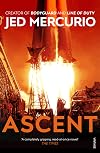
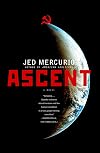
Ascent
by Jed Mercurio
On This Page
Description
Fascinated with the secrets still surrounding the Soviet Union's race against the Americans to put a man on the moon, Jed Mercurio proposes a compelling scenario: What if the Americans weren't the first? And with its inscrutable but intriguing hero, Yefgeni Yeremin, a brilliant Soviet cosmonaut, Ascent allows us to imagine what that terrifying journey might have been like.Yeremin, a Soviet MiG pilot, rises from the privation of a Stalingrad orphanage to the heights of the cosmonaut corps. show more During the Korean War, as a member of an elite squadron, he shoots down the most American fighter jets-a feat that should make him a national hero, but because the Soviets' involvement in the war is secret, Yeremin's victories go unreported. When he is recalled from obscurity to join the race to the moon, he realizes it is his chance for immortality. In hypnotic, deceptively spare prose, Mercurio tells a haunting tale that questions the power of ideology and the nature of fate. show lessTags
Recommendations













Member Reviews
For a book written in a fairly flat, emotionless voice the story in Ascent is incredibly moving and intensely rendered. The character's motives and feelings are rarely mentioned, but it is remarkable how vivid the narrative is and how immersed the reader becomes.
A fictional account of a Soviet fighter pilot who forges a legendary reputation in the Korean War only to lose it all in the dying days of the war. His previous prestige saves him from the Siberian labour camps, but he is exiled to a remote base in the Arctic circle for ten years. One more legendary exploit rescues him from this obscurity and secures his ultimate ambition – a spot on the team for the Soviet space program.
Since finishing the book a few weeks ago I keep finding show more myself returning to its themes and images; the ending still haunts me and will stay lodged in my brain for a long long time. show less
A fictional account of a Soviet fighter pilot who forges a legendary reputation in the Korean War only to lose it all in the dying days of the war. His previous prestige saves him from the Siberian labour camps, but he is exiled to a remote base in the Arctic circle for ten years. One more legendary exploit rescues him from this obscurity and secures his ultimate ambition – a spot on the team for the Soviet space program.
Since finishing the book a few weeks ago I keep finding show more myself returning to its themes and images; the ending still haunts me and will stay lodged in my brain for a long long time. show less
I enjoyed this books immensely even though I am not at all interested in descriptions of war and fighting. But this one is written in a way that makes reading pure pleasure. Our hero Yefgenii becomes a legend in the Korean war by shooting down more American jets than anybody else. But Russia's involvement in the war must be kept secret, so Yefgenii is exiled to a remote Arctic base. In 1964, he gets recruited into the space programme.... It is an intriguing story, yes, but what makes this book so interesting is the way the author uses language and grammar. Short sentences, fast pace -and the most fascinating bit is the last third of the book, written completely in the present tense, letting you be part of the actions as they happen. The show more way the author tells the story makes you feel as if you are in a race to get to the end, every sentence drives you to the next one, every end of a chapter throws you into the beginning of the following one. I loved it! show less
I personally file this book under the category of "how did this get published". The premise is a great idea, what if the Soviets beat the Americans in the race to put a man on the moon? A simple enough idea, but one that I feel that Mercurio missed the target in delivering.
We are presented with Yefgeni Yeremin, an orphan of Stalingrad who manages (through deeds and action) to get into the Soviet air force. Sent to Korea along with other pilots to secretly fight the Americans, Yefgeni becomes the greatest Ace of the war, but after the war he is relegated to obscurity and exile for disobeying the State. But in the 1960's he is pulled from obscurity (sort of) to be a cosmonaut and through luck and stubbornness is selected to be the man to show more be the first to land on the moon.
A simple plot with a lot of possibilities, but one that totally falls short. Yefgeni is an obdurate, self-centered, self-absorbed man who cares nothing about anybody else and only on perfecting himself. This man marries a woman who was widowed during the Korean War, and has two children with her, but throughout the narrative she is only ever referred to as "the Widow" and his children as "the boy" and "the girl". Really? There was no development to Yefgeni's character to the point that when events at the climax of the story unfold, I knew what actions he would take (the wrong ones) because the story was entirely about his achievement, and not about how his actions or decisions would affect others (those that loved him, the State, etc.).
The book is moderately good on the technical details of combat flying and space-flight, but is lacking considerably in character development. By the time Yefgeni was racking up his amazing (I thought absurdly unrealistic) kill totals as a fighter pilot in Korea I had lost interest in what happened to him. If you want a decent technical read about what might have been in the Soviet space program, then give Ascent a try. If you are looking for a compelling character to be engaged with, complete with growth and development, then steer clear. show less
We are presented with Yefgeni Yeremin, an orphan of Stalingrad who manages (through deeds and action) to get into the Soviet air force. Sent to Korea along with other pilots to secretly fight the Americans, Yefgeni becomes the greatest Ace of the war, but after the war he is relegated to obscurity and exile for disobeying the State. But in the 1960's he is pulled from obscurity (sort of) to be a cosmonaut and through luck and stubbornness is selected to be the man to show more be the first to land on the moon.
A simple plot with a lot of possibilities, but one that totally falls short. Yefgeni is an obdurate, self-centered, self-absorbed man who cares nothing about anybody else and only on perfecting himself. This man marries a woman who was widowed during the Korean War, and has two children with her, but throughout the narrative she is only ever referred to as "the Widow" and his children as "the boy" and "the girl". Really? There was no development to Yefgeni's character to the point that when events at the climax of the story unfold, I knew what actions he would take (the wrong ones) because the story was entirely about his achievement, and not about how his actions or decisions would affect others (those that loved him, the State, etc.).
The book is moderately good on the technical details of combat flying and space-flight, but is lacking considerably in character development. By the time Yefgeni was racking up his amazing (I thought absurdly unrealistic) kill totals as a fighter pilot in Korea I had lost interest in what happened to him. If you want a decent technical read about what might have been in the Soviet space program, then give Ascent a try. If you are looking for a compelling character to be engaged with, complete with growth and development, then steer clear. show less
What if the Russians had got a man on the moon first? This novel follows the life of that cosmonaut from a brutal childhood, through becoming a fighter ace in the Korean War, to arctic exile and finally joining the space race. Yefgenii is single-minded from the outset and strives to escape the orphanage and make a name for himself. The facts that his exploits in the Korean war can never be acknowledged, and when he finally gets into Star City, he has to be the unnamed test pilot of the lunar orbiter and lander, mean he can never gain the recognition that his skills deserve.
Written in a thoughtful, ever so slightly detached style, this short novel is a joy, and for me had a real Russian feel (although I have no experience to back that show more up!). Mercurio is not afraid to use technical jargon without explanation, but that makes it more real, and totally without unnecessary padding.
I loved this book. show less
Written in a thoughtful, ever so slightly detached style, this short novel is a joy, and for me had a real Russian feel (although I have no experience to back that show more up!). Mercurio is not afraid to use technical jargon without explanation, but that makes it more real, and totally without unnecessary padding.
I loved this book. show less
Mercurio writes in a simple, unshowy style that puts plot to the fore and always manages to keep the reader involved. That said, the first half of this novel is much more enjoyable than the second, surprisingly so given that the latter is about a Russian cosmonaut's astonishing ascent to the surface of the moon while the first half recounts his more worldly exploits as an ace fighter pilot during the Korean War. The problem with the moon story is that it is just too difficult to believe. I can go with the conspiracists who maintain that the Russians got there before the US, but for it to have happened in quite such adverse circumstances takes an altogether bigger leap of faith. The fighter pilot stuff, though, is good old-fashioned show more boys-own entertainment. And somehow it makes you yearn for a not so distant past. Advances in technology meant the close air combat in the Korean War was never replicated in quite the same way (though Top Gun fans might have something to say about that). So a gripping read, but stretches credibility just a little too far. show less
NOTE: This review originally appeared on goodreads, so the reference to "reviews below" is to goodreads users, not LibraryThing users:
Judging from many of the reviews below, other people clearly got something out of this book, but it didn't really work for me - even though I felt that I should've liked it from the descriptions of what it was about.
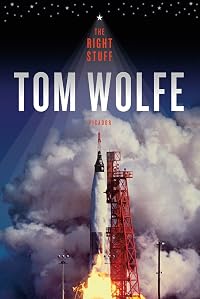
In some places it has been described as a kind of "Right Stuff" done from the Soviet point of view, but if you are expecting Tom Wolfe (I wasn't) you will definitely be disappointed - stylistically this is very different. Where it is similar to "The Right Stuff" is in its subject matter (pilots and the space race) and its close referencing of real events (particularly in the Korean War show more section) and real people (lots of US astronauts are name-checked, almost obsessively so - as many fought in the Korean War). This gave me a strong sense that I was reading faction rather than mere fiction - but for me that aspect became increasingly irritating because the more the author did it, the more I wanted to know how much of the story was in some way based on real events. The author refuses to say though and it's not that easy to find out about, whereas in "The Right Stuff" most of the key events described are well known matters of public record.
I could've lived with this if the novel had worked better for me as fiction but I didn't really care what happened to the central character, nor did I find him unsympathetic yet compelling. As a result, the main thing keeping my interest in the latter stages was how far this novel was based on fact - and to the extent that it wasn't, how plausible it was as a counterfactual. To avoid spoilers, let's just the say that the last part appears to have much less basis in fact that the earlier parts and I had guessed how it was all going to finish up, so for me there was a lack of suspense too.
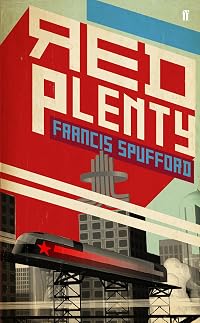
If you are in interested in the Soviet Union during the period covered the novel, try Francis Spufford's "Red Plenty" - which for me was a much more successful fusion of fact and fiction. For more on that and a more detailed review of Ascent, see: http://www.paulsamael.com/blog/faction-or-fiction show less
Judging from many of the reviews below, other people clearly got something out of this book, but it didn't really work for me - even though I felt that I should've liked it from the descriptions of what it was about.
In some places it has been described as a kind of "Right Stuff" done from the Soviet point of view, but if you are expecting Tom Wolfe (I wasn't) you will definitely be disappointed - stylistically this is very different. Where it is similar to "The Right Stuff" is in its subject matter (pilots and the space race) and its close referencing of real events (particularly in the Korean War show more section) and real people (lots of US astronauts are name-checked, almost obsessively so - as many fought in the Korean War). This gave me a strong sense that I was reading faction rather than mere fiction - but for me that aspect became increasingly irritating because the more the author did it, the more I wanted to know how much of the story was in some way based on real events. The author refuses to say though and it's not that easy to find out about, whereas in "The Right Stuff" most of the key events described are well known matters of public record.
I could've lived with this if the novel had worked better for me as fiction but I didn't really care what happened to the central character, nor did I find him unsympathetic yet compelling. As a result, the main thing keeping my interest in the latter stages was how far this novel was based on fact - and to the extent that it wasn't, how plausible it was as a counterfactual. To avoid spoilers, let's just the say that the last part appears to have much less basis in fact that the earlier parts and I had guessed how it was all going to finish up, so for me there was a lack of suspense too.
If you are in interested in the Soviet Union during the period covered the novel, try Francis Spufford's "Red Plenty" - which for me was a much more successful fusion of fact and fiction. For more on that and a more detailed review of Ascent, see: http://www.paulsamael.com/blog/faction-or-fiction show less
Jed Mercurio is an odd guy. Now 40, he trained as a doctor in Britain, and worked as a junior doctor for a few years, but eventually gave it up to pursue writing as a parallel career. He came to fame with Cardiac Arrest - a brutally honest depiction of what life as a junior doctor could be like in Britain's NHS, which was considered dark, depressing and dangerous by many; and lauded as the only fictional description of what that life was like by Britain's junior doctors. When I was a student, he was held in high regard by senior students and junior doctors as someone who was prepared to tell things as they actually were, and not the sanitised Casualty version usually seen on television.
He then went on to write Bodies, a novel from a few show more years back that covered similar ground as Cardiac Arrest, describing a brutal first year in the wards of a fictional junior doctor who seemed to have more than the whiff of the autobiographical about him. That in turn was televised, with the setting changed slightly to an obstetrics ward, and received a fairly decent reception, though again, much was made of how bleak its world view was.
Mercurio's depiction of life as a junior doctor IS honest, it is realistic, and it is scary; but it only ever portrays the dark side of everything. Most junior docs get through life without directly experiencing all that Mercurio describes, though most will know someone that most of the things have happened to. I don't know if Mercurio's own junior doctor years were unusually harsh, or whether he has always chosen simply to amalgamate the worst of everything he ever heard of, but his fictionalised experiences certainly do not represent the sum of most people's.
Anyway, on that background, I approached Ascent, Mercurio's new book, with slightly mixed feelings. This is the first time he's written about something other than medicine, and I was curious to see how he handled it. Ascent is the fictionalised tale of Yefgenii Yeremin, a Russian boy orphaned in World War II, who fights his way from a state orphanage into flight school, becomes a pilot, fights American jets under Korean colours during the Korean War, becomes a Hero of the State, fucks it up, gets exiled to the Arctic, where he is involved in shooting down an American U2, and eventually ends up as a cosmonaut-trainee in the Russian space programme. The story tracks Yeremin through all of that, culminating in an account of the covert Soviet attempt to beat the US to the moon. The novel is written in an odd style; heavy in technical detail and descriptions of dogfights, and deliberately sparse in the emotional context that surrounds it. It comes over as a quasi-documentary style piece of work, and I presume that is the intention...but I don't think it ever quite works. Mercurio's apparent intent is to paint Yeremin in such a way that we understand why he makes the choices he does as he leads to his career-defining moment, and the sacrifices he is prepared to make along the way, building to what I assume is meant to be a stirring emotional climax as Yeremin's life reaches its zenith. For me though, that emotional climax is undercut by the overly spare human side to the characters in the book. Yeremin's wife is never named, and is described throughout simply as 'the widow' (having been widowed before he married her); and his two children are never anything more than 'the girl' and 'the boy'. Other characters get slightly more sketched in, and we are invited to see how Yeremin engages with them emotionally, but it distinctly feels like a writer telling us we should feel emotion rather than showing. The vital human connection is never quite there.
There are aspects of the book I definitely did like; for all that it adds to the detached feel of it, some of the writing about the technical and historical facets is stimulating (interestingly Mercurio served with the RAF Student Corps as a medical student, and it definitely seems that he is a writer who sticks to the adage about writing what you know). In particular, the Cold War aspects of the Korean War were something I hadn't really appreciated before - that Russian jet pilots in Korean planes engaged with American pilots in the first aerial war of the jet age, a battle that history has only recently begun to reacknowledge on both sides. The Soviet space programme is similarly well technically described, and it's not too difficult to imagine that something much like Yeremin's career and life could so easily have happened, and that the Soviets may not have been as far away as reaching the moon as we traditionally think. Mercurio can't resist historical name-dropping though, and the book has pretty pointless cameos in the earlier sections from the likes of Buzz Aldrin, Neil Armstrong, Gus Grissom and other pilots who would later go on to join the US space programme.
Overall, Ascent is a mis-fire, albeit an interesting one. Mercurio remains a writer who seems to be overly focussed on the technical and the bleak, and who fails to seem to be able to engage in a meaningful way with his characters on a more basically human level. show less
He then went on to write Bodies, a novel from a few show more years back that covered similar ground as Cardiac Arrest, describing a brutal first year in the wards of a fictional junior doctor who seemed to have more than the whiff of the autobiographical about him. That in turn was televised, with the setting changed slightly to an obstetrics ward, and received a fairly decent reception, though again, much was made of how bleak its world view was.
Mercurio's depiction of life as a junior doctor IS honest, it is realistic, and it is scary; but it only ever portrays the dark side of everything. Most junior docs get through life without directly experiencing all that Mercurio describes, though most will know someone that most of the things have happened to. I don't know if Mercurio's own junior doctor years were unusually harsh, or whether he has always chosen simply to amalgamate the worst of everything he ever heard of, but his fictionalised experiences certainly do not represent the sum of most people's.
Anyway, on that background, I approached Ascent, Mercurio's new book, with slightly mixed feelings. This is the first time he's written about something other than medicine, and I was curious to see how he handled it. Ascent is the fictionalised tale of Yefgenii Yeremin, a Russian boy orphaned in World War II, who fights his way from a state orphanage into flight school, becomes a pilot, fights American jets under Korean colours during the Korean War, becomes a Hero of the State, fucks it up, gets exiled to the Arctic, where he is involved in shooting down an American U2, and eventually ends up as a cosmonaut-trainee in the Russian space programme. The story tracks Yeremin through all of that, culminating in an account of the covert Soviet attempt to beat the US to the moon. The novel is written in an odd style; heavy in technical detail and descriptions of dogfights, and deliberately sparse in the emotional context that surrounds it. It comes over as a quasi-documentary style piece of work, and I presume that is the intention...but I don't think it ever quite works. Mercurio's apparent intent is to paint Yeremin in such a way that we understand why he makes the choices he does as he leads to his career-defining moment, and the sacrifices he is prepared to make along the way, building to what I assume is meant to be a stirring emotional climax as Yeremin's life reaches its zenith. For me though, that emotional climax is undercut by the overly spare human side to the characters in the book. Yeremin's wife is never named, and is described throughout simply as 'the widow' (having been widowed before he married her); and his two children are never anything more than 'the girl' and 'the boy'. Other characters get slightly more sketched in, and we are invited to see how Yeremin engages with them emotionally, but it distinctly feels like a writer telling us we should feel emotion rather than showing. The vital human connection is never quite there.
There are aspects of the book I definitely did like; for all that it adds to the detached feel of it, some of the writing about the technical and historical facets is stimulating (interestingly Mercurio served with the RAF Student Corps as a medical student, and it definitely seems that he is a writer who sticks to the adage about writing what you know). In particular, the Cold War aspects of the Korean War were something I hadn't really appreciated before - that Russian jet pilots in Korean planes engaged with American pilots in the first aerial war of the jet age, a battle that history has only recently begun to reacknowledge on both sides. The Soviet space programme is similarly well technically described, and it's not too difficult to imagine that something much like Yeremin's career and life could so easily have happened, and that the Soviets may not have been as far away as reaching the moon as we traditionally think. Mercurio can't resist historical name-dropping though, and the book has pretty pointless cameos in the earlier sections from the likes of Buzz Aldrin, Neil Armstrong, Gus Grissom and other pilots who would later go on to join the US space programme.
Overall, Ascent is a mis-fire, albeit an interesting one. Mercurio remains a writer who seems to be overly focussed on the technical and the bleak, and who fails to seem to be able to engage in a meaningful way with his characters on a more basically human level. show less
Members
- Recently Added By
Lists

The Guardian's 1000 Novels Everyone Must Read
1,005 works; 547 members
Author Information

15 Works 494 Members
Awards and Honors
Common Knowledge
- Original title
- Ascent
- Important events
- Korean War; Yuri Gagarin becomes first human in space. April 12, 1961
Classifications
- Genres
- Fiction and Literature, General Fiction, Science Fiction, Graphic Novels & Comics, Historical Fiction
- DDC/MDS
- 823.914 — Literature & rhetoric English & Old English literatures English fiction 1900- 1901-1999 1945-1999
- LCC
- PR6113 .E73 .A83 — Language and Literature English English Literature 2001-
- BISAC
Statistics
- Members
- 161
- Popularity
- 203,330
- Reviews
- 12
- Rating
- (3.49)
- Languages
- English, Italian
- Media
- Paper, Audiobook, Ebook
- ISBNs
- 15
- ASINs
- 3