
Mike Stocks
Author of White Man Falling
About the Author
Series
Works by Mike Stocks
The Usborne Book of Classic Horror: The Stories of Dracula, Frankenstein, Jekyll & Hyde (Paperback Classics) (2004) — Contributor — 19 copies, 1 review
Victorian Harrow Stories 1 copy
Associated Works
Tagged
Common Knowledge
- Gender
- male
Members
Reviews
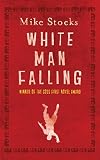
I bought this book because I'd had some minor dealings with the author, via his editorship of the excellent poetry magazine 'Anon'. I wasn't at all sure it would be my cup of tea, though, and it did take me several attempts to get into it at first. But when I finally sat down to give it a fair trial and got through the first few pages, I soon began to see what a very good book it really is. It's been described by Sarah Dunant as a 'serious comic novel' and that sums it up nicely. It's show more serious in that it reads as a highly authentic insight into life in modern India, and deals with issues of faith and mysticism and the power of the unsaid. It's comic in that it offers dry, often dark humour from beginning to end, whether in relation to the absurdities of domestic life or the equally absurd machinations of the political world. For anyone who's interested in a poignant, thought-provoking and entertaining book, this one comes highly recommended. show less
The Usborne Book of Classic Horror: The Stories of Dracula, Frankenstein, Jekyll & Hyde by John Grant
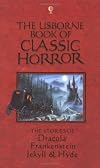
Some changes were made to the three classic horror stories Dracula, Frankenstein and Jekyll&Hyde for "modern readers". I didn't agree with every change, but all in all they didn't affect the underlying story.
**spoilers**
For example at the end of Frankenstein the monster decides to live in the Arctic however long this may be, instead of to killing himself. This removes the finality of the original story and leaves a somewhat open ending. I'd like to think Frankenstein's creation is still show more somewhere out there.
Another change was a clearer description how Frankenstein creates the monster. In this retelling he uses part of his thigh instead of quote "The dissecting room and the slaughter-house furnished many of my materials".
As far as I can remember (it's been a while since I bought the book) this collections was written for children, so this might explain the afore mentioned change. Furtheremore in this version Frankenstein clearly uses electricity to bring the monster to life, like in most adaptions of the novel I've seen. show less
**spoilers**
For example at the end of Frankenstein the monster decides to live in the Arctic however long this may be, instead of to killing himself. This removes the finality of the original story and leaves a somewhat open ending. I'd like to think Frankenstein's creation is still show more somewhere out there.
Another change was a clearer description how Frankenstein creates the monster. In this retelling he uses part of his thigh instead of quote "The dissecting room and the slaughter-house furnished many of my materials".
As far as I can remember (it's been a while since I bought the book) this collections was written for children, so this might explain the afore mentioned change. Furtheremore in this version Frankenstein clearly uses electricity to bring the monster to life, like in most adaptions of the novel I've seen. show less
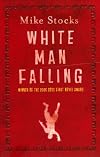
This is an unusual book about a relatively poor family in a small town in India. It has a charm which keeps you reading as the main character eventually manages to take on the status of a minor god and thus secure the well-being of his wife and children.
An odd story of an indian man, retired from the police force due to a stroke, who is nearly flattened by a white man falling from the sky. This sets off a chain of events as a powerful man in town, mistaking Swami as a threat, threatens him. As Swami has 6 daughters with no means of a dowry, this disruption to his life is most distressing to his wife. She is negotiating a marriage for her eldest Daughter to a middle class family and is thrawted by her husband's misfortunes.
A readable story, show more it shows a man caught in a storm of events he cannot control and withdrawing from the the world after a near death experience. The love of his wife and children who try to support him as he becomes extremely popular in town show a tighknit family unit even if they do not understand Swami. A comedy of errors that has to be read to the end, show less
A readable story, show more it shows a man caught in a storm of events he cannot control and withdrawing from the the world after a near death experience. The love of his wife and children who try to support him as he becomes extremely popular in town show a tighknit family unit even if they do not understand Swami. A comedy of errors that has to be read to the end, show less
Lists
Awards


You May Also Like


Associated Authors
Statistics
- Works
- 9
- Also by
- 1
- Members
- 244
- Popularity
- #93,238
- Rating
- 3.9
- Reviews
- 8
- ISBNs
- 35
- Languages
- 2
