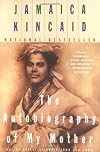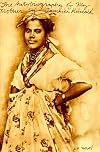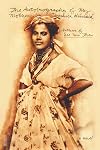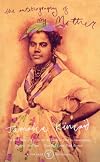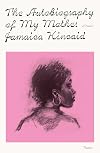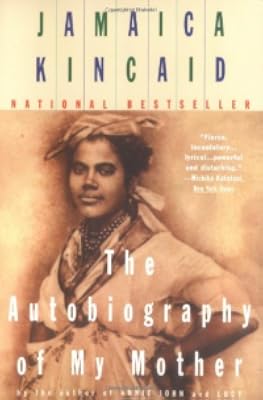
The Autobiography of My Mother
by Jamaica Kincaid
On This Page
Description
From the recipient of the 2010 Clifton Fadiman Medal comes an unforgettable novel of one woman's courageous coming of age. Powerful, disturbing, and stirring, Jamaica Kincaid's novel is the deeply charged story of a woman's life on the island of Dominica. Xuela Claudette Richardson, the daughter of a Carib mother and a half-Scottish, half-African father, loses her mother to death the moment she is born and must find her way on her own. Jamaica Kincaid takes us from Xuela's childhood in a show more home where she can hear the song of the sea to the tin-roofed room where she lives as a schoolgirl in the house of Jack La Batte, who becomes her first lover. Xuela develops a passion for the stevedore Roland, who steals bolts of Irish linen for her from the ships he unloads, but she eventually marries an English doctor, Philip Bailey. Xuela's intensely physical world is redolent of overripe fruit, gentian violet, sulfur, and rain on the road. It seethes with her sorrow, her deep sympathy for those who share her history, her fear of her father, and her desperate loneliness. But underlying all is 'the black room of the world' that is Xuela's barrenness and life without a mother. The Autobiography of My Mother is a story of love, fear, loss, and the forging of character, an account of one woman's inexorable evolution, evoked in startling and magical poetry. show lessTags
Recommendations






Member Reviews
This book is both stunning and exceptional. A woman describes the people and events of her very much examined life with a stark absence not just of sentimentality, but as if even the notion of sentimentality did not exist. She depicts only one person she felt love for, a sensual, passionate love, and none with whom a shared understanding of the world creates a bond that supports trust and affection. The very sensuality with which she accepts herself and the colors, smells, and sounds that saturate her world make her sympathetic, but do not make me want to fully accept that world as one I could comprehend more than partially.
"My impulse is to the good, my good is to serve myself. I am not a people, I am not a nation. I only wish from time to time to make my actions be the actions of a people, to make my actions be the actions of a nation."
I started this one on my vacation to Costa Rica and I have been thinking about it ever since. The Autobiography of My Mother by Jamaica Kinkaid is haunting, introspective and thought provoking. The writing cuts deep to the core. As a reader you are challenged to contemplate on the writer's innermost thoughts and process the historical context that has contributed to some of her beliefs and shapes this story.
Kinkaid's portrayal of Xuela, the protagonist, as flawed but not devoid of deep introspection and questioning was my show more favorite aspect of this character study. It starts off as a story about grief. Xuela's mother dies during childbirth so she never gets to meet or bind with her. However, the grief of love that develops stays with her & shapes her relationships with people & ties her closely to her island's history with colonization. Even Xuela questions her grief all the time because she doesn't understand how she can feel such great loss over someone she never met. She questions what love is and what it feels like. It makes her an observer of life at times, rather than a participant. This very grief also makes her have fierce autonomy over her own body, shapes her feminism, & keeps her from getting too close to anyone.
Kindkaid masterfully tackles these main themes:
🌴 lasting impacts of colonization in the Caribbean
🌴 autonomy over sex & female bodies & ability to birth
🌴 the exploration of the meaning of love
🌴 grief from the womb, absent parents, lack of love
🌴 how absence of love shapes people
🌴 mixed identities and power
🌴 older men preying on young girls
🌴 how grief makes you an observer
Ultimately the writing keeps you hooked. It was keeps you moving forward through the darkness of this book. Kinkaid makes excellent choices in how she tells this story & it is one that you have to experience personally in order to fully understand how powerful it is. Every line is intentional & makes you question what you think you know. show less
I started this one on my vacation to Costa Rica and I have been thinking about it ever since. The Autobiography of My Mother by Jamaica Kinkaid is haunting, introspective and thought provoking. The writing cuts deep to the core. As a reader you are challenged to contemplate on the writer's innermost thoughts and process the historical context that has contributed to some of her beliefs and shapes this story.
Kinkaid's portrayal of Xuela, the protagonist, as flawed but not devoid of deep introspection and questioning was my show more favorite aspect of this character study. It starts off as a story about grief. Xuela's mother dies during childbirth so she never gets to meet or bind with her. However, the grief of love that develops stays with her & shapes her relationships with people & ties her closely to her island's history with colonization. Even Xuela questions her grief all the time because she doesn't understand how she can feel such great loss over someone she never met. She questions what love is and what it feels like. It makes her an observer of life at times, rather than a participant. This very grief also makes her have fierce autonomy over her own body, shapes her feminism, & keeps her from getting too close to anyone.
Kindkaid masterfully tackles these main themes:
🌴 lasting impacts of colonization in the Caribbean
🌴 autonomy over sex & female bodies & ability to birth
🌴 the exploration of the meaning of love
🌴 grief from the womb, absent parents, lack of love
🌴 how absence of love shapes people
🌴 mixed identities and power
🌴 older men preying on young girls
🌴 how grief makes you an observer
Ultimately the writing keeps you hooked. It was keeps you moving forward through the darkness of this book. Kinkaid makes excellent choices in how she tells this story & it is one that you have to experience personally in order to fully understand how powerful it is. Every line is intentional & makes you question what you think you know. show less
I have written and rewritten my thoughts on this book for the past three days. Trying to find a simple and clear way to do that has been difficult, and the frustration has seeped its way into other things I have been doing recently. Clarity of thought, despite the numerous times attempted, is always difficult, and I won't meander down the path of this thought itself as there are those that have articulated it better and more eloquently. Typically I use a system with the reviews I've done—it's nothing original, or special, and it works for me most times. This usually consists of a small sketch of the plot; mention of parts of the story I found interesting, like its structure or the characters or some interesting background details; show more attempts to place the story in historical, political and social context, and the overall feelings elicited from reading tying the whole thing up. It's rather formulaic, I admit, but again it works for me. So, how to use this way of gaining clarity on a work that defies clarity, and whose beauty is partly drawn from how convoluted and intricate it is.
Where to start? Jamaica Kincaid. She's a wonderful writer. That dreamy elegant prose she writes with: magnificent. And it shines in this book even more than it does in the other works, which were also great, that I've read. Her works have a very distinct voice, and I can boldly claim, after finishing my fifth Kincaid book, that someone can read a paragraph from her work that I haven't read yet, and without knowing who is being read beforehand, and I would know that it is her. Actually just two sentences, not even an entire paragraph. All this is more impressive after I recently discovered that she writes the story in her head for sometime and then unleashes it all on paper without rewriting.
Getting to the reason this book is difficult to review: Xuela. The voice and protagonist of this story, and what an unforgettable character. This story is set in the Caribbean island of Dominica, and Xuela is the product of its history. Her mother belongs to the vanishing indigenous Carib people and her father was born of an African mother and a Scottish father. After her mother died while giving birth to her, abandoned and neglected, Xuela lives a loveless childhood. She's hardened to life and learns to confront truths, no matter how painful and uncomfortable. For Xuela, there is no reconciliation. What happened in history: genocide of indigenous peoples following Colombus' explorations; the uprooted and enslaved Africans made other; the status of superiority both events created for white people, and the aftermath of all this violence cannot be undone, reversed, appeased or wiped away.
"Why should great acts of transgression be followed by profound redemption, a redemption of such magnitude that it had the power at once to make my own transgressions stomach-turning yet not unlike the naïve and simple actions of a child? Such was the case of a man who traded in human bodies and then wrote a hymn, a hymn of such fame that the descendants of the human bodies in which he had traded sang this hymn on Sundays in church with a fervor and sincerity that he, the author and transgressor, was not capable of. The depths of evil, its results, were all too clear to me: its satisfactions, its rewards, the glorious sensations, the praise, the feeling of exaltation and superiority evil elicits when it is successful, the feeling of invincibility—I had observed all of this firsthand."
Through her personal history, Xuela connects past and present. Showing that not much of the past remains past, and how so much of the present is made of the past. It's an incredible story that I won't be forgetting anytime soon. show less
Where to start? Jamaica Kincaid. She's a wonderful writer. That dreamy elegant prose she writes with: magnificent. And it shines in this book even more than it does in the other works, which were also great, that I've read. Her works have a very distinct voice, and I can boldly claim, after finishing my fifth Kincaid book, that someone can read a paragraph from her work that I haven't read yet, and without knowing who is being read beforehand, and I would know that it is her. Actually just two sentences, not even an entire paragraph. All this is more impressive after I recently discovered that she writes the story in her head for sometime and then unleashes it all on paper without rewriting.
Getting to the reason this book is difficult to review: Xuela. The voice and protagonist of this story, and what an unforgettable character. This story is set in the Caribbean island of Dominica, and Xuela is the product of its history. Her mother belongs to the vanishing indigenous Carib people and her father was born of an African mother and a Scottish father. After her mother died while giving birth to her, abandoned and neglected, Xuela lives a loveless childhood. She's hardened to life and learns to confront truths, no matter how painful and uncomfortable. For Xuela, there is no reconciliation. What happened in history: genocide of indigenous peoples following Colombus' explorations; the uprooted and enslaved Africans made other; the status of superiority both events created for white people, and the aftermath of all this violence cannot be undone, reversed, appeased or wiped away.
"Why should great acts of transgression be followed by profound redemption, a redemption of such magnitude that it had the power at once to make my own transgressions stomach-turning yet not unlike the naïve and simple actions of a child? Such was the case of a man who traded in human bodies and then wrote a hymn, a hymn of such fame that the descendants of the human bodies in which he had traded sang this hymn on Sundays in church with a fervor and sincerity that he, the author and transgressor, was not capable of. The depths of evil, its results, were all too clear to me: its satisfactions, its rewards, the glorious sensations, the praise, the feeling of exaltation and superiority evil elicits when it is successful, the feeling of invincibility—I had observed all of this firsthand."
Through her personal history, Xuela connects past and present. Showing that not much of the past remains past, and how so much of the present is made of the past. It's an incredible story that I won't be forgetting anytime soon. show less
A possibly autobiographical account of a young girl's survival against impossible odds in a static colonial backwater. The language here is crisp and precise: Kincaid is one of those writers that reminds you that writing, like all art, really, is a series of choices: her sentences don't run on as much as they unfold themselves as she plays with opposition, comparison, and paradox. The narrator -- who may or may not be the author -- comes across as a hard, inexhaustible node of determination. This comes as a bit of a surprise, since many books that get tagged as postcolonial literature feature characters caught between two or more cultural traditions and often incapacitated or paralyzed by the contradictions that this experience implies. show more That's not the case here, although the narrator makes many sharp observations about how Dominica's troubled and varied history has affected those around her, the book has an incongruous Horatio Alger quality that I think that the author herself more or less acknowledges. Of course, it's hard to believe that anyone that lacked an almost superhuman will could make it through the scenes of poverty and degradation depicted in "Autobiography," never mind write about them. Kincaid argues, I think, that this sort of willfulness is a precondition for writing, a necessary toughness.
This doesn't mean that this book's narrator is particularly likeable, or that the book is particularly enjoyable. Kincaid wrestles with a lot of painful history here, but isn't aiming at any particular reconciliation. Her depiction of the Caribbean is, like V.S. Naipaul's, spare and pitiless, and, while Kincaid's description of the act of physical love are marvelously vivid,, there isn't a lot of love or fellow feeling to go around here. A lot of the book's social and personal chasms remain unbridged. Not to put too fine a point on it, but this is the sort of book that's more or less guaranteed to make a lot of well-intentioned white people feel decidedly uncomfortable. This, of course might be part of it's concept, and that's fine. But potential readers should keep in mind that it's probably easier to admire "Autobiography of my Mother" than it is to enjoy it. show less
This doesn't mean that this book's narrator is particularly likeable, or that the book is particularly enjoyable. Kincaid wrestles with a lot of painful history here, but isn't aiming at any particular reconciliation. Her depiction of the Caribbean is, like V.S. Naipaul's, spare and pitiless, and, while Kincaid's description of the act of physical love are marvelously vivid,, there isn't a lot of love or fellow feeling to go around here. A lot of the book's social and personal chasms remain unbridged. Not to put too fine a point on it, but this is the sort of book that's more or less guaranteed to make a lot of well-intentioned white people feel decidedly uncomfortable. This, of course might be part of it's concept, and that's fine. But potential readers should keep in mind that it's probably easier to admire "Autobiography of my Mother" than it is to enjoy it. show less
A somewhat longer and more complex work than the other book I just read by Kincaid, 'Annie John.' Similarly, though, it deals with fraught and complex emotional relationships. Or lack of relationships. The narrator here is a woman, Xuela, whose mother died in childbirth; and who lets that lack define who she is as as person.
Her father is a distant and venal man, and Xuela doesn't think much of him. By necessity, she is essentially on her own. However, as the book progresses, she seeks something(?) in others: the narrator has an affair with a much older man, marries a white man who cares deeply for her but whom she does not love, and falls in love with a married man to whom she is only one of many women.
Xuela strives to find an identity show more and a place for herself in the world, but through all her striving is a dark fatalism which undercuts her: what she describes as a 'bleak, black wind' at her back. This can be read as stemming from her family situation, her community, her gender, and the legacy of colonialism - but it's also simply and matter-of-factly portrayed as just the way this character is, without apologies or excuses.
Is this actually Kincaid's reconstruction of her mother's life, or is the title a reference to the looming absence of the narrator's mother? I'm not sure. show less
Her father is a distant and venal man, and Xuela doesn't think much of him. By necessity, she is essentially on her own. However, as the book progresses, she seeks something(?) in others: the narrator has an affair with a much older man, marries a white man who cares deeply for her but whom she does not love, and falls in love with a married man to whom she is only one of many women.
Xuela strives to find an identity show more and a place for herself in the world, but through all her striving is a dark fatalism which undercuts her: what she describes as a 'bleak, black wind' at her back. This can be read as stemming from her family situation, her community, her gender, and the legacy of colonialism - but it's also simply and matter-of-factly portrayed as just the way this character is, without apologies or excuses.
Is this actually Kincaid's reconstruction of her mother's life, or is the title a reference to the looming absence of the narrator's mother? I'm not sure. show less
The book made me uncomfortable in the sense that the main character was so sharp and exact about everything. This is a no holding back kind of story, where we learn every little detail because the person telling them just doesn't care what is personal and what is not. This book is all about "Woe-is-me, but I just don't care about it. I'm pushing on, and doing something else." That is a fine quality in a book, but the sharpness and unlikability of the narrator just grated on my nerves. Of course, it is supposed to do that, because that means the writing is well developed and the woman telling the story is genuine. I think you have to be able to handle that kind of sharp tongued, overly truthful, not a care in the world type of character show more in order to properly enjoy this book. If that type of personality makes you uncomfortable, you probably won't find it as pleasant a read. show less
Jamaica Kincaid's "The Autobiography of My Mother" is a simple story that reads like a memoir. The first-person narrator goes through life without love, never having met her mother and having a father who only supports her materially.
Kincaid's writing is organic but sparsely detailed. Readers will not gain much insight into the setting, Dominica, but they will get a picture of the personal journey of the narrator. Unfortunately, I did not find this particularly interesting perhaps because there were so few details about the world around her, and, despite going into the book with a good knowledge of the politics and geography, I had difficulty connecting with the character.
"The Autobiography of My Mother" is nevertheless a quick read. show more Kincaid is repetitious but not monotonous and her style of writing flows very well. I look forward to reading some of her better known works. show less
Kincaid's writing is organic but sparsely detailed. Readers will not gain much insight into the setting, Dominica, but they will get a picture of the personal journey of the narrator. Unfortunately, I did not find this particularly interesting perhaps because there were so few details about the world around her, and, despite going into the book with a good knowledge of the politics and geography, I had difficulty connecting with the character.
"The Autobiography of My Mother" is nevertheless a quick read. show more Kincaid is repetitious but not monotonous and her style of writing flows very well. I look forward to reading some of her better known works. show less
Members
- Recently Added By
Lists

International IMPAC Dublin Literary Award
179 works; 6 members

Pen/Faulkner Winners and Finalists
178 works; 9 members

Books Read in 2022
5,226 works; 115 members

Literary Witches
86 works; 4 members
Author Information

50+ Works 8,494 Members
Jamaica Kincaid came to the United States in 1966 as a free-lance writer and is now on staff at the New Yorker. Her first volume of stories, At the Bottom of the River (1983), depicts men and women alienated from each other by conflict, physical separation, or death. The story "My Mother" vividly describes the painful separation between mother and show more daughter; and the stories in Annie John (1985) clearly reveal that the world of the past cannot be recaptured. Kincaid's poetic use of language and everyday images allows the reader to experience ordinary events with a new and heightened sensitivity. Kincaid is a relatively new writer whose works are beginning to receive critical attention. (Bowker Author Biography) Jamaica Kincaid, novelist, memoirist, & essayist, was born in St. John's, Antigua. Her books include At the Bottom of the River, Annie John, Lucy, The Autobiography of My Mother, and My Brother, all published by FSG. She lives with her family in Vermont. (Publisher Provided) show less
Awards and Honors
Awards
Notable Lists
Common Knowledge
- Canonical title
- The Autobiography of My Mother
- Original title
- The Autobiography of My Mother
- Original publication date
- 1995
- People/Characters
- Xuela Claudette Richardson
- Important places
- Caribbean Region; Dominica; West Indies; Antigua, Antigua and Barbuda; Antigua and Barbuda
- Dedication*
- Per a Derek Walcott
- First words*
- La meva mare va morir en el moment que vaig néixe jo, pe això en tota la meva vida no hi ha hagut res que s'hagi interposat entre la meva pesona i l'eternitat; sempre he tingut al darrere un vent orc i negre.
- Original language
- English
- Disambiguation notice
- This book is a work of fiction. If you have tagged it as a biography or non-fiction, please read the title page of your book where it states that this book is a work of fiction.
*Some information comes from Common Knowledge in other languages. Click "Edit" for more information.
Classifications
Statistics
- Members
- 963
- Popularity
- 27,620
- Reviews
- 20
- Rating
- (3.56)
- Languages
- 13 — Basque, Catalan, Danish, Dutch, English, French, German, Italian, Norwegian (Bokmål), Portuguese (Portugal), Croatian, Spanish, Swedish
- Media
- Paper, Audiobook, Ebook
- ISBNs
- 42
- ASINs
- 7