On This Page
Description
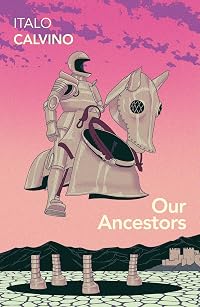
Viscount Medardo is bisected by a Turkish cannonball on the plains of Bohemia; Baron Cosimo, at the age of twelve, retires to the trees for the rest of his days; Charlemagne's knight, Agiluf, is an empty suit of armour. These three vivid images are the points of departure for Calvino's classic triptych of moral tales, now published in one volume and all displaying the exuberant talent of a master storyteller.Tags
Recommendations










Member Recommendations
Member Reviews
This volume pulls together two novellas and one novel written across the length of the 1950s by Italo Calvino as partial pastiches of past literature, all with an implied commentary about the position of the intellectual in post-war Italy.
This tells us all we need to know about the strengths and weaknesses of the work.
On the one hand, Calvino writes fluently and with a mastery of the forms he is working with – the (comic) Gothic novel, the moral tale of the Enlightenment and the courtly romance – but he is soon falling into the post-modern trap of saying very little of any depth extremely well.
Why is this? Perhaps it is because he is embarrassed. He is a bourgeois intellectual and instinctive aesthete who wants to be a socialist show more in an age of hard-nosed Marxists. He is trying to keep his nose high from the stench of politics and compromise while being a man of the Left.
How does he try and do this. By metaphorically staying up in the trees and trying to appropriate the great European literary tradition for a basic liberal decency that reminds us of the similar and often not quite convincing efforts of Camus to do the same in 1950s France.
Calvino tries lightness of touch instead of trying to meet the sour-pusses of the old Left on their own puritan ground as Camus did. This means that the works are (mostly) enjoyable but also rather shallow, a case of educated bourgeois knowingly speaking unto educated bourgeois.
For all the claims Calvino was to make about abstracting the authentic vision of the common man from traditional literature (exemplified by his remarkable knowledge of folk tales), his work requires a fair amount of education to appreciate fully. There is an inherent ‘snobbisme’ in it.
The stories of good and evil disembodied in the cloven viscount, the young aristocrat who takes to the trees and stays there and the knight who is perfect but does not exist are all well told and give an insight into the minds of an elite uncomfortable with modernity and yet committed to it.
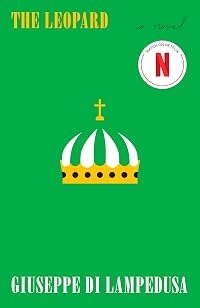
The contrast with Di Lampedusa’s ‘The Leopard’, published around the same time, coming, in this latter case, from a genuine aristocrat whose compromise with modernity came from necessity and not from ideology, is striking.
The bourgeoisie’s continuing interest in the aristocracy is amusing. They will not let go of the past. Our genuine aristocrat can (paradoxically): he speaks of the past as the past whereas Calvino tries to bring the past into the future, turning tragedy perhaps into farce.
Italo Calvino’s short introduction is worth reading in this context. He refers to his initial engagement with the post-war fashion for social realism after the victory of the partisans over Mussolini but (in his late twenties) decided to follow his heart and Robert Louis Stevenson.
This tension between his literary aestheticism and the politics of engagement are being worked through in these works and that is why they are good but not great. They are neither one thing nor the other – the politics is obscure and the adventuring cloaked in too much implicit meaning.
In the end, it is all too clever by half. It makes you feel superior for understanding things the ‘hoi polloi’ won’t get but there is no way this is a voice for the common man … interesting, amusing but locked in its time and in the past simultaneously. show less
This tells us all we need to know about the strengths and weaknesses of the work.
On the one hand, Calvino writes fluently and with a mastery of the forms he is working with – the (comic) Gothic novel, the moral tale of the Enlightenment and the courtly romance – but he is soon falling into the post-modern trap of saying very little of any depth extremely well.
Why is this? Perhaps it is because he is embarrassed. He is a bourgeois intellectual and instinctive aesthete who wants to be a socialist show more in an age of hard-nosed Marxists. He is trying to keep his nose high from the stench of politics and compromise while being a man of the Left.
How does he try and do this. By metaphorically staying up in the trees and trying to appropriate the great European literary tradition for a basic liberal decency that reminds us of the similar and often not quite convincing efforts of Camus to do the same in 1950s France.
Calvino tries lightness of touch instead of trying to meet the sour-pusses of the old Left on their own puritan ground as Camus did. This means that the works are (mostly) enjoyable but also rather shallow, a case of educated bourgeois knowingly speaking unto educated bourgeois.
For all the claims Calvino was to make about abstracting the authentic vision of the common man from traditional literature (exemplified by his remarkable knowledge of folk tales), his work requires a fair amount of education to appreciate fully. There is an inherent ‘snobbisme’ in it.
The stories of good and evil disembodied in the cloven viscount, the young aristocrat who takes to the trees and stays there and the knight who is perfect but does not exist are all well told and give an insight into the minds of an elite uncomfortable with modernity and yet committed to it.
The contrast with Di Lampedusa’s ‘The Leopard’, published around the same time, coming, in this latter case, from a genuine aristocrat whose compromise with modernity came from necessity and not from ideology, is striking.
The bourgeoisie’s continuing interest in the aristocracy is amusing. They will not let go of the past. Our genuine aristocrat can (paradoxically): he speaks of the past as the past whereas Calvino tries to bring the past into the future, turning tragedy perhaps into farce.
Italo Calvino’s short introduction is worth reading in this context. He refers to his initial engagement with the post-war fashion for social realism after the victory of the partisans over Mussolini but (in his late twenties) decided to follow his heart and Robert Louis Stevenson.
This tension between his literary aestheticism and the politics of engagement are being worked through in these works and that is why they are good but not great. They are neither one thing nor the other – the politics is obscure and the adventuring cloaked in too much implicit meaning.
In the end, it is all too clever by half. It makes you feel superior for understanding things the ‘hoi polloi’ won’t get but there is no way this is a voice for the common man … interesting, amusing but locked in its time and in the past simultaneously. show less
Il visconte dimezzato
Era da tantissimo che volevo leggere questa famosissima “trilogia” di Calvino! E finalmente ho cominciato col primo romanzo! Bello, indubbiamente, ma non bellissimo come immaginavo. Non so, forse mi aspettavo troppo, o ho aspettato troppo per leggerlo, fatto sta che non sono riuscita a dargli le 5 stelline. Ma quattro sono fuor di dubbio, perché è veramente un bel libro! :)
http://www.naufragio.it/iltempodileggere/10273
Il barone rampante
Secondo capitolo della trilogia degli antenati, ennesima conferma della grandiosità di Calvino!
Lo STILE di Calvino è semplicemente perfetto! Il suo modo di giocare con le parole, certe uscite imprevedibili, l’ironia, la caratterizzazione dei personaggi… è geniale, non show more c’è altro da dire! Se non lo avete ancora fatto, leggetelo!
http://www.naufragio.it/iltempodileggere/14867
Il cavaliere inesistente
Con Calvino ho un rapporto di amore e simpatia, nel senso che alcuni suoi libri mi sono piaciuti tantissimo mentre altri non così tanto, ma a ben vedere mi sono comunque piaciuti, magari non li ho amati, in confronto con gli altri mi risultavano perdenti. Su Il cavaliere inesistente avevo alte aspettative, tanto che temevo potesse deludermi in confronto, ma invece mi ha avvinto fin dalle prime pagine, quando lo posavo malvolentieri giù mi dicevo sempre “questo libro è bellissimo”! Sarà banale quanto sto per dire, ma nessuno sa insegnarti che cosa significa esistere se non qualcuno che non c’è. E seppure ogni personaggio aveva il suo rimuginare sull'esistenza in maniera diversa, io mi sono ritrovata un po’ in tutti. Ho sofferto e gioito con i Curvaldi, ho tifato per i nostri guerrieri, ho riso di certe descrizioni bizzarre ma così credibili, mi sono incantata alle riflessioni di suor Teodora, e soprattutto mi sono commossa per questo cavaliere che si sforza di esistere per pura volontà. Magari il libro non mi ha trasmesso sentimenti forti, è stato come un insinuarsi nelle mie emozioni con delicatezza, ma sicuramente ha lasciato un’impronta profonda.
http://www.naufragio.it/iltempodileggere/20987 show less
Era da tantissimo che volevo leggere questa famosissima “trilogia” di Calvino! E finalmente ho cominciato col primo romanzo! Bello, indubbiamente, ma non bellissimo come immaginavo. Non so, forse mi aspettavo troppo, o ho aspettato troppo per leggerlo, fatto sta che non sono riuscita a dargli le 5 stelline. Ma quattro sono fuor di dubbio, perché è veramente un bel libro! :)
http://www.naufragio.it/iltempodileggere/10273
Il barone rampante
Secondo capitolo della trilogia degli antenati, ennesima conferma della grandiosità di Calvino!
Lo STILE di Calvino è semplicemente perfetto! Il suo modo di giocare con le parole, certe uscite imprevedibili, l’ironia, la caratterizzazione dei personaggi… è geniale, non show more c’è altro da dire! Se non lo avete ancora fatto, leggetelo!
http://www.naufragio.it/iltempodileggere/14867
Il cavaliere inesistente
Con Calvino ho un rapporto di amore e simpatia, nel senso che alcuni suoi libri mi sono piaciuti tantissimo mentre altri non così tanto, ma a ben vedere mi sono comunque piaciuti, magari non li ho amati, in confronto con gli altri mi risultavano perdenti. Su Il cavaliere inesistente avevo alte aspettative, tanto che temevo potesse deludermi in confronto, ma invece mi ha avvinto fin dalle prime pagine, quando lo posavo malvolentieri giù mi dicevo sempre “questo libro è bellissimo”! Sarà banale quanto sto per dire, ma nessuno sa insegnarti che cosa significa esistere se non qualcuno che non c’è. E seppure ogni personaggio aveva il suo rimuginare sull'esistenza in maniera diversa, io mi sono ritrovata un po’ in tutti. Ho sofferto e gioito con i Curvaldi, ho tifato per i nostri guerrieri, ho riso di certe descrizioni bizzarre ma così credibili, mi sono incantata alle riflessioni di suor Teodora, e soprattutto mi sono commossa per questo cavaliere che si sforza di esistere per pura volontà. Magari il libro non mi ha trasmesso sentimenti forti, è stato come un insinuarsi nelle mie emozioni con delicatezza, ma sicuramente ha lasciato un’impronta profonda.
http://www.naufragio.it/iltempodileggere/20987 show less
Three tales from the master of fables. The Cloven Viscount about two polar opposite sides of a character shows how both the good and the evil can be insufferable. The Baron in the Trees provides the story of a life lost in the desire of freedom that then fails to grasp real opportunities (obviously an allegory of the difficulties of being a left-wing thinker). The Non-Existent Knight is less resonant, but the first two are a joy.
A set of three novellas, not related, but each told by a narrator who is tangential to the main story. The theme of identity runs throughout these novellas but is approached in different ways. I love this theme and really enjoyed the writing.
In terms of the actual stories: I really liked the first two, but the third, while having an interesting theme (existence, what makes someone exist), the story was just not as interesting and I really didn’t like the narrator interjection pieces. I wonder if Full Metal Alchemist was conceived with this story in mind?
In terms of the actual stories: I really liked the first two, but the third, while having an interesting theme (existence, what makes someone exist), the story was just not as interesting and I really didn’t like the narrator interjection pieces. I wonder if Full Metal Alchemist was conceived with this story in mind?
This book contains 3 stories: The Cloven Viscount, The Baron In The Trees, and The Non-Existent Knight.
The Cloven Viscount
The first sory was fairly short, being around 70 pages. It wasn't a bad story, but I felt slightly let down. I was perhaps expecting more, based on previous experiences of Calvino, but the story was alright, having said that. The Cloven Viscount is an amusing, surreal, and dark story, if brief, and ultimately predictable.
The Baron In The Trees
This is the second story in the book, and is quite a lot longer than the other two. Like the first, it is about an unusual Italian nobleman, set in Italy in fuedal times. While this story is to an extent more credible, it is also much more entertaining than the first. It is the show more sort of story, that while reading, I became involved in to the point where I could imagine myself there, and forgot about everything else around me. Despite being a translation, the prose presumaby retains a lot of its original quality, as it was, in varying measures throughout, charming, clever, and inspiring. The book is probaby worth picking up for this story alone, if you happen upon it, though it is also included in other volumes.
The Non-Existant Knight
Here Calvino has another excellent and somewhat fantastical tale to tell, which not only succeeds as a whole but in the details too. There is a good amount of humour gained from the farcical and ridiculous in this one, but it is balanced by the deeper reflections too, which means fans of the author will be left pleased.
Overall I was impressed by this set of three stories. Every Calvino book I read shows a slightly different side to the author, and two of these had a fantastical air about them that I haven't come across in quite a while. show less
The Cloven Viscount
The first sory was fairly short, being around 70 pages. It wasn't a bad story, but I felt slightly let down. I was perhaps expecting more, based on previous experiences of Calvino, but the story was alright, having said that. The Cloven Viscount is an amusing, surreal, and dark story, if brief, and ultimately predictable.
The Baron In The Trees
This is the second story in the book, and is quite a lot longer than the other two. Like the first, it is about an unusual Italian nobleman, set in Italy in fuedal times. While this story is to an extent more credible, it is also much more entertaining than the first. It is the show more sort of story, that while reading, I became involved in to the point where I could imagine myself there, and forgot about everything else around me. Despite being a translation, the prose presumaby retains a lot of its original quality, as it was, in varying measures throughout, charming, clever, and inspiring. The book is probaby worth picking up for this story alone, if you happen upon it, though it is also included in other volumes.
The Non-Existant Knight
Here Calvino has another excellent and somewhat fantastical tale to tell, which not only succeeds as a whole but in the details too. There is a good amount of humour gained from the farcical and ridiculous in this one, but it is balanced by the deeper reflections too, which means fans of the author will be left pleased.
Overall I was impressed by this set of three stories. Every Calvino book I read shows a slightly different side to the author, and two of these had a fantastical air about them that I haven't come across in quite a while. show less
Our Ancestors contains three short stories by Calvino: The Cloven Viscount, Baron in the Trees, and The Non-Existent Knight.
The Cloven Viscount deals with a viscount split in two on the field of battle and whose two separate halves continue living: one who is good, the other bad.
The Baron in the Trees deals with a young boy who renounces earthly existence in favour of an arboreal one, and how he comes to terms with his independence. One of the more overtly philosophical works in the collection.
The Non-Existent Knight deals with a brave knight who embodies all the chivalric virtues yet is only an empty suit of armour. The main themes are identity, integration with society, and virtue.
All three are allegorical but not too heavy-handed; show more they are part of Calvino's classic works and together help illustrate why Calvino remains one of the best modern Italian writers. show less
The Cloven Viscount deals with a viscount split in two on the field of battle and whose two separate halves continue living: one who is good, the other bad.
The Baron in the Trees deals with a young boy who renounces earthly existence in favour of an arboreal one, and how he comes to terms with his independence. One of the more overtly philosophical works in the collection.
The Non-Existent Knight deals with a brave knight who embodies all the chivalric virtues yet is only an empty suit of armour. The main themes are identity, integration with society, and virtue.
All three are allegorical but not too heavy-handed; show more they are part of Calvino's classic works and together help illustrate why Calvino remains one of the best modern Italian writers. show less
A nice collection of 3 of Calvino's best novels.
Members
- Recently Added By
Lists

Magic Realism
371 works; 52 members

Italian Literature
556 works; 41 members
EU Fiction: 1950-2022
223 works; 68 members

Books Set in Italy
167 works; 19 members

1950s
340 works; 22 members

Elegant Prose
80 works; 4 members

Bibliografia essenziale
86 works; 2 members

Recommended Literary Books
111 works; 1 member
Lista dei 100 migliori libri italiani degli ultimi 200 anni
100 works; 1 member
Author Information

392+ Works 70,023 Members
Italo Calvino 1923-1984 Novelist and short story writer Italo Calvino was born in Cuba on October 15, 1923, and grew up in Italy, graduating from the University of Turin in 1947. He is remembered for his distinctive style of fables. Much of his first work was political, including Il Sentiero dei Nidi di Ragno (The Path of the Nest Spiders, 1947), show more considered one of the main novels of neorealism. In the 1950s, Calvino began to explore fantasy and myth as extensions of realism. Il Visconte Dimezzato (The Cloven Knight, 1952), concerns a knight split in two in combat who continues to live on as two separates, one good and one bad, deprived of the link which made them a moral whole. In Il Barone Rampante (Baron in the Trees, 1957), a boy takes to the trees to avoid eating snail soup and lives an entire, fulfilled life without ever coming back down. Calvino was awarded an honorary degree from Mount Holyoke College in 1984 and died in 1985, following a cerebral hemorrhage. At the time of his death, he was the most translated contemporary Italian writer and a contender for the Nobel Prize for Literature. (Bowker Author Biography) show less
Some Editions
Awards and Honors
Awards
Notable Lists
Series

Belongs to Publisher Series
Alianza Tres (30)
Work Relationships
Contains
Has as a reference guide/companion
Common Knowledge
- Canonical title*
- Onze voorouders
- Original title
- I nostri antenati
- Alternate titles*
- Наши предки; Our Ancestors
- Original publication date
- 1960
- People/Characters
- Visconte Medardo di Terralba; Dr. Trelawney; Pamela; Sebastiana; Pietrochiodo; Ezekiel (show all 28); Esau; Ariolfo; Kurt; Barone Cosimo Piovasco di Rondo'; Barone Arminio Piovasco di Rondò; Cavaliere Enea Silvio Carrega; Battista; Biagio; Abate Fauchefleur; Sofonisba Viola Violante d'Ondariva; Conte d'Estomac; Ottimo Massimo; Gian dei Brughi; Napoleone; Zar di Russia; Cavalier Agilulfo; Rambaldo; Argalif Isoarre; Torrismondo; Bradamante; Gurdulù; Charlemagne
- Important places*
- Cuba
- Important events
- French Revolution
- First words
- There was a war against the Turks.
- Last words*
- (Click to show. Warning: May contain spoilers.)Welke onvoorziene gouden tijden bereid je me voor, jij onbedwingbare, jij bewaarder van duur betaalde schatten, jij, het rijk dat ik ga veroveren, toekomst...
- Blurbers
- Vidal, Gore; Sturrock, John; Sontag, Susan
- Original language
- Italian
- Canonical DDC/MDS
- 853.914
*Some information comes from Common Knowledge in other languages. Click "Edit" for more information.
Classifications
- Genres
- General Fiction, Fiction and Literature, Fantasy
- DDC/MDS
- 853.914 — Literature & rhetoric Italian, Romanian & related literatures Italian fiction 1900- 20th Century 1945-1999
- LCC
- PQ4809 .A45 — Language and Literature French, Italian, Spanish and Portuguese literatures Italian literature Individual authors, 1900-1960
- BISAC
Statistics
- Members
- 1,169
- Popularity
- 21,427
- Reviews
- 13
- Rating
- (4.08)
- Languages
- 18 — Catalan, Czech, Danish, Dutch, English, Finnish, French, German, Hebrew, Hungarian, Italian, Lithuanian, Norwegian (Bokmål), Portuguese, Russian, Spanish, Swedish, Turkish
- Media
- Paper, Ebook
- ISBNs
- 49
- ASINs
- 17