On This Page
Description
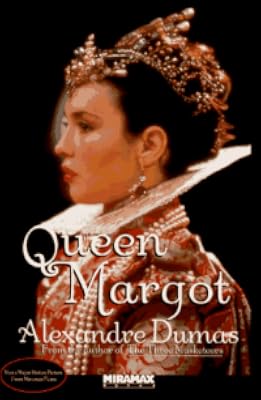
Alexandre Dumas brings an extraordinary period of history to life in this exciting period romance. It is the twilight of the reign of King Charles IX, and France is dominated by religious wars between Catholics and Protestants. King Charles' sister, Marguerite, daughter of staunch Catholics Henri II and Catherine de Medici, is set to marry the Protestant Henri de Navarre. Their marriage sets off a series of conspiracies between the Catholics and the Protestants in a dangerous and show more breathtaking game for power. From the mysterious murder of Henri de Navarre's mother, cleverly plotted by the evil Catherine de Medici, to the notorious Saint Bartholomew Massacre which killed thousands of Protestants lured to Paris by the wedding, Queen Margot is full of suspense, intrigue, betrayals, and daring escapes. At the center of it all are the good-hearted Marguerite and Henri, perfect political allies with fascinating love lives. show lessTags
Recommendations

























Member Reviews
Coming back to Dumas as an adult is a very interesting experience. Just so that you know where I am coming from: as a preteen/teenager I was reading any Dumas novel I could get my hands on and I’ve lost count of how many times I’d reread The Three Musketeers.
This book has everything that Dumas excelled at: court intrigues, secret meetings, secret lovers, assassinations, mistaken identities, duels, adventures, etc, etc, etc. Today’s authors attempting to write fantasy with court intrigues would do well to go to Dumas and learn how it’s done (unless they have already ;) ).
Queen Margot of the title is awesome - clever, strong, and resourceful. (She spends quite a lot of time hiding various gentlemen in her chambers, for various show more reasons, ranging from tragic to hilarious.) I wish to have seen more of her and less of other characters, as well as of the very soppy love affair Dumas gifted her with. Women of the book know that they are not free, they talk about it, resent it, and do the best they can. I liked that – and it’s really not bad for a male author from the 19th century.
Do I have any complaints? Sure. The way Dumas writes about Saint Bartholomew’s Day massacre is very shallow and simplistic (but the foreshadowing of the horror to come was quite well done, I thought).
Coconas loses his humanity so easily during the night of the massacre, participating so eagerly – it’s horrifying to watch. And then… there is no aftermath, it’s “oh, we are all friends again”, and he gets to be a wonderful friend to La Mole and be quite a hero at the end. This is unbelievably clumsy and just plain wrong! It fees like Dumas wrote two different characters and then made them into one (or his ghost writers couldn’t agree). The last few chapters are just melodrama, melodrama, melodrama that I skimmed through – I no longer have patience with these things.
I had a very good time with refreshing my knowledge of French history while reading. Dumas does not pretend to write historical novels. I think that he wrote historical fantasies/alternative histories before anyone invented the concepts. Of course, Margaret of Valois, Catherine de Medici (who, in this book, should really go under the name of Catherine “I poison people” de Medici), Henry of Navarre and others were quite different and much more complex people than shown here.
But I accept the rules of the game, and in return, I am entertained in a very satisfying way, despite the flaws. I am beginning to think that Dumas rereads might be a good thing. After all, there are sequels, The Countess of Monsoreau and The Forty-Five Guardsmen What will I think when I revisit those? show less
This book has everything that Dumas excelled at: court intrigues, secret meetings, secret lovers, assassinations, mistaken identities, duels, adventures, etc, etc, etc. Today’s authors attempting to write fantasy with court intrigues would do well to go to Dumas and learn how it’s done (unless they have already ;) ).
Queen Margot of the title is awesome - clever, strong, and resourceful. (She spends quite a lot of time hiding various gentlemen in her chambers, for various show more reasons, ranging from tragic to hilarious.) I wish to have seen more of her and less of other characters, as well as of the very soppy love affair Dumas gifted her with. Women of the book know that they are not free, they talk about it, resent it, and do the best they can. I liked that – and it’s really not bad for a male author from the 19th century.
Do I have any complaints? Sure. The way Dumas writes about Saint Bartholomew’s Day massacre is very shallow and simplistic (but the foreshadowing of the horror to come was quite well done, I thought).
Coconas loses his humanity so easily during the night of the massacre, participating so eagerly – it’s horrifying to watch. And then… there is no aftermath, it’s “oh, we are all friends again”, and he gets to be a wonderful friend to La Mole and be quite a hero at the end. This is unbelievably clumsy and just plain wrong! It fees like Dumas wrote two different characters and then made them into one (or his ghost writers couldn’t agree). The last few chapters are just melodrama, melodrama, melodrama that I skimmed through – I no longer have patience with these things.
I had a very good time with refreshing my knowledge of French history while reading. Dumas does not pretend to write historical novels. I think that he wrote historical fantasies/alternative histories before anyone invented the concepts. Of course, Margaret of Valois, Catherine de Medici (who, in this book, should really go under the name of Catherine “I poison people” de Medici), Henry of Navarre and others were quite different and much more complex people than shown here.
But I accept the rules of the game, and in return, I am entertained in a very satisfying way, despite the flaws. I am beginning to think that Dumas rereads might be a good thing. After all, there are sequels, The Countess of Monsoreau and The Forty-Five Guardsmen What will I think when I revisit those? show less
You think you know scheming, backstabbing, double dealing and treachery? You don’t know anything compared to the French aristocracy. Yes, I know this is fiction, true historical fiction since it it set almost 200 years before it was written, but darn if it doesn’t ring true to some extent. No one gets and keeps power without a little skulduggery on the side. And in the French court, murder helps, too.
Because this is based on real people; Queen Catherine de Medici and her many sons, plus wives, girlfriends and hangers-on, I did some fact-checking to see how close Dumas got it. There is some embroidery and speculation (did Catherine poison Henry of Navarre’s mother Jeanne?) but the bare bones of the succession, religious turmoil and show more court drama is factual. And boy is it fun. Once I got the hang of the French names and titles it was a breeze. I nearly drew myself a quick family tree because damn, everyone is related to everyone else and it’s crazy. Eventually though I got it.
As you might suspect, at the heart of the plot is the succession to the throne of France and all the jousting and jockeying that goes into getting it. The sheer amount of lies and manipulation is staggering. Dumas keeps Francis alive even though he was king and died before Charles, who is king in the novel, ascends to the throne. His sister Margot describes Francis as “cunning and cold. He has never made friends, because he neither loves nor hates. He just plots for himself, and he will treat his friends as enemies, or take his enemies for friends, as he thinks it may be advantageous to him.” That pretty much goes for all of them and Charles does a good job of getting his brothers out of the way by giving them lesser crowns. His mother Catherine is also a master manipulator and isn’t happy now Charles is ruling independently. She employs a purfumier which is really just a nice way to say poisoner. As soon as the poisons start flying though, you know there will be an unintended victim and near misses.
We also get a massacre, secret romances, murder, imprisonment, friendship, changing alliances, secret passageways, eavesdropping, clandestine meetings and religious conversions. Great stuff. show less
Because this is based on real people; Queen Catherine de Medici and her many sons, plus wives, girlfriends and hangers-on, I did some fact-checking to see how close Dumas got it. There is some embroidery and speculation (did Catherine poison Henry of Navarre’s mother Jeanne?) but the bare bones of the succession, religious turmoil and show more court drama is factual. And boy is it fun. Once I got the hang of the French names and titles it was a breeze. I nearly drew myself a quick family tree because damn, everyone is related to everyone else and it’s crazy. Eventually though I got it.
As you might suspect, at the heart of the plot is the succession to the throne of France and all the jousting and jockeying that goes into getting it. The sheer amount of lies and manipulation is staggering. Dumas keeps Francis alive even though he was king and died before Charles, who is king in the novel, ascends to the throne. His sister Margot describes Francis as “cunning and cold. He has never made friends, because he neither loves nor hates. He just plots for himself, and he will treat his friends as enemies, or take his enemies for friends, as he thinks it may be advantageous to him.” That pretty much goes for all of them and Charles does a good job of getting his brothers out of the way by giving them lesser crowns. His mother Catherine is also a master manipulator and isn’t happy now Charles is ruling independently. She employs a purfumier which is really just a nice way to say poisoner. As soon as the poisons start flying though, you know there will be an unintended victim and near misses.
We also get a massacre, secret romances, murder, imprisonment, friendship, changing alliances, secret passageways, eavesdropping, clandestine meetings and religious conversions. Great stuff. show less
I watched the 1994 film version of 'La Reine Margot' years before I discovered it was based on a book by Dumas. The film is incredibly gothic, melodramatic, and gory, so I loved it. Naturally I had to read the novel too. As it turns out, the book is even more overwrought and violent, with the addition of wit. I found it a wonderful romp, absolutely full of non-stop intrigue. The pace is fantastic, as befits a novel originally published as a popular serial that had to keep readers hooked from installment to installment. Characters are constantly hiding in cupboards from the Queen Mother, escaping into secret passages, getting into sword fights, narrowly escaping being poisoned, swearing deadly revenge, swearing eternal love, falsely show more pledging allegiance, plotting against the King, plotting against the Crown Prince, hunting dangerous boar, shooting at enemies, disguising themselves, climbing out of windows, hiding secret messages, being stabbed, and being imprisoned. Meanwhile, the St Bartholomew's Day massacre and subsequent unrest! Now and again someone sits down to eat an omelette, although most meals are interrupted by at least one dramatic event. Once I worked out which of the three Henrys was which and stopped constantly reading the endnotes, I was joyfully carried along by the momentum of events. There is such a vivid excitement and propulsive tension to the story, despite the eventual outcome not being in doubt.
Dumas adeptly juggles the machinations of Catherine de Medicis, Henry of Navarre, his magnificent wife Margot, her best friend, the Duke d'Anjou, the Duke de Guise, and the Duke d'Alençon. Many of their plots involve de la Mole and Coconnas, a pair of handsome young men who always choose the most melodramatic and excessive course of action in any situation. They meet coincidentally, become friends, realise they are on opposite sides of France's bitter religious divide, attempt to kill each other, both nearly die, recover, try to kill each other again, both nearly die again, recover together, and swear eternal friendship. The comparisons with Orestes and Pylades are many, not only in the narration but also in Coconnas's letter resigning from the service of a Crown Prince because his friendship with de la Mole is more important. It is difficult not be delighted by these two, indeed by every character, despite nearly all of them having a strong penchant for murder. While this Renaissance Pylades and Orestes are little more than thugs, they have such style and panache that I cared about them anyway.I was sad when Coconnas chose to be executed with de la Mole, rather than taking the chance to escape with his ladylove. The pair die holding hands, which reminded me of Enjolras and Grantaire in [b:Les Misérables|24280|Les Misérables|Victor Hugo|https://i.gr-assets.com/images/S/compressed.photo.goodreads.com/books/1411852091l/24280._SY75_.jpg|3208463]. Then Margot retrieves de la Mole's severed head from the executioner, an action apparently attested by historical record.
The endnotes helpfully explain where Dumas played fast and loose with historical events. He constantly compresses timescales, re-attributes actions to keep the cast of main characters manageable, and gleefully invents and embroiders upon people's motives. Margot is of course at the heart of the book, a fascinatingly subtle and clever woman. In many ways the central conflict is between her and the Queen Mother, both working through men. Margot has a clear agreement with her husband to act as allies while finding love elsewhere. Catherine de Medicis plans carefully and ruthlessly for her sons, although her cruel methods eventually backfire in horrifying fashion. The king of France is childish and capricious, so power revolves around him while he has limited awareness of and control over events. This is particularly obvious when his mother strong-arms him into signing an arrest warrant. The king's brothers aren't a great deal better at plotting; clearly none of the sons inherited their mother's strategic mind. By contrast, Henry of Navarre and Margot de Valois are both blessed with a cool head and quick thinking. Both traits are essential in order to survive the Louvre in the 1570s, evidently. When de la Mole and Coconnas are compared with their respective ladyloves, it is clearly the women who do the thinking while the men look decorative and get into lots of fights.
I had a great time reading 'La Reine Margot' and found the endnotes helpful for historical context, albeit to be read in batches rather than every time one appears. The introduction provides some very interesting background to the novel's composition. Dumas apparently wrote it in three months, while working on four or five other projects. That really puts my three month PhD thesis draft in the shade. I also learned from the introduction that the 1997 Oxford World Classics edition I read is based on an 1846 translation, which edited the text! The Victorian translator removed some historical digressions that they felt would not interest a British audience. As I adored the chapters in [b:Les Misérables|24280|Les Misérables|Victor Hugo|https://i.gr-assets.com/images/S/compressed.photo.goodreads.com/books/1411852091l/24280._SY75_.jpg|3208463] on argot, Waterloo, and the history of the Parisian sewer system, I respectfully disagree with this choice. I wonder if there's a more comprehensive English translation to be found? If I had the patience and a French dictionary, I could try reading the original. 'La Reine Margot' was such an appealingly escapist reading experience that I'll keep the possibility in mind, despite my usual disinclination to reread. Now I want to rewatch the film, for comparison and because I love the visuals and music. Truly, there is nothing to match the capital-R Romantic melodrama of mid-19th century French fiction. show less
Dumas adeptly juggles the machinations of Catherine de Medicis, Henry of Navarre, his magnificent wife Margot, her best friend, the Duke d'Anjou, the Duke de Guise, and the Duke d'Alençon. Many of their plots involve de la Mole and Coconnas, a pair of handsome young men who always choose the most melodramatic and excessive course of action in any situation. They meet coincidentally, become friends, realise they are on opposite sides of France's bitter religious divide, attempt to kill each other, both nearly die, recover, try to kill each other again, both nearly die again, recover together, and swear eternal friendship. The comparisons with Orestes and Pylades are many, not only in the narration but also in Coconnas's letter resigning from the service of a Crown Prince because his friendship with de la Mole is more important. It is difficult not be delighted by these two, indeed by every character, despite nearly all of them having a strong penchant for murder. While this Renaissance Pylades and Orestes are little more than thugs, they have such style and panache that I cared about them anyway.
The endnotes helpfully explain where Dumas played fast and loose with historical events. He constantly compresses timescales, re-attributes actions to keep the cast of main characters manageable, and gleefully invents and embroiders upon people's motives. Margot is of course at the heart of the book, a fascinatingly subtle and clever woman. In many ways the central conflict is between her and the Queen Mother, both working through men. Margot has a clear agreement with her husband to act as allies while finding love elsewhere. Catherine de Medicis plans carefully and ruthlessly for her sons, although her cruel methods eventually backfire in horrifying fashion. The king of France is childish and capricious, so power revolves around him while he has limited awareness of and control over events. This is particularly obvious when his mother strong-arms him into signing an arrest warrant. The king's brothers aren't a great deal better at plotting; clearly none of the sons inherited their mother's strategic mind. By contrast, Henry of Navarre and Margot de Valois are both blessed with a cool head and quick thinking. Both traits are essential in order to survive the Louvre in the 1570s, evidently. When de la Mole and Coconnas are compared with their respective ladyloves, it is clearly the women who do the thinking while the men look decorative and get into lots of fights.
I had a great time reading 'La Reine Margot' and found the endnotes helpful for historical context, albeit to be read in batches rather than every time one appears. The introduction provides some very interesting background to the novel's composition. Dumas apparently wrote it in three months, while working on four or five other projects. That really puts my three month PhD thesis draft in the shade. I also learned from the introduction that the 1997 Oxford World Classics edition I read is based on an 1846 translation, which edited the text! The Victorian translator removed some historical digressions that they felt would not interest a British audience. As I adored the chapters in [b:Les Misérables|24280|Les Misérables|Victor Hugo|https://i.gr-assets.com/images/S/compressed.photo.goodreads.com/books/1411852091l/24280._SY75_.jpg|3208463] on argot, Waterloo, and the history of the Parisian sewer system, I respectfully disagree with this choice. I wonder if there's a more comprehensive English translation to be found? If I had the patience and a French dictionary, I could try reading the original. 'La Reine Margot' was such an appealingly escapist reading experience that I'll keep the possibility in mind, despite my usual disinclination to reread. Now I want to rewatch the film, for comparison and because I love the visuals and music. Truly, there is nothing to match the capital-R Romantic melodrama of mid-19th century French fiction. show less
[La Reine Margot] is historical fiction written by a mid-19th century French author about the 1500s French King Charles IX and the fight between Catholics and Huguenots. Charles has 2 brothers vying to be next on the throne. He marries his Catholic sister Marguerite (the Queen Margot of the title) to Henry of Navarre, the Protestant King of Navarre. Marguerite and Henry create an unlikely political partnership but both have active love-lifes on the side. Also, the family matriarch is Catherine de Medici who does a lot of political maneuvering and plotting.
I really liked this. It has the typical Dumas swashbuckling scenes, poisonings, and intrigues. It's certainly not as good as The Count of Monte Cristo, but it was good fun. I will say show more that I read a lot of historical fiction and it sort of bothered me that Dumas takes A LOT of license with the facts to create a better novel. The explanatory notes were detailed and pointed out all the ways Dumas changed the facts. I'm used to historical fiction that really tries to stick to good research, so this was a departure for me. But in the end I was able to let that go and enjoy the ride. show less
I really liked this. It has the typical Dumas swashbuckling scenes, poisonings, and intrigues. It's certainly not as good as The Count of Monte Cristo, but it was good fun. I will say show more that I read a lot of historical fiction and it sort of bothered me that Dumas takes A LOT of license with the facts to create a better novel. The explanatory notes were detailed and pointed out all the ways Dumas changed the facts. I'm used to historical fiction that really tries to stick to good research, so this was a departure for me. But in the end I was able to let that go and enjoy the ride. show less
Mostly this book was political intrigue, conspiracies, ambitions, and affairs among the French ruling family and their auxiliaries. There was a great villain, however, and come-and-go moments of swashbuckling adventure. I did not care for the ending (albeit, the story and its resolution were historically determined.)
I'm pretty sure everyone in this book was at one time protagonist and antagonist, with maybe two exceptions. The book was confused by the fact that two of the main characters were named Henry, there were multiple kings, two of which were very central to the story and both were often refered to in the narrative simply as the king.
Not a bad book by any means, but probably my least favorite of AD's novels.
I'm pretty sure everyone in this book was at one time protagonist and antagonist, with maybe two exceptions. The book was confused by the fact that two of the main characters were named Henry, there were multiple kings, two of which were very central to the story and both were often refered to in the narrative simply as the king.
Not a bad book by any means, but probably my least favorite of AD's novels.
I loved this book. Dumas wrote it in serial form, so it is fast paced and hard to put down--almost every chapter ends with a cliffhanger. It is set in Paris in the 1570s, during and after the marriage of Catholic Marguerite de Valois (Margot) to Protestant Henry de Navarre, a union orchestrated by Margot's mother Catherine de Medicis, which ends up resulting in the Saint Bartholomew's Day massacre on French Protestants. It's got it all: history (albeit re-written by Dumas), scandal, intrigue, a duplicitous royal family, a murderous mother-in-law, indiscreet love affairs, blood, gore, and finally, self-sacrifice. I also enjoyed Dumas' dry humor.
O Massacre de São Bartolomeu é talvez o mais interessante evento histórico que os brasileiros por algum motivo não aprendem na escola.
Felizmente, quem quer começar a aprender algo pode ler A Rainha Margot.
A época e os personagens sempre me fascinaram - e eu queria que o livro tivesse o triplo do tamanho, para passar mais tempo com eles. Eu passei muito tempo procurando livros sobre Marguerite de Valois, Catherine de Medici, Charles IX, Henri III, Henri IV, François d'Anjou (na época desse livro, François d'Alençon) e outros personagens da época. E esse é um dos melhores. Não exatamente fiel, afinal Dumas é conhecido por fazer algumas concessões pelo romance. Mas interessantíssimo. Minha grande crítica à série é de show more ter sido tão curta. Adoraria ver a Rainha Margot aprisionada após dar um golpe e tomar controle de uma de suas cidades, e Henri IV decidindo que Paris valia bem uma missa.
Quem se interessou pode procurar as memórias da Rainha Margot. Elas cobrem um período relativamente pequeno de sua vida, mas a leitura é excelente. show less
Felizmente, quem quer começar a aprender algo pode ler A Rainha Margot.
A época e os personagens sempre me fascinaram - e eu queria que o livro tivesse o triplo do tamanho, para passar mais tempo com eles. Eu passei muito tempo procurando livros sobre Marguerite de Valois, Catherine de Medici, Charles IX, Henri III, Henri IV, François d'Anjou (na época desse livro, François d'Alençon) e outros personagens da época. E esse é um dos melhores. Não exatamente fiel, afinal Dumas é conhecido por fazer algumas concessões pelo romance. Mas interessantíssimo. Minha grande crítica à série é de show more ter sido tão curta. Adoraria ver a Rainha Margot aprisionada após dar um golpe e tomar controle de uma de suas cidades, e Henri IV decidindo que Paris valia bem uma missa.
Quem se interessou pode procurar as memórias da Rainha Margot. Elas cobrem um período relativamente pequeno de sua vida, mas a leitura é excelente. show less
Members
- Recently Added By
Lists

1001 Books You Must Read Before You Die
1,448 works; 1,134 members

Top Five Books of 2016
795 works; 229 members

My list of 100 books to read next
100 works; 4 members

Books Read in 2017
4,249 works; 130 members

Paris, City of Lights
103 works; 17 members

Books Read in 2016
4,666 works; 197 members

Historical Figures in Fiction
51 works; 5 members

French Fiction of the 18th and 19th Centuries in English Translation
169 works; 3 members

Books in The Club Dumas
72 works; 1 member

Very Long Novels
15 works; 1 member
Author Information

1,609+ Works 98,567 Members
Some Editions
Awards and Honors
Notable Lists
Series

Belongs to Publisher Series
Work Relationships
Contains
Has the adaptation
Common Knowledge
- Canonical title
- Queen Margot
- Original title
- La Reine Margot
- Alternate titles
- Queen Margot, or, Marguerite de Valois
- Original publication date
- 1845
- People/Characters
- Catherine de Medici; Charles IX, King of France; Henri IV, King of France; Henri III, King of France; François-Hercule, Duke of Anjou and Alençon; Henry, Duke of Guise (show all 11); Marguerite de Valois (1553-1615); Count Lerac de la Mole; Count Annibal de Coconnas; Henriette, Duchesse de Nevers; Rene (perfumer to Catherine de Medici)
- Important places
- Paris, France; France
- Important events
- St. Bartholomew's Day Massacre; French Wars of Religion
- Related movies
- La reine Margot (1994 | IMDb)
- First words
- On Monday, the eighteenth of August, 1572, there was a grand fête at the Louvre.
A year had elapsed since the death of Charles IX and the accession of his successor. (Epilogue) - Last words
- (Click to show. Warning: May contain spoilers.)"I have conquered," cried Catherine; "and the odious Béarnais will not reign!"
(Click to show. Warning: May contain spoilers.)Henri sighed and disappeared in the darkness. (Epilogue) - Original language
- French
Classifications
- Genres
- Fiction and Literature, General Fiction, Historical Fiction
- DDC/MDS
- 843.7 — Literature & rhetoric French Literature French fiction Constitutional monarchy 1815–48
- LCC
- PQ2227 .R3 .E55 — Language and Literature French, Italian, Spanish and Portuguese literatures French literature Modern literature 19th century
- BISAC
Statistics
- Members
- 1,803
- Popularity
- 12,110
- Reviews
- 35
- Rating
- (3.93)
- Languages
- 15 — Czech, Danish, Dutch, English, Finnish, French, German, Italian, Lithuanian, Norwegian (Bokmål), Polish, Portuguese, Russian, Spanish, Swedish
- Media
- Paper, Audiobook, Ebook
- ISBNs
- 131
- ASINs
- 76