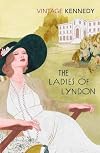
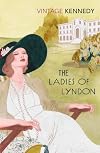
The Ladies of Lyndon
by Margaret Kennedy
On This Page
Description
Agatha is aware of an intensity, a powerful storm of emotion briefly awakened by a shortlived love affair with her cousin Gerald, that is entirely lacking from the successful marriage on which she is about to embark. Beautiful, young and carefully brought up, Agatha knows she is securing a perfect and luxurious future in marrying handsome John Clewer and becoming Mistress of Lyndon, and she soon becomes the perfect country house hostess. But when Gerald reappears and war in Europe disturbs show more the sheltered comfort of Lyndon forever, Agatha is once again haunted by the idea of a different life. show lessTags
Recommendations











Member Reviews
Ladies of Lyndon is Margaret Kennedy’s first novel. I began at the beginning quite by accident…I needed a book published in 1923. If this is her debut, I am looking forward with relish to her subsequent works, which will now all be added to the mountain that is my TBR.
Agatha Cocks is a beautiful, elegant young lady of eighteen, who is about to marry an older man, John Clewer, owner of Lyndon and a member of the aristocracy. She had a brief bout of puppy love with her cousin, Gerald Blair, at sixteen, but her mother put a quick stop to that by packing her off to boarding school. Gerald takes himself off to America. Her marriage to John seems quite ideal, and Lyndon affords just the life she is seeking, and then Gerald returns to show more visit. That sets the stage for a lot of upheaval in Agatha’s life.
We also follow John’s brother, James, a character I completely adored and the other members of the Clewer family, who varied in garnering my disdain. There is also Agatha’s interfering mother, whose neck I would gladly have wrung.
The writing is beautifully done, with only a few flaws in the storytelling, not worth mentioning. I was reminded of Edith Wharton, in that the novel is, at some level, about class distinctions and what people will do to get into or escape the constraints of the upper class of the time. All that glitters is not gold; things are not always what they seem.
This is one of those happy accidents you often wish for and seldom encounter. It was never really on my radar and it exceeded all my expectations. show less
Although written in the 1920s, The Ladies of Lyndon is set in Edwardian England and during and after the First World War. Agatha is one of the most sought-after debutantes of her season, and she marries John Clewer in order to become mistress of Lyndon. Her marriage is unhappy, and she finds comfort in her relationship with an old flame.
This is a novel that explores various characters’ search for satisfaction in their lives—oddly enough, it’s John’s brother James who is happiest with his life, although everyone thinks he’s rather “off.” However, because James is the one who’s most comfortable with himself and his life, he’s one of the most endearing characters in this book—along with his wife, Dolly the former show more housemaid. By marrying her, James raises a lot of eyebrows, but he really and truly doesn’t care what people think—and this is what makes his one of the more self-fulfilled characters in this book.
Agatha, however, is another story. Married at a young age, she’s not quite as self-aware as some of the other characters are, and so she basically gets pushed into her marriage with John. So the road she follows to achieve happiness is interesting and unconventional, to say the least. It’s the characters that drive this novel; and although the plot is in itself interesting, it’s not quite as interesting as the people that populate it. This story could so easily have been cliché, but it’s not. Instead, it’s a wonderfully charming book. This was Margaret Kennedy’s first book (incidentally, it was published when she was my age, 27), and it shows the promise of great things to come. I’ve been trying to track down copies of some of Kennedy’s other books, and can’t wait to read more! show less
This is a novel that explores various characters’ search for satisfaction in their lives—oddly enough, it’s John’s brother James who is happiest with his life, although everyone thinks he’s rather “off.” However, because James is the one who’s most comfortable with himself and his life, he’s one of the most endearing characters in this book—along with his wife, Dolly the former show more housemaid. By marrying her, James raises a lot of eyebrows, but he really and truly doesn’t care what people think—and this is what makes his one of the more self-fulfilled characters in this book.
Agatha, however, is another story. Married at a young age, she’s not quite as self-aware as some of the other characters are, and so she basically gets pushed into her marriage with John. So the road she follows to achieve happiness is interesting and unconventional, to say the least. It’s the characters that drive this novel; and although the plot is in itself interesting, it’s not quite as interesting as the people that populate it. This story could so easily have been cliché, but it’s not. Instead, it’s a wonderfully charming book. This was Margaret Kennedy’s first book (incidentally, it was published when she was my age, 27), and it shows the promise of great things to come. I’ve been trying to track down copies of some of Kennedy’s other books, and can’t wait to read more! show less
I was wary of Margaret Kennedy’s first novel for a long time, seeing that it had mixed reviews – both on its original publication and on its later reissues – and wondering that if I had read it first it might have changed my feelings about progressing through her work, if maybe I might not have come to love that work as much as do.
Now that I’ve read the book, I’m sure that it wouldn’t have changed things too much. I would have liked it more than enough to pick up her second book – her huge success and the book I did read first – ‘The Constant Nymph’. And after that I still would have been more that interested enough to order ‘The Fool of the Family’ – the sequel that I enjoyed even more – from the library; show more then I would have still ordered and fallen in love with ‘Lucy Carmichael’ because I’ve always has a weakness for book titles that include both forename and surname; then I still would have ordered in ‘The Feast’, because it was set in Cornwall, and been so very impressed ….
But I’m glad that I read ‘The Ladies of Lyndon’ after reading many of Margaret Kennedy’s later novels. I recognised her distinctive voice and style, and I realised that neither were quite fully formed, that she still had some growing to do. I saw wit and I saw a clarity of vision that could be almost brutal; qualities that are a little more understated in other books. And, most interestingly, I saw character types, themes and ideas that she would run through her work in the years that were ahead of her.
Lyndon was a wonderful house, and the country home of the Clewer family.
“Lyndon, architectural and complacent, gleamed whitely amid the sombre green of ilex and cedar. Its classical facade stretched in ample wings to east and west. The grounds, originally laid out by the famous ‘Capability Brown’, and improved upon by successive generations of landscape gardeners, were admirably in keeping with the dwelling house they guarded. They maintained a note of assured artificiality: they belonged to an age when gentlemen of property owned the earth and could do what they liked with it – an age which had nor read Wordsworth and which took for granted that nature could be improved on … “
When this story opens, early in the twentieth century the family was large and its relationships were rather complicated. Because a widow and a widower, each with children, had married and produced another child. He – Lord Clewer – had died not long after his second marriage, leaving his title to the elder of his two unmarried sons and leaving the dowager Lady Clewer as chatelaine of the family home.
Mrs Varden Cocks was delighted when Sir John Clewer made a proposal of marriage to her eighteen year-old daughter, Agatha. She believed that girls should marry young, before they had had time to form opinions of their own, she knew that Lyndon was the perfect setting for her lovely daughter, and she was relieved that marriage would put Agatha’s brief romance with her cousin, Gerald, who she believed she might still have feelings for, very firmly in the past.
Her only worry was John’s brother, James. She had been told that he was ugly, that his intelligence was limited, that his behaviour was unpredictable, but the family was managing. Lady Clewer had said that James could stay with her in London while Agatha and James were on their honeymoon, but his longer term future had still to be decided. Agatha was worried; but when she met him she realised that he was clumsy, he was unconventional, he was eccentric, but that when she put her ideas of what was ‘proper behaviour’ to the side there wasn’t too much wrong with James at all.
They became friends, and Agatha supported him when he declared that he was going to go to Paris to study art.
(At this point I thought of Margery Sharp’s Martha books. Martha and James lived in different ages, came from different classes, were of opposite sexes, so their stories were quite different but their talents and their approaches to life were remarkably similar.)
When James proposed marriage to the third housemaid Agatha supported him. The rest of the family was horrified, but she saw that Dolly wasn’t interested in James’ money or his social position. They had played together as children, when his aunt was employed at Lyndon, and Agatha could see that she loved him for what he was and that he loved her.
Agatha had a knack for friendship, and she was the one person who loved and was loved by every member of the family.
Sadly though her marriage was not a success. It was nobody’s fault, it was simply that they had been alone very little before they married, they hadn’t known each other very well at all.
And Eric Blair, Agatha’s old flame, was a regular guest at Lyndon’s house parties …
The plot is quite simple, but it is the characters who make this story sing. They are so very well drawn, and their dialogues and their actions are utterly believable. Margaret Kennedy manages a large cast, and makes use of their different perspectives quite beautifully.
(I was particularly taken with Agatha’s mother, who was a force of nature in the very best of ways.)
She did that better in later books – ‘The Feast’ and ‘The Midas Touch’ – are that titles that come to mind. But she does it well enough here to keep the story rolling along nicely, and the social satire is very well judged.
The changing world is caught too, but not quite so well, and there is a time shift that is handled rather awkwardly in the middle of the book.
This is not Margaret Kennedy’s most accomplished novel, but it is an accomplished first novel and it held my attention from the first page to the last.
The characters, the writing style and the narrative voice made it work.
Nicola Beauman’s introduction to the Virago edition of ‘The Ladies of Lyndon’ suggests that Margaret Kennedy had at first intended that James be at the centre of her story, but I think the position that he occupied – slightly off-centre, suited him much better. I loved him and his story, I loved Dolly even more, and I love that Margaret Kennedy put the ideas she explored here – about a family’s response to someone ‘different’, about how that affected their life, about how they might bend social convention – at the centre of her last novel forty years later.
Agatha was perfectly suited to the position at the centre if the story. I loved and, though her action bothered me at times, I always felt for her.
And the end of the story – a turning point in Agatha’s life – was so perfectly judged. show less
Now that I’ve read the book, I’m sure that it wouldn’t have changed things too much. I would have liked it more than enough to pick up her second book – her huge success and the book I did read first – ‘The Constant Nymph’. And after that I still would have been more that interested enough to order ‘The Fool of the Family’ – the sequel that I enjoyed even more – from the library; show more then I would have still ordered and fallen in love with ‘Lucy Carmichael’ because I’ve always has a weakness for book titles that include both forename and surname; then I still would have ordered in ‘The Feast’, because it was set in Cornwall, and been so very impressed ….
But I’m glad that I read ‘The Ladies of Lyndon’ after reading many of Margaret Kennedy’s later novels. I recognised her distinctive voice and style, and I realised that neither were quite fully formed, that she still had some growing to do. I saw wit and I saw a clarity of vision that could be almost brutal; qualities that are a little more understated in other books. And, most interestingly, I saw character types, themes and ideas that she would run through her work in the years that were ahead of her.
Lyndon was a wonderful house, and the country home of the Clewer family.
“Lyndon, architectural and complacent, gleamed whitely amid the sombre green of ilex and cedar. Its classical facade stretched in ample wings to east and west. The grounds, originally laid out by the famous ‘Capability Brown’, and improved upon by successive generations of landscape gardeners, were admirably in keeping with the dwelling house they guarded. They maintained a note of assured artificiality: they belonged to an age when gentlemen of property owned the earth and could do what they liked with it – an age which had nor read Wordsworth and which took for granted that nature could be improved on … “
When this story opens, early in the twentieth century the family was large and its relationships were rather complicated. Because a widow and a widower, each with children, had married and produced another child. He – Lord Clewer – had died not long after his second marriage, leaving his title to the elder of his two unmarried sons and leaving the dowager Lady Clewer as chatelaine of the family home.
Mrs Varden Cocks was delighted when Sir John Clewer made a proposal of marriage to her eighteen year-old daughter, Agatha. She believed that girls should marry young, before they had had time to form opinions of their own, she knew that Lyndon was the perfect setting for her lovely daughter, and she was relieved that marriage would put Agatha’s brief romance with her cousin, Gerald, who she believed she might still have feelings for, very firmly in the past.
Her only worry was John’s brother, James. She had been told that he was ugly, that his intelligence was limited, that his behaviour was unpredictable, but the family was managing. Lady Clewer had said that James could stay with her in London while Agatha and James were on their honeymoon, but his longer term future had still to be decided. Agatha was worried; but when she met him she realised that he was clumsy, he was unconventional, he was eccentric, but that when she put her ideas of what was ‘proper behaviour’ to the side there wasn’t too much wrong with James at all.
They became friends, and Agatha supported him when he declared that he was going to go to Paris to study art.
(At this point I thought of Margery Sharp’s Martha books. Martha and James lived in different ages, came from different classes, were of opposite sexes, so their stories were quite different but their talents and their approaches to life were remarkably similar.)
When James proposed marriage to the third housemaid Agatha supported him. The rest of the family was horrified, but she saw that Dolly wasn’t interested in James’ money or his social position. They had played together as children, when his aunt was employed at Lyndon, and Agatha could see that she loved him for what he was and that he loved her.
Agatha had a knack for friendship, and she was the one person who loved and was loved by every member of the family.
Sadly though her marriage was not a success. It was nobody’s fault, it was simply that they had been alone very little before they married, they hadn’t known each other very well at all.
And Eric Blair, Agatha’s old flame, was a regular guest at Lyndon’s house parties …
The plot is quite simple, but it is the characters who make this story sing. They are so very well drawn, and their dialogues and their actions are utterly believable. Margaret Kennedy manages a large cast, and makes use of their different perspectives quite beautifully.
(I was particularly taken with Agatha’s mother, who was a force of nature in the very best of ways.)
She did that better in later books – ‘The Feast’ and ‘The Midas Touch’ – are that titles that come to mind. But she does it well enough here to keep the story rolling along nicely, and the social satire is very well judged.
The changing world is caught too, but not quite so well, and there is a time shift that is handled rather awkwardly in the middle of the book.
This is not Margaret Kennedy’s most accomplished novel, but it is an accomplished first novel and it held my attention from the first page to the last.
The characters, the writing style and the narrative voice made it work.
Nicola Beauman’s introduction to the Virago edition of ‘The Ladies of Lyndon’ suggests that Margaret Kennedy had at first intended that James be at the centre of her story, but I think the position that he occupied – slightly off-centre, suited him much better. I loved him and his story, I loved Dolly even more, and I love that Margaret Kennedy put the ideas she explored here – about a family’s response to someone ‘different’, about how that affected their life, about how they might bend social convention – at the centre of her last novel forty years later.
Agatha was perfectly suited to the position at the centre if the story. I loved and, though her action bothered me at times, I always felt for her.
And the end of the story – a turning point in Agatha’s life – was so perfectly judged. show less
This is well written in the Victorian melodrama mould (well, Edwardian), a world of arranged marriages, Society, autocratic mamas and quietly rebellious daughters...
This follows the lovely Agatha Cocks...after a teenage romance was firmly quashed, she is set to marry the much more 'suitable'John Clewer. Agatha moves into a privileged and ostensibly not unhappy lifestyle - there's sisters-in-law and a rather strange brother-in-law, who could be slightly autistic...but he sometimes seems to see things more clearly than anyone.
As cousin Gerard- he of the adolescent romance - will Agatha's rather loveless marriage survive?
It all went off the boil a tad for me at the end, as the unanswered cliffhanger ending had, by then, ceased to really show more matter anymore!
Not a must-read but enjoyable. show less
This follows the lovely Agatha Cocks...after a teenage romance was firmly quashed, she is set to marry the much more 'suitable'John Clewer. Agatha moves into a privileged and ostensibly not unhappy lifestyle - there's sisters-in-law and a rather strange brother-in-law, who could be slightly autistic...but he sometimes seems to see things more clearly than anyone.
As cousin Gerard- he of the adolescent romance - will Agatha's rather loveless marriage survive?
It all went off the boil a tad for me at the end, as the unanswered cliffhanger ending had, by then, ceased to really show more matter anymore!
Not a must-read but enjoyable. show less
Margaret Kennedy's The Ladies of Lyndon is a remarkable first novel, and compares favorably, in its treatment of a fading British aristocracy, with D.H. Lawrence's Lady Chatterley's Lover. Agatha Cocks, who becomes Lady Clewer in the course of the story, is a beautiful, charismatic, and innocent young woman who marries the wrong man. Sir John Clewer is not a flawed man, not an uncaring man, but for her, he is the wrong man. This error takes time - and the passing of the First World War - to surface. But when it does, Agatha's options, ethics, and feelings are complicated to say the least.
But the story is not merely about Agatha. In fact, one of the best features of the novel is the panoramic view of the extended Clewer family, which show more includes children from three marriages and their spouses. Agatha's brother-in-law James, for example, is quirky, fascinating, and endearing. Originally thought to be mentally deficient, probably because of a mild case of what would later come to be known as Asperger's Syndome, James turns out to be a talented, if unconventional artist. Agatha's mother, Ellen, as well as her stepmother in-law, Marian, are both strong hands at running their families, and dedicated to the upper class status quo. Her stepsisters in-law, Lois, and Cynthia, are each unalike yet similarly calculating when it comes to their interests. Other characters within the Lyndon estate orbit include an Hubert, art critic, Sir Thomas, a manufacturing magnate, Dolly, a housemaid, and Gerald, a childhood friend, cousin, and bit of a medical nerd.
Kennedy's skillful and witty dialogue brings this world alive. It is no surprise that she went on to success as a playwright, and that her work was adapted to cinema. It perhaps is a surprise that her first publication was a book on history, unless you reflect on the steady and organic manner in which the plot unfolds. But it is surely unexpected that it was her next novel, the Constant Nymph, and not this one, which made her famous. Once again, three cheers to Virago Modern Classics, for featuring this author and uncovering this gem from 1923. show less
But the story is not merely about Agatha. In fact, one of the best features of the novel is the panoramic view of the extended Clewer family, which show more includes children from three marriages and their spouses. Agatha's brother-in-law James, for example, is quirky, fascinating, and endearing. Originally thought to be mentally deficient, probably because of a mild case of what would later come to be known as Asperger's Syndome, James turns out to be a talented, if unconventional artist. Agatha's mother, Ellen, as well as her stepmother in-law, Marian, are both strong hands at running their families, and dedicated to the upper class status quo. Her stepsisters in-law, Lois, and Cynthia, are each unalike yet similarly calculating when it comes to their interests. Other characters within the Lyndon estate orbit include an Hubert, art critic, Sir Thomas, a manufacturing magnate, Dolly, a housemaid, and Gerald, a childhood friend, cousin, and bit of a medical nerd.
Kennedy's skillful and witty dialogue brings this world alive. It is no surprise that she went on to success as a playwright, and that her work was adapted to cinema. It perhaps is a surprise that her first publication was a book on history, unless you reflect on the steady and organic manner in which the plot unfolds. But it is surely unexpected that it was her next novel, the Constant Nymph, and not this one, which made her famous. Once again, three cheers to Virago Modern Classics, for featuring this author and uncovering this gem from 1923. show less
This book was a page turner for me but I wasn't enthralled. This is my first Margaret Kennedy book and I'm going to look for her other books. I love the style of the writing but the plot is very predictable. The main protagonist, Agatha, is sympathetic but I wanted more of her character fleshed out. There's something missing, we don't really understand what motivated her decisions or thoughts. I felt like I understood the people in the background better than I did Agatha. The character of James is interesting but, again, I wanted to know more about him. Overall I would recommend it. I certainly couldn't put it down until I finished it.
difficult ending. a writer who doesn't tell you everything
Members
- Recently Added By
Lists

For Further Reading: A List of 160 Novels from 15 Literatures
160 works; 4 members
Author Information

26+ Works 1,819 Members
Some Editions
Series
Belongs to Publisher Series
Common Knowledge
- Canonical title
- The Ladies of Lyndon
- Original title
- The Ladies of Lyndon
- Original publication date
- 1923
- People/Characters
- Agatha Clewer (nee Cocks); John Clewer; James Clewer; Dolly Kell
- Dedication
- TO
MY MOTHER - First words
- In the first decades of the twentieth century, London contained quite a number of distinguished, grey-headed bachelors who owed their celibacy to Mrs. Varden Cocks.
Margaret Kennedy's name is inextricably linked with the title of her bestselling novel The Constant Nymph. (Introduction) - Quotations
- The way we go on now, people act silly and then find out new ways so as not to suffer for it. They don't study not to be silly.
She thinks we concern ourselves too much with averting the consequnces of our own acts instead of eradicating folly and vice themselves. - Last words
- (Click to show. Warning: May contain spoilers.)She had barely sketched a movement forward when the iron gates clanged between them and she was plunged into the abyss.
(Click to show. Warning: May contain spoilers.)The comedy, the insight and the sombre conclusion make this novel memorable, on its own terms a work of fiction of a high order. (Introduction) - Original language
- English
Classifications
Statistics
- Members
- 215
- Popularity
- 151,352
- Reviews
- 8
- Rating
- (3.74)
- Languages
- English, French, Swedish
- Media
- Paper, Ebook
- ISBNs
- 6
- ASINs
- 4