On This Page
Description
In England, a woman marries into the landed gentry, only to find the life stifling. When she tries to renew with her old milieu, her husband objects. Drama follows drama, ending in a custody battle for their only child. A look at British society.Tags
Recommendations







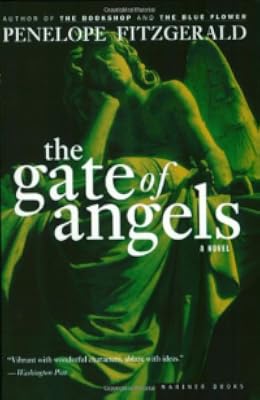
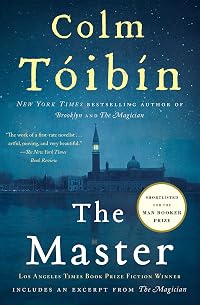
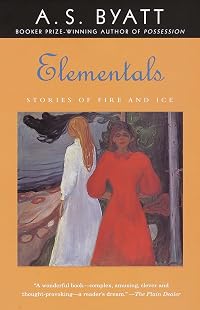
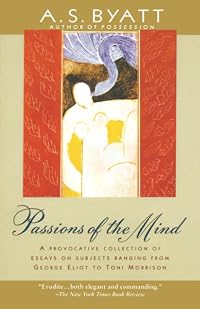


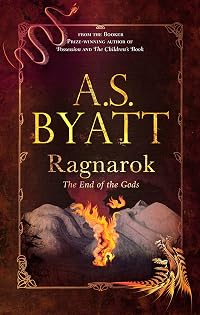
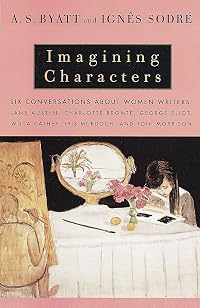
Member Recommendations
KayCliff Both novels feature Frederica Potter.
Member Reviews
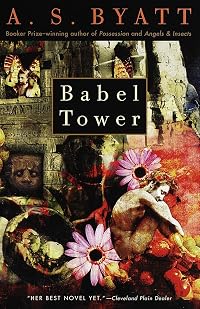
Babel Tower is an immensely pleasurable reading experience. Not because it's a particularly cheery book—god, it's not—but because it demands such intensity, such devotion of the reader and repays it all with interest. The intertextuality of it all is such a delight—books within books, Babbletower hidden within Babel Tower, the stories, the letters, the references to other novels—all giving rise to a level of introspection which feels organic rather than forced. Her characters are all incredibly vivid, even if I don't think I would particularly like to spend much time with any of them—Frederica is a little too much of a woman of her time—and really I do think that A.S. Byatt is one of the most intelligent authors working today.
This is the only book to cause me to miss my stop on the train. I was so engrossed that I blew right past my station and had to call my mother to come pick me up.
Possession will always be my favorite of Byatt's - partly because it was the novel to introduce me to the author, partly because it's a masterpiece - but this is one that really spoke to me the second time around. I somehow missed the unifying dissertation on language last time, only vaguely connecting spoken thought (or the lack of thereof, silence, etc.) to the title, a legend on the birth of language.
I've read some reviews calling Babel Tower a mess in twelve parts, and it's true that there are multiple parallel plot lines. However, the plots are balanced and overlapping, show more even if it is a little difficult to say exactly what the novel is about in a sentence.
It's about Frederica, an Englishwoman attempting to divorce her husband and retain custody of her son. It's also about education, as it traces civil servants on a committee to analyze primary-level schools and determine which was the "right" way to teach. In examining teaching, the book begins to discuss grammar, words, and theories suggesting that a lack of formal language instruction diminishes a person's capacity to think. It's also about a clergyman who works for the Listeners, a suicide hotline, and his relationship with his estranged children. It's about a book, written ostensibly by one of the characters, which may or may not be obscene, and is used as a frame narrative to offer alternative context to the rest of the story. Its trial mirrors the Lady Chatterly affair even as it is set alongside Frederica's divorce and custody hearings.
The book is brilliant. It's the third in a quartet. I liked the first two, but to this one, I have sworn undying love. show less
Possession will always be my favorite of Byatt's - partly because it was the novel to introduce me to the author, partly because it's a masterpiece - but this is one that really spoke to me the second time around. I somehow missed the unifying dissertation on language last time, only vaguely connecting spoken thought (or the lack of thereof, silence, etc.) to the title, a legend on the birth of language.
I've read some reviews calling Babel Tower a mess in twelve parts, and it's true that there are multiple parallel plot lines. However, the plots are balanced and overlapping, show more even if it is a little difficult to say exactly what the novel is about in a sentence.
It's about Frederica, an Englishwoman attempting to divorce her husband and retain custody of her son. It's also about education, as it traces civil servants on a committee to analyze primary-level schools and determine which was the "right" way to teach. In examining teaching, the book begins to discuss grammar, words, and theories suggesting that a lack of formal language instruction diminishes a person's capacity to think. It's also about a clergyman who works for the Listeners, a suicide hotline, and his relationship with his estranged children. It's about a book, written ostensibly by one of the characters, which may or may not be obscene, and is used as a frame narrative to offer alternative context to the rest of the story. Its trial mirrors the Lady Chatterly affair even as it is set alongside Frederica's divorce and custody hearings.
The book is brilliant. It's the third in a quartet. I liked the first two, but to this one, I have sworn undying love. show less
The third in the Frederica saga: we're now in the mid-sixties. Frederica's impulsive marriage to Nigel Reiver has not worked out well, and she's trying to build a new life as a literary single parent in London, teaching adult education classes, reviewing, and reading manuscripts for a publisher. Alexander is on a government committee that's reporting on possible reforms of the teaching of English in schools, and Daniel is working for the Samaritans out of a switchboard in a church crypt.
Byatt comments ironically on the challenge-everything ethos of the Swinging Sixties by bringing in a full-scale book-within-a-book, Babbletower, a fantasy novel set in a libertine community where the do-what-thou-wilt ideals of Sade and Fourier are show more taken to their grotesque, horrific conclusion.
The book ends in two — parallel — extended set-piece court scenes, as Frederica's marriage is ended under the still unreformed divorce laws of the time in one court, and the author and publisher of Babbletower are tried for obscenity in another. We see how clumsy an instrument the legal mechanism for determining truth is when it has to deal with the emotional reality of a marriage or the literary reality of a novel. But we've already seen Frederica trying and failing to resolve her firsthand experience of sex and love with the supposedly authoritative — but mutually conflicting! — understanding she has learnt to look for from her reading of E M Forster and D H Lawrence. And we see that each of the so-called experts who give evidence for and against Babbletower has taken something quite different from the book from what we saw in it as readers, and different again from what the author thought he was putting in.
This is a very big, serious, complicated novel of ideas, but it's also a very funny book, full of mischievous caricatures of sixties types — two dreadful Liverpool Poets, Anthony Burgess (safely dead, and therefore playing himself, hilariously), Angus Wilson (a friend of the author's sister, and therefore disguised slightly), trendy clergymen and trendier psychoanalysts, a Bowie-esque pop star, various artists, a vicar's-wife novelist, etc. Best of all, of course, but a full-scale character rather than a mere caricature, is the author of Babbletower, Jude Mason, who shares a profession and some aspects of his personality with Quentin Crisp, but turns out to have a quite different background.
Oh yes, this is a Byatt novel, so it doesn't stop with one book-within-a-book: as well as Babbletower there is a Tolkienish quest-novel being written as a serial for the children by Frederica's childcare-partner, Agatha Mond, and there is Frederica's own work-in-progress, a collage and cut-up book she calls Laminations. Not to mention the usual literary fun and games with parodies of reviews, novel reports, student essays, and the documents of Alexander's committee. And — just in passing — a lot of serious discussion of the nature of language, the sources of morality, the way these things develop in children, cults, Happenings, charismatic Christianity, ritual, the sexuality of snails, the effects of pesticides, and much more.
A lot to take in, even at a second or third reading. But vastly entertaining. show less
Byatt comments ironically on the challenge-everything ethos of the Swinging Sixties by bringing in a full-scale book-within-a-book, Babbletower, a fantasy novel set in a libertine community where the do-what-thou-wilt ideals of Sade and Fourier are show more taken to their grotesque, horrific conclusion.
The book ends in two — parallel — extended set-piece court scenes, as Frederica's marriage is ended under the still unreformed divorce laws of the time in one court, and the author and publisher of Babbletower are tried for obscenity in another. We see how clumsy an instrument the legal mechanism for determining truth is when it has to deal with the emotional reality of a marriage or the literary reality of a novel. But we've already seen Frederica trying and failing to resolve her firsthand experience of sex and love with the supposedly authoritative — but mutually conflicting! — understanding she has learnt to look for from her reading of E M Forster and D H Lawrence. And we see that each of the so-called experts who give evidence for and against Babbletower has taken something quite different from the book from what we saw in it as readers, and different again from what the author thought he was putting in.
This is a very big, serious, complicated novel of ideas, but it's also a very funny book, full of mischievous caricatures of sixties types — two dreadful Liverpool Poets, Anthony Burgess (safely dead, and therefore playing himself, hilariously), Angus Wilson (a friend of the author's sister, and therefore disguised slightly), trendy clergymen and trendier psychoanalysts, a Bowie-esque pop star, various artists, a vicar's-wife novelist, etc. Best of all, of course, but a full-scale character rather than a mere caricature, is the author of Babbletower, Jude Mason, who shares a profession and some aspects of his personality with Quentin Crisp, but turns out to have a quite different background.
Oh yes, this is a Byatt novel, so it doesn't stop with one book-within-a-book: as well as Babbletower there is a Tolkienish quest-novel being written as a serial for the children by Frederica's childcare-partner, Agatha Mond, and there is Frederica's own work-in-progress, a collage and cut-up book she calls Laminations. Not to mention the usual literary fun and games with parodies of reviews, novel reports, student essays, and the documents of Alexander's committee. And — just in passing — a lot of serious discussion of the nature of language, the sources of morality, the way these things develop in children, cults, Happenings, charismatic Christianity, ritual, the sexuality of snails, the effects of pesticides, and much more.
A lot to take in, even at a second or third reading. But vastly entertaining. show less
A haunting novel about the structures of human society and how they constrain and support us all. At the heart of this complex novel is Frederica, a woman of intellectual promise who finds herself trapped in a suffocating marriage. Although her husband married her when she was making waves in academia, he now seems to view her as a piece of furniture whose entire existence must transpire within the walls of his estate. After the birth of their first child, Leo, Frederica wishes to return to work, but is forbidden. When her husband becomes violent and refuses to let her friends visit, she flees for her life, taking her son with her.
However, now she is at the mercy of the patriarchal society of 1960s England. She must fight for her show more divorce. She must fight for custody of her son. Meanwhile, the fulfilling work she is finding is putting her in the way of a burgeoning controversy. One of the books she recommends for publication to her employer is being prosecuted for obscenity and she drawn into the orbit of the bizarre little man who is the book's author. The parallel cases of the book and Frederica's marriage will carry on to the books conclusion.
This is a sprawling novel that will take the reader deep into Frederica's family and personal life. It is populated with layer characters and leisurely meditations upon the meaning of love, family, creativity, expression and meaning. show less
However, now she is at the mercy of the patriarchal society of 1960s England. She must fight for her show more divorce. She must fight for custody of her son. Meanwhile, the fulfilling work she is finding is putting her in the way of a burgeoning controversy. One of the books she recommends for publication to her employer is being prosecuted for obscenity and she drawn into the orbit of the bizarre little man who is the book's author. The parallel cases of the book and Frederica's marriage will carry on to the books conclusion.
This is a sprawling novel that will take the reader deep into Frederica's family and personal life. It is populated with layer characters and leisurely meditations upon the meaning of love, family, creativity, expression and meaning. show less
מזמן לא התחבטתי כל כך עם ספר וההערכו שלו כמו עם הספר הזה. בהחתחלה חשבתי שהוא מדהים, גם בכתיבה שלו, גם בארודיציה שלו וגם ביכולתו לתת לך להבין על מה מדובר למרות שיש עשרות רבים של גיבורים שאינך מכיר (וזה למעשה כרך אחד ולא הראשון מתוך ארבעה כרכים). עם הקריאה, שאיננה קצרה התחלתי פה ושם להתעייף. יותר מדי ציטוטים, יותר מדי פירוט, יותר מדי ארכנות. ובכל זאת המשכתי לקרוא ובעניין רב ועכשיו אני מהרהר האם לקרוא את שאר הכרכים show more ואם כן באיזה סדר. בקיצור, בכל זאת ארבעה כוכבים. show less
I’m presented with the problem endemic to enthusiastic readers who don’t have any formal education in literature; I can tell this is a good book, but I can’t really say why. I suppose the best I can do is say I found the heroine complicated, but appealing and the other characters also complicated, whether they were appealing or not.
It is a novel of ideas. It was a pleasure to read, and I could go back to the beginning right away, start reading again and still find interesting issues to think about. It reflects and discusses issues which were topical in the 60s, like women's rights, new trends in education, changes in what was designated obscene and sexual revolution. It is also paradise for those who like literary analysis, and discussions in philosophy and ethics. It is dense with ideas on and from Nietzsche, Blake, Fourier, D. H. Lawrence, Kafka, Forster and the Marquis de Sade. Blake is quoted and referred to most extensively, and I find it not accidental. The book itself is an extended Song of Innocence into Song of Experience on many levels.
It's about the show more "innocence and experience" of Frederica, the main character, who finds out what is important in her life, and of a group of people who isolate themselves to practice sexual and social freedom. The idea of the society of `freedom' is tackled by a book within the book: _Babbletower_- a utopian/dystopian tale in which a group of nobles are trying to build a utopian society based on the premise that everyone should do what brings him pleasure. But, what if somebody finds cruelty bringing him pleasure?
The author of the book within the book is put on trial for obscenity. At the same time the main character of the novel, Frederica, finds herself in divorce and custody proceedings. Both trials borrow extensively from the real trials that took place in England at the time. show less
It's about the show more "innocence and experience" of Frederica, the main character, who finds out what is important in her life, and of a group of people who isolate themselves to practice sexual and social freedom. The idea of the society of `freedom' is tackled by a book within the book: _Babbletower_- a utopian/dystopian tale in which a group of nobles are trying to build a utopian society based on the premise that everyone should do what brings him pleasure. But, what if somebody finds cruelty bringing him pleasure?
The author of the book within the book is put on trial for obscenity. At the same time the main character of the novel, Frederica, finds herself in divorce and custody proceedings. Both trials borrow extensively from the real trials that took place in England at the time. show less
Members
- Recently Added By
Published Reviews
A noisy and often garishly colourful book which talks in many voices and conducts debates on a number of different levels - at times even struggling to contain its own discursive energies. Nevertheless, Byatt manages to connect her subjects - language, society, literature and science - with a series of elegant and coherent metaphors. Ultimately, Babel Tower is not, therefore, a fragmented show more experimental narrative designed to thwart the linearity of realism, but a narrative collage skilfully assembled from many voices - quoted, imagined or ventriloquised, yet all dynamically connected and contained by the novel form. show less
added by KayCliff
It is both a novel of daunting virtuosity and a statement of grand moral and historical force.... a forceful confrontation with the sacred monsters of the 1960s counter-culture, Blake, Sade and Tolkien.... It is devastating, and unanswerable, because it never caricatures what it despises.
added by KayCliff
Lists

Unread books
1,063 works; 87 members

Female Author
1,234 works; 67 members

Legal Stories
84 works; 12 members

Fiction Books Worthy of Reading Again
37 works; 1 member
Author Information

83+ Works 38,300 Members
A.S. Byatt was born on August 24, 1936 in Sheffield, England. She received a B.A. from Newnham College, Cambridge in 1957, did graduate study at Bryn Mawr College from 1957-58, and attended Somerville College, Oxford from 1958-59. She was a staff member in the extra-mural department at the University of London from 1962-71. From 1968-69, she was show more also a part-time lecturer in the liberal studies department of the Central School of Art and Design, London. She was a lecturer at University College from 1972-80 and then senior lecturer from 1981-83. She became a full-time writer in 1983. Her works include The Biographer's Tale, The Virgin in the Garden, Babel Tower, A Whistling Woman, and The Children's Book. She also wrote numerous collections of short stories including Sugar and Other Stories, The Matisse Stories, The Djinn in the Nightingale's Eye, Elementals, and Little Black Book of Stories. Byatt received the English Speaking Union fellowship in 1957-58, the Fellow of the Royal Society of Literature in 1983, the Silver Pen Award for Still Life, and the Booker Prize for Possession: A Romance in 1990. (Bowker Author Biography) show less
Some Editions
Series

Work Relationships
Is contained in
Common Knowledge
- Canonical title
- Babel Tower
- Original title
- Babel Tower
- Original publication date
- 1996
- People/Characters
- Frederica Potter; Jude Mason; Daniel Orton
- Important places
- Barad-dûr
- Dedication*
- Für David Royle
- First words
- It might begin: The thrush has his anvil or altar on one fallen stone in a heap, gold and grey, roughly squared and shaped, hot in the sun and mossy in the shade.
- Quotations
- Human beings invented Original Sin because the alternative hypothesis was worse. Better to be at the centre of a universe whose terrors are all a direct result of our own failings, than to be helpless victims of random and la... (show all)rgely malevolent forces.
Clichés have become clichés because they are concise, useful and evocative.
“Who will be responsible for cleaning the latrines? Many previous attempts to found ideal societies have foundered on just this question, which is not trivial.”
Daniel keeps watch in St Simeon's Church.... It is October 28th and Daniel wishes to give thanks for, to contemplate, the ending of an evil. On this day the House of Commons, in a free vote, has passed the Murder (Abolition o... (show all)f the Death Penalty) Bill. Daniel ... meditates on the panoply, the grisly ceremony, the ghoulish cruelty of what has just been done away with.
Mary says, "I still don't remember how I got hit ...". Marcus, who is now working on the neuroscience of the brain, ... [says] "It might come back. You might remember without knowing you remember. And then one day, it will su... (show all)ddenly come clear, you will know."
She has enjoyed the act of writing, of watching language run black out of the end of her pen. - Last words
- (Click to show. Warning: May contain spoilers.)And they went on walking, and if the Krebs did not catch up with them, they are walking still.
*Some information comes from Common Knowledge in other languages. Click "Edit" for more information.
Classifications
Statistics
- Members
- 2,035
- Popularity
- 10,273
- Reviews
- 17
- Rating
- (3.86)
- Languages
- 9 — Danish, English, French, German, Greek, Italian, Norwegian (Bokmål), Spanish, Swedish
- Media
- Paper, Audiobook, Ebook
- ISBNs
- 29
- ASINs
- 16