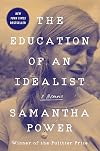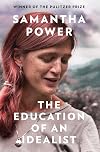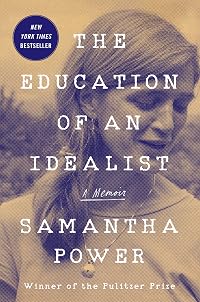
The Education of an Idealist: A Memoir
by Samantha Power
On This Page
Description
A NEW YORK TIMES, WALL STREET JOURNAL, AND USA TODAY BESTSELLERONE OF AUDIBLE'S BEST AUDIOBOOKS OF 2019
A NEW YORK TIMES NOTABLE BOOK OF 2019
- ONE OF TIME'S MUST-READ BOOKS OF 2019
- AN ECONOMIST BOOK OF THE YEAR
- A WASHINGTON POST NOTABLE BOOK OF 2019
- A PUBLISHERS WEEKLY BEST BOOK OF 2019 "Her highly personal and reflective memoir . . . is a must-read for anyone who cares about our role in a changing world."—President Barack Obama
An intimate, powerful, and
In her memoir, Power offers an urgent response to the question "What can one person do?" and a call for a clearer eye, a kinder heart, and a more open and civil hand in our politics and daily lives. The Education of an Idealist traces Power's distinctly American journey from immigrant to war correspondent to presidential Cabinet official. In 2005, her critiques of US foreign policy caught the eye of newly elected senator Barack Obama, who invited her to work with him on Capitol Hill and then on his presidential campaign. After Obama was elected president, Power went from being an activist outsider to a government insider, navigating the halls of power while trying to put her ideals into practice. She served for four years as Obama's human rights adviser, and in 2013, he named her US Ambassador to the United Nations, the youngest American to assume the role.
Power transports us from her childhood in Dublin to the streets of war-torn Bosnia to the White House Situation Room and the world of high-stakes diplomacy. Humorous and deeply honest, The Education of an Idealist lays bare the searing battles and defining moments of her life and shows how she juggled the demands of a 24/7 national security job with the challenge of raising two young children. Along the way, she illuminates the intricacies of politics and geopolitics, reminding us how the United States can lead in the world, and why we each have the opportunity to advance the cause of human dignity. Power's memoir is an unforgettable account of the power of idealism and of one person's fierce determination to make a difference.
"This is a wonderful book. [...] The interweaving of Power's personal story, family story, diplomatic history and moral arguments is executed seamlessly and with unblinking honesty."—THOMAS L. FRIEDMAN, The New York Times Book Review
"Honest, personal, revealing... about the development of a young woman's inner strength and self-knowledge."—COLM TÓIBÍN, author of Brooklyn and Nora Webster
"Truly engrossing."—RACHEL MADDOW
. show less
Tags
Recommendations













Member Reviews
Having read Power's book on genocide years ago, I wanted this memoir as soon as I read about it.
At the start, Power says "Some may interpret this book's title as suggesting that I began with lofty dreams about how one person could make a difference, only to be 'educated' by the brutish forces that I encountered. That's not the story that follows." She's right.
In this personal memoir, Power doesn't make excuses. She tracks her rise from child in Ireland to doctoral candidate to writer of A Problem from Hell to her position as ambassador to the UN under Barack Obama. In this trip she went from outside observer of human rights violations to a position where she could influence the actions of the US. Challenged to put her money where her show more mouth was, Power stood up.
In case after case, Power's voice did not diminish. She was not always successful in bringing about the larger changes or actions but she did not lose her focus. For me, reading about Power's commitment to what is often considered "weakness" is inspiring. Further, the glimpse into the presidency of Barack Obama is equally meaningful. I take away his advice: "don't admire the problem". He wanted solutions, not hand-wringing. He was willing to hear points of view at odds with his own, and at the same time did not back down when he believed he made the right choice.
I came away refreshed and willing to believe once again that for some politicians integrity means something. show less
At the start, Power says "Some may interpret this book's title as suggesting that I began with lofty dreams about how one person could make a difference, only to be 'educated' by the brutish forces that I encountered. That's not the story that follows." She's right.
In this personal memoir, Power doesn't make excuses. She tracks her rise from child in Ireland to doctoral candidate to writer of A Problem from Hell to her position as ambassador to the UN under Barack Obama. In this trip she went from outside observer of human rights violations to a position where she could influence the actions of the US. Challenged to put her money where her show more mouth was, Power stood up.
In case after case, Power's voice did not diminish. She was not always successful in bringing about the larger changes or actions but she did not lose her focus. For me, reading about Power's commitment to what is often considered "weakness" is inspiring. Further, the glimpse into the presidency of Barack Obama is equally meaningful. I take away his advice: "don't admire the problem". He wanted solutions, not hand-wringing. He was willing to hear points of view at odds with his own, and at the same time did not back down when he believed he made the right choice.
I came away refreshed and willing to believe once again that for some politicians integrity means something. show less
During her tenure in the U.S. National Security Council, Samantha Power was involved in the efforts to bring Bosnian Serb war criminal Ratko Mladić to justice. In her memoir, The Education of an Idealist, recounts an event in that process:
It’s representative of the worldview show more that Power expresses throughout the book that she would fail to see the irony in trying to advocate for human rights in a room built in the 1870s with the proceeds of U.S. colonial expansion and named for treaties that her country has broken time and time again (and continues to break!) while committing genocide against Native American peoples.
I use the phrase “her country” advisedly because for all the repeated reference to her “Irish roots” and her story as an immigrant from Ireland to the United States, Power set aside her Irishness as determinedly as she worked to erase any trace of Dublin from her accent. I don’t say that lightly, or because I think it’s impossible to be both Irish and American. I say that because Power has whole-heartedly embraced the concept of American exceptionalism, with its equation of military power and economic hegemony with “greatness”; the idea of the U.S. as a country uniquely composed of immigrants (Australia, New Zealand, Canada, and, indeed, Ireland, all have a greater percentage of foreign-born residents as of 2019 than does the U.S.) which allows those immigrants and their children opportunities that they’d never have in any other country (my politics don’t intersect much with those of Leo Varadkar, but I can’t deny that he was Taoiseach: with a dad from India, openly gay, and agnostic. Try having someone like that elected as head of government in the Greatest Country in the WorldTM).
(It’s also clear that Power comes from a far more privileged background than she’s ever quite willing to explicitly admit to the reader. For someone from Ireland, however, it’s obvious that anyone who was born to squash-playing, “Mum”-saying, university graduate surgeon parents in 1970s Ireland and whose first school was bloody Mount Anville (fee-paying suburban Dublin school) didn’t exactly come from the wrong side of the tracks (she was raised in Ballsbridge for feck’s sake). No matter how much she talks about how moving to the U.S. gave her opportunities she wouldn’t have had if she’d stayed in Ireland, it’s clear that these were differences of type rather than kind.)
I’m not saying that The Education of an Idealist isn’t often an interesting and informative read, one which shows how an administration works and how practical considerations, bad luck, or other circumstances can force unsatisfying compromises. I also don’t think that Power is a moustache-twirling villain who feigns an interest in human rights and the prevention of war crimes in order to get ahead in politics—after all, as the current U.S. administration is proving to the world daily, it’s possible to get ahead with absolutely no ethics at all! Plus her work as U.N. Ambassador did show a commitment to LGBT rights, combatting the Ebola outbreak in 2014, and dealing with the shamefully persistent phenomenon of U.N. peacekeepers committing sexual assaults of the populations whom they are tasked with protecting.
But ultimately this is a book which provides a case study of how, with the best will in the world, good intentions can keep on paving that road to hell. show less
”…we invited the Serbian president’s chief of staff, Miki Rakić, to the White House. David, who had been a theater director in college and always had an eye for the mise-en-scène, reserved the ornate Indian Treaty Room in the EEOB for our meeting. He thought the intricate gold and marble detailing and the kaleidoscopically tiled floor would serve as a fitting backdrop to my reciting the benefits that would accrue to Serbia if Mladić were rounded up.”
It’s representative of the worldview show more that Power expresses throughout the book that she would fail to see the irony in trying to advocate for human rights in a room built in the 1870s with the proceeds of U.S. colonial expansion and named for treaties that her country has broken time and time again (and continues to break!) while committing genocide against Native American peoples.
I use the phrase “her country” advisedly because for all the repeated reference to her “Irish roots” and her story as an immigrant from Ireland to the United States, Power set aside her Irishness as determinedly as she worked to erase any trace of Dublin from her accent. I don’t say that lightly, or because I think it’s impossible to be both Irish and American. I say that because Power has whole-heartedly embraced the concept of American exceptionalism, with its equation of military power and economic hegemony with “greatness”; the idea of the U.S. as a country uniquely composed of immigrants (Australia, New Zealand, Canada, and, indeed, Ireland, all have a greater percentage of foreign-born residents as of 2019 than does the U.S.) which allows those immigrants and their children opportunities that they’d never have in any other country (my politics don’t intersect much with those of Leo Varadkar, but I can’t deny that he was Taoiseach: with a dad from India, openly gay, and agnostic. Try having someone like that elected as head of government in the Greatest Country in the WorldTM).
(It’s also clear that Power comes from a far more privileged background than she’s ever quite willing to explicitly admit to the reader. For someone from Ireland, however, it’s obvious that anyone who was born to squash-playing, “Mum”-saying, university graduate surgeon parents in 1970s Ireland and whose first school was bloody Mount Anville (fee-paying suburban Dublin school) didn’t exactly come from the wrong side of the tracks (she was raised in Ballsbridge for feck’s sake). No matter how much she talks about how moving to the U.S. gave her opportunities she wouldn’t have had if she’d stayed in Ireland, it’s clear that these were differences of type rather than kind.)
I’m not saying that The Education of an Idealist isn’t often an interesting and informative read, one which shows how an administration works and how practical considerations, bad luck, or other circumstances can force unsatisfying compromises. I also don’t think that Power is a moustache-twirling villain who feigns an interest in human rights and the prevention of war crimes in order to get ahead in politics—after all, as the current U.S. administration is proving to the world daily, it’s possible to get ahead with absolutely no ethics at all! Plus her work as U.N. Ambassador did show a commitment to LGBT rights, combatting the Ebola outbreak in 2014, and dealing with the shamefully persistent phenomenon of U.N. peacekeepers committing sexual assaults of the populations whom they are tasked with protecting.
But ultimately this is a book which provides a case study of how, with the best will in the world, good intentions can keep on paving that road to hell. show less
Summary: A memoir on immigrant-American, war correspondent, human rights activist, and diplomat Samantha Power.
Samantha Power has led an interesting life, by any measure. Born in Ireland, she emigrated with her mother Vera to the United States as a young girl, leaving an alcoholic father who eventually drank himself to death at a young age. She and her mother became naturalized citizens and Vera married Eddie, who provided not only the love but the stability she needed. She played basketball and ran cross country in high school and is an avid baseball fan. After graduating from Yale, she ended up as a freelance war correspondent in the former Yugoslavia, where she encountered the genocidal efforts against Bosnian Muslims, culminating in show more Srebenica. Returning to the U.S. she plunged into law school while doing the research on her Pulitzer Prize-winning book, A Problem From Hell, a history of genocide in the 20th century.
She returned to Harvard, teaching at the Kennedy School for Government and serving as Executive Director of the Carr Center for Human Rights Policy. She left Harvard in 2005 for a one-year fellowship with then-Senator Barack Obama, helping shape his efforts to press for American intervention in Darfur. She campaigned for Obama, resigning at one point, when what she thought was an off-the-record conversation about Senator Clinton was published. She later joined his administrator on the National Security Council, where she served as a Special Assistant to the President and Senior Director for Multilateral Affairs and Human Rights. In 2013, she was appointed the U.S. Ambassador to the United Nations, where she served until January 2017.
Leaving public office in 2017 afforded more time with her husband, legal scholar at Harvard, Cass Sunstein, and their two children, Declan and Rian as well as resuming teaching duties at Harvard Law School and the Kennedy. She returned to government in 2021 as the Administrator for the United States Agency for International Development.
The Education of an Idealist covers everything except for that last sentence. Fitting for an interesting life, Power tells an interesting story, an un-put-downable story at least for me. Beyond the curriculum vitae outlined above, we come to understand the shaping of a woman passionate in the pursuit of human rights and how she persisted when her passion ran up against political realities and limits. This is a woman who first of all knew both love and loss, and understood both the pain of feeling she’d abandoned a father, and the flourishing she experienced with her mother and step-father who were for her every step of the way. I was fascinated to learn that until about mid-way through her time at Yale, she was more interested in sports than international affairs. A European trip awakened her to genocide, oppression, and the fissures that would eventually erupt in Yugoslavia. An internship with Mort Abramowitz where she researched the Bosnian conflict led her to the adventure of trying to see that war up close as a war correspondent–setting the precedent for her commitment to get “on the ground” whenever she could to understand a crisis–whether the girls kidnapped by Boko Haram, the Ebola crisis, or even the missions of other U.N. ambassadors, who she visited rather than making them call on her.
The narrative is a story of a passion to save human lives, and to stand up for human flourishing, where ideals often ran up against reality. She learned how hard it is to do better. One senses her frustration when she thought she had a commitment from the President for U.S. intervention in Syria after Assad’s nerve gas attacks, only for him to backpedal and fail to secure Senate support. She learned to do what could be done, negotiating protocols with Russia to remove Assad’s chemical weapons. We see her frustration when political realities with Turkey prevent Obama from naming atrocities against the Armenians a century ago genocide. And we see how hurtful accusations against her could be when she had fought for the very things she was accused of not doing.
Part of the narrative is how she found strength in fostering community with other women both in her own government, and with women ambassadors at the UN. One of her last acts was to call attention to twenty women being held as political prisoners. Her efforts, and the political pressure applied, resulted in the release of 14 before she left office. They also, along with her live-in nanny, Maria, help her wrestle with the tension of high-level government service and parenting, and the unavoidable tradeoffs this involves.
Perhaps in light of the present situation with Russia and Ukraine, Power devoted her last speech at the UN to warning the world of the efforts of Russia to sow havoc, whether supporting Assad’s genocidal efforts to eliminate his opposition, the ruthless annexation of Crimea from Ukraine (bite by bite?), and the interference in American elections. I admire the fire with which she spoke:
“Are you truly incapable of shame? Is there literally nothing that can shame you? Is there no act of barbarism against civilians, no execution of a child that gets under your skin, that just creeps you out a little bit? Is there nothing you will not lie about or justify?"
Power also reminds us of the difference immigrants make in our country, whether herself as an Irish naturalized US citizen, or the Turkish immigrant who founded Chobani Yogurt or her nanny Maria, to whom she administered the oath of citizenship. Her passion for refugees energized her efforts to get those “in the pipeline” settled as the doors were closing.
The one question that Power fails to wrestle with is the tension between human rights advocacy and the question of whether there are limits to what any given government can or should do. These are the realities her idealism bumps up against. Given the unique place of America in the world, should vigorous international human rights advocacy be a cardinal doctrine of our foreign policy, and should this be backed with American military force if necessary? This seems implicit in Power’s advocacy, but this is not defended, and so foreign policy seems to end up a patchwork of idealism and realpolitik. Power’s resort at the end is that if we cannot change the world, then we change the smaller and individual worlds we can. That may be a good personal response, but is it sufficient for governments?
That said, this is a memoir and not a foreign policy treatise. In addition to a riveting read, I am grateful for the example of someone who does not give way to cynicism or despair, who works for the possible when the ideal eludes one. The importance of bedrock convictions, the support of a strong, loving family, and finding community are lessons from Power’s life in how to sustain one’s ideals, even as one is “educated” to the realities that bump up against the ideal. Hopefully it will help inspire a new generation, including many women, to the public service for the common good which has always been vital to the health of our country and our world. show less
Samantha Power has led an interesting life, by any measure. Born in Ireland, she emigrated with her mother Vera to the United States as a young girl, leaving an alcoholic father who eventually drank himself to death at a young age. She and her mother became naturalized citizens and Vera married Eddie, who provided not only the love but the stability she needed. She played basketball and ran cross country in high school and is an avid baseball fan. After graduating from Yale, she ended up as a freelance war correspondent in the former Yugoslavia, where she encountered the genocidal efforts against Bosnian Muslims, culminating in show more Srebenica. Returning to the U.S. she plunged into law school while doing the research on her Pulitzer Prize-winning book, A Problem From Hell, a history of genocide in the 20th century.
She returned to Harvard, teaching at the Kennedy School for Government and serving as Executive Director of the Carr Center for Human Rights Policy. She left Harvard in 2005 for a one-year fellowship with then-Senator Barack Obama, helping shape his efforts to press for American intervention in Darfur. She campaigned for Obama, resigning at one point, when what she thought was an off-the-record conversation about Senator Clinton was published. She later joined his administrator on the National Security Council, where she served as a Special Assistant to the President and Senior Director for Multilateral Affairs and Human Rights. In 2013, she was appointed the U.S. Ambassador to the United Nations, where she served until January 2017.
Leaving public office in 2017 afforded more time with her husband, legal scholar at Harvard, Cass Sunstein, and their two children, Declan and Rian as well as resuming teaching duties at Harvard Law School and the Kennedy. She returned to government in 2021 as the Administrator for the United States Agency for International Development.
The Education of an Idealist covers everything except for that last sentence. Fitting for an interesting life, Power tells an interesting story, an un-put-downable story at least for me. Beyond the curriculum vitae outlined above, we come to understand the shaping of a woman passionate in the pursuit of human rights and how she persisted when her passion ran up against political realities and limits. This is a woman who first of all knew both love and loss, and understood both the pain of feeling she’d abandoned a father, and the flourishing she experienced with her mother and step-father who were for her every step of the way. I was fascinated to learn that until about mid-way through her time at Yale, she was more interested in sports than international affairs. A European trip awakened her to genocide, oppression, and the fissures that would eventually erupt in Yugoslavia. An internship with Mort Abramowitz where she researched the Bosnian conflict led her to the adventure of trying to see that war up close as a war correspondent–setting the precedent for her commitment to get “on the ground” whenever she could to understand a crisis–whether the girls kidnapped by Boko Haram, the Ebola crisis, or even the missions of other U.N. ambassadors, who she visited rather than making them call on her.
The narrative is a story of a passion to save human lives, and to stand up for human flourishing, where ideals often ran up against reality. She learned how hard it is to do better. One senses her frustration when she thought she had a commitment from the President for U.S. intervention in Syria after Assad’s nerve gas attacks, only for him to backpedal and fail to secure Senate support. She learned to do what could be done, negotiating protocols with Russia to remove Assad’s chemical weapons. We see her frustration when political realities with Turkey prevent Obama from naming atrocities against the Armenians a century ago genocide. And we see how hurtful accusations against her could be when she had fought for the very things she was accused of not doing.
Part of the narrative is how she found strength in fostering community with other women both in her own government, and with women ambassadors at the UN. One of her last acts was to call attention to twenty women being held as political prisoners. Her efforts, and the political pressure applied, resulted in the release of 14 before she left office. They also, along with her live-in nanny, Maria, help her wrestle with the tension of high-level government service and parenting, and the unavoidable tradeoffs this involves.
Perhaps in light of the present situation with Russia and Ukraine, Power devoted her last speech at the UN to warning the world of the efforts of Russia to sow havoc, whether supporting Assad’s genocidal efforts to eliminate his opposition, the ruthless annexation of Crimea from Ukraine (bite by bite?), and the interference in American elections. I admire the fire with which she spoke:
“Are you truly incapable of shame? Is there literally nothing that can shame you? Is there no act of barbarism against civilians, no execution of a child that gets under your skin, that just creeps you out a little bit? Is there nothing you will not lie about or justify?"
Power also reminds us of the difference immigrants make in our country, whether herself as an Irish naturalized US citizen, or the Turkish immigrant who founded Chobani Yogurt or her nanny Maria, to whom she administered the oath of citizenship. Her passion for refugees energized her efforts to get those “in the pipeline” settled as the doors were closing.
The one question that Power fails to wrestle with is the tension between human rights advocacy and the question of whether there are limits to what any given government can or should do. These are the realities her idealism bumps up against. Given the unique place of America in the world, should vigorous international human rights advocacy be a cardinal doctrine of our foreign policy, and should this be backed with American military force if necessary? This seems implicit in Power’s advocacy, but this is not defended, and so foreign policy seems to end up a patchwork of idealism and realpolitik. Power’s resort at the end is that if we cannot change the world, then we change the smaller and individual worlds we can. That may be a good personal response, but is it sufficient for governments?
That said, this is a memoir and not a foreign policy treatise. In addition to a riveting read, I am grateful for the example of someone who does not give way to cynicism or despair, who works for the possible when the ideal eludes one. The importance of bedrock convictions, the support of a strong, loving family, and finding community are lessons from Power’s life in how to sustain one’s ideals, even as one is “educated” to the realities that bump up against the ideal. Hopefully it will help inspire a new generation, including many women, to the public service for the common good which has always been vital to the health of our country and our world. show less
I was slightly overwhelmed when I picked up Samantha's memoir---heavy, and LONG---but I was immediately absorbed and finally decided that this has to be one of my very most favorite books of the year---and I am SO impressed with Samantha. She filled in a lot of history for me personally that I had skipped over with her closeup and very personal view of what was happening in her own life in relation to her function as a government employee, and then, our country's UN representative. It's easy to not pay enough attention to what is happening in the world when one's own life take most of the attention. I am amazed with what Samantha Power was able to accomplish. Keeping such close track of what was happening was definitely aided by her show more experiences as a journalist but how fortunate the reader is to have the results of all of that work in this book. What will her next memoir include years from now? show less
Not as good as I had expected. Power is an idealist, unwilling to let reality intrude on her dreams even if that means that hundreds die to save one. Obama seems to have used her more as an advocate for extreme idealism, than to seriously listen to her policy positions. She has very little big or long-term perspective. Climate change, for example, barely gets even a mention! Often, she comes across as naive, for example,
> Although the effects of this red-line episode were hard to measure, a large number of foreign diplomats told me afterward that America's "flip-flopping" had damaged President Obamas global reputation. I found much of this criticism maddening, given that many of these same ambassadors represented countries that would show more never have stood publicly with the United States had we gone ahead with air strikes.
It isn't their job to stand behind the US, so why should this be maddening?
Unfortunately, it also gets really boring at times. There is a whole chapter on how she prepared for her Senate confirmation hearings by extensively rehearsing giving meaningless answers to run out each Senator's five-minute clock. Why should we care?
That said, her experiences in Bosnia are interesting. I wonder if maybe Western journalists and journalism are why these people end up blaming the West for their problems. They naturally don't understand how journalists can just be observers. The sections on how she worked as UN ambassador are also interesting.
> Many journalists in Bosnia brought a similar focus to their work. High-minded though it sounds, we wanted our articles to matter and our governments' actions to change. I was aware that this aspiration was more reminiscent of an editorial writer's ambition than that of a traditional reporter, whose job was to document what she saw. But when I wrote an article—no matter how obscure the publication where it appeared—I hoped President Clinton would see it.
> Even after violent incidents in Dublin, I do not recall ever fearing that my mother would not make it home from the hospital or my dad from the pub. At the same time, my early years in Dublin meant that I never saw civil strife as something that happened "over there" or to "those people."
> When I first visited, although the war had already been under way for nearly two years, I spoke to many Bosnians who still held out hope that the United States would rescue them. Their knowledge of the political dynamics in Washington was striking. The columns of American opinion writers (particularly Anthony Lewis and William Safire of the New York Times) were translated and, despite the shortage of paper and ink, widely circulated. Electricity was intermittent, and smuggled batteries for shortwave radios were only sold at exorbitant prices. Nonetheless, many residents knew which members of the US Senate were pushing for air strikes, while some even tracked when these politicians were up for reelection. Often my Bosnian neighbors informed me of obscure happenings in the Clinton administration.
> When I drove with Stacy Sullivan of Newsweek to UN headquarters for the daily press briefing in Sarajevo, we typically passed a cluster of photographers in an expectant scrum at the entrance to the main road, which was known as Sniper Alley. The still and video photographers had their cameras ready, knowing that someone was likely to get shot by a Bosnian Serb sniper as he or she made a mad dash across this exposed portion of road. Elizabeth Rubin, a writer with Harper's who would become a close friend, once saw a woman who managed to survive the crossing yell back at one of the perched photographers, "No work for you today, asshole. I made it alive."
> The words, the photographs, the videos—nothing had changed the President's mind. While Sarajevans had once thought of Western journalists as messengers on their behalf, they had now begun to see us as ambassadors of idle nations. No matter how many massacres we covered, Western governments seemed determined to steer clear of the conflict.
> I begged him to write an editorial demanding that the US government secure David's release before proceeding with the Dayton talks. "He's the only Western eyewitness to the mass graves," I implored. "He's in profound danger."
> the Oxford English Dictionary had added the term upstander, which it wrote was "coined in 2002 by the Irish-American diplomat Samantha Power."
> The Bat Cave, John explained to me, is inside each of our heads—either a place of great stillness, or, on other occasions, a place where bats fly around, flapping their wings in sometimes frantic ways. Being "in the Bat Cave" thereby became our shorthand for times when self-doubt was intruding. The bats fluttered wildly in my head when I worked in Obama's Senate office, and while I tried to slay them by reminding myself "it's not you; it's them," that mantra rarely worked. Eleanor Roosevelt wrote movingly about having her own equivalent of a Bat Cave, but in the end, she found consolation by telling herself, "Great minds discuss ideas; average minds discuss events; small minds discuss people."
> In therapy, I became aware of a deeply submerged, misplaced certainty that if my brother and I had remained at home in Dublin, our father would not have died. For years, it seemed, I had been subconsciously blaming myself for my dad's death. Because I had long accepted that alcoholism was a "disease" over which my father was powerless, I believed that it had been my job to save him. But now, with the help of John, Al-Anon, and therapy, I saw that my child-self had not been a capable agent in a grown-up world; I finally recognized that I had been helpless. For the first time in my life—at the age of thirty-five—I began grieving over the monumental loss and rupture that I had experienced. And I started to stop seeing that loss as my fault.
> Cass never put personal sentiments in emails, but many days he would send me an SOS in code: "CWGHN?" (Can We Go Home Now?).
> "Mr. President, the talks are not going to work," I said. "We know that the Turks are engaging in the normalization process precisely in order to convince you not to recognize the genocide. But they aren't serious beyond that. As soon as they get through April twenty-fourth, they'll refuse any compromise." "Well, you know what?" he said sharply, before walking away, "I don't have the luxury of not trying for peace."
> when I met the Mexican Ambassador to the UN for the first time, he chastised me for publicizing something I had discussed during a private UN lunch. "You have to decide whether you are a diplomat or an activist," he said. "You can't be both." "I am both," I told him, "and we should all be both. I’m not going to drink wine at a lunch with the Cuban foreign minister and pretend his government is not responsible for killing one of the country’s best." "I hear you," he said, "but people won't speak freely to you if they think you are more interested in making a media splash than engaging in real dialogue."
> Thomson invoked what he called the "effectiveness trap." US officials unhappy with a policy, he wrote, typically deceive themselves into believing that they are doing more good by staying in government than they could by leaving. show less
> Although the effects of this red-line episode were hard to measure, a large number of foreign diplomats told me afterward that America's "flip-flopping" had damaged President Obamas global reputation. I found much of this criticism maddening, given that many of these same ambassadors represented countries that would show more never have stood publicly with the United States had we gone ahead with air strikes.
It isn't their job to stand behind the US, so why should this be maddening?
Unfortunately, it also gets really boring at times. There is a whole chapter on how she prepared for her Senate confirmation hearings by extensively rehearsing giving meaningless answers to run out each Senator's five-minute clock. Why should we care?
That said, her experiences in Bosnia are interesting. I wonder if maybe Western journalists and journalism are why these people end up blaming the West for their problems. They naturally don't understand how journalists can just be observers. The sections on how she worked as UN ambassador are also interesting.
> Many journalists in Bosnia brought a similar focus to their work. High-minded though it sounds, we wanted our articles to matter and our governments' actions to change. I was aware that this aspiration was more reminiscent of an editorial writer's ambition than that of a traditional reporter, whose job was to document what she saw. But when I wrote an article—no matter how obscure the publication where it appeared—I hoped President Clinton would see it.
> Even after violent incidents in Dublin, I do not recall ever fearing that my mother would not make it home from the hospital or my dad from the pub. At the same time, my early years in Dublin meant that I never saw civil strife as something that happened "over there" or to "those people."
> When I first visited, although the war had already been under way for nearly two years, I spoke to many Bosnians who still held out hope that the United States would rescue them. Their knowledge of the political dynamics in Washington was striking. The columns of American opinion writers (particularly Anthony Lewis and William Safire of the New York Times) were translated and, despite the shortage of paper and ink, widely circulated. Electricity was intermittent, and smuggled batteries for shortwave radios were only sold at exorbitant prices. Nonetheless, many residents knew which members of the US Senate were pushing for air strikes, while some even tracked when these politicians were up for reelection. Often my Bosnian neighbors informed me of obscure happenings in the Clinton administration.
> When I drove with Stacy Sullivan of Newsweek to UN headquarters for the daily press briefing in Sarajevo, we typically passed a cluster of photographers in an expectant scrum at the entrance to the main road, which was known as Sniper Alley. The still and video photographers had their cameras ready, knowing that someone was likely to get shot by a Bosnian Serb sniper as he or she made a mad dash across this exposed portion of road. Elizabeth Rubin, a writer with Harper's who would become a close friend, once saw a woman who managed to survive the crossing yell back at one of the perched photographers, "No work for you today, asshole. I made it alive."
> The words, the photographs, the videos—nothing had changed the President's mind. While Sarajevans had once thought of Western journalists as messengers on their behalf, they had now begun to see us as ambassadors of idle nations. No matter how many massacres we covered, Western governments seemed determined to steer clear of the conflict.
> I begged him to write an editorial demanding that the US government secure David's release before proceeding with the Dayton talks. "He's the only Western eyewitness to the mass graves," I implored. "He's in profound danger."
> the Oxford English Dictionary had added the term upstander, which it wrote was "coined in 2002 by the Irish-American diplomat Samantha Power."
> The Bat Cave, John explained to me, is inside each of our heads—either a place of great stillness, or, on other occasions, a place where bats fly around, flapping their wings in sometimes frantic ways. Being "in the Bat Cave" thereby became our shorthand for times when self-doubt was intruding. The bats fluttered wildly in my head when I worked in Obama's Senate office, and while I tried to slay them by reminding myself "it's not you; it's them," that mantra rarely worked. Eleanor Roosevelt wrote movingly about having her own equivalent of a Bat Cave, but in the end, she found consolation by telling herself, "Great minds discuss ideas; average minds discuss events; small minds discuss people."
> In therapy, I became aware of a deeply submerged, misplaced certainty that if my brother and I had remained at home in Dublin, our father would not have died. For years, it seemed, I had been subconsciously blaming myself for my dad's death. Because I had long accepted that alcoholism was a "disease" over which my father was powerless, I believed that it had been my job to save him. But now, with the help of John, Al-Anon, and therapy, I saw that my child-self had not been a capable agent in a grown-up world; I finally recognized that I had been helpless. For the first time in my life—at the age of thirty-five—I began grieving over the monumental loss and rupture that I had experienced. And I started to stop seeing that loss as my fault.
> Cass never put personal sentiments in emails, but many days he would send me an SOS in code: "CWGHN?" (Can We Go Home Now?).
> "Mr. President, the talks are not going to work," I said. "We know that the Turks are engaging in the normalization process precisely in order to convince you not to recognize the genocide. But they aren't serious beyond that. As soon as they get through April twenty-fourth, they'll refuse any compromise." "Well, you know what?" he said sharply, before walking away, "I don't have the luxury of not trying for peace."
> when I met the Mexican Ambassador to the UN for the first time, he chastised me for publicizing something I had discussed during a private UN lunch. "You have to decide whether you are a diplomat or an activist," he said. "You can't be both." "I am both," I told him, "and we should all be both. I’m not going to drink wine at a lunch with the Cuban foreign minister and pretend his government is not responsible for killing one of the country’s best." "I hear you," he said, "but people won't speak freely to you if they think you are more interested in making a media splash than engaging in real dialogue."
> Thomson invoked what he called the "effectiveness trap." US officials unhappy with a policy, he wrote, typically deceive themselves into believing that they are doing more good by staying in government than they could by leaving. show less
Beautifully read by the author, the memoir suffers from the same tendency to document every single thing that happened that one sees in both Obama's and Bolton's recent books. Even for those of us who lived through the period in question, it's a fascinating reminder of everything that has happened globally and domestically in the last 40 years
Like many people who are able to drive real change, Powers is an idealist who can't let go of a passionately held value, no matter how much trouble sticking to it might get her into. It's an admirable quality, and I'm not sure I would want to know her well.
Like many people who are able to drive real change, Powers is an idealist who can't let go of a passionately held value, no matter how much trouble sticking to it might get her into. It's an admirable quality, and I'm not sure I would want to know her well.
I didn't expect to enjoy this book but Ambassador Power surprised me: this is a much more personal book than "A Problem from Hell" which I liked very much. She reveals quite a bit of herself while also portraying the life of a working diplomat with grace.
Members
- Recently Added By
Lists

Books recommended by Barack Obama
295 works; 28 members

Club Read's Recommended Nonfiction Written by Women
618 works; 30 members

Office Library
41 works; 1 member
Author Information

7+ Works 3,409 Members
Samantha Power is the Anna Lindh Professor of Practice of Global Leadership and Public Policy at Harvard's John F. Kennedy School of Government
Awards and Honors
Awards
Distinctions
Common Knowledge
- People/Characters
- Samantha Power
Classifications
- Genres
- Biography & Memoir, Politics and Government, General Nonfiction, Nonfiction, History
- DDC/MDS
- 327.2092 — Society, government, & culture Political science International Relations: Spies Diplomacy Biography And History Biography
- LCC
- E901.1 .P69 .A3 — History of the United States Twenty-first century
- BISAC
Statistics
- Members
- 772
- Popularity
- 36,233
- Reviews
- 23
- Rating
- (4.29)
- Languages
- Dutch, English
- Media
- Paper, Audiobook, Ebook
- ISBNs
- 16
- ASINs
- 4