On This Page
Description
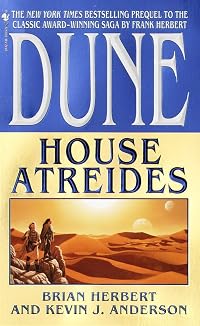
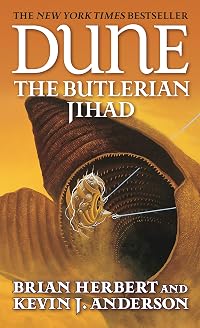
Frank Herbert's award-winning Dune chronicles captured the imagination of millions of readers worldwide. By the time of his death in 1986, Herbert had completed six novels in the series, but much of his vision remained unwritten. Now, working from his father's recently discovered files, Brian Herbert and bestselling novelist Kevin J. Anderson collaborate on a new novel, the prelude to Dune-where we step onto the planet Arrakis decades before Dune's hero, Paul Muad'Dib Atreides, walks its show more sands.Here is the rich and complex world that Frank Herbert created, in the time leading up to the momentous events of Dune. As Emperor Elrood's son plots a subtle regicide, young Leto Atreides leaves for a year's education on the mechanized world of Ix; a planetologist named Pardot Kynes seeks the secrets of Arrakis; and the eight-year-old slave Duncan Idaho is hunted by his cruel masters in a terrifying game from which he vows escape and vengeance. But none can envision the fate in store for them: one that will make them renegades-and shapers of history. show lessTags
Recommendations















Member Reviews
Ever wonder what the spinning corpse of Frank Herbert sounds like? If so, then you've probably not read the new Dune novels written by Brian Herbert and Kevin J. Anderson.
Now, there was a time when Dune was my favorite science fiction series. I loved the vast culture, the socioeconomic overview, the religions, the everything. And, I was sad when I discovered that Frank Herbert passed away leaving his last book unfinished.
Before I got into Dune, I loved reading Star Wars novels. And who hasn't read a star wars novel without hearing the name "Kevin J. Anderson"? I, of course, stopped reading Star Wars novels when I realized that they were mostly formulaic, and that I didn't want to devote my limited bookshelf space to glorified fan show more fiction. Also, I got tired of the fact that KJA would always "push the envelope," introducing characters more powerful than Luke Skywalker, giving them ships capable of destroying the universe, and then letting them gallivant through the galaxy doing whatever they want until they learn a valuable lesson.
So, when I heard that Brian Herbert was using KJA to write more Dune books, my heart sank. Nevertheless, I decided to pick up the first one and at least give it a shot. Maybe Herbert learned a little about writing from daddy, and was only using KJA as a big name to sell the books.
Wrong. I'm not sure what percentage of this book is actually written by Herbert, but it reads exactly like every other KJA book I've had the misfortune of reading: like glorified fan fiction. And sure enough, KJA introduces characters that are MORE POWERFUL than Paul Atriedes, and able to do all sorts of amazing feats, and this all happened before Paul was EVEN BORN!
Here's some fan fiction of my own: "After the publication of Dune: House Atreides, the mystical forces of the universe were so unsettled that they shattered the barrier between life and death. The zombie Frank Herbert rose from his grave, and would have eaten the brains of the people who wrote and published the piece of crap that had word "Dune" in the title, had they any brains to eat. Instead, he shambled over to his Underwood and pecked out the rest of Dune 7, which was promptly published to wide acclaim. As he returned to his grave after a particularly harrowing signing, he dragged along a large burlap sack with the muffled sounds of screaming coming from within. After that, there were no more glorified fan fiction books being published by a particularly prosaic writer."
You'll probably like this book if you love the spoonfed dreck that KJA normally defecates onto paper. Otherwise, you'll probably only read this book if you LOVE Dune, and will read anything with the word "Dune" in the title, and named your first child "Frank Herbert Paul Maud'Dib of Dune Jones." And if she can forgive you, maybe you can forgive Brian Herbert. show less
Now, there was a time when Dune was my favorite science fiction series. I loved the vast culture, the socioeconomic overview, the religions, the everything. And, I was sad when I discovered that Frank Herbert passed away leaving his last book unfinished.
Before I got into Dune, I loved reading Star Wars novels. And who hasn't read a star wars novel without hearing the name "Kevin J. Anderson"? I, of course, stopped reading Star Wars novels when I realized that they were mostly formulaic, and that I didn't want to devote my limited bookshelf space to glorified fan show more fiction. Also, I got tired of the fact that KJA would always "push the envelope," introducing characters more powerful than Luke Skywalker, giving them ships capable of destroying the universe, and then letting them gallivant through the galaxy doing whatever they want until they learn a valuable lesson.
So, when I heard that Brian Herbert was using KJA to write more Dune books, my heart sank. Nevertheless, I decided to pick up the first one and at least give it a shot. Maybe Herbert learned a little about writing from daddy, and was only using KJA as a big name to sell the books.
Wrong. I'm not sure what percentage of this book is actually written by Herbert, but it reads exactly like every other KJA book I've had the misfortune of reading: like glorified fan fiction. And sure enough, KJA introduces characters that are MORE POWERFUL than Paul Atriedes, and able to do all sorts of amazing feats, and this all happened before Paul was EVEN BORN!
Here's some fan fiction of my own: "After the publication of Dune: House Atreides, the mystical forces of the universe were so unsettled that they shattered the barrier between life and death. The zombie Frank Herbert rose from his grave, and would have eaten the brains of the people who wrote and published the piece of crap that had word "Dune" in the title, had they any brains to eat. Instead, he shambled over to his Underwood and pecked out the rest of Dune 7, which was promptly published to wide acclaim. As he returned to his grave after a particularly harrowing signing, he dragged along a large burlap sack with the muffled sounds of screaming coming from within. After that, there were no more glorified fan fiction books being published by a particularly prosaic writer."
You'll probably like this book if you love the spoonfed dreck that KJA normally defecates onto paper. Otherwise, you'll probably only read this book if you LOVE Dune, and will read anything with the word "Dune" in the title, and named your first child "Frank Herbert Paul Maud'Dib of Dune Jones." And if she can forgive you, maybe you can forgive Brian Herbert. show less
After I began to read all the various Dune novels in chronological order, I was worried the Brian Herbert and Kevin J Anderson books would burn me out. So many people have given them such drastically negative reviews, I was unsure what would happen. First I read the Legends of Dune trilogy, which I enjoyed quite a bit as a space opera on it's own, but now I am getting into the direct prequels and was worried they would fall flat. Thankfully I discovered the book was very enjoyable, even more so than the Legends trilogy. They are not quite as good as Frank Herbert of course, but very few writers in history have been. This book focused a bit more on politics than action, a stark contrast to the Legends of Dune trilogy, and while I thought show more this would be boring it ended up providing a really interesting view of the Dune universe leading up to the original novel. Overall the novel did a great job fleshing out the various characters, one could easily read this without ever touching the original novel and not feel confused or lost. I still do not understand the hate and vitriol people have for Brian Herbert deciding to continue the story his father created, and feel he definitely does the original series justice. Even if you don't like the books, they do nothing to take away from the original. I for one am glad he decided to finish the original series and write various other books in the Dune universe. show less
This is the first volume of Brian and Kevin’s Houses of Dune prequel trilogy. It reads better than the Legends of Dune trilogy that precedes it in chronological (not publication) order. I found the Legends trilogy to be mostly mean spirited with lots of wanton carnage. I suspect that was done by the authors to set the tone for why humanity bans all thinking machines. So this first book in the Houses of Dune trilogy was a refreshing change from that and, although still plot driven, had characters that seemed to this reader to be a little more fleshed out and not as cartoonish as in the Legends trilogy. Still not up to the standards of Frank Herbert but still worth reading for a Dune fan.
Not bad, but it's got problems.
I liked Dune, the novel, and I also liked the recent movie. I was interested in the comic, but find it has some of the same problems as the later novels in the series. There is often too much going on and the level of detail starts to chip away at the grandeur of the Dune universe.
I didn't like the galactic emperor being a doddering old man who is too easily worked over by a pair of chuckleheads. One of them is his son, suspect #1 in any regicides, and certainly someone that a wily ruler with 100+ years in power would keep an eye on. They poison the emperor through a childishly simple B&E on his bedroom. Really? The emperor of the the known universe doesn't have locks on his windows and cameras in his show more room?
There is also a lot of hoping around. GoT manages to do that well, with more characters, but I felt a little choppy here. The imperial palace, the factory world IX, Dune, Bene Gesserit scheming, and the Atreides home world is a lot to cover in one volume.
The art is only ok and the dialogue is a little flat. I'll give #3 a try, but I'm not enthused. show less
I liked Dune, the novel, and I also liked the recent movie. I was interested in the comic, but find it has some of the same problems as the later novels in the series. There is often too much going on and the level of detail starts to chip away at the grandeur of the Dune universe.
I didn't like the galactic emperor being a doddering old man who is too easily worked over by a pair of chuckleheads. One of them is his son, suspect #1 in any regicides, and certainly someone that a wily ruler with 100+ years in power would keep an eye on. They poison the emperor through a childishly simple B&E on his bedroom. Really? The emperor of the the known universe doesn't have locks on his windows and cameras in his show more room?
There is also a lot of hoping around. GoT manages to do that well, with more characters, but I felt a little choppy here. The imperial palace, the factory world IX, Dune, Bene Gesserit scheming, and the Atreides home world is a lot to cover in one volume.
The art is only ok and the dialogue is a little flat. I'll give #3 a try, but I'm not enthused. show less
I was at first hesitant when I learned that someone was going to "mess with" Frank Herbert's siminal Dune series. However, I like Kevin J. Anderson and it's always better to try a continuation by an author whose work you already enjoy. I am so glad I took the plunge! This prequel was excellent and I think it captured the spirit of Frank Herbert's work. Leto and Jessica are especially well done, but the machinations of the Bene Gesserit steal the book. I positively loved learning the background on how Jessica was conceived, how Leto won her heart and all the events that lead up to Paul.
The authors clearly stayed within canon when dveeloping the plot and though the writing style is not the same as Frabk Herbert's, I found it much easier show more to read. The novel flowed well. Overall, I highly recommend this to fans of Dune, though purists will no doubt find some issues with it. show less
The authors clearly stayed within canon when dveeloping the plot and though the writing style is not the same as Frabk Herbert's, I found it much easier show more to read. The novel flowed well. Overall, I highly recommend this to fans of Dune, though purists will no doubt find some issues with it. show less
Getting lost in the first of the Prequel Trilogy felt a bit like coming home. Herbert and Anderson's partnered writing has improved with each novel they have co-authored, and this feels entirely reminiscent of Frank Herbert’s works. They manage to emulate his style, diction, syntax, and mannerisms throughout the novel, which follows Paulus Atreides, Leto, Shaddam, Fenring, Emperor Elrood, Mohiam, Kynes, Stilgar, Vladimir, Rabban, Abulard, Rhombar, Thufir, Duncan, and others. (Yes, for die-hard Dune fans like myself every name in the above list is significant.)
As Shaddam and Fenring work to gain the throne, Prince Leto is busy learning and training. Kynes is sent as Imperial Planetologyst to Arrakis to try to better understand spice show more while Vladimir gains control of Arrakis and begins skimming and stockpiling melange. Duncan Idaho is used as a hunted child in ‘games’ for the Harkonnen guards and elite on Geidi Prime until he escapes and enters the service of an impressed Duke Paulus and Leto on Caladan. While Paulus spends his time participating in the grand spectacle of bullfights and teacheing Leto to both understand and be loved by their people, the Tleilaxu and Shaddam plan the takeover of Ix as part of an attempt to create synthetic spice. Leto travels to Ix to learn from House Vernius and the Bene Gesserit discover that they are only three generations from the culmination of their most secret breeding program-- the Kwisatz Haderach.
The novel is beautifully constructed and an easy way to fall back into the Dune universe. Familiar names in an earlier time show that the politics, economics, and power plays a generation before the time of Paul Atreides are as complex and ever changing as in the later (and the Butlerian era) Dune novels and the characters and stories as compelling. show less
As Shaddam and Fenring work to gain the throne, Prince Leto is busy learning and training. Kynes is sent as Imperial Planetologyst to Arrakis to try to better understand spice show more while Vladimir gains control of Arrakis and begins skimming and stockpiling melange. Duncan Idaho is used as a hunted child in ‘games’ for the Harkonnen guards and elite on Geidi Prime until he escapes and enters the service of an impressed Duke Paulus and Leto on Caladan. While Paulus spends his time participating in the grand spectacle of bullfights and teacheing Leto to both understand and be loved by their people, the Tleilaxu and Shaddam plan the takeover of Ix as part of an attempt to create synthetic spice. Leto travels to Ix to learn from House Vernius and the Bene Gesserit discover that they are only three generations from the culmination of their most secret breeding program-- the Kwisatz Haderach.
The novel is beautifully constructed and an easy way to fall back into the Dune universe. Familiar names in an earlier time show that the politics, economics, and power plays a generation before the time of Paul Atreides are as complex and ever changing as in the later (and the Butlerian era) Dune novels and the characters and stories as compelling. show less
Although I genuinely enjoy Frank Herbert’s original novels, these 2nd generation novels furtive attempts at capturing the essence of his universe lack finesse as well as grace (at least this one does). Having grown up reading Kevin J Anderson, I know him to be a strong writer with a firm grasp on characterization and form. I can only surmise that he deferred too much steering of the authorship to Brian, who I will refer to by his first name rather than his last to denote that he in no ways live up to Frank Herbert’s legacy. While the various plot points do manage to solidly encapsulate the evil vindictiveness of the Harkonnens and the Corrinos, the book is fracturous, with too many points of view in too many places with little show more connectivity, too few of which are female. In an effort to set the stage for the latter two books in the trilogy, a great many characters are introduced. While some lose their POV after the first couple chapters, other characters are given a great deal of time to develop.
The three characters that one would hope would have the most consequence, both from being original Herbertian characters, as well as figuring as protagonists on the buildup toward their birth rite novel, the Baron Vladimir Harkonnen, Duncan Idaho and Leto Atreides are all varieties of static. The Baron is given no valid reason for his early viscous attitudes, although Brian cleverly fashioned the impetus for his eventual bloated suspensor-assisted treachery. I considered labeling the Baron as an antagonists because probably anyone who's seen Dune would say that he is, except in this case everyone is an antagonist--virtually all of the book's characters are hedonistic, self-righteous and seek to sabotage everyone else (except for Pardot Kynes). Duncan Idaho wins the hand-wave grand prize for being a completely unbelievable pre-pubescent lone, cunning, planet-hopping soldier based solely on the death of his paper-pusher parents. To claim this character is “larger than life” would be ironic and ridiculously understated. Unnaturally lucky, 8 year old Duncan manages to thwart seasoned Harkonnen hunters and cross multiple hemispheres of a planet with no resources. Leto Atreides, raised by a doting much-beloved king in a wholesome fishing monarchy not unlike Scandinavia, comes off as sadly both stupid and weak willed. Leto’s naiveté and regurgitation of his mother’s rhetoric paints him as useless during a planetary revolt, forcing his business-minded hakoiri musume playmates to orchestrate their escape. This book does little if anything to set Leto up as the eventual martyred hero, though it should be noted that for this book Jessica hasn’t been born yet—the claim could be made that her influence changes him irrevocably…
Yet, these three are still given far more development than any of the female characters. A possible love interest for Leto, Kailea, is given one brief scene to introduce her personality as haughty and profit-driven, seemingly devoid of girlish fantasies and friends. Afterwards she fades into the background, apparently since her goal of joining court in the Imperial planet Kaitain is no longer viable. Although it’s not clear if Leto actually has a crush on her, if so it’s difficult to understand why. But speaking of women connected to Leto, his mother is also quite the puzzle. Helena is possibly the worst choice to marry Paulus. Frigid, aloof and Orange Bible-thumping, Helena barely shows any warmth for her son and is constantly concerned with appearances. Leto doesn’t understand her, and the reader isn’t given the chance to. The one female narrator Brian offers us for more than one chapter is the Bene Gesserit Gaius Helen Mohiam. Helen comes to as something of an unwilling participant in the Landsaard. We understand that she has a great many powers to control her physical being and that she willing follows the edicts of the Bene Gesserit. Beyond that the only part of her personality that the reader really sees is her taking pleasure in seeing Baron Harkonnen undone. Clearly Brian doesn’t understand enough about women characters to write them with any contributing value, a huge a disappointment since he is probably the only one who will ever be able to publish in the Dune universe. Why Kevin J Anderson, a writer who has proven he can work with strong female protagonists didn’t fight harder for their inclusion is mystifying.
The one aspect of House Atreides that appeals to the reader is Brian’s land and mindscapes. Doubtless Brian recognizes and tries to duplicate the use of the acid trip in his father’s work, which is definitely an important touch. Additionally, Brian paints beautiful vistas such as the cavernous stalactite city of Vernii, obviously an homage to D’ni (they even rhyme) and some descriptions of Arrakis, Kaitain and Caladan. The setting Brian paints isn’t always complete and it could stand a little improvement, but it does set the scene well.
The obvious answer to the question of why House Atreides fails to impress is found in its nature. Being the first part of a trilogy that seeks to setup all the behind the scenes plot devices and innuendos for Dune, House Atreides obviously has a great deal of ground to cover. Yet, some things appear totally superfluous, such as Mohiam’s giving birth to one child that didn’t measure up to the Bene Gesserit expectation from Vladimir Harkonnen. Thus the reader has to revisit the distasteful “sexual” encounter between her and Harkonnen again, supposedly to show how serious the Bene Gesserit are about their breeding program. Beyond which it seems to contribute nothing and wastes the reader’s time. In any film adaptation (which hopefully will never exist), these two scenes would be merged but perhaps Brian found something compelling in that scenario that isn’t at first obvious.
Brian also skillfully uses another homage to help the story past its built-in handicap of no faster-than-light communication between worlds. No doubt suggested by Anderson, in one case a character is given an acid trip vision of an incredible invention that he afterwards goes about creating. This device allows him to gestalt his telepathic abilities (the reader is expected to buy into his telepathic abilities since he was a candidate to be a Guild Navigator) across the light years to connect synchronously with his twin brother. The concept is lifted from Anne McCaffrey’s Talent and the Hive series (and perhaps from other places) and in addition to its nostalgic factor, the idea plays on the edict of from the Great Revolt of the Butlerian Jihad to develop the human rather than the machine mind… although its execution in story is another rudimentary hand wave.
In conclusion, House Atreides, taken by itself, does little to live up to the precedent of highly sophisticated science fiction novel writing set by Frank Herbert. For the purposes of fairness, House Atreides' numerous stomach-churning bouts of amoral behavior shouldn't be wholly foisted on Brian for inheriting such a series, but too few of his characters are capable of taking the moral high ground and those that are could still benefit from further characterization. With a multitude of shallow characters, the reader is left with a bad taste and the beginnings of a search for science fiction that centers around a few characters with actual development. show less
The three characters that one would hope would have the most consequence, both from being original Herbertian characters, as well as figuring as protagonists on the buildup toward their birth rite novel, the Baron Vladimir Harkonnen, Duncan Idaho and Leto Atreides are all varieties of static. The Baron is given no valid reason for his early viscous attitudes, although Brian cleverly fashioned the impetus for his eventual bloated suspensor-assisted treachery. I considered labeling the Baron as an antagonists because probably anyone who's seen Dune would say that he is, except in this case everyone is an antagonist--virtually all of the book's characters are hedonistic, self-righteous and seek to sabotage everyone else (except for Pardot Kynes). Duncan Idaho wins the hand-wave grand prize for being a completely unbelievable pre-pubescent lone, cunning, planet-hopping soldier based solely on the death of his paper-pusher parents. To claim this character is “larger than life” would be ironic and ridiculously understated. Unnaturally lucky, 8 year old Duncan manages to thwart seasoned Harkonnen hunters and cross multiple hemispheres of a planet with no resources. Leto Atreides, raised by a doting much-beloved king in a wholesome fishing monarchy not unlike Scandinavia, comes off as sadly both stupid and weak willed. Leto’s naiveté and regurgitation of his mother’s rhetoric paints him as useless during a planetary revolt, forcing his business-minded hakoiri musume playmates to orchestrate their escape. This book does little if anything to set Leto up as the eventual martyred hero, though it should be noted that for this book Jessica hasn’t been born yet—the claim could be made that her influence changes him irrevocably…
Yet, these three are still given far more development than any of the female characters. A possible love interest for Leto, Kailea, is given one brief scene to introduce her personality as haughty and profit-driven, seemingly devoid of girlish fantasies and friends. Afterwards she fades into the background, apparently since her goal of joining court in the Imperial planet Kaitain is no longer viable. Although it’s not clear if Leto actually has a crush on her, if so it’s difficult to understand why. But speaking of women connected to Leto, his mother is also quite the puzzle. Helena is possibly the worst choice to marry Paulus. Frigid, aloof and Orange Bible-thumping, Helena barely shows any warmth for her son and is constantly concerned with appearances. Leto doesn’t understand her, and the reader isn’t given the chance to. The one female narrator Brian offers us for more than one chapter is the Bene Gesserit Gaius Helen Mohiam. Helen comes to as something of an unwilling participant in the Landsaard. We understand that she has a great many powers to control her physical being and that she willing follows the edicts of the Bene Gesserit. Beyond that the only part of her personality that the reader really sees is her taking pleasure in seeing Baron Harkonnen undone. Clearly Brian doesn’t understand enough about women characters to write them with any contributing value, a huge a disappointment since he is probably the only one who will ever be able to publish in the Dune universe. Why Kevin J Anderson, a writer who has proven he can work with strong female protagonists didn’t fight harder for their inclusion is mystifying.
The one aspect of House Atreides that appeals to the reader is Brian’s land and mindscapes. Doubtless Brian recognizes and tries to duplicate the use of the acid trip in his father’s work, which is definitely an important touch. Additionally, Brian paints beautiful vistas such as the cavernous stalactite city of Vernii, obviously an homage to D’ni (they even rhyme) and some descriptions of Arrakis, Kaitain and Caladan. The setting Brian paints isn’t always complete and it could stand a little improvement, but it does set the scene well.
The obvious answer to the question of why House Atreides fails to impress is found in its nature. Being the first part of a trilogy that seeks to setup all the behind the scenes plot devices and innuendos for Dune, House Atreides obviously has a great deal of ground to cover. Yet, some things appear totally superfluous, such as Mohiam’s giving birth to one child that didn’t measure up to the Bene Gesserit expectation from Vladimir Harkonnen. Thus the reader has to revisit the distasteful “sexual” encounter between her and Harkonnen again, supposedly to show how serious the Bene Gesserit are about their breeding program. Beyond which it seems to contribute nothing and wastes the reader’s time. In any film adaptation (which hopefully will never exist), these two scenes would be merged but perhaps Brian found something compelling in that scenario that isn’t at first obvious.
Brian also skillfully uses another homage to help the story past its built-in handicap of no faster-than-light communication between worlds. No doubt suggested by Anderson, in one case a character is given an acid trip vision of an incredible invention that he afterwards goes about creating. This device allows him to gestalt his telepathic abilities (the reader is expected to buy into his telepathic abilities since he was a candidate to be a Guild Navigator) across the light years to connect synchronously with his twin brother. The concept is lifted from Anne McCaffrey’s Talent and the Hive series (and perhaps from other places) and in addition to its nostalgic factor, the idea plays on the edict of from the Great Revolt of the Butlerian Jihad to develop the human rather than the machine mind… although its execution in story is another rudimentary hand wave.
In conclusion, House Atreides, taken by itself, does little to live up to the precedent of highly sophisticated science fiction novel writing set by Frank Herbert. For the purposes of fairness, House Atreides' numerous stomach-churning bouts of amoral behavior shouldn't be wholly foisted on Brian for inheriting such a series, but too few of his characters are capable of taking the moral high ground and those that are could still benefit from further characterization. With a multitude of shallow characters, the reader is left with a bad taste and the beginnings of a search for science fiction that centers around a few characters with actual development. show less
Members
- Recently Added By
Lists

Epic Science Fiction
15 works; 4 members

Favorite Long Books
330 works; 42 members
Author Information

137+ Works 35,384 Members
Brian Herbert is an author and the son of Frank Herbert, the creator of the Dune series. Brian Herbert has had several stand-alone novels published but he is perhaps most well-known for his books that expand on his father's Dune novels. Written with author Kevin J. Anderson, these novels have been commercially successful and generally well show more received by the public. Brian Herbert is the co-author of the Dune novels House Atreides, House Harkonnen, House Corrino, The Butlerian Jihad, The Machine Crusade, The Battle of Corrin, The Road To Dune, Hunters of Dune, Sandworms Of Dune, Paul Of Dune, The Winds Of Dune, and Sisterhood of Dune. Brian Herbert has also edited several works relating to the Dune universe and to his father. In 2003, he authored Dreamer of Dune, the biography of Frank Herbert, a Hugo Award finalist nomination. (Bowker Author Biography) show less

461+ Works 86,441 Members
Kevin J. Anderson was born on March 27, 1962. Before becoming a full-time author, he worked in California for twelve years as a technical writer and editor at the Lawrence Livermore National Laboratory. His science fiction books include Resurrection, Inc., the Star Wars Jedi Academy Trilogy, the Young Jedi Knights series, Ground Zero, Ruins, show more Climbing Olympus, Blindfold, and The Dark Between the Stars. He has also written several books with Doug Beason including Ignition, Virtual Destruction, Fallout, and Ill Wind. (Bowker Author Biography) Kevin J. Anderson has written twenty seven bestsellers and has been nominated for the Nebula Award, the Bram Stoker Award, and the SFX Reader's Choice Award. He also holds the Guinness world record for "The Largest Single-Author Signing". (Publisher Provided) show less
Some Editions
Awards and Honors
Awards
Distinctions
Series

Belongs to Publisher Series
Bantam Books (05025)
Work Relationships
Is contained in
Contains
Common Knowledge
- Canonical title
- Dune: House Atreides
- Original title
- Dune: House Atreides
- Original publication date
- 1999-10
- People/Characters
- Leto Atreides I; Vladimir Harkonnen; Pardot Kynes; Abulurd Harkonnen; Elrood Corrino IX; Shaddam Corrino IV (show all 18); Hasimir Fenring; Paulus Atreides; Dominic Vernius; Rhombur Vernius; Helena Atreides; Ilban Richese; Gaius Helen Mohiam; Duncan Idaho; Glossu Rabban; Kailea Vernius; Liet-Kynes; Jessica Atreides
- Important places
- Dune; Arrakis; Ix; Kaitain; Salusa Secundus; Caladan (show all 11); Giedi Prime; Grand Palais, Ix; Wallach IX; Xuttuh; Cala City, Caladan
- Important events
- Project Amal; Butlerian Jihad (mentioned)
- Dedication
- This book is for our mentor, Frank Herbert,
who was every bit as fascinating and complex as
the marvelous Dune universe he created. - First words
- Lean and muscular, Baron Vladimir Harkonnen hunched forward next to the ornithopter pilot.
- Last words
- (Click to show. Warning: May contain spoilers.)In high spirits, Leto and Rhombur followed the Master of Assassins back up to the castle.
- Publisher's editor
- LoBrutto, Pat
- Original language
- English
- Canonical DDC/MDS
- 813.087625
Classifications
- Genres
- Science Fiction, Fiction and Literature
- DDC/MDS
- 813.087625 — Literature & rhetoric American literature in English American fiction in English By type Genre fiction Adventure fiction Speculative fiction Science fiction Space opera
- LCC
- PS3558 .E617 .D86 — Language and Literature American literature American literature Individual authors 1961-
- BISAC
Statistics
- Members
- 4,170
- Popularity
- 3,671
- Reviews
- 38
- Rating
- (3.35)
- Languages
- 13 — Czech, Dutch, English, French, German, Hungarian, Italian, Polish, Romanian, Russian, Slovak, Spanish, Turkish
- Media
- Paper, Audiobook, Ebook
- ISBNs
- 54
- ASINs
- 21