On This Page
Description
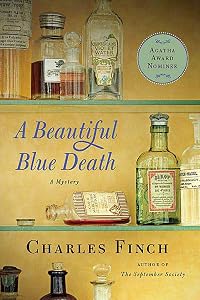
Fiction. Literature. Mystery. Charles Lenox, Victorian gentleman and armchair explorer, likes nothing more than to relax in his private study with a cup of tea, a roaring fire and a good book. But when his lifelong friend Lady Jane asks for his help, Lenox cannot resist the chance to unravel a mystery. Prudence Smith, one of Jane's former servants, is dead of an apparent suicide. But Lenox suspects something far more sinister: murder, by a rare and deadly poison. The grand house where the show more girl worked is full of suspects, and though Prue had dabbled with the hearts of more than a few men, Lenox is baffled by the motive for the girl's death. When another body turns up during the London season's most fashionable ball, Lenox must untangle a web of loyalties and animosities. Was it jealousy that killed Prudence Smith? Or was it something else entirely? And can Lenox find the answer before the killer strikes again-this time, disturbingly close to home? show lessTags
Recommendations



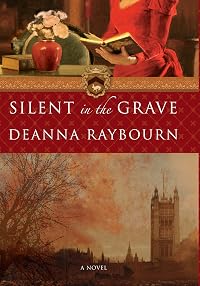
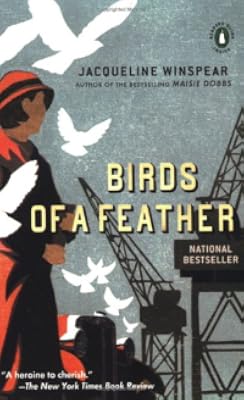
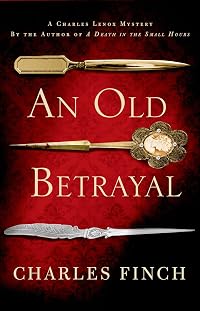
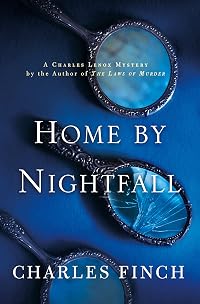





Member Recommendations
sarah-e Another fun mystery, set in England's past
41
Member Reviews
I submerged into 1865 London with surprising ease in this debut mystery. I was irked by lots of little picky detail boo-boos, but charmed by the characters of Charles Lenox and Lady Jane Grey, who *should* be called Lady Deere or the Dowager Countess of Deere, but whatever. Their interspecies friendship, as the Victorians would see it, is charming and sweet and very vibrantly drawn. Its charm makes me feel all squooshy inside.
And that's the real reason I've only rated this 3.8 stars. (Still getting used to the decimal star system.) I think the mystery was nicely handled, and I think the period details were very well sprinkled in the book. I like the idea of the sleuth...a humane, likable Sherlock Holmes...and I appreciate the historical show more "huh" moments the character, born about 1827, feels as he moves through the huge, modern, scary metropolis. I feel the same way whenever I go to New York City. It's a function of middle age, this peculiarly acute recognition of time's passing and its effects on the world around us.
But in the end, it was all more fun to read than it is to remember, which I barely do. A good entertainment, but not a fine one; a decent day's read, but nothing to keep me up late finishing.
Faint praise, I fear. Not bad. Don't break a leg getting to the store to buy it. show less
And that's the real reason I've only rated this 3.8 stars. (Still getting used to the decimal star system.) I think the mystery was nicely handled, and I think the period details were very well sprinkled in the book. I like the idea of the sleuth...a humane, likable Sherlock Holmes...and I appreciate the historical show more "huh" moments the character, born about 1827, feels as he moves through the huge, modern, scary metropolis. I feel the same way whenever I go to New York City. It's a function of middle age, this peculiarly acute recognition of time's passing and its effects on the world around us.
But in the end, it was all more fun to read than it is to remember, which I barely do. A good entertainment, but not a fine one; a decent day's read, but nothing to keep me up late finishing.
Faint praise, I fear. Not bad. Don't break a leg getting to the store to buy it. show less
Alas, suckered in yet again by a beautiful cover and really good title. The title, however, is pedantically explained away very quickly in the book – and that is pretty much how the rest of the writing runs as well. Repetition and a strong case of the “Captain Obvious is obvious” make up the dominant style here: the first chapter is spent largely on explaining how Our Hero Lenox has just come home and it's cold and he doesn't want to go out again. He wants to stay by his fire with a book. He would rather not go out in the cold again. "I say, Graham, it's cold out." [Graham, the butler does not say:] "Yes, you bleeding twit, you've said that four times already." And Lenox does go out, and – lo, and behold: it's cold.
And so on.
One show more character, McConnell, whom Lenox brings in for medical advice, is a drunken failure. And oh, he's a doctor. And he drinks. And he is despised by many as a failure. Because he drinks.
And so on.
There is a summary description of the downward spiral of the man's marriage, with no more emotion than the description of Lenox's study, and no insight or empathy: simply a list of events.
There is no artistry to the writing. Which in and of itself can be fine – I don't expect (or want) every line to drip with poetry. But some flair, something to distinguish the style from a generic children's book or textbook might be nice – something to indicate that the author actually has a reason to want to be an author rather than an actuary or arborist. Instead, much of it consists of a section of dialogue, brought to a complete standstill by a paragraph or two describing a room minutely, or talking about the history of the police force: very much see-Spot-run.
There is one sentence that stood out for me as a great example of why I just didn't enjoy this book: "You could have knocked Lenox over with a feather." The narration constantly brings me into it – "you" this and "you" that, and it started feeling like a choose-your-own-adventure novel. And such a cliché… Personally, I'd work very hard to avoid such a vapid chestnut. Finch does not.
There were small – and not-so-small – errors scattered throughout. Example: the description of a place with awnings up in midwinter. A snowy midwinter. That’s not a good idea; they wouldn’t stay up for long. Example: Lenox is attacked by two men. One of them has a very prominent tattoo – a hammer alongside his left eye. Earlier in the book, someone made mention of a gang of roughs called the Hammer. Hmmmm. And yet – Lenox never mentions the (extremely prominent) tattoo when he talks about the attack, and he wonders and he ponders on whoever could have done it. Small examples: "McConnell! Lenox! A toast!" – but there isn't one. And "I'll use the old call" – a signal he and his brother used as children – which consists of yelling his brother's name. These boys and their cryptic private codes …
There are two threads running, quite annoyingly, through the whole blessed book: Lenox has bad boots which leave his feet cold and wet, and every meal or snack or beverage he partakes of is detailed. (Not even lovingly detailed – just … detailed.) It goes back to the feeling that this is a children's book: "and then Charles had four pieces of toast!" (not an actual quote). And for the love of Bob, man, you're rich and you live in London - you have no excuse – stop your whingeing and go get a decent pair of bloody boots.
ETA: Speaking of food, one sentence I marked was: "They ate very simple food - cold sliced tomatoes, mashed potatoes, and milk" - ew ew ew ew ew.
It seems to take forever to get through the solution of the mystery, and then it finally ends. But there is still a good-sized chunk of the book left. And then comes another ending. And another. The piecemeal wrap-up and coda are painful.
I find it a bit of a stretch to believe that this drunken failure of what used to be a good doctor (remember him?) could take a five-minute look at the corpse and pronounce it death by bella indigo, repeatedly stressed to be a rare and expensive poison. It might be easier to swallow thinking of it by its more common name, deadly nightshade – but why on earth did I have to look that up? Why didn't the revelation go something like: "Ah! I believe it was bella indigo." Lenox looked blank [as I imagine he often did], and McConnell clarified, "Usually known as deadly nightshade." "Oh – well, that I've heard of." And why such an emphasis on the cost of it? Forty pounds a dose or whatever, fine – but I daresay it could also be found growing in assorted fields and hedgerows, and wouldn't take overmuch technique to render into a usable poison. Or maybe it would. I have no idea – and, after reading this book, I kind of think I should.
However, maybe the doctor intuits the real poison used because, though a drunk, he's just that awesome. Quote: "My own opinion is that one day even a single speck of something will tell us everything about it". Really. Gosh. How perspicacious of you.
There are several things that just don't feel right for the time period this is set in. They may be just fine; they may be down to Lenox's odd character (or Finch’s attempt to be unique); it all just felt very off. Example: Lenox, a gentleman, straggles down to breakfast – and other meals – in his robe and slippers. Example: Lady Jane promises Lenox the first dance at some shindig, and then partners someone else. I don't care if that someone else is the host, I thought that was the height of bad manners. Example: People drink a great deal of water in the book, which may be just fine, but maybe I was thinking of medieval London, when to drink water was to court some brand of dysentery. I just found it very, very odd that, for example, waiters were circulating about a ballroom with trays of glasses of water. If nothing else I would expect something like that to prompt scandalized and shocked whispers about the host’s parsimony and lack of hospitality.
And one more: Lenox belongs to multiple clubs. I went back and collected them: The Athanaeum Club, the Savile, the Devonshire, the Eton and Hammer, the Oriental, the Marlborough, the Oxford and Cambridge, and the Travelers. Seriously, eight clubs? Maybe it's possible – each of these is apparently slanted toward a different interest – but in my limited experience with fiction of the period I've never seen a character who belonged to more than one. That was kind of the point of a club, I thought – to belong, for there to be a sort of pied-à-terre or comfortable place away from home. Eight boltholes seems a bit excessive, especially for a man who loves his home and seems a bit of a homebody.
Next door to Lenox lives his best friend, called Lady Jane, who brings him into the case. He-who-was-Richard points out in his review that, really, "Lady Jane Grey" is only called that to be cute. "Her husband had been Captain Lord James Grey, Earl of Deere", so she ought indeed to be "Lady Deere" (or something). This mistake does not boost confidence in the author (but it does line up with other small mistakes, like those above). Jane is supposed to be feisty and independent and intelligent – and I know this because I'm told so. This is the sum total of her characterization. Now, naturally, a relationship such as Lenox and Jane have could easily be seen as "inappropriate", i.e. sexual – but it's okay! The author makes sure to hammer home the fact that they're just friends! It's ok! They have a special relationship!
Another special relationship for Lenox is that with his butler, the aforementioned Graham. In other reviews folks noted that Lenox is supposed to echo Lord Peter in some ways, and I have to say I feel that that is pretty silly. The closest point of comparison is this man-manservant relationship, but … no. The bond between Bunter and Peter was built over the course of the whole series of books, with a revelation of their past here and a present-day moment there, and it was beautiful. Here, the whole past and present of the relationship is vomited out in one chapter. Also? Graham is no Bunter, and I can't believe the universe even allows me to put Lenox and Lord Peter in the same sentence.
Charles Lenox. I'm sorry, he's just dull. The single solitary real Lord-Peter-esque thing about him is that he's the younger son of a peer who investigates crimes as a whim. But he's just such a schlub. He plans exotic trips that never happen. He muddles on very happily in a lovely city home and buys whatever he wants (except a decent pair of boots). The way Lenox treats his books did not endear him to me. He repeatedly knocks piles of books off desks and whatnot, and leaves them there. Lord Peter would flatten his nose for him.
And his investigative skills? There's the main reason that the Lord Peter comparisons make the hair on the back of my neck stand up. Not out of fear or whatever, but more in the manner of a really pissed-off dog's hackles rising. He's not a smart man, Lenox, or at least he's not written as such, though I think the reader is expected to think him ever so clever. His method of interrogating suspects is to ask "Did you kill her?" He seems convinced each time that he'll receive an answer other than an outraged "No!" Oh, and the initial crime scene? Lenox mocks the pinch-hitting detective for believing in a suicide – but how can he think otherwise when a) no one points out the pen thing (which yes he should notice, but almost no one did); b) he has no way of knowing for certain the girl was illiterate and couldn't have written a suicide note; c) most importantly, Lenox took away evidence that was sitting there. Lenox and McConnell also undressed (and redressed?) the corpse. This kind of tampering with a crime scene would be literally criminal if this book had been set in even a slightly later age.
So, no, the man is no Lord Peter. He's no Sherlock Holmes, either, God knows, although he plays at it, making Sherlockian deductions based on observation. The difference – well, the difference reminds me of Much Ado About Nothing: "And then they laugh at him, and beat him." Holmes disarms people, and frightens some, and impresses everyone when he tells them details he couldn't possibly know. Lenox tries it a couple of times, and just annoys people.
Just as he annoyed me. show less
And so on.
One show more character, McConnell, whom Lenox brings in for medical advice, is a drunken failure. And oh, he's a doctor. And he drinks. And he is despised by many as a failure. Because he drinks.
And so on.
There is a summary description of the downward spiral of the man's marriage, with no more emotion than the description of Lenox's study, and no insight or empathy: simply a list of events.
There is no artistry to the writing. Which in and of itself can be fine – I don't expect (or want) every line to drip with poetry. But some flair, something to distinguish the style from a generic children's book or textbook might be nice – something to indicate that the author actually has a reason to want to be an author rather than an actuary or arborist. Instead, much of it consists of a section of dialogue, brought to a complete standstill by a paragraph or two describing a room minutely, or talking about the history of the police force: very much see-Spot-run.
There is one sentence that stood out for me as a great example of why I just didn't enjoy this book: "You could have knocked Lenox over with a feather." The narration constantly brings me into it – "you" this and "you" that, and it started feeling like a choose-your-own-adventure novel. And such a cliché… Personally, I'd work very hard to avoid such a vapid chestnut. Finch does not.
There were small – and not-so-small – errors scattered throughout. Example: the description of a place with awnings up in midwinter. A snowy midwinter. That’s not a good idea; they wouldn’t stay up for long. Example: Lenox is attacked by two men. One of them has a very prominent tattoo – a hammer alongside his left eye. Earlier in the book, someone made mention of a gang of roughs called the Hammer. Hmmmm. And yet – Lenox never mentions the (extremely prominent) tattoo when he talks about the attack, and he wonders and he ponders on whoever could have done it. Small examples: "McConnell! Lenox! A toast!" – but there isn't one. And "I'll use the old call" – a signal he and his brother used as children – which consists of yelling his brother's name. These boys and their cryptic private codes …
There are two threads running, quite annoyingly, through the whole blessed book: Lenox has bad boots which leave his feet cold and wet, and every meal or snack or beverage he partakes of is detailed. (Not even lovingly detailed – just … detailed.) It goes back to the feeling that this is a children's book: "and then Charles had four pieces of toast!" (not an actual quote). And for the love of Bob, man, you're rich and you live in London - you have no excuse – stop your whingeing and go get a decent pair of bloody boots.
ETA: Speaking of food, one sentence I marked was: "They ate very simple food - cold sliced tomatoes, mashed potatoes, and milk" - ew ew ew ew ew.
It seems to take forever to get through the solution of the mystery, and then it finally ends. But there is still a good-sized chunk of the book left. And then comes another ending. And another. The piecemeal wrap-up and coda are painful.
I find it a bit of a stretch to believe that this drunken failure of what used to be a good doctor (remember him?) could take a five-minute look at the corpse and pronounce it death by bella indigo, repeatedly stressed to be a rare and expensive poison. It might be easier to swallow thinking of it by its more common name, deadly nightshade – but why on earth did I have to look that up? Why didn't the revelation go something like: "Ah! I believe it was bella indigo." Lenox looked blank [as I imagine he often did], and McConnell clarified, "Usually known as deadly nightshade." "Oh – well, that I've heard of." And why such an emphasis on the cost of it? Forty pounds a dose or whatever, fine – but I daresay it could also be found growing in assorted fields and hedgerows, and wouldn't take overmuch technique to render into a usable poison. Or maybe it would. I have no idea – and, after reading this book, I kind of think I should.
However, maybe the doctor intuits the real poison used because, though a drunk, he's just that awesome. Quote: "My own opinion is that one day even a single speck of something will tell us everything about it". Really. Gosh. How perspicacious of you.
There are several things that just don't feel right for the time period this is set in. They may be just fine; they may be down to Lenox's odd character (or Finch’s attempt to be unique); it all just felt very off. Example: Lenox, a gentleman, straggles down to breakfast – and other meals – in his robe and slippers. Example: Lady Jane promises Lenox the first dance at some shindig, and then partners someone else. I don't care if that someone else is the host, I thought that was the height of bad manners. Example: People drink a great deal of water in the book, which may be just fine, but maybe I was thinking of medieval London, when to drink water was to court some brand of dysentery. I just found it very, very odd that, for example, waiters were circulating about a ballroom with trays of glasses of water. If nothing else I would expect something like that to prompt scandalized and shocked whispers about the host’s parsimony and lack of hospitality.
And one more: Lenox belongs to multiple clubs. I went back and collected them: The Athanaeum Club, the Savile, the Devonshire, the Eton and Hammer, the Oriental, the Marlborough, the Oxford and Cambridge, and the Travelers. Seriously, eight clubs? Maybe it's possible – each of these is apparently slanted toward a different interest – but in my limited experience with fiction of the period I've never seen a character who belonged to more than one. That was kind of the point of a club, I thought – to belong, for there to be a sort of pied-à-terre or comfortable place away from home. Eight boltholes seems a bit excessive, especially for a man who loves his home and seems a bit of a homebody.
Next door to Lenox lives his best friend, called Lady Jane, who brings him into the case. He-who-was-Richard points out in his review that, really, "Lady Jane Grey" is only called that to be cute. "Her husband had been Captain Lord James Grey, Earl of Deere", so she ought indeed to be "Lady Deere" (or something). This mistake does not boost confidence in the author (but it does line up with other small mistakes, like those above). Jane is supposed to be feisty and independent and intelligent – and I know this because I'm told so. This is the sum total of her characterization. Now, naturally, a relationship such as Lenox and Jane have could easily be seen as "inappropriate", i.e. sexual – but it's okay! The author makes sure to hammer home the fact that they're just friends! It's ok! They have a special relationship!
Another special relationship for Lenox is that with his butler, the aforementioned Graham. In other reviews folks noted that Lenox is supposed to echo Lord Peter in some ways, and I have to say I feel that that is pretty silly. The closest point of comparison is this man-manservant relationship, but … no. The bond between Bunter and Peter was built over the course of the whole series of books, with a revelation of their past here and a present-day moment there, and it was beautiful. Here, the whole past and present of the relationship is vomited out in one chapter. Also? Graham is no Bunter, and I can't believe the universe even allows me to put Lenox and Lord Peter in the same sentence.
Charles Lenox. I'm sorry, he's just dull. The single solitary real Lord-Peter-esque thing about him is that he's the younger son of a peer who investigates crimes as a whim. But he's just such a schlub. He plans exotic trips that never happen. He muddles on very happily in a lovely city home and buys whatever he wants (except a decent pair of boots). The way Lenox treats his books did not endear him to me. He repeatedly knocks piles of books off desks and whatnot, and leaves them there. Lord Peter would flatten his nose for him.
And his investigative skills? There's the main reason that the Lord Peter comparisons make the hair on the back of my neck stand up. Not out of fear or whatever, but more in the manner of a really pissed-off dog's hackles rising. He's not a smart man, Lenox, or at least he's not written as such, though I think the reader is expected to think him ever so clever. His method of interrogating suspects is to ask "Did you kill her?" He seems convinced each time that he'll receive an answer other than an outraged "No!" Oh, and the initial crime scene? Lenox mocks the pinch-hitting detective for believing in a suicide – but how can he think otherwise when a) no one points out the pen thing (which yes he should notice, but almost no one did); b) he has no way of knowing for certain the girl was illiterate and couldn't have written a suicide note; c) most importantly, Lenox took away evidence that was sitting there. Lenox and McConnell also undressed (and redressed?) the corpse. This kind of tampering with a crime scene would be literally criminal if this book had been set in even a slightly later age.
So, no, the man is no Lord Peter. He's no Sherlock Holmes, either, God knows, although he plays at it, making Sherlockian deductions based on observation. The difference – well, the difference reminds me of Much Ado About Nothing: "And then they laugh at him, and beat him." Holmes disarms people, and frightens some, and impresses everyone when he tells them details he couldn't possibly know. Lenox tries it a couple of times, and just annoys people.
Just as he annoyed me. show less
It's 1865, and Charles Lenox is a gentleman, the younger brother of baronet Sir Edmund Lenox, living in London and pursuing his hobbies and passions.
One of his hobbies is planning foreign travel. He rarely takes these carefully planned trips, because one of his passions is solving crimes. He has a friend who sometimes assists him, Dr. Thomas McConnell, but that fact and his ability to deduce interesting facts about people from evidence that others miss is really where the resemblance to that other great Victorian-era detective ends. Lenox is not a professional, a consulting detective. He's an amateur, doing this for love and usefulness. When his neighbor and friend, Lady Jane Grey, asks for his help, he immediately cancels his latest show more planned trip.
A former housemaid of Lady Jane's, Prudence Smith, has died, either by murder or suicide, at the home of her new employer, George Barnard. Barnard is an acquaintance, and also the head of the Royal Mint, and is more interested in preventing scandal than finding the truth.
It's a delicate case, and gets a bit more challenging when Inspector Exeter, a senior man at Scotland Yard but inclined to be resentful of Lenox's interference, is assigned to investigate it.
Finch leads us through an intricate puzzle involving Barnard's two nephews, both living with him, Prudence Smith's multiple lovers, as well as two Members of Parliament and a wealthy industrialist of low birth who are all guests in the Barnard home. Everyone with even a remote motive has an alibi, and everyone without an alibi seems to have no conceivable motive.
And then one of the Members of Parliament is murdered, during Barnard's annual ball. It seems improbable that the two murders are unrelated, yet what connects them? There's also the awkward fact that the dead man had been one of the best suspects in the murder of the maid, and the nephew that had no alibi for her murder, has an unbreakable alibi for the murder of the MP: Lenox's brother Sir Edmund was watching him the whole time.
This is a carefully built puzzle grounded in the personalities and constraints of the different players, with economical but effective character development of each significant individual. I did find the epilogue a bit drawn out, and there mainly, I think, to lay the groundwork for developments in later volumes in the series, but that's a minor complaint in a generally very satisfying mystery.
If you enjoy a good mystery, this is one to seek out, especially since, if you enjoy this one, there are several more already in print.
Recommended.
I received a free electronic galley of this book from the publisher via NetGalley. show less
One of his hobbies is planning foreign travel. He rarely takes these carefully planned trips, because one of his passions is solving crimes. He has a friend who sometimes assists him, Dr. Thomas McConnell, but that fact and his ability to deduce interesting facts about people from evidence that others miss is really where the resemblance to that other great Victorian-era detective ends. Lenox is not a professional, a consulting detective. He's an amateur, doing this for love and usefulness. When his neighbor and friend, Lady Jane Grey, asks for his help, he immediately cancels his latest show more planned trip.
A former housemaid of Lady Jane's, Prudence Smith, has died, either by murder or suicide, at the home of her new employer, George Barnard. Barnard is an acquaintance, and also the head of the Royal Mint, and is more interested in preventing scandal than finding the truth.
It's a delicate case, and gets a bit more challenging when Inspector Exeter, a senior man at Scotland Yard but inclined to be resentful of Lenox's interference, is assigned to investigate it.
Finch leads us through an intricate puzzle involving Barnard's two nephews, both living with him, Prudence Smith's multiple lovers, as well as two Members of Parliament and a wealthy industrialist of low birth who are all guests in the Barnard home. Everyone with even a remote motive has an alibi, and everyone without an alibi seems to have no conceivable motive.
And then one of the Members of Parliament is murdered, during Barnard's annual ball. It seems improbable that the two murders are unrelated, yet what connects them? There's also the awkward fact that the dead man had been one of the best suspects in the murder of the maid, and the nephew that had no alibi for her murder, has an unbreakable alibi for the murder of the MP: Lenox's brother Sir Edmund was watching him the whole time.
This is a carefully built puzzle grounded in the personalities and constraints of the different players, with economical but effective character development of each significant individual. I did find the epilogue a bit drawn out, and there mainly, I think, to lay the groundwork for developments in later volumes in the series, but that's a minor complaint in a generally very satisfying mystery.
If you enjoy a good mystery, this is one to seek out, especially since, if you enjoy this one, there are several more already in print.
Recommended.
I received a free electronic galley of this book from the publisher via NetGalley. show less
Amiable but suspenseless. The whodunnit was obvious from very early on thanks to some graceless foreshadowing (with one whopper of a clue in particular that was never again referred to, even at the denouement), there are lots of historical inaccuracies and Americanisms, and the characterisation is thin. It’s the kind of book that’s fine to read at this time of year, but not one that will linger long in the memory or that entices me to try the rest of the series.
Charles Lenox, a Victorian gentleman with a comfortable fortune, would love to spend his days reading books, poring over maps, and traveling to far-off countries. However, he also happens to be a skilled amateur detective who has assisted Scotland Yard several times in the past. When his lifelong friend Lady Jane Grey asks him to look at a case, he is eager to help. Lady Jane’s former housemaid, Prudence Smith, is dead from ingesting a rare and expensive poison. Prue’s current employer and the local Scotland Yard inspector insist that it was suicide, but Lenox soon discovers that it was murder. His investigation unearths several possible motives, but he remains baffled – until a second murder casts things in a whole new light.
For show more a debut novel, this mystery was really quite good. I wanted to enjoy it because I love both mysteries and the Victorian era, and I was definitely not disappointed. The strongest part of the book is definitely main character Charles Lenox, who is much more normal and well rounded than many other fictional detectives (*coughcoughHolmesandPoirotcough*). Not only is he an intuitive detective, but he’s also a dreamer, he loves to travel, he toys with the idea of running for Parliament, he’s a little bit arrogant, and he has several meaningful relationships in his life. He just seems like a real, believable person to me. For all that, the mystery was also well plotted, and I found the solution ingenious. There were a few stylistic flaws, but I’ll definitely forgive them for the sake of getting my hands on the next book! This is definitely a series I’ll continue to read. show less
For show more a debut novel, this mystery was really quite good. I wanted to enjoy it because I love both mysteries and the Victorian era, and I was definitely not disappointed. The strongest part of the book is definitely main character Charles Lenox, who is much more normal and well rounded than many other fictional detectives (*coughcoughHolmesandPoirotcough*). Not only is he an intuitive detective, but he’s also a dreamer, he loves to travel, he toys with the idea of running for Parliament, he’s a little bit arrogant, and he has several meaningful relationships in his life. He just seems like a real, believable person to me. For all that, the mystery was also well plotted, and I found the solution ingenious. There were a few stylistic flaws, but I’ll definitely forgive them for the sake of getting my hands on the next book! This is definitely a series I’ll continue to read. show less
The first book in the Charles Lenox mystery series sets an ambition challenge for Charles Lenox, English gentleman and amateur detective. A young house maid is poisoned with the rare bella indigo - the beautiful blue - and the evidence points to a suicide, but Charles immediately suspects that the young girl was murdered. But why? And who among the house guests committed the crime? As Charles digs deeper he begins to unravel a complex scheme of murder tied to potential financial gain.
I really enjoyed this first mystery by Charles Finch. It easily fits the mold for the quintessential English detective novel, and with the character of Charles Lenox I see hints of other great fiction detectives, from Sherlock Holmes to Hercule Poirot. The show more story is set in 1867 and we get a wonderful glimpse of Victorian London. Lenox is an interesting character, a man of wealth and means, second son to a lord, so he has the time available, and the pedigree necessary, to investigate crimes among London's upper crust. Lenox has cultivated a great list of friends and acquaintances who he depends on for their expertise, from his good friend Dr. McConnell, his brother Edward, his butler Graham, and his good friend Lady Jane. As Holmes was an expert in many areas, able to deduce the smallest details from simple clues, Lenox is an expert on people, and uses a large and growing group of experts to aid him in his case.
The case is suitably complex, and Charles Finch does a great job of leading the reader down the paths of dead ends, red herrings, and important clues. When the killer and motive are revealed, the vital clues are explained, and you learn that everything needed to solve the crime had been presented. There were no mysterious clues or off the page deductions, and I really enjoyed this. In a few places Finch tended to ramble, as Lenox goes off on a tangent about travelling, or discussing the goings on of society. These added to the setting, but slowed a the novel a bit in the middle, but not enough that I would not recommend this book. It is still a great mystery and a great read, and I am looking forward to the other books in the series.
I listened to the audiobook narrated by James Langton. Langton does an excellent job of bringing the characters and story to life, easily jumping between the voices, from Scottish burr to standard English, upper class and lower class. I found all of the characters distinct and the production did not have any flaws in it.
If you are looking for a good mystery, featuring a wonderful amateur detective, then I recommend you pick up A Beautiful Blue Death. Like me, I am sure you will find yourself entranced by Charles Finch's world. show less
I really enjoyed this first mystery by Charles Finch. It easily fits the mold for the quintessential English detective novel, and with the character of Charles Lenox I see hints of other great fiction detectives, from Sherlock Holmes to Hercule Poirot. The show more story is set in 1867 and we get a wonderful glimpse of Victorian London. Lenox is an interesting character, a man of wealth and means, second son to a lord, so he has the time available, and the pedigree necessary, to investigate crimes among London's upper crust. Lenox has cultivated a great list of friends and acquaintances who he depends on for their expertise, from his good friend Dr. McConnell, his brother Edward, his butler Graham, and his good friend Lady Jane. As Holmes was an expert in many areas, able to deduce the smallest details from simple clues, Lenox is an expert on people, and uses a large and growing group of experts to aid him in his case.
The case is suitably complex, and Charles Finch does a great job of leading the reader down the paths of dead ends, red herrings, and important clues. When the killer and motive are revealed, the vital clues are explained, and you learn that everything needed to solve the crime had been presented. There were no mysterious clues or off the page deductions, and I really enjoyed this. In a few places Finch tended to ramble, as Lenox goes off on a tangent about travelling, or discussing the goings on of society. These added to the setting, but slowed a the novel a bit in the middle, but not enough that I would not recommend this book. It is still a great mystery and a great read, and I am looking forward to the other books in the series.
I listened to the audiobook narrated by James Langton. Langton does an excellent job of bringing the characters and story to life, easily jumping between the voices, from Scottish burr to standard English, upper class and lower class. I found all of the characters distinct and the production did not have any flaws in it.
If you are looking for a good mystery, featuring a wonderful amateur detective, then I recommend you pick up A Beautiful Blue Death. Like me, I am sure you will find yourself entranced by Charles Finch's world. show less
Aw I'm so happy when I find a series I can approve of without reservations. I loved everything about this book - the marvelous characters and the sweet relationships they share (the last scene is gorgeous in that respect), the gripping mystery, the setting and the vivid details. The end was a real end with a glimpse into the future which you don't often find in detective fiction and a very solid resolution. I just fell in love with the main character who's got progressive ideas and a great personality. The female characters are extremely interesting too and the author finds this right balance between writing a Victorian England story that's full of life and Having Characters Whose Ideas Don't Make You Want to Fling The Book Across the show more Room. Thank you, Charles Finch, I needed that. This is so lovely, a real treat. show less
Members
- Recently Added By
Published Reviews
ThingScore 50
If you like a classic whodunit, reminiscent of Agatha Christie and Sir Arthur Conan Doyle, A Beautiful Blue Death is for you. The author, Charles Finch, states that he was heavily influenced by Doyles famous Sherlock Holmes tales and it shows in his writing. Instead of it being a bad immatation like so many others who try to copy Doyles success, Finch creates a character that is the complete show more opposite of Sherlock but retains the feel of reading one of the great detectives novels.
The sometimes-detective Charles Lenox is the friendly good-natured version of Sherlock Holmes. Inspector Exeter is the pompous equivalent of Inspector Lestrade from Sherlock Holmes. McConnel is Lenox best friend who is a doctor that helped with the crime scene and the equivalent of Watson. Lenox's older brother is an influential member of parliament and just like Sherlock's brother except they have a close relationship.
I had a hard time getting into the story in the beginning because it was slow to really get into the investigation and cultivation of leads. The pace picks up and he begins to make more progress solving the case. I wasn't surprised by who the murderer(s) were, the why was the real mystery. It wasn't a 1 a.m. page-turner for me but those who like a clean and cozy mystery will probably enjoy it. Happy reading! 📚 show less
The sometimes-detective Charles Lenox is the friendly good-natured version of Sherlock Holmes. Inspector Exeter is the pompous equivalent of Inspector Lestrade from Sherlock Holmes. McConnel is Lenox best friend who is a doctor that helped with the crime scene and the equivalent of Watson. Lenox's older brother is an influential member of parliament and just like Sherlock's brother except they have a close relationship.
I had a hard time getting into the story in the beginning because it was slow to really get into the investigation and cultivation of leads. The pace picks up and he begins to make more progress solving the case. I wasn't surprised by who the murderer(s) were, the why was the real mystery. It wasn't a 1 a.m. page-turner for me but those who like a clean and cozy mystery will probably enjoy it. Happy reading! 📚 show less
added by firereader2316
On the whole, though, most Sherlockians can skip this unengaging debut without risk.
added by rretzler
Lovers of quality historical whodunits will hope this is the first in a series.
added by rretzler
Lists

Favorite Series
238 works; 94 members

Detective/Mystery Fiction set in the Gilded Age
12 works; 6 members

Top Five Books of 2014
1,064 works; 398 members

Books discovered on LibraryThing
256 works; 35 members

A Rainbow of Books: Colors in the Title
570 works; 24 members

Books Read in 2019
4,052 works; 108 members

Books Read in 2020
4,379 works; 124 members

Gaslamp Mysteries
78 works; 4 members

Books Read in 2025
4,091 works; 97 members
Author Information
Some Editions
Awards and Honors
Awards
Series

Work Relationships
Is contained in
Common Knowledge
- Canonical title
- A Beautiful Blue Death
- Original title
- A Beautiful Blue Death
- Original publication date
- 2007-07-26
- People/Characters
- Charles Lenox; Lady Jane Grey; Prudence Smith; Dr. Thomas McConnell; Inspector Exeter; Graham (show all 18); George Barnard; Claude Barnard; Eustace Bramwell; Newton Duff; Jack Soames; Roderick Potts; Sir Edmund Lenox; James; Toto Phillips; Lord Cabot; Skaggs; Bartholomew Deck
- Important places
- London, England, UK
- Dedication
- To my mother
- First words
- The fateful note came just as Lenox was settling into his armchair after a long, tiresome day in the city.
- Last words
- (Click to show. Warning: May contain spoilers.)They rode briskly to the west, talking and laughing together, until some minutes later Edmund, glancing up by chance in his library, could only see their twinned figure against the pale darkness of early evening, blurred together into one, far off in the distance.
- Blurbers
- Liss, David; Penny, Louise; Olmstead, Robert; Weinman, Sarah
Classifications
Statistics
- Members
- 1,670
- Popularity
- 13,364
- Reviews
- 118
- Rating
- (3.47)
- Languages
- English, German, Russian
- Media
- Paper, Audiobook, Ebook
- ISBNs
- 18
- ASINs
- 9
