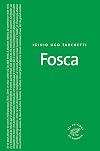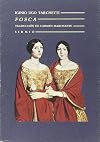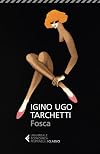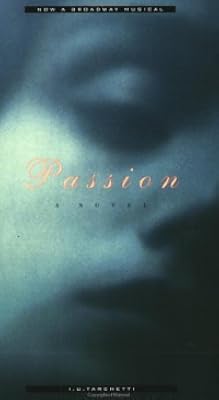
Passion
by Igino Ugo Tarchetti
On This Page
Description
"Set in mid-nineteenth-century Italy, Passion tells of a love triangle involving Giorgio, an officer in the Italian army; Clara, a robust young married woman with a child; and the grotesque, vampire-like Fosca, who embodies the romantic macabre. The relationships, one involving adultery and the other a flouting of social conventions, are treated with warped extremity, at once serious and ironic."--BOOK JACKET.Title Summary field provided by Blackwell North America, Inc. All Rights ReservedTags
Recommendations


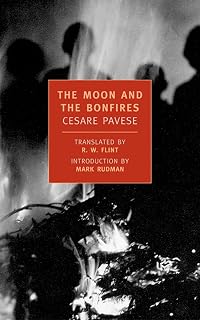

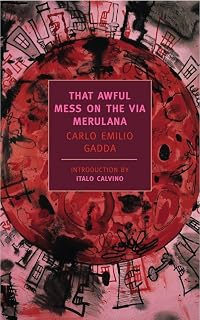
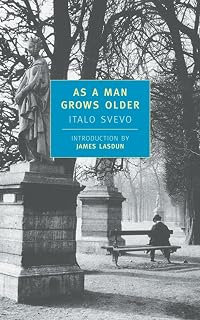


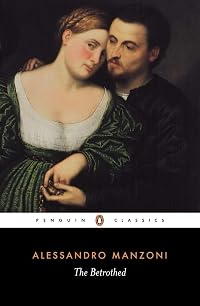














Member Recommendations
bluepiano The outlines of these novels are so similar that I rather wonder if Zweig had the earlier novel in mind when writing his.
Member Reviews
A young Milanese officer recalls the stormy year of love and hate for two women; one, Clara (light) passionately loved in a happy though troublesome because adulterous affair, and Fosca (dark), sick and monstrously ugly, who entangles him in a morbid net of dependence despite his profound physical and spiritual repugnance of her.
It's far from perfect, but it works. There is a mighty strain of psychological horror and morbidity typical of the Milanese "dishevelleds" (Scapigliati) to which Tarchetti belonged. Fosca is an amazing creation, unexplained and inexplicable, an emotional vampire and a physical threat, who poisons Giorgio's weakened soul and body. And yet she is far more than a witch and a monster, she has intelligence and show more exquisite sensitivity, and enormous strength, like those unkillable bugs who seem to revive after every crush of the heel. She is just as repellent, but changing moods and registers with unfailing cunning, she gets Giorgio to pity her, to forgive her, to accommodate her, to the point of agreeing to pretend to love her (she is expected to die any minute, so where's the harm in that). He tries to run away, she follows like a haunting nightmare, and finally gives away her passion in public, precipitating Giorgio's duel with her cousin. The night before the duel Giorgio, who has been abandoned by Clara, goes to Fosca, who forces him to make love to her. Tarchetti died before writing out the sketched "night of passion", the book was completed by his friend Salvatore Farina. I believe Tarchetti would have given it more zest, more madness; it still reads like a sketch. Nevertheless, because of Fosca, sufficient and whole in her desperate yearning, the story itself feels complete. show less
It's far from perfect, but it works. There is a mighty strain of psychological horror and morbidity typical of the Milanese "dishevelleds" (Scapigliati) to which Tarchetti belonged. Fosca is an amazing creation, unexplained and inexplicable, an emotional vampire and a physical threat, who poisons Giorgio's weakened soul and body. And yet she is far more than a witch and a monster, she has intelligence and show more exquisite sensitivity, and enormous strength, like those unkillable bugs who seem to revive after every crush of the heel. She is just as repellent, but changing moods and registers with unfailing cunning, she gets Giorgio to pity her, to forgive her, to accommodate her, to the point of agreeing to pretend to love her (she is expected to die any minute, so where's the harm in that). He tries to run away, she follows like a haunting nightmare, and finally gives away her passion in public, precipitating Giorgio's duel with her cousin. The night before the duel Giorgio, who has been abandoned by Clara, goes to Fosca, who forces him to make love to her. Tarchetti died before writing out the sketched "night of passion", the book was completed by his friend Salvatore Farina. I believe Tarchetti would have given it more zest, more madness; it still reads like a sketch. Nevertheless, because of Fosca, sufficient and whole in her desperate yearning, the story itself feels complete. show less
So much about this book is risible, though Tarchetti seems in dead earnest. So is his narrator, Giorgio,although no one who takes pains to tell us how preternaturally sensitive a soul he is is likely to have a large store of humour. And deathly serious as well is Fosca, the invalid with whom Giorgio becomes entangled. Their relationship, the subject of the novel, is the result of Giorgio's declaring his love to Fosca.
He does this, though he finds her repellent (too skinny), after a doctor tells him that if he does not do so, Fosca will die. (He finds consolation in the doctor's subsequent warning that their 'love' must remain unconsummated, as, once again, Fosca would otherwise die. Later still the doctor issues another alert: If Fosca show more doesn't die soon, Giorgio must instead die of the same contagious strain of hysteria. Giorgio is too occupied with agonising to tell us whether the doctor was finally removed from the register.) If you were to imagine a parody of a Decadent novel narrated by a parody of a Romantic hero you might imagine something a bit like this book. It can't be excused as a product of its time--it must have seemed silly in 1869--and Tarchetti isn't accomplished enough a writer to get away with it: He's no Zola and this is no Therese Racquin, no over-heated melodrama that is redeemed by good atmospheric writing.
What makes the book of more than historical interest is Fosca herself. I can't at the moment remember another fictional character so monstrous as she. Clinging, hysterical, utterly selfish, manipulative, demanding, she's credible--and therefore hateful--partly because in her case as opposed to the narrator's Tarchetti does a good job of showing what she's like rather than telling us and partly, no doubt, because her traits are merely an exaggeration of ones we've all seen in everyday life. A perfect villain (though I'm not at all sure that that's how Tarchetti intended the reader to regard her) and a memorable character. It's because of her that the book was worth reading.
Venuti, the translator of the Oneworld edition I read, interjects slangy modern American phrases into well-researched 19th-century English (and gives his reason for doing so, my translation of which is 'I dumbed it down for the American market'). So be prepared to tack from 'I was utterly in want of love; when one is unloved, vanity lacks any reason to exist. . . .' to 'Time flies when you're having fun.'
(A fair while after writing that much I came across a credible post saying that the novel was actually a satirical take on an Itailan literary movement of the period that apparently emboldened those who would write the likes of Decadent novels as told by Romantic heroes. In that case, Tarchetti most certainly does have a sense of humour & as well it's likely that the segments of the transaltion I found jarring were knowledgeably in the spirit of the book.) show less
He does this, though he finds her repellent (too skinny), after a doctor tells him that if he does not do so, Fosca will die. (He finds consolation in the doctor's subsequent warning that their 'love' must remain unconsummated, as, once again, Fosca would otherwise die. Later still the doctor issues another alert: If Fosca show more doesn't die soon, Giorgio must instead die of the same contagious strain of hysteria. Giorgio is too occupied with agonising to tell us whether the doctor was finally removed from the register.) If you were to imagine a parody of a Decadent novel narrated by a parody of a Romantic hero you might imagine something a bit like this book. It can't be excused as a product of its time--it must have seemed silly in 1869--and Tarchetti isn't accomplished enough a writer to get away with it: He's no Zola and this is no Therese Racquin, no over-heated melodrama that is redeemed by good atmospheric writing.
What makes the book of more than historical interest is Fosca herself. I can't at the moment remember another fictional character so monstrous as she. Clinging, hysterical, utterly selfish, manipulative, demanding, she's credible--and therefore hateful--partly because in her case as opposed to the narrator's Tarchetti does a good job of showing what she's like rather than telling us and partly, no doubt, because her traits are merely an exaggeration of ones we've all seen in everyday life. A perfect villain (though I'm not at all sure that that's how Tarchetti intended the reader to regard her) and a memorable character. It's because of her that the book was worth reading.
Venuti, the translator of the Oneworld edition I read, interjects slangy modern American phrases into well-researched 19th-century English (and gives his reason for doing so, my translation of which is 'I dumbed it down for the American market'). So be prepared to tack from 'I was utterly in want of love; when one is unloved, vanity lacks any reason to exist. . . .' to 'Time flies when you're having fun.'
(A fair while after writing that much I came across a credible post saying that the novel was actually a satirical take on an Itailan literary movement of the period that apparently emboldened those who would write the likes of Decadent novels as told by Romantic heroes. In that case, Tarchetti most certainly does have a sense of humour & as well it's likely that the segments of the transaltion I found jarring were knowledgeably in the spirit of the book.) show less
Romanzo interessante, ma troppo estremo nei sentimenti per piacermi davvero. La prima parte, con la descrizione della nascita dell’amore tra Giorgio e Clara, mi ha annoiato parecchio. Con l’arrivo di Fosca, quando le cose cominciano a diventare forse un po’ più gotiche, ho provato maggiore interesse, ma non più di tanto. Fosca mi ha incuriosita moltissimo, e mi ha anche affascinato, ma il suo amore per Giorgio mi è sembrato alla fine, tutto sommato, banale come quello di Clara.
Sono contenta comunque di aver scoperto questo autore e questa corrente della letteratura italiana che ignoravo.
http://www.naufragio.it/iltempodileggere/18019
Sono contenta comunque di aver scoperto questo autore e questa corrente della letteratura italiana che ignoravo.
http://www.naufragio.it/iltempodileggere/18019
De zeden van de tijd doen de wenkbrauwen geamuseerd optrekken tijdens het lezen van Fosca. Zichzelf lichamelijk ziek maken door simpelweg lief te hebben, het is niet meer van deze tijd. Met net geen 225 pagina's biedt Fosca een wonderlijke blik op de geschiedenis, maar nóg meer pathetische hartenkreten zouden wellicht wat te veel van het goede zijn.
Volledige bespreking via http://wraakvandedodo.blogspot.be/2014/12/iginio-ugo-tarchetti-fosca.html
Volledige bespreking via http://wraakvandedodo.blogspot.be/2014/12/iginio-ugo-tarchetti-fosca.html
Dec 21, 2014Dutch
1
Un joven oficial se debate entre el amor de la bella pero infiel Clara y la atracción que siente por Fosca, una mujer fea y epiléptica.
Apr 30, 2014Spanish
853.8 TAR
Apr 13, 2020Italian
Ratings
Members
- Recently Added By
Lists

Troublesome bodies
110 works; 7 members
Author Information

18+ Works 346 Members
Awards and Honors
Notable Lists
Series
Belongs to Publisher Series
Work Relationships
Has the adaptation
Common Knowledge
- Canonical title
- Passion
- Original title
- Fosca
- Original publication date
- 1869
- People/Characters
- Giorgio Bachetti; Fosca; Clara
- Important places
- Italy
- Related movies
- Passion of Love (1981 | IMDb)
- First words*
- Meerdere keren ben ik van plan geweest deze memoires te schrijven, maar een eigenaardige mengeling van angst en beklemming deed me er steeds weer van afzien.
- Last words*
- (Click to show. Warning: May contain spoilers.)Vaarwel, mijn goede vriend, moge u gelukkig zijn en uzelf geen verwijt maken; u was in dit drama niet meer dan een werktuig.
*Some information comes from Common Knowledge in other languages. Click "Edit" for more information.
Classifications
- Genres
- Fiction and Literature, General Fiction
- DDC/MDS
- 853.8 — Literature & rhetoric Italian, Romanian & related literatures Italian fiction Later 19th century 1859–1900
- LCC
- PQ4733 .T3 .F613 — Language and Literature French, Italian, Spanish and Portuguese literatures Italian literature Individual authors, 1701-1900
- BISAC
Statistics
- Members
- 168
- Popularity
- 194,794
- Reviews
- 6
- Rating
- (3.79)
- Languages
- 7 — Catalan, Dutch, English, French, Italian, Portuguese, Spanish
- Media
- Paper, Ebook
- ISBNs
- 26
- ASINs
- 5