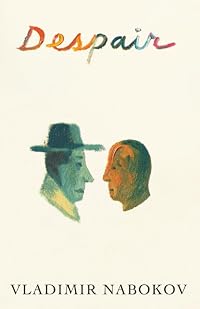
Despair
by Vladimir Nabokov
On This Page
Description
Extensively revised by Nabokov in 1965--thirty years after its original publication--Despair is the wickedly inventive and richly derisive story of Hermann, a man who undertakes the perfect crime--his own murder.Tags
Recommendations










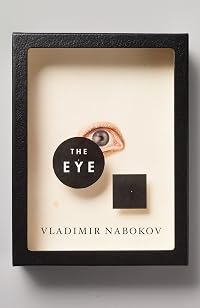





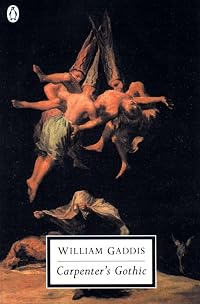
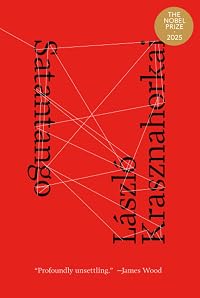
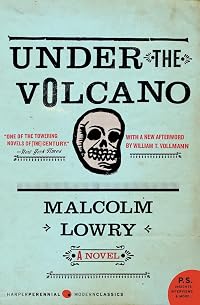
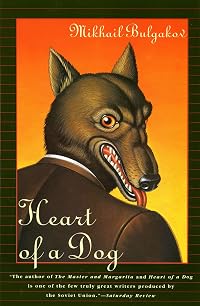



Member Recommendations
Jarandel The presence or absence of doubles leads protagonists to the strangest extremities. Also, unreliable narrators.
CGlanovsky Unreliable narrators, packed with literary references, and appear at first to have cliched plots.
Member Reviews
This is Nabokov's Dostoevskian novel, albeit only in the choice of topic -- his language and style is completely unDostoevsky-like. This is not surprising given Nabokov's disdain for Dostoevsky as a writer. The narrator makes jabs at "Dusty" often, refers to "The Double" and "Crime and Punishment" openly and with a kind of sneer.
In brief, the narrator has met his double in the person of a vagabond, starts a relationship with this person, then plans a nefarious crime, it seems, for the sake of writing about it. Because this narrator is, like Nabokov, a well-educated, elegant, Russian emigre and not the harassed petty clerk of Dostoevsky's tale, he is very concerned with the mechanics of writing the story. The first chapters often bring show more up literary problems, like which events should he speak of first, details of place, how things should be introduced and he comes back to the issue of writing, especially at the end. Leave it to Nabokov to tell Dostoevsky how to write.
It is an interesting piece -- Nabokov's first novel, reworked 30 or so years later --with a wonderful, but not unexpected, little twist near the end. Nevertheless, what's missing from "Despair" is the essence of a Dostoevsky novel: the angst and frisson, inelegant, hysterical and so compelling. show less
In brief, the narrator has met his double in the person of a vagabond, starts a relationship with this person, then plans a nefarious crime, it seems, for the sake of writing about it. Because this narrator is, like Nabokov, a well-educated, elegant, Russian emigre and not the harassed petty clerk of Dostoevsky's tale, he is very concerned with the mechanics of writing the story. The first chapters often bring show more up literary problems, like which events should he speak of first, details of place, how things should be introduced and he comes back to the issue of writing, especially at the end. Leave it to Nabokov to tell Dostoevsky how to write.
It is an interesting piece -- Nabokov's first novel, reworked 30 or so years later --with a wonderful, but not unexpected, little twist near the end. Nevertheless, what's missing from "Despair" is the essence of a Dostoevsky novel: the angst and frisson, inelegant, hysterical and so compelling. show less
I read a lot of Nabokov when I was in college and in graduate school; I read all the short stories and almost all of the novels. Besides Invitation to a Beheading, the perfect novel I occasionally teach, I haven’t returned to Nabokov in twenty years. Despair is proof that I have been away too long. Nobody writes like him and trying to explain to someone why he’s so terrific is like trying to explain why the Grateful Dead are the best band of all time or why the Word Cup is so exciting: it’s a non-argument. This line of reasoning extends to the length that any “faults” in the book (or in his work as a whole) are, I’d almost guarantee, faults of perception on my part.
And “faults of perception” is Despair’s chief issue: show more to Hermann, Nabokov’s artist/killer, the hoi polloi (embodied by his wife, Lydia, and others) are the ones unable to appreciate his genius, his subtle creation, his ability to see what others cannot. Like Humbert, Cincinnatus, Kinbote, and many others, Hermann is a means by which Nabokov explores his great theme: the nature of artistic perception and production. Thus Despair is a novel in which the author frequently reminds his reader of his presence, rather than (as many authors do) attempt to stage-manage things skillfully enough that the reader “loses himself” in the book. The novel’s second sentence is a comment on its first, and Hermann routinely addresses the reader about his own prose style and means of communicating to the reader what is occurring. At one point, Hermann states of a paragraph he has just written, “Very mediocre stuff, I know that myself.” These moments, of which there are many, jar the reader; the scene in which Hermann agonizes over what to title his book is pitch-perfect.
It is Hermann’s plot to murder the hapless Felix in which he flexes his artistic muscles. His long story to his wife about how Felix is really his long-lost brother who has asked him to assist in a noble suicide, his dropping pieces of information for later effect, and his errors in the execution of his plan all allow a reader to better appreciate the complexities, joys, and struggles of artistic production. The reader is also put into the mind of an artist who thinks he is far better than he is. Hermann is furious with himself for overlooking a detail (“S-T-I-C-K”) and thinks that this was his undoing—although, of course, the reader finds another error of Hermann’s artistic judgment far more egregious.
In his Foreword, Nabokov states that Despair “has no social comment to make, no message to bring in its teeth. It does not uplift the spiritual organ of man, nor does it show humanity the right exit.” This stance, reminiscent of Twain’s warning at the start of Huck Finn (“persons attempting to find a moral in it will be shot”) is refreshing in a hand-wringing age like ours, where the art is too often viewed as a means of “social justice.” I’d rather spend a year with Hermann than a day with Barbara Kingsolver. show less
And “faults of perception” is Despair’s chief issue: show more to Hermann, Nabokov’s artist/killer, the hoi polloi (embodied by his wife, Lydia, and others) are the ones unable to appreciate his genius, his subtle creation, his ability to see what others cannot. Like Humbert, Cincinnatus, Kinbote, and many others, Hermann is a means by which Nabokov explores his great theme: the nature of artistic perception and production. Thus Despair is a novel in which the author frequently reminds his reader of his presence, rather than (as many authors do) attempt to stage-manage things skillfully enough that the reader “loses himself” in the book. The novel’s second sentence is a comment on its first, and Hermann routinely addresses the reader about his own prose style and means of communicating to the reader what is occurring. At one point, Hermann states of a paragraph he has just written, “Very mediocre stuff, I know that myself.” These moments, of which there are many, jar the reader; the scene in which Hermann agonizes over what to title his book is pitch-perfect.
It is Hermann’s plot to murder the hapless Felix in which he flexes his artistic muscles. His long story to his wife about how Felix is really his long-lost brother who has asked him to assist in a noble suicide, his dropping pieces of information for later effect, and his errors in the execution of his plan all allow a reader to better appreciate the complexities, joys, and struggles of artistic production. The reader is also put into the mind of an artist who thinks he is far better than he is. Hermann is furious with himself for overlooking a detail (“S-T-I-C-K”) and thinks that this was his undoing—although, of course, the reader finds another error of Hermann’s artistic judgment far more egregious.
In his Foreword, Nabokov states that Despair “has no social comment to make, no message to bring in its teeth. It does not uplift the spiritual organ of man, nor does it show humanity the right exit.” This stance, reminiscent of Twain’s warning at the start of Huck Finn (“persons attempting to find a moral in it will be shot”) is refreshing in a hand-wringing age like ours, where the art is too often viewed as a means of “social justice.” I’d rather spend a year with Hermann than a day with Barbara Kingsolver. show less
In which a self-proclaimed mastermind decides that his discovery of his lookalike is his ticket to pulling off a great criminal enterprise. Hermann Karlovich is one of my favorites of Nabokov's unreliable narrators, and it's great fun sharing his elaborate schemes, dreams, and dismissals of the capacities of all and sundry individuals who might get in his way. Nabokov's language throughout is, no surprise, achingly beautiful.
Oh, this book.
Nabokov is a master of his prose.
I won't say that I enjoyed this more than Lolita, but I will say that it's darker.
Despair has a lot more gallows humour, it has a touch of bitter satire about it. It's short, it's sweet, and it was so readable for me.
Nabokov introduces our narrator - a murder who considers himself to be an artist. I really like unreliable or 'unlikeable' narrators as a medium and Nabokov executes this perfectly.
The whole novel is littered with sarcasm and wonderful wit and a self-awareness that I think would be very difficult to reproduce.
Though it wasn't quite as poetic as Lolita, I still absolutely adored it, and think the world of Nabokov.
If you've read Nabokov before and adore him like I do, or if you show more haven't, Despair is a great book. show less
Nabokov is a master of his prose.
I won't say that I enjoyed this more than Lolita, but I will say that it's darker.
Despair has a lot more gallows humour, it has a touch of bitter satire about it. It's short, it's sweet, and it was so readable for me.
Nabokov introduces our narrator - a murder who considers himself to be an artist. I really like unreliable or 'unlikeable' narrators as a medium and Nabokov executes this perfectly.
The whole novel is littered with sarcasm and wonderful wit and a self-awareness that I think would be very difficult to reproduce.
Though it wasn't quite as poetic as Lolita, I still absolutely adored it, and think the world of Nabokov.
If you've read Nabokov before and adore him like I do, or if you show more haven't, Despair is a great book. show less
44. Despair by Vladimir Nabokov
translation: from Russian in 1965 by the author
published: 1934 (Serially)
format: 214-page paperback
acquired: June
read: Aug 15-19
time reading: 7 hr 6 min, 2 min/page
rating: 3
locations: Berlin mainly
about the author: 1899 – 1977. Russia born, educated at Trinity College in Cambridge, 1922. Lived in Berlin (1922-1937), Paris, the US (1941-1961) and Montreux, Switzerland (1961-1977).
Hermann strains the reader up front - his arrogance combined with his twisting of grammatical limits, his claims of how boring this all is...it's all very forced and uncomfortable for the reader, and also, of course, still readable and captivating enough. First he tells us how brilliant he is, then tells us about his double he show more found - a lookalike. That a Russian émigré living in Berlin would find a lookalike in a Czech hobo should immediately catch our attention.
As the book evolves, the reader of course will see more and more what Hermann doesn't. His marriage, for example, is nothing like he thinks. And as he kicks his dark plan with the hobo into gear, we have to wonder at all he hasn't worked out. This is a kind of reverse Crime and Punishment, and the references to Dostoyevsky and his Raskolnikov is heavily handed. The sort of self-destabilizing self-psychoanalysis in C&P is here too, but here it's a game, nearly a caricature. Nabokov was notoriously critical of Dostoyevsky and I suspect this book is a playful attack on him and his thinking and style.
----
some extra notes:
The overall spite—of Hermann our narrator, but also, maybe, of the author, casts a heavy impression on all the other things this book is doing. As a reader, I felt a little beat up by it all. For example, it opens: "If I were not perfectly sure of my power to write and of my marvelous ability to express ideas with the utmost grace and vividness...So, more or less, I had thought of beginning my tale." Now imagine 200 pages of that.
I've read several of Nabokov's 1930's novels now. Written in and often taking place in Berlin, they don't give me the slightest impression of the economics or politics of the time. Which is curious. They do, however, give me a wonderful impression of the technology of the era. The cars, phones, elevators, buses etc and how they are used and the assumptions made about all this. The world was a little more technologically advanced that I realized.
----
Overall I think this books is doing a lot of. But, I definitely didn't pick up on all that much of it. Just felt that impression. Not my favorite Nabokov, but an interesting book and enjoyable enough.
2020:
https://www.librarything.com/topic/322920#7256705 show less
translation: from Russian in 1965 by the author
published: 1934 (Serially)
format: 214-page paperback
acquired: June
read: Aug 15-19
time reading: 7 hr 6 min, 2 min/page
rating: 3
locations: Berlin mainly
about the author: 1899 – 1977. Russia born, educated at Trinity College in Cambridge, 1922. Lived in Berlin (1922-1937), Paris, the US (1941-1961) and Montreux, Switzerland (1961-1977).
Hermann strains the reader up front - his arrogance combined with his twisting of grammatical limits, his claims of how boring this all is...it's all very forced and uncomfortable for the reader, and also, of course, still readable and captivating enough. First he tells us how brilliant he is, then tells us about his double he show more found - a lookalike. That a Russian émigré living in Berlin would find a lookalike in a Czech hobo should immediately catch our attention.
As the book evolves, the reader of course will see more and more what Hermann doesn't. His marriage, for example, is nothing like he thinks. And as he kicks his dark plan with the hobo into gear, we have to wonder at all he hasn't worked out. This is a kind of reverse Crime and Punishment, and the references to Dostoyevsky and his Raskolnikov is heavily handed. The sort of self-destabilizing self-psychoanalysis in C&P is here too, but here it's a game, nearly a caricature. Nabokov was notoriously critical of Dostoyevsky and I suspect this book is a playful attack on him and his thinking and style.
----
some extra notes:
The overall spite—of Hermann our narrator, but also, maybe, of the author, casts a heavy impression on all the other things this book is doing. As a reader, I felt a little beat up by it all. For example, it opens: "If I were not perfectly sure of my power to write and of my marvelous ability to express ideas with the utmost grace and vividness...So, more or less, I had thought of beginning my tale." Now imagine 200 pages of that.
I've read several of Nabokov's 1930's novels now. Written in and often taking place in Berlin, they don't give me the slightest impression of the economics or politics of the time. Which is curious. They do, however, give me a wonderful impression of the technology of the era. The cars, phones, elevators, buses etc and how they are used and the assumptions made about all this. The world was a little more technologically advanced that I realized.
----
Overall I think this books is doing a lot of. But, I definitely didn't pick up on all that much of it. Just felt that impression. Not my favorite Nabokov, but an interesting book and enjoyable enough.
2020:
https://www.librarything.com/topic/322920#7256705 show less
Nabokov's mastery of style, and not necessarily his plots, are what make him a success, and that's why if one were to read Despair because of the back cover praise that it is "a beautiful mystery plot, not to be revealed" one would very quickly find himself bored and disappointed.
This book is not about what happens as much as it's about the person making it happen, the deceptive, arrogant, and thoroughly reprehensible narrator Hermann. He is obsessed in the same way that Nabokov's other famous depraved lunatic, Humbert Humbert, is: changing the course of his life to satisfy his need to see doubles in his world and act upon the consequences of meeting those doubles.
What happens to Hermann and his unwitting double, the dissheveled beggar show more Felix, is far less important, though, than the patient, methodical development of Hermann's psychosis, revealed in his increasingly digressive and unreliable narration.
This book is a feast of self-referentiality and a marvel of successfully slow pacing, and enjoyed as such, it is indeed a revelation. Just don't expect too much perfectly-crafted mystery. show less
This book is not about what happens as much as it's about the person making it happen, the deceptive, arrogant, and thoroughly reprehensible narrator Hermann. He is obsessed in the same way that Nabokov's other famous depraved lunatic, Humbert Humbert, is: changing the course of his life to satisfy his need to see doubles in his world and act upon the consequences of meeting those doubles.
What happens to Hermann and his unwitting double, the dissheveled beggar show more Felix, is far less important, though, than the patient, methodical development of Hermann's psychosis, revealed in his increasingly digressive and unreliable narration.
This book is a feast of self-referentiality and a marvel of successfully slow pacing, and enjoyed as such, it is indeed a revelation. Just don't expect too much perfectly-crafted mystery. show less
A nightmare of a novel that takes us into the mind of another "unreliable narrator." Like many of Nabokov's novels we can never be sure of what we know since it's based on what the narrator tells us - much of which is questionable. What starts out as the seemingly perfect murder becomes the perfect stage for madness. Is it "real" or is it Nabokov?
Members
- Recently Added By
Lists

20th Century Literature
1,161 works; 55 members

Unreliable Narrators
170 works; 43 members

did I say that I didn't mean that (unreliable narrators)
34 works; 7 members

SHOULD Read Books!
354 works; 9 members

1930s
262 works; 5 members

2015 Reading challenge
18 works; 1 member

Books set in Prague
40 works; 1 member

Russian Literature
184 works; 35 members
Author Information

431+ Works 96,109 Members
Vladimir Vladimirovich Nobokov was born April 22, 1899 in St. Petersburg, Russia to a wealthy family. He attended Trinity College, Cambridge. When he left Russia, he moved to Paris and eventually to the United States in 1940. He taught at Wellesley College and Cornell University. Nobokov is revered as one of the great American novelists of the show more 20th Century. Before he moved to the United States, he wrote under the pseudonym Vladimir Serin. Among those titles, were Mashenka, his first novel and Invitation to a Beheading. The first book he wrote in English was The Real Life of Sebastian Knight. He is best know for his work Lolita which was made into a movie in 1962. In addition to novels, he also wrote poetry and short stories. He was a finalist for the National Book Award for Fiction seven times, but never won it. Nabokov died July 2, 1977. show less
Series
Belongs to Publisher Series
Work Relationships
Is contained in
Has the adaptation
Common Knowledge
- Canonical title
- Despair
- Original title
- Отчаяние
- Original publication date
- 1934 (Russian) (Russian); 1937 (English) (English); 1966 (2nd English version) (2nd English version)
- People/Characters
- Hermann Karlovich; Felix
- Important places
- Prague, Czech Republic
- Related movies
- Despair (1978 | IMDb)
- Dedication
- To Véra
- Original language
- Russian
Classifications
- Genres
- General Fiction, Fiction and Literature
- DDC/MDS
- 813.54 — Literature & rhetoric American literature in English American fiction in English 1900-1999 1945-1999
- LCC
- PG3476 .N3 .O83 — Language and Literature Slavic languages and literatures. Baltic languages. Albanian language Slavic. Baltic. Albanian Russian literature Individual authors and works 1917-1960
- BISAC
Statistics
- Members
- 2,006
- Popularity
- 10,462
- Reviews
- 36
- Rating
- (3.83)
- Languages
- 18 — Czech, Danish, Dutch, English, French, German, Greek, Hebrew, Hungarian, Italian, Japanese, Polish, Romanian, Russian, Spanish, Swedish, Turkish, Portuguese (Portugal)
- Media
- Paper, Audiobook, Ebook
- ISBNs
- 48
- ASINs
- 31