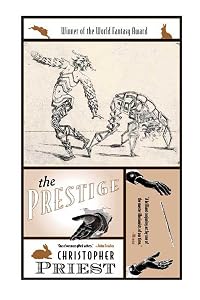
The Prestige
by Christopher Priest
On This Page
Description
In 1878, two young stage magicians clash in the dark during the course of a fraudulent séance. From this moment on, their lives become webs of deceit and revelation as they vie to outwit and expose each other. Their rivalry will take them to the peaks of their careers-but with terrible consequences. In the course of pursuing each other's ruin, they will deploy all the deception their magician's craft can command, the highest misdirection and the darkest science. Blood will be spilled, but show more it will not be enough. In the end, their legacy will pass on for generations to descendants who must, for their sanity's sake, untangle their puzzle. show lessTags
Recommendations



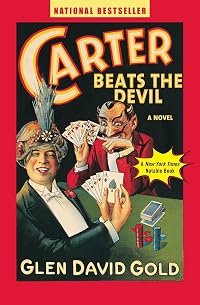

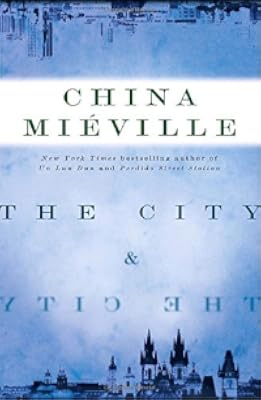
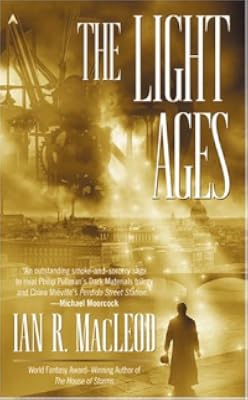
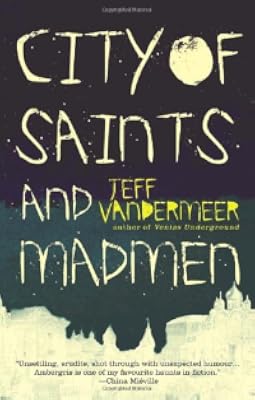
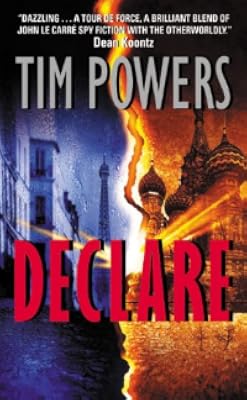
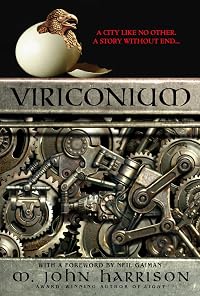


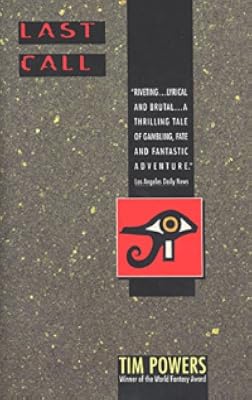
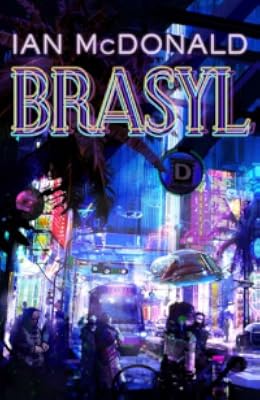
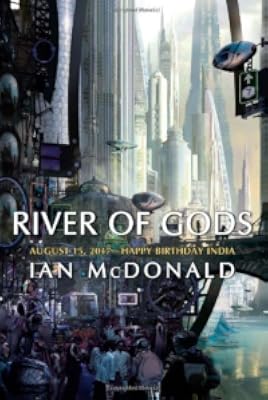
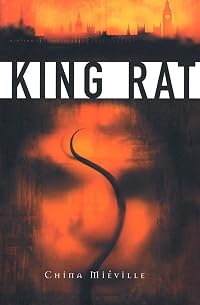
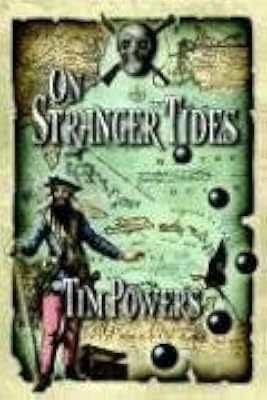
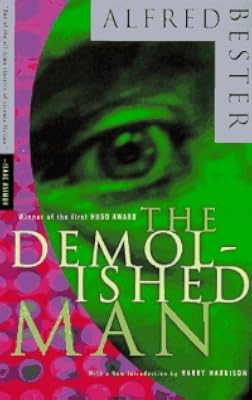

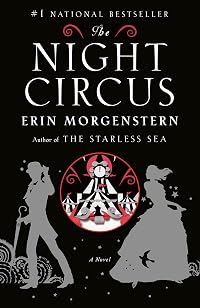
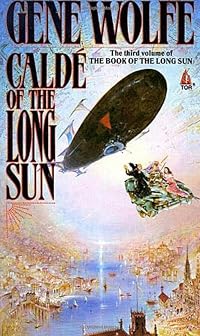
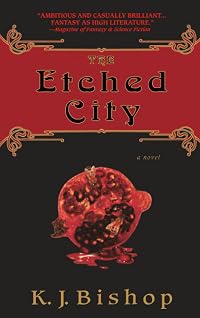

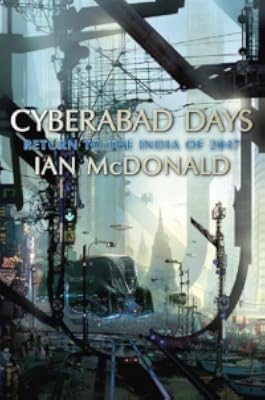
Member Recommendations
Jarandel The presence or absence of doubles leads protagonists to the strangest extremities. Also, unreliable narrators.
10
SomeGuyInVirginia Mysteries featuring historical personages.
paradoxosalpha Rivalries in stage magic; coveting the apparatus for the trick; multigenerational change.
11

Member Reviews
Christopher Nolan's 2006 movie adaptation of this book, on which Christopher Priest is given a coauthor credit, is one of my favorite films. Having recently rewatched it, I thought it time to give the book on which it was based a go. I found a book that, like the movie, respects its readers' intelligence while providing a lot of fuel for speculative thought. And like the movie, it's a pleasure all the way through.
Knowing each illusionist's secret didn't detract from my enjoyment. Instead, I got to observe the skillfulness of Priest's misdirections. The book is better than the movie at conjuring late Victorian England. It provides a modern-day framing device, missing from the film, that's intriguing and creepy; in fact the heightened show more gothic atmosphere and willingness to flirt with the supernatural is a major point of difference between the book and the movie, which reflects Nolan's more cerebral methods. For all their similarities, the novel leans toward fantasy while the film leans toward sci-fi. In both, the twists are astounding and the audience, readers and viewers, realize that they've been manipulated by expert hands. (Interestingly, Christopher Priest was for most of his life a prominent member of the science fiction community.)
For all its trickiness, this is no cold intellectural exercise. Emotions run high, and there are countless tiny touches that assure us we're in the hands of a master storyteller. For me, one was the way that the same events are recounted slightly differently in the journals of the two protagonists. There's rarely a dramatic reason for this: it only reflects the normal way that two people might remember the same important event. That Priest took the trouble to be realistic in this way when he didn't have to increases my respect for him as an author.
A warning: at least two of the other reviews on this site reveal the most important secrets of the book, secrets the author intends the reader to discover only after long periods of wonderment. Do read the book before reading these reviews! show less
Knowing each illusionist's secret didn't detract from my enjoyment. Instead, I got to observe the skillfulness of Priest's misdirections. The book is better than the movie at conjuring late Victorian England. It provides a modern-day framing device, missing from the film, that's intriguing and creepy; in fact the heightened show more gothic atmosphere and willingness to flirt with the supernatural is a major point of difference between the book and the movie, which reflects Nolan's more cerebral methods. For all their similarities, the novel leans toward fantasy while the film leans toward sci-fi. In both, the twists are astounding and the audience, readers and viewers, realize that they've been manipulated by expert hands. (Interestingly, Christopher Priest was for most of his life a prominent member of the science fiction community.)
For all its trickiness, this is no cold intellectural exercise. Emotions run high, and there are countless tiny touches that assure us we're in the hands of a master storyteller. For me, one was the way that the same events are recounted slightly differently in the journals of the two protagonists. There's rarely a dramatic reason for this: it only reflects the normal way that two people might remember the same important event. That Priest took the trouble to be realistic in this way when he didn't have to increases my respect for him as an author.
A warning: at least two of the other reviews on this site reveal the most important secrets of the book, secrets the author intends the reader to discover only after long periods of wonderment. Do read the book before reading these reviews! show less
It has been awhile since I've read/listened to a literary work that I would describe as "unique", but this warrants it. I'll put out there that I have not seen the film (nor did I know it existed until much later in my listening), and I don't really care to because the audiobook experience was so vivid and complete.
Both the narrative structure and the content are compelling. We first meet a character who at least initially, seems sort of incidental -- Andrew Westley. We know little about him except that he's adopted, a disgruntled journalist, and a recipient of a book written by one of his biological ancestors. Refreshingly, Christopher Priest does not fall on "adoptee" clichés (either positive or negative), and Westley feels he must show more have a twin brother out there and he wants very much to meet him. This would be a good foundation for a story, but soon we forget that it is even there...for awhile at least.
What follows is a chronicle, in epistolary style, of a feud between two magicians, and one that gives new meaning to the "sins of the fathers..." Each magician gets substantial air time to be centered as the ...protagonist? Tough call. Alfred Borden and Rupert Angier each share details of their childhoods and development of their careers as magicians, as well as their complex perspectives that inform their actions and reactions in their feud with each other. Admittedly, some of the descriptions of certain illusions contained so much detail that my attention started to drift, but the detail, particularly in the case of Angier's narrative is actually where the devil is. We shall leave it at that.
This truly was an experience--I got lost in the story and forgot why it started. Of course the book returns to where it began, with Andrew (and the Lady Katherine...Angier). Just when I felt like it was enough to bear witness to the lives of Alfred Borden and Rupert Angier, Priest throws in...not a twist per se, but takes us where we might not wanted to have gone. Simon Vance's narration is excellent-- expressing nuances of jealousy, concern, regret, and fear, spread over several characters. Ultimately it is a story about hubris and ambition, but also about love and vulnerability. And on top of all that, a good-old-fashioned mystery--not so much a "whodunnit" but more of a "whodunwhat". show less
Both the narrative structure and the content are compelling. We first meet a character who at least initially, seems sort of incidental -- Andrew Westley. We know little about him except that he's adopted, a disgruntled journalist, and a recipient of a book written by one of his biological ancestors. Refreshingly, Christopher Priest does not fall on "adoptee" clichés (either positive or negative), and Westley feels he must show more have a twin brother out there and he wants very much to meet him. This would be a good foundation for a story, but soon we forget that it is even there...for awhile at least.
What follows is a chronicle, in epistolary style, of a feud between two magicians, and one that gives new meaning to the "sins of the fathers..." Each magician gets substantial air time to be centered as the ...protagonist? Tough call. Alfred Borden and Rupert Angier each share details of their childhoods and development of their careers as magicians, as well as their complex perspectives that inform their actions and reactions in their feud with each other. Admittedly, some of the descriptions of certain illusions contained so much detail that my attention started to drift, but the detail, particularly in the case of Angier's narrative is actually where the devil is. We shall leave it at that.
This truly was an experience--I got lost in the story and forgot why it started. Of course the book returns to where it began, with Andrew (and the Lady Katherine...Angier). Just when I felt like it was enough to bear witness to the lives of Alfred Borden and Rupert Angier, Priest throws in...not a twist per se, but takes us where we might not wanted to have gone. Simon Vance's narration is excellent-- expressing nuances of jealousy, concern, regret, and fear, spread over several characters. Ultimately it is a story about hubris and ambition, but also about love and vulnerability. And on top of all that, a good-old-fashioned mystery--not so much a "whodunnit" but more of a "whodunwhat". show less
The performer is of course not a sorcerer at all, but an actor who plays the part of a sorcerer and who wishes the audience to believe, if only temporarily, that he is in contact with darker powers. The audience, meantime, knows that what they are seeing is not true sorcery, but they suppress the knowledge and acquiesce to the selfsame wish as the performer’s. The greater the performer’s skill at maintaining the illusion, the better at this deceptive sorcery he is judged to be.
-- The Prestige, page 33
Reading The Prestige is like being in the audience of a magic show. You know that you are being fooled, you just don't know how it's being done. So you keep reading, trying not to fall for the misdirection, thinking you have it all show more figured out. And then you get to the end and realize you've been wrong the whole time, and now you have to reread the book just to admire the way the author wove his magic.
The Prestige is the story of two stage magicians in the Victorian era, two men whose rivalry over one particular illusion extends even beyond their lifetimes. The novel reads like a classic gothic-inspired tale from Wilkie Collins or Charlotte Brontë, with hints of Mary Shelley and Robert Louis Stevenson. Written as a collection of personal diaries and journals, The Prestige unfolds illusion by illusion until the climactic ending.
A perfect novel for the dark of winter, The Prestige had me hooked from the very beginning and didn't let go until the final page. I highly recommend this winner of the 1996 World Fantasy Award. show less
-- The Prestige, page 33
Reading The Prestige is like being in the audience of a magic show. You know that you are being fooled, you just don't know how it's being done. So you keep reading, trying not to fall for the misdirection, thinking you have it all show more figured out. And then you get to the end and realize you've been wrong the whole time, and now you have to reread the book just to admire the way the author wove his magic.
The Prestige is the story of two stage magicians in the Victorian era, two men whose rivalry over one particular illusion extends even beyond their lifetimes. The novel reads like a classic gothic-inspired tale from Wilkie Collins or Charlotte Brontë, with hints of Mary Shelley and Robert Louis Stevenson. Written as a collection of personal diaries and journals, The Prestige unfolds illusion by illusion until the climactic ending.
A perfect novel for the dark of winter, The Prestige had me hooked from the very beginning and didn't let go until the final page. I highly recommend this winner of the 1996 World Fantasy Award. show less
I really wish I had read Priest's book before seeing the movie as the twists, turns and revelations would have been so much more fun without any foreknowledge. The movie gives away the 'prestige' of the story and that is a shame since the book is written in such a cunningly confusing way. While much of the movie is true to the major events in the book, the endings are quite different. The book ending is much more creepy and horrific and I much preferred it to the cinematic version.
Even though I knew the plot going in, I'm still glad I read this book. The writing and pace are simply marvelous. It works equally well as science-fiction, historical fiction, horror, and mystery. The book is quite an achievement and, at ~400 pages, is just show more about the perfect length for the story being told. show less
Even though I knew the plot going in, I'm still glad I read this book. The writing and pace are simply marvelous. It works equally well as science-fiction, historical fiction, horror, and mystery. The book is quite an achievement and, at ~400 pages, is just show more about the perfect length for the story being told. show less
I admit that I saw the movie of this book first, and I loved it, so I knew I had to read the book. There are some interesting differences between the book and the movie, but ultimately the story is the same. I love the mystery and the conflict between the two illusionists. It reminded me a little of The Night Circus, which is one of my favorite books! I do feel like the differences did make the movie better though, which I'm always disappointed to have to say.
A tale of two rival 19th-century magicians who end up trying to outdo each other -- to put it mildly -- in performing an act involving disappearing in one place and reappearing in another.
I did see the movie that was based on this novel. It was long enough ago that I didn't remember a lot of the specific details (many of which I think were different from the book's, anyway), but I certainly remembered the the twisty revelations about how the acts were performed. They were pretty unforgettable.
I wondered, at the beginning, exactly how Priest would pull off some of the movie's tricks in text form. I also wondered whether it would work nearly as well going into it knowing its secrets. Well, the answer to the first question turns out to be show more that it was pretty cleverly done, I think. And the answer to the second is that, yes. Yes, it did work just fine for me, even spoiled as I was. I do think it would have been a lot of fun to read this knowing nothing about it and to have to slowly piece together the truth of what's going on, as it was with the movie. But the trick the book is performing is still an impressive one when you know how it works. In fact, there's a certain satisfaction in being able to follow everything it's doing as it's doing it. It kind of reminds me of a video I saw once of Penn & Teller doing the famous cups and balls trick with transparent cups. You can see exactly how everything's working, and it's still damned cool.
But this novel has more going for it than a bit of clever literary sleight of hand. It's got obsession! Irony! Tragedy! Weird science! Not to mention a deep but subtle sense of horror and some interesting lurking philosophical questions. Also, it's just completely batshit crazy. But it a wonderful kind of way.
Anyway. If any of that sounds the least bit appealing, I definitely recommend both the book and the movie, in whichever order you'd prefer to consume them. show less
I did see the movie that was based on this novel. It was long enough ago that I didn't remember a lot of the specific details (many of which I think were different from the book's, anyway), but I certainly remembered the the twisty revelations about how the acts were performed. They were pretty unforgettable.
I wondered, at the beginning, exactly how Priest would pull off some of the movie's tricks in text form. I also wondered whether it would work nearly as well going into it knowing its secrets. Well, the answer to the first question turns out to be show more that it was pretty cleverly done, I think. And the answer to the second is that, yes. Yes, it did work just fine for me, even spoiled as I was. I do think it would have been a lot of fun to read this knowing nothing about it and to have to slowly piece together the truth of what's going on, as it was with the movie. But the trick the book is performing is still an impressive one when you know how it works. In fact, there's a certain satisfaction in being able to follow everything it's doing as it's doing it. It kind of reminds me of a video I saw once of Penn & Teller doing the famous cups and balls trick with transparent cups. You can see exactly how everything's working, and it's still damned cool.
But this novel has more going for it than a bit of clever literary sleight of hand. It's got obsession! Irony! Tragedy! Weird science! Not to mention a deep but subtle sense of horror and some interesting lurking philosophical questions. Also, it's just completely batshit crazy. But it a wonderful kind of way.
Anyway. If any of that sounds the least bit appealing, I definitely recommend both the book and the movie, in whichever order you'd prefer to consume them. show less
I'm not entirely sure what to make of The Prestige though I have read it several times. It is a story so in love with mystery and derailing the expectations it deliberately builds that quite often I feel like it skips over what could have been the most compelling or entertaining moments, not to mention losing out on character depth.
It is the story of four people. Andrew and Kate, two modern day people traumatised by an event in their childhood, and Alfred and Rupert, their great-grandfathers who were feuding magicians towards the end of the 19th century. Each character's section reveals more of events that build towards the resolution of the mystery though when we finally get there I don't find it satisfying, it really just raises more show more questions. In this way it feels much like a ghost story.
Priest does a lot of playing with expectation and mirroring, which is very clever. However for me the book comes alive once we reach Rupert's section, which is by far the longest and the only one bursting with personality. Perhaps it is because his section starts when he is nine years old or just because he has an excitable personality, but he is instantly charming and also the only funny character in the book. It's a page-turner firstly because you want to find out what is going on and then once you reach Rupert's section just because it is so fun.
But overall it remains an eerie mystery and leaves with a discomfiting tone. show less
It is the story of four people. Andrew and Kate, two modern day people traumatised by an event in their childhood, and Alfred and Rupert, their great-grandfathers who were feuding magicians towards the end of the 19th century. Each character's section reveals more of events that build towards the resolution of the mystery though when we finally get there I don't find it satisfying, it really just raises more show more questions. In this way it feels much like a ghost story.
Priest does a lot of playing with expectation and mirroring, which is very clever. However for me the book comes alive once we reach Rupert's section, which is by far the longest and the only one bursting with personality. Perhaps it is because his section starts when he is nine years old or just because he has an excitable personality, but he is instantly charming and also the only funny character in the book. It's a page-turner firstly because you want to find out what is going on and then once you reach Rupert's section just because it is so fun.
But overall it remains an eerie mystery and leaves with a discomfiting tone. show less
Members
- Recently Added By
Lists

The Guardian's 1000 Novels Everyone Must Read
1,005 works; 552 members

Best Fantasy Novels
821 works; 361 members

Read the book and saw the movie
1,170 works; 193 members

Best Contemporary Literary Fiction (Around the Last 30 Years)
400 works; 124 members

Favourite Books
1,820 works; 311 members

Best 21st Century Books (So Far)
679 works; 86 members

Books With a Twist
69 works; 46 members
Historical Fiction
889 works; 90 members

Unreliable Narrators
170 works; 43 members

Scary ghost stories - no zombies, vampires or werewolves, please
53 works; 19 members

Books Set in Great Britain
191 works; 13 members

S.F. Masterworks (Complete)
229 works; 15 members

Gaslamp Fantasy
87 works; 15 members

Speculative Fiction: Slipstream Literature
166 works; 16 members

SF Masterworks
193 works; 8 members

Fiction Featuring Real People
81 works; 17 members
Arthur C. Clarke Award Winners and Shortlisted Books
219 works; 14 members
Page Turners
185 works; 11 members

Books Read in 2023
5,638 works; 147 members

Books Read in 2017
4,249 works; 129 members

Historical Figures in Fiction
51 works; 5 members

to get
244 works; 2 members

KayStJ's to-read list
1,616 works; 11 members

Jones & Newman: Best Horror Books Further Recommended Reading
577 works; 4 members

Favorite Epistolary Fiction
143 works; 144 members

Historical fiction set in Britain
13 works; 1 member
Talk Discussions
Past Discussions
SPOILERS - SEPTEMBER - The Prestige in The Green Dragon (October 2014)
SEPTEMBER - NO SPOILERS - The Prestige in The Green Dragon (September 2014)
Author Information

63+ Works 11,856 Members
Some Editions
Awards and Honors
Awards
Distinctions
Series
Belongs to Publisher Series
Work Relationships
Is contained in
Has the adaptation
Common Knowledge
- Canonical title*
- Le Prestige
- Original title
- The Prestige
- Original publication date
- 1995
- People/Characters
- Alfred Borden; Rupert Angier; Nikola Tesla; Andrew Westley; Nicholas Julius Borden
- Important places
- Colorado, USA; England, UK
- Related movies
- The Prestige (2006 | IMDb)
- Dedication
- For Elizabeth and Simon
- First words
- It began on a train, heading north through England, although I was soon to discover that the story had really begun more than a hundred years earlier.
- Last words
- (Click to show. Warning: May contain spoilers.)Without looking at us, or anywhere in the direction of the house, he stepped out on to the flat ground, hunching his shoulders in the blizzard, then moved to the right, between the trees, down the hill, and out of our sight.
- Blurbers
- Fowles, John
- Original language
- English
*Some information comes from Common Knowledge in other languages. Click "Edit" for more information.
Classifications
- Genres
- Fiction and Literature, Science Fiction, General Fiction, Fantasy, Historical Fiction, Horror, Mystery
- DDC/MDS
- 823.914 — Literature & rhetoric English & Old English literatures English fiction 1900- 1901-1999 1945-1999
- LCC
- PR6066 .R55 .P74 — Language and Literature English English Literature 1961-2000
- BISAC
Statistics
- Members
- 3,804
- Popularity
- 4,194
- Reviews
- 149
- Rating
- (3.81)
- Languages
- 14 — Czech, English, French, German, Hungarian, Italian, Lithuanian, Polish, Portuguese, Romanian, Russian, Spanish, Swedish, Turkish
- Media
- Paper, Audiobook, Ebook
- ISBNs
- 51
- ASINs
- 17