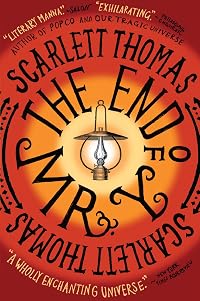
The End of Mr. Y
by Scarlett Thomas
On This Page
Description
A cursed book. A missing professor. Some nefarious men in gray suits. And a dreamworld called the Troposphere? Ariel Manto has a fascination with nineteenth-century scientists--especially Thomas Lumas and "The End of Mr. Y, "a book no one alive has read. When she mysteriously uncovers a copy at a used bookstore, Ariel is launched into an adventure of science and faith, consciousness and death, space and time, and everything in between. Seeking answers, Ariel follows in Mr. Y's footsteps: She show more swallows a tincture, stares into a black dot, and is transported into the Troposphere--a wonderland where she can travel through time and space using the thoughts of others. There she begins to understand all the mysteries surrounding the book, herself, and the universe. Or is it all just a hallucination? show lessTags
Recommendations

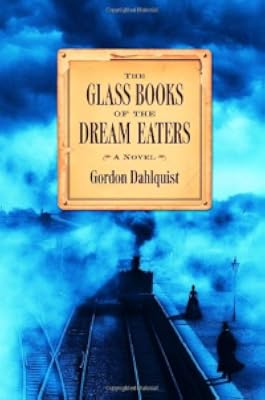
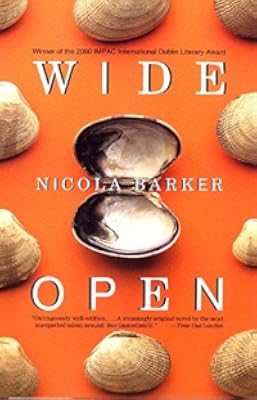
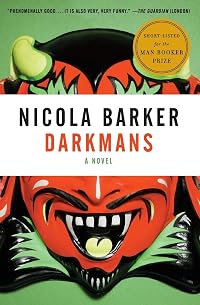
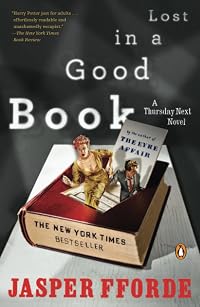


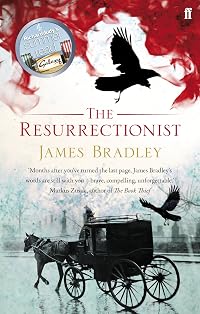
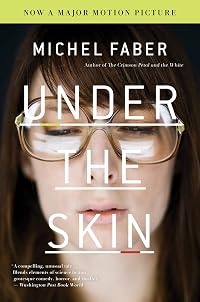
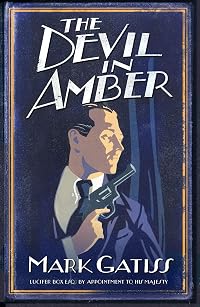
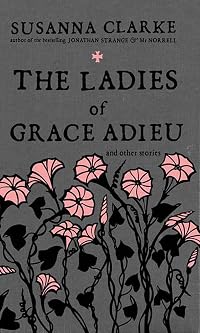
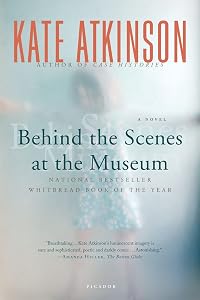

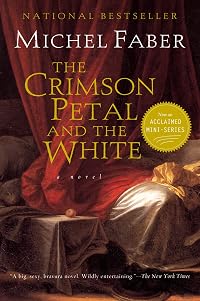
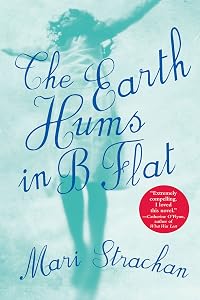
Member Recommendations
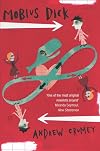
mpettitt Another book where philosophical thinking is encouraged within the plot
61
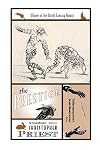
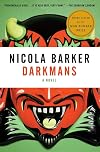
Widsith Both slightly bonkers Kent-based novels-of-ideas with supernatural elements...I think Barker is the better writer, but Thomas has the whole geeky-cool angle covered.
Also recommended by VisibleGhost, debbiereads
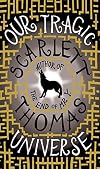
souloftherose Scarlett Thomas' earlier novel The End of Mr Y shares many similar themes with Our Tragic Universe
20
by anonymous user
Member Reviews
This was much stranger than I was expecting - but all the more enjoyable for it. At times some of the philosophical aspects were too taxing for me to want to think too hard about but there were some beautiful explanations of some scientific ideas. I particularly liked the passage regarding God vs the multiverse and despite being familiar with the arguments had never thought about them like that. The paradox of homoeopathic solutions and the craziness that ensues once Ariel drinks it was enthralling up until the last part of the book. Here I felt the book lost momentum and ultimately I didn't like the ending. This was partially because I didn't quite understand it, but also because I found it unsatisfying in terms of the narrative. show more Perhaps a second reading at a later date will change my mind.
Overall, strange and wonderful, if slightly anticlimactic. show less
Overall, strange and wonderful, if slightly anticlimactic. show less
 This review was written for LibraryThing Early Reviewers.
I absolutely adore this book! First and foremost I HEART the cover with the black-edged pages. I know it's childish, but I first picked up the book because I found the cover really interesting (yes I'm a slave to good marketing, sue me). But I'm so glad I did.
First of all, the book was incredibly cleverly written. The story is about a woman attempting to complete her PhD on an obscure 19th century English writer who she is fascinated with. Meanwhile, her supervisor suddenly disappears, adding to the mystery around her subject matter. A legend surrounds her author that anyone who attempts to read his book, titled 'The End of Mr. Y' will disappear, and it was thought that there was only one copy of it in existence. Events in her show more otherwise uneventful life become curiouser and curiouser, forcing our heroine out of her otherwise monotonous life and causing her to ask questions that will at best give the reader a new outlook on life, and at worst turn them into a crowd of conspiracy theorists.
I believe that this book is a cross between Alice in Wonderland and Angels & Demons, a fantastic literary mystery, truly one of a kind. I can't wait to start her latest book, [Pop Co.], which I already have waiting for me in my apartment when I get back to college! show less
First of all, the book was incredibly cleverly written. The story is about a woman attempting to complete her PhD on an obscure 19th century English writer who she is fascinated with. Meanwhile, her supervisor suddenly disappears, adding to the mystery around her subject matter. A legend surrounds her author that anyone who attempts to read his book, titled 'The End of Mr. Y' will disappear, and it was thought that there was only one copy of it in existence. Events in her show more otherwise uneventful life become curiouser and curiouser, forcing our heroine out of her otherwise monotonous life and causing her to ask questions that will at best give the reader a new outlook on life, and at worst turn them into a crowd of conspiracy theorists.
I believe that this book is a cross between Alice in Wonderland and Angels & Demons, a fantastic literary mystery, truly one of a kind. I can't wait to start her latest book, [Pop Co.], which I already have waiting for me in my apartment when I get back to college! show less
This was a fascinating premise for a book that simply became less and less pleasant to read. The science-fantasy aspects remained interesting, and I managed to get used to the constant name-dropping of philosophers and theorists (in fact, the book made me want to become better acquainted with Jacques Derrida). What I couldn't get beyond was the extremely unlikable protagonist, Ariel, who also narrates the book in first person.
I suspect that Thomas' motivations in making her lead so damaged was to suggest that she has "nothing left to lose," which allows Thomas to justify some pretty extreme actions as the book goes on. But there's nothing to even invite you to identify with Ariel's point of view; instead, she's just cynical, bitter, and show more hard from the moment we meet her. Worse, you're left reading the story of a deeply self-destructive individual who routinely serves herself up for violent sex with self-absorbed men, apparently only to motivate the ever-increasing "tailspin" of the plot - and frankly, that's not what I meant to sign up for with a mind-bending fantasy novel. It just feels so unnecessary; it has almost no bearing at all on the SF/F aspects of the story, and there are other, more subtle ways to bring a sympathetic character to desperation. It's been a few weeks since I finished the book, and I'm still at a loss as to why Thomas chose this method. It left me feeling - well, icky - and as a result, a novel of otherwise interesting world-building will remain unrevisited (and in fact, I plan to get rid of my copy). show less
I suspect that Thomas' motivations in making her lead so damaged was to suggest that she has "nothing left to lose," which allows Thomas to justify some pretty extreme actions as the book goes on. But there's nothing to even invite you to identify with Ariel's point of view; instead, she's just cynical, bitter, and show more hard from the moment we meet her. Worse, you're left reading the story of a deeply self-destructive individual who routinely serves herself up for violent sex with self-absorbed men, apparently only to motivate the ever-increasing "tailspin" of the plot - and frankly, that's not what I meant to sign up for with a mind-bending fantasy novel. It just feels so unnecessary; it has almost no bearing at all on the SF/F aspects of the story, and there are other, more subtle ways to bring a sympathetic character to desperation. It's been a few weeks since I finished the book, and I'm still at a loss as to why Thomas chose this method. It left me feeling - well, icky - and as a result, a novel of otherwise interesting world-building will remain unrevisited (and in fact, I plan to get rid of my copy). show less
Post-structuralist physics with a plot, which is how it ought to be since even an equation is really just a love story told by someone with Aspergers. Come to think of it, there are autistic kids, or more accurately, KIDS in the plot and they come to a bad end with the help of the CIA, but if you're worried about spoilers, we could just go back to before that happened, only we'd better do it before the end of The End of Mr. Y.
Personally, I'm post-Post-structualism, but I still enjoy a romp through the existential questions that need to be resolved before the end of the story which luckily is not the end of our personal story. Like the main character, I too want to know everything but unlike a fictional character, I don't get to find show more out. Books are subject to intelligent design and its characters are created by an author outside the story though they usually are unaware of this (though T. E. Lumas knows he's really Mr. Y). Characters' worlds are created by language, and to some extent, we create ours with language as well. We spend much time in the Lacanian Symbolic register, but there's also a real register even if we can't really talk about it because talking is symbolic. Still, it's there, though I'll bet many of us readers feel like Ariel, preferring books to embodied existence. We're all connected through ancestry, proximity, language, and empathy and posting on Goodreads and destroying the troposphere can't disconnect us. What passes for a resolution at the end is insufficiently satisfying but when you're out to explain everything, this is to be expected.
I enjoyed the extra edges everything has when their fourth dimensionality is limited to three since I've seen the diagrams of tesseracts (aka hypercubes), the videogame interface to reality, and Ariel social-engineering the password to Saul's computer, (but does she ever make use of what she downloads from it?) And what of the diseases that would never have been cured without experiments on mice? Maybe one of those now incurable illnesses would kill Hitler and prevent the holocaust.
Reading others' reviews of this book makes me see the difficult position the author finds herself in. She wants to engage with the thoughts of various philosophers and theorists, but she can't just explain them from scratch. So some readers felt she under-explained, others felt she over-explained. Some felt threatened by the ideas being there at all, and blamed Ms. Thomas of pretension. In my opinion, she did reasonable well with this insoluble problem. She might understand Dasein better than I do, but I don't think she fully grasps that the zeros and ones of machine code is just another metaphor. To be fair, most computer scientists don't either. show less
Personally, I'm post-Post-structualism, but I still enjoy a romp through the existential questions that need to be resolved before the end of the story which luckily is not the end of our personal story. Like the main character, I too want to know everything but unlike a fictional character, I don't get to find show more out. Books are subject to intelligent design and its characters are created by an author outside the story though they usually are unaware of this (though T. E. Lumas knows he's really Mr. Y). Characters' worlds are created by language, and to some extent, we create ours with language as well. We spend much time in the Lacanian Symbolic register, but there's also a real register even if we can't really talk about it because talking is symbolic. Still, it's there, though I'll bet many of us readers feel like Ariel, preferring books to embodied existence. We're all connected through ancestry, proximity, language, and empathy and posting on Goodreads and destroying the troposphere can't disconnect us. What passes for a resolution at the end is insufficiently satisfying but when you're out to explain everything, this is to be expected.
I enjoyed the extra edges everything has when their fourth dimensionality is limited to three since I've seen the diagrams of tesseracts (aka hypercubes), the videogame interface to reality, and Ariel social-engineering the password to Saul's computer, (but does she ever make use of what she downloads from it?) And what of the diseases that would never have been cured without experiments on mice? Maybe one of those now incurable illnesses would kill Hitler and prevent the holocaust.
Reading others' reviews of this book makes me see the difficult position the author finds herself in. She wants to engage with the thoughts of various philosophers and theorists, but she can't just explain them from scratch. So some readers felt she under-explained, others felt she over-explained. Some felt threatened by the ideas being there at all, and blamed Ms. Thomas of pretension. In my opinion, she did reasonable well with this insoluble problem. She might understand Dasein better than I do, but I don't think she fully grasps that the zeros and ones of machine code is just another metaphor. To be fair, most computer scientists don't either. show less
I require a very high bar for spec fic books based predominantly on quantum mechanics, but I think Thomas did a very good job here. She clearly learned her stuff, and uses it sparingly and deeply when used. I'm less a philosophical expert, but it seemed to be handled similarly. All of that being said, while many books use quantum mechanics in service to the plot, Thomas seems to be writing more of a Sophie's World style, where the plot exists to advance her thoughts on quantum mechanics and philosophy.
While this seems to have turned a lot of people off, I found her completely forthright about it: this is a book about a main character who is writing her thesis about novels that are thought experiments. This is a novel that is a thought show more experiment: let's say we could enter thoughts. If that were possible, what would it mean for how thoughts are made? What would that say about what it means to be conscious? Is what we learned from this thought experiment generalizable even in a universe where thoughts aren't a manifest place that can be visited? Those are fun questions to ask and explore.
When she veers away from that core, the book really falls flat (the love story? The random officemate who was into evo bio and got totally dropped, even though I really wanted her to integrate into the main plot line?), but that's OK, because it's not supposed to be a proper novel. My only real complaint is the ending kind of petered out.
I thought Thomas had interesting thoughts about what it means to think, what defines consciousness and whether emergent consciousness is possible. I was intrigued by the thought process of whether defining phenomena mathematically instantiates them or merely defines them and I think she explores this in a particularly deft and nuanced way. show less
While this seems to have turned a lot of people off, I found her completely forthright about it: this is a book about a main character who is writing her thesis about novels that are thought experiments. This is a novel that is a thought show more experiment: let's say we could enter thoughts. If that were possible, what would it mean for how thoughts are made? What would that say about what it means to be conscious? Is what we learned from this thought experiment generalizable even in a universe where thoughts aren't a manifest place that can be visited? Those are fun questions to ask and explore.
When she veers away from that core, the book really falls flat (the love story? The random officemate who was into evo bio and got totally dropped, even though I really wanted her to integrate into the main plot line?), but that's OK, because it's not supposed to be a proper novel. My only real complaint is the ending kind of petered out.
I thought Thomas had interesting thoughts about what it means to think, what defines consciousness and whether emergent consciousness is possible. I was intrigued by the thought process of whether defining phenomena mathematically instantiates them or merely defines them and I think she explores this in a particularly deft and nuanced way. show less
Finally finished this on the second attempt. Quite enjoyed it. The back cover states that "Ariel finds herself swept into a thrilling adventure of love, sex, death and time-travel. All cool, however not entirely sure why female characters who like sex have to be suffering from some sort of trauma and daddy issues as a way of explaining why they are really just self harming.
from the book cover, i was expecting a whimsical victorian fantasy, or at least a light read perfect for when i need perking up...
a couple of chapters in and i was getting annoyed that i've been misled...but then i got sucked in...and the book never let me go.
i almost do not want to describe anything about this book. it's spent so long on my bookshelves that i have forgotten what it was about...and discovering the content as i read it was wonderful. there's actually barely a plot or character development. the book is fluffed by meandering reflections and discussions on physics, philosophy, religion and on the relationship between reality and language...i think...
at times it got too overindulgent, but nothing unforgivable. i dont think show more it was ever preachy. reading it felt more like having a drunken discussion with friends at university when we were young/foolish enough to think we can actually figure out the big questions looming before us (how wrong we were!)...
there's a lot of ideas in the book that i would love to read again. among them is the idea that a book is actually a thought experiment, where we see the world through the eyes of the characters (a kind of telepathy with the fictional world). and as we shift through the perspectives of the different characters, we eventually see through the eyes of the author living in their own time (a kind of telepathy in the real world!).
i really liked that ^_^
from the book:
"Let me become part of a book; I'd give anything for that. Being cursed by the End of Mr.Y must mean becoming part of the book; an intertextual being: a book-cyborg, or...perhaps a bibliorg." show less
a couple of chapters in and i was getting annoyed that i've been misled...but then i got sucked in...and the book never let me go.
i almost do not want to describe anything about this book. it's spent so long on my bookshelves that i have forgotten what it was about...and discovering the content as i read it was wonderful. there's actually barely a plot or character development. the book is fluffed by meandering reflections and discussions on physics, philosophy, religion and on the relationship between reality and language...i think...
at times it got too overindulgent, but nothing unforgivable. i dont think show more it was ever preachy. reading it felt more like having a drunken discussion with friends at university when we were young/foolish enough to think we can actually figure out the big questions looming before us (how wrong we were!)...
there's a lot of ideas in the book that i would love to read again. among them is the idea that a book is actually a thought experiment, where we see the world through the eyes of the characters (a kind of telepathy with the fictional world). and as we shift through the perspectives of the different characters, we eventually see through the eyes of the author living in their own time (a kind of telepathy in the real world!).
i really liked that ^_^
from the book:
"Let me become part of a book; I'd give anything for that. Being cursed by the End of Mr.Y must mean becoming part of the book; an intertextual being: a book-cyborg, or...perhaps a bibliorg." show less
Members
- Recently Added By
Published Reviews
ThingScore 63
Thomas writes with marvelous panache, although I wish she indulged less in her earnest calls for homeopathy and animal rights. Amid all the novel’s engaging questions about the nature of reality, it’s hard to get worked up about a subplot that has Ariel traveling through time to save laboratory mice. Still, she spins Derrida and subatomic theory into a wholly enchanting alternate universe show more that should appeal to a wide popular audience, and that’s something no deconstructionist or physicist has managed to do. Consider “The End of Mr. Y” an accomplished, impressive thought experiment for the 21st century. show less
added by SimoneA
added by lemontwist
Lists

Favourite Women's Prize for Fiction, Orange & Bailey's Prize contenders
132 works; 52 members

Recommend the 20 best books you've read in the last five years
2,168 works; 606 members

Books Read in 2014
2,343 works; 89 members

Academia in Fiction
158 works; 23 members

Books Read in 2016
4,666 works; 199 members

A Novel Cure
742 works; 23 members

BingoDOG - Genre Benders
74 works; 14 members

BingoDOG - Scientists in Fiction
111 works; 17 members
Author Information

23+ Works 6,266 Members
Scarlett Thomas was born in London in 1972. Her novels include The Seed Collectors, PopCo, The End of Mr.Y which was longlisted for the Orange Broadband Prize for Fiction 2007, and Our Tragic Universe. She teaches creative writing at the University of Kent.
Some Editions
Awards and Honors
Series
Belongs to Publisher Series
Work Relationships
Is contained in
Common Knowledge
- Canonical title
- The End of Mr. Y
- Original title
- The End of Mr Y
- Original publication date
- 2006 (US) (US); 2007 (UK) (UK)
- People/Characters
- Ariel Manto; Thomas Lumas; Saul Burlem; Wolfgang; Heather; Adam
- Important places
- Canterbury, Kent, England, UK; Kent, England, UK; The Troposphere; Faversham, Kent, England, UK; The Shrine of St. Jude, Faversham, Kent, England, UK; Hertfordshire, England, UK (show all 7); Torquay, Devon, England, UK
- Epigraph
- But what if God himself can be simulated, that is to say can be reduced to the signs that constitute faith? Then the whole system becomes weightless, it is no longer itself anything but a gigantic simulacrum--not unreal, but ... (show all)a simulacrum, that is to say never exchanged for the real, but exchanged for itself, in an uninterrupted circuit without reference or circumference.--Jean Baudrillard
Indeed it is even possible for an entity to show itself as something which in itself it is not.--Martin Heidegger - Dedication
- For Couze Venn
- First words
- You now have one choice.
- Last words
- (Click to show. Warning: May contain spoilers.)And then I understand.
- Blurbers
- Coe, Jonathan; Pullman, Philip; Coupland, Douglas
- Original language
- English
Classifications
Statistics
- Members
- 2,647
- Popularity
- 7,072
- Reviews
- 118
- Rating
- (3.75)
- Languages
- 11 — Danish, Dutch, English, French, German, Italian, Norwegian (Bokmål), Portuguese, Spanish, Swedish, Turkish
- Media
- Paper, Audiobook, Ebook
- ISBNs
- 43
- ASINs
- 9
