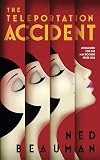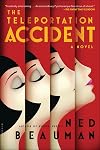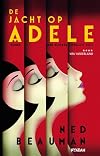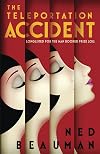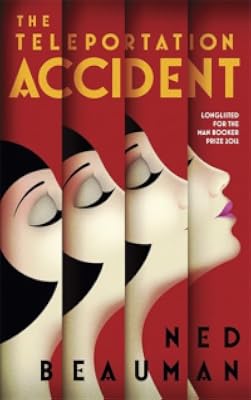
The Teleportation Accident
by Ned Beauman
On This Page
Description
"In the declining Weimar Republic, Egon Loeser works as a stage designer for New Expressionist theatre. His hero is the greatest set designer of the seventeenth century, Adriano Lavicini, who devised the so-called Teleportation Device for the whisking of actors from one scene to another-a miracle, until the thing malfunctioned, causing numerous deaths and perhaps summoning the devil himself. Apolitical in a dangerous time, sex-driven in a dry spell, Loeser leaves the tired scene in Berlin in show more pursuit of the lubricious Adele Hitler (no relation), who couldn't care less about him. Heading first to Paris and then to Los Angeles, he finds his entire tired Berlin social circle reconstituted in exile, under the patronage of a crime writer and his possibly philandering wife. He also finds himself uncomfortably close to a string of murders at Caltech, where a physicist, assisted by Adele herself, is trying to develop a device for honest-to-God teleportation.Following his breathtaking debut, Boxer, Beetle, Ned Beauman ups the ante, creating in The Teleportation Accident a marvelous mash-up of historical fiction, L.A. noir, science fiction, and satire, and proving himself a star on the rise"-- show lessTags
Recommendations







































Member Recommendations
Member Reviews
The best new novel I've read so far this year, The Teleportation Accident will be released in the United States this February. It is also perhaps the best blurb-description of a novel I've ever read and worth reproducing in full since I personally could not do this much justice to a summary/tease:
"HISTORY HAPPENED WHILE YOU WERE HUNGOVER
When you haven't had sex in a long time, it feels like the worst thing that could ever happen to anyone.
If you're living in Germany in the 1930s, it probably isn't.
But that's no consolation to Egon Loeser, whose carnal misfortunes will push him from the experimental theatres of Berlin to the absinthe bars of Paris to the physics laboratories of Los Angeles, trying all the while to solve two mysteries: show more whether it was really a deal with Satan that claimed the life of his hero, the great Renaissance stage designer Adriano Lavicini; and why a handsome, clever, charming, modest guy like him can't, just once in a while, get himself laid.
From the author of the acclaimed Boxer, Beetle comes a historical novel that doesn't know what year it is; a noir novel that turns all the lights on; a romance novel that arrives drunk to dinner; a science fiction novel that can't remember what 'isotope' means; a stunningly inventive, exceptionally funny, dangerously unsteady and (largely) coherent novel about sex, violence, space, time, and how the best way to deal with history is to ignore it.
LET'S HOPE THE PARTY WAS WORTH IT"
The Teleportation Accident is hilarious, fascinating, moving and spellbinding. It mostly covers the 1930s and 1940s, mostly in Berlin, Paris and Los Angeles. But the political situation is buried deep in the background as the protagonist is almost completely indifferent to politics (the closest he comes is a funny scene where he joins a Nazi book burning, thinking it is performance art and also relishing the chance to burn a book about his social scene that made the egregious faux pas of omitting him entirely). Instead it is portrays the cultural life, especially theater, and parodies the many hangers on that world.
While scene by scene it is like a madcap improvisation, it also has a plot that keeps you engaged and a thematic coherence.
I will certainly be moving Beauman's other book, "Boxer, Beetle", up to the top of my to read list. show less
"HISTORY HAPPENED WHILE YOU WERE HUNGOVER
When you haven't had sex in a long time, it feels like the worst thing that could ever happen to anyone.
If you're living in Germany in the 1930s, it probably isn't.
But that's no consolation to Egon Loeser, whose carnal misfortunes will push him from the experimental theatres of Berlin to the absinthe bars of Paris to the physics laboratories of Los Angeles, trying all the while to solve two mysteries: show more whether it was really a deal with Satan that claimed the life of his hero, the great Renaissance stage designer Adriano Lavicini; and why a handsome, clever, charming, modest guy like him can't, just once in a while, get himself laid.
From the author of the acclaimed Boxer, Beetle comes a historical novel that doesn't know what year it is; a noir novel that turns all the lights on; a romance novel that arrives drunk to dinner; a science fiction novel that can't remember what 'isotope' means; a stunningly inventive, exceptionally funny, dangerously unsteady and (largely) coherent novel about sex, violence, space, time, and how the best way to deal with history is to ignore it.
LET'S HOPE THE PARTY WAS WORTH IT"
The Teleportation Accident is hilarious, fascinating, moving and spellbinding. It mostly covers the 1930s and 1940s, mostly in Berlin, Paris and Los Angeles. But the political situation is buried deep in the background as the protagonist is almost completely indifferent to politics (the closest he comes is a funny scene where he joins a Nazi book burning, thinking it is performance art and also relishing the chance to burn a book about his social scene that made the egregious faux pas of omitting him entirely). Instead it is portrays the cultural life, especially theater, and parodies the many hangers on that world.
While scene by scene it is like a madcap improvisation, it also has a plot that keeps you engaged and a thematic coherence.
I will certainly be moving Beauman's other book, "Boxer, Beetle", up to the top of my to read list. show less
Rating: 4.8* of five
The Publisher Says: HISTORY HAPPENED WHILE YOU WERE HUNGOVER.
When you haven't had sex in a long time, it feels like the worst thing that is happening to anyone anywhere. If you're living in Germany in the 1930s, it probably isn't.
But that's no consolation to Egon Loeser, whose carnal misfortunes will push him from the experimental theatres of Berlin to the absinthe bars of Paris to the physics laboratories of Los Angeles, trying all the while to solve two mysteries: whether it was really a deal with Satan that claimed the life of his hero, the great Renaissance stage designer Adriano Lavicini; and why a handsome, clever, charming, modest guy like him can't, just once in a while, get himself laid.
From the author of show more the acclaimed Boxer, Beetle comes an historical novel that doesn't know what year it is; a noir novel that turns all the lights on; a romance novel that arrives drunk to dinner; a science fiction novel that can't remember what 'isotope' means; a stunningly inventive, exceptionally funny, dangerously unsteady and (largely) coherent novel about sex, violence, space, time, and how the best way to deal with history is to ignore it.
LET'S HOPE THE PARTY WAS WORTH IT.
My Review: My review, if I was up for it, would be nothing but retyping the entire novel in this space. You don't need to read my yodels of praise and warbles of inducement to buy the book, you need to read the book.
Is the book funny, as is claimed for it in so many "real" review sources? Here's something I marked on page 7:
Page seven and I'm chuckling, building to a snorting laugh. This is my kind of humor, this droll and dry as a good martini sort of language making ironic-verging-on-facetious observations of all those about the main character...and which observations comment quietly on the main character himself.
What about the romance mentioned so prominently in the book's sales materials, and in "mainstream" reviews? Loesser pursues the elusive, rich, and utterly madcap Adele Hitler (no relation) across continents, despite this exchange from page 54:
Well, all righty then! That's him told. Loesser's anguished suspicion that Adele is right wars with his indignation at being evaluated, pigeonholed, and relegated to a non-starter position before he can make so much as a move. This propels the rest of the novel.
For noir tropes, we have Loesser's falling in with one Dr. Voronoff, famous in the demi-monde of Paris for his impotence cure: Insert the testicle of a monkey between a man's own testicles and let its nature suffuse the aging roué with unquenchable virility. For madame, there is a similar cure for the debilities of aging: Skin cream made from the foreskins of newly circumcised babies. Fresh, innocent skin cells from a body part famed for its stretchiness...well, what could possibly make more sense? A can't-fail nostrum for wrinkles and crow's feet! And Loesser, plus an accomplice-cum-con man called Scramsfield (who promises Loesser that he will reunite him with Adele, already vanished to Los Angeles), will happily liberate wealthy, stupid American women from their desperately needed money in order to survive the Great Depression.
After a spectacular failure in the quackery trade makes Paris too hot for Loesser, he continues his pursuit of Adele to Los Angeles, and here the story becomes an extremely strange (even stranger, I suppose) send-up of Golden Age science fiction tropes, decadent capitalist stereotypes, rumors of Hollywood loucheness, all of which so deeply informed the interwar popular culture's storytelling.
Teleportation. Actual physical teleportation. Research and development for same. It's almost incalculably difficult to imagine how this could be done on a macro scale in today's scientific universe, but thankfully Beauman hasn't set his story in our world but in 1935 (as it now is in the story). And here we come to a place in the narrative where, although there is no diminution of the chuckle-inducing phrasemaking or the wince-cringe-and-giggle observation that's characterized the book until now, the window-dressing is just that, decoration.
The heart of this book is yearning. Everyone in the book yearns for something, be it a person, a state of feeling, a quantum of knowledge, a passed opportunity, a deed desperately regretted that's in need of recall; yearning and searching for the way to fill the void left by the object yearned for. Adele, that object of Loesser's yearning, seeks to fill her own void by assisting in the creation of an actual, physical teleportation device, being the amanuensis and magician's assistant to Professor Bailey of the currently rechristened California Institute of Technology. The Professor has the most yearning of anyone in the entire book, stretching back to a time in Los Angeles history when what was then the Throop College of Technology welcomed a Midwestern boy called Bailey....
I don't believe anyone would thank me for the spoiler that completes that sentence. It's worth the trip to discover it yourself.
This novel was longlisted for the 2012 Booker Prize, and I see why. Beauman's linguistic playfulness and inventive use of tropes in ways both satirical and satisfying to trope fans is amazing when one considers his revolting youth. (He is under thirty, which I consider an affront to God. No one born after Man left the Moon for the final time to date should understand the world Beauman builds with deft and dextrous motions. Ain't natural.)
I left this reading experience amused, satisfied, and to my own surprise, quite moved. I liked the process of getting to the end of the story. I liked the scenery painted for me along the way. I liked the moral, or to give it less gravitas, the point of Beauman's engrossing, enfolding, bemusing narrative. I really want to know what happens next in Beauman's career. I hope I can keep all my buttons in the proper buttonholes until he finishes his ideas' fermentation.
I've rated the book under five stars, which all of the foregoing would seem to support, because I wasn't catapulted to a new level of spiritual awareness or aesthetic ecstasy (0.1 off), and because the dust jacket of the hardcover edition is coated in some sort of spoodge that has the hand-feel of the years-old bacon grease that coats the interior of a none-too-clean greasy spoon's range hood (0.1 off, after an entire star disappeared; seemed unfair to Beauman, since *he* didn't choose this icky stuff. If I come to find out he *did* choose it, another star off, and no mistake.) show less
The Publisher Says: HISTORY HAPPENED WHILE YOU WERE HUNGOVER.
When you haven't had sex in a long time, it feels like the worst thing that is happening to anyone anywhere. If you're living in Germany in the 1930s, it probably isn't.
But that's no consolation to Egon Loeser, whose carnal misfortunes will push him from the experimental theatres of Berlin to the absinthe bars of Paris to the physics laboratories of Los Angeles, trying all the while to solve two mysteries: whether it was really a deal with Satan that claimed the life of his hero, the great Renaissance stage designer Adriano Lavicini; and why a handsome, clever, charming, modest guy like him can't, just once in a while, get himself laid.
From the author of show more the acclaimed Boxer, Beetle comes an historical novel that doesn't know what year it is; a noir novel that turns all the lights on; a romance novel that arrives drunk to dinner; a science fiction novel that can't remember what 'isotope' means; a stunningly inventive, exceptionally funny, dangerously unsteady and (largely) coherent novel about sex, violence, space, time, and how the best way to deal with history is to ignore it.
LET'S HOPE THE PARTY WAS WORTH IT.
My Review: My review, if I was up for it, would be nothing but retyping the entire novel in this space. You don't need to read my yodels of praise and warbles of inducement to buy the book, you need to read the book.
Is the book funny, as is claimed for it in so many "real" review sources? Here's something I marked on page 7:
Klugweil, meanwhile, was a twenty-four-year-old sso languid as to be almost liquid, except when he went on stage and broke open some inner asylum of shrieks and contortions, wild eyes and bared teeth -- which made him perfectly suited to Expressionist acting and almost useless for any other type. He'd been at university with Loesser, who had always wondered what he was like during sex but had never quite had the cheek to make an enquiry with his dull girlfriend.
Page seven and I'm chuckling, building to a snorting laugh. This is my kind of humor, this droll and dry as a good martini sort of language making ironic-verging-on-facetious observations of all those about the main character...and which observations comment quietly on the main character himself.
What about the romance mentioned so prominently in the book's sales materials, and in "mainstream" reviews? Loesser pursues the elusive, rich, and utterly madcap Adele Hitler (no relation) across continents, despite this exchange from page 54:
"You'll fuck the man who brings your coffee just because he's handsome, and yet I chase you for two years and --"
She waved her hand as if to swat him away. "Oh, please let's not get into that again. 'Love is the foolish overestimation of the difference between one sexual object and another.'"
"Who said that?"
"I saw it on the wall at a party."
"Oh, so it must be true! And all my devotion means nothing?"
"I'm flattered, but there'd be no point in us even trying. You're the sort of man who couldn't stand it if I were unfaithful, but you're also the sort of man I couldn't help but be unfaithful to. You're that type. You're an apprentice cuckold."
Well, all righty then! That's him told. Loesser's anguished suspicion that Adele is right wars with his indignation at being evaluated, pigeonholed, and relegated to a non-starter position before he can make so much as a move. This propels the rest of the novel.
For noir tropes, we have Loesser's falling in with one Dr. Voronoff, famous in the demi-monde of Paris for his impotence cure: Insert the testicle of a monkey between a man's own testicles and let its nature suffuse the aging roué with unquenchable virility. For madame, there is a similar cure for the debilities of aging: Skin cream made from the foreskins of newly circumcised babies. Fresh, innocent skin cells from a body part famed for its stretchiness...well, what could possibly make more sense? A can't-fail nostrum for wrinkles and crow's feet! And Loesser, plus an accomplice-cum-con man called Scramsfield (who promises Loesser that he will reunite him with Adele, already vanished to Los Angeles), will happily liberate wealthy, stupid American women from their desperately needed money in order to survive the Great Depression.
After a spectacular failure in the quackery trade makes Paris too hot for Loesser, he continues his pursuit of Adele to Los Angeles, and here the story becomes an extremely strange (even stranger, I suppose) send-up of Golden Age science fiction tropes, decadent capitalist stereotypes, rumors of Hollywood loucheness, all of which so deeply informed the interwar popular culture's storytelling.
Teleportation. Actual physical teleportation. Research and development for same. It's almost incalculably difficult to imagine how this could be done on a macro scale in today's scientific universe, but thankfully Beauman hasn't set his story in our world but in 1935 (as it now is in the story). And here we come to a place in the narrative where, although there is no diminution of the chuckle-inducing phrasemaking or the wince-cringe-and-giggle observation that's characterized the book until now, the window-dressing is just that, decoration.
The heart of this book is yearning. Everyone in the book yearns for something, be it a person, a state of feeling, a quantum of knowledge, a passed opportunity, a deed desperately regretted that's in need of recall; yearning and searching for the way to fill the void left by the object yearned for. Adele, that object of Loesser's yearning, seeks to fill her own void by assisting in the creation of an actual, physical teleportation device, being the amanuensis and magician's assistant to Professor Bailey of the currently rechristened California Institute of Technology. The Professor has the most yearning of anyone in the entire book, stretching back to a time in Los Angeles history when what was then the Throop College of Technology welcomed a Midwestern boy called Bailey....
I don't believe anyone would thank me for the spoiler that completes that sentence. It's worth the trip to discover it yourself.
This novel was longlisted for the 2012 Booker Prize, and I see why. Beauman's linguistic playfulness and inventive use of tropes in ways both satirical and satisfying to trope fans is amazing when one considers his revolting youth. (He is under thirty, which I consider an affront to God. No one born after Man left the Moon for the final time to date should understand the world Beauman builds with deft and dextrous motions. Ain't natural.)
I left this reading experience amused, satisfied, and to my own surprise, quite moved. I liked the process of getting to the end of the story. I liked the scenery painted for me along the way. I liked the moral, or to give it less gravitas, the point of Beauman's engrossing, enfolding, bemusing narrative. I really want to know what happens next in Beauman's career. I hope I can keep all my buttons in the proper buttonholes until he finishes his ideas' fermentation.
I've rated the book under five stars, which all of the foregoing would seem to support, because I wasn't catapulted to a new level of spiritual awareness or aesthetic ecstasy (0.1 off), and because the dust jacket of the hardcover edition is coated in some sort of spoodge that has the hand-feel of the years-old bacon grease that coats the interior of a none-too-clean greasy spoon's range hood (0.1 off, after an entire star disappeared; seemed unfair to Beauman, since *he* didn't choose this icky stuff. If I come to find out he *did* choose it, another star off, and no mistake.) show less
I'm giving this novel four stars for being very, very funny, in spite of the intensely annoying protagonist. Egon Loeser is just such an utter misogynist asshole that I spent the whole book wondering when a woman would finally punch him. His incredible ineptitude and endless insensitivity tied the narrative together, keeping me reading as I waited for page 343. This is the most satisfying part of the whole book as [slight spoiler] Loeser is finally asked, 'Why are you such a total prick all the time?' WHY INDEED.
I recognised the excellent comic timing and use of language in 'The Teleportation Incident' from Beauman's previous novel [b:Boxer, Beetle|7988426|Boxer, Beetle|Ned show more Beauman|https://images.gr-assets.com/books/1278351360s/7988426.jpg|12455322]. The cast is similarly populated with drunks, confidence tricksters, liars, bastards, eccentrics, and idiots. However I found this novel more reliably funny and the characters more memorable. (I also spotted a reference to 'Boxer Beetle' on page 272 - I see what you did there, Beauman.) Moreover, public transport conspiracies, pretentious thesps, pet iguanas, Weimar Germany, and mad science all amuse me.
The plot of the novel is beyond my ability to explain and pinballs all over the place, cheerfully bypassing major events like the Second World War. More notable to me was the glorious wordplay, which reminded me of P.G. Wodehouse crossed with Steve Aylett. I particularly loved the phrase, 'lost in the orchards of her face' and this whole paragraph:
I recommend reading this book for its surreal hilarity, just be aware that you will probably hate most if not all of the characters. You may also end up yearning for an additional volume telling the story from Adele’s perspective, as I did. show less
I recognised the excellent comic timing and use of language in 'The Teleportation Incident' from Beauman's previous novel [b:Boxer, Beetle|7988426|Boxer, Beetle|Ned show more Beauman|https://images.gr-assets.com/books/1278351360s/7988426.jpg|12455322]. The cast is similarly populated with drunks, confidence tricksters, liars, bastards, eccentrics, and idiots. However I found this novel more reliably funny and the characters more memorable. (I also spotted a reference to 'Boxer Beetle' on page 272 - I see what you did there, Beauman.) Moreover, public transport conspiracies, pretentious thesps, pet iguanas, Weimar Germany, and mad science all amuse me.
The plot of the novel is beyond my ability to explain and pinballs all over the place, cheerfully bypassing major events like the Second World War. More notable to me was the glorious wordplay, which reminded me of P.G. Wodehouse crossed with Steve Aylett. I particularly loved the phrase, 'lost in the orchards of her face' and this whole paragraph:
Loeser was annoyed by that compromise, but he was hardly surprised. After all, in Pasadena, motorised sleds were rolling along the streets like tanks, men in Santa Claus costumes were standing guard on corners like infantry, and carols were blaring from loudspeakers like patriotic anthems. As far as he could tell, Christmas here was equivalent to a sort of martial law. Perhaps he was lucky not to have any elves billeted in his home.
I recommend reading this book for its surreal hilarity, just be aware that you will probably hate most if not all of the characters. You may also end up yearning for an additional volume telling the story from Adele’s perspective, as I did. show less
A very original and very entertaining novel, brimming with sophistication, vainness and the insatiable desire of a young intellectual who hasn't got laid in a long time. It's a whimsical mix of several genres. Even if situated in a recognisable timeframe, the book is filled with tiny historical inaccuracies that somehow all serve to make the world in which the novel unfurls even more unbelievably realistic. Supernatural elements turn out to be quite banal fabrications while sound science reveals dark Lovecraftian mysteries. Literal references abound, historical figures mix with complete fabrications and recurring characters predictably turn out where they're the least expected. Somber historical events are treated lightly but with show more respect. I don't often laugh out loud when I read, but this one had me giggling on my subway seat. Truly genius. show less
No book that I actually finished has ever made me want more to take a shower after the last page (no, not even one by Chuck Wendig. I KNOW!) more than Ned Beauman's debut novel, Boxer, Beetle. It was therefore with a trepidation only partly assuaged by my knowledge that my best reading pal SJ loved this one that I began The Teleportation Accident.
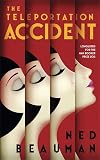
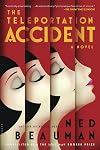
The cover helped.
Misleading as it is as to its contents.
What's inside is often unspeakably foul, vaguely misogynist (at one point early on the phrase "non-mercenary vulva" is used to describe a theoretical female who might be kind enough to sleep with our protagonist) and reads a lot like one might imagine a (wildly unlikely) collaboration between Robert Silverberg and Douglas Adams would, if show more it were set in pre WWII Berlin, Paris and Los Angeles (with a little -- a very little -- and the wrong bits of -- Henry Miller thrown in). I was craving a shower before I'd even finished one chapter. But...
But...
Well, I did not mention Douglas Adams lightly, except instead of gentle absurdist/parodic humor, the humor one is slapped in the face with every few lines is nasty and sordid and really pretty repugnant, but funny nonetheless. Funny enough to make even the most umbrage-taking feminist keep on reading, even if she winds up hating herself for it. As in chock full of lines like "the moon over Berlin shone bright as a bare bulb in a toilet cubicle." Ha ha ha and eww.
As for what it's about, well, it's sort of a companion piece to Boxer, Beetle in that it, too, is largely concerned with Germany in the 1930s, but where many characters in that book are obsessed in various ways with the Nazis, those in The Teleportation Accident, even though unlike the Boxer, Beetles they are from Berlin, are pretty much oblivious to them. Egon Loeser and his friends are more concerned about parties and pussy and scoring some decent cocaine -- or a corkscrew -- no, an actual corkscrew, jeeze -- than about world or local affairs. Politics is for people who can't handle art.* "History happened while you were hungover," the tagline says. And for these people it's so true that it's only when Loeser chases his ill-chosen anima projection, one Adele Hitler**, to Los Angeles (via Paris) that he gets even an inkling of what is happening to the Jews in his home city and country, and this only in that people he meets in LA assume he's a refugee like everybody else -- and assume he knows why they might think this.
So this book could almost be an exploration of how people could remain carefully, willfully ignorant of one of history's greatest crimes right up until it was too late for them to do anything about it. So described, this book becomes somewhat admirable (I'd posit it's this quality that got it listed for the Man Booker prize). But that makes it no less tough to take. But I suppose I'm supposed to admire that as well.
The book does, though, get a few bonus points for playing a bit with an amusing conceit -- that H.P. Lovecraft's fiction wasn't really fiction but just sort of veiled/fictionalized references to staggeringly difficult concepts in particle physics and dimensions and whatnot -- but like so many of the neat ideas tossed around in here, it doesn't get the attention it deserves. It's kind of like Randy from A Christmas Story opening his presents. Wow, oh neat, wow, yeah, and RIIIIIIIP into the next package. Except the Lovecraft stuff is not the toy zeppelin we see the kid asleep and cradling at the end. The Lovecraft stuff is the socks.
And speaking of the end, or rather, the four ends, the words "Scooby Doo Ending" kept coming to mind. And even though the very last bit where [REDACTED] turns out to be [REDACTED] in [REDACTED] is pretty cool and amusing, that last of the four epilogues is really the most interesting bit of the book. So interesting, in fact, that I wound up wishing I'd gotten to read that book instead of this one.
Ah, me.
*Of course, in no small part that proved to be quite true, as Adolph Hitler was famously a failed artist.
**No relation to Adolph, we learn in very casual passing. show less
The cover helped.
Misleading as it is as to its contents.
What's inside is often unspeakably foul, vaguely misogynist (at one point early on the phrase "non-mercenary vulva" is used to describe a theoretical female who might be kind enough to sleep with our protagonist) and reads a lot like one might imagine a (wildly unlikely) collaboration between Robert Silverberg and Douglas Adams would, if show more it were set in pre WWII Berlin, Paris and Los Angeles (with a little -- a very little -- and the wrong bits of -- Henry Miller thrown in). I was craving a shower before I'd even finished one chapter. But...
But...
Well, I did not mention Douglas Adams lightly, except instead of gentle absurdist/parodic humor, the humor one is slapped in the face with every few lines is nasty and sordid and really pretty repugnant, but funny nonetheless. Funny enough to make even the most umbrage-taking feminist keep on reading, even if she winds up hating herself for it. As in chock full of lines like "the moon over Berlin shone bright as a bare bulb in a toilet cubicle." Ha ha ha and eww.
As for what it's about, well, it's sort of a companion piece to Boxer, Beetle in that it, too, is largely concerned with Germany in the 1930s, but where many characters in that book are obsessed in various ways with the Nazis, those in The Teleportation Accident, even though unlike the Boxer, Beetles they are from Berlin, are pretty much oblivious to them. Egon Loeser and his friends are more concerned about parties and pussy and scoring some decent cocaine -- or a corkscrew -- no, an actual corkscrew, jeeze -- than about world or local affairs. Politics is for people who can't handle art.* "History happened while you were hungover," the tagline says. And for these people it's so true that it's only when Loeser chases his ill-chosen anima projection, one Adele Hitler**, to Los Angeles (via Paris) that he gets even an inkling of what is happening to the Jews in his home city and country, and this only in that people he meets in LA assume he's a refugee like everybody else -- and assume he knows why they might think this.
So this book could almost be an exploration of how people could remain carefully, willfully ignorant of one of history's greatest crimes right up until it was too late for them to do anything about it. So described, this book becomes somewhat admirable (I'd posit it's this quality that got it listed for the Man Booker prize). But that makes it no less tough to take. But I suppose I'm supposed to admire that as well.
The book does, though, get a few bonus points for playing a bit with an amusing conceit -- that H.P. Lovecraft's fiction wasn't really fiction but just sort of veiled/fictionalized references to staggeringly difficult concepts in particle physics and dimensions and whatnot -- but like so many of the neat ideas tossed around in here, it doesn't get the attention it deserves. It's kind of like Randy from A Christmas Story opening his presents. Wow, oh neat, wow, yeah, and RIIIIIIIP into the next package. Except the Lovecraft stuff is not the toy zeppelin we see the kid asleep and cradling at the end. The Lovecraft stuff is the socks.
And speaking of the end, or rather, the four ends, the words "Scooby Doo Ending" kept coming to mind. And even though the very last bit where [REDACTED] turns out to be [REDACTED] in [REDACTED] is pretty cool and amusing, that last of the four epilogues is really the most interesting bit of the book. So interesting, in fact, that I wound up wishing I'd gotten to read that book instead of this one.
Ah, me.
*Of course, in no small part that proved to be quite true, as Adolph Hitler was famously a failed artist.
**No relation to Adolph, we learn in very casual passing. show less
Egon Loeser, protagonist of Ned Beauman’s The Teleportation Accident, is an asshole. He’s obsessed with sex, contemptuous of his friends, hopelessly infatuated with a girl who doesn’t return his affections, and completely untalented as a theatrical director. In the hands of a lesser author, such an unlikable main character could be the fatal flaw that alienates most readers. However, Beauman makes up for Loeser’s bad behavior by populating the novel’s supporting cast with striking, sharply drawn characters and filling it with laugh-out-loud comedy throughout.
At the start of the story, Loeser is a set designer in decadent pre-war Berlin. Loeser’s 1931 is full of never-ending parties, desultory work on a play production that show more never seems any closer to performance, and an ever-vigilant search for good cocaine. The play he is working on is the story of the life of Adriano Lavicini, a seventeenth-century stage designer best known for the tragic accident that ended his career and life.
Lavicini, it seems, built a complex special effect known as the Teleportation Device which brought down half the walls of a theater and killed two dozen people (and a cat). Loeser, set designer for the play about Lavicini’s life, builds a much more modest Teleportation Device that merely serves to accidentally dislocate the star actor’s arms. Different types of Teleportation Devices are a running theme throughout the play; Lavicini’s, Loeser’s and a literal Teleportation Device built by a Californian professor named Bailey who Loeser meets later.
After the failure of Loeser’s stage device, he heads to yet another Berlin party, where he fortuitously runs into a girl named Adele Hitler (no relation). Loeser was Adele’s tutor when she was younger, and when he discovers the pudgy girl he knew has transformed into an incredibly beautiful young woman, he is instantly smitten. This encounter completely changes the course of Loeser’s life; he becomes obsessed with Adele and follows her first to Paris and then to Los Angeles.
As Loeser fruitlessly follows Adele around the world, he runs into a wonderful cast of characters, all of whom leap off the page. Loeser becomes a fan of the hard-boiled fiction of Stent Mutton and accidentally meets Mutton and his wife one day while wandering lost in California. Dolores Mutton, Stent’s knock-out wife, is beautiful but also incredibly terrifying, later threatening Loeser with death in no uncertain terms. Loeser ends up living in the guest house of one Colonel Gorge, a gruff, powerful man who is suffering agnosia, which causes him to confuse pictures for the real thing – hold up a picture of a woman, and he becomes convinced she is there in the room. The book also includes a few chapters from other perspectives; in one, Beauman focuses on a con artist named Scramsfield, who gets Loeser caught up in one of his scams. In another, Beauman tells the story of the surprisingly unhinged Dr. Bailey, whose fraught personal history has influenced the unconventional means and methods he uses to research teleportation.
Even if The Teleportation Accident occasionally rambled, I was always drawn back in by Beauman’s flair for characterization and comedy. I laughed out loud a good dozen times throughout, which is a rare achievement for any book. The only real criticism I’d level against the book is that the opening pages are needlessly obtuse; I wouldn’t be surprised if a number of readers put it down at the beginning out of a worry that the novel would continue at that pitch throughout. Thankfully, once Beauman settles down and gets to business, The Teleportation Accident is a thoroughly readable and highly enjoyable book. show less
At the start of the story, Loeser is a set designer in decadent pre-war Berlin. Loeser’s 1931 is full of never-ending parties, desultory work on a play production that show more never seems any closer to performance, and an ever-vigilant search for good cocaine. The play he is working on is the story of the life of Adriano Lavicini, a seventeenth-century stage designer best known for the tragic accident that ended his career and life.
Lavicini, it seems, built a complex special effect known as the Teleportation Device which brought down half the walls of a theater and killed two dozen people (and a cat). Loeser, set designer for the play about Lavicini’s life, builds a much more modest Teleportation Device that merely serves to accidentally dislocate the star actor’s arms. Different types of Teleportation Devices are a running theme throughout the play; Lavicini’s, Loeser’s and a literal Teleportation Device built by a Californian professor named Bailey who Loeser meets later.
After the failure of Loeser’s stage device, he heads to yet another Berlin party, where he fortuitously runs into a girl named Adele Hitler (no relation). Loeser was Adele’s tutor when she was younger, and when he discovers the pudgy girl he knew has transformed into an incredibly beautiful young woman, he is instantly smitten. This encounter completely changes the course of Loeser’s life; he becomes obsessed with Adele and follows her first to Paris and then to Los Angeles.
As Loeser fruitlessly follows Adele around the world, he runs into a wonderful cast of characters, all of whom leap off the page. Loeser becomes a fan of the hard-boiled fiction of Stent Mutton and accidentally meets Mutton and his wife one day while wandering lost in California. Dolores Mutton, Stent’s knock-out wife, is beautiful but also incredibly terrifying, later threatening Loeser with death in no uncertain terms. Loeser ends up living in the guest house of one Colonel Gorge, a gruff, powerful man who is suffering agnosia, which causes him to confuse pictures for the real thing – hold up a picture of a woman, and he becomes convinced she is there in the room. The book also includes a few chapters from other perspectives; in one, Beauman focuses on a con artist named Scramsfield, who gets Loeser caught up in one of his scams. In another, Beauman tells the story of the surprisingly unhinged Dr. Bailey, whose fraught personal history has influenced the unconventional means and methods he uses to research teleportation.
Even if The Teleportation Accident occasionally rambled, I was always drawn back in by Beauman’s flair for characterization and comedy. I laughed out loud a good dozen times throughout, which is a rare achievement for any book. The only real criticism I’d level against the book is that the opening pages are needlessly obtuse; I wouldn’t be surprised if a number of readers put it down at the beginning out of a worry that the novel would continue at that pitch throughout. Thankfully, once Beauman settles down and gets to business, The Teleportation Accident is a thoroughly readable and highly enjoyable book. show less
I can think of few books more pretentious than this one. I would list them by name, but you probably haven't heard of them.
I hated this book: its shallow yet pedantic theme, its contemptible even-to-me characters, and, worst of all, the Scooby-Doo plotting.
That being said, it was a strange hatred. Rather than setting it aside, I did read it to the end. I did laugh on occasion, and sometimes admire a flourish here and there. Of course, these moments of affection only made my moments hatred more intense. So, yes, a strange hatred. It was less an obnoxious stranger than betrayal by a causal acquaintance.
Due to this strangeness, there's a chance I might read a Ned Beauman book in the future. I might even like it. But not this.
I hated this book: its shallow yet pedantic theme, its contemptible even-to-me characters, and, worst of all, the Scooby-Doo plotting.
That being said, it was a strange hatred. Rather than setting it aside, I did read it to the end. I did laugh on occasion, and sometimes admire a flourish here and there. Of course, these moments of affection only made my moments hatred more intense. So, yes, a strange hatred. It was less an obnoxious stranger than betrayal by a causal acquaintance.
Due to this strangeness, there's a chance I might read a Ned Beauman book in the future. I might even like it. But not this.
Members
- Recently Added By
Published Reviews
ThingScore 100
Egon Loeser, the sex-starved German stage designer at the heart of this strange and brilliant novel by Ned Beauman, is obsessed with two things. The first is a girl, inauspiciously called Adele Hitler, who he meets in Thirties Berlin, where the book begins. The second is Adriano Lavincini, a late Renaissance Venetian stage-designer who, in 1677, caused part of a Parisian theatre to collapse show more with his teleportation device – the accident referred to in the title.
Loeser follows Adele from Berlin to Paris and Los Angeles, in the hope that she will eventually sleep with him. On the way, he meets a cast of eccentrics: a caddish Brit, Rupert Rackenham, who seduces Adele and steals the Lavincini story for his novel (and who writes for The Daily Telegraph); a physics professor trying to build his own teleportation device; an Angeleno bookseller who collects science fiction by H P Lovecraft and a con-man in Paris who tries to pass off his own work as an undiscovered novel by F Scott Fitzgerald.
Beauman, whose first novel Boxer, Beetle (2010) interwove the stories of a modern-day collector of Nazi memorabilia with that of a homosexual Jewish boxer in the 1930s, is blisteringly funny, witty and erudite. A series of dazzling metaphors and similes pinpoint an experience exactly: the physics professor, for example, “had that odd conversational manner of some scientists… that is so doggedly awkward that it sometimes seems to verge upon flirtation”. Only once or twice does this style, and off-beam subject matter, strain slightly. For the most part, however, Beauman manages to combine the intrigue of a thriller with the imagery of a comedy. It makes for an excellent read. show less
Loeser follows Adele from Berlin to Paris and Los Angeles, in the hope that she will eventually sleep with him. On the way, he meets a cast of eccentrics: a caddish Brit, Rupert Rackenham, who seduces Adele and steals the Lavincini story for his novel (and who writes for The Daily Telegraph); a physics professor trying to build his own teleportation device; an Angeleno bookseller who collects science fiction by H P Lovecraft and a con-man in Paris who tries to pass off his own work as an undiscovered novel by F Scott Fitzgerald.
Beauman, whose first novel Boxer, Beetle (2010) interwove the stories of a modern-day collector of Nazi memorabilia with that of a homosexual Jewish boxer in the 1930s, is blisteringly funny, witty and erudite. A series of dazzling metaphors and similes pinpoint an experience exactly: the physics professor, for example, “had that odd conversational manner of some scientists… that is so doggedly awkward that it sometimes seems to verge upon flirtation”. Only once or twice does this style, and off-beam subject matter, strain slightly. For the most part, however, Beauman manages to combine the intrigue of a thriller with the imagery of a comedy. It makes for an excellent read. show less
added by kidzdoc
Living in Berlin just before the second world war, everything goes wrong for Egon Loeser, and it has nothing to do with the Nazis. In Ned Beauman's terrific second novel, longlisted this week for the Booker, his protagonist, a German set designer, is too sex-starved, self-pitying and, usually, hungover to notice that history is happening all around him.
At one point, just before he leaves show more Berlin to chase a girl named Adele Hitler (no relation), Loeser sees a group of what he thinks are students holding a bonfire outside the library. He assumes it is "some sort of silly art performance" and joins in, cheerfully burning the books of writers he envies. This comes at the end of a section titled Literary Realism – a dig at the one genre that doesn't know it's a genre – after which the book veers gleefully through hardboiled noir, SF, murder-mystery and romance, distorting each in turn.
There is so much pleasure in the unstable elements of the story that I couldn't help feel a loss as the wheels of the plot started to turn. Luckily, the setting up of various false leads, reveals and tricks are worth it for the brilliant finale. If there was ever any worry that he might have crammed all his ideas into his first book, the prize-winning Boxer, Beetle, this makes it clear he kept a secret bunker of his best ones aside. show less
At one point, just before he leaves show more Berlin to chase a girl named Adele Hitler (no relation), Loeser sees a group of what he thinks are students holding a bonfire outside the library. He assumes it is "some sort of silly art performance" and joins in, cheerfully burning the books of writers he envies. This comes at the end of a section titled Literary Realism – a dig at the one genre that doesn't know it's a genre – after which the book veers gleefully through hardboiled noir, SF, murder-mystery and romance, distorting each in turn.
There is so much pleasure in the unstable elements of the story that I couldn't help feel a loss as the wheels of the plot started to turn. Luckily, the setting up of various false leads, reveals and tricks are worth it for the brilliant finale. If there was ever any worry that he might have crammed all his ideas into his first book, the prize-winning Boxer, Beetle, this makes it clear he kept a secret bunker of his best ones aside. show less
added by kidzdoc
Lists

Booker Prize
491 works; 62 members

Top Five Books of 2014
1,064 works; 398 members

Man Booker Prize Longlist 2012
12 works; 2 members

IMPAC Dublin Literary Award 2014 longlist
150 works; 3 members
Talk Discussions
Past Discussions
The Teleportation Accident by Ned Bauman in Booker Prize (July 2012)
Author Information

7+ Works 1,893 Members
Some Editions
Awards and Honors
Awards
Series
Belongs to Publisher Series
Contemporánea [Alba] (12)
Common Knowledge
- Canonical title*
- De jacht op Adele
- Original title
- The Teleportation Accident
- Original publication date
- 2012
- People/Characters
- Egon Loeser; Adele Hitler; Stent Mutton; Dr. Clarendon; Dieter Ziesel; Rupert Rackenham (show all 7); Woodkin
- Important places
- Berlin, Germany; Paris, France; Los Angeles, California, USA; Germany; France; California, USA (show all 7); USA
- Epigraph
- I hate politics and belief in politics, because it makes men arrogant, doctrinaire, obstinate and inhuman. Thomas Mann, Reflections of a Nonpolitical Man
...all I had to do was go down into the subway. It was like fishing down there. Go down into the subway and come up with a girl. Philip Roth, The Human Stain - First words
- When you knock a bowl of sugar on to your host's carpet, it is a parody of the avalanche that killed his mother and father, just as the duck's beak that your new girlfriend's lips form when she attempts a seductive pout is a ... (show all)quotation of the quacking noise your last girlfriend made during sex.
- Quotations
- ...In Pasadena, motorised sleighs were rolling along the streets like tanks, men in Santa Claus costumes were standing guard on corners like infantry, and carols were blaring from loudspeakers like patriotic anthems. As far a... (show all)s he could tell, Christmas here was equivalent to a sort of martial law.
There was enough ice in her voice for a serviceable daiquiri.
This is infernal... It's as if they've decided to incorporate the eventual hangover directly into the flavour as a sort of omen.
As a result, no doubt, of some bureaucratic oversight, Sunset Boulevard had a beginning and a middle but no end. - Last words
- (Click to show. Warning: May contain spoilers.)'I don't know where I am,' the ape was thinking. 'I don't know where I am. I don't know where I am. I don't know where I am. I don't know where I am. I don't know where I am.'
- Canonical DDC/MDS
- 823.92
- Canonical LCC
- PR6102.E225
*Some information comes from Common Knowledge in other languages. Click "Edit" for more information.
Classifications
Statistics
- Members
- 781
- Popularity
- 35,831
- Reviews
- 37
- Rating
- (3.59)
- Languages
- 7 — Dutch, English, French, German, Italian, Spanish, Turkish
- Media
- Paper, Ebook
- ISBNs
- 23
- ASINs
- 9