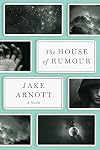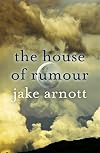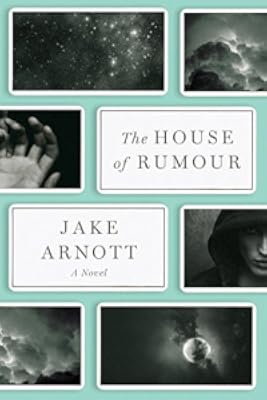
The House of Rumour
by Jake Arnott
On This Page
Description
Larry Zagorski, a science fiction writer turned U.S. fighter pilot, searches for connections between what seem like disparate events while conspiracy theories begin to suggest the possibility of a single force behind them in this novel that mixes real-life figures with fictional characters as it moves briskly from WW II spy intrigue (featuring Ian Fleming) and occultism to the West Coast pulp science-fiction set and the 1980s U.K. new wave music scene.Tags
Recommendations





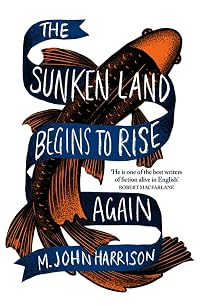

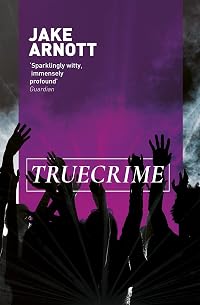
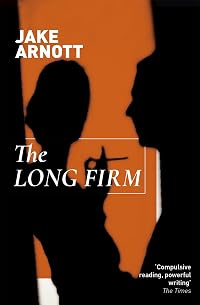
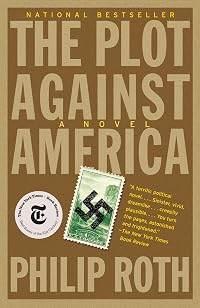













Member Recommendations

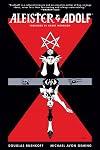
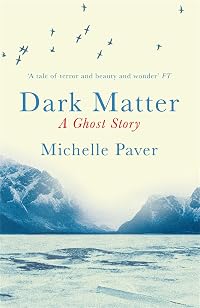
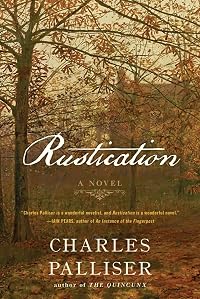
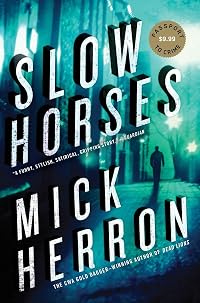
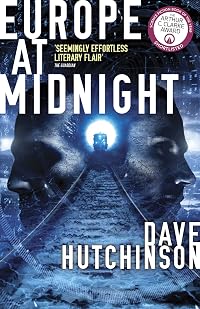
paradoxosalpha Both of these books are concerned with Aleister Crowley's role in WWII espionage, and a context that ties those events to the 21st-century present. Arnott's book takes the form of beefy literary fiction, and Rushkoff's is a short graphic novel.
Member Reviews
The House of Rumour is a sprawling novel featuring Aleister Crowley's role in the British interrogation of Rudolf Hess as a sort of psycho-social asymptote. It's rather galling to me that it took five years for me to get wind of this 2012 book, especially considering that the author had previously written another novel with Crowley as a character, The Devil's Paintbrush. In fact, this more recent one touches on so many and varied of my peculiar interests, that I think it may have the greatest number of different subject tags ever applied to a single novel in my personal library catalog.
The plot spans the 20th century, with cults, sci-fi writers, occultists, spies, aliens, Nazis, Trotskyists, musicians, transsexuals, and all manner of show more paranoids and conspirators. The twenty-two chapters include over a dozen narrators and central characters, but they are all linked into an integrated manifold plot that is as much obscured as it is revealed by their separate subjectivities. It uses a number of historical figures as characters, but author Jake Arnott has done his homework, and the whole thing keeps its plausibility very well. Time after time, people and things in this novel that seemed so neat that they must be fictional turn out to be positive historical fact.
The literary style here is perhaps most comparable to that of David Mitchell. There's a fair amount of metafictional intricacy, and not just when Arnott seems to vicariously boost the book he's writing, remarking that, "Using the Major Arcana as a structure looks like a gimmick at first, but in the end the Tarot bestows an ominous gravity on the narrative" (179). He's referring not only to the book in which the sentence appears, but more overtly to Gresham's Nightmare Alley, an actual novel from 1946 accurately described. And then it is paralleled again within the story by The Quantum Arcana of Arnold Jakubowsi, an imaginary 1966 novel written by one of Arnott's principal characters (339)--and evidently riffing on Phil Dick's Three Stigmata of Palmer Eldritch.
Arnott's trumps mostly have the titles used in Crowley's Thoth Tarot, except for "The Female Pope" and "Judgement." They are also in the customary Golden Dawn sequence, except that Death and the Devil have been swapped. But the plot is not linear, and the chapters are not in chronological order. It's like looking at a moving scene through a spyglass only gradually being brought into focus, and with key elements at the edges of the visual field. I'm not entirely sure that this book wouldn't read just as clearly and effectively if one were to shuffle a pack of trumps and read the chapters in the order of a random draw. It might even be feasible and fun to create a "Choose Your Own Adventure" apparatus for this book, allowing a reader choices at the end of each chapter, to follow their own curiosity into the different corners of the story, pursuing the traces of characters and themes.
The narrative voices of the individual chapters are highly varied, yet the prose is very lucid throughout. The trick is not to understand what it says, but what it portends. That's an experience I value as a reader, and if your tastes are like mine, you'll enjoy the hell out of this book.
Londoner Arnott has been very successful with getting his fiction adapted to TV in the UK, and this book was well-received critically. It sure could make a terrific series over one or two seasons. show less
The plot spans the 20th century, with cults, sci-fi writers, occultists, spies, aliens, Nazis, Trotskyists, musicians, transsexuals, and all manner of show more paranoids and conspirators. The twenty-two chapters include over a dozen narrators and central characters, but they are all linked into an integrated manifold plot that is as much obscured as it is revealed by their separate subjectivities. It uses a number of historical figures as characters, but author Jake Arnott has done his homework, and the whole thing keeps its plausibility very well. Time after time, people and things in this novel that seemed so neat that they must be fictional turn out to be positive historical fact.
The literary style here is perhaps most comparable to that of David Mitchell. There's a fair amount of metafictional intricacy, and not just when Arnott seems to vicariously boost the book he's writing, remarking that, "Using the Major Arcana as a structure looks like a gimmick at first, but in the end the Tarot bestows an ominous gravity on the narrative" (179). He's referring not only to the book in which the sentence appears, but more overtly to Gresham's Nightmare Alley, an actual novel from 1946 accurately described. And then it is paralleled again within the story by The Quantum Arcana of Arnold Jakubowsi, an imaginary 1966 novel written by one of Arnott's principal characters (339)--and evidently riffing on Phil Dick's Three Stigmata of Palmer Eldritch.
Arnott's trumps mostly have the titles used in Crowley's Thoth Tarot, except for "The Female Pope" and "Judgement." They are also in the customary Golden Dawn sequence, except that Death and the Devil have been swapped. But the plot is not linear, and the chapters are not in chronological order. It's like looking at a moving scene through a spyglass only gradually being brought into focus, and with key elements at the edges of the visual field. I'm not entirely sure that this book wouldn't read just as clearly and effectively if one were to shuffle a pack of trumps and read the chapters in the order of a random draw. It might even be feasible and fun to create a "Choose Your Own Adventure" apparatus for this book, allowing a reader choices at the end of each chapter, to follow their own curiosity into the different corners of the story, pursuing the traces of characters and themes.
The narrative voices of the individual chapters are highly varied, yet the prose is very lucid throughout. The trick is not to understand what it says, but what it portends. That's an experience I value as a reader, and if your tastes are like mine, you'll enjoy the hell out of this book.
Londoner Arnott has been very successful with getting his fiction adapted to TV in the UK, and this book was well-received critically. It sure could make a terrific series over one or two seasons. show less
This book got me thinking about the sort of courage it must take to integrate real people into your fictional plot. There are quite a few here, despite the standard disclaimer about “any resemblance to real persons living or dead being purely coincidental”. Having two people called L Ron Hubbard who both invent a cult called Scientology would be some coincidence. And then there’s Ian Fleming...and the horse whip....crikey.
What it adds up to is a very bold rewriting of history, bringing together espionage, science fiction, Nazis and the space race. It started off reminding me of the work of William Boyd – who writes the only spy fiction I can understand – then it started reminding me of Louis de Bernieres, particularly show more stylistically. And there were shades of David Mitchell and Hari Kunzru, but ultimately this is a very original piece of work that is like nothing other than itself.
There is a lot of skipping about – no sooner had I got to grips with one narrator we were off inside someone else’s head, in another place and another time. I would have perhaps preferred fewer changes of setting but that’s just a personal thing. It covers such a broad sweep of time and so many different settings that I am left with many memorable images. There were several moments, too, when I would be totally drawn into a piece of narrative (like the bit where the horses were being painted), forgetting that it was an anecdote within a letter within a chapter within a fictional book. It’s the sort of book where, even if one chapter doesn’t appeal, there will be one along soon that will. show less
What it adds up to is a very bold rewriting of history, bringing together espionage, science fiction, Nazis and the space race. It started off reminding me of the work of William Boyd – who writes the only spy fiction I can understand – then it started reminding me of Louis de Bernieres, particularly show more stylistically. And there were shades of David Mitchell and Hari Kunzru, but ultimately this is a very original piece of work that is like nothing other than itself.
There is a lot of skipping about – no sooner had I got to grips with one narrator we were off inside someone else’s head, in another place and another time. I would have perhaps preferred fewer changes of setting but that’s just a personal thing. It covers such a broad sweep of time and so many different settings that I am left with many memorable images. There were several moments, too, when I would be totally drawn into a piece of narrative (like the bit where the horses were being painted), forgetting that it was an anecdote within a letter within a chapter within a fictional book. It’s the sort of book where, even if one chapter doesn’t appeal, there will be one along soon that will. show less
I received this book as a giveaway on another website, so I approached it having no idea what it was about. Initially, the disparate threads of characters and stories didn't seem very promising, but I ended up being blown away. This book uses a series of interlocking characters and the theme of science fiction to tell a story of the 20th century, with highlights including a member of the Jonestown cult who believes she has had contact with aliens, a british spy who accidentally allows secrets about psychological warfare during world war two to be stolen by the transvestite he is sleeping with and a modern era actor and singer who takes those stolen secrets and looks for someone to pass them along to, all while looking over his shoulder show more for the scientologists he fears. Not to mention that an early portion of the book features a writer's group with members like Robert Heinlein and L. Ron Hubbard.
Despite the fact that some of these things sound like they could amount to an unsatisfying "wackiness" they do not because the author both really seems to believe in the humanity of his characters and has a wide range of references that he is well versed in, which bring his oddities into a deeper context.
My favorite section of the book involves a person reading a science fiction story about a homeless man who believes he is an alien, who has been sent to earth to observe. With what he took from the story and a sermon he hears from a black muslim preacher, the reader, who is a former lover of the jonestown cult member, finds real hope in the idea that maybe all homeless people are higher beings.
I would really recommend this book to anyone who enjoys science fiction as well as anybody who likes historical fiction that looks at how popular culture both reflects and shapes the rest of history. show less
Despite the fact that some of these things sound like they could amount to an unsatisfying "wackiness" they do not because the author both really seems to believe in the humanity of his characters and has a wide range of references that he is well versed in, which bring his oddities into a deeper context.
My favorite section of the book involves a person reading a science fiction story about a homeless man who believes he is an alien, who has been sent to earth to observe. With what he took from the story and a sermon he hears from a black muslim preacher, the reader, who is a former lover of the jonestown cult member, finds real hope in the idea that maybe all homeless people are higher beings.
I would really recommend this book to anyone who enjoys science fiction as well as anybody who likes historical fiction that looks at how popular culture both reflects and shapes the rest of history. show less
I loved this book. It took me a while to love it, but once the connections start to engage, it snaps into sharp focus and the structure of the whole comes plain. It is a complicated novel and very difficult to review.
A series of episodes, a set of lives loosely linked are woven together: the strange prophetic novel that seems to predict Rudolph Hess’s flight to Scotland, a young writer of pulp SF and his relationship to a cult that is connected to Aleister Crowley who is connected to a secret service agent who is connected to Rudolph Hess who is connected to a notorious transvestite who is connected to a confused singer turned actor who is making a film based on an old SF story that brings us back to the pulp writers. It all comes show more around in the end, full circle, connecting - not neatly or nicely, but very satisfyingly.
I don’t know enough about the Tarot to know if the episodes follow its story of the Fool’s journey or if that’s a conceit; since Jake Arnott uses the Crowley Tarot rather than the classic deck and since Crowley appears as in the story and the theme of occultism runs through it, I assume it’s highly significant and I should probably read more about it. Quantum entanglement is another theme, and other theories of quantum physics, and it draws a lot of inspiration from Michael Coleman Talbot and the hologramatic universe theory.
It took a while to ‘get’ it – who are these people, how can they possibly have anything In common? But as you keep reading the thing begins to develop a definite WOW factor. The artistry of it is stunning; it reminds me of those pictures that were so popular when I was a student, you peer endlessly into what seems to be a bank of impenetrable colour and then, suddenly, you see the image, everything snaps into sharp focus, everything becomes clear.
It took about 5 days bedtime reading for this book to become something I couldn’t wait to pick up again each night. Stick with it, it takes time to develop but it’s definitely worth it. It’s not a book for everyone, it’s certainly not the page-turning thriller the cover blurb suggests, but if enjoy a challenging novel that requires you to think a little, or you have any interest at all in quantum physics, you’ll love it. show less
A series of episodes, a set of lives loosely linked are woven together: the strange prophetic novel that seems to predict Rudolph Hess’s flight to Scotland, a young writer of pulp SF and his relationship to a cult that is connected to Aleister Crowley who is connected to a secret service agent who is connected to Rudolph Hess who is connected to a notorious transvestite who is connected to a confused singer turned actor who is making a film based on an old SF story that brings us back to the pulp writers. It all comes show more around in the end, full circle, connecting - not neatly or nicely, but very satisfyingly.
I don’t know enough about the Tarot to know if the episodes follow its story of the Fool’s journey or if that’s a conceit; since Jake Arnott uses the Crowley Tarot rather than the classic deck and since Crowley appears as in the story and the theme of occultism runs through it, I assume it’s highly significant and I should probably read more about it. Quantum entanglement is another theme, and other theories of quantum physics, and it draws a lot of inspiration from Michael Coleman Talbot and the hologramatic universe theory.
It took a while to ‘get’ it – who are these people, how can they possibly have anything In common? But as you keep reading the thing begins to develop a definite WOW factor. The artistry of it is stunning; it reminds me of those pictures that were so popular when I was a student, you peer endlessly into what seems to be a bank of impenetrable colour and then, suddenly, you see the image, everything snaps into sharp focus, everything becomes clear.
It took about 5 days bedtime reading for this book to become something I couldn’t wait to pick up again each night. Stick with it, it takes time to develop but it’s definitely worth it. It’s not a book for everyone, it’s certainly not the page-turning thriller the cover blurb suggests, but if enjoy a challenging novel that requires you to think a little, or you have any interest at all in quantum physics, you’ll love it. show less
I loved this book that was about nothing, but everything. It's not an alternate history, because the major historical events described did occur (WWII, Nazi occultism, JPL, the SF surge in popularity both in book and movie form, the Cuban Missile Crisis, Jonestown, etc.). This was about perspective, about what these events *could* have looked like and meant to some of those involved on the fringes, and how truth vs. fact can be very subjective.
Arnott's characterizations were fascinating and complete. He made his characters very real, and very plausible. His arrangement of voices through the use of the Major Arcana of the Tarot made everything fit perfectly together. This was an enjoyable and satisfying read.
Arnott's characterizations were fascinating and complete. He made his characters very real, and very plausible. His arrangement of voices through the use of the Major Arcana of the Tarot made everything fit perfectly together. This was an enjoyable and satisfying read.
If you are under 40, like conspiracy theories, and don't recognize two or more of the following names, you will probably want to read this book:
Ian Fleming, spy and novelist
Aleister Crowley, the "wickedest man alive"
Jack Parsons, rocket scientist and black magician
L. Ron Hubbard, novelist and messiah
Rudolph Hess, Nazi
Jim Jones, messiah
Nation of Islam, saucer cult
Arnott, in a narrative arranged thematically around the Tarot deck, gives us a secret history that ranges through most of the 20th Century and up to 2011 and back and forth in time from the death of a former MI5 employee and a transvestite hooker in 1987 to a cabal of 1941 science fiction writers in Los Angeles. Here many a character real and imagined have parts, but mostly it's show more the story of the fictitious science fiction writer Larry Zagorski and the real Nazi Rudolph Hess. The supporting characters are more ideas and events than people: Hess' flight to England, the Cuban Revolution, Scientology, black magic, saucer cults, monster movies, utopia and the moment - like a collapsing quantum wave function - the promise becomes disillusionment. And, through it all, is the unrequited love of Larry for a woman.
Part of me suspects that this sort of novel is written starting with a list of historical events and people and then a plot thought up for connecting all the characters and events. But that's ok. The whole aesthetic of a good conspiracy theory comes from how the dots are linked and how many you work with.
However, Arnott's seemingly effortless erudition, by itself, doesn't impress me that much nor do I think it's bound to impress the average reader of the Fortean Times. It all seems a little glib and easy to those of us who once had to satisfy our cravings for outré occult and conspiracy esoterica by haunting used bookstores and mailing away for obscure catalogs rather than laying on the couch with a laptop.
Readers who have read the secret histories and conspiracy novels of Tim Powers and Robert Anton Wilson, who each in their own way have covered some of the same territory in explorations of the tarot, quantum mechanics, and Aleister Crowley, are likely to find Arnott's philosophy light and his characters mostly dropped in names. That includes the raft of science fiction writers who get walk-on bits: Jack Williamson, L. Ron Hubbard, Robert Heinlein, Tony Boucher, and Leigh Brackett. The exception is one obscure, but interesting, writer who gets her own chapter: Katharine Burdekin aka Murray Constantine who wrote Swastika Night, the first "Hitler wins" alternate history. The other surprisingly rich character is Ian Fleming who ends up bemoaning that James Bond, the spy alter ego he thought he was running, now runs him. Philip K. Dick is promised on the cover but never makes an onstage appearance though there is more than a little of his legend in the drug addled Zagorski. But, with the exception of Fleming, Hess, and Zagorsk,i none of these characters have the depth of a typical Powers' character. The philosophical themes, somewhat unnecessarily wrapped up in the final, explanatory chapter, are not covered in the depth Wilson would have. (The author promises that thehouseofrumour.com has more about the various incidents, allegations, and conspiracies mentioned in the novel. I studiously avoided it since I wanted to review the book on its own merits.) The novel's publicity material itself makes the comparison between Arnott and Dan Brown and Dan DeLillo. I can't speak to that having no experience with either of those latter two authors.
Still, even if he resorts to the usual literary tricks of juxtaposition and characters carefully created to elucidate thematic variations, Arnott's writing sometimes rises to a certain beauty - particularly in a chapter where two timelines are mingled: the moon landing of Apollo 11 and Hess' flight to England.
So, the more easily wowed younger reader may just find this mindblowing. The older reader and fan of conspiracy theories probably won't, but both will get a quick, engaging tour through the secret byways of 20th century history. Like a tarot deck, a lot will depend on what the reader brings to the table. show less
Ian Fleming, spy and novelist
Aleister Crowley, the "wickedest man alive"
Jack Parsons, rocket scientist and black magician
L. Ron Hubbard, novelist and messiah
Rudolph Hess, Nazi
Jim Jones, messiah
Nation of Islam, saucer cult
Arnott, in a narrative arranged thematically around the Tarot deck, gives us a secret history that ranges through most of the 20th Century and up to 2011 and back and forth in time from the death of a former MI5 employee and a transvestite hooker in 1987 to a cabal of 1941 science fiction writers in Los Angeles. Here many a character real and imagined have parts, but mostly it's show more the story of the fictitious science fiction writer Larry Zagorski and the real Nazi Rudolph Hess. The supporting characters are more ideas and events than people: Hess' flight to England, the Cuban Revolution, Scientology, black magic, saucer cults, monster movies, utopia and the moment - like a collapsing quantum wave function - the promise becomes disillusionment. And, through it all, is the unrequited love of Larry for a woman.
Part of me suspects that this sort of novel is written starting with a list of historical events and people and then a plot thought up for connecting all the characters and events. But that's ok. The whole aesthetic of a good conspiracy theory comes from how the dots are linked and how many you work with.
However, Arnott's seemingly effortless erudition, by itself, doesn't impress me that much nor do I think it's bound to impress the average reader of the Fortean Times. It all seems a little glib and easy to those of us who once had to satisfy our cravings for outré occult and conspiracy esoterica by haunting used bookstores and mailing away for obscure catalogs rather than laying on the couch with a laptop.
Readers who have read the secret histories and conspiracy novels of Tim Powers and Robert Anton Wilson, who each in their own way have covered some of the same territory in explorations of the tarot, quantum mechanics, and Aleister Crowley, are likely to find Arnott's philosophy light and his characters mostly dropped in names. That includes the raft of science fiction writers who get walk-on bits: Jack Williamson, L. Ron Hubbard, Robert Heinlein, Tony Boucher, and Leigh Brackett. The exception is one obscure, but interesting, writer who gets her own chapter: Katharine Burdekin aka Murray Constantine who wrote Swastika Night, the first "Hitler wins" alternate history. The other surprisingly rich character is Ian Fleming who ends up bemoaning that James Bond, the spy alter ego he thought he was running, now runs him. Philip K. Dick is promised on the cover but never makes an onstage appearance though there is more than a little of his legend in the drug addled Zagorski. But, with the exception of Fleming, Hess, and Zagorsk,i none of these characters have the depth of a typical Powers' character. The philosophical themes, somewhat unnecessarily wrapped up in the final, explanatory chapter, are not covered in the depth Wilson would have. (The author promises that thehouseofrumour.com has more about the various incidents, allegations, and conspiracies mentioned in the novel. I studiously avoided it since I wanted to review the book on its own merits.) The novel's publicity material itself makes the comparison between Arnott and Dan Brown and Dan DeLillo. I can't speak to that having no experience with either of those latter two authors.
Still, even if he resorts to the usual literary tricks of juxtaposition and characters carefully created to elucidate thematic variations, Arnott's writing sometimes rises to a certain beauty - particularly in a chapter where two timelines are mingled: the moon landing of Apollo 11 and Hess' flight to England.
So, the more easily wowed younger reader may just find this mindblowing. The older reader and fan of conspiracy theories probably won't, but both will get a quick, engaging tour through the secret byways of 20th century history. Like a tarot deck, a lot will depend on what the reader brings to the table. show less
Set mostly in the latter half of the 20th century, the novel jumps from from Nazi Germany to Castro's Cuba, from prewar Los Angeles to postwar London. Themes are flights to freedom, gender fluidity, literary prophecy, and the human masquerade. This is hidden or secret history, but not of the dreary, trendy sort: Ian Fleming emerges as a character, and you'll never read a Bond novel the same way again. A brilliant act of literary-historical invention. For an East Coast complement, see Paul La Farge's The Night Ocean.
Members
- Recently Added By
Lists

Best Spy Fiction
153 works; 102 members

Fiction Featuring Real People
81 works; 17 members

Kirkus Reviews Best Fiction of 2013
99 works; 6 members

Tarotiform Fiction
10 works; 1 member

Books We Couldn't Put Down
443 works; 197 members

Books We Want To Read Again For The First Time
384 works; 160 members
Author Information

17+ Works 1,623 Members
Awards and Honors
Distinctions
Common Knowledge
- Canonical title
- The House of Rumour
- Original title
- The House of Rumour
- Original publication date
- 2012
- People/Characters
- Ian Fleming; Aleister Crowley; Rudolph Hess; Larry Zagorski; Robert Heinlein; Jenny the Pirate (show all 8); Jack Parsons; Katherine Burdekin
Classifications
Statistics
- Members
- 196
- Popularity
- 167,171
- Reviews
- 15
- Rating
- (3.55)
- Languages
- English
- Media
- Paper, Audiobook, Ebook
- ISBNs
- 13
- ASINs
- 2