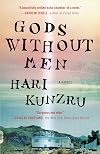
Gods Without Men
by Hari Kunzru
On This Page
Description
Jaz and Lisa Matharu are plunged into a surreal public hell after their son, Raj, vanishes during a family vacation in the California desert. However, the Mojave is a place of strange power, and before Raj reappears inexplicably unharmed--but not unchanged--the fate of this young family will intersect with that of many others, echoing the stories of all those who have traveled before them. Driven by the energy and cunning of Coyote, the mythic, shape-shifting trickster, Gods Without Men is show more full of big ideas, but centered on flesh-and-blood characters who converge at an odd, remote town in the shadow of a rock formation called the Pinnacles. Viscerally gripping and intellectually engaging, it is, above all, a heartfelt exploration of the search for pattern and meaning in a chaotic universe. show lessTags
Recommendations










Member Recommendations
Member Reviews
There's something about big ol' rocks and pagan/mystical beliefs. Stonehenge. Uluru. And in anchoring Kunzru's novel, the trinitarian Pinnacle Rocks arising out of the Californian desert. The native population believed it was where the land of the living and the land of the dead met and were woven together. It was where an exploring Spanish friar was tempted by the devil. It was the base of a 1950s UFO cult and 1970s countercultural commune. It is where a "glowing boy" pops up through the decades.
Kunzru weaves the novel together using strands of story taken from different decades and centuries. We jump from 2008 to 1920 to 1971 to 1775. The largest piece of the action occurs in 2008. Jaz and Lisa Matharu are passing through on a show more vacation with their 4 year old autistic son Raj. On a trip to Pinnacle Rocks, Raj inexplicably disappears. A media circus descends on the parents. Months later Raj reappears in the desert, equally inexplicably, in the middle of a nearby secure Marine base. Or does he? When first seen he is described as the "glowing boy" who has appeared throughout decades. And Jaz is certain that the boy who has come back is not Raj, but "something wearing his skin".
This appears to allude to the changeling myth, as seen in novels like Keith Donohue's The Stolen Child. Lisa, for her part, thinks Jaz has gone insane. Unlike in Donohue's novel, Kunzru does not say a substitution has been made for certain. It is suggested, and would be in keeping with the coyote theme that is part of the local native mythology and which is woven through the novel (Coyote, that trickster figure that straddles the worlds of the living and the dead), but no more.
This brings up similarities to the film Picnic at Hanging Rock, where a group of Australian schoolgirls go out to a large rock formation on the outskirts of modern civilization. In the midst of strong tones of paganism and mysticism in connection to the rocks, several of the girls climb up them and are never seen again. The mystery of what happened to them is never solved. So here, the mystery of what happened to Raj Matharu is not resolved.
Most everyone in this novel could be termed an outsider or on the fringe. Jaz is from a rural Punjabi family, trying to fit in. Lisa is Jewish. Their son is autistic. Other contemporary characters include a disillusioned British rock star escaping from LA and a teenaged Iraqi girl sent to live with relatives in California after her intellectual father is murdered in the civil war there. A little further back are the Ashtar Galactic Command, talking about communicating with extraterrestrial intelligences and later moving into countercultural drug running. Further back is the Spanish priest, exploring the New World. And of course The People themselves, turned into outsiders in what used to be their land.
So we have a novel of people who largely don't fit in with their surroundings, connected to each other through this physical place that seems to exist outside the boundaries of its own surroundings. If it ends in a confused tangle of uncertain realities, well, that shouldn't be entirely unexpected.
Near the end of the novel, writing as Lisa's character, Kunzru indeed tells us to abandon our need for certain answers:
You don't know what happened here, Kunzru tells us. And that's as it is supposed to be. show less
Kunzru weaves the novel together using strands of story taken from different decades and centuries. We jump from 2008 to 1920 to 1971 to 1775. The largest piece of the action occurs in 2008. Jaz and Lisa Matharu are passing through on a show more vacation with their 4 year old autistic son Raj. On a trip to Pinnacle Rocks, Raj inexplicably disappears. A media circus descends on the parents. Months later Raj reappears in the desert, equally inexplicably, in the middle of a nearby secure Marine base. Or does he? When first seen he is described as the "glowing boy" who has appeared throughout decades. And Jaz is certain that the boy who has come back is not Raj, but "something wearing his skin".
This appears to allude to the changeling myth, as seen in novels like Keith Donohue's The Stolen Child. Lisa, for her part, thinks Jaz has gone insane. Unlike in Donohue's novel, Kunzru does not say a substitution has been made for certain. It is suggested, and would be in keeping with the coyote theme that is part of the local native mythology and which is woven through the novel (Coyote, that trickster figure that straddles the worlds of the living and the dead), but no more.
This brings up similarities to the film Picnic at Hanging Rock, where a group of Australian schoolgirls go out to a large rock formation on the outskirts of modern civilization. In the midst of strong tones of paganism and mysticism in connection to the rocks, several of the girls climb up them and are never seen again. The mystery of what happened to them is never solved. So here, the mystery of what happened to Raj Matharu is not resolved.
Most everyone in this novel could be termed an outsider or on the fringe. Jaz is from a rural Punjabi family, trying to fit in. Lisa is Jewish. Their son is autistic. Other contemporary characters include a disillusioned British rock star escaping from LA and a teenaged Iraqi girl sent to live with relatives in California after her intellectual father is murdered in the civil war there. A little further back are the Ashtar Galactic Command, talking about communicating with extraterrestrial intelligences and later moving into countercultural drug running. Further back is the Spanish priest, exploring the New World. And of course The People themselves, turned into outsiders in what used to be their land.
So we have a novel of people who largely don't fit in with their surroundings, connected to each other through this physical place that seems to exist outside the boundaries of its own surroundings. If it ends in a confused tangle of uncertain realities, well, that shouldn't be entirely unexpected.
Near the end of the novel, writing as Lisa's character, Kunzru indeed tells us to abandon our need for certain answers:
The problem with modern people - one of the problems - was that they'd forgotten how to be humble... They looked so ugly to her, all the morning people, because when Raj went missing she'd seen the flip side of the self-assurance: the outrage when something unknowable reared up before them, not just unknown for now, because they or their designated expert had yet to enquire into the matter, had yet to Google the search term or send the e-mail or write the check for the correct amount to the relevant company or government department, but unknowable in principle, inaccessible to human comprehension. Their fear made them dangerous - murderous even - for in their blind panic they'd turn on whoever they could find as a scapegoat, would tear them into pieces to preserve this cherished fiction, the fiction of the essential comprehensibility of the world.
You don't know what happened here, Kunzru tells us. And that's as it is supposed to be. show less
"Only connect," as E.M. Forster wrote in Howards End, to "live in fragments no more" is a wish that's appears to be a plea against the fractured, chaotic and constantly in motion life in the 21st century First World. Hari Kunzru's fourth novel, Gods Without Men, is written in fragments of different times and places, but there are slender threads connecting them to each other. Whether the reader makes those connections and feels the fabric of a novel depends on the reader. And we all know we readers are not cut from the same cloth.
The novel is about both the trickster known as Coyote and the world of humans, those foible-filled creatures. In a way, Gods Without Men is as much a myth as novel, in that Coyote has set up and been caught in show more a trap in which humans are involved. During diferent eras, there is the inference that if one creature escapes, another must take its place (there is a similar story in Jonathan Strange and Mr Norrell that ended up being surprisingly poignant).
But that is the underpinning of the various stories contained within Kunzru's book. The main narratives are of a modern New York couple whose autistic son disappears for a few months while they are out West strolling around the Three Pinnacles rock formation out in the midst of the desert, a group in the late 1950s who seek wisdom from an alien race and a commune seeking wisdom from drugs as much as the aliens. There are connections between these stories, and a few others, that are not forced but which give few hints of how it all might tie together.
The main characters in all of these narratives are well-rounded portraits with compelling storylines. Jaz Matharu is a second-generation American who has given up Sikh ways and used his mad math skills to help develop a financial market software program, Walter, that would recognize 2001: A Space Odyssey's Hal as kin. His wife, Lisa, is a lapsed Jew who gives up her publishing job after it's apparent their son, Raj, suffers from serious autism. Kunzru is adept at letting the reader see how they both got to the ratty desert motel where they stay just before Raj disappears. Kunzru also does both characters the service of letting the reader see their lives from their individual points of view. Neither is the villian. Neither is without fault. And it would be fascinating to discover what happens to them after the novel closes. The sections where they are in limbo when Raj disappears are haunting.
Another child goes missing in the late 1950s. Joanie is searching for life to mean something when she discovers the writings of a scientific crackpot who thinks he is communicating with more intelligent beings from outer space. She becomes part of a group following him, living out in the desert near the Three Pinnacles. Joanie, an innocent, loses track of her young daughter, Judy.
Years later, in the late 1960s and early 70s, Joanie, Judy (with definite ties to Raj's story) and Dawn, a girl from town, all end up at the commune near Three Pinnacles which took the place of the earlier group seeking wisdom from the stars. They've got a wild man, Coyote, who may or may not be the trickster. But he's definitely a snake in the garden figure. As with the other narratives, Dawn's story would make a complete novel on its own. Seeing her at different stages of her life only reinforces this feeling.
Another story is woven into the narrative of how Raj comes back that does not quite have the feel of a complete story but one that is among the most moving in the novel. Laila is a young woman who has come from Iraq to California and then to the Three Pinnacles area to live in a constructed village. It was built by the military to be a fake Iraq for troops on their way over. Laila's story has everything -- a haven of childhood bliss, fear, secrecy, war, tragic loss and escape without the sense of a fresh, new beginning. But within the narrative, she has a role to play that puts her own story in the background. On the surface, there is enough about Laila that her tale holds together.
However, Kunzru weaves hints into her story that show it could have been a sprawling epic on its own, telling the stories of Iraquis in various parts of society back home and here, as well as their life in a strange land and the people they encounter. When a soldier lets Laila wear night goggles to watch an evening training, the reality of what most of us have only seen on the news comes into clear focus.
Reading this section was like a sucker punch, especially with the pressures Laila also faces from her older relatives that have taken in her and her brother. They're strangers here in ways that not even the white men trying to fit in with the tribes they encounter in other parts of the book are. Jaz has something of the same problem. He doesn't feel he fits in anywhere any longer, certainly not with his traditional-bound family and not with Lisa, even though both feel grief and guilt over their son's disappearance.
The individual pieces in the novel, and the connection of various characters either looking beyond themselves for wisdom or having a search forced on them as they weave in and out of time, is worth reading. But the stories of strangers not at home in their worlds could have been an even stronger tale, one not relying on tricks or the trickster. show less
The novel is about both the trickster known as Coyote and the world of humans, those foible-filled creatures. In a way, Gods Without Men is as much a myth as novel, in that Coyote has set up and been caught in show more a trap in which humans are involved. During diferent eras, there is the inference that if one creature escapes, another must take its place (there is a similar story in Jonathan Strange and Mr Norrell that ended up being surprisingly poignant).
But that is the underpinning of the various stories contained within Kunzru's book. The main narratives are of a modern New York couple whose autistic son disappears for a few months while they are out West strolling around the Three Pinnacles rock formation out in the midst of the desert, a group in the late 1950s who seek wisdom from an alien race and a commune seeking wisdom from drugs as much as the aliens. There are connections between these stories, and a few others, that are not forced but which give few hints of how it all might tie together.
The main characters in all of these narratives are well-rounded portraits with compelling storylines. Jaz Matharu is a second-generation American who has given up Sikh ways and used his mad math skills to help develop a financial market software program, Walter, that would recognize 2001: A Space Odyssey's Hal as kin. His wife, Lisa, is a lapsed Jew who gives up her publishing job after it's apparent their son, Raj, suffers from serious autism. Kunzru is adept at letting the reader see how they both got to the ratty desert motel where they stay just before Raj disappears. Kunzru also does both characters the service of letting the reader see their lives from their individual points of view. Neither is the villian. Neither is without fault. And it would be fascinating to discover what happens to them after the novel closes. The sections where they are in limbo when Raj disappears are haunting.
Another child goes missing in the late 1950s. Joanie is searching for life to mean something when she discovers the writings of a scientific crackpot who thinks he is communicating with more intelligent beings from outer space. She becomes part of a group following him, living out in the desert near the Three Pinnacles. Joanie, an innocent, loses track of her young daughter, Judy.
Years later, in the late 1960s and early 70s, Joanie, Judy (with definite ties to Raj's story) and Dawn, a girl from town, all end up at the commune near Three Pinnacles which took the place of the earlier group seeking wisdom from the stars. They've got a wild man, Coyote, who may or may not be the trickster. But he's definitely a snake in the garden figure. As with the other narratives, Dawn's story would make a complete novel on its own. Seeing her at different stages of her life only reinforces this feeling.
Another story is woven into the narrative of how Raj comes back that does not quite have the feel of a complete story but one that is among the most moving in the novel. Laila is a young woman who has come from Iraq to California and then to the Three Pinnacles area to live in a constructed village. It was built by the military to be a fake Iraq for troops on their way over. Laila's story has everything -- a haven of childhood bliss, fear, secrecy, war, tragic loss and escape without the sense of a fresh, new beginning. But within the narrative, she has a role to play that puts her own story in the background. On the surface, there is enough about Laila that her tale holds together.
However, Kunzru weaves hints into her story that show it could have been a sprawling epic on its own, telling the stories of Iraquis in various parts of society back home and here, as well as their life in a strange land and the people they encounter. When a soldier lets Laila wear night goggles to watch an evening training, the reality of what most of us have only seen on the news comes into clear focus.
Reading this section was like a sucker punch, especially with the pressures Laila also faces from her older relatives that have taken in her and her brother. They're strangers here in ways that not even the white men trying to fit in with the tribes they encounter in other parts of the book are. Jaz has something of the same problem. He doesn't feel he fits in anywhere any longer, certainly not with his traditional-bound family and not with Lisa, even though both feel grief and guilt over their son's disappearance.
The individual pieces in the novel, and the connection of various characters either looking beyond themselves for wisdom or having a search forced on them as they weave in and out of time, is worth reading. But the stories of strangers not at home in their worlds could have been an even stronger tale, one not relying on tricks or the trickster. show less
If you’ve ever wandered near enough to a true wilderness and felt the impersonal man-crushing power that is raw nature you might understand why the characters in Gods Without Men cannot untangle themselves from their desert geography. I found this novel fascinating in a way few modern books are. That it can successfully speak on multiple levels of human psychology, spirituality, philosophy, and sociology while ingeniously avoiding most of the pitfalls inherent such an ambitious project is impressive. I found this to be an excellent novel that lingers in my mind weeks after I’ve put it down.
Kunzru’s assured novel wanders back and forth in time, following several groups of the lost as they seek something more or better for themselves. Where their stories all collide eventually is the Pinnacles, three fingers of stone projecting up out of the Mojave Desert. Among the wide cast of characters are Fray Garces, a half-insane Jesuit missionary intent on conveting the natives; Deighton, a scarred and arrogant ethnologist attempting to study the culture of the native tribes before it is lost entirely; dissolute British rock star Nicky Capaldi; the members of a hippie commune, including their “Guide,” Judy; and several others. But the core of the novel is formed by the experiences of Jaz, an assimilated American Sikh; his show more white American wife Lisa; and their four-year-old son Raj, who has autism. When Raj vanishes in the desert, near the Pinnacles, Jaz and Lisa become the center of a media storm. Kunzru’s portait of their marriage is nuanced and insightful; his descriptions of Jaz and his family’s life as immigrants always slightly out of step with American culture even more so.
Complex, layered, lively, and intelligent, Kunzru has crafted an astute and piercing portrait of humanity’s continual quest for meaning—whether through religion, science, drugs, computer programming, or extraterrestrial life—amid the chaos of every day life. show less
Complex, layered, lively, and intelligent, Kunzru has crafted an astute and piercing portrait of humanity’s continual quest for meaning—whether through religion, science, drugs, computer programming, or extraterrestrial life—amid the chaos of every day life. show less
This was mind expanding literature, it’s got my brain going round in a whirl. Vast in scale, it centres its action around a distinctive rock formation in the Californian desert, but flips backwards and forwards in time, covering almost 250 years in total. Characters come from a vast array of cultures. It’s hard to pin down exactly what it’s about, except to say that perhaps it’s about everything, and the way that everything is connected to everything else.
Skilfully written, the book’s chapters mostly follow the same formula – plunging straight into the action without any explanation of who the characters, where they are or what is going on. Nothing other than the date. Puzzlement is allowed to tick over to within a show more nanosecond of irritation before the author lays out the backstory, in the manner of a poker player revealing his hand, and everything falls into place, including the ways in which characters’ stories intersect across the time line. I’m going to admit that I found the chapters taking place prior to 1947 tough going; on the other hand the modern day stories were totally gripping, and in the end you need those earlier stories to form a coherent whole. show less
Skilfully written, the book’s chapters mostly follow the same formula – plunging straight into the action without any explanation of who the characters, where they are or what is going on. Nothing other than the date. Puzzlement is allowed to tick over to within a show more nanosecond of irritation before the author lays out the backstory, in the manner of a poker player revealing his hand, and everything falls into place, including the ways in which characters’ stories intersect across the time line. I’m going to admit that I found the chapters taking place prior to 1947 tough going; on the other hand the modern day stories were totally gripping, and in the end you need those earlier stories to form a coherent whole. show less
I really enjoyed this book. I found it hard to get into, but am so glad I stuck with it because by about 100 pages, I was totally hooked.
The main story is set in the present. A young autistic boy is lost in the dessert during a family vacation. In this dessert is a pinnacle rock, with three "fingers" reaching to the sky. And around this landmark, over more than 300 years, people and animals have lived. Their stories are interwoven and together build a narrative about life. This is a story about faith, about seeking a purpose for all the wonder and tragedy that is life. It is about the need to understand how the world works. And about how we can never fully answer these kinds of questions.
The writing is very good, with the multiple show more voices over a vast time period all ringing true. The story is deep and complex but never hard to follow. Very well done! show less
The main story is set in the present. A young autistic boy is lost in the dessert during a family vacation. In this dessert is a pinnacle rock, with three "fingers" reaching to the sky. And around this landmark, over more than 300 years, people and animals have lived. Their stories are interwoven and together build a narrative about life. This is a story about faith, about seeking a purpose for all the wonder and tragedy that is life. It is about the need to understand how the world works. And about how we can never fully answer these kinds of questions.
The writing is very good, with the multiple show more voices over a vast time period all ringing true. The story is deep and complex but never hard to follow. Very well done! show less
Gods without men is an interconnecting set of stories that take place in the Mojave Desert in Southern California. The title is taken from a quote by Balzac that in the desert there is everything and nothing; "It is God without men." The novel takes form and substance when people enter the desert with a variety of motivations and states of consciousness searching for personal meaning.
The timeline starts in 1947 and moves erratically forward to 2009 and back to 1775 developing the idea that people have been attracted to the desert by mystical "signs" of alien beings in the desert rocks, utopian societies, tales of "spiritual" awakenings, and the means to escape from themselves. Some of the characters who are searching include a WWII show more veteran, an Iraqi Goth teenager, US Marines, culturally enclosed Native Americans, burned out rockers, drug dealers/users with tombstones in their eyes, hippie dropouts, paranoid ranchers, and members of an American family with a Muslim father, Jewish mother, and autistic son seeking deliverance from their fate.
The desert provides vast spaces for these disparate characters to act out their existential dilemmas, trying to find meaning in gods, sand, and rock to problems of their own making. They all come to realize that their consciousness is individual and awareness often leads to despair. They perceive projections of unconscious desires and unexplained phenomena in barren locations as evidence of potentially positive supernatural intervention. Ultimately, the characters have to find their own meaning inside themselves, not through isolation, but by interacting with and accepting other people's personally valid conception of existence.
Hari Kunzru's novel is apparently rambling in structure, but the lives of key characters overlap and intersect in states of consciousness and concrete events shared across the centuries and millennia in the desert. Although the search for meaning is a solitary proces, it is facilitated by the perceptions of kindred spirits and the mystique of the vast and, in human perception, limitless time and area of the the desert. And, given the limitations of their percetions, there are some phenomena in the land of gods without men that cannot be resolved with dialectic. show less
The timeline starts in 1947 and moves erratically forward to 2009 and back to 1775 developing the idea that people have been attracted to the desert by mystical "signs" of alien beings in the desert rocks, utopian societies, tales of "spiritual" awakenings, and the means to escape from themselves. Some of the characters who are searching include a WWII show more veteran, an Iraqi Goth teenager, US Marines, culturally enclosed Native Americans, burned out rockers, drug dealers/users with tombstones in their eyes, hippie dropouts, paranoid ranchers, and members of an American family with a Muslim father, Jewish mother, and autistic son seeking deliverance from their fate.
The desert provides vast spaces for these disparate characters to act out their existential dilemmas, trying to find meaning in gods, sand, and rock to problems of their own making. They all come to realize that their consciousness is individual and awareness often leads to despair. They perceive projections of unconscious desires and unexplained phenomena in barren locations as evidence of potentially positive supernatural intervention. Ultimately, the characters have to find their own meaning inside themselves, not through isolation, but by interacting with and accepting other people's personally valid conception of existence.
Hari Kunzru's novel is apparently rambling in structure, but the lives of key characters overlap and intersect in states of consciousness and concrete events shared across the centuries and millennia in the desert. Although the search for meaning is a solitary proces, it is facilitated by the perceptions of kindred spirits and the mystique of the vast and, in human perception, limitless time and area of the the desert. And, given the limitations of their percetions, there are some phenomena in the land of gods without men that cannot be resolved with dialectic. show less
Members
- Recently Added By
Lists

Top Five Books of 2013
1,562 works; 715 members

Top Five Books of 2015
811 works; 241 members

Top 10 Favourite Books of the 2010s
10 works; 2 members

Books Read in 2015
3,299 works; 129 members

I Can't Finish This Book
189 works; 22 members

BBC Radio 4 Bookclub
340 works; 13 members

Top 50 Favourite Books
50 works; 2 members

Books Read in 2022
5,166 works; 112 members

Indian Diaspora
42 works; 2 members

Christmas Haul 2014
9 works; 1 member
Author Information

20+ Works 4,896 Members
Born in London and raised in Essex, Hari Kunzru is a freelance journalist and editor living in London.
Some Editions
Awards and Honors
Common Knowledge
- Original publication date
- 2011
- People/Characters
- Jaz Matharu; Lisa Matharu; Dawn; Schmidt; Nicky Capaldi; Fray Garcés (show all 10); Joanie; Deighton; Laila; Ike Prince
- Important places
- Pinnacle Rocks, California, USA; California, USA
- Epigraph
- Dans le désert, voyez-vous, il y a tout, et il n'y a rien...
c'est Dieu sans les hommes.
Balzac, "Une passion dans le désert" (1830)
De Indio y Negra, nace Lobo, de Indio y Mestiza, nace Coyote...
Andrés de Islas, Las Castas (1774)
My God! It's full of stars!
Arthur C. Clarke, 2001: A Space Odyssey (1968) - Dedication
- For Katie
- First words
- In the time when the animals were men, Coyote was living in a certain place.
- Last words
- (Click to show. Warning: May contain spoilers.)I received all this in silence and stillness and then the creature retreated into the sky and I was once again alone in this desert place.
- Blurbers
- Mitchell, David
Classifications
Statistics
- Members
- 604
- Popularity
- 48,348
- Reviews
- 26
- Rating
- (3.66)
- Languages
- Dutch, English, French, Spanish
- Media
- Paper, Audiobook, Ebook
- ISBNs
- 20
- ASINs
- 3