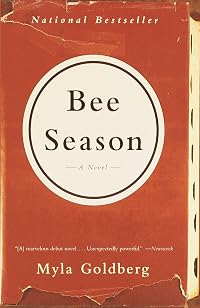
Bee Season
by Myla Goldberg
On This Page
Description
The bestselling, critically acclaimed debut novel about an ordinary girl with an extraordinary talent for spelling. Annotation. Eliza Naumann, a seemingly unremarkable nine-year-old, expects never to fit into her gifted family: her autodidactic father, Saul, absorbed in his study of Jewish mysticism; her brother, Aaron, the vessel of his father's spiritual ambitions; and her brilliant but distant lawyer-mom, Miriam. But when Eliza sweeps her school and district spelling bees in quick show more succession, Saul takes it as a sign that she is destined for greatness. In this altered reality, Saul inducts her into his hallowed study and lavishes upon her the attention previously reserved for Aaron, who in his displacement embarks upon a lone quest for spiritual fulfillment. When Miriam's secret life triggers a familial explosion, it is Eliza who must order the chaos. Myla Goldberg's keen eye for detail brings Eliza's journey to three-dimensional life. As she rises from classroom obscurity to the blinding lights and outsized expectations of the National Bee, Eliza's small pains and large joys are finely wrought and deeply felt. Not merely a coming-of-age story, Goldberg's first novel delicately examines the unraveling fabric of one family. The outcome of this tale is as startling and unconventional as her prose, which wields its metaphors sharply and rings with maturity. The work of a lyrical and gifted storyteller, Bee Season marks the arrival of an extraordinarily talented new writer. show lessTags
Recommendations
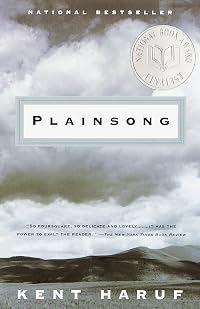
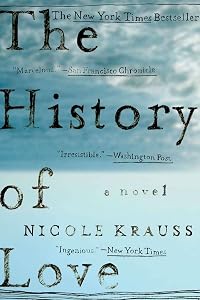

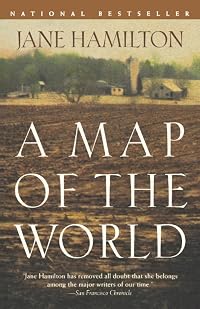
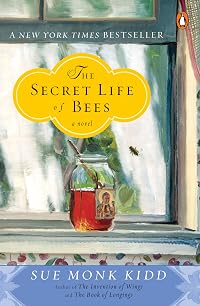





Member Recommendations
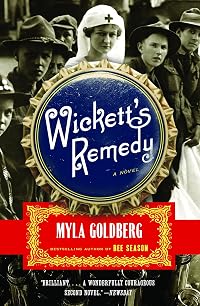
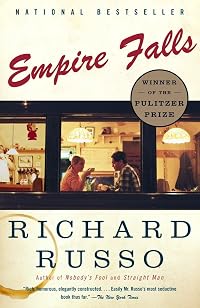
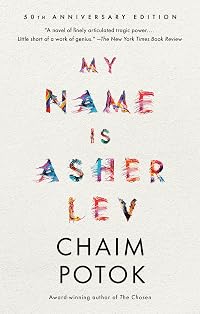
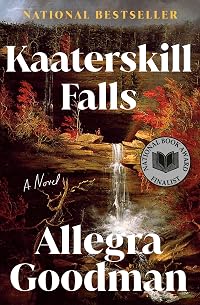
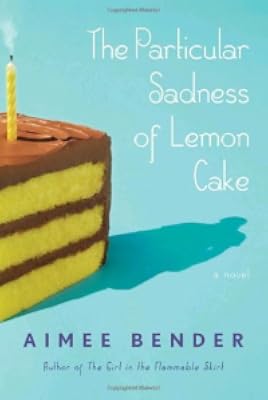
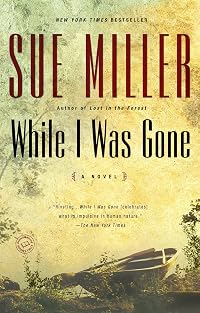
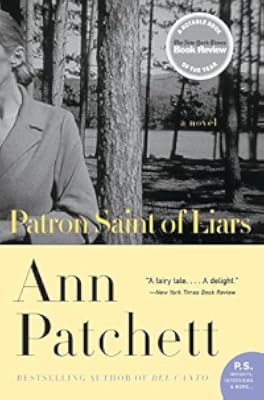
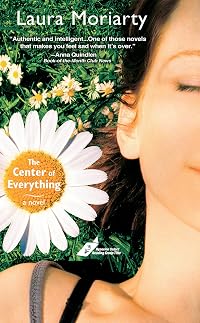
whymaggiemay Both are novels about families dealing with issues and undergoing changes.
40
Member Reviews
Miriam creates a great work of art which will be destroyed for use as evidence. I don't imagine her treatment in a mental hospital will result in anything good for either her
Saul is a failed mystic who hopes to get another chance vicariously through his daughter. She wants to be close to him and so goes along with the plan but in the end seems to learn that's not the kind of relationship with her dad that she wants. I wonder, though, if he's capable of any other kind. He may be, but we never find out. Maybe Eliza, with her transcendent knowledge, can work it out with him.
But we don't really know what happens to any of the characters. The book ends with a punchline. A good punchline, perhaps, but life is not a joke.
To say that this book left me puzzled is an understatement. I really enjoyed Goldberg's careful construct: a seemingly normal family slowly coming apart due to miscommunication, mental illness, religious fanaticism and plain old teenage growing up. I also really enjoyed the discussion around religion: a child's acceptance, a teen's questioning, an adult's embracing. I also liked the fact that there are no easy answers: mom doesn't come home, Aaron doesn't agree and dad doesn't have all the answers.
This is definitely what makes the end so powerful, but my real question is: has Elly really achieved enlightenment or is she schizophrenic like her mother (or epileptic)? I guess that's for each reader to determine according to each one's show more beliefs...
This is not what I expected, but a book that I will cherish in all its weirdness and questions, loving but broken relationships and intriguing look at meditation in all its forms. show less
This is definitely what makes the end so powerful, but my real question is: has Elly really achieved enlightenment or is she schizophrenic like her mother (or epileptic)? I guess that's for each reader to determine according to each one's show more beliefs...
This is not what I expected, but a book that I will cherish in all its weirdness and questions, loving but broken relationships and intriguing look at meditation in all its forms. show less
This dysfunctional family is looking for love in all the wrong places. As the story begins, we think this is just a “normal” dysfunctional family, but as the book progresses, we feel the horror of watching helplessly as the problems of the parents affect the children, who start out shy but hopeful, and with a chance in life….
Eliza Naumann is eleven, and in a class “where the unimpressive fifth graders are put.” Then, inexplicably to all, she wins the school spelling bee. Suddenly her father Saul, previously pretty much oblivious to her existence, abandons nurturing her gifted older brother Aaron in order to coach Eliza to the finals. In the process, the wax effigy of a family that these characters have carefully constructed show more dissolves as they fly, independently and together, too close to the sun.
As their worlds fall apart they transmute psychologically into whirling dervishes, needing to exert more and more regulation into the small parts of their worlds they can control. They never figure out that each of them is looking for the same thing, and that being honest and open with each other is their only chance to get it.
Discussion: There are so many rich layers to this torte of a book: the secret interior lives kept from one another that are being taken to crazy extremes; the hilarious and frightening way in which each family member's secret behaviors echoes the others’ pyschoses; the power of rituals to bind people; the power of rituals to ward off fear; the power of rituals to take over meaning until no meaning is left – just the rite; the sins (and illnesses) of the fathers (and mothers) being visited upon the children; and hovering above it all, the power of words.
Words play a large symbolic role in this story. They are Eliza’s ticket out of her crazy family, but her father Saul, a frustrated Jewish mystic, is determined to transform Eliza’s talent with words into the ability to see God, as instructed by the 13th Century mystic Abraham Abulafia. Aaron, unaware of what his father and sister are doing, also wants desperately to communicate with God, and learns the words from a Hare Krishna sect to help him do it. And it is the search for transcendence as expressed by the word “perfectimundo" that has driven the mother, Miriam, to insanity.
Evaluation: Bee Season was a New York Times Notable Book for 2000, winner of the Borders New Voices Prize, and a finalist for the Hemingway Foundation/PEN award, the NYPL Young Lions award, and the Barnes & Noble Discover award. The character study of the two young people is masterful; the adults seem "empty,” but perhaps that is only a reflection of who they are: cardboard adults in the improbable position of parenting. They were also children of parents who sapped them of all hope and happiness. This affecting book is emotionally draining. The results of the absence of engaged and caring parenting on four damaged people are heartbreaking. show less
Eliza Naumann is eleven, and in a class “where the unimpressive fifth graders are put.” Then, inexplicably to all, she wins the school spelling bee. Suddenly her father Saul, previously pretty much oblivious to her existence, abandons nurturing her gifted older brother Aaron in order to coach Eliza to the finals. In the process, the wax effigy of a family that these characters have carefully constructed show more dissolves as they fly, independently and together, too close to the sun.
As their worlds fall apart they transmute psychologically into whirling dervishes, needing to exert more and more regulation into the small parts of their worlds they can control. They never figure out that each of them is looking for the same thing, and that being honest and open with each other is their only chance to get it.
Discussion: There are so many rich layers to this torte of a book: the secret interior lives kept from one another that are being taken to crazy extremes; the hilarious and frightening way in which each family member's secret behaviors echoes the others’ pyschoses; the power of rituals to bind people; the power of rituals to ward off fear; the power of rituals to take over meaning until no meaning is left – just the rite; the sins (and illnesses) of the fathers (and mothers) being visited upon the children; and hovering above it all, the power of words.
Words play a large symbolic role in this story. They are Eliza’s ticket out of her crazy family, but her father Saul, a frustrated Jewish mystic, is determined to transform Eliza’s talent with words into the ability to see God, as instructed by the 13th Century mystic Abraham Abulafia. Aaron, unaware of what his father and sister are doing, also wants desperately to communicate with God, and learns the words from a Hare Krishna sect to help him do it. And it is the search for transcendence as expressed by the word “perfectimundo" that has driven the mother, Miriam, to insanity.
Evaluation: Bee Season was a New York Times Notable Book for 2000, winner of the Borders New Voices Prize, and a finalist for the Hemingway Foundation/PEN award, the NYPL Young Lions award, and the Barnes & Noble Discover award. The character study of the two young people is masterful; the adults seem "empty,” but perhaps that is only a reflection of who they are: cardboard adults in the improbable position of parenting. They were also children of parents who sapped them of all hope and happiness. This affecting book is emotionally draining. The results of the absence of engaged and caring parenting on four damaged people are heartbreaking. show less
Poor eleven year old Eliza Naumann just wants to be noticed by her family. Every member of her family has their own preoccupation. Older brother Aaron, once destined to becomes a rabbi, is on a quest to discover the right religion for him. Slowly he becomes absorbed into the Harre Krishna culture and dreams of becoming a pujari speaking Sanskrit. Mother Miriam has a fixation on stealing things. She stole a random shoe from a mall department store sale rack. She didn't even want the shoe, useless without its mate, after all. She ended up throwing it away. Each theft begs the question why Each family member slips further into the background while Eliza becomes obsessed with words. When she discovers she is good at spelling her father show more becomes her champion and urges her to "remove herself entirely from daily life, to brush against the limitless" (p 98). There is an open-ended conclusion to this fractured family. show less
This book tells of a little girl who gains the attention from her parents that she has always craved when it is discovered that she has a gift for spelling. Her family, which was already dysfunctional, spirals more and more out of control: her brother, who had been a devout rabbi-to-be, converts to Harre Krishna; her mother is sent to a mental institution; and her father pushes her deeper and deeper into an obscure branch of Jewish mysticism, living vicariously through her efforts . I honestly wouldn't recommend this book. While the characters are engaging and multi-faceted, the tension in the family is grating, and the book is deeply disturbing. Moreover, I think that the narrative itself could have used more editing. It seems like the show more author took two unrelated concepts -- spelling and mysticism -- and shoehorned them together into the same book. It turns out that the author had studied this particular mystic in college, which would explain her own fascination with him and his concepts, but I feel that it hurts her story overall. Just my two cents. show less
I wish I had read the book before I saw the movie. As it was, I felt a certain dread as I read, knowing what was unfolding before it unfolded. Yet both the movie and the book were outstanding in their own ways.
The Saul character (the father) is incredible. A stay at home dad, he's so immersed in studying Hebrew texts that he is clueless about his family. If the kids don't show signs of extraordinariness, he's not interested. And how he could be so wrong about his wife for, it seems, the entire 18-year marriage? What good is all the book learning if he can't function adequately in life?
The child Eliza has a learning style that not much is known about--synesthesia-- although that term is not used in the book. Synesthetic learners take in show more information from all their senses, and sometimes it the senses overlap; for example, letters may have colors. In Eliza's case, they move and rearrange themselves so that she can spell words. Intuition plays a big role, whether it can be laid to the Kabbala, as here, or to some sixth sense.
The writer's style is lovely, her use of metaphor thrilling. I've seen a lot of sentence fragments in fiction lately, though, and they don't work any better here than elsewhere. Goldberg can set a scene with just a scattering of words, like "a small boy in a blue shirt the color of deodorized toilet water," or "the day (of a bar mitzvah) is a Tootsie Pop he must try to lick without giving in to the urge to bite through its chocolate center." show less
The Saul character (the father) is incredible. A stay at home dad, he's so immersed in studying Hebrew texts that he is clueless about his family. If the kids don't show signs of extraordinariness, he's not interested. And how he could be so wrong about his wife for, it seems, the entire 18-year marriage? What good is all the book learning if he can't function adequately in life?
The child Eliza has a learning style that not much is known about--synesthesia-- although that term is not used in the book. Synesthetic learners take in show more information from all their senses, and sometimes it the senses overlap; for example, letters may have colors. In Eliza's case, they move and rearrange themselves so that she can spell words. Intuition plays a big role, whether it can be laid to the Kabbala, as here, or to some sixth sense.
The writer's style is lovely, her use of metaphor thrilling. I've seen a lot of sentence fragments in fiction lately, though, and they don't work any better here than elsewhere. Goldberg can set a scene with just a scattering of words, like "a small boy in a blue shirt the color of deodorized toilet water," or "the day (of a bar mitzvah) is a Tootsie Pop he must try to lick without giving in to the urge to bite through its chocolate center." show less
My review from September 12, 2002:
I really enjoyed this book ... it kind of made me think of many of the books I used to read by authors such as Chaim Potok (in its discussion of the acceptance and denial of Jewish mysticism and religion as a whole) and Judy Blume (in that it dealt with growing up with all-to-human parents, rites of passage and much more). ...And yet this is a book for adults and deals with adult emotions and issues!
The characters created by Myla Goldberg are wonderfully crafted.
* Saul, the obsessively scholarly dad/cantor;
*Miriam, the mom secretly involved in a life of crime;
*Aaron, a teenage boy who explores religions other than Judaism when cast aside by his father due to Eliza's spelling bee success;
*Eliza, the show more mediocre student who suddenly replaces her brother in Saul's study and affections when she suddenly discovers her talent in winning spelling bees;
The lives of all the characters are linked dynamically to each other and I found the book hard to put down because of them. I couldn't wait to see how everything was drawn together at the end!
A sign of a great book is one that keeps your imagination fueled even after finishing the last page ...and this story did just that! As I am writing this I still find myself wondering what religion Aaron will choose; will he return to Judaism? How will Saul cope with his family situation? What will become of Miriam? ...And will Eliza end up on top of the world ultimately -her wisdom before her time seems to indicate that to me! Lots to think about! Lots of fun! show less
I really enjoyed this book ... it kind of made me think of many of the books I used to read by authors such as Chaim Potok (in its discussion of the acceptance and denial of Jewish mysticism and religion as a whole) and Judy Blume (in that it dealt with growing up with all-to-human parents, rites of passage and much more). ...And yet this is a book for adults and deals with adult emotions and issues!
The characters created by Myla Goldberg are wonderfully crafted.
* Saul, the obsessively scholarly dad/cantor;
*Miriam, the mom secretly involved in a life of crime;
*Aaron, a teenage boy who explores religions other than Judaism when cast aside by his father due to Eliza's spelling bee success;
*Eliza, the show more mediocre student who suddenly replaces her brother in Saul's study and affections when she suddenly discovers her talent in winning spelling bees;
The lives of all the characters are linked dynamically to each other and I found the book hard to put down because of them. I couldn't wait to see how everything was drawn together at the end!
A sign of a great book is one that keeps your imagination fueled even after finishing the last page ...and this story did just that! As I am writing this I still find myself wondering what religion Aaron will choose; will he return to Judaism? How will Saul cope with his family situation? What will become of Miriam? ...And will Eliza end up on top of the world ultimately -her wisdom before her time seems to indicate that to me! Lots to think about! Lots of fun! show less
Members
- Recently Added By
Published Reviews
ThingScore 75
Myla Goldberg's first novel, ''Bee Season,'' is a dispassionate, fervidly intelligent book -- she explores class, linguistics and religious extremism with the confidence of a born essayist -- that comes by its emotion honestly.
added by jlelliott
Lists

Tagged by Tim or Meh!
91 works; 9 members

Books Read in 2015
3,299 works; 129 members

Florida
366 works; 3 members

Books Featured on Readers' Review of the Diane Rehm Show
161 works; 8 members
Author Information

8+ Works 5,581 Members
Awards and Honors
Awards
Notable Lists
Work Relationships
Has the adaptation
Common Knowledge
- Canonical title
- Bee Season
- Original publication date
- 2000-05-25
- People/Characters
- Eliza Naumann; Saul Naumann; Aaron Naumann; Miriam Naumann
- Important places
- Huntingdon, Pennsylvania, USA; Philadelphia, Pennsylvania, USA; Washington, D.C., USA
- Related movies
- Bee Season (2005 | IMDb)
- Epigraph
- The world of letters is the true world of bliss.
-- ABRAHAM ABULAFIA (1240 - c. 1292)
Are you really proud of me?
-- REBECCA SEALFON, 1997 NATIONAL SPELLING BEE CHAMPION - Dedication
- For my family
- First words
- At precisely 11 A.M. every teacher in every classroom at McKinley Elementary School tells their students to stand.
- Last words
- (Click to show. Warning: May contain spoilers.)She is sure.
- Blurbers
- Bender, Aimee (paperback) (paperback); Stout, Elizabeth (paperback) (paperback)
Classifications
Statistics
- Members
- 4,092
- Popularity
- 3,785
- Reviews
- 94
- Rating
- (3.52)
- Languages
- 6 — Dutch, English, French, German, Italian, Spanish
- Media
- Paper, Audiobook, Ebook
- ISBNs
- 27
- UPCs
- 1
- ASINs
- 7